From Surf Wiki (app.surf) — the open knowledge base
Man
Male adult human
Male adult human
A man is an adult male human. Before adulthood, a male child or adolescent is referred to as a boy.
Like most other male mammals, a man's genome usually inherits an X chromosome from the mother and a Y chromosome from the father. Sex differentiation of the male fetus is governed by the SRY gene on the Y chromosome. During puberty, hormones which stimulate androgen production result in the development of secondary sexual characteristics that result in even more differences between the sexes. These include greater muscle mass, greater height, the growth of facial hair and a lower body fat composition. Male anatomy is distinguished from female anatomy by the male reproductive system, which includes the testicles, sperm ducts, prostate gland and epididymides, and penis. Secondary sex characteristics include a narrower pelvis and hips, and smaller breasts and nipples.
Throughout human history, traditional gender roles have often defined men's activities and opportunities. Men often face conscription into military service or are directed into professions with high mortality rates. Many religious doctrines stipulate certain rules for men, such as religious circumcision. Men are over-represented as both perpetrators and victims of violence.
Trans men have a gender identity that does not align with their female sex assignment at birth, while intersex men may have sex characteristics that do not fit typical notions of male biology.
Etymology
The English term "man" is derived from the Proto-Indo-European root *man- (see Sanskrit/Avestan manu-, Slavic mǫž "man, male"). More directly, the word derives from Old English mann. The Old English form primarily meant "person" or "human being" and referred to men, women, and children alike. The Old English word for "man" as distinct from "wif"/"woman" or "child" was wer. Mann only came to mean "man" in Middle English, replacing wer, which survives today only in the compounds "werewolf" (from Old English werwulf, literally "man-wolf"), and "wergild", literally "man-payment".
Biology ==
Main article: Sex differences in humans
In humans, sperm cells carry either an X or a Y sex chromosome. If a sperm cell carrying a Y chromosome fertilizes the female ovum, the offspring will have a male karyotype (XY). The SRY gene is typically found on the Y chromosome and causes the development of the testes, which in turn govern other aspects of male sex differentiation. Sex differentiation in males proceeds in a testes-dependent way while female differentiation is not gonad dependent.
Primary sex characteristics (or sex organs) are characteristics that are present at birth and are integral to the reproductive process. For men, primary sex characteristics include the penis and testicles.
Adult humans exhibit sexual dimorphism in many other characteristics, many of which have no direct link to reproductive ability. Humans are sexually dimorphic in body size, body structure, and body composition. Men tend to be taller and heavier than women, and adjusted for height, men tend to have greater lean and bone mass than women, and lower fat mass.
Secondary sex characteristics are features that appear during puberty in humans. Such features are especially evident in the sexually dimorphic phenotypic traits that distinguish between the sexes, but—unlike the primary sex characteristics—are not directly part of the reproductive system. Secondary sexual characteristics that are specific to men include:
- Broadened shoulders;
- Increased body hair;
- An enlarged larynx (also known as an Adam's apple); and
- A voice that is significantly deeper than the voice of a child or a woman.
Men weigh more than women. On average, men are taller than women by about 10%. On average, men have a larger waist in comparison to their hips (see waist–hip ratio) than women. In women, the index and ring fingers tend to be either more similar in size or their index finger is slightly longer than their ring finger, whereas men's ring finger tends to be longer.
Reproductive system
Main article: Male reproductive system
The internal male genitalia consist of the testicles, which produce sperm, the accessory glands, which produce seminal fluid, the epididymides, which store sperm cells, and the vasa deferentia and ejaculatory ducts, which transfer the mature sperm to the urethra.
The external male genitalia consist of the penis and the scrotum, a pouch of skin housing the testicles.
Sperm cells are ejaculated in semen through the penis and enter the female reproductive tract through the vagina. Sperm that pass from the vagina to the uterus can enter the fallopian tubes and fertilize an egg, which develops into an embryo. The study of male reproduction and associated organs is called andrology.
Testosterone stimulates the development of the Wolffian ducts, the penis, and closure of the labioscrotal folds into the scrotum. Another significant hormone in sexual differentiation is the anti-Müllerian hormone, which inhibits the development of the Müllerian ducts. For males during puberty, testosterone, along with gonadotropins released by the pituitary gland, stimulates spermatogenesis.
Health
While a majority of the global health gender disparities is weighted against women, there are situations in which men tend to fare poorer. One such instance is armed conflicts, where men are often the immediate victims. A study of conflicts in 13 countries from 1955 to 2002 found that 81% of all violent war deaths were male. Apart from armed conflicts, areas with high incidence of violence, such as regions controlled by drug cartels, also see men experiencing higher mortality rates. This stems from social beliefs that associate ideals of masculinity with aggressive, confrontational behavior. Lastly, sudden and drastic changes in economic environments and the loss of social safety nets, in particular social subsidies and food stamps, have also been linked to higher levels of alcohol consumption and psychological stress among men, leading to a spike in male mortality rates. This is because such situations often makes it harder for men to provide for their family, a task that has been long regarded as the "essence of masculinity." A retrospective analyses of people infected with the common cold found that doctors underrate the symptoms of men, and are more willing to attribute symptoms and illness to women than men. Women live longer than men in all countries, and across all age groups, for which reliable records exist. In the United States, men are less healthy than women across all social classes. Non-white men are especially unhealthy. Men are over-represented in dangerous occupations and represent a majority of on the job deaths. Further, medical doctors provide men with less service, less advice, and spend less time with men than they do with women per medical encounter.
Sexuality
Male sexuality and attraction varies between individuals, and a man's sexual behavior can be affected by many factors, including evolved predispositions, personality, upbringing, and culture. While most men are heterosexual, significant minorities are homosexual or bisexual.
Sex or gender identity
Most cultures use a gender binary in which man is one of the two genders, the other being woman.
Most men are cisgender, and their gender identity aligns with their male sex assignment at birth. Trans men have a male gender identity that does not align with their female sex assignment at birth, and may undergo masculinizing hormone replacement therapy and/or sex reassignment surgery. Intersex men may have sex characteristics that do not fit typical notions of male biology. A 2016 systemic review estimated that 0.256% of people self-identify as female-to-male transgender. A 2017 survey of 80,929 Minnesota students found that roughly twice as many female-assigned adolescents self-identified as transgender, compared to adolescents with a male sex assignment.
Masculinity (also sometimes called manhood or manliness) is the set of personality traits and attributes associated with boys and men. Manhood is the embodiment of qualities seen as associated with mature masculinity; it is related to adulthood and may be distinguished from boyhood. Although masculinity is socially constructed, some research indicates that some behaviors considered masculine are biologically influenced.Social vs biological citations:
- To what extent masculinity is biologically or socially influenced is subject to debate. It is distinct from the definition of the biological male sex, as both males and females can exhibit masculine traits.Male vs Masculine/Feminine:
- Men generally face social stigma for embodying feminine traits, more so than women do for embodying masculine traits. This can also manifest as homophobia.
Standards of manliness or masculinity vary across different cultures and historical periods. While the outward signs of masculinity look different in different cultures, there are some common aspects to its definition across cultures. In all cultures in the past, and still among traditional and non-Western cultures, getting married is the most common and definitive distinction between boyhood and manhood. In the late 20th century, some qualities traditionally associated with marriage (such as the "triple Ps" of protecting, providing, and procreating) were still considered signs of having achieved manhood.
Relationships

Platonic relationships are not significantly different between men and women, though some differences do exist. Friendships involving men tend to be based more on shared activities than self-disclosure and personal connection. Perceptions of friendship involving men varies among cultures and time periods. In heterosexual romantic relationships, men are typically expected to take a proactive role, initiate the relationship, plan dates, and propose marriage.
Status
Anthropology has shown that masculinity itself has social status, just like wealth, race and social class. In Western culture, for example, greater masculinity usually brings greater social status. Many English words such as virtue and virile (from the Indo-European root vir meaning man) reflect this. In most cultures, male privilege allows men more rights and privileges than women. In societies where men are not given special legal privileges, they typically hold more positions of power, and men are seen as being taken more seriously in society. This is associated with a "gender-role strain" in which men face increased societal pressure to conform to gender roles.
History
The earliest known recorded name of a man in writing is potentially Kushim, who would have lived sometime between 3400 and 3000 BC in the Sumerian city of Uruk; though his name may have been a title rather than his actual name. The earliest confirmed names are that of Gal-Sal and his two slaves named En-pap X and Sukkalgir, from .
Fatherhood
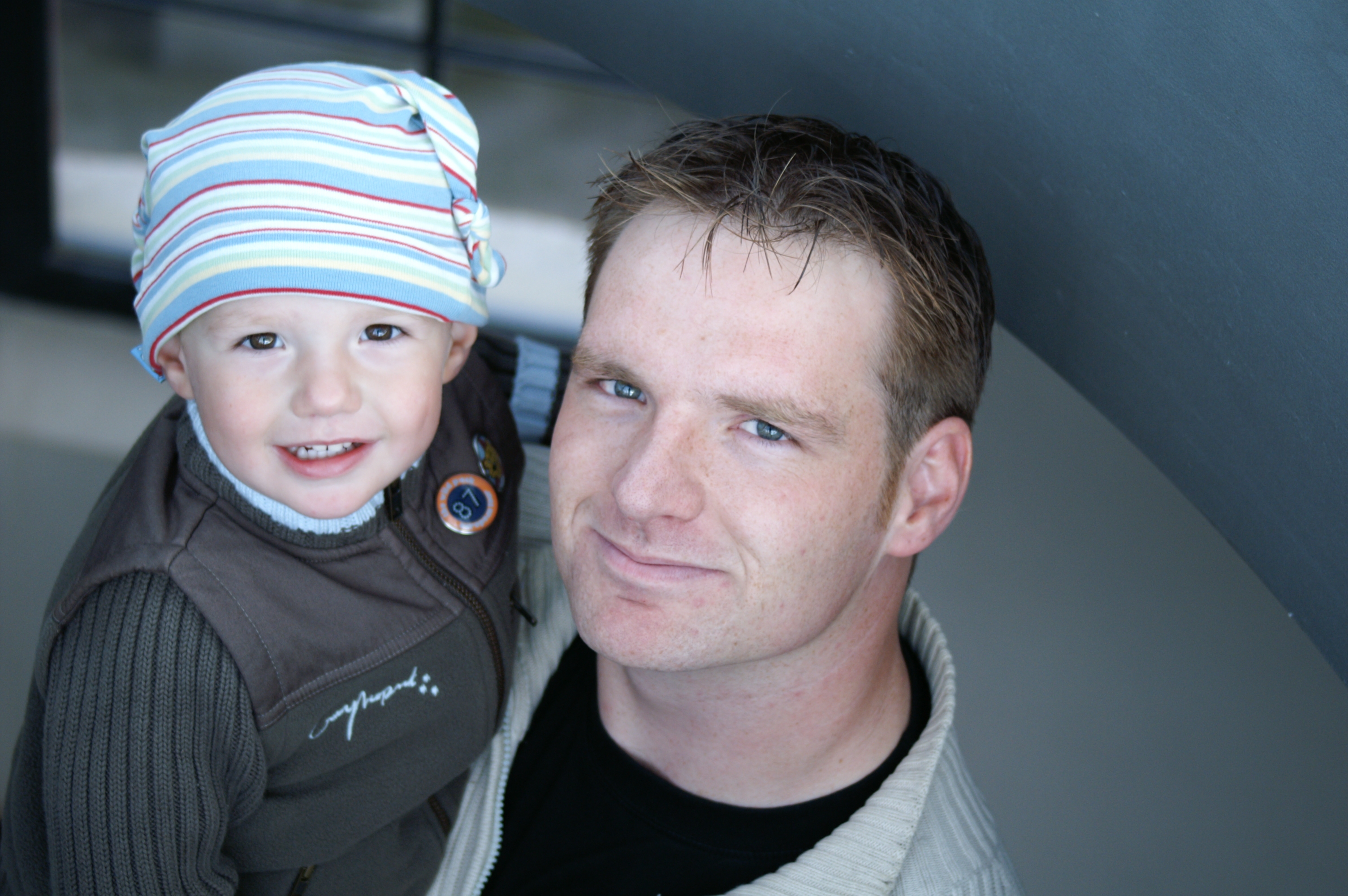
Men may have children, whether biological or adopted; such men are called fathers. The role of men in the family has shifted considerably in the 20th and 21st centuries, taking on a more active role in raising children in most societies. Men would traditionally marry a woman when raising children, but in modern times many countries now allow for same-sex marriage, and for those couples to raise children either via adoption or surrogacy. Men may be single parents, and are increasingly so in modern times, though women are three times more likely to be single parents than men. In paternal societies, men have typically have been regarded as the "head of household" and held additional social privileges.
Work
Men have traditionally held jobs that were not available to women. Such jobs tended to be either more strenuous, more prestigious, or more dangerous. Modern men increasingly take untraditional career paths, such as staying home and raising children while their partner works. Modern men tend to work longer than women, which impacts their ability to spend time with their families. Even in modern times, some jobs remain available only to men, such as military service. Conscription is overwhelmingly discriminatory, currently only ten countries include women in their conscription programs. Men continue to hold more dangerous jobs than women, even in developed countries. In the United States in 2020, ten times as many men died on the job as women.
Entertainment and media
Media portrayals of men often replicate traditional understanding of masculinity. Men are portrayed more frequently in television than women and most commonly appear as leads in action and drama programming. Men are typically more active in television programming than women and typically hold more power and status. Due to their prominence, men are more likely to be both the objects and instigators of humorous or disparaging content. Fathers are often portrayed in television as either idealized and caring or clumsy and inept. In advertising, men are disproportionately featured in advertisements for alcohol, vehicles, and business products.
Clothing
Men's clothing typically encompasses a range of garments designed for various occasions, seasons, and styles. Fundamental items of a man's wardrobe include shirts, trousers, suits, and jackets, which are designed to provide both comfort and style while prioritizing functionality. Men's fashion also encompasses more casual garments such as t-shirts, sweatshirts, jeans, shorts, and swimwear, which are typically intended for informal settings. Cultural and regional traditions often influence men's fashion, resulting in diverse styles and garments that reflect the characteristics of different parts of the world.
Education
Men traditionally received more education than women as a result of single-sex education. Universal education, meaning state-provided primary and secondary education independent of gender, is not yet a global norm, even if it is assumed in most developed countries. In the 21st century, the balance has shifted in many developed nations, and men now lag behind women in education.
Men are more likely than women to be faculty at universities.
In 2020, 90% of the world's men were literate, compared to 87% of women. But sub-Saharan Africa, and southwest Asia lagged behind the rest of the world; only 72% of men in sub-Saharan Africa were literate.
Rights
In most societies, men have more legal and cultural rights than women, and misogyny is far more prevalent than misandry in society. However, there are exceptions to this generalization. While one in six males experience childhood sexual abuse, men typically receive less support after being victims of it, and rape of males is stigmatized. Domestic violence against men is similarly stigmatized, although men make up half of the victims in heterosexual couples. Opponents of circumcision describe it as a human rights violation. The fathers' rights movement seeks to support separated fathers that do not receive equal rights to care for their children. The men's movement is the response to issues faced by men in Western countries. It includes pro-feminist groups such as the men's liberation movement, and anti-feminist groups such as the manosphere.
Gender symbol
Main article: Gender symbol
The Mars symbol (♂) is a common symbol that represents the male sex. The symbol is identical to the planetary symbol of Mars. It was first used to denote sex by Carl Linnaeus in 1751. The symbol is sometimes seen as a stylized representation of the shield and spear of the Roman god Mars. According to Stearn, however, this derivation is "fanciful" and all the historical evidence favours "the conclusion of the French classical scholar Claude de Saumaise" that it is derived from θρ, the contraction of a Greek epithet for Mars, θοῦρος (Thouros).
Notes
References
Bibliography
References
- {{Cite Merriam-Webster. male
- "Meaning of "man" in English". [[Cambridge Advanced Learner's Dictionary.
- "Definition of "man"". [[Merriam-Webster]].
- ''American Heritage Dictionary'', Appendix I: Indo-European Roots. [http://www.bartleby.com/61/roots/IE295.html man-1] {{webarchive. link. (19 May 2006 . Accessed 22 July 2007.)
- (January 2017). "Mann and Gender in Old English Prose: A Pilot Study". Neophilologus.
- "Etymology, origin and meaning of man".
- "Etymology, origin and meaning of wergeld".
- (2000). "Sexual Differentiation". MDText.com, Inc..
- Wells, Jonathan C. K.. (2007-09-01). "Sexual dimorphism of body composition". Best Practice & Research Clinical Endocrinology & Metabolism.
- (2011). "Williams Textbook of Endocrinology E-Book". [[Elsevier Health Sciences]].
- (2016). "CliffsNotes AP Biology". [[Houghton Mifflin Harcourt]].
- (2011). "Child and Adolescent Development: An Integrated Approach". [[Cengage Learning]].
- (30 April 2018). "Primary & Secondary Sexual Characteristics". Sciencing.com.
- (2018). "Encyclopedia of Reproduction". Elsevier Science.
- Berger, Kathleen Stassen. (2005). "The Developing Person Through the Life Span". Worth Publishers.
- (2014). "The Active Female: Health Issues Throughout the Lifespan". [[Springer Science+Business Media]].
- Halpern, Diane F.. (2013). "Sex Differences in Cognitive Abilities". [[Psychology Press]].
- "Definition of Male genitalia".
- (2015). "Neurology of Sexual and Bladder Disorders".
- Goodman, H. Maurice. (2009). "Basic Medical Endocrinology". Elsevier.
- The World Bank. (2012). "World Development Report 2012: Gender Equality and Development". The World Bank.
- [http://www.bjs.gov/content/pub/pdf/htus8008.pdf "Homicide Trends in the United States, 1980–2008"] {{Webarchive. link. (20 November 2019 [[United States Department of Justice]] (2010) p. 10)
- Márquez, Patricia. (1999). "The Street Is My Home: Youth and Violence in Caracas". Stanford University Press.
- (2017). "The science behind 'man flu.'". BMJ.
- (2016). "Sex Differences in Longevity and in Responses to Anti-Aging Interventions: A Mini-Review". Gerontology.
- (May 2003). "The Health of Men: Structured Inequalities and Opportunities". Am J Public Health.
- (2016). "Sexual Orientation, Controversy, and Science". Psychological Science in the Public Interest.
- Kevin L. Nadal, ''The Sage Encyclopedia of Psychology and Gender'' (2017, {{ISBN. 978-1-4833-8427-6), p. 401: "Most cultures currently construct their societies based on the understanding of gender binary—the two gender categorizations (male and female). Such societies divide their population based on biological sex assigned to individuals at birth to begin the process of gender socialization."
- (2017). "Life-Span Human Development". Cengage Learning.
- (2019). "Psychopathology: Foundations for a Contemporary Understanding". Routledge.
- "what are Answers to Your Questions About Transgender Individuals and Gender Identity". [[American Psychological Association.
- "What is Intersex? Frequently Asked Questions".
- (2016). "Prevalence of Transgender Depends on the "Case" Definition: A Systematic Review". The Journal of Sexual Medicine.
- (1 June 2019). "Size and Distribution of Transgender and Gender Nonconforming Populations: A Narrative Review". Endocrinology and Metabolism Clinics of North America.
- (2018). "Gale Researcher Guide for: The Continuing Significance of Gender". Gale, Cengage Learning.
- (2004). "Men and Masculinities: A Social, Cultural, and Historical Encyclopedia, Volume 1". ABC-CLIO.
- Arnett, Jeffrey Jensen. (1998). "Learning to Stand Alone: The Contemporary American Transition to Adulthood in Cultural and Historical Context". Human Development.
- Gilmore, David D.. (1990). "Manhood in the Making: Cultural Concepts of Masculinity". Yale University Press.
- (2009). "Virtue (2009)". Merriam-Webster Online Dictionary.
- (2009). "Virile (2009)". Merriam-Webster Online Dictionary.
- Harari, Yuval Noah. (2014). "[[Sapiens: A Brief History of Humankind]]". [[Penguin Random House Canada]].
- (2015-08-19). "Who's the First Person in History Whose Name We Know?".
- University of California, Irvine. (September 28, 2016). "Today's parents spend more time with their kids than moms and dads did 50 years ago". Science Daily.
- (19 June 2019). "8 facts about American dads".
- (17 August 2005). "Fathers play greater role in childcare".
- (16 December 2014). "Fathers' Leave and Fathers' Involvement: Evidence from Four OECD Countries". European Journal of Social Security.
- "The Single-Parent Family {{!}} Psychology Today".
- Bell, Kenton. (2014-12-25). "head of household definition {{!}} Open Education Sociology Dictionary".
- (September 2009). "On Men and Work: Taking the Road Less Traveled". Journal of Career Development.
- Williams, Joan C.. (2013-05-29). "Why Men Work So Many Hours". Harvard Business Review.
- Micheletti, Alberto. (2018-08-18). "Why is warfare almost exclusively male?".
- link. (31 July 2023 . In Ember, Carol R.; Ember, Melvin ''Encyclopedia of Sex and Gender: Men and Women in the World's Cultures''. Volume 1. [[Springer Science+Business Media). Springer]]. p. 108. {{ISBN. 978-0-306-47770-6. Retrieved April 25, 2015.
- (2019-03-22). "Conscripting women: gender, soldiering, and military service in Sweden 1965–2018". Women's History Review.
- DeVore, Chuck. "Fatal Employment: Men 10 Times More Likely Than Women To Be Killed At Work".
- Fejes, Fred J.. (1992). "Masculinity as Fact: A Review of Empirical Mass Communication Research on Masculinity". SAGE Publications.
- (1999). "The Indispensable Guide to Classic Men's Clothing". Tatra Press.
- "Historical summary of faculty, students, degrees, and finances in degree-granting institutions: Selected years, 1869–70 through 2005–06". Nces.ed.gov.
- (2001). "Women (Still) Need Not Apply:The Gender and Science Reader". Routledge.
- (2021). "Study on gender behaviour and its impact on education outcomes (with a special focus on the performance of boys and young men in education): final report". Publications Office of the European Union.
- (2001). "A six-year Longitudinal Study of Undergraduate Women in Engineering and Science:The Gender and Science Reader". Routledge.
- (12 September 2022). "This is how much global literacy has changed over 200 years".
- Ouellette, Marc. (2007). "International Encyclopedia of Men and Masculinities". Routledge.
- Gilmore, David D.. (2010). "Misogyny: The Male Malady". University of Pennsylvania Press.
- (2003). "Prevalence and psychological sequelae of self-reported childhood physical and sexual abuse in a general population sample of men and women". Child Abuse & Neglect.
- (1998). "Sexual abuse of boys: Definition, prevalence, correlates, sequelae, and management". Journal of the American Medical Association.
- (1990). "Sexual abuse in a national survey of adult men and women: Prevalence, characteristics, and risk factors". Child Abuse & Neglect.
- (2013). "Sexual Violence against Men and International Law – Criminalising the Unmentionable". International Criminal Law Review.
- Rabin, Roni Caryn. (23 January 2012). "Men Struggle for Rape Awareness". The New York Times.
- Migliaccio, Todd A.. (Winter 2001). "Marginalizing the Battered Male". [[The Journal of Men's Studies]].
- (October 2008). "Female perpetration of violence in heterosexual intimate relationships: adolescence through adulthood". Trauma Violence Abuse.
- (2004). "Sex Differences in Aggression in Real-World Settings: A Meta-Analytic Review". Review of General Psychology.
- "The National Intimate Partner and Sexual Violence Survey 2016/2017". Centers for Disease Control and Prevention.
- (2015-02-01). "Ritual Male Infant Circumcision and Human Rights". The American Journal of Bioethics.
- Flood, Michael. (2012-12-01). "Separated fathers and the 'fathers' rights' movement". Journal of Family Studies.
- (27 October 2022). "Where does Men's Liberation Come From?".
- Schott, G D. (24 December 2005). "Sex symbols ancient and modern: their origins and iconography on the pedigree". BMJ: British Medical Journal.
- (30 January 2018). "Solar System Symbols".
- Stearn, William T.. (May 1962). "The Origin of the Male and Female Symbols of Biology". [[Taxon (journal).
- Stearn, William T.. (1962). "The Origin of the Male and Female Symbols of Biology". Taxon.
This article was imported from Wikipedia and is available under the Creative Commons Attribution-ShareAlike 4.0 License. Content has been adapted to SurfDoc format. Original contributors can be found on the article history page.
Ask Mako anything about Man — get instant answers, deeper analysis, and related topics.
Research with MakoFree with your Surf account
Create a free account to save articles, ask Mako questions, and organize your research.
Sign up freeThis content may have been generated or modified by AI. CloudSurf Software LLC is not responsible for the accuracy, completeness, or reliability of AI-generated content. Always verify important information from primary sources.
Report
Social role
Masculinity
Main article: Masculinity