From Surf Wiki (app.surf) — the open knowledge base
Malay language
Austronesian language
Austronesian language
| Field | Value | |||||
|---|---|---|---|---|---|---|
| name | Malay | |||||
| ethnicity | {{ubl | |||||
| nativename | Bahasa Melayu | |||||
| states | Brunei, Christmas Island, Cocos (Keeling) Islands, Timor-Leste, Indonesia, Malaysia, Singapore, Southeast Philippines, South Thailand, Tanintharyi, Champa, Christmas Island, Sri Lanka, Capetown | |||||
| speakers | L1: million | |||||
| date | 2004–2010 | |||||
| ref | e27 | |||||
| speakers2 | Total (L1 and L2): 290 million (2009) | |||||
| speakers_label | Speakers | |||||
| familycolor | Austronesian | |||||
| fam2 | Malayo-Polynesian | |||||
| fam3 | Malayic | |||||
| ancestor | Old Malay | |||||
| ancestor2 | Classical Malay | |||||
| ancestor3 | Pre-Modern Malay | |||||
| stand1 | Standard Malay (Malaysian Malay) | |||||
| stand2 | Indonesian | |||||
| script | {{ubl | Latin (Malay alphabet) | Arabic (Jawi script) | Arabic (Pegon script) (In Indonesia) | Thai alphabet (in Thailand) | Malay Braille |
| nation | {{ubl | |||||
| UNESCO (as Indonesian)<ref name | "UNESCO"{{Cite news | url= https://unesdoc.unesco.org/ark:/48223/pf0000387388.locale=en | title=Recognition of Bahasa Indonesia as an official language of the General Conference of UNESCO | |||
| access-date | 2023-11-20 | website=unesco.org / document no. 42 C/28 | language=en}} | |||
| minority | {{ubl | |||||
| East Timor (beside Dili Malay, Indonesian used as a working language and a trade language with Indonesia)<ref name | "easttimorgovernment.com" | |||||
| agency | {{ubl | |||||
| iso1 | ms | |||||
| iso2b | may | |||||
| iso2t | msa | |||||
| iso3 | msa | |||||
| lc1 | zlm | |||||
| ld1 | Malay (individual language) | |||||
| lc2 | ind | |||||
| ld2 | Indonesian | |||||
| lc3 | zsm | |||||
| ld3 | Standard Malay | |||||
| lc4 | abs | |||||
| ld4 | Ambon Malay | |||||
| lc5 | mbf | |||||
| ld5 | Baba Malay | |||||
| lc6 | pea | |||||
| ld6 | Baba Indonesian | |||||
| lc7 | mhp | |||||
| ld7 | Balinese Malay | |||||
| lc8 | bjn | |||||
| ld8 | Banjarese | |||||
| lc9 | mfb | |||||
| ld9 | Bangka | |||||
| lc10 | btj | |||||
| ld10 | Bacan | |||||
| lc11 | bew | |||||
| ld11 | Betawi | |||||
| lc12 | bve | |||||
| ld12 | Berau | |||||
| lc13 | kxd | |||||
| ld13 | Brunei Malay | |||||
| lc14 | ccm | |||||
| ld14 | Chetty Malay | |||||
| lc15 | coa | |||||
| ld15 | Cocos Malay | |||||
| lc16 | liw | |||||
| ld16 | Col | |||||
| lc17 | goq | |||||
| ld17 | Gorap | |||||
| lc18 | hji | |||||
| ld18 | Haji | |||||
| lc19 | jax | |||||
| ld19 | Jambi Malay | |||||
| lc20 | vkk | |||||
| ld20 | Kaur | |||||
| lc21 | meo | |||||
| ld21 | Kedah Malay | |||||
| lc22 | mfa | |||||
| ld22 | Kelantan-Pattani Malay | |||||
| lc23 | kvr | |||||
| ld23 | Kerinci | |||||
| lc24 | mqg | |||||
| ld24 | Kota Bangun Kutai | |||||
| lc25 | mkn | |||||
| ld25 | Kupang Malay | |||||
| lc26 | mfp | |||||
| ld26 | Makassar Malay | |||||
| lc27 | xmm | |||||
| ld27 | Manado Malay | |||||
| lc28 | min | |||||
| ld28 | Minangkabau | |||||
| lc29 | mui | |||||
| ld29 | Musi | |||||
| lc30 | zmi | |||||
| ld30 | Negeri Sembilan | |||||
| lc31 | max | |||||
| ld31 | North Moluccan Malay | |||||
| lc32 | pmy | |||||
| ld32 | Papuan Malay | |||||
| lc33 | pel | |||||
| ld33 | Pekal | |||||
| lc34 | msi | |||||
| ld34 | Sabah Malay | |||||
| lc35 | sci | |||||
| ld35 | Sri Lanka Malay language | |||||
| lc36 | pse | |||||
| ld36 | South Barisan Malay | |||||
| lc37 | vkt | |||||
| ld37 | Tenggarong Kutai Malay | |||||
| lingua | 31-MFA-a | |||||
| sign | Manually Coded Malay | |||||
| glotto | nucl1806 | |||||
| glottorefname | Nuclear Malayic | |||||
| pronunciation | ||||||
| map | Malay language Spoken Area Map v1.png | |||||
| mapcaption | Areas where Malay is spoken: | |||||
| map2 | Malay varieties in Southeast Asia.png | |||||
| mapcaption2 | Varieties of Malay in Southeast Asia: |
the language on which standard Indonesian and standard Malay are based
| Malays | Various ethnic groups in Brunei, Indonesia, Malaysia and Singapore | (see also Malayophones)
--بهاس ملايو
Historically Pallava script, Kawi script, Ulu scripts, Rejang script, Hebrew script}} | Brunei | Indonesia (as Indonesian) | Malaysia | Singapore | UNESCO (as Indonesian){{Cite news|url= https://unesdoc.unesco.org/ark:/48223/pf0000387388.locale=en|title=Recognition of Bahasa Indonesia as an official language of the General Conference of UNESCO |access-date=2023-11-20|website=unesco.org / document no. 42 C/28|language=en}} | East Timor (beside Dili Malay, Indonesian used as a working language and a trade language with Indonesia) | Indonesia (beside the national standard of Indonesian, Local Malay enjoys the status of a regional language in Sumatra and Kalimantan) | Sri Lanka (as Sri Lankan Malay) | Thailand (as Pattani Malay, Syburi Malay, and Bangkok Malay) | Agency for Language Development and Cultivation in Indonesia | Institute of Language and Literature in Malaysia | Language and Literature Bureau in Brunei | Malay Language Council in Singapore | MABBIM (a trilateral joint venture)
Malay ( ; endonym: Bahasa Melayu, Jawi script: بهاس ملايو) is an Austronesian language spoken primarily in several islands of Maritime Southeast Asia and Malay Peninsula on mainland Asia. The language is an official language of Brunei, Malaysia, Singapore and Indonesia. Indonesian, a standardized variety of Malay, is the official language of Indonesia and one of the working languages of Timor-Leste. Malay is also spoken as a regional language of ethnic Malays in Indonesia, southeast Philippines and the southern part of Thailand. Altogether, it is spoken by 60 million people across Maritime Southeast Asia.
The language is pluricentric and a macrolanguage, i.e., a group of mutually intelligible speech varieties, or dialect continuum, that have no traditional name in common, and which may be considered distinct languages by their speakers. Several varieties of it are standardized as the national language (bahasa kebangsaan or bahasa nasional) of several nation states with various official names: in Malaysia, it is designated as either Bahasa Melayu ("Malay language") or in some instances, Bahasa Malaysia ("Malaysian language"); in Singapore and Brunei, it is called Bahasa Melayu ("Malay language") where it in the latter country refers to a formal standard variety set apart from its own vernacular dialect;See:
- in Indonesia, an autonomous normative variety called Bahasa Indonesia ("Indonesian language") is designated the bahasa persatuan/pemersatu ("unifying language" or lingua franca) whereas the term "Malay" (bahasa Melayu) refers to vernacular varieties of Malay indigenous to areas of Central to Southern Sumatra and West Kalimantan as the ethnic languages of Malay in Indonesia.
Classical Malay, also called Court Malay, was the literary standard of the pre-colonial Malacca and Johor Sultanates and so the language is sometimes called Malacca, Johor or Riau Malay (or various combinations of those names) to distinguish it from the various other Malayic languages. According to Ethnologue 16, several of the Malayic varieties they currently list as separate languages, including the Orang Asli varieties of the Malay Peninsula, are so closely related to standard Malay that they may prove to be dialects. There are also several Malay trade and creole languages (e.g. Ambonese Malay) based on a lingua franca derived from Classical Malay as well as Makassar Malay, which appears to be a mixed language.
Origin
Malay historical linguists agree on the likelihood of the Malayic homeland being in western Borneo. A form known as Proto-Malayic was spoken in Borneo at least by 1000 BCE, it has been argued to be the ancestral language of all subsequent Malayic languages. Its ancestor, Proto-Malayo-Polynesian, a descendant of the Proto-Austronesian language, began to break up by at least 2000 BCE, possibly as a result of the southward expansion of Austronesian peoples into Maritime Southeast Asia from the island of Taiwan.
Through the penetration and proliferation of Sanskrit vocabulary and the influence of major Indian religions, the Proto-Malayic evolved into a form known as the Old Malay language.
The oldest surviving specimen of Old Malay, the Kedukan Bukit inscription, dating from the end of the 7th century CE, was found on the banks of the River Tatang, a tributary of the River Musi, South Sumatra. "Malayu" was the name of an old kingdom located in Jambi Province in Eastern Sumatra.
The use of Malay as a lingua franca throughout the Malay Archipelago is linked to the rise of Muslim kingdoms and the spread of Islam, itself a consequence of growing regional trade. A literary language was established in Malacca. After the defeat of Malacca by the Portuguese in 1511, the literary center shifted to the Johor-Riau Sultanate and the literary language is therefore often called Johor-Riau Malay, though it is a continuation of Malacca Malay. When Johor was divided between British Malaya (Johor) and the Dutch East Indies (Riau), its language was accorded official status in both territories.
Indonesia pronounced "Riau" (Malacca–Johor) Malay its official language (Bahasa Indonesia) when it gained independence. Since 1928, nationalists and young people throughout the Indonesian archipelago had declared Malay to be Indonesia's only official language, as proclaimed in the Sumpah Pemuda "Youth Vow." Thus Indonesia was the first country to designate Malay as an official language.
In Malaysia, the 1957 Article 152 of the Federation adopted Johor (Malacca) Malay as the official language (Bahasa Malaysia). The name "Malaysia", in both language and country, emphasised that the nation consisted of more than just ethnic Malays. In 1986 the official name was changed to Bahasa Melayu, but in 2007 it was changed back.
"Bahasa Melayu" was defined as Brunei's official language in the country's 1959 Constitution. It is also based on the Malaccan standard.
The Indonesian and Malaysian registers of Malay are separated by some centuries of different vocabulary development (see Differences between Malaysian and Indonesian; cf. Serbo-Croatian). This is, in part, partly due to the influence of different colonial languages; Dutch in the case of Indonesia (see Dutch East Indies) and English in the case of Malaysia, Singapore and Brunei, which were formerly under British rule. However, Indonesia and Malaysia largely unified their previously divergent orthographies in 1972, and they along with Brunei have set up a joint commission to develop common scientific and technical vocabulary and otherwise co-operate to keep their standards convergent.
Some Malay dialects, however, show only limited mutual intelligibility with the standard language; for example, Kelantanese or Sarawakian pronunciation is difficult for many fellow Malaysians to understand, while Indonesian contains many words unfamiliar to speakers of Malaysian, some because of Javanese, Sundanese or other local language influence and some because of the independent development of Indonesian slang and colloquial parlance.
The language spoken by the Peranakan (Straits Chinese, a hybrid of Chinese settlers from the Ming Dynasty and local Malays) is a unique patois of Malay and the Hokkien Chinese, which is mostly spoken in the former Straits Settlements of Penang and Malacca in Malaysia and the Indonesian Archipelago. --
History
Main article: History of the Malay language
The history of the Malay language can be divided into five periods: Old Malay, the Transitional Period, Classical Malay, Late Modern Malay and Modern Malay. Old Malay is believed to be the actual ancestor of Classical Malay.
Old Malay was influenced by Sanskrit, the ancient Indo-Aryan language of India. Sanskrit loan words can be found in Old Malay vocabulary. The earliest known stone inscription in the Old Malay language was found on the island of Sumatra. Written in the Pallava variety of the Grantha alphabet, it is dated 1 May 683. Known as the Kedukan Bukit inscription, it was discovered by the Dutchman C. J. Batenburg on 29 November 1920 at Kedukan Bukit, on the banks of the Tatang River, a tributary of the Musi River, near Palembang, in what is now South Sumatra, Indonesia. The stone measures approximately 45 by 80 cm. For centuries, Srivijaya, a maritime empire based on the island from the 7th to the 11th centuries, was responsible for the spread of Old Malay throughout the Malay Peninsula and the Malay Archipelago through its expansion and economic power. Old Malay served as the lingua franca of traders and was widely used in various ports and marketplaces across the region.
The Tanjung Tanah Law was a 14th-century pre-Islamic legal text that was produced during the reign of Adityawarman (1345–1377) of the Melayu Kingdom (also known as Malayu or Dharmasraya Kingdom), a Hindu-Buddhist kingdom that arose after the end of Srivijayan rule in Sumatra. The laws were for the Minangkabau people, who today still live in the highlands of Sumatra, Indonesia.
The Terengganu Inscription Stone (Malay: Batu Bersurat Terengganu; Jawi: باتو برسورت ترڠݢانو) is a granite stele bearing an inscription in Jawi script, discovered in Terengganu, on the east coast of the Malay Peninsula (in what is now Malaysia). It is considered the earliest evidence of Classical Malay. Dated approximately to 702 AH (1303 CE), it represents the oldest known evidence of Jawi writing in the Malay world and stands as one of the earliest testimonies to the advent of Islam as a state religion in the region. The inscription contains a proclamation issued by a ruler of Terengganu, referred to as Seri Paduka Tuan, urging his subjects to uphold and propagate Islam, while outlining 10 basic Sharia laws as guidance.
Classical Malay came into widespread use as the lingua franca of the region during the Malacca Sultanate era (1402–1511), a powerful maritime kingdom strategically located along the Strait of Malacca that became a hub of international trade and Islamic learning in the region. During this period, the Malay language developed rapidly under the influence of Islamic literature, which brought about significant linguistic changes, including a massive infusion of Arabic vocabulary, as well as continued influence from Sanskrit and Tamil. This enriched form of the language came to be known as Classical Malay. It was during this time the language evolved into a form recognisable to speakers of modern Malay.
After the Capture of Malacca by the Portuguese in 1511, marking the fall of the Malacca Sultanate, the royal court re-established itself as the Johor Sultanate. The court continued to use Classical Malay as its literary and administrative language. Over time, this literary tradition became strongly associated with the territories under the sultanate, including the present-day Malaysian state of Johor and the Indonesian province of Riau Islands. As a result, many assumed that the spoken Malay of Johor and Riau was closely related to Classical Malay. However, while the literary language used in the region reflects the classical tradition, the local spoken dialects differ. The fall of Malacca led to the dispersal of Malay literary centres, as many literati and scholars sought refuge in areas outside the immediate control of European colonial powers. As a result, new Malay literary works began to emerge from Aceh, Java, Makassar, the Moluccas, Champa, and other regions.
Among the oldest surviving letters written in Malay are the letters from Sultan Abu Hayat of Ternate, in the Maluku Islands of present-day Indonesia, dated around 1521–1522. The text is addressed to the king of Portugal, following contact with Portuguese explorer Francisco Serrão. The letters show a sign of non-native usage, as the Ternateans used (and still use) the unrelated Ternate language, a West Papuan language, as their first language. Malay was used solely as a lingua franca for inter-ethnic communications.
The 19th century marked a period of strong Western political and commercial domination in the Malay Peninsula and the Malay Archipelago. The colonial demarcation brought by the 1824 Anglo-Dutch Treaty led to Dutch East India Company effectively colonising the East Indies in the south, while the British Empire held several colonies and protectorates in the Malay peninsula and Borneo in the north. Both colonial powers used the Malay language as a tool of centralisation and modernisation. They made use of each other's scholarly publications in developing the standardised versions of the Malay language. The flourishing of pre-modern Malay literature in the 19th century led to the rise of intellectual movements among the locals and the emergence of new communities of Malay linguists.
Classification
Malay is a member of the Austronesian family of languages, which includes languages from Southeast Asia and the Pacific Ocean, with a smaller number in continental Asia. Malagasy, a geographic outlier spoken in Madagascar in the Indian Ocean, is also a member of this language family. Although these languages are not necessarily mutually intelligible to any extent, their similarities are often quite apparent. In more conservative languages like Malay, many roots have come with relatively little change from their common ancestor, Proto-Austronesian language. There are many cognates found in the languages' words for kinship, health, body parts and common animals. Numbers, especially, show remarkable similarities.
Within Austronesian, Malay is part of a cluster of numerous closely related forms of speech known as the Malayic languages, which were spread across Malaya and the Indonesian archipelago by Malay traders from Sumatra. There is disagreement as to which varieties of speech popularly called "Malay" should be considered dialects of this language, and which should be classified as distinct Malay languages. The vernacular of Brunei—Brunei Malay—for example, is not readily intelligible with the standard language, and the same is true with some lects on the Malay Peninsula such as Kedah Malay. However, both Brunei and Kedah are quite close.
Writing system
Main article: Malay alphabet
Malay is now written using the Latin script, known as Rumi in Brunei, Malaysia and Singapore or Latin in Indonesia, although an Arabic script called Arab Melayu or Jawi also exists. Latin script is official in Malaysia, Singapore, and Indonesia. Malay uses Hindu-Arabic numerals.
Rumi (Latin) and Jawi are co-official in Brunei and Malaysia only. Names of institutions and organisations have to use Jawi and Rumi (Latin) scripts in Brunei and some parts of Malaysia. Jawi is used fully in schools, especially the religious school, sekolah agama, which is compulsory during the afternoon for Muslim students aged from around 6–7 up to 12–14.
Efforts are currently being undertaken to preserve Jawi in Malaysia, and students taking Malay language examinations in Malaysia have the option of answering questions using Jawi.
The Latin script, however, is the most commonly used in Brunei and Malaysia, both for official and informal purposes.
Historically, Malay has been written using various scripts. Before the introduction of Arabic script in the Malay region, Malay was written using the Pallava, Kawi and Rencong scripts; these scripts are no longer frequently used, but similar scripts such as the Cham alphabet are used by the Chams of Vietnam and Cambodia. Old Malay was written using Pallava and Kawi script, as evident from several inscription stones in the Malay region. Starting from the era of kingdom of Pasai and throughout the golden age of the Malacca Sultanate, Jawi gradually replaced these scripts as the most commonly used script in the Malay region. Starting from the 17th century, under Dutch and British influence, Jawi was gradually replaced by the Rumi script.
Extent of use
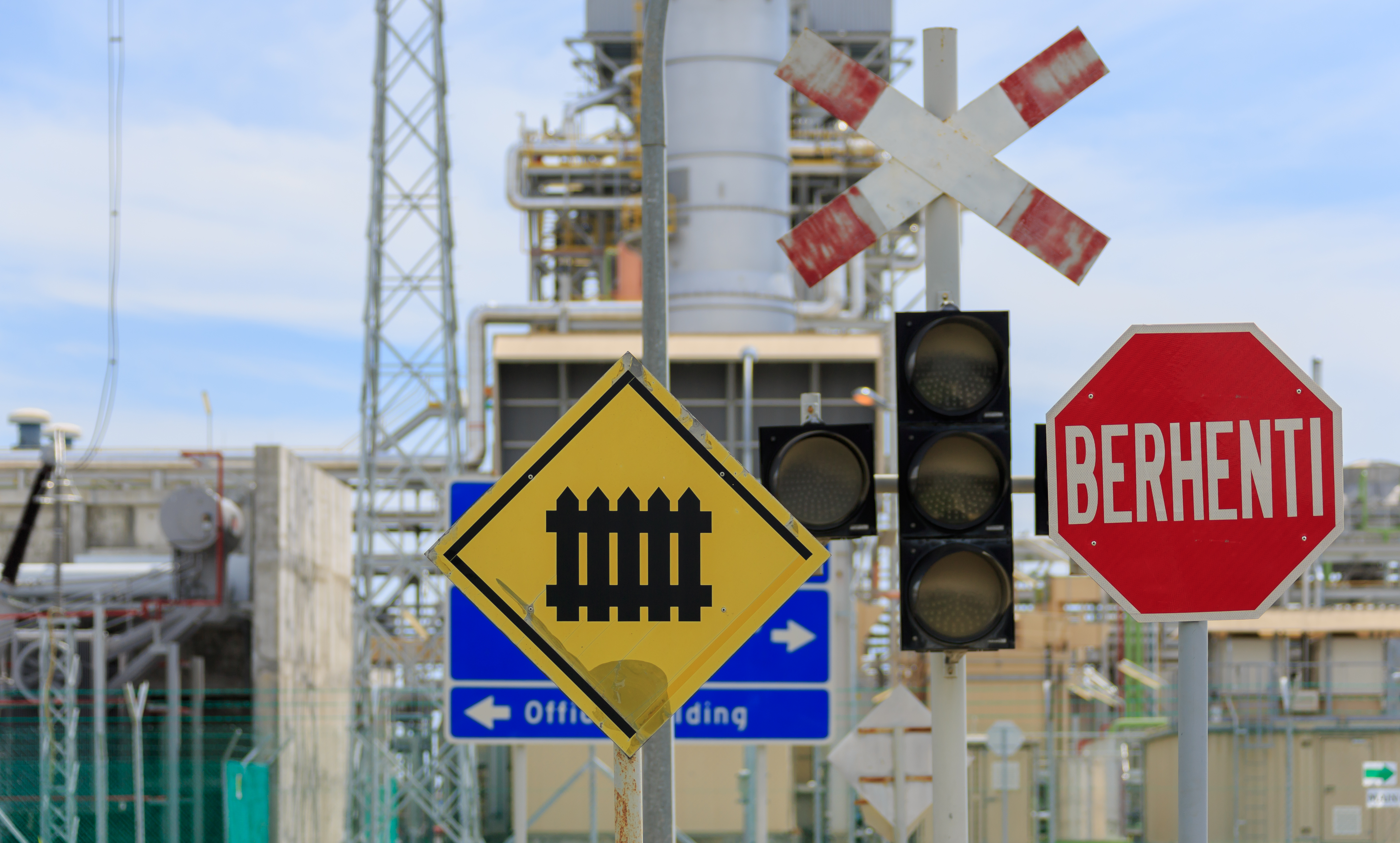
Malay is spoken in Brunei, Indonesia, Malaysia, Timor-Leste, Singapore, southeastern Philippines and southern Thailand. Indonesian is the national language in Indonesia by Article 36 of the 1945 Constitution of the Republic of Indonesia, while "Malay" (bahasa Melayu) has been recognised as the ethnic languages of Malay in Indonesia alongside Malay-based trade and creole languages and other ethnic languages. Malaysia and Singapore use a common standard Malay.{{Cite book
Bahasa Indonesia (Indonesian) exercises in the development of Malay as an international language as well as a language of science. The VOA and BBC use Indonesian as one of their standard language for broadcasting. In Australia, Indonesian is one of three Asian target languages, together with Japanese and Mandarin, taught in some schools as part of the Languages Other Than English programme. Indonesian has been taught in Australian schools and universities since the 1950s. Indonesian has been recognised as an official language of the General Conference of UNESCO since 2023.
Phonology
Main article: Malay phonology
Consonants
The consonants of Malaysian and also Indonesian are shown below. Non-native consonants that only occur in borrowed words, principally from Arabic, Dutch and English, are shown in brackets.
| Labial | Dental/ | ||||||||||||||
|---|---|---|---|---|---|---|---|---|---|---|---|---|---|---|---|
| Alveolar | Postalv./ | ||||||||||||||
| Palatal | Velar | Glottal | Nasal | Stop/ | |||||||||||
| Affricate | voiceless | voiced | Fricative | voiceless | voiced | Approximant | semivowel | lateral | Trill | ||||||
| () | |||||||||||||||
| () | () | () | |||||||||||||
| () | () | () |
Orthographic note: The sounds are represented orthographically by their symbols as above, except:
- is 'z', the same as the sound (only occurs in Arabic loanwords originally containing the sound, but the writing is not distinguished from Arabic loanwords with sound, and this sound must be learned separately by the speakers).
- is 'ny'; 'n' before 'c' and 'j'
- is 'ng'
- is represented as 's', the same as the sound (only occurs in Arabic loanwords originally containing the sound, but the writing is not distinguished from Arabic loanwords with sound, and this sound must be learned separately by the speakers). Previously (before 1972), this sound was written 'th' in Standard Malay (not Indonesian)
- the glottal stop is final 'k' or an apostrophe ' (although some words have this glottal stop in the middle, such as rakyat)
- is 'c'
- is 'j'
- is 'sy'
- is 'kh'
- is 'y'
- is 'k'
Loans from Arabic:
- Phonemes which occur only in Arabic loans may be pronounced distinctly by speakers who know Arabic. Otherwise they tend to be replaced with native sounds.
| Distinct | Assimilated | Example |
|---|---|---|
| , | *khabar, kabar* "news" | |
| , | *redha, rela* "good will" | |
| , | *lohor, zuhur* "noon (prayer)" | |
| , | *ghaib, raib* "hidden" | |
| *saat, sa'at* "second (time)" | ||
| Selasa "Tuesday" | ||
| makam "grave" |
Vowels
Malay originally had four vowels, but in many dialects today, including Standard Malay, it has six, with split into and split into . Many words are commonly pronounced variably, with either or , and relatively few words require a mid vowel .
| Front | Central | Back | Close | Mid | Open |
|---|
Orthographic note: both and are written with . Orthographic are relatively rare, so the letter usually represents . There are some homographs; for example, perang is used for both "war" and "blond". (In Indonesia, "blond" is written as pirang instead of perang.)
Some analyses regard as diphthongs. However, and can only occur in open syllables, such as cukai ("excise") and pulau ("island"). Words with a phonetic diphthong in a closed syllable, such as baik ("good") and laut ("sea"), are actually two syllables. An alternative analysis therefore treats the phonetic diphthongs , and as a sequence of a monophthong plus an approximant: , and respectively.
There is a rule of vowel harmony: the non-open vowels in bisyllabic words must agree in height, so hidung ("nose") is allowed but *hedung is not.
| Example | Standard Pronunciation | Indonesian–*Baku* | *Johor–Riau* (*Piawai*) | Northern Peninsular |
|---|---|---|---|---|
| ⟨a⟩ in final open syllable | ⟨keret**a**⟩ | /a/ | /ə/ | /a/ |
| ⟨i⟩ in final closed syllable with final ⟨n⟩ and ⟨ng⟩ | ⟨kamb**i**ng⟩ | /i/ | /e/ | /i/ |
| ⟨i⟩ in final closed syllable with other final consonants | ⟨it**i**k⟩ | /i/ | /e/ | /e/ |
| ⟨u⟩ in final closed syllable with final ⟨n⟩ and ⟨ng⟩ | ⟨tah**u**n⟩ | /u/ | /o/ | /u/ |
| ⟨u⟩ in final closed syllable with other final consonants | ⟨lump**u**r⟩ | /u/ | /o/ | /o/ |
| final ⟨r⟩ | ⟨lumpu**r**⟩ | /r/ | silent | /r/ |
Study by Uri Tadmor which was published in 2003 shows that mutation of ⟨a⟩ in final open syllable is an areal feature. Specifically, it is an areal feature of Western Austronesia. Uri Tadmor classify those types into four groups as below.
| Types | Phonemes | "Malay" homeland | Native languages area |
|---|---|---|---|
| [a] (origin) | [a] | Kedah, Brunei | Arekan (eg. Tengger), Sarawak, Sabah, Kalimantan (except Pontianak), East Indonesia |
| Raised | [ə], [ɨ] | Johor, Pontianak, Tanah Abang (Jakarta) | Bali |
| Rounded | [o], [ɔ] | Pattani, Palembang | Minangkabau, Mataraman (eg. Yogyakarta) |
| Fronted | [ɛ], [e] | Perak, Jakarta, Sambas |
Grammar
Main article: Malay grammar
Malay is an agglutinative language, and new words are formed by three methods: attaching affixes onto a root word (affixation), formation of a compound word (composition), or repetition of words or portions of words (reduplication). Nouns and verbs may be basic roots, but frequently they are derived from other words by means of prefixes, suffixes and circumfixes.
Malay does not make use of grammatical gender, and there are only a few words that use natural gender; the same word is used for 'he' and 'she' which is dia or for 'his' and 'her' which is dia punya. There is no grammatical plural in Malay either; thus orang may mean either 'person' or 'people'. Verbs are not inflected for person or number, and they are not marked for tense; tense is instead denoted by time adverbs (such as 'yesterday') or by other tense indicators, such as sudah 'already' and belum 'not yet'. On the other hand, there is a complex system of verb affixes to render nuances of meaning and to denote voice or intentional and accidental moods.
Malay does not have a grammatical subject in the sense that English does. In intransitive clauses, the noun comes before the verb. When there is both an agent and an object, these are separated by the verb (OVA or AVO), with the difference encoded in the voice of the verb. OVA, commonly but inaccurately called "passive", is the basic and most common word order.
Vocabulary
Main article: List of loanwords in Malay, List of loanwords in Indonesian
The Malay language has many words borrowed from Arabic (in particular religious terms), Sanskrit, Tamil, certain Sinitic languages, Persian (due to historical status of Malay Archipelago as a trading hub), and more recently, Portuguese, Dutch and English (in particular many scientific and technological terms). Indonesian has inclination toward Sanskrit in formulation of new words due to extensive Javanese and Balinese speaking community, while Malaysian and Bruneian Malay prefer Arabic as source for neologism due to acceptance of Islamic Arabic practices. Arabic in Indonesian tends to reside in (Islamic) religious sphere. The presence of Sanskritised neologism in Malaysian and Bruneian Malay is a result of "importation" from Indonesian. Terminology for various subjects such as administration, business, and law was derived from the languages of respective colonial master, those are Dutch for Indonesian and English for Malaysian and Bruneian Malay. Although the rule for scientific terms development is agreed, the result can be differ because of (1) the difference in traditional vocabulary (such as Dutch vs English and Sanskritic Javanese vs Arabised Malay) and (2) the loan-shift difference on semantics and grammatical feature choice. The divergence between Indonesian and "Standard" Malay are systemic in nature and, to a certain extent, contribute to the way the two sets of speakers understand and react to the world, and are more far reaching with a discernible cognitive gap than the difference between dialects.
Varieties and related languages
Main article: Malayic languages, Malay trade and creole languages
There is a group of closely related languages spoken by Malays and related peoples across Brunei, Indonesia, Malaysia, Singapore, Southern Thailand, Timor-Leste, and the far southern parts of the Philippines. They have traditionally been classified as Malay, Para-Malay, and Aboriginal Malay, but this reflects geography and ethnicity rather than a proper linguistic classification. The Malayic languages are mutually intelligible to varying extents, though the distinction between language and dialect is unclear in many cases.
Para-Malay includes the Malayic languages of Sumatra. They are: Minangkabau, Central Malay (Bengkulu), Pekal, Talang Mamak, Musi (Palembang), Negeri Sembilan (Malaysia), and Duano’.
Aboriginal Malay are the Malayic languages spoken by the Orang Asli (Proto-Malay) in Malaya. They are Jakun, Orang Kanaq, Orang Seletar, and Temuan.
The other Malayic languages, included in neither of these groups, are associated with the expansion of the Malays across the archipelago. They include Riau-Johor Malay (Malaysian and Indonesian), Kedah Malay, Brunei Malay, Berau Malay, Bangka Malay, Jambi Malay, Kutai Malay, Terengganu Malay, Riau Malay, Loncong, Pattani Malay, Bacan Malay, and Banjarese. Menterap may belong here.
There are also several Malay-based creole languages, such as Betawi Malay, Cocos Malay, Makassar Malay, Ambonese Malay, Dili Malay, Kupang Malay, Manado Malay, Papuan Malay, Thousand Islands Malay, Larantuka Malay, Alor Malay, Balinese Malay, Sri Lankan Malay and Sabah Malay, which may be more or less distinct from standard (Malaccan) Malay.
Due to the early settlement of a Cape Malay community in Cape Town, who are now known as Coloureds, numerous Classical Malay words were brought into Afrikaans.
Usages
The extent to which Malay and related Malayan languages are used in the countries where it is spoken varies depending on historical and cultural circumstances. Malay is the national language in Malaysia by Article 152 of the Constitution of Malaysia, and became the sole official language in West Malaysia in 1968, and in East Malaysia gradually from 1974. English continues, however, to be widely used in professional and commercial fields and in the superior courts. Other minority languages are also commonly used by the country's large ethnic minorities. The situation in Brunei is similar to that of Malaysia.
In Singapore, Malay was historically the lingua franca among people of different nationalities. Although this has largely given way to English, Malay still retains the status of national language and the national anthem, Majulah Singapura, is entirely in Malay. In addition, parade commands in the military, police and civil defence are given only in Malay.
Most residents of the five southernmost provinces of Thailand—a region that, for the most part, used to be part of an ancient Malay kingdom called Pattani—speak a dialect of Malay called Yawi (not to be confused with Jawi), which is similar to Kelantanese Malay, but the language has no official status or recognition.
Owing to earlier contact with the Philippines, Malay words—such as dalam hati (sympathy), luwalhati (glory), tengah hari (midday), sedap (delicious)—have evolved and been integrated into Tagalog and other Philippine languages. This linguistic exchange reflects broader patterns of cultural interaction and mutual influence that have contributed to shared concepts of social values and inclusion within Philippine society.
By contrast, Indonesian has successfully become the lingua franca for its disparate islands and ethnic groups, in part because the colonial language, Dutch, is no longer commonly spoken. (In East Timor, which was governed as a province of Indonesia from 1976 to 1999, Indonesian is widely spoken and recognized under its Constitution as a 'working language'.)
Besides Indonesian, which developed from the Riau Malay dialect, there are many Malay varieties spoken in Indonesia; they are divided into western and eastern groups. Western Malay dialects are predominantly spoken in Sumatra and Borneo, which itself is divided into Bornean and Sumatran Malay; some of the most widely spoken Sumatran Malay dialects are Riau Malay, Langkat, Palembang Malay and Jambi Malay. Minangkabau, Kerinci and Bengkulu are believed to be Sumatran Malay descendants. Meanwhile, the Jakarta dialect (known as Betawi) also belongs to the western Malay group.
The eastern varieties, classified either as dialects or creoles, are spoken in the eastern part of the Malay or Nusantara archipelago and include Makassar Malay, Manado Malay, Ambonese Malay, North Moluccan Malay, Kupang Malay, Dili Malay, and Papuan Malay.
The differences among both groups are quite observable. For example, the word kita means 'we, us' in western, but means 'I, me' in Manado, whereas 'we, us" in Manado is torang and Ambon katong (originally abbreviated from Malay kita orang 'we people'). Another difference is the lack of possessive pronouns (and suffixes) in eastern dialects. Manado uses the verb pe and Ambon pu (from Malay punya 'to have') to mark possession. So 'my name' and 'our house" are translated in western Malay as namaku and rumah kita but kita pe nama and torang pe rumah in Manado and beta pu nama, katong pu rumah in Ambon dialect.
The pronunciation may vary in western dialects, especially the pronunciation of words ending in the vowel 'a'. For example, in some parts of Malaysia and in Singapore, kita (inclusive 'we, us, our') is pronounced as , in Kelantan and Southern Thailand as , in Riau as , in Palembang as , in Betawi and Perak as and in Kedah and Perlis as /kitɑ/.
Batavian and eastern dialects are sometimes regarded as Malay creole, because the speakers are not ethnically Malay.
Examples
Despite that statement of "all Malay speakers should be able to understand either of the translations below, which differ mostly in their choice of wording," the divergence between Indonesian and "Standard" Malay are systemic in nature and, to a certain extent, contribute to the way the two sets of speakers understand and react to the world, and are more far reaching with a discernible cognitive gap than the difference between dialects. The words for 'article', pasal and perkara, and for 'declaration', pernyataan and perisytiharan, are specific to the Indonesian and Malaysian standards, respectively, but otherwise all the words are found in both (and even those words may be found with slightly different meanings).
| English | Malay–Indonesian | IndonesianStandard named as stated in: | Standard "Malay"The other language standard aside from "Indonesian" is named simply as "Malay", as stated in: |
|---|---|---|---|
| **Universal Declaration of Human Rights** | **Pernyataan Umum tentang Hak Asasi Manusia** | ||
| (General Declaration about Human Rights) | **Perisytiharan Hak Asasi Manusia Sejagat** | ||
| (Universal Declaration of Human Rights) | |||
| **Article 1** | **Pasal 1** | **Perkara 1** | |
| All human beings are born free and equal in dignity and rights. They are endowed with reason and conscience and should act towards one another in a spirit of brotherhood. | *Semua orang dilahirkan merdeka dan mempunyai martabat dan hak-hak yang sama. Mereka dikaruniai akal dan hati nurani dan hendaknya bergaul satu sama lain dalam semangat persaudaraan.* | *Semua manusia dilahirkan bebas dan sama rata dari segi maruah dan hak-hak. Mereka mempunyai pemikiran dan perasaan hati dan hendaklah bertindak di antara satu sama lain dengan semangat persaudaraan.* | |
| (All human beings are born free and have the same dignity and rights. They are endowed with reason and conscience and should get along with each other in a spirit of brotherhood.) | (All human beings are born free and are equal in dignity and rights. They have thoughts and feelings and should get along with a spirit of brotherhood.) |
Notes
References
References
- Uli, Kozok. (10 March 2012). "How many people speak Indonesian". University of Hawaii at Manoa.
- Uri Tadmor. (2008). "Grammatical Borrowing in Cross-Linguistic Perspective". Walter de Gruyter.
- (26 August 2008). "Kedah MB defends use of Jawi on signboards". [[The Star (Malaysia).
- Dahlan, H. Abdullah Zaini. Kitabati, Practical Methods for Learning to Read & Write Pegon (Kitabati, Metode Praktis Belajar Membaca & Menulis Pegon). Zaini Press. Accessed April 19, 2023. [https://ia903106.us.archive.org/22/items/etaoin/Kitabati.pdf https://ia903106.us.archive.org/22/items/etaoin/Kitabati.pdf].
- Estuningtiyas, Retna Dwi. (2021-05-02). "Rijal Dakwah: KH. Abdullah Syafi'ie (1910-1985)". The International Journal of Pegon: Islam Nusantara Civilization.
- "East Timor Languages".
- {{cite LPD. 3
- Lowenberg, Peter. (1988). "With Forked Tongues: What are National Languages Good For?". Karoma.
- 10 million in Malaysia as either "Malay" or "[[Malaysian language. Indonesian]]", etc.
- Wardhana, Dian Eka Chandra. (2021). "Indonesian as the Language of ASEAN During the New Life Behavior Change 2021". Journal of Social Work and Science Education.
- Asmah Haji Omar. (1992). "Malay as a pluricentric language Pluricentric Languages: Differing Norms in Different Nations". Mouton de Gruyte.
- Blust, Robert. (2013). "The Austronesian Languages". Australian National University.
- Tadmor, Uri. (2009). "The World's Major Languages". Routledge.
- {{harvp. Adelaar. 2004
- Andaya, Leonard Y.. (2001). "The Search for the 'Origins' of Melayu". Journal of Southeast Asian Studies.
- "Languages of Indonesia (Sumatra)".
- [http://www.bernama.com/bernama/v3/bm/news.php?id=294230 Penggunaan Istilah Bahasa Malaysia Dan Bukan Bahasa Melayu Muktamad, Kata Zainuddin]. BERNAMA, 5 November 2007
- (1996). "Atlas of Languages of Intercultural Communication in the Pacific, Asia, and the Americas: Vol I: Maps. Vol II: Texts". Walter de Gruyter.
- (15 September 2007). "Bahasa Melayu Kuno". Bahasa-malaysia-simple-fun.com.
- [http://sea.lib.niu.edu/lang/malay.html Southeast Asia Digital Library: About Malay] {{webarchive. link. (16 June 2007)
- Surakhman, M. Ali. (23 October 2017). "Undang-Undang Tanjung Tanah: Naskah Melayu Tertua di Dunia".
- Sneddon, James N.. (2003). "The Indonesian Language: Its History and Role in Modern Society". UNSW Press.
- Adelaar, K. Alexander. (1999). "Malay: A short history". South Pacific Journal of Psychology.
- Sneddon, James N.. (2003). "The Indonesian Language: Its History and Role in Modern Society". UNSW Press.
- ''[[Ethnologue]]'' 16 classifies them as distinct languages, ISO3 ''kxd'' and ''meo'', but states that they "are so closely related that they may one day be included as dialects of Malay".
- "Malay (Bahasa Melayu)".
- (24 October 2010). "Malay Can Be 'Language of ASEAN'". brudirect.com.
- Omar, Asmah Haji. (1971). "Standard Language and the Standardization of Malay". Anthropological Linguistics.
- "Voice of America Bahasa Indonesia". [[Voice of America]].
- "Languages: News and Analysis in your Language". [[BBC World Service]].
- (10 June 2009). "Building an Asia-literate Australia: an Australian strategy for Asian language proficiency". Australian Policy Online.
- (September 2025). "Indonesian".
- (2011). "Standard Malay (Brunei)". Journal of the International Phonetic Association.
- (2008). "Tatabahasa Dewan". [[Dewan Bahasa dan Pustaka]].
- Hassan, Abdullah. (1972). "The Morphology of Malay". University of Edinburgh.
- (2008). "Indonesian". Journal of the International Phonetic Association.
- Asmah Haji, Omar. (1985). "Susur galur bahasa Melayu". Dewan Bahasa dan Pustaka.
- (1993). "Fonologi generatif: teori dan penerapan". Dewan Bahasa dan Pustaka.
- Clynes, Adrian. (1997). "On the Proto-Austronesian "Diphthongs"". Oceanic Linguistics.
- Adelaar, K. A.. (1992). "Proto Malayic: the reconstruction of its phonology and parts of its lexicon and morphology". Pacific Linguistics.
- Abu Bakar, Mukhlis. (2019-12-18). "Sebutan Johor-Riau dan Sebutan Baku dalam Konteks Identiti Masyarakat Melayu Singapura". Issues in Language Studies.
- Uri, Tadmor. (2003). "Final /a/ mutation: a borrowed areal feature in Western Austronesia". Pacific Linguistics, The Australian National University.
- Omar, Asmah Haji. (2008). "MABBIM and the development of Malay minimizing geopolitical divergences". Malay/Indonesian as a Language of Knowledge and Practical Communication: Appraisal, Challenges and the Future.
- ''Ethnologue'' 16 also lists Col, Haji, Kaur, Kerinci, Kubu, Lubu'.
- "Bahasa Melayu Riau dan Bahasa Nasional". Melayu Online.
This article was imported from Wikipedia and is available under the Creative Commons Attribution-ShareAlike 4.0 License. Content has been adapted to SurfDoc format. Original contributors can be found on the article history page.
Ask Mako anything about Malay language — get instant answers, deeper analysis, and related topics.
Research with MakoFree with your Surf account
Create a free account to save articles, ask Mako questions, and organize your research.
Sign up freeThis content may have been generated or modified by AI. CloudSurf Software LLC is not responsible for the accuracy, completeness, or reliability of AI-generated content. Always verify important information from primary sources.
Report