From Surf Wiki (app.surf) — the open knowledge base
Magnesite
Type of mineral
Type of mineral
| Field | Value |
|---|---|
| name | Magnesite |
| category | Carbonate mineral |
| image | Magnesite-121892.jpg |
| imagesize | 260px |
| caption | Magnesite crystals from Brazil (11.4 × 9.2 × 3.6 cm) |
| formula | MgCO3 |
| IMAsymbol | Mgs |
| strunz | 5.AB.05 |
| system | Trigonal |
| class | Hexagonal scalenohedral (m) |
| H-M symbol: ( 2/m) | |
| symmetry | *R*c |
| color | Colorless, white, pale yellow, pale brown, faintly pink, lilac-rose |
| habit | Usually massive, rarely as rhombohedrons or hexagonal prisms |
| cleavage | [101] perfect |
| fracture | Conchoidal |
| tenacity | Brittle |
| mohs | 3.5–4.5 |
| luster | Vitreous |
| refractive | nω=1.508 – 1.510 nε=1.700 |
| opticalprop | Uniaxial (−) |
| birefringence | 0.191 |
| streak | white |
| gravity | 3.0–3.2 |
| fusibility | infusible |
| solubility | Effervesces in hot HCl |
| diaphaneity | Transparent to translucent |
| other | May exhibit pale green to pale blue fluorescence and phosphorescence under UV; triboluminescent |
| references |
H-M symbol: ( 2/m)
Magnesite is a mineral with the chemical formula (magnesium carbonate). Iron, manganese, cobalt, and nickel may occur as admixtures, but only in small amounts. Magnesite occurs naturally in both cryptocrystalline and crystalline forms depending on the conditions of formation.
Magnesite is used in the production of magnesium oxide for the refractory lining of kilns and furnaces, as well as artistically in jewelry and sculpture. Since it may be formed by carbonation of magnesium serpentine, there have also been efforts to use magnesite for carbon sequestration.
Occurrence
Magnesite occurs as veins in and an alteration product of ultramafic rocks, serpentinite and other magnesium rich rock types in both contact and regional metamorphic terrains. These magnesites are often cryptocrystalline and contain silica in the form of opal or chert.
Magnesite is also present within the regolith above ultramafic rocks as a secondary carbonate within soil and subsoil, where it is deposited as a consequence of dissolution of magnesium-bearing minerals by carbon dioxide in groundwaters.[[File:Two_types_of_magnesite.jpg|thumb|339x339px|Difference between cryptocrystalline and crystalline magnesite.]]
Crystalline and cryptocrystalline magnesites have very different mineral structures. While crystalline magnesite has a well developed crystal structure, the cryptocrystalline magnesite is amorphous- mostly aggregate of fine grains.
Formation
Magnesite can be formed via talc carbonate metasomatism of peridotite and other ultramafic rocks. Magnesite is formed via carbonation of olivine in the presence of water and carbon dioxide at elevated temperatures and high pressures typical of the greenschist facies.
Magnesite can also be formed via the carbonation of magnesium serpentine (lizardite) via the following reaction: :2 Mg3Si2O5(OH)4 + 3 CO2 → Mg3Si4O10(OH)2 + 3 MgCO3 + 3 H2O
However, when performing this reaction in the laboratory, the trihydrated form of magnesium carbonate (nesquehonite) will form at room temperature. This very observation led to the postulation of a "dehydration barrier" being involved in the low-temperature formation of anhydrous magnesium carbonate. Laboratory experiments with formamide, a liquid resembling water, have shown how no such dehydration barrier can be involved. The fundamental difficulty to nucleate anhydrous magnesium carbonate remains when using this non-aqueous solution. Not cation dehydration, but rather the spatial configuration of carbonate anions creates the barrier in the low-temperature nucleation of magnesite.
Magnesite has been found in modern sediments, caves and soils. Its low-temperature (around 40 C) formation is known to require alternations between precipitation and dissolution intervals. The low-temperature formation of magnesite might well be of significance toward large-scale carbon sequestration. A major step forward toward the industrial production of magnesite at atmospheric pressure and a temperature of 316 K was described by Vandeginste. In those experiments small additions of hydrochloric acid alternated periodically with additions of sodium carbonate solution. New was also the very short duration of only a few hours for the alternating dissolution and precipitation cycles.
Magnesite was detected in meteorite ALH84001 and on planet Mars itself. Magnesite was identified on Mars using infrared spectroscopy from satellite orbit. Near Jezero Crater, Mg-carbonates have been detected and reported to have formed in lacustrine environment prevailing there. Controversy still exists over the temperature of formation of these carbonates. Low-temperature formation has been suggested for the magnesite from the Mars-derived ALH84001 meteorite.
Magnesium-rich olivine (forsterite) favors production of magnesite from peridotite. Iron-rich olivine (fayalite) favors production of magnetite-magnesite-silica compositions.
Magnesite can also be formed by way of metasomatism in skarn deposits, in dolomitic limestones, associated with wollastonite, periclase, and talc.
Resistant to high temperature and able to withstand high pressure, magnesite has been proposed to be one of the major carbonate bearing phase in Earth's mantle and possible carriers for deep carbon reservoirs. For similar reason, it is found in metamorphosed peridotite rocks in Central Alps, Switzerland and high pressure eclogitic rocks from Tianshan, China.
Magnesite can also precipitate in lakes in presence of bacteria either as hydrous Mg-carbonates or magnesite.
Isotopic evidence
Clumped isotopes have been used in interpreting conditions of magnesite formation and the isotopic composition of the precipitating fluid. Within ultramafic complexes, magnesites are found within veins and stockworks in cryptocrystalline form as well as within carbonated peridotite units in crystalline form. These cryptocrystalline forms are mostly variably weathered and yield low temperature of formation. On the other hand, coarse magnesites yield very high temperature indicating hydrothermal origin. It is speculated that coarse high temperature magnesites are formed from mantle derived fluids whereas cryptocrystalline ones are precipitated by circulating meteoric water, taking up carbon from dissolved inorganic carbon pool, soil carbon and affected by disequilibrium isotope effects.
Magnesites forming in lakes and playa settings are in general enriched in heavy isotopes of C and O because of evaporation and CO2 degassing. This reflects in the clumped isotope derived temperature being very low. These are affected by pH effect, biological activity as well as kinetic isotope effect associated with degassing. Magnesite forms as surface moulds in such conditions but more generally occur as hydrous Mg-carbonates since their precipitation is kinetically favored. Most of the times, they derive C from DIC or nearby ultramafic complexes (e.g., Altin Playa, British Columbia, Canada).
Magnesites in metamorphic rocks, on the other hand, indicate very high temperature of formation. Isotopic composition of parental fluid is also heavy- generally metamorphic fluids. This has been verified by fluid inclusion derived temperature as well as traditional O isotope thermometry involving co-precipitating quartz-magnesite.
Often, magnesite records lower clumped isotope temperature than associated dolomite, calcite. The reason might be that calcite, dolomite form earlier at higher temperature (from mantle like fluids) which increases Mg/Ca ratio in the fluid sufficiently so as to precipitate magnesite. As this happens with increasing time, fluid cools, evolves by mixing with other fluids and when it forms magnesite, it decreases its temperature. So the presence of associated carbonates have a control on magnesite isotopic composition.
Origin of Martian carbonates can be deconvolved with the application of clumped isotope. Source of the CO2, climatic-hydrologic conditions on Mars could be assessed from these rocks. Recent study has shown (implementing clumped isotope thermometry) that carbonates in ALH84001 indicate formation at low temperature evaporative condition from subsurface water and derivation of CO2 from Martian atmosphere.
Uses
Refractory material

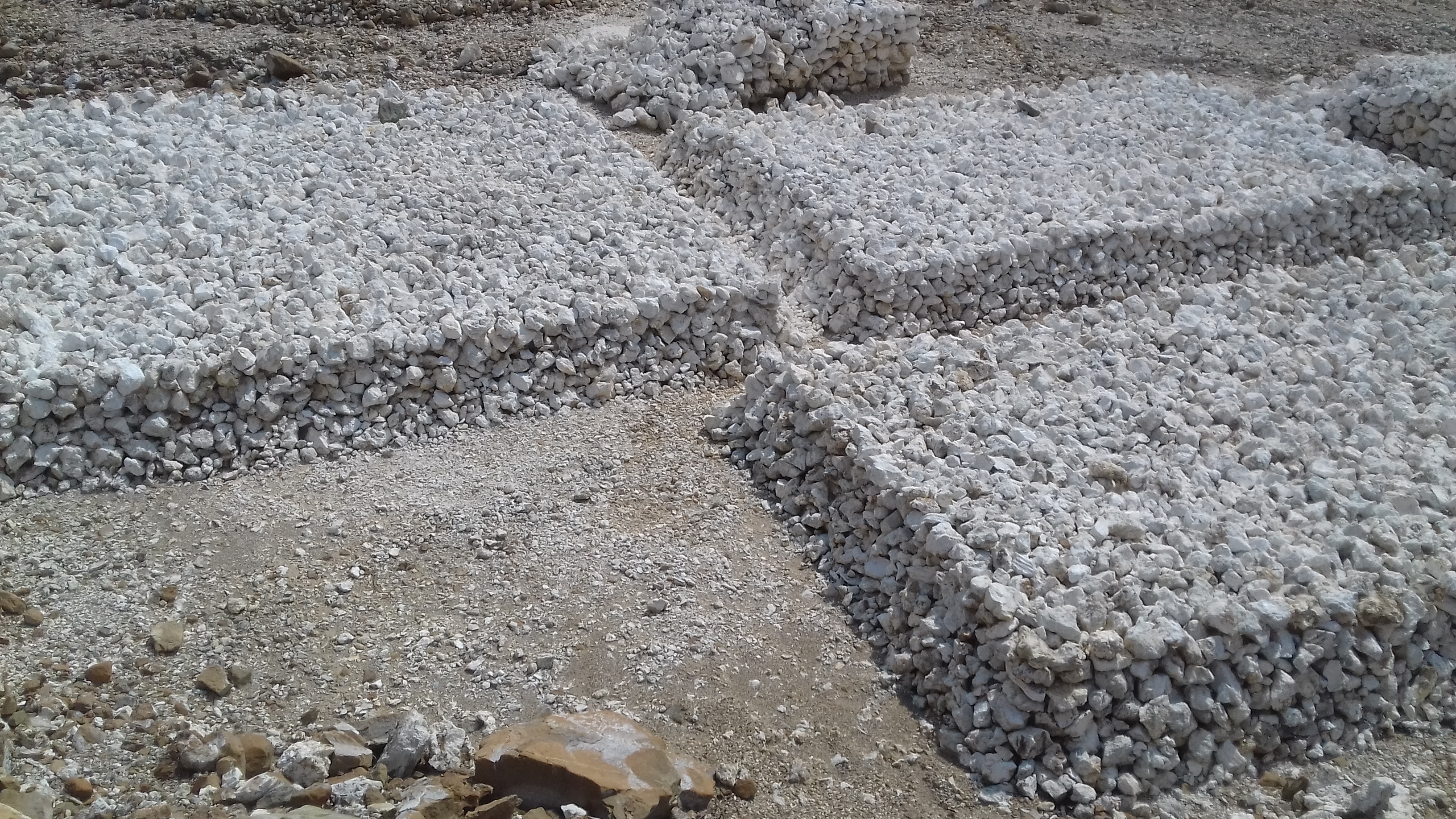
Similar to the production of lime, magnesite can be burned in the presence of charcoal to produce MgO, which, in the form of a mineral, is known as periclase. Large quantities of magnesite are burnt to make magnesium oxide: an important refractory (heat-resistant) material used as a lining in blast furnaces, kilns and incinerators.
Calcination temperatures determine the reactivity of resulting oxide products and the classifications of light burnt and dead burnt refer to the surface area and resulting reactivity of the product (this is typically determined by an industry metric of the iodine number).
'Light burnt' product generally refers to calcination commencing at 450 °C and proceeding to an upper limit of 900 °C – which results in good surface area and reactivity.
Above 900 °C, the material loses its reactive crystalline structure and reverts to the chemically inert 'dead-burnt' product- which is preferred for use in refractory materials such as furnace linings.
In fire assay, magnesite cupels can be used for cupellation, as the magnesite cupel will resist the high temperatures involved.
Other uses
Magnesite can also be used as a binder in flooring material (magnesite screed). Furthermore, it is being used as a catalyst and filler in the production of synthetic rubber and in the preparation of magnesium chemicals and fertilizers.
Research is proceeding to evaluate the practicality of sequestering the greenhouse gas carbon dioxide in magnesite on a large scale. This has focused on peridotites from ophiolites (obducted mantle rocks on crust) where magnesite can be created by letting carbon dioxide react with these rocks. Some progress has been made in ophiolites from Oman. But the major problem is that these artificial processes require sufficient porosity-permeability so that the fluids can flow but this is hardly the case in peridotites.
Artworks
Magnesite can be cut, drilled, and polished to form beads that are used in jewelry-making. Magnesite beads can be dyed into a broad spectrum of bold colors, including a light blue color that mimics the appearance of turquoise.
The Japanese-American artist Isamu Noguchi used magnesite as a sculptural material for some of his artworks.
Occupational safety and health
People can be exposed to magnesite in the workplace by inhaling it, skin contact, and eye contact.
United States
The Occupational Safety and Health Administration (OSHA) has set the legal limit (permissible exposure limit) for magnesite exposure in the workplace as 15 mg/m3 total exposure and 5 mg/m3 respiratory exposure over an 8-hour workday. The National Institute for Occupational Safety and Health (NIOSH) has set a recommended exposure limit (REL) of 10 mg/m3 total exposure and 5 mg/m3 respiratory exposure over an 8-hour workday.
References
- Smithsonian Rock and Gem
References
- Warr, L.N.. (2021). "IMA–CNMNC approved mineral symbols". Mineralogical Magazine.
- http://rruff.geo.arizona.edu/doclib/hom/magnesite.pdf Handbook of Mineralogy
- http://www.mindat.org/min-2482.html Mindat.org
- http://webmineral.com/data/Magnesite.shtml Webmineral data
- Klein, Cornelis and Cornelius S. Hurlbut, Jr., ''Manual of Mineralogy,'' Wiley, 20th ed., p. 332 {{ISBN. 0-471-80580-7
- Leitmeier, H.(1916): Einige Bemerkungen über die Entstehung von Magnesit und Sideritlagerstätten, ''Mitteilungen der Geologischen Gesellschaft in Wien'', vol.9, pp. 159–166.
- Lippmann, F. (1973): Sedimentary carbonate minerals. Springer Verlag, Berlin, 228 p.
- Xu, J; Yan, C.; Zhang, F.; Konishi, H., Xu, H. & Teng, H. H. (2013): Testing the cation-hydration effect on the crystallization of Ca – Mg- CO3 systems. Proc. Natl. Acad. Sci. US, vol.110 (44), pp.17750-17755.
- Deelman, J.C. (1999): [http://www.jcdeelman.demon.nl/dolomite/files/NeuesJahrbuchMineral.pdf "Low-temperature nucleation of magnesite and dolomite"], ''Neues Jahrbuch für Mineralogie'', Monatshefte, pp. 289–302.
- Alves dos Anjos et al. (2011): Synthesis of magnesite at low temperature. Carbonates and Evaporites, vol.26, pp.213–215. [https://www.researchgate.net/publication/226426989_Synthesis_of_magnesite_at_low_temperature]
- Hobbs, F. W. C. and Xu, H. (2020): Magnesite formation through temperature and pH cycling as a proxy for lagoon and playa environments. Geochimica et Cosmochimica Acta, vol.269, pp.101–116.
- Oelkers, E. H.; Gislason, S. R. and Matter, J. (2008): Mineral carbonation of CO2. Elements, vol.4, pp.333–337.
- V. Vandeginste (2021): Effect of pH cycling and zinc ions on calcium and magnesium carbonate formation in saline fluids at low temperature. Minerals, vol.11, pp.723–734.
- V. Vandeginste, V.; Snell, O.; Hall, M. R.; Steer, E. and Vandeginste, A. (2019): Acceleration of dolomitization by zinc in saline waters. Nature Communications, vol.10, 1851.
- Ehlmann, B. L. et al. (2008): Orbital identification of carbonate-bearing rocks on Mars. Science, vol.322, no.5909, pp.1828–1832.
- (March 2020). "The mineral diversity of Jezero crater: Evidence for possible lacustrine carbonates on Mars". Icarus.
- McSween Jr, H. Y and Harvey, R. P.(1998): An evaporation model for formation of carbonates in the ALH84001 Martian meteorite. International Geology Review, vol.49, pp.774–783.
- Warren, P. H. (1998): Petrologic evidence for low-temperature, possibly flood evaporitic origin of carbonates in the ALH84001 meteorite. Journal of Geophysical Research, vol.103, no.E7, 16759-16773.
- (January 2004). "Stability of magnesite and its high-pressure form in the lowermost mantle". Nature.
- (2016-09-23). "Carbonates at high pressures: Possible carriers for deep carbon reservoirs in the Earth's lower mantle". Physical Review B.
- (2005-04-22). "A New Interpretation of Centimetre-scale Variations in the Progress of Infiltration-driven Metamorphic Reactions: Case Study of Carbonated Metaperidotite, Val d'Efra, Central Alps, Switzerland". Journal of Petrology.
- (July 2002). "Ultra-high pressure metamorphism in western Tianshan, China: Part II. Evidence from magnesite in eclogite". American Mineralogist.
- (2012-01-01). "Magnesium isotope fractionation during hydrous magnesium carbonate precipitation with and without cyanobacteria". Geochimica et Cosmochimica Acta.
- (2013-01-01). "Using Mg Isotopes to Trace Cyanobacterially Mediated Magnesium Carbonate Precipitation in Alkaline Lakes". Aquatic Geochemistry.
- (June 2016). "Paired stable isotopes (O, C) and clumped isotope thermometry of magnesite and silica veins in the New Caledonia Peridotite Nappe". Geochimica et Cosmochimica Acta.
- (June 2019). "Magnesite formation in playa environments near Atlin, British Columbia, Canada". Geochimica et Cosmochimica Acta.
- (2012-06-17). "Coexisting serpentine and quartz from carbonate-bearing serpentinized peridotite in the Samail Ophiolite, Oman". Contributions to Mineralogy and Petrology.
- (2011-10-11). "Carbonates in the Martian meteorite Allan Hills 84001 formed at 18 ± 4 °C in a near-surface aqueous environment". Proceedings of the National Academy of Sciences.
- Information about [http://www.wcdeckwaterproofing.com/what-you-need-to-know-about-magnesite-floors/ magnesite flooring], West Coast Deck Water Proofing
- "Scientists find way to make mineral which can remove CO2 from atmosphere".
- (2011-05-30). "Rates and Mechanisms of Mineral Carbonation in Peridotite: Natural Processes and Recipes for Enhanced, in situ CO2 Capture and Storage". Annual Review of Earth and Planetary Sciences.
- "Ford Fountain for the New York World's Fair".
- "CDC – NIOSH Pocket Guide to Chemical Hazards – Magnesite".
This article was imported from Wikipedia and is available under the Creative Commons Attribution-ShareAlike 4.0 License. Content has been adapted to SurfDoc format. Original contributors can be found on the article history page.
Ask Mako anything about Magnesite — get instant answers, deeper analysis, and related topics.
Research with MakoFree with your Surf account
Create a free account to save articles, ask Mako questions, and organize your research.
Sign up freeThis content may have been generated or modified by AI. CloudSurf Software LLC is not responsible for the accuracy, completeness, or reliability of AI-generated content. Always verify important information from primary sources.
Report