From Surf Wiki (app.surf) — the open knowledge base
Luis Buñuel
Spanish-Mexican filmmaker (1900–1983)
Spanish-Mexican filmmaker (1900–1983)
| Field | Value |
|---|---|
| name | Luis Buñuel |
| image | LuisBuñuel1929.jpg |
| caption | Buñuel in 1929 |
| birth_name | Luis Buñuel Portolés |
| birth_date | |
| birth_place | Calanda, Aragon, Spain |
| death_date | |
| death_place | Mexico City, Mexico |
| nationality | Spanish, Mexican |
| citizenship | |
| alma_mater | University of Madrid |
| spouse | |
| children | 2, including Juan Luis |
| relatives | Diego Buñuel (grandson) |
| years_active | 1929–1977 |
| notable_works | Full list |
| occupation | Filmmaker |
Luis Buñuel Portolés (; 22 February 1900 – 29 July 1983) was a Spanish and MexicanMultiple sources:
- filmmaker who worked in France, Mexico, and Spain. He has been widely considered by many film critics, historians, and directors to be one of the greatest and most influential filmmakers of all time. Buñuel's works are known for their avant-garde surrealism which was also infused with political commentary.
Often associated with the surrealist movement of the 1920s, Buñuel's career spanned the 1920s through the 1970s. He collaborated with prolific surrealist painter Salvador Dalí on Un Chien Andalou (1929) and L'Age d'Or (1930). Both films are considered masterpieces of surrealist cinema. From 1947 to 1960, he honed his skills as a director in Mexico, making grounded and human melodramas such as Gran Casino (1947), Los Olvidados (1950), and Él (1953). Here is where he gained the fundamentals of storytelling.
Buñuel then transitioned into making artful, unconventional, surrealistic, and political satirical films. He earned acclaim with the morally complex arthouse drama film Viridiana (1961) which criticized the Francoist dictatorship. The film won the Palme d'Or at the 1961 Cannes Film Festival. He then criticized political and social conditions in The Exterminating Angel (1962) and The Discreet Charm of the Bourgeoisie (1972), the latter of which won the Academy Award for Best Foreign Language Film. He also directed Diary of a Chambermaid (1964) and Belle de Jour (1967). His final film, That Obscure Object of Desire (1977), earned the National Society of Film Critics Award for Best Director.
Buñuel earned five Cannes Film Festival prizes, two Berlin International Film Festival prizes, a BAFTA Award, and an Academy Award in 1972. Buñuel received numerous honors including National Prize for Arts and Sciences for Fine Arts in 1977, the Moscow International Film Festival Contribution to Cinema Prize in 1979, and the Career Golden Lion in 1982. He was nominated twice for the Nobel Prize in Literature, in 1968 and then in 1972. Seven of Buñuel's films are included in Sight & Sound 2012 critics' poll of the top 250 films of all time. Buñuel's obituary in The New York Times called him "an iconoclast, moralist, and revolutionary who was a leader of avant-garde surrealism in his youth and a dominant international movie director half a century later."
Early life and education
Buñuel was born on 22 February 1900 in Calanda, a small town in the Aragon region of Spain. His father was Leonardo Buñuel, also a native of Calanda, who had left home at age 14 to start a hardware business in Havana, Cuba, ultimately amassing a fortune and returning home to Calanda at the age of 43, in 1898. He married the 18-year-old daughter of the only innkeeper in Calanda, María Portolés Cerezuela. The eldest of seven children, Luis had two brothers, Alfonso and Leonardo, and four sisters: Alicia, Concepción, Margarita and María. He later described his birthplace by saying that in Calanda, "the Middle Ages lasted until World War I".
When Buñuel was four months old, the family moved to Zaragoza, where they were one of the wealthiest families in town. After being kicked and insulted by the study hall proctor before a final exam, Buñuel refused to return to the school. He told his mother he had been expelled, which was not true; in fact, he had received the highest marks on his world history exam. Buñuel finished the last two years of his high school education at the local public school, graduating at the age of 16. Even as a child, Buñuel was something of a cinematic showman; friends from that period described productions in which Buñuel projected shadows on a screen using a magic lantern and a bedsheet. He also excelled at boxing and playing the violin.

Luis Buñuel (top row, right), Madrid, 1923]] In his youth, Buñuel was deeply religious, serving at Mass and taking Communion every day, until, at the age of 16, he grew disgusted with what he perceived as the illogicality of the Church, along with its power and wealth.
In 1917, he attended the University of Madrid, first studying agronomy then industrial engineering and finally switching to philosophy. He developed very close relationships with painter Salvador Dalí and poet Federico García Lorca, among other important Spanish creative artists living in the Residencia de Estudiantes, with the three friends forming the nucleus of the Spanish Surrealist avant-garde, and becoming known as members of "La Generación del 27". Buñuel was especially taken with García Lorca, later writing in his autobiography: We liked each other instantly. Although we seemed to have little in common—I was a redneck from Aragon, and he an elegant Andalusian—we spent most of our time together...We used to sit on the grass in the evenings behind the Residencia (at that time, there were vast open spaces reaching to the horizon), and he would read me his poems. He read slowly and beautifully, and through him I began to discover a wholly new world. Buñuel's relationship with Dalí was somewhat more troubled, being tinged with jealousy over the growing intimacy between Dalí and Lorca and resentment over Dalí's early success as an artist.
Buñuel's interest in films was intensified by a viewing of Fritz Lang's Der müde Tod: "I came out of the Vieux Colombier [theater] completely transformed. Images could and did become for me the true means of expression. I decided to devote myself to the cinema". At the age of 72, Buñuel had not lost his enthusiasm for this film, asking the octogenarian Lang for his autograph.
Career
1925–1930: Early French period
In 1925 Buñuel moved to Paris, where he began work as a secretary in an organization called the International Society of Intellectual Cooperation. He also became actively involved in cinema and theater, going to the movies as often as three times a day. Through these interests, he met a number of influential people, including the pianist Ricardo Viñes, who was instrumental in securing Buñuel's selection as artistic director of the Dutch premiere of Manuel de Falla's puppet-opera El retablo de maese Pedro in 1926.
He decided to enter the film industry and enrolled in a private film school run by Jean Epstein and some associates. Before long, Buñuel was working for Epstein as an assistant director on Mauprat (1926) and La chute de la maison Usher (1928), and also for Mario Nalpas on La Sirène des Tropiques (Siren of the Tropics) (1927), starring Josephine Baker. He appeared on screen in a small part as a smuggler in Jacques Feyder's Carmen (1926).
When Buñuel derisively rejected Epstein's demand that he assist Epstein's mentor, Abel Gance, who was at the time working on the film Napoléon, Epstein dismissed him angrily, saying "How can a little asshole like you dare to talk that way about a great director like Gance?"
After parting with Epstein, Buñuel worked as film critic for La Gaceta Literaria (1927) and Les Cahiers d'Art (1928). He also collaborated with the celebrated writer Ramón Gómez de la Serna on the script for what he hoped would be his first film, "a story in six scenes" called Los caprichos.
''Un Chien Andalou'' (1929)
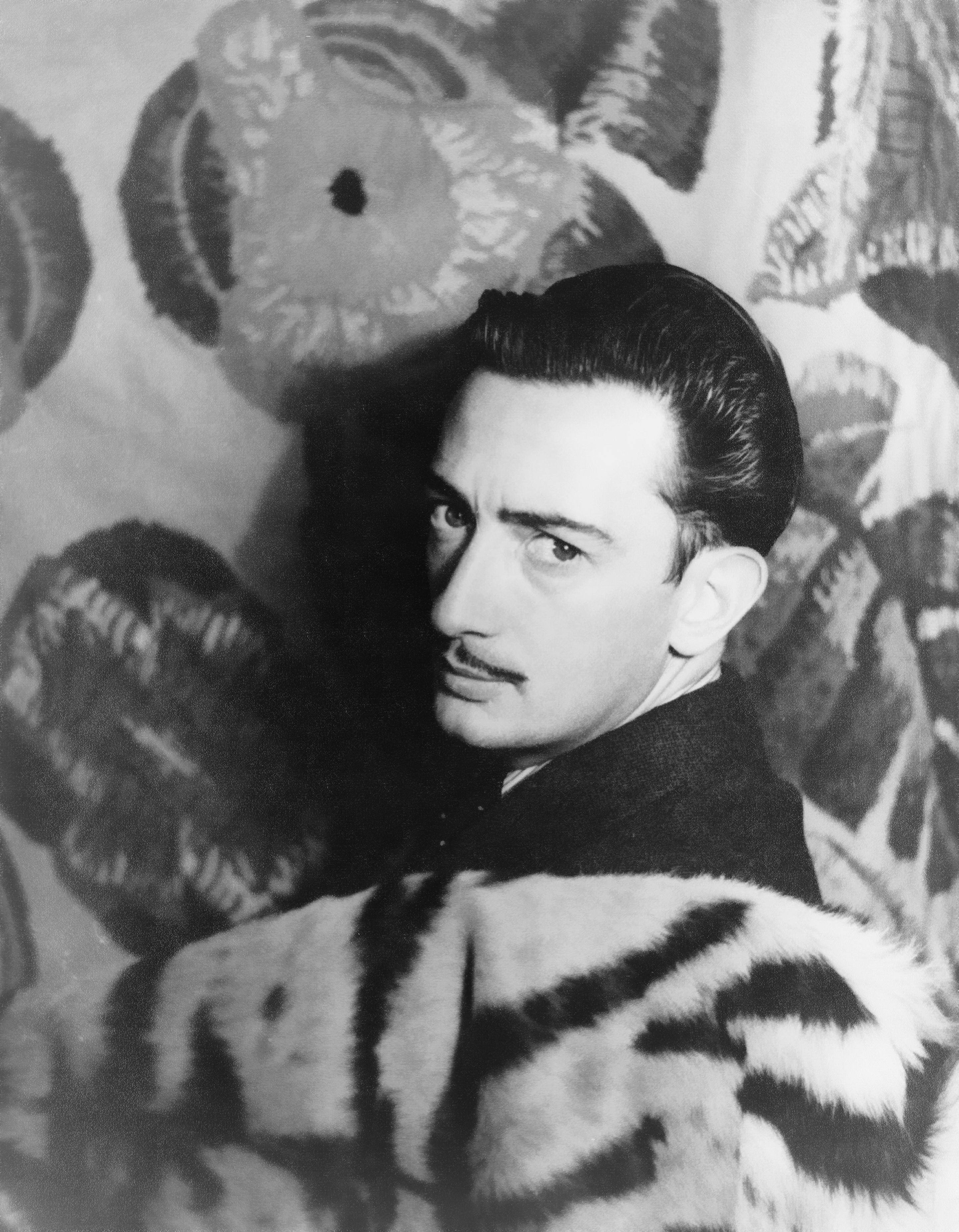
After his apprenticeship with Epstein, Buñuel shot and directed a 16-minute short, Un Chien Andalou, with Salvador Dalí. The film, financed by Buñuel's mother, consists of a series of startling images of a Freudian nature, starting with a woman's eyeball being sliced open with a razor blade. Un Chien Andalou was enthusiastically received by the burgeoning French surrealist movement of the time and continues to be shown regularly in film societies to this day. It has been called "the most famous short film ever made" by critic Roger Ebert.
The script was written in six days at Dalí's home in Cadaqués. In a letter to a friend written in February 1929, Buñuel described the writing process:
We had to look for the plot line. Dalí said to me, 'I dreamed last night of ants swarming around in my hands', and I said, 'Good Lord, and I dreamed that I had sliced somebody or other's eye. There's the film, let's go and make it.'
In deliberate contrast to the approach taken by Jean Epstein and his peers, which was to never leave anything in their work to chance, with every aesthetic decision having a rational explanation and fitting clearly into the whole, Buñuel and Dalí made a cardinal point of eliminating all logical associations. In Buñuel's words: "Our only rule was very simple: no idea or image that might lend itself to a rational explanation of any kind would be accepted. We had to open all doors to the irrational and keep only those images that surprised us, without trying to explain why".
It was Buñuel's intention to outrage the self-proclaimed artistic vanguard of his youth, later saying: "Historically the film represents a violent reaction against what in those days was called 'avant-garde,' which was aimed exclusively at artistic sensibility and the audience's reason." Against his hopes and expectations, the film was a popular success with the very audience he had wanted to insult, leading Buñuel to exclaim in exasperation: "What can I do about the people who adore all that is new, even when it goes against their deepest convictions, or about the insincere, corrupt press, and the inane herd that saw beauty or poetry in something which was basically no more than a desperate impassioned call for murder?"
Although Un Chien Andalou is a silent film, during the original screening (attended by the elite of the Parisian art world), Buñuel played a sequence of phonograph records which he switched manually while keeping his pockets full of stones with which to pelt anticipated hecklers. After the premiere, Buñuel and Dalí were granted formal admittance to the tight-knit community of Surrealists, led by poet André Breton.
''L'Age d'Or'' (1930)
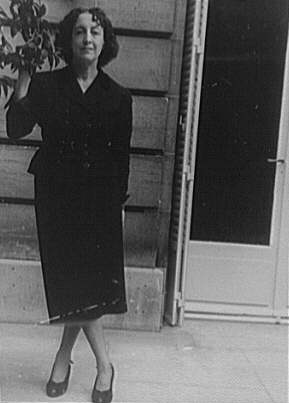
Late in 1929, on the strength of Un Chien Andalou, Buñuel and Dalí were commissioned to make another short film by Marie-Laurie and Charles de Noailles, owners of a private cinema on the Place des États-Unis and financial supporters of productions by Jacques Manuel, Man Ray and Pierre Chenal. At first, the intent was that the new film be around the same length as Un Chien, only this time with sound. But by mid-1930, the film had grown segmentally to an hour's duration. Anxious that it was over twice as long as planned and at double the budget, Buñuel offered to trim the film and cease production, but Noailles gave him the go-ahead to continue the project.
The film, entitled L'Age d'Or, was begun as a second collaboration with Dalí, but, while working on the scenario, the two had a falling out; Buñuel, who at the time had strong leftist sympathies, desired a deliberate undermining of all bourgeois institutions, while Dalí, who eventually supported the Spanish fascist Francisco Franco and various figures of the European aristocracy, wanted merely to cause a scandal through the use of various scatological and anti-Catholic images. The friction between them was exacerbated when, at a dinner party in Cadaqués, Buñuel tried to throttle Dalí's girlfriend, Gala, the wife of Surrealist poet Paul Éluard. In consequence, Dalí had nothing to do with the actual shooting of the film. During the course of production, Buñuel worked around his technical ignorance by filming mostly in sequence and using nearly every foot of film that he shot. Buñuel invited friends and acquaintances to appear, for nothing, in the film; for example, anyone who owned a tuxedo or a party frock got a part in the salon scene.
fr
Concurrent with the succès de scandale, both Buñuel and the film's leading lady, Lya Lys, received offers of interest from Metro-Goldwyn-Mayer and traveled to Hollywood at the studio's expense. While in the United States, Buñuel associated with other celebrity expatriates including Sergei Eisenstein, Josef von Sternberg, Jacques Feyder, Charles Chaplin and Bertolt Brecht. All that was required of Buñuel by his loose-ended contract with MGM was that he "learn some good American technical skills", but, after being ushered off the first set he visited because the star, Greta Garbo, did not welcome intruders, he decided to stay at home most of the time and only show up to collect his paycheck. His only enduring contribution to MGM came when he served as an extra in La Fruta Amarga, a Spanish-language remake of Min and Bill. When, after a few months at the studio, he was asked to watch rushes of Lili Damita to gauge her Spanish accent, he refused and sent a message to studio boss Irving Thalberg stating that he was there as a Frenchman, not a Spaniard, and he "didn't have time to waste listening to one of the whores". He was back in Spain shortly thereafter.
1931–1937: Spain
Spain in the early 1930s was a time of political and social turbulence. Due to both a surge in anti-clerical sentiment and a longrunning desire for retribution for the corruption and malfeasance of the extreme right and their supporters in the church, Anarchists and Radical Socialists sacked monarchist headquarters in Madrid and proceeded to burn down or otherwise wreck more than a dozen churches in the capital. Similar revolutionary acts occurred in many other cities in southern and eastern Spain, in most cases with the acquiescence and occasionally with the assistance of the official Republican authorities.
Buñuel's future wife, Jeanne Rucar, recalled that during that period, "he got very excited about politics and the ideas that were everywhere in pre-Civil War Spain". In the first flush of his enthusiasm, Buñuel joined the Communist Party of Spain (PCE) in 1931,

In 1932, Buñuel was invited to serve as film documentarian for the celebrated Mission Dakar-Djibouti, the first large-scale French anthropological field expedition, which, led by Marcel Griaule, unearthed some 3,500 African artifacts for the new Musée de l'Homme. Although he declined, the project piqued his interest in ethnography. After reading the academic study, Las Jurdes: étude de géographie humaine (1927) by , he decided to make a film focused on peasant life in Las Hurdes, perhaps the poorest comarca in Extremadura, one of Spain's poorest regions. The film, called Las Hurdes: Tierra Sin Pan (1933), was financed on a budget of 20,000 pesetas donated by a working-class anarchist friend named Ramón Acín, who had won the money in a lottery. In the film, Buñuel matches scenes of deplorable social conditions with narration that resembles travelogue commentary delivered by a detached-sounding announcer, while the soundtrack thunders inappropriate music by Brahms.
Las Hurdes was banned by the Second Spanish Republic and then by the Francoist dictatorship. It is a film which continues to perplex viewers and resists easy categorization by film historians. Las Hurdes has been called one of the first examples of mockumentary, and has been labeled a "surrealist documentary", a term defined by critic as "A multi-layered and unnerving use of sound, the juxtaposition of narrative forms already learnt from the written press, travelogues and new pedagogic methods, as well as a subversive use of photographed and filmed documents understood as a basis for contemporary propaganda for the masses". Catherine Russell has stated that in Las Hurdes, Buñuel was able to reconcile his political philosophy with his surrealist aesthetic, with surrealism becoming "a means of awakening a marxist materialism in danger of becoming a stale orthodoxy".
After Las Hurdes in 1933, Buñuel worked in Paris in the dubbing department of Paramount Pictures, but following his marriage in 1934, he switched to Warner Brothers because they operated dubbing studios in Madrid. A friend, , who owned the commercial film company , invited Buñuel to produce films for a mass audience. He accepted the offer, viewing it as an "experiment" as he knew the film industry in Spain was still far behind the technical level of Hollywood or Paris. According to film historian Manuel Rotellar's interviews with members of the cast and crew of the Filmófono studios, Buñuel's only condition was that his involvement with these pictures be completely anonymous, apparently for fear of damaging his reputation as a surrealist. Rotellar insists, however, "the truth is that it was Luis Buñuel who directed the Filmófono productions". are:
* *Don Quintín el amargao* (Don Quintin the Sourpuss), 1935 – a musical based on a play by Carlos Arniches, the first *zarzuela* (a type of Spanish opera) filmed in sound. * *La hija de Juan Simón* (Juan Simón's Daughter), 1935 – another musical and a major commercial success * (Who Loves Me?), 1936 – a sentimental comedy that Buñuel called "my only commercial failure, and a pretty dismal one at that". * *¡Centinela, alerta!*, (Sentry, Keep Watch!), 1937 – a comedy and Filmófono's biggest box-office hit.
During the Spanish Civil War (1936–1939), Buñuel placed himself at the disposal of the Republican government. The minister for foreign affairs sent him first to Geneva (September 1936) and then to Paris for two years (1936–38), with official responsibility for cataloging Republican propaganda films. In August 1936, Federico García Lorca was shot and killed by Nationalist militia. According to his son, Juan Luis, Buñuel rarely talked about Lorca but mourned the poet's untimely death throughout his life.
Buñuel essentially functioned as the coordinator of film propaganda for the Republic, which meant that he was in a position to examine all film shot in the country and decide what sequences could be developed and distributed abroad. The Spanish Ambassador suggested that Buñuel revisit Hollywood where he could give technical advice on films being made there about the Spanish Civil War, Almost immediately upon his arrival in America, however, the war ended and the Motion Picture Producers and Distributors Association of America discontinued making films on the Spanish conflict. According to Buñuel's wife, returning to Spain was impossible since the Fascists had seized power, so Buñuel decided to stay in the U.S. indefinitely, stating that he was "immensely attracted by the American naturalness and sociability".
1938–1945: United States

American countries, commissioned by the Committee on Inter-American Affairs headed by Nelson Rockefeller.]] Returning to Hollywood in 1938, he was befriended by Frank Davis, an MGM producer and member of the Communist Party USA, The project was shelved precipitately when another Hollywood film about the Spanish Civil War, Blockade, was met with disfavor by the Catholic League of Decency. In the words of biographer Ruth Brandon, Buñuel and his family "lived from one unsatisfactory crumb of work to another" because he "had none of the arrogance and pushiness essential for survival in Hollywood". For the most part, he was snubbed by many of the people in the film community whom he met during his first trip to America, although he was able to sell some gags to Chaplin for his film The Great Dictator.
In desperation, to market himself to independent producers, he composed a 21-page autobiography, a section of which, headed "My Present Plans", outlined proposals for two documentary films:
- "The Primitive Man", which would depict "the terrible struggle of primitive man against a hostile universe, how the world appeared, how they saw it, what ideas they had on love, on death, on fraternity, how and why religion is born", [italics in original]
- "Psycho-Pathology", which would "expose the origin and development of different psychopathic diseases...Such a documental film, apart from its great scientific interest, could depict on screen a New Form of Terror or its synonym Humour." [italics in original]
Nobody showed any interest and Buñuel realized that staying in Los Angeles was futile, so he traveled to New York City to see if he could change his fortunes.
In New York City, Antheil introduced Buñuel to Iris Barry, chief curator of film at the Museum of Modern Art (MoMA). The finished product was a compilation of scenes from Riefenstahl's Nazi epic with Hans Bertram's Feuertaufe. While being vetted for the job at the OCIAA, upon being asked if he was a Communist, he replied: "I am a Republican," and, apparently, the interviewer did not realize that Buñuel was referring to the Spanish socialist coalition government, not the American political party.
In 1942, Buñuel applied for American citizenship because he anticipated that MoMA would be put under federal control. News of this reached Archbishop Spellman, who angrily confronted Barry with the question: "Are you aware that you are harbouring in this Museum the Antichrist, the man who made a blasphemous film L'Age d'Or?" At the same time, a campaign on the part of Hollywood, through its industry trade paper, the Motion Picture Herald, to undermine the MoMA film unit resulted in a 66% reduction in the department's budget and Buñuel felt himself compelled to resign. In 1944, he returned to Hollywood for the third time, this time as Spanish Dubbing Producer for Warner Brothers. Buñuel did not carry out the violent part of his plan. Dalí explained himself by saying: "I did not write my book to put YOU on a pedestal. I wrote it to put ME on a pedestal".

Buñuel's first dubbing assignment on returning to Hollywood was My Reputation, a Barbara Stanwyck picture which became El Que Diran in Buñuel's hands. In addition to his dubbing work, Buñuel attempted to develop a number of independent projects:
- In collaboration with an old friend from his Surrealist days, Man Ray, he worked on a scenario called The Sewers of Los Angeles, which took place on a mountain of excrement close to a highway and a dust basin.
- With his friend, José Rubia Barcia, he co-wrote a screenplay called La novia de medianoche (The Midnight Bride), a gothic thriller, which lay dormant until it was filmed by Antonio Simón in 1997.
- He continued working on a screenplay called "Goya and the Duchess of Alba", a treatment he had started as early as 1927, with the actor/producer Florián Rey and cameraman José María Beltrán, and then resuscitated in 1937 as a project for Paramount.
- In his autobiography Mon Dernier soupir (1982, translated in the U.S. as My Last Sigh, 1983, and in the UK as My Last Breath, 1984), Buñuel wrote that, at the request of director Robert Florey, he submitted a treatment of a scene about a disembodied hand, which was later included in the movie The Beast with Five Fingers (1946), starring Peter Lorre, without acknowledgement of Buñuel's contribution or payment of any compensation. However, Brian Taves, film scholar and archivist with the Library of Congress, has challenged the truth of this claim.
In 1945, Buñuel's contract with Warner Brothers expired, and he decided not to renew it in order, as he put it: "to realize my life's ambition for a year: to do nothing". While his family enjoyed themselves at the beach, Buñuel spent much of his time in Antelope Valley with new acquaintances writer Aldous Huxley and sculptor Alexander Calder, from whom he rented a house.
In his autobiography, in a chapter about his second spell in America, Buñuel states that "[o]n several occasions, both American and European producers have suggested that I tackle a film version of Malcolm Lowry's Under the Volcano", but that after reading the book many times as well as eight different screenplays he was unable to come up with a solution for the cinema. The movie was eventually made in 1984 by John Huston.
1946–1953: Mexico
In 1946, an old friend, producer Denise Tual, the widow of Pierre Batcheff, the leading man in Un Chien Andalou, proposed that she and Buñuel adapt Lorca's play La casa de Bernarda Alba for production in Paris. As it turned out, though, before they could both make their way to Europe, they encountered problems in securing the rights from Lorca's family. While in Mexico City, on a stopover, they had asked Óscar Dancigers, a Russian émigré producer active in Mexico, for financing. Dancigers ran an independent production company that specialized in assisting U.S. film studios with on-location shooting in Mexico, but following World War II, he had lost his connection with Hollywood due to his being blacklisted as a Communist. Although Dancigers was not enthusiastic about the Lorca project, he did want to work with Buñuel and persuaded the Spanish director to undertake a totally different project.
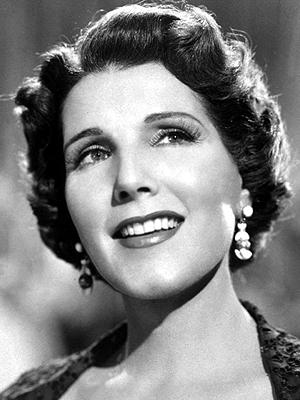
The Golden Age of Mexican cinema was peaking in the mid-to-late 1940s, at just the time Buñuel was connecting with Dancigers. Movies represented Mexico's third largest industry by 1947, employing 32,000 workers, with 72 film producers who invested 66 million pesos (approximately U.S. $13 million) per year, four active studios with 40 million pesos of invested capital, and approximately 1,500 theaters throughout the nation, with about 200 in Mexico City alone. For their first project, the two men selected what seemed like a sure-fire success, Gran Casino, a musical period piece set in Tampico during the boom years of oil exploitation, starring two of the most popular entertainers in Latin America: Libertad Lamarque, an Argentine actress and singer, and Jorge Negrete, a Mexican singer and leading man in "charro" films. Buñuel recalled: "I kept them singing all the time—a competition, a championship".
The film was not successful at the box office, with some even calling it a fiasco. Different reasons have been given for its failure with the public; for some, Buñuel was forced to make concessions to the bad taste of his stars, particularly Negrete, others cite Buñuel's rusty technical skills and lack of confidence after so many years out of the director's chair, while still others speculate that Mexican audiences were tiring of genre movies, called "churros", that were perceived as being cheaply and hastily made.
The failure of Gran Casino sidelined Buñuel, and it was over two years before he had the chance to direct another picture. According to Buñuel, he spent this time "scratching my nose, watching flies and living off my mother's money", but he was actually somewhat more industrious than that may sound. With the husband/wife team of Janet and Luis Alcoriza, he wrote the scenario for Si usted no puede, yo sí, which was filmed in 1950 by Julián Soler. Dancigers pointed out to him that there was currently public interest in films about street urchins, so Buñuel scoured the back streets and slums of Mexico City in search of material, interviewing social workers about street gang warfare and murdered children.
During this period, Dancigers was busy producing films for the actor/director Fernando Soler, one of the most durable of Mexican film personalities, having been referred to as the "national paterfamilias". Although Soler typically preferred to direct his own films, for their next collaboration, El Gran Calavera, based on a play by Adolfo Torrado, he decided that doing both jobs would be too much trouble, so he asked Dancigers to find someone who could be trusted to handle the technical aspects of the directorial duties. Buñuel welcomed the opportunity, stating that: "I amused myself with the montage, the constructions, the angles...All of that interested me because I was still an apprentice in so-called 'normal' cinema." As a result of his work on this film, he developed a technique for making films cheaply and quickly by limiting them to 125 shots. In 2013, the picture was re-made by Mexican director Gary Alazraki under the title The Noble Family. In 1949, Buñuel renounced his Spanish citizenship to become a naturalized Mexican.
The commercial success of El Gran Calavera enabled Buñuel to redeem a promise he had extracted from Dancigers, which was that if Buñuel could deliver a money-maker, Dancigers would guarantee "a degree of freedom" on the next film project. Dancigers was open to the idea, but instead of a "feuilleton", he suggested making "something rather more serious". During his recent researches through the slums of Mexico City, Buñuel had read a newspaper account of a twelve-year-old boy's body being found on a garbage dump, and this became the inspiration, and final scene, for the film, eventually called Los Olvidados.
The film tells the story of a street gang of children who terrorize their impoverished neighborhood, at one point brutalizing a blind man and at another assaulting a legless man who moves around on a dolly, which they toss down a hill. Film historian Carl J. Mora has said of Los Olvidados that the director "visualized poverty in a radically different way from the traditional forms of Mexican melodrama. Buñuel's street children are not 'ennobled' by their desperate struggle for survival; they are in fact ruthless predators who are not better than their equally unromanticized victims". The film was made quickly (18 days) and cheaply (450,000 pesos), with Buñuel's fee being the equivalent of $2,000. another staff member urged Buñuel to abandon shooting on a "garbage heap", noting that there were many "lovely residential neighborhoods like Las Lomas" that were available; while Pedro de Urdimalas, one of the scriptwriters, refused to allow his name in the credits.

This hostility was also felt by those who attended the movie's première in Mexico City on 9 November 1950, when Los Olvidados was taken by many as an insult to Mexican sensibilities and to the Mexican nation. In his memoir, Buñuel recalled that after the initial screening, the painter Frida Kahlo refused to speak to him, while poet León Felipe's wife had to be restrained physically from attacking him. There were even calls to have Buñuel's Mexican citizenship revoked. Dancigers, panicked by what he feared would be a complete debacle, quickly commissioned an alternate "happy" ending to the film, and also tacked on a preface showing stock footage of the skylines of New York City, London and Paris with voice-over commentary to the effect that behind the wealth of all the great cities of the world can be found poverty and malnourished children, and that Mexico City "that large modern city, is no exception". Regardless, attendance was so poor that Dancigers withdrew the film after only three days in theaters.
Through the determined efforts of future Nobel Prize winner for Literature Octavio Paz, who at the time was in Mexico's diplomatic service, Los Olvidados was chosen to represent Mexico at the Cannes Film Festival of 1951, and Paz promoted the film assiduously by distributing a supportive manifesto and parading outside the cinema with a placard. Opinion in general was enthusiastic, with the Surrealists (Breton and poet Jacques Prévert) and other artistic intellectuals (painter Marc Chagall and poet/dramatist/filmmaker Jean Cocteau) laudatory, but the communist critic Georges Sadoul objected to what he saw as the film's "bourgeois morality" because of its positive depictions of a "bourgeois teacher" and a "bourgeois state" in rehabilitating street children, as well as a scene in which the police demonstrate their utility by stopping a pederast from assaulting a child. Buñuel won the Best Director prize that year at Cannes, and also won the FIPRESCI International Critics' Award. The film was reissued in Mexico where it ran for two months to much greater acceptance and profit. Los Olvidados and its triumph at Cannes made Buñuel an instant world celebrity and the most important Spanish-speaking film director in the world. In 2003, Los Olvidados was inscribed by UNESCO in the Memory of the World International Register, calling it: "the most important document in Spanish about the marginal lives of children in contemporary large cities".
Buñuel remained in Mexico for the rest of his life, although he spent periods of time filming in France and Spain. In Mexico, he filmed 21 films over 18 years. For many critics, although there were occasional widely acknowledged masterpieces like Los Olvidados and Él (1953), the majority of his output consisted of generic fare which was adapted to the norms of the national film industry, frequently adopting melodramatic conventions that appealed to local tastes. Other commentators, however, have written of the deceptive complexity and intensity of many of these films, arguing that, collectively, they, "bring a philosophical depth and power to his cinema, together offering a sustained meditation on ideas of religion, class inequity, violence and desire". Although Buñuel usually had little choice regarding the selection of these projects, they often deal with themes that were central to his lifelong concerns:
- sexual pathology: Él (1953), Ensayo de un crimen (1955), and Abismos de pasión (1954)
- the destructive effects of rampant machismo: El Bruto, (1953), El río y la muerte, (1955);
- the blurring of fantasy and reality: Subida al cielo (1952), La ilusión viaja en tranvía (1954);
- the disruptive status of women in a male-dominated culture: Susana (1951), La hija del engaño (1951—a remake of the Filmófono production Don Quintín el amargao of 16 years earlier), Una mujer sin amor (1952); and
- the absurdity of the religious life: Nazarín (1959) and Simón del desierto (1965).
Film critic of the time, Pauline Kael says of Buñuel that "at his most indifferent" he is sometimes most original and at his best which can be seen in parts of Nazarin.
As busy as he was during the 1950s and early 1960s, there were still many film projects that Buñuel had to abandon due to lack of financing or studio support, including a cherished plan to film Mexican novelist Juan Rulfo's Pedro Páramo, of which he said how much he enjoyed "the crossing from the mysterious to the real, almost without transition. I really like this mixture of reality and fantasy, but I don't know how to bring it to the screen." Other unrealized projects during his lifetime included adaptations of André Gide's Les caves du Vatican; Benito Pérez Galdós's Fortunata y Jacinta, Doña Perfecta, and Ángel Guerra; Evelyn Waugh's The Loved One; William Golding's Lord of the Flies; Dalton Trumbo's Johnny Got His Gun; J. K. Huysmans's Là-Bas; Matthew Lewis's The Monk; José Donoso's Lugar sin límites; a film of four stories based on Carlos Fuentes's Aura; and Julio Cortázar's Las ménades.
1954–1965: International work
As much as he welcomed steady employment in the Mexican film industry, Buñuel was quick to seize opportunities to re-emerge onto the international film scene and to engage with themes that were not necessarily focused on Mexican preoccupations. The result, Adventures of Robinson Crusoe, was Buñuel's first color film. Buñuel was given much more time than usual for the filming (three months), which was accomplished on location in Manzanillo, a Pacific seaport with a lush jungle interior, and was shot simultaneously in English and Spanish. When the film was released in the United States, its young star Dan O'Herlihy used his own money to fund a Los Angeles run for the film and gave free admission to all members of the Screen Actors Guild, who in turn rewarded the little-known actor with his only Oscar nomination.
In the mid-1950s, Buñuel got the chance to work again in France on international co-productions. The result was what critic Raymond Durgnat has called the director's "revolutionary triptych", in that each of the three films is "openly, or by implication, a study in the morality and tactics of armed revolution against a right-wing dictatorship". At one point during the filming, Buñuel asked Philipe, who was visibly dying of cancer, why the actor was making this film, and Philipe responded by asking the director the same question, to which both said they did not know. Buñuel was later to explain that he was so strapped for cash that he, "took everything that was offered to me, as long as it wasn't humiliating".
In 1960, Buñuel re-teamed with scenarist Hugo Butler and organizer George Pepper, allegedly his favorite producer, to make his second English-language film, a US/Mexico co-production called The Young One, based on a short story by writer and former CIA-agent Peter Matthiessen. This film has been called "a surprisingly uncompromising study of racism and sexual desire, set on a remote island in the Deep South" and has been described by critic Ed Gonzalez as "salacious enough to make Elia Kazan's Baby Doll and Luis Malle's Pretty Baby blush". Although the film won a special award at the Cannes Film Festival for its treatment of racial discrimination,
At the 1960 Cannes Festival, Buñuel was approached by the young director Carlos Saura, whose film Los Golfos had been entered officially to represent Spain. Two years earlier, Saura had partnered with Juan Antonio Bardem and Luis García Berlanga to form a production company called UNINCI, and the group was keen to get Buñuel to make a new film in his native country as part of their overall goal of creating a uniquely Spanish brand of cinema. Finally, Buñuel agreed to work again in Spain when further support was provided by producer Pere Portabella's company Film 59.
Buñuel and his co-scenarist Julio Alejandro drafted a preliminary screenplay for Viridiana, which critic Andrew Sarris has described as incorporating "a plot which is almost too lurid to synopsize even in these enlightened times", dealing with rape, incest, hints of necrophilia, animal cruelty and sacrilege, and submitted it to the Spanish censor, who, to the surprise of nearly everyone, approved it after requesting only minor modifications and one significant change to the ending. Although Buñuel accommodated the censor's demands, he came up with a final scene that was even more provocative than the scene it replaced: "even more immoral", as Buñuel was later to observe. Since Buñuel had more than adequate resources, top-flight technical and artistic crews, and experienced actors, filming of Viridiana (which took place on location and at Bardem's studios in Madrid) went smoothly and quickly.
Buñuel submitted a cutting copy to the censors and then arranged for his son, Juan Luis, to smuggle the negatives to Paris for the final editing and mixing, ensuring that the authorities would not have an opportunity to view the finished product before its planned submission as Spain's official entry to the 1961 Cannes Festival. Spain's director general of cinematography José Muñoz-Fontán presented the film on the last day of the festival and then, on the urging of Portabella and Bardem, appeared in person to accept the top prize, the Palme d'Or, which the film shared with the French entry Une aussi longue absence, directed by Henri Colpi. Within days, l'Osservatore Romano, the Vatican's official organ, denounced the film as an insult not only to Catholicism but to Christianity. Muñoz-Fontán was dismissed from his government post, the film was banned in Spain for the next 17 years, all mention of it in the press was prohibited, and the two Spanish production companies UNINCI and Film 59 were disbanded.

Buñuel went on to make two more films in Mexico with Pinal and Alatriste, El ángel exterminador (1962) and Simón del desierto (1965) and was later to say that Alatriste had been the one producer who gave him the most freedom in creative expression.
In 1963, actor Fernando Rey, one of the stars of Viridiana, introduced Buñuel to producer Serge Silberman, a Polish entrepreneur who had fled to Paris when his family died in the Holocaust and had worked with several renowned French directors, including Jean-Pierre Melville, Jacques Becker, Marcel Camus and Christian-Jaque. Silberman proposed that the two make an adaptation of Octave Mirbeau's The Diary of a Chambermaid, which Buñuel had read several times. Buñuel wanted to do the filming in Mexico with Pinal, but Silberman insisted it be done in France.
Pinal was so determined to work again with Buñuel that she was ready to move to France, learn the language and even work for nothing in order to get the part of Célestine, the title character. Silberman, however, wanted French actress Jeanne Moreau to play the role, so he put Pinal off by telling her that Moreau, too, was willing to act with no fee. Ultimately, Silberman got his way, leaving Pinal so disappointed that she was later to claim that Alatriste's failure to help her secure this part led to the breakup of their marriage. When Buñuel requested a French-speaking writer with whom to collaborate on the screenplay, Silberman suggested the 32-year-old Jean-Claude Carrière, an actor whose previous screenwriting credits included only a few films for the comic star/director Pierre Étaix, but once Buñuel learned that Carrière was the heir to a wine-growing family, the newcomer was hired on the spot. At first, Carrière found it difficult to work with Buñuel, because the young man was so deferential that he never challenged any of Buñuel's ideas, until, at Buñuel's covert insistence, Silberman told Carrière to stand up to Buñuel now and then; as Carrière was later to say: "In a way, Buñuel needed an opponent. He didn't need a secretary – he needed someone to contradict him and oppose him and to make suggestions." The finished 1964 film, Diary of a Chambermaid, became the first of several to be made by the team of Buñuel, Carrière and Silberman. Carrière later said "Without me and without Serge Silberman, the producer, perhaps Buñuel would not have made so many films after he was 65. We really encouraged him to work. That's for sure." This was the second filmed version of Mirbeau's novel, the first being a 1946 Hollywood production directed by Jean Renoir, which Buñuel refused to view for fear of being influenced by the famous French director, whom he venerated. Buñuel's version, while admired by many, has often been compared unfavorably to Renoir's, with a number of critics claiming that Renoir's Diary fits better in Renoir's overall oeuvre, while Buñuel's Diary is not sufficiently "Buñuelian".
After the 1964 release of Diary, Buñuel again tried to make a film of Matthew Lewis's The Monk, a project on which he had worked, on and off, since 1938, according to producer Pierre Braunberger.
In 1965, Buñuel managed to work again with Silvia Pinal in what was his last Mexican feature, co-starring Claudio Brook, Simón del desierto. Pinal was keenly interested in continuing to work with Buñuel, trusting him completely and frequently stating that he brought out the best in her; however, this was their last collaboration.
1966–1983: Acclaim and final films
In 1966, Buñuel was contacted by the Hakim brothers, Robert and Raymond, Egyptian-French producers who specialized in sexy films directed by star filmmakers, who offered him the opportunity to direct a film version of Joseph Kessel's novel Belle de Jour, a book about an affluent young woman who leads a double life as a prostitute, and that had caused a scandal upon its first publication in 1928. Buñuel did not like Kessel's novel, considering it "a bit of a soap opera", but he took on the challenge because: "I found it interesting to try to turn something I didn't like into something I did." So he and Carrière set out enthusiastically to interview women in the brothels of Madrid to learn about their sexual fantasies. Buñuel also was not happy about the choice of the 22-year-old Catherine Deneuve for the title role, feeling that she had been foisted upon him by the Hakim brothers and Deneuve's lover at the time, director François Truffaut. As a result, both actress and director found working together difficult, with Deneuve claiming, "I felt they showed more of me than they'd said they were going to. There were moments when I felt totally used. I was very unhappy," and Buñuel deriding her prudery on the set. The resulting film has been described by film critic Roger Ebert as "possibly the best-known erotic film of modern times, perhaps the best", even though, as another critic has written, "in terms of explicit sexual activity, there is little in Belle de jour we might not see in a Doris Day comedy from the same year". It was Buñuel's most successful film at the box office.
Critics have noted Buñuel's habit of following up a commercial or critical success with a more personal, idiosyncratic film that might have less chance of popular esteem.
After the worldwide success of his 1967 Belle de Jour, and upon viewing Jean-Luc Godard's film La Chinoise, Buñuel, who had wanted to make a film about Catholic heresies for years, told Carrière: "If that is what today's cinema is like, then we can make a film about heresies." The two spent months researching Catholic history and created the 1969 film The Milky Way, a "picaresque road film" that tells the story of two vagabonds on pilgrimage to the tomb of the Apostle James at Santiago de Compostela, during which they travel through time and space to take part in situations illustrating heresies that arose from the six major Catholic dogmas. Vincent Canby, reviewing the film in the New York Times, compared it to George Stevens's blockbuster The Greatest Story Ever Told, in that Buñuel had made a film about Jesus casting nearly all the famous French performers of the time in cameo roles. The Milky Way was banned in Italy, only to have the Catholic Church intervene on its behalf.
The 1970 film Tristana is a film about a young woman who is seduced and manipulated by her guardian, who attempts to thwart her romance with a young artist and who eventually induces her to marry him after she loses one of her legs due to a tumor. It has been considered by scholar Beth Miller the least understood of Buñuel's films, and consequently one of the most underrated, due to a "consistent failure to apprehend its political and, especially, its socialist-feminist statement". Buñuel had wanted to make a film of Benito Pérez Galdós's novel Tristana as early as 1952, even though he considered Galdós's book the author's weakest. After finishing Viridiana and in the wake of the scandal its release caused in 1962, the Spanish censor turned down this project, On this occasion, however, Deneuve and Buñuel had a more mutually satisfactory working relationship, with Deneuve telling an interviewer, "but in the end, you know, it was actually rather a wonderful shoot. Tristana is one of my favorite films. Personally, as an actress, I prefer Tristana to Belle de Jour."
The germ of the idea for their next film together, The Discreet Charm of the Bourgeoisie (1972) came from Buñuel and Silberman discussing uncanny repetition in everyday life; Silberman told an anecdote about how he had invited some friends for dinner at his house, only to forget about it, so that, on the night of the dinner party, he was absent and his wife was in her nightclothes. The film tells of a group of affluent friends who are continually stymied in their attempts to eat a meal together, a situation that a number of critics have contrasted to the opposite dilemma of the characters in The Exterminating Angel, where guests of a dinner party are mysteriously unable to leave after having completed their meal. For the first time, Buñuel made use of a video-playback monitor, which allowed him to make much more extensive use of crane shots and elaborate tracking shots, and enabled him to cut the film in the camera and eliminate the need for reshoots. Filming required only two months and Buñuel claimed that editing took only one day. When the film was released, Silberman decided to skip the Cannes Festival in order to concentrate on getting it nominated for the Academy Award for Best Foreign Language Film, which it won, leading Buñuel to express his contempt for a process that relied on the judgment of "2500 idiots, including for example the assistant dress designer of the studio".
As was his habit, Buñuel took advantage of the popular success of Discreet Charm to make one of the "puzzling, idiosyncratic films he really wanted to make". In 1973, at the Monastery of Paular in the Spanish Somosierra, he wrote the screenplay for The Phantom of Liberty (1974) with Carrière for production by Silberman and his Hollywood partners. Buñuel has stated that he made the film as a tribute to poet Benjamin Péret, a founding member of French Surrealism, and called it his "most Surrealist film".
Buñuel's final film was That Obscure Object of Desire (1977), adapted by Buñuel and Carrière from an 1898 novel by Pierre Louÿs called La Femme et le pantin, which had already been used as the basis of films directed by Josef von Sternberg (The Devil Is a Woman, 1935) and Julien Duvivier (La Femme et le Pantin, 1959). The film, which tells the story of an older man who is obsessed by a young woman who continually evades his attempts to consummate a sexual relationship, starred the Spanish actor Fernando Rey, appearing in his fourth Buñuel film. Initially, the part of the young woman was to be played by Maria Schneider, who had achieved international fame for her roles in Last Tango in Paris and The Passenger, but once shooting started, according to Carrière, her drug usage resulted in a "lackluster and dull" performance that caused tempestuous arguments with Buñuel on the set and her eventual dismissal. Silberman, the producer, decided to abandon the project at that point, but was convinced by Buñuel to continue shooting with two different actresses, Ángela Molina and Carole Bouquet playing the same role in alternating sequences throughout the film. In his autobiography, Buñuel claimed that this unusual casting decision was his own idea after drinking two dry martinis, saying: "If I had to list all the benefits derived from alcohol, it would be endless". Others have reported that Carrière had first broached the idea while developing the film's scenario, but had been brushed off by Buñuel as "the whim of a rainy day".
After the release of That Obscure Object of Desire, Buñuel retired from filmmaking. In 1982, he wrote (along with Carrière) his autobiography, Mon Dernier Soupir (translated into English as My Last Sigh in the U.S., My Last Breath in the UK), which provides an account of his life, friends, and family as well as a representation of his eccentric personality. In it, he recounts dreams, encounters with many well-known writers, actors, and artists such as Pablo Picasso and Charlie Chaplin as well as antics, like dressing up as a nun and walking around town.
Personal life
Starting at the age of 17, Buñuel steadily dated the future poet and dramatist Concha Méndez, with whom he vacationed every summer at San Sebastián. He introduced her to his friends at the Residencia as his fiancée. After five years, she broke off the relationship, citing Buñuel's "insufferable character".
During his student years, Buñuel became an accomplished hypnotist. He claimed that once, while calming a hysterical prostitute through hypnotic suggestion, he inadvertently put one of the several bystanders into a trance as well. He was often to insist that watching movies was a form of hypnosis: "This kind of cinematographic hypnosis is no doubt due to the darkness of the theatre and to the rapidly changing scenes, lights, and camera movements, which weaken the spectator's critical intelligence and exercise over him a kind of fascination." Referring to Buñuel's interest in hypnosis, Anthony Lane wrote, "You can easily picture yourself being hypnotized by this man; sit through a sample of his movies, and you will think you have been."
Marriage
In 1926 he met his future wife, Jeanne Rucar Lefebvre, a gymnastics teacher who had won a bronze medal at the 1924 Paris Olympics. Buñuel courted her in a formal Aragonese manner, complete with a chaperone, and they married in 1934 despite a warning by Jean Epstein when Buñuel first proposed in 1930: "Jeanne, you are making a mistake.... It's not right for you, don't marry him." The two remained married throughout his life and had two sons, Juan Luis and Rafael. Diego Buñuel, filmmaker and host of the National Geographic Channel's Don't Tell My Mother series, is their grandson.
Illness and death
In his 70s, Buñuel once told his friend, novelist Carlos Fuentes: "I'm not afraid of death. I'm afraid of dying alone in a hotel room, with my bags open and a shooting script on the night table. I must know whose fingers will close my eyes." In his autobiography, My Last Sigh, he wrote, "I'd love to rise from the grave every ten years or so and go buy a few newspapers. Ghostly pale, sliding silently along the walls, my paper under my arm, I'd return to the cemetery and read about all the disasters in the world before falling back to sleep, safe and secure in my tomb."
According to his wife, Jeanne, Buñuel died in Mexico City in 1983 from diabetes complications. Fuentes has recounted that Buñuel spent his last week in hospital discussing theology with the Jesuit brother Julián Pablo Fernández, a long time friend. His funeral was very private, involving only family and close friends, among them poets Octavio Paz and Homero Aridjis.
Technique and influences
Main article: Filmmaking technique of Luis Buñuel
Buñuel's technique of filmmaking was strongly influenced by mise-en-scène, sound editing and use of music. The influences on his filmmaking have included a positive relationship to surrealism and a critical approach to atheism and religion. Buñuel's style of directing was extremely economical; he shot films in a few weeks, rarely deviating from his script (the scene in Tristana where Catherine Deneuve exposes her breasts to Saturno – but not the audience – being a noted exception) and shooting as much as possible in order to minimize editing time. He remained true throughout his working life to an operating philosophy that he articulated at the beginning of his career in 1928: "The guiding idea, the silent procession of images that are concrete, decisive, measured in space and time—in a word, the film—was first projected inside the brain of the filmmaker". In this, Buñuel has been compared with Alfred Hitchcock, another director famous for precision, efficiency and preplanning, for whom actually shooting the film was an anticlimax, because each man knew, in Buñuel's words, "exactly how each scene will be shot and what the final montage will be". According to actress Jeanne Moreau: "He was the only director I know who never threw away a shot. He had the film in his mind. When he said 'action' and 'cut,' you knew that what was in between the two would be printed."
Buñuel is often cited as an auteur; Ingmar Bergman once wrote "Buñuel nearly always made Buñuel films". Despite his variety, John Huston believed that, regardless of genre, a Buñuel film is so distinctive as to be instantly recognizable. Writer Octavio Paz called Buñuel's work "the marriage of the film image to the poetic image, creating a new reality...scandalous and subversive". David Thomson names him as one of the greatest directors, adding "He is as intent on comedy as Kafka was, as little intent on showing off style, and as much a victim as the joke he tells."
Retrospectives

- In 1994, a retrospective of Buñuel's works was organized by the Kunst- und Ausstellungshalle in Bonn, as homage to one of the most internationally revered figures in world cinema. This was followed in the summer of 1996 by a commemoration of the centenary of the birth of cinema held by the Museo Nacional Centro de Arte Reina Sofía in Madrid, which included a unique retrospective, jointly sponsored by the King of Spain and the President of Mexico, called ¿Buñuel!. La mirada del siglo, honoring his special status as Spanish cinema's most emblematic figure.[[File:Liceo Español Luis Buñuel.jpg|thumb|[[Liceo Español Luis Buñuel]]]]
- A secondary school in Zaragoza, Spain has been named for Buñuel: Instituto de Educación Secundaria Ies Luis Buñuel. Liceo Español Luis Buñuel, a Spanish international school, is in Neuilly-sur-Seine, France, near Paris.
- In Calanda, Spain a bust of the head of Luis Buñuel is on display at the Centro Buñuel Calanda (CBC), a museum devoted to the director. The mission of the CBC is to serve as a reference center both for connoisseurs of Buñuel and for anyone interested in the arts of Aragon.
- One of the main theatres at the Palais des Festivals et des Congrès, where the Cannes Film Festival is held, is named after him: Salle Buñuel.
- To mark the centenary of his birth, in 2000 the Cannes festival partnered with the Spanish film industry, to pay tribute to Luis Buñuel. This tribute consisted of three events: (1) the inauguration, for Cannes 2000, of the Palace's new Luis Buñuel room, (2) an original exhibition organized by Instituto de la Cinematografía y de las Artes Audiovisuales entitled "The Secret World of Buñuel", and (3) an exceptional projection of Viridiana, the Palme d'Or winner in 1961, in the presence of specially invited artists.
- The Luis Buñuel Film Institute (LBFI) is housed in the Downtown Independent Theatre, Los Angeles, and has as its mission: "to form the vital and innovative arena for the promotion of the work of Luis Buñuel, and a seminal resource for the development of new research, knowledge and scholarship on his life and work, extending across his body of films and writings".
- The International Museum of Surgical Science in Chicago hosts an exhibit between August 2025 and February 2026 titled Buñuel: Master of Dreams. On 2 November, the cremains of Buñuel will be flown from Los Angeles to Chicago and unveiled for members of the public to make offerings in accordance with the traditions of the Mexican holiday Day of the Dead.
Filmography
Main article: Luis Buñuel filmography
Awards, influence, and legacy
Buñuel was given the Career Golden Lion in 1982 by the Venice Film Festival and the FIPRESCI Prize – Honorable Mention in 1969 by the Berlin International Film Festival. In 1977, he received the National Prize for Arts and Sciences for Fine Arts. At the 11th Moscow International Film Festival in 1979, he was awarded the Honorable Prize for his contribution to cinema. He was nominated twice for the Nobel Prize in Literature in 1968 and 1972. Fifteen of his films are included in the They Shoot Pictures, Don't They? list of the 1,000 greatest films of all time, second only to Jean-Luc Godard, with sixteen, and he ranks number 13 on their list of the top 250 directors.
He has influenced directors such as Woody Allen, Godfrey Reggio, Aki Kaurismäki, Gaspar Noé, Yorgos Lanthimos, Wes Anderson, and Jonathan Glazer.
** Documentaries about Buñuel **
- Dans l'oeil de Luis Buñuel. France, 2013, 54 min., book and director: François Lévy-Kuentz, Producer: KUIV Productions, arte France.
- El último guión – Buñuel en la memoria. Spain, Germany, France, 2008, 45 min., Book and director: Javier Espada und Gaizka Urresti, Producer: Imval Producciones
- Tras Nazarín (Following Nazarín). Spain/Mexico, 2015. Directed by Javier Espada. Ircania Producciones. Utilizes still photos taken by Buñuel and Manuel Álvarez Bravo to link the images of the film to the Mexican countryside. Includes interviews with Jean Claude Carrière, Ignacio López Tarso, Silvia Pinal, Arturo Ripstein and Carlos Reygadas, along with critics and film scholars.
In popular culture
Buñuel has been portrayed as a character in many films and television productions:
- A portion of the television mini-series Lorca, muerte de un poeta (1987–1988), directed by Juan Antonio Bardem recreates the student years of Buñuel, Lorca and Dalí, with Fernando Valverde portraying Buñuel in two episodes.
- He was played by Dimiter Guerasimof in the 1991 biopic Dalí, directed by Antoni Ribas, despite the fact that Dalí and his attorney had written to Ribas objecting to the project in its early stages in 1985.
- Buñuel appeared as a character in Alejandro Pelayo's 1993 film Miroslava, based on the life of actress Miroslava Stern, who committed suicide after appearing in Ensayo de un crimen (1955).
- Buñuel was played by three actors, El Gran Wyoming (old age), Pere Arquillué (young adult) and Juan Carlos Jiménez Marín (child), in Carlos Saura's 2001 fantasy, Buñuel y la mesa del rey Salomón, which tells of Buñuel, Lorca and Dalí setting out in search of the mythical table of King Salomón, which is thought to have the power to see into the past, the present and the future.
- Buñuel was a character in a 2001 television miniseries Severo Ochoa: La conquista de un Nobel, on the life of the Spanish émigré and Nobel Prize winner in medicine, who was also at the Residencia de Estudiantes during Buñuel's time there.
- Matt Lucas portrayed Buñuel in Richard Curson Smith's 2002 TV movie Surrealissimo: The Scandalous Success of Salvador Dalí, a comedy depicting Dalí's "trial" by the Surrealists in 1934 for his pro-Hitler sympathies.
- A 2005 short called The Death of Salvador Dali, directed by Delaney Bishop, contains sequences in which Buñuel appears, played by Alejandro Cardenas.
- Paul Morrison's Little Ashes hypothesizes a love affair between Dalí and Lorca, with Buñuel (played by Matthew McNulty) looking on suspiciously.
- Buñuel, played by Adrien de Van, is one of many notable personalities encountered by Woody Allen's protagonist in Midnight in Paris (2011).
- In 2019, Fermín Solís published a graphic novel titled Buñuel en el Laberinto de las Tortugas (English translation, 2021: Buñuel in the Labyrinth of the Turtles) depicting the creation of Las Hurdes: Tierra Sin Pan.
- An animated film of the book was released in 2019, directed by Salvador Simó.
- Buñuel's films The Exterminating Angel (1962) and The Discreet Charm of the Bourgeoisie (1972) were adapted into a musical by Stephen Sondheim and David Ives titled, Here We Are (2023) which premiered at The Shed in New York City.
Notes
References
- "Buñuel's Mexico". Fine Arts Library of the Harvard College Library.
- "Luis Buñuel, Spanish director".
- Kyrou, Ado. "Luis Buñuel". Encyclopædia Britannica, Inc..
- French, Philip. (29 May 2011). "L'Age d'Or/ Un Chien Andalou". [[The Guardian]].
- Berg, Charles Ramírez. "Program Notes: THAT OBSCURE OBJECT OF DESIRE". Austin Film Society.
- Pendragon, The. (26 April 2018). "Sight & Sound 2012 critics top 250 films".
- "Critics' Top 250 Films". British Film Institute.
- Flint, Peter B. Flint. (30 July 1983). "Luis Buñuel Dies at 83; Filmmaker for 50 Years". [[The New York Times]].
- Alcalá, Manuel. (1973). "Buñuel (Cine e ideologia)". Edicusa.
- "The Havana of Luis Buñuel".
- (27 March 2014). "Dos gallegos y Buñuel padre". GlobalGalicia.
- Schwarze, Michael. (1988). "Luis Buñuel". Plaza & Janes.
- Luis Buñuel, ''My Last Sigh'', translated by Abigail Israel, New York: Alfred Knopf, 1983.
- (2009). "Lorca, Buñuel, Dalí: Forbidden Pleasures and Connected Lives". I.B. Tauris.
- "Luis Bunuel". Website Creations.
- Gobierno de Aragon. "A Proposito de Bunuel – Screenplay".
- Brandon, Ruth. (1999). "Surreal Lives: The Surrealists 1917–1945". Macmillan.
- Smith, Warren Allen. (2002). "Celebrities in Hell". Barricade Books.
- Delgado, Manuel and Alice J. Poust. (2001). "Lorca, Buņuel, Dalí: Art and Theory". Associated University Presses.
- "La Generacion del 27: Dalí, Buñuel, and Lorca". Poets.org.
- Buñuel, Luis. (1983). "My last sigh". Knopf.
- Christian, Diane, and Bruce Jackson. "Luis Buñuel That Obscure Object of Desire/ Cet obscur oject du désir 1977". Market Arcade Film & Arts Center and State University of New York at Buffalo.
- Hammond, Paul. (2003). ""L'Age d'Or" in British Film Institute Film Classics, Volume 3". Taylor and Francis.
- Williams, Alan Larson. (1992). "Republic of Images: A History of French Filmmaking". Harvard University Press.
- Taléns, Jenaro. (1993). "The Branded Eye: Buñuel's Un Chien Andalou". University of Minnesota Press.
- Sadoul, Georges. (1972). "Dictionary of Film Makers". University of California Press.
- Edwards, Gwynne. (2005). "A Companion to Luís Buñuel". Tamesis.
- "Siren of the Tropics". Our Film Festival, Inc..
- "Luis Buñuel". Brain-Juice.Com, Inc..
- De La Colina, Jose. (1994). "Objects of Desire: Conversations with Luis Bunuel". Marsilio Publishers.
- "Un chien Andalou (An Andalusian Dog, 1929)". Brain-Juice.Com.
- Mansfield, Nick. (2000). "Subjectivity: Theories of the Self from Freud to Haraway". New York University Press.
- Richardson, Michael. (2006). "Surrealism and Cinema". Berg.
- Mathijs, Ernest. (2011). "Cult Cinema". Blackwell.
- Ebert, Roger. (16 April 2000). "Un Chien Andalou Movie Review (1928)". RogerEbert.com.
- Etherington-Smith, Meredith. (August 2024). "The Persistence of Memory: A Biography of Dalí". Da Capo Press.
- Adamowicz, Elza. (2010). "Un Chien Andalou: (Luis Buñuel and Salvador Dalí, 1929)". I.B.Tauris.
- Buñuel, Luis. (2006). ""Notes on the Making of Un Chien Andalou", in Art in Cinema : documents toward a history of the film society". Temple University Press.
- Koller, Michael. (9 June 2011). "Un Chien Andalou". Film Victoria.
- Buñuel, Luis. (12 December 1929). "Preface to the script for Un Chien Andalou". La Révolution Surréaliste.
- "Un Chien Andalou". Maverick Arts Magazine.
- (17 September 2007). "The Surrealists' Muse".
- Gubern, Román and Paul Hammond. (2012). "Luis Bunuel: The Red Years, 1929–1939". University of Wisconsin Press.
- "Marxism – European Cinema Before and After World War II". Advameg, Inc..
- Thurlow, Clifford. (2008). "Making Short Films: The Complete Guide from Script to Screen, 2nd ed". Berg.
- Dalí, Salvador. (1942). "The Secret Life of Salvador Dali". Dial Press.
- Bodin, Richard Pierre. (7 December 1930). "Review of "L'age d'Or"". Le Figaro.
- Fanés, Fèlix. (2007). "Salvador Dali: The Construction of the Image". Yale University Press.
- Kyrou, Ado. (1963). "Luis Buñuel: an introduction". Simon and Schuster.
- Scheib, Richard. (15 December 2005). "L'Age d'Or". Moria – The Science Fiction, Horror and Fantasy Film Review.
- Instituto Cervantes. (2001). "Buñuel, 100 año: es peligroso asomarse al Interior/ Buñuel, 100 Years: It' s Dangerous to Look Inside". Museum of Modern Art.
- Laufer, Laura. "L'Âge d'or" de Luis Bunuel". Le Centre Georges-Pompidou.
- (2006). "The Village Voice Film Guide: 50 Years of Movies from Classics to Cult Hits". Wiley.
- Burke, Carolyn. (2005). "Lee Miller: A Life". Knopf.
- Teitelbaum, Mo Amelia. (2010). "The Stylemakers: Minimalism and Classic-Modernism 1915–45". Philip Willson.
- Durgnat, Raymond. (1968). "Luis Buñuel". University of California Press.
- Walters, Rob. (2006). "Spread Spectrum: Hedy Lamarr And the Mobile Phone". BookSurge Publishing.
- (July 1954). "Entretien avec Luis Buñuel". Cahiers du Cinéma.
- Jarvinen, Lisa. (2012). "The Rise of Spanish-Language Filmmaking: Out from Hollywood's Shadow, 1929–1939". Rutgers University Press.
- Bazin, Andre. (1991). "Buņuel, Dreyer, Welles". Editorial Fundamentos.
- Blinkhorn, Martin. (1988). "Democracy And Civil War in Spain 1931–1939". Routledge.
- Payne, Stanley G.. (1976). "A History of Spain and Portugal, V. 2". University of Wisconsin Press.
- Rucar de Buñuel, Jeanne. (1990). "Memorias de un mujer sin piano". Alianza Editorial.
- Aub, Max. (1985). "Conversaciones con Buñuel: Seguidas de 45 entrevistas con familiares, amigos y colaboradores del cineasta aragonés". Aguilar.
- Ruoff, Jeffrey. (Spring–Summer 1998). "An Ethnographic Surrealist Film: Luis Buñuel's Land Without Bread". Visual Anthropology Review.
- Margulies, Ivone. (2003). "Rites of Realism: Essays on Corporeal Cinema". Duke University Press.
- Weir, David. (1997). "Anarchy & Culture: The Aesthetic Politics of Modernism". University of Massachusetts Press.
- "Buñuel: The Beginning and the End". Harvard Film Archive.
- (Fall 1998). ""Las Hurdes" and the political efficacy of the grotesque". Canadian Journal of Film Studies.
- Richardson, Tony. (1978). ""The Films of Luis Buñuel," in The World of Luis Buñuel, ed. Joan Mellen". Oxford University Press.
- Russell, Dominique. (15 April 2005). "Luis Buñuel". Senses of Cinema.
- Juhasz, Alexandra. (2006). "F Is For Phony: Fake Documentary And Truth's Undoing". U of Minnesota Press.
- "Week 16: Mockumentary". Documentary Site.
- Ibarz, Mercè. (2004). ""A Serious Experiment: Land Without Bread, 1933", in Luis Buñuel: New Readings. ed. Isabel Santaolalla and Peter William Evans". British Film Institute.
- Russell, Catherine. (2006). ""Surrealist Ethnography: Las Hurdes and the Documentary Unconscious", in F Is for Phony: Fake Documentary And Truth's Undoing, edited by Alexandra Juhasz and Jesse Lerner". U of Minnesota Press.
- Acevedo-Muñoz, Ernesto R.. (2003). "Buñuel and Mexico: The Crisis of National Cinema". University of California Press.
- Higginbotham, Virginia. (1979). "Luis Buñuel". Twayne Publishers.
- Rotellar, Manuel. (1978). "Luis Buñuel en Filmófono". Cinema 2002.
- Mortimore, Roger. (Summer 1975). "Buñuel, Sáenz de Heredia, and Filmófono". Sight and Sound.
- Fuentes, Victor. (2000). "Los mundos de Buñuel". [[Ediciones Akal]].
- "Don Quintín el Amargao on AllMovie Don Quintín el Amargao (1935)". AllMovie, a division of All Media Network.
- Bentley, Bernard P. E.. (2008). "A Companion to Spanish Cinema". Tamesis.
- Buñuel, Luis. (2002). "An Unspeakable Betrayal: Selected Writings of Luis Buñuel". University of California Press.
- (4 January 2012). "Luis Buñuel: The Red Years, 1929–1939, p.260". University of Wisconsin Pres.
- del Olmo, F. Javier Ruiz. (2010). "Language and Collective Identity in Buñuel. Propaganda in the Film "España 1936"". Comunicar.
- "Espana leal, en armas". British Film Institute.
- Beevor, Antony. (2006). "The Battle for Spain. The Spanish Civil War 1936–1939". Penguin Books.
- Ehrlich, Linda C.. (9 July 2009). "A Buñuel Scrapbook: The Last Script: Remembering Luis Buñuel (1) and Calanda: 40 Years Later".
- Faber, Sebastiaan. (4 December 2011). "Luis Buñuel, chameleon: Revelations from the "Red Decade"". Abraham Lincoln Brigade Archives (ALBA).
- Cole, Robert. (2006). "Propaganda, Censorship And Irish Neutrality in the Second World War". Edinburgh University Press.
- "The Lifelong Sigh of Don Luis Buñuel". American Society of Cinematographers.
- Manchel, Frank. (1990). "Film Study: An Analytical Bibliography, Volume 1". Associated University Presses.
- Baxter, John. (1994). "Buñuel". Carroll & Graf.
- (13 July 2012). "A documentary shows the most bitter of Buñuel and intimate portrait". The Delta World..
- Nin, Anais. (1969). "Diary of Anaïs Nin Volume 3 1939–1944: Vol. 3 (1939–1944)". Houghton Mifflin Harcourt.
- Schreiber, Rebecca M.. (2008). "Cold War Exiles in Mexico: U.S. Dissidents and the Culture of Critical Resistance". Univ of Minnesota Press.
- Aranda, Francisco. (1976). "Luis Buñuel: A Critical Biography". Da Capo Press.
- Taylor, John Russell. (1983). "Strangers in paradise: the Hollywood émigrés, 1933–1950". Holt, Rinehart & Winston.
- (2014). "Lady in the Dark: Iris Barry and the Art of Film". Columbia University Press.
- (1985). "El mundo mítico y mágico de Salvador Dalí". Plaza & Janes.
- Barcia, José Rubia. (1992). "Con Luis Buñuel en Hollywood y después". Ediciós do Castro.
- Sánchez Vidal, Agustín. (1995). "Góngora, Buñuel, Spanish Avant-Garde and Centenary of Goya's Death, in The Spanish Avant-Garde, ed. Derek Harris". Manchester University Press.
- Taves, Brian. (Summer 1987). "Whose Hand? Correcting a Buñuel myth". Sight and Sound.
- Bazin, André. (1982). "The cinema of cruelty: from Buñuel to Hitchcock". Seaver Books.
- (13 June 1984). "Under the Volcano".
- Pallister, Janis L.. (1997). "French-Speaking Women Film Directors: A Guide". Fairleigh Dickinson Univ Press.
- Camacho, Enrique, Javier Pérez Bazo and Manuel Rodríguez Blanco. (2001). "Buñuel, 100 años : es peligroso asomarse al interior = Buñuel, 100 years : it's dangerous to look inside". Instituto Cervantes / The Museum of Modern Art.
- (2005). "Luis Buñuel: Cinema 1900–1983". Taschen.
- Fein, Seth. (1994). "Hollywood, U.S.-Mexican Relations, and the Devolution of the "Golden Age" of Mexican Cinema". Film-Historia.
- Huer, Federico. (1964). "La industria cinematográfica mexicana". Policromía.
- Mira Nouselles, Alberto. (2010). "Historical Dictionary of Spanish Cinema". Scarecrow Press.
- Estève, Michel. (1963). "Luis Buñuel". Études Cinématographiques.
- Martínez Herranz, Amparo. (2002). "Gran Casino de Luis Buñuel". Artigrama.
- Fuentes, Víctor. (Winter–Spring 2004). "Buñuel's Cinematic Narrative and the Latin American New Novel". Discourse.
- García Riera, Emilio. (1969). "Historia documental del cine mexicano. Vol. 3". Era.
- Charity, Tom. (December 2007). "Luis Buñuel: Two-Disc Collector's Edition". Sight and Sound.
- Mraz, John. (February 1984). "Mexican Cinema: Of churros and charros". Jump Cut.
- Paranaguá, Paulo Antonio. (1995). "Mexican Cinema". British Film Institute.
- Stock, Ann Marie. (1997). "Framing Latin American Cinema: Contemporary Critical Perspectives". University of Minnesota Press.
- "El gran calavera (1949)". Cine Club – Cine Mexicano.
- Dent, David W.. (2002). "Encyclopedia of Modern Mexico". Scarecrow Press.
- "El gran calavera (The Great Madcap, 1949), directed by Luis Buñuel". The Los Angeles Conservancy.
- Pulver, Andrew. (29 March 2011). "A short history of Spanish cinema". Guardian News and Media.
- "Los olvidados (1950)". Cine Club – Cine Mexicano.
- Ibañez, Juan Carlos and Manuel Palacio. (2003). ""Los Olvidados/The Young and the Damned", in The Cinema of Latin America, ed. Alberto Elena and Marina Díaz López". Columbia University Press.
- Pierre, DBC. (16 February 2007). "The lost boys". The Guardian, 16 February 2007.
- Villarreal, Rachel Kram. (August 2024). "Gladiolas for the Children of Sanchez: Ernesto P. Uruchurtu's Mexico City, 1950—1968".
- Gonzalez, Ed. "Los Olvidados ****".
- Mora, Carl J.. (1982). "Mexican Cinema: Reflections of a Society". University of California Press.
- "Pedro de Urdimalas". Sociedad de Autores y Compositores de México (SACM).
- Caistor, Nick. (2007). "Octavio Paz". Reaktion Books.
- "Nomination Form, Memory of the World Register". UNESCO.
- Ross, John. (2009). "El Monstruo: Dread and Redemption in Mexico City". Nation Books.
- Berg, Charles Ramírez. "Los Olvidados (1950)". Austin Film Society.
- Paz, Octavio. (29 September 1983). "Cannes, 1951. Los olvidados". El País.
- Wilson, Jason. (1979). "Octavio Paz, a Study of His Poetics". Cambridge University Press.
- Garmendia, Arturo. (27 January 2010). "La batalla por 'Los Olvidados' de Buñuel". Cineforever.
- Steffen, James. "Los Olvidados". Turner Entertainment Networks.
- Faber, Sebastiaan. (2002). "Exile and Cultural Hegemony: Spanish Intellectuals in Mexico, 1939–1975". Vanderbilt University Press.
- Gazetas, Aristides. (2008). "An Introduction to World Cinema". McFarland.
- "Los olvidados". UNESCO Memory of the World.
- (1963). "Interview with Wilfried Berghahn". Filmkritik.
- (8 February 2009). "Mexican-era Luis Buñuel". Los Angeles Times.
- (February 1966). "Buñuel, Citizen of Mexico". Jeune Cinema.
- (21 June 1968). "Screen: Bunuel's Relentless 'Nazarin':Film Set in the Mexico of Porfirio Diaz". The New York Times.
- (2008). "Queering Buñuel: Sexual Dissidence and Psychoanalysis in His Mexican and Spanish Cinema". I.B.Tauris.
- (1995). "The Films of Luis Buñuel. Subjectivity and Desire". Clarendon Press.
- "Luis Buñuel's Cinema of Entrapment in the Age of Cowardice: The Search for a Greater Truth". Gregory and Maria Pearse.
- "La construcción femenina en el discurso cinematográfico de Buñuel: la femme fatale".
- "La hija del engaño (1951)". Maximiliano Maza.
- "The Age of Movies: Selected Writings of Pauline Kael (paperback)".
- Poniatowska, Elena. (1961). "Palabras cruzadas". Ediciones Era.
- (16 July 2002). "The Adventures of Robinson Crusoe".
- "Adventures of Robinson Crusoe (1954)". Turner Entertainment Networks.
- (12 February 1988). "Film: From Bunuel, 'Los Ambiciosos,' at the Public". The New York Times.
- "Fever Mounts in El Pao". Writers Institute.
- (26 March 2013). "My Last Sigh: The Autobiography of Luis Bunuel". Knopf Doubleday Publishing.
- (8 November 2005). "The Young One 4 out of 4".
- "The Young One: Buñuel's Neglected Masterpiece".
- "Los Golfos". Festival de Cannes.
- (2008). "Speak the Culture: Spain: Be Fluent in Spanish Life and Culture". Thorogood Publishing.
- (31 July 2013). "Recuerdan a Luis Buñuel a 30 años de su fallecimiento". laopinion.com.
- "Pere Portabella". Museum of Modern Art.
- "The Devil and the Nun". University of Warwick.
- "Viridiana". RogerEbert.com.
- Pavlović, Tatjana. (2009). "100 Years of Spanish Cinema". Wiley.
- "Viridiana.50". Ministerio de Cultura de España.
- (1973). "The Cinema of Luis Buñuel". Tantivy Press.
- (1975). "Buñuel". L'Age d'Homme.
- (1 April 1999). "Luis Buñuel: Viridiana". The Guardian.
- "Luis Bunuel's Case Study on Bourgeoisie Plight and its Underlining Causes". A Potpourri of Vestiges.
- "Luis Buñuel Remembered by Jean-Claude Carrière". Jean-Claude Carrière.
- (1999). ""The Decline of the Golden Age and the Making of the Crisis," in Mexico's Cinema: A Century of Film and Filmmakers, edited by Joanne Hershfield and David R. Maciel". Rowman & Littlefield.
- (25 July 2003). "Serge Silberman, productor de Luis Buñuel y de Akira Kurosawa". El Pais.
- (27 July 2003). "Serge Silberman: Flamboyant film producer prepared to go out on a limb". The Guardian.
- (8 September 2003). "The Diary of a Chambermaid".
- (13 July 1997). "Las experiencias de Silvia Pinal con Buñuel y Gustavo Alatriste". Proceso.
- (2013). "FilmCraft: Screenwriting". Focal Press.
- "The Storytellers – Interview with Jean-Claude Carriéré". Colville-Andersen..
- "Diary of a Chambermaid". Turner Entertainment Networks.
- (1996). "On Translating French Literature and Film, Volume 1". Rodopi.
- (29 July 2013). "No he conocido a alguien que supere a Luis Buñuel: Silvia Pinal". La Jornada.
- (2005). "The X-List: The National Society of Film Critics' Guide to the Movies that Turn Us On". Da Capo Press.
- (2004). "L'écrivain-reporter au cœur des années trente". Presses Univ. Septentrion.
- "Conversation with Luis Buñuel on Belle de jour". INA Institute.
- (16 September 2014). "Belle de Jour (1967): Bunuel's Masterpiece Starring Catherine Deneuve".
- Landazuri, Margarita. "Belle de jour". Turner Entertainment Networks.
- "Luis Buñuel's Belle de Jour". Museum of Modern Art.
- "Belle de jour: Tough Love".
- (2 April 2012). "Belle de Jour: Catherine Deneuve and Her Shades of Grey". HuffPost.
- "Belle de Jour". Roger Ebert.com.
- (9 September 2013). "Who Let the Cats Out? Buñuel, Deneuve and Belle de jour". Film Victoria.
- "The Milky Way: Easy Striders".
- "Supernal Dreams: Jean-Claude Carriere on Luis Bunuel's Sublime Fantasy, "The Milky Way"".
- (2010). "World on Film: An Introduction". John Wiley & Sons.
- (2011). "Encyclopedia of Religion and Film". ABC-CLIO.
- (27 January 1970). "'The Milky Way':Bunuel Weaves Surreal Spiritual Journey". [[The New York Times]].
- "Tristana". Ebert Digital LLC.
- (1983). ""From Mistress to Murderess," in Women in Hispanic Literature: Icons and Fallen Idols, edited by Beth Kurti Miller". University of California Press.
- "Tristana". Turner Entertainment Network.
- "Dinner Is Served".
- (21 November 2012). "The Discreet Charm of the Bourgeoisie".
- (4 February 2011). "Maria Schneider, Actress in ''Last Tango'', Dies at 58". [[The New York Times]].
- (8 February 2011). "David Thomson on Films: Remembering Maria Schneider".
- (24 May 2014). "Buñuel's Pursuit of That Obscure Object".
- (17 September 2003). "That Obscure Object of Desire".
- (19 February 2017). "Outtake: Luis Buñuel is a Walking Contradiction".
- Bellver, Catherine Gullo. (2001). "Absence and Presence: Spanish Women Poets of the Twenties and Thirties". Bucknell University Press.
- Wilcox, John Chapman. (1997). "Women Poets of Spain, 1860–1990: Toward a Gynocentric Vision". University of Illinois Press.
- "Biografia Concha Mendez Cuesta". Agonia.Net.
- Lane, Anthony. (10 December 2000). "In Your Dreams".
- "Trébede".
- (6 November 1994). "Jeanne Rucar, viuda de Luis Buñuel". El País.
- (2009). "Lorca, Buñuel, Dalí: Forbidden Pleasures and Connected Lives". I.B. Tauris.
- (2017). "Conversations with Bunuel: Interviews with the Filmmaker, Family Members, Friends and Collaborators". McFarland.
- (19 September 2000). "Luis Buñuel: In The Directors' Chair". BBC World Service.
- Rucar de Buñuel, Jeanne. (2010). "Memoirs of a Woman Without a Piano: My Life with Luis Buñuel". Five Ties Publishing.
- "Rafael Bunuel, Escultor". Instituto Cervantes.
- "Nat Geo Adventure". NGC-UK Partnership.
- (18 December 2000). "The Discreet Charm of the Bourgeosie".
- Thomson, David. (20 February 2000). "FILM; In Bunuel's Dreams Began Film's Liberation". The New York Times.
- Reference Jeanne Rucar, "Memorias de una mujer sin piano". ''Cabaret Voltaire'', Spain 1990.
- (20 August 2007). "''The Milky Way'': The Heretic's Progress".
- "Octavio Paz: The Poet in His Labyrinth". Journal Archives of Steven H. Cullinane.
- (28 December 2004). "Dead man laughing". The Guardian.
- Alexander, Sean. (2004). ""Luis Buñuel", in The Scarecrow Video Movie Guide". Sasquatch Books.
- Stam, Robert. (1991). ""Hitchcock and Buñuel: Authority, Desire and the Absurd", in Hitchcock's Rereleased Films: From Rope to Vertigo, ed. by Walter Raubicheck and Walter Srebnick". Wayne State University Press.
- (September–October 1983). "Two Old Masters: Luis Buñuel". Film Society of Lincoln Center.
- "Commentary: Bergman on Filmmakers". Berganorama.
- Sinyard, Neil. (2010). ""The Discreet Charm of Houston and Buñuel: Notes on a Cinematic Odd Couple", in John Huston: Essays on a Restless Director, ed. Tony Tracy and Roddy Flynn". McFarland.
- Paz, Octavio. (1986). "On Poets and Others". Arcade Publishing.
- Thomson, David. "[[The New Biographical Dictionary of Film]]".
- "¿Buñuel!. La mirada del siglo". Museo Nacional Centro de Arte Reina Sofía.
- "IES Luis Buñuel". iesluisbunuel.com.
- "Historia del Liceo Español". Gobierno de Espana. Ministerio de Educación.
- Simonis, Damien. (2009). "Spain – ebook edition. 7th Edition". Lonely Planet.
- "el CBC". cbcvirtual.com.
- "Accès aux projections". Festival de Cannes.
- "Tribute to Luis Buñuel". Festival de Cannes.
- "Luis Buñuel Film Institute". Luis Buñuel Film Institute.
- Pride, Ray. (20 October 2025). "DuSable Park Moves Forward {{!}} Tony Fitzpatrick's Public Art Sites {{!}} Luis Buñuel's Ashes".
- (30 September 2025). "BUÑUEL: MASTER OF DREAMS".
- (19 April 2010). "Golden Lion for Career Achievement".
- "Berlinale – International Film Festival Berlin".
- (23 December 2015). "Famed Mexican Auteur Arturo Ripstein's 'Bleak Street' Gets US Run".
- "11th Moscow International Film Festival (1979)".
- (21 May 2024). "Nomination archive – Luis Buñuel".
- "The 1,000 Greatest Films". They Shoot Pictures, Don't They?.
- "The Top 250 Directors". They Shoot Pictures, Don't They?.
- (25 January 2022). "Life Out of Balance // An interview with Godfrey Reggio". Minnesota Public Radio News.
- Belinchón, Gregorio. (20 May 2024). "Director Yorgos Lanthimos: 'I never take things too seriously'". [[El País]].
- Palmer, Elle. (19 September 2023). "The "hero" filmmaker Wes Anderson thinks about "every day"". Far Out Magazine.
- (24 March 2017). "7 Filmmakers Deeply Influenced by Luis Buñuel". IndieWire Media, LLC..
- "Tras Nazarín (Following Nazarín)".
- Selas, Alejandro Reche. (21 August 2009). "La Hispalense rendirá homenaje a Buñuel en marco del Festival de Cine". [[Joly Digital]].
- (18 January 1985). "Dalí se opone a un proyecto de película de Antoni Ribas sobre el pintor". El Pais.
- Montes Garces, Elizabeth. (2007). "Relocating Identities in Latin American Cultures". University of Calgary Press.
- "Buñuel y la mesa del Rey Salomón". ClubCine.
- "Residencia de Estudiantes – History". Residencia de Estudiantes.
- Rojas, Carlos. (1993). "Salvador Dalí, Or The Art of Spitting on Your Mother's Portrait". Penn State Press.
- "The Death of Salvador Dali – Press release". dalimovie.com.
- Smith, David. (27 October 2007). "Were Spain's two artistic legends secret gay lovers?". The Observer.
- Berger, Joseph. (27 May 2011). "Decoding Woody Allen's ''Midnight in Paris''". The New York Times.
- "Bunuel in the Labyrinth of the Turtles".
- (25 April 2019). "'Buñuel en el laberinto de las tortugas', la película española de animación del año". Corporación de Radio y Televisión Española.
This article was imported from Wikipedia and is available under the Creative Commons Attribution-ShareAlike 4.0 License. Content has been adapted to SurfDoc format. Original contributors can be found on the article history page.
Ask Mako anything about Luis Buñuel — get instant answers, deeper analysis, and related topics.
Research with MakoFree with your Surf account
Create a free account to save articles, ask Mako questions, and organize your research.
Sign up freeThis content may have been generated or modified by AI. CloudSurf Software LLC is not responsible for the accuracy, completeness, or reliability of AI-generated content. Always verify important information from primary sources.
Report