From Surf Wiki (app.surf) — the open knowledge base
Luchino Visconti
Italian theatre, opera and cinema director (1906-1976)
Italian theatre, opera and cinema director (1906-1976)
| Field | Value | |
|---|---|---|
| honorific_prefix | *Don* | |
| image | Luchino Visconti 1972b.jpg | |
| caption | Visconti in 1972 | |
| birth_date | ||
| birth_place | Milan, Italy | |
| death_date | ||
| death_place | Rome, Italy | |
| occupation | ||
| years_active | 1943–1976 | |
| notable_works | ||
| title | Count of Lonate Pozzolo | |
| partner | See below | |
| relatives | {{ubl | |
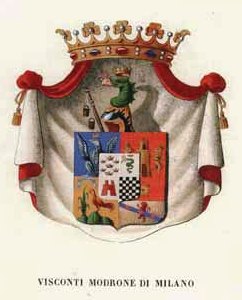
| family | Visconti di Modrone |
- Eriprando Visconti (nephew)
- Uberto Pasolini (grandnephew)
Luchino Visconti di Modrone, Count of Lonate Pozzolo (; 2 November 1906 – 17 March 1976) was an Italian filmmaker, theatre and opera director, and screenwriter. He was one of the fathers of cinematic neorealism, but later moved towards luxurious, sweeping epics dealing with themes of beauty, decadence, death, and European history, especially the decay of the nobility and the bourgeoisie. Critic Jonathan Jones wrote that “no one did as much to shape Italian cinema as Luchino Visconti.”
Born into a Milanese noble family with close ties to the artistic world, Visconti began his career in France as an assistant director to Jean Renoir. His 1943 directorial debut, Ossessione, was condemned by the Fascist regime for its unvarnished depictions of working-class characters, but is today renowned as a pioneering work of Italian cinema, generally regarded as the first neorealist film. During World War II, he served in the anti-fascist resistance, and afterwards was active in left-wing politics.
Visconti's best-known films include Senso (1954) and The Leopard (1963), which are historical melodramas adapted from Italian literary classics, the gritty drama Rocco and His Brothers (1960), and his "German Trilogy" – The Damned (1969), Death in Venice (1971) and Ludwig (1973). He was also an accomplished director of operas and stage plays, both in Italy and abroad, and held a close association with La Scala in his hometown of Milan.
Visconti received several notable accolades, including both the Palme d'Or (for The Leopard) and the Golden Lion (for 1965's Sandra), the latter out of five total nominations. He won the David di Donatello for Best Director twice and the Nastro d'Argento for Best Director four times, and was both an Oscar and BAFTA Award nominee. Six of Visconti's films are on the list of 100 Italian films to be saved. Many of his works are regarded as highly-influential to future generations of filmmakers, including Francis Ford Coppola and Martin Scorsese.
Early life
Luchino Visconti was born into a prominent noble family in Milan, one of seven children of Giuseppe Visconti di Modrone, Duke of Grazzano Visconti and Count of Lonate Pozzolo, and his wife Carla (née Erba, heiress to Erba Pharmaceuticals). He was formally known as Count don Luchino Visconti di Modrone, and his family is a branch of the Visconti of Milan where they ruled from 1277 to 1447, initially as lords, then as dukes.
He grew up in the Milanese family seat, the Palazzo Visconti di Modrone in Via Cerva, as well as on the family estate, Grazzano Visconti Castle near Vigolzone. He was baptized and raised in the Roman Catholic church. After his parents separated in the early 1920s, his mother moved with her younger children, including him, to her own house in Milan, as well as to her summer residence, Villa Erba in Cernobbio on Lake Como. The father, as chamberlain of King Victor Emmanuel III of Italy, also owned a villa in Rome that Luchino later inherited and lived in for decades.
8955 - Milano - Palazzo Visconti di Grazzano (sec. XVIII) - Foto Giovanni Dall'Orto 22-Apr-2007.jpg|Palazzo Visconti di Modrone in Milan Grazzano Visconti - panoramio - Gregorini Demetrio (1).jpg|Grazzano Visconti Castle Villa Erba - dal lago.jpg|Villa Erba on Lake Como
In his early years, he was exposed to art, music and theatre: The Palazzo Visconti di Modrone in Milan, where he grew up, had its own small private theatre and the children participated in its performances. The family also had their own box in the La Scala opera house. Luchino studied cello with the Italian cellist and composer Lorenzo de Paolis (1890–1965) and met the composer Giacomo Puccini, the conductor Arturo Toscanini and the writer Gabriele D'Annunzio. Visconti found literature by reading Proust's In Search of Lost Time, later a lifelong film project that he never realized. Before he started his film career, he was passionate about training racehorses in his own stable. He was engaged to Princess Irma of Windisch-Graetz, but this raised concerns with her father, Prince Hugo, and Visconti broke the engagement off in 1935.
Wartime resistance activity
During World War II, Visconti joined the Italian Communist Party, which he considered to be the only effective opponent of Italian Fascism. While he had, in his early years, been impressed by such aesthetic aspects of the solemn parades of the National Fascist Party as marching in columns in boots and uniform, he had now come to hate the Mussolini regime. He accused the bourgeoisie of treason to tyranny, and following the Badoglio Proclamation, began working with the Italian resistance. He supported the communists' partisan fight at the risk of death; his villa in Rome became a meeting place for oppositional artists.
After the king's flight in the autumn of 1943 and the intervention of the Germans, he went into hiding in the mountains, at Settefrati, under the nom de guerre Alfredo Guidi. Visconti helped English and American prisoners of war hide after they had escaped, and also gave shelter to partisans in his house in Rome, with the help of actress María Denis.
After the German occupation of Rome in April 1944, Visconti was arrested and detained by the anti-partisan Pietro Koch and sentenced to execution by firing squad. He was only saved from death by Denis' last-minute intervention. After the war, Visconti testified against Koch, who was himself convicted and executed.
Career

Films
He began his film-making career as a set dresser on Jean Renoir's Partie de campagne (1936) through the intercession of their common friend Coco Chanel. After a short tour of the United States, where he visited Hollywood, he returned to Italy to be Renoir's assistant again, this time for Tosca (1941), a production that was interrupted and later completed by German director Karl Koch.
Together with fellow members of the Milanese film journal Cinema - Gianni Puccini, Antonio Pietrangeli and Giuseppe De Santis - Visconti wrote the screenplay for his first film as director: Ossessione (Obsession, 1943), one of the first examples of neorealist (involving real locations and regular people) movies and an unofficial adaptation of the novel The Postman Always Rings Twice. The premiere of Ossessione took place at a film festival hosted by Vittorio Mussolini (son of Benito), who was the national arbiter for cinema and other arts, and the editor of Cinema. Though prior to the premiere their working relationship was positive, upon viewing the film Vittorio stormed out of the theatre exclaiming: "This is not Italy!", according to the account of Cinema group contributor Aldo Scagnetti. The film was subsequently suppressed by the fascist regime, to the extent that the first public showing of the film in Rome only occurred in May 1945.
In 1948, he wrote and directed La terra trema (The Earth Trembles), based on the novel I Malavoglia by Giovanni Verga. Visconti continued working throughout the 1950s, but he veered away from the neorealist path with his 1954 film, Senso, shot in colour. Based on the novella by Camillo Boito, it is set in Austrian-occupied Venice in 1866. In this film, Visconti combines realism and romanticism as a way to break away from neorealism. However, as one biographer notes, "Visconti without neorealism is like Lang without expressionism and Eisenstein without formalism". He describes the film as the "most Viscontian" of all Visconti's films. Visconti returned to neorealism once more with Rocco e i suoi fratelli (Rocco and His Brothers, 1960), the story of Southern Italians who migrate to Milan hoping to find financial stability. In 1961, he was a member of the jury at the 2nd Moscow International Film Festival.
Turning away from neo-realism, Visconti created an unmistakable visual language in his films from the 1960s onwards. Thanks to his unique blend of aristocratic and upper-class origins, communist political convictions and brilliant social analysis, he created masterpieces of film history in The Leopard (1963), The Damned (1969), Death in Venice (1971) and Ludwig (1972). Throughout the 1960s, Visconti's films became more personal. Il Gattopardo (The Leopard, 1963) is based on Lampedusa's novel of the same name about the decline of the Sicilian aristocracy at the time of the Risorgimento, where the change of times becomes visible in two of the main characters: Don Fabrizio Corbera, Prince of Salina (Burt Lancaster) appears patriarchal but humane, while Don Calogero Sedara (Paolo Stoppa), a shrewd entrepreneur and social climber from the village, appears submissive, but foxy and brutal at the same time, a mafia-like type of the future. The tension arises from the marriage of their relatives of the next generation, combined with the fall of the old Bourbon rule and the rise of a united Italy. This film was distributed in America and Britain by Twentieth-Century Fox, which deleted important scenes. Visconti repudiated the Twentieth-Century Fox version.
It was not until The Damned (1969) that Visconti received a nomination for an Academy Award for Best Original Screenplay. The film, one of Visconti's better-known works, concerns a German industrialist's family which begins to disintegrate during the Nazi consolidation of power in the 1930s. The film opened to widespread critical acclaim, but also faced controversy from rating boards for its sexual content, including depictions of homosexuality, pedophilia, rape, and incest. In the United States, the film was given an X rating. The avant-garde filmmaker Rainer Werner Fassbinder praised it as his favourite movie. Its decadence and lavish beauty are characteristic of Visconti's aesthetic − very visible also in the movie Death in Venice (1971) that adapted the daring novella Death in Venice published in 1912 by Thomas Mann.
Visconti's final film was The Innocent (1976), in which he returns to his recurring interest in infidelity and betrayal.
Theatre
Visconti was also a celebrated theatre and opera director. During the years 1946 to 1960, he directed many performances of the Rina Morelli-Paolo Stoppa Company with actor Vittorio Gassman as well as many celebrated productions of operas.
Visconti's love of opera is evident in the 1954 Senso, where the beginning of the film shows scenes from the fourth act of Il trovatore, which were filmed at the Teatro La Fenice in Venice. Beginning when he directed a production at Milan's Teatro alla Scala of La vestale in December 1954, his career included a famous revival of La traviata at La Scala in 1955 with Maria Callas and an equally famous Anna Bolena (also at La Scala) in 1957 with Callas. A significant 1958 Royal Opera House (London) production of Verdi's five-act Italian version of Don Carlos (with Jon Vickers) followed, along with a Macbeth in Spoleto in 1958 and a famous black-and-white Il trovatore with scenery and costumes by Filippo Sanjust at the Royal Opera House in 1964. In 1966 Visconti's luscious Falstaff for the Vienna State Opera conducted by Leonard Bernstein was critically acclaimed. On the other hand, his austere 1969 Simon Boccanegra with the singers clothed in geometrical costumes provoked controversy.
Filmmaking style and themes
In the aftermath of World War II he became one of the founding fathers of the Italian neorealistic film movement that focused on challenging economic and conditions, and how it affected the psyche of the underclass. Visconti came from nobility, was highly educated and was never in financial lack. His films reflected that tension. In fact, Visconti said he felt he came from a world long ago, that of the previous (19th) century.
In the film The Leopard, he addressed the decline of an old social order and the rise of “modern times”. He did not see his opulent flashbacks as an escape into imaginary, lost worlds, but rather as the deciphering of signs. He wanted to put his finger on the signs of profound historical changes which would only become visible later. He searched world literature for relevant works to show the discrepancies between generations and their world views, as a task of realism in art. When he was accused of decadence, he recalled Thomas Mann and his way of creating art.
Personal life
In later years, Visconti made no secret of his homosexuality, though he remained a devout Catholic throughout his life. "I am a Catholic," he commented in 1971. "I was born a Catholic, I was baptized a Catholic. I cannot change what I am, I cannot easily become a Protestant. My ideas may be unorthodox, but I am still a Catholic." While his first 3-year-relationship from 1936, with the photographer Horst P. Horst, remained discreet because of the prejudices of the time, he later showed up openly in the company of his lovers, among them the director and producer Franco Zeffirelli and the actor Udo Kier. His last lover was the Austrian actor Helmut Berger, who played Martin in Visconti's film The Damned. Berger also appeared in Visconti's Ludwig in 1973 and Conversation Piece in 1974, along with Burt Lancaster. Zeffirelli also worked as part of the crew in production design, as assistant director, and other roles in a number of Visconti's films, operas, and theatrical productions. According to Visconti's autobiography, he and Umberto II of Italy had a romantic relationship during their youth in the 1920s.
Visconti was hostile to the Protests of 1968 and didn't even try to follow the movement and adopt the airs of youth, like Alberto Moravia or Pier Paolo Pasolini did (although the latter was certainly not sympathetic towards the protestors). In his view, the protesters sought change for the sake of destruction without building something new. Disgusted, he regarded the young people in their enthusiasm, outbursts of anger, parties and tumults, abstract speeches, juggling with Mao, Marx, and Che Guevara as a symbol of reaction. The emerging radical-left terrorism in Italy frightened him and made him fear the rise of a new fascism.
Visconti has a grandnephew, Uberto Pasolini, who is also a filmmaker. (Uberto, however, is of no known relation to the aforementioned director, Pier Paolo Pasolini.)
Health issues and death
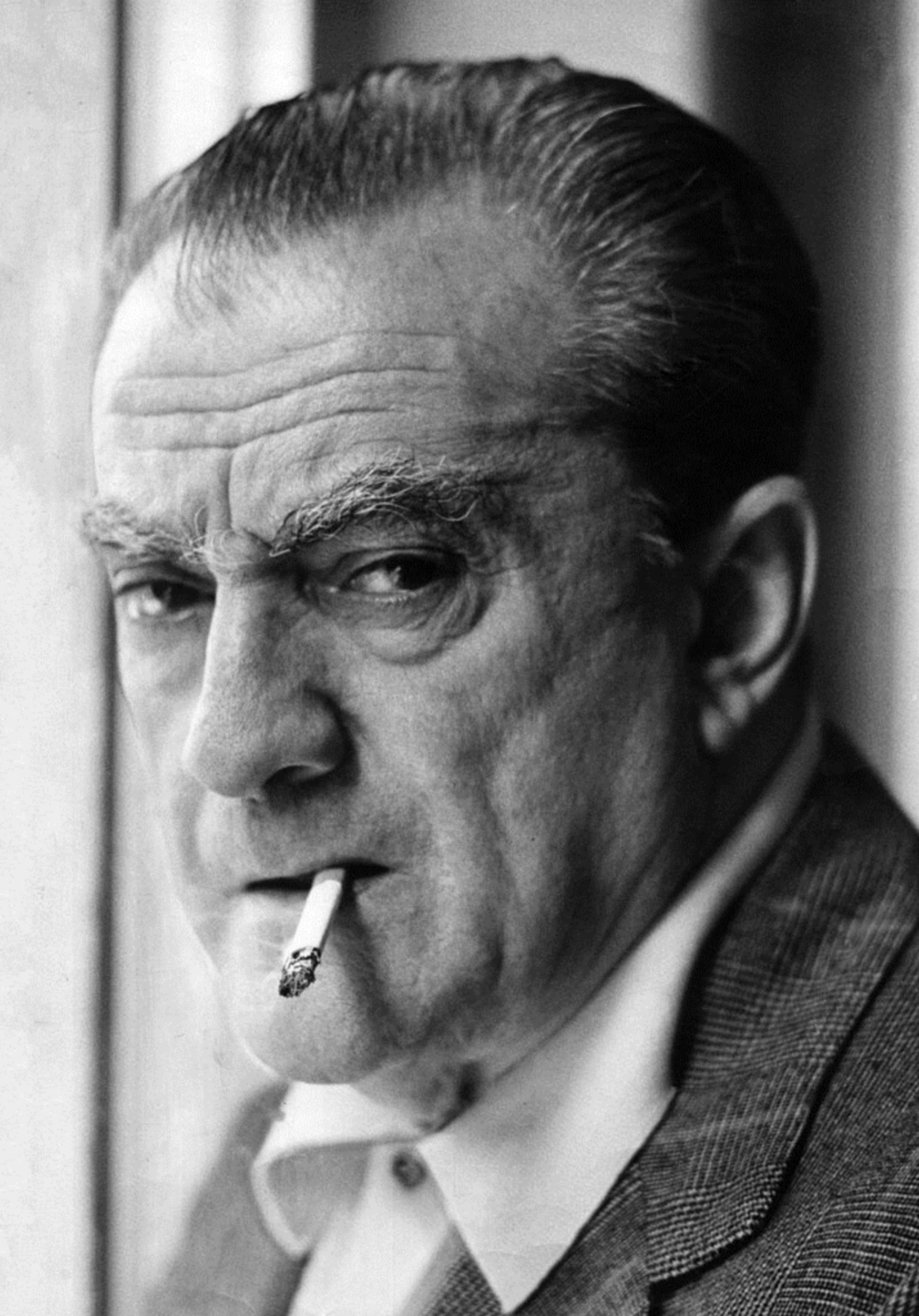
Visconti smoked 120 cigarettes a day. He suffered a serious stroke in 1972, but continued to smoke heavily. He died in Rome of another stroke at the age of sixty-nine on 17 March 1976. The church funeral service for Visconti took place on March 19, 1976, in Sant'Ignazio di Loyola in Campo Marzio in Rome. In addition to the Visconti family, the Italian President Giovanni Leone and the actors Burt Lancaster, Claudia Cardinale, Laura Antonelli, Vittorio Gassman and Helmut Berger were present.
There is a museum dedicated to the director's work in Ischia where he had his summer residence La Colombaia.
Work
Filmography
Feature films
| Year | Original title | International English title | Awards |
|---|---|---|---|
| 1943 | Ossessione | *Obsession* | |
| 1948 | *La terra trema* | *The Earth Will Tremble* | Special International Award — [9th Venice International Film Festival](9th-venice-international-film-festival) |
| Nominated – Grand International Prize of Venice — 9th Venice International Film Festival | |||
| 1951 | *Bellissima* | *Bellissima* | |
| 1954 | *Senso* | *Senso* or *The Wanton Countess* | Nominated – Golden Lion — [15th Venice International Film Festival](15th-venice-international-film-festival) |
| 1957 | *Le notti bianche* | *White Nights* | Silver Lion Prize – [18th Venice International Film Festival](18th-venice-international-film-festival) |
| Nominated – Golden Lion — 18th Venice International Film Festival | |||
| 1960 | *Rocco e i suoi fratelli* | *Rocco and His Brothers* | Special Prize – [21st Venice International Film Festival](21st-venice-international-film-festival) |
| FIPRESCI Prize – 21st Venice International Film Festival | |||
| 1961 Nastro d'Argento for Best Director | |||
| 1961 Nastro d'Argento for Screenplay | |||
| Nominated – Golden Lion — 21st Venice International Film Festival | |||
| 1963 | *Il gattopardo* | *The Leopard* | Palme d'Or – [1963 Cannes Film Festival](1963-cannes-film-festival) |
| 1965 | *Vaghe stelle dell'Orsa* | *Sandra* | Golden Lion — [26th Venice International Film Festival](26th-venice-international-film-festival) |
| 1967 | *Lo straniero* | *The Stranger* | Nominated – Golden Lion — [28th Venice International Film Festival](28th-venice-international-film-festival) |
| 1969 | *La caduta degli dei* | *The Damned* | 1970 Nastro d'Argento for Best Director |
| Nominated – Academy Award for Best Original Screenplay — [42nd Academy Awards](42nd-academy-awards) | |||
| 1971 | *Morte a Venezia* | *Death in Venice* | 25th Anniversary Prize — [1971 Cannes Film Festival](1971-cannes-film-festival) |
| David di Donatello for Best Director — 16th David di Donatello Awards | |||
| 1972 Nastro d'Argento for Best Director | |||
| Nominated — Palme d'Or — 1971 Cannes Film Festival | |||
| Nominated — BAFTA Award for Best Film — [25th British Academy Film Awards](25th-british-academy-film-awards) | |||
| Nominated — BAFTA Award for Best Direction — 25th British Academy Film Awards | |||
| 1973 | *Ludwig* | *Ludwig* | David di Donatello for Best Director — 18th David di Donatello Awards |
| 1974 | *Gruppo di famiglia in un interno* | *Conversation Piece* | 1975 Nastro d'Argento for Best Director |
| 1976 | *L'innocente* | *The Innocent* |
Other films
- **, documentary, 1945
- Appunti su un fatto di cronaca, short film, 1951
- Siamo donne (We, the Women), 1953, episode Anna Magnani
- Boccaccio '70, 1962, based on the episode Il lavoro in Boccaccio's Decameron
- Le streghe (The Witches), 1967, episode La strega bruciata viva
- **, TV movie, 1970
Opera
| Year | Title and Composer | Opera House | Principal cast / Conductor | |
|---|---|---|---|---|
| 1954 | *La vestale*, | |||
| Gaspare Spontini | La Scala | Maria Callas, Franco Corelli, Ebe Stignani, Nicola Zaccaria | ||
| Conducted by Antonino Votto | ||||
| 1955 | *La sonnambula*, | |||
| Vincenzo Bellini, | La Scala | Maria Callas, Cesare Valletti, Giuseppe Modesti | ||
| Conducted by Leonard Bernstein | ||||
| 1955 | *La traviata*, | |||
| Giuseppe Verdi | La Scala | Maria Callas, Giuseppe Di Stefano, Ettore Bastianini | ||
| Conducted by Carlo Maria Giulini | ||||
| 1957 | *Anna Bolena*, | |||
| Gaetano Donizetti | La Scala | Maria Callas, Giulietta Simionato, Nicola Rossi-Lemeni | ||
| Conducted by Gianandrea Gavazzeni | ||||
| 1957 | *Iphigénie en Tauride*, | |||
| Christoph Willibald Gluck | La Scala | Maria Callas, Franceso Albanese, Anselmo Colzani, Fiorenza Cossotto | ||
| Conducted by Nino Sanzogno | ||||
| 1958 | *Don Carlo*, Verdi | Royal Opera House, | ||
| London | Jon Vickers, Tito Gobbi, Boris Christoff, Gré Brouwenstijn | |||
| Conducted by Carlo Maria Giulini | ||||
| 1958 | *Macbeth*, Verdi | Spoleto Festival | William Chapman & Dino Dondi; Ferruccio Mazzoli & Ugo Trama;Shakeh Vartenissian. | |
| Conducted by Thomas Schippers | ||||
| 1959 | *Il duca d'Alba*, Donizetti | Spoleto Festival | url=https://web.archive.org/web/20150803001807/http://www.luchinovisconti.net/visconti_pg/teatro_lirica.htm | date=3 August 2015 }} on luchinovisconti.net |
| 1961 | *Salome*, Richard Strauss | Spoleto Festival | George Shirley, Lili Chookasian, Margarei Tynes, Robert Anderson, Paul Arnold. | |
| Conductor: Thomas Schippers | ||||
| 1963 | *Il diavolo in giardino*, | |||
| Franco Mannino (1963) | Teatro Massimo, Palermo | Ugo Benelli, Clara Petrella, Gianna Galli, Antonio Annaloro, Antonio Boyer. | ||
| Conductor: Enrico Medioli. | ||||
| Libretto: Visconti & Filippo Sanjust | ||||
| 1963 | *La traviata*, Verdi | Spoleto Festival | Franca Fabbri, Franco Bonisolli, Mario Basiola | |
| Conducted by Robert La Marchina | ||||
| 1964 | *Le nozze di Figaro*, | |||
| Wolfgang Amadeus Mozart | Teatro dell'Opera di Roma | Rolando Panerai, Uva Ligabue, Ugo Trama, Martella Adani, Stefania Malagù. | ||
| Conductor: Carlo Maria Giulini | ||||
| 1964 | *Il trovatore* | Bolshoi Opera, Moscow (September) | Pietro Cappuccilli, Gabriella Tucci, Giulietta Simionato, Carlo Bergonzi | |
| Conducted by Gianandrea Gavazzeni | ||||
| 1964 | *Il trovatore*, Verdi | Royal Opera House, London (November) | ||
| (Sanjust production) | Peter Glossop, Gwyneth Jones & Leontyne Price, Giulietta Simionato, Bruno Prevedi | |||
| Conducted by Carlo Maria Giulini | ||||
| 1965 | *Don Carlo*, Verdi | Teatro dell'Opera di Roma | Cesare Siepi, Gianfranco Cecchele, Kostas Paskalis, Martti Talvela, Suzanne Sarroca, Mirella Boyer. | |
| Conducted by Carlo Maria Giulini. | ||||
| 1966 | *Falstaff*, Verdi | Vienna Staatsoper | Dietrich Fischer-Dieskau, Rolando Panerai, Murray Dickie, Erich Kunz, Ilva Ligabue, Regina Resnik. | |
| Conducted by Leonard Bernstein | ||||
| 1966 | *Der Rosenkavalier*, Strauss | Royal Opera House, London | url=https://web.archive.org/web/20150924092026/http://www.rohcollections.org.uk/performance.aspx?performance=11997&row=0 | date=24 September 2015 }} on rohcollections.org.uk |
| 1967 | *La traviata*, Verdi | Royal Opera House, London | Mirella Freni, Renato Cioni, Piero Cappuccilli. | |
| Conducted by Carlo Maria Giulini | ||||
| 1969 | *Simon Boccanegra*, Verdi | Vienna Staatsoper | Eberhard Wächter, Nicolai Ghiaurov, Gundula Janowitz, Carlo Cossutta | |
| Conducted by Josef Krips | ||||
| 1973 | *Manon Lescaut*, | |||
| Giacomo Puccini | Spoleto Festival | Nancy Shade, Harry Theyard, Angelo Romero, Carlo Del Bosco. | ||
| Conductor: Thomas Schippers. |
References
Notes Sources
- Ardoin, John, The Callas Legacy, London: Duckworth, 1977
- Bacon, Henry, Visconti: Explorations of Beauty and Decay, New York: Cambridge University Press, 1998
- Düttmann, Alexander García, Visconti: Insights into Flesh and Blood, translated by Robert Savage, Stanford: Stanford University Press, 2009
- Glasenapp, Jörg (ed.): Luchino Visconti (= Film-Konzepte, vol. 48). Munich: edition text + kritik 2017.
- Iannello, Silvia, Le immagini e le parole dei Malavoglia Roma: Sovera, 2008 (in Italian)
- Nowell-Smith, Geoffrey, Luchino Visconti. London: British Film Institute, 2003.
- Visconti bibliography, University of California Library, Berkeley. Retrieved 7 November 2011.
- Schifano, Laurence: Luchino Visconti (biography, in French), Paris 1987 (German translation: Luchino Visconti, Fürst des Films, Gernsbach 1988)
- Viscontiana: Luchino Visconti e il melodramma verdiano, Milan: Edizioni Gabriele Mazzotta, 2001. A catalog for an exhibition in Parma of artifacts relating to Visconti's productions of operas by Verdi, curated by Caterina d'Amico de Carvalho, in Italian.
References
- Jones, Jonathan. (2001-12-12). "Count zero". The Guardian.
- "Luchino Visconti".
- "Luchino Visconti: The forefather of Italian neorealism". faroutmagazine.
- 'THE LEOPARD' IN ITS ORIGINAL LAIR: Care and Authenticity Mark screen Version of Modern Classic By HERBERT MITGANG. New York Times 29 July 1962: 69
- "Visconti's Verdi – Italian Journal".
- (17 March 2016). "Where to begin with Luchino Visconti".
- Kiang, Jessica. (2015-10-08). "The Essentials: The 8 Best Luchino Visconti Films".
- [https://mannerofman.blogspot.com/2008/11/mm-icon-luchino-visconti.html "M/M Icon: Luchino Visconti"], ''Manner of Man Magazine'' online at mannerofman.com, 2 November 2010. Retrieved 18 November 2012
- Flatley, Guy. (27 June 1971). "Yes, He Threw No Tantrum". [[The New York Times]].
- L. Schifano: ''Luchino Visconti. Fürst des Films'', biography (German translation), 1988, p. 141−151
- L. Schifano: ''Luchino Visconti. Fürst des Films'', biography (German translation), 1988, p. 208
- L. Schifano: ''Luchino Visconti. Fürst des Films'', biography (German translation), 1988, p. 205−230
- Bacon, Henry. (1998). "Visconti: Explorations of Beauty and Decay". Cambridge University Press.
- Bacon, Henry. (1998). "Visconti: Explorations of Beauty and Decay". Cambridge University Press.
- Bacon, Henry. (1998). "Visconti : explorations of beauty and decay". Cambridge University Press.
- Bacon, Henry. (1998). "Visconti : explorations of beauty and decay". Cambridge University Press.
- Nowell-Smith, p. 9.
- "2nd Moscow International Film Festival (1961)". MIFF.
- L. Schifano: ''Luchino Visconti. Fürst des Films'', biography (German translation), 1988, p. 406−408
- Carr, Jeremy. (22 July 2005). "Visconti, Luchino". [[Senses of Cinema]].
- Silva, Horacio, [https://www.nytimes.com/2006/09/17/style/tmagazine/t17visconti.html "The Aristocrat"], ''The New York Times'', 17 September 2006. (Overview of Visconti's life and career) Retrieved 7 November 2011
- Laurence Schifano: ''Luchino Visconti. Prince of film'', biography, 1988
- "The Damned".
- Dall'Oroto, Giovanni "Umberto II" from ''Who's Who in Contemporary Gay and Lesbian History'', London: Psychology Press, 2002 p. 453.
- L. Schifano: ''Luchino Visconti. Fürst des Films'', biography (German translation), 1988, p. 412−415
- (2016-09-21). "Director Uberto Pasolini presents his movie on loneliness in Madrid". [[The San Diego Union-Tribune]].
- (2021-07-16). "''Nowhere Special'' — Nuremberg International Human Rights Film Festival".
- Thomson, David. (15 February 2003). "The decadent realist". The Guardian.
- "Luchino Visconti | Encyclopedia.com".
- The British Film Institute. "Luchino Visconti Biography".
- Colombaia, La. "Ischia.it english - Colombaia by Luchino Visconti".
- Ardoin 1977, p. 89
- Ardoin 1977, p. 93
- Ardoin 1977, p. 96
- Ardoin 1977, p. 120
- Ardoin 1977, p. 123
- ''Viscontiana'' 2001, p. 113
- ''Viscontiana'' 2001, pp. 62–63
- [http://www.luchinovisconti.net/visconti_pg/teatro_lirica.htm "Lirica": Operas directed by Visconti] {{Webarchive. link. (3 August 2015 on luchinovisconti.net)
- ''Viscontiana'' 2001, p. 142
- ''Viscontiana'' 2001, p. 64
- ''Viscontiana'' 2001, p. 65
- ''Viscontiana'' 2001, p. 65–66
- ''Viscontiana'' 2001, p. 66
- ''Viscontiana'' 2001, pp. 66–67
- ''Viscontiana'' 2001, p. 143
- link. (24 September 2015 on rohcollections.org.uk)
- ''Viscontiana'' 2001, p. 67
- ''Viscontiana'' 2001, p. 68
This article was imported from Wikipedia and is available under the Creative Commons Attribution-ShareAlike 4.0 License. Content has been adapted to SurfDoc format. Original contributors can be found on the article history page.
Ask Mako anything about Luchino Visconti — get instant answers, deeper analysis, and related topics.
Research with MakoFree with your Surf account
Create a free account to save articles, ask Mako questions, and organize your research.
Sign up freeThis content may have been generated or modified by AI. CloudSurf Software LLC is not responsible for the accuracy, completeness, or reliability of AI-generated content. Always verify important information from primary sources.
Report