From Surf Wiki (app.surf) — the open knowledge base
Lobo, Batangas
Municipality in Batangas, Philippines
Municipality in Batangas, Philippines
| Field | Value | |
|---|---|---|
| name | ||
| image_skyline | {{multiple image | |
| border | infobox | |
| total_width | 250 | |
| image_style | border:1; | |
| perrow | 1/2/2 | |
| image1 | Lobo Downtown Panorama.jpg | |
| image2 | Punta de Malabrigo Lighthouse Batangas.JPG | |
| image3 | Lobo_River,_Philippines.jpg | |
| image4 | LoboChurchjf9794_20.JPG | |
| image5 | LoboChurchHall,Batangasjf0090_06.JPG | |
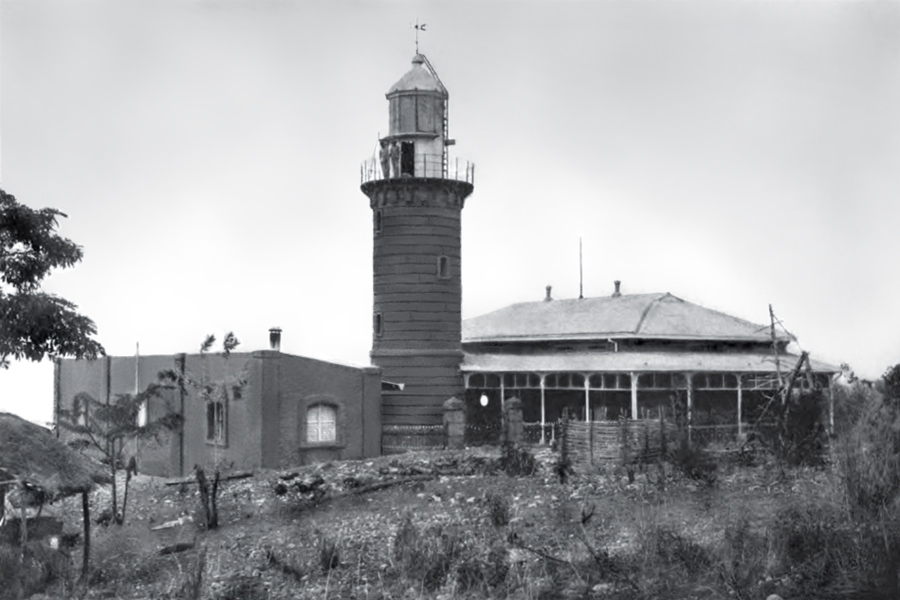
| image_caption | From top to bottom: Downtown, Malabrigo Point Lighthouse, Lobo River, Saint Michael the Archangel Parish, Municipal Hall | |
| image_flag | Flag_of_Lobo,_Batangas.png | |
| flag_size | 120x80px | |
| image_seal | Lobo Batangas.png | |
| seal_size | 100x80px | |
| image_map | ||
| map_caption | ||
| mapframe | yes | |
| pushpin_map | Philippines | |
| pushpin_label_position | left | |
| pushpin_map_caption | Location within the | |
| coordinates | ||
| settlement_type | ||
| subdivision_type | Country | |
| subdivision_name | Philippines | |
| subdivision_type1 | Region | |
| subdivision_name1 | ||
| subdivision_type2 | Province | |
| subdivision_name2 | ||
| official_name | ||
| etymology | Wolf | |
| named_for | ||
| nickname | *Atis Capital of the Philippines* | |
| anthem | "Himno ng Lobo" | |
| established_title | Founded | |
| established_date | September 27, 1871 | |
| subdivision_type3 | District | |
| subdivision_name3 | ||
| parts_type | Barangays | |
| parts_style | para | |
| p1 | (see Barangays) | |
| leader_title | Mayor | |
| leader_name | Geronimo C. Alfiler | |
| leader_title1 | Vice Mayor | |
| leader_name1 | Angelito H. Abiera | |
| leader_title2 | Representative | |
| leader_name2 | Gerville R. Luistro | |
| leader_title3 | Municipal Council | |
| leader_name3 | {{PH Town Council | |
| 1 | ||
| 2 | Victoriano C. Dueñas | |
| 3 | Leslee M. Aguilar | |
| 4 | Ridian J. Dueñas | |
| 5 | Chritzaldy Kim B. Manalo | |
| 6 | John Joseph G. Comia | |
| 7 | Mark Ernani R. You | |
| 8 | Bienvenido F. Aliwalas Jr. | |
| 9 | Jake B. Paglicawan | |
| 10 | Renato B. Lat - ABC President | |
| 11 | Gian Carlo L. Manalo - PPSK | |
| leader_title4 | Electorate | |
| leader_name4 | voters (electorate_point_in_time}} | ) |
| government_type | ||
| government_footnotes | ||
| elevation_m | ||
| elevation_max_m | 905 | |
| elevation_min_m | 0 | |
| elevation_footnotes | ||
| area_footnotes | ||
| area_total_km2 | ||
| population_footnotes | ||
| population_total | ||
| population_as_of | ||
| population_density_km2 | auto | |
| population_blank1_title | Households | |
| population_blank1 | ||
| timezone | PST | |
| utc_offset | +8 | |
| postal_code_type | ZIP code | |
| postal_code | ||
| postal2_code_type | ||
| postal2_code | ||
| area_code_type | ||
| area_code | ||
| website | ||
| demographics_type1 | Economy | |
| demographics1_title1 | ||
| demographics1_info1 | ||
| demographics1_title2 | Poverty incidence | |
| demographics1_info2 | % () | |
| demographics1_title3 | Revenue | |
| demographics1_info3 | ||
| demographics1_title4 | Revenue rank | |
| demographics1_title5 | Assets | |
| demographics1_info5 | ||
| demographics1_title6 | Assets rank | |
| demographics1_title7 | IRA | |
| demographics1_title8 | IRA rank | |
| demographics1_title9 | Expenditure | |
| demographics1_info9 | ||
| demographics1_title10 | Liabilities | |
| demographics1_info10 | ||
| demographics_type2 | Service provider | |
| demographics2_title1 | Electricity | |
| demographics2_info1 | ||
| demographics2_title2 | Water | |
| demographics2_title3 | Telecommunications | |
| demographics2_title4 | Cable TV | |
| blank_name_sec1 | ||
| blank_info_sec1 | ||
| blank1_name_sec1 | Native languages | |
| blank1_info_sec1 | ||
| blank2_name_sec1 | Crime index | |
| blank1_name_sec2 | **Major religion/s** | |
| blank1_info_sec2 | Roman Catholic | |
| blank2_name_sec2 | **Feast date** | |
| blank2_info_sec2 | September 23–30 | |
| blank3_name_sec2 | **Catholic diocese** | |
| blank3_info_sec2 | Archdiocese of Lipa | |
| blank4_name_sec2 | **Patron saint** | |
| blank4_info_sec2 | Saint Michael |
Lobo, officially the Municipality of Lobo (), is a municipality in the province of Batangas, Philippines. According to the , it has a population of people.
Etymology
The name "Lobo" may have come from: {{ordered list | list-style-type = square|the Spanish and Tagalog term for "wolf", lobo|the Tagalog word "lubog", that later became the word "Lobu" or "Lobo"|the Lobo River, which flows through Lobo itself and|the balloon that landed into Mt. Banoi.
The town was proclaimed as the "Atis Capital of the Philippines" through Resolution 2011-61 in September 2011.
History
Legend of Datu Kumintang and Gat Bahaghari
According to legend, Lobo was first inhabited by the followers of Datu Kumintang of Borneo, along with Gat Bahaghari and his family. They traveled to Rosario and trailing along the Rosario-Lobo River, they reached the “Wawa of Lobo” (now Fabrica) which his followers named Bahaghari in honor of Gat Bahaghari. Attracted by the panoramic view and soil fertility of this place, Gat Bahaghari and his followers decided to establish a permanent settlement in this area.
Some followers of Gat Bahaghari thought that in order to detect approaching pirates, they built their houses on the top of a hill overlooking the sea which is now the Municipal Cemetery of Lobo.
Beneath this hill on the west side is low land treasured with sumasagitsit or running tiny streams of water which they utilized to irrigate their farms. With the help of the streams, their farms became very productive that enabled them to transport their excess products to their bountiful harvests, they replied that they came from sumasagitsit. The term sumasagitsit was later on changed to Masagitsit until it was changed as Barangay Masaguitsit.
Foreign rule
Lobo's history is related with that of Rosario. Rosario was founded by Augustinian friars in 1687 that originated from the southeastern coast of Batangas which is Lobo. When Rosario was founded, Lobo became a barrio of Rosario with the present municipalities of Taysan, San Juan, and Padre Garcia.
The inhabitants were forced to flee the coast of Lobo to avoid the Moros. While fleeing, the inhabitants recited the rosary that gave Rosario its name. The settlement was reestablished at the north-west bank of Kansahayan River in Hilerang Kawayan, now a barangay called Pinagbayanan of Taysan. However, at the height of the Moro Wars in the second half of the 18th century, the Moro raids reached Hilerang Kawayan.
Rosario was moved again by the Dominican priests fearing that the Moros will attack them. They headed north holding a novena and praying the rosary while fleeing from Hilerang Kawayan. On the last day of the novena, the inhabitants settled at the river bank of Tubig ng Bayan (, a river from Lipa now known as Balintawak River/Creek), now Padre Garcia. They residents erected a stone church south of the river bank in honor of their saint, the Our Lady of the Most Holy Rosary (known as Nuestra Señora del Rosario in the municipality). The town was named Santo Rosario. Rosario remained in the location for a long time until 1902.
On December 12, 1848, the barrio of Bolbok was separated from Rosario and was named San Juan de Bocboc, then in 1850, the barrio of Mercedes also became an independent municipality now known as Taysan. It was not until September 27, 1871 that the barrio of Lobo became an independent municipality. The Spaniards did not know what to name the place until they saw that a balloon that came from the people celebrating their fiesta in the Municipality of Batangas fly towards Mt. Banoi. They eagerly waited for the balloon to fall down. They were so amazed that they named the place "Lobo" to commemorate the incident. The parish of Lobo was established on February 4, 1873. The parish was then named Parroquia de San Miguel Arcanghel meaning "Saint Michael the Archangel Parish" being the patron saint of Lobo. Don Cayetano Macarandang was the first parish priest of the church serving from 1871 until 1873.
According to Manuel Sastron's publication of Batangas y su Provincia, he described Lobo as "the most remarkably isolated municipality in Batangas". Lobo's road was so narrow that horses could only barely pass through it. Travelling by sea was also seen as dangerous for small boats due to big waves. He also said that the Lobo's population in the 19th century was only 6,700 people. He referenced the Lobo River as being large and being fed by four or five tributaries. Sastron said that Lobo was peaceful and crimes rarely occur. Before the end of the Spanish period, the Malabrigo Point Lighthouse was proposed to be made in barrio Malabrigo. It was one among the Spaniards built as part of the Plan General de Alumbrado de Maritimo de las Costas del Archipelago de Filipino which would make 55 lighthouses in the Philippines.
When the American occupation began, Lobo was consolidated to Taysan through the Act No. 708 (An Act Reducing Thirteen of the Municipalities in the Province of Batangas into Five) but became independent again when Taysan was consolidated to Rosario in the same year through Act No. 958 (An Act Reducing The Twenty-two Municipalities of the Province of Batangas to Sixteen, and Repealing Act Numbered Seven Hundred and Eight, entitled "An Act Reducing Thirteen of the Municipalities in the Province of Batangas into Five."). Lobo was commonly misspelled as Loboo by the Americans.
Geography
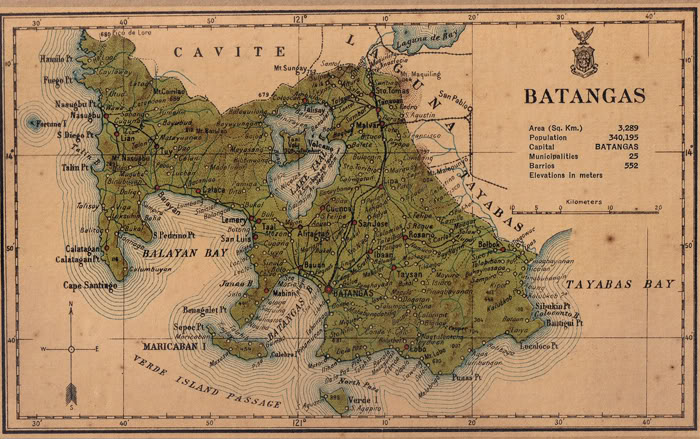
Lobo is located at . The town is located near the southern tip of the Batangas province, about 145 km from Manila.
Lobo has white sand beaches and has protected mangrove forests and fish sanctuaries.
According to the Philippine Statistics Authority, the municipality has a land area of 175.03 km2 constituting of the 3,119.75 km2 total area of Batangas.
Barangays
Lobo is politically subdivided into 26 barangays, as shown in the matrix below. Each barangay consists of puroks and some have sitios.
According to the 2020 census, the most populated barangay in Lobo is Balibago with 3,454 residents living while the least populated barangay in Lobo is Malalim na Sanog with 306 residents living. Lobo originally had 7 barangays named as Masagitsit (now Masaguitsit), Bignay, Tayuman, Malapad na Parang, Mabilog na Bundok, Malabrigo, and Sabana (non-existent as of present).
In 1959, the sitio of Biga in Barangay Tayuman was converted into a barangay.
Climate
Demographics
In the 2024 census, Lobo had a population of 41,251 people. The population density was {{sigfig|41,251/175.03|2}} PD/km2.
Economy
Government
Main article: Sangguniang Bayan

Elected officials
Lota L. Manalo and Jurly R. Manalo are the current mayor and vice mayor, respectively.
The Municipal Councilors are:
- Geronimo Alfiler
- Angelito Abiera
- Michael Cueto
- Jan-Michael Anyayahan
- Victoriano Dueñas
- Mark Ernani Tiu
- Amador Ambrocio Sulit
- Leslee Aguilar
Lobo Church
Saint Michael the Archangel Parish Church, commonly known as Lobo Church, is a Neo-classic parish church in the municipality of Lobo. The church is under the jurisdiction of the Roman Catholic Archdiocese of Lipa. The parish is dedicated to Saint Michael and its feast day is celebrated every May 8. The church was founded in 1873 while the current building was built in 1980 to 1986.
History

In March 1871, Lobo, a visita under the jurisdiction of Taysan, and its residents requested the Governor-General for the visita to be an independent town and its parish due to reasons of long walking distance and difficult travel to the mother town. On September 27, 1871, the visita with the barrios of Masagitsit, Tayuman, Bignay, Malapad na Parang, Mabilog na Bundok, Malabrigo, and Sabana was made into a town. Still, the request to the parish was temporarily suspended until the church, the convent, and a school were adequately built.
On November 20, 1872, the King of Spain approved the request to build the parish and on February 4, 1873, the Governor, Viceroy of the Philippine Islands, enacted the king's order, formally founding the parish. The parish started as a tuklong made from bamboo and cogon in 1874, then it was built into a church and a convent made of wood and bamboo in 1886, initiated by Fr. Isidro Gamboa. The parish was administered by Augustinian Recollect friars until 1902.
When the Diocese of Lipa was made in 1910, the parish was given to a Belgian priest, Fr. Raymundo Esquinet, along with the parishes of San Jose, Ibaan, Bauan, Taysan, Cuenca, and Tombol. In 1915, the parish was given to the OSJ missionaries along with Taysan's parish, Nuestra Señora de la Merced Parish Church. The parish was under the guidance of the congregation until 1917.
In 1979, the church was renovated into a concrete building but was destroyed by Typhoon Yeyeng in 1981. A temporary chapel was made to continue parish activities. Five years later, the parish church was completely rebuilt and was blessed in 1987.
Fish sanctuaries

Lobo has several fish sanctuaries:
- Lobo Mangrove Conservation Area
- Sawang and Olo-Olo Fish Sanctuary and Refuge Area
- Malabrigo Fish Sanctuary and Refuge Area
- Biga Fish Sanctuary and Refuge Area
Education
The Lobo Schools District Office governs all educational institutions within the municipality. It oversees the management and operations of all private and public, from primary to secondary schools.
Primary and elementary schools
- Apar Elementary School
- Balatbat Elementary School
- Balibago Elementary School
- Banalo Elementary School
- Biga Elementary School
- Bignay Primary School
- Calo Elementary School
- Calumpit Elementary School
- Jaybanga Elementary School
- Lagadlarin/Olo-Olo Elementary School
- Lobo Elementary School
- Mabilog Na Bundok Elementary School
- Malabrigo Elementary School
- Malapad Na Parang Elementary School
- Masaguitsit Elementary School
- Nagtaluntong Elementary School
- Nagtoctoc Elementary School
- Pinaghawanan Elementary School
- Punas Elementary School
- San Miguel Elementary School
- San Nicolas Elementary School
- Sawang Elementary School
- Soloc Elementary School
- St. Michael the Archangel Parochial School
Secondary schools
- Balibago-Biga National High School
- Basilio S. Marasigan Memorial National High School
- Jaybanga Integrated National High School
- Lobo Institute
- Lobo Senior High School
- Lord Immanuel Institute Foundation
- Malabrigo National High School
- Malapad na Parang National High School
- Masaguitsit Banalo National High School
Gallery
File:Malabrigo Light House.jpg|Malabrigo Point Lighthouse File:Lobo,Batangasjf9999 20.JPG|Park File:Lobo,Batangasjf9902 12.JPG|Downtown Lobo File:LoboChurchjf9812 02.JPG|Saint Michael the Archangel Parish Church
References
References
- (29 November 2015). "Government boosts atis production in Lobo". The Philippine Star.
- "The History of Lobo, Batangas".
- "Taysan, Batangas - Pinagbayanan".
- "Rosario, Batangas History".
- "Most Holy Rosary Parish".
- "The Etymology of Lobo, Batangas".
- "Manuel Sastron's publication of Batangas y su Provincia".
- (2014–2015). "Infrastructures of Colonial Modernity Public Works in Manila from the Late 19th to the Early 20th Centuries". [[National Commission for Culture and the Arts]].
- (March 28, 1903). "An Act Reducing Thirteen of the Municipalities in the Province of Batangas to Five".
- (March 28, 1903). "An Act Reducing The Twenty-two Municipalities of the Province of Batangas to Sixteen, and Repealing Act Numbered Seven Hundred and Eight, entitled "An Act Reducing Thirteen of the Municipalities in the Province of Batangas into Five."".
- (2 December 2018). "Mining the white gold". BusinessMirror.
- {{DILG detail
- "Church of St. Michael The Archangel, Lobo, Batangas, Philippines".
- "St. Michael the Archangel Parish Lobo, Batangas".
- (22 April 2018). "Locals realize what the real 'gold' is in Lobo, Batangas". Manila Bulletin.
- (9 June 2015). "Environmental group opposes large-scale Batangas mining project". INQUIRER.net.
- (January 15, 2021). "Masterlist of Schools".
This article was imported from Wikipedia and is available under the Creative Commons Attribution-ShareAlike 4.0 License. Content has been adapted to SurfDoc format. Original contributors can be found on the article history page.
Ask Mako anything about Lobo, Batangas — get instant answers, deeper analysis, and related topics.
Research with MakoFree with your Surf account
Create a free account to save articles, ask Mako questions, and organize your research.
Sign up freeThis content may have been generated or modified by AI. CloudSurf Software LLC is not responsible for the accuracy, completeness, or reliability of AI-generated content. Always verify important information from primary sources.
Report