From Surf Wiki (app.surf) — the open knowledge base
List of poisonous animals
None
None
animals poisonous on contact or when ingested
The following is a list of poisonous animals, which are animals that passively deliver toxins (called poison) to their victims upon contact such as through inhalation, absorption through the skin, or after being ingested. They are often distinguished from venomous animals, which actively inject their toxins (called venom) into their victims through a venom apparatus such as fangs or a stinger. The only difference between poisonous animals and venomous animals is how they deliver the toxins. This list deals exclusively with poisonous animals.
Poisonous animals
This list is a partial list of animals that are poisonous to humans and other animals in that their flesh is toxic if consumed, or in some cases if they are touched:
Frogs and toads
Frogs
- Northern corroboree frog
- Southern corroboree frog
- Mantella
- Poison dart frog[[File:Poison Dart Frogs.jpg|thumb|right|The bright colors of poison dart frogs warn predators of their toxicity.]]
Toads
Some of these toads are "milked" for their bufotoxins.
- American toad
- Asiatic toad
- Cane toad
- Colorado River toad
- Common toad
- European green toad
- Fowler's toad
Mammals
- Slow loris (usually thought of as venomous, but they also lick their fur, making it toxic)
Birds
- Pitohui
- Blue-capped ifrit
- Shrikethrushes
- Spur-winged goose (diet-dependent)
- Common quail (diet-dependent)
- Carolina parakeet
Snakes
- Rhabdophis keelback snakes
- Garter snake (diet-dependent, when feeding on Pacific newts)
Salamanders
- Pacific newts or Western newts
Fish
- Tetraodontidae (Blowfish, Pufferfish)
- Greenland shark
- Barracuda (age and diet dependent)
Cephalopods
- Blue-ringed octopus
- Pfeffer's flamboyant cuttlefish
Insects
- Blister beetle
- Diamphidia
- Cinnabar moth
- Certain tiger moths (Erebidae)
- Birdwings
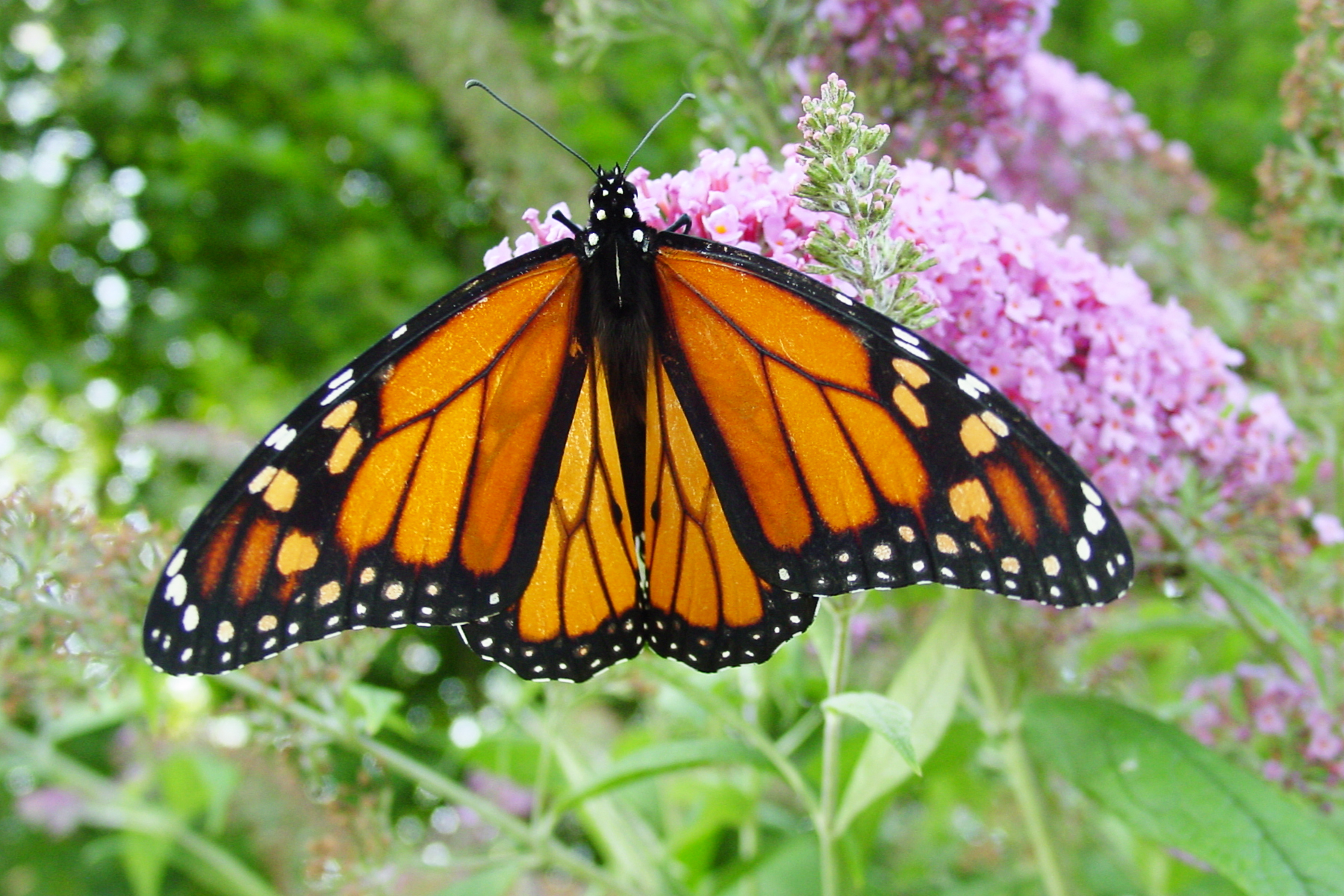
- Milkweed butterflies (include Monarch butterfly)
- Battus (butterfly)
Crustaceans
- Gorilla crabs (Xanthidae)
Cnidarians
- Some members of the genus Palythoa produce the highly toxic palytoxin
- Rhodactis species
Echinoderms
- It is common for sea cucumbers like Pearsonothuria graeffei to protect itself with toxins
- Actinopyga agassizii a toxic sea cucumber
- Some starfish, like Plectaster decanus, are poisonous
Annelids
- The polychaete worm Hediste diversicolor
- Halla parthenopeia
Nemerteans
- Antarctonemertes valida is one of several nemerteans which make use of defensive toxic secretions
Flatworms
- Bipalium kewense, the hammerhead flatworm, is coated in toxic mucus
Sponges
- Negombata magnifica, the toxic finger-sponge, is one of many toxic species of sponges
Placozoans
- Trichoplax use large specialized cells to release antipredatory toxins
References
References
- Gupta, Ramesh C.. (24 March 2017). "Reproductive and developmental toxicology".
- (2006). "[Venomous and poisonous animals--I. Overview].". Médecine Tropicale.
- (3 November 2017). "Poison vs. Venom". [[Australian Academy of Science]].
- (2013-09-27). "Mad, bad and dangerous to know: the biochemistry, ecology and evolution of slow loris venom". Journal of Venomous Animals and Toxins Including Tropical Diseases.
- Bartram, S.. (2001). "Chemistry and ecology of toxic birds". ChemBioChem.
- (2004). "A resistant predator and its toxic prey: persistence of newt toxin leads to poisonous (not venomous) snakes". Journal of Chemical Ecology.
- (December 2005). "Western Newts". Toxic Animals Around The World.
- (April 3, 2007). "Kings of Camouflage".
- Rowlett, Joe. (2018-04-11). "Rhodactis Mushroom Corals Are Surprisingly Deadly".
- [https://www.floridamuseum.ufl.edu/iz/discover-invertebrates/pearsonothuria-graeffei/ Pearsonothuria graeffei – Invertebrate Zoology]
- (2022). "An investigation into the toxicity of tissue extracts from two distinct marine Polychaeta". Toxicon: X.
- [https://dialnet.unirioja.es/servlet/articulo?codigo=5351688 Toxicity of the purple mucus of the polychaete Halla parthenopeia (Oenonidae) revealed by a battery of ecotoxicological bioassays]
- [https://www.duo.uio.no/bitstream/handle/10852/99885/1/msac096.pdf Evolution, Expression Patterns, and Distribution of Novel Ribbon Worm Predatory and Defensive Toxins]
- [https://www.cbsnews.com/sacramento/news/meet-but-dont-touch-the-toxic-invasive-worm-that-experts-say-has-been-hiding-in-plain-sight/ Meet, but don't touch, the toxic invasive worm that experts say has been hiding in plain sight]
- (2021). "Neural versus alternative integrative systems: Molecular insights into origins of neurotransmitters". Philosophical Transactions of the Royal Society B: Biological Sciences.
This article was imported from Wikipedia and is available under the Creative Commons Attribution-ShareAlike 4.0 License. Content has been adapted to SurfDoc format. Original contributors can be found on the article history page.
Ask Mako anything about List of poisonous animals — get instant answers, deeper analysis, and related topics.
Research with MakoFree with your Surf account
Create a free account to save articles, ask Mako questions, and organize your research.
Sign up freeThis content may have been generated or modified by AI. CloudSurf Software LLC is not responsible for the accuracy, completeness, or reliability of AI-generated content. Always verify important information from primary sources.
Report