From Surf Wiki (app.surf) — the open knowledge base
List of national flowers
Flowers that represent specific geographic areas
Flowers that represent specific geographic areas
In some countries, plants have been chosen as symbols to represent specific geographic areas. Some countries have a country-wide floral emblem; others in addition have symbols representing subdivisions. Different processes have been used to adopt these symbols – some are conferred by government bodies, whereas others are the result of informal public polls. The term floral emblem, which refers to flowers specifically, is primarily used in Australia and Canada. In the United States, the term state flower is more often used.
National plants
Africa
Ethiopia
The national flower of Ethiopia is Zantedeschia aethiopica, commonly known as calla lily.
Mauritius
The national flower of Mauritius is the Ruizia boutoniana.
Nigeria
The national flower of Nigeria is Costus spectabilis which is commonly known as Yellow Trumpet.
Seychelles
The national flower of the Seychelles is the tropicbird orchid (known locally as orkid payanke), Angraecum eburneum.
South Africa
The national flower of South Africa is the King Protea, Protea cynaroides.
Tunisia
The national flower of Tunisia is jasmine. It was chosen as a symbol for the 2010 Tunisian Revolution.
Zimbabwe
The national flower of Zimbabwe is the flame lily, Gloriosa superba.
Asia
Afghanistan
The national flower of Afghanistan is the Tulip. It is called Lala (لاله) in the Farsi language and Khatol in the Pashto language.
Bangladesh
The national flower of Bangladesh is the water lily Nymphaea nouchali. It is called shapla (শাপলা) in the Bengali language.
Bhutan
The national flower of Bhutan is the blue poppy. Previously misidentified as the non-native Meconopsis grandis, national flower of Bhutan was identified in 2017 as Meconopsis gakyidiana, a new distinct species.
Brunei
The national flower of Brunei is Simpoh Ayer (Dillenia suffruticosa).
Cambodia

Cambodia formally adopted the romduol () as its national flower in the year 2005 by a royal decree. The royal decree designates the taxon as Mitrella mesnyi, however, this is a taxonomically illegitimate synonym for Sphaerocoryne affinis, which does not occur in Cambodia. The accepted species name for romduol is Sphaerocoryne lefevrei.
India
The lotus (Nelumbo nucifera) is the national flower of India. It is a sacred flower in the art and culture of ancient India.
Indonesia

Main article: List of Indonesian floral emblems
There are three types of floral emblems used to symbolize Indonesia:
- The puspa bangsa ("national flower") of Indonesia is melati (Jasminum sambac).
- The puspa pesona ("flower of charm") is anggrek bulan or moon orchid (Phalaenopsis amabilis).
- The puspa langka ("rare flower") is padma raksasa rafflesia (Rafflesia arnoldii).
All three were chosen on World Environment Day in 1990, and enforced by law through Presidential Decree (Keputusan Presiden) No. 4 1993, On the other occasion, bunga bangkai (Titan arum) was also added as puspa langka together with rafflesia.
Melati (Jasminum sambac), a small white flower with sweet fragrance, has long been considered a sacred flower in Indonesian tradition, as it symbolizes purity, sacredness, graceful simplicity and sincerity. For example, on her wedding day, a traditional Indonesian bride's hair is often adorned with arrangements of jasmine, while the groom's kris is often adorned with a lock of jasmine. However, jasmine is also often used as a floral offering for spirits and deities, and also often present during funerals, which has caused it to be seen as having mystical and sacred properties. Moon orchid was chosen for its beauty, while the other two rare flowers, Rafflesia arnoldii and Titan arum, were chosen to demonstrate uniqueness and Indonesia's rich biodiversity.
Each of the 34 provinces of Indonesia also has a native plant as its provincial flower.
Iran

The national flower of Iran is the water lily which is also called nymphaea (Niloofare Abi, in Persian). The flower is the national flower of Iran since the Achaemenid Empire era (552 BC).
Israel

The national flower of Israel is the poppy anemone (Anemone coronaria; calanit metzuya in Hebrew), chosen in 2013 to replace Cyclamen persicum.
Jordan
The national flower of Jordan is black iris (Iris nigricans).
Kuwait
The national flower of Kuwait is Arfaj (Rhanterium epapposum).
Laos
The national flower of Laos is the plumeria (champa), despite it no longer being endemic.
Malaysia
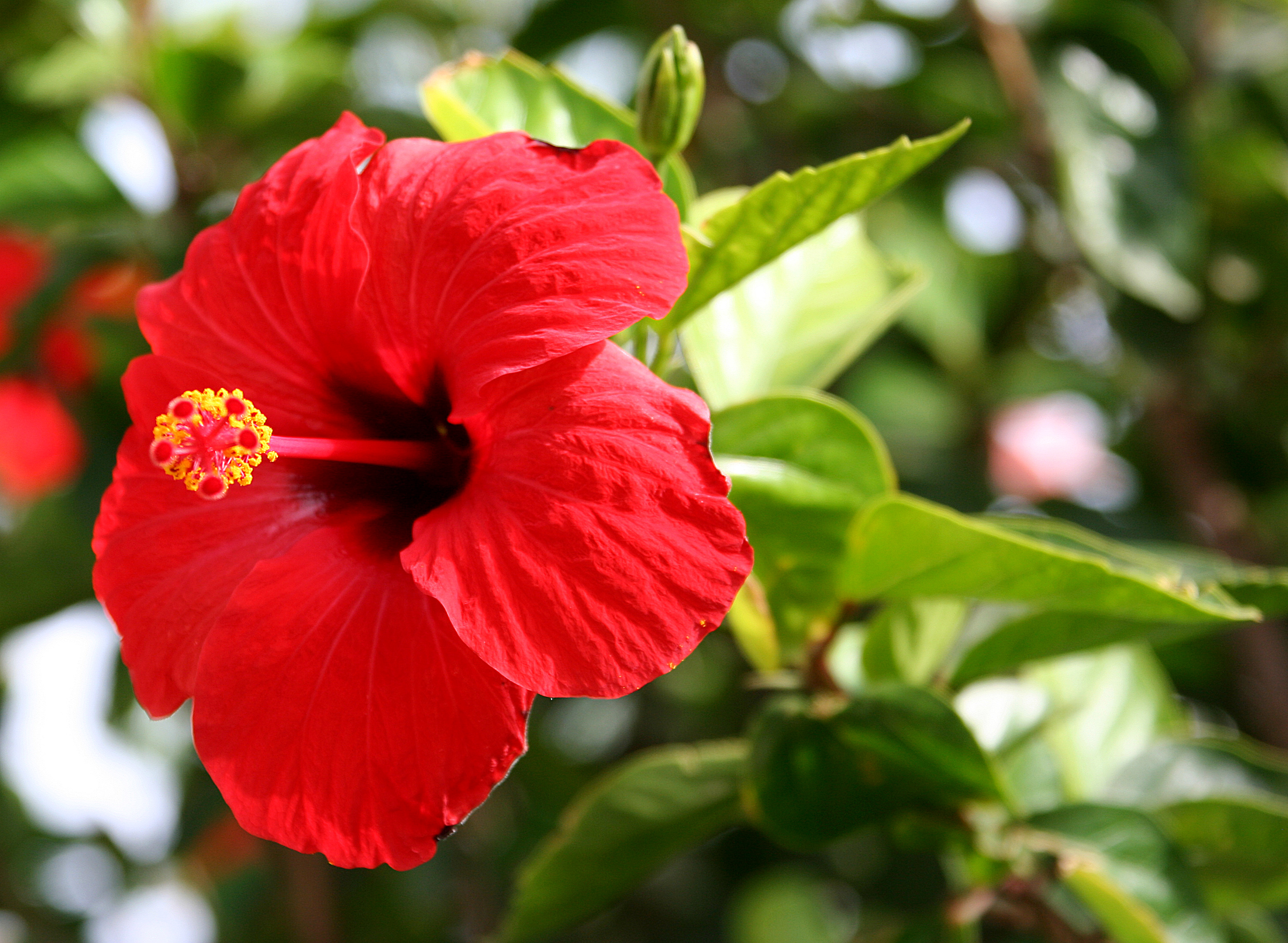
The national flower of Malaysia is the bunga raya (Chinese hibiscus, Hibiscus rosa-sinensis).
Maldives
The national flower of the Maldives is the pink polyantha rose (Rosa polyantha), called fiyaathoshi finifenmaa.
Mongolia
The national flower of Mongolia is Scabiosa comosa (, ber tsetseg).
Myanmar
The national flower of Myanmar is Pterocarpus indicus (paduak).
Nepal

The national flower of Nepal is the tree rhododendron (Rhododendron arboreum).
North Korea
The national flower of North Korea is the Korean mountain magnolia (Magnolia sieboldii, Korean: 목란/木蘭 mongnan).
Palestine
The national flower of Palestine is the Faqqua iris (Iris haynei).
Pakistan
The national flower of Pakistan is common jasmine also known as Jasminum officinale.
Philippines
The Philippines adopted the sampaguita (Arabian jasmine, Jasminum sambac) in 1934 as its national flower because it symbolizes purity and cleanliness due to its color and sweet smell. It is popularly strung into garlands presented to visitors and dignitaries and is a common adornment on religious images.
Sampaguita in the Filipino language is a direct loan word from the Indian sanskrit word "campaka". Plants of some species of flowers like Sampaguita, fruits like mango and nangka, vegetables like ampalaya, patola, malunggay, name of Philippine's pre-Christian chief god Bathala (from sanskrit Bhattara Guru), came from India during pre-Spanish Indianised trade and influences. Among strong traces of continuity of Hindu influence in Philippines are placing of Sampaguita garland around the neck of visitors to show hospitality and friendship, throwing the rice over bride and groom for prosperity, performing paninilbihan, paying dowry, visiting a shrine to pray for fertility, etc.
Saudi Arabia
The national flower of Saudi Arabia is Royal Jasmine (Jasminum grandiflorum).
Singapore
The national flower of Singapore is a hybrid orchid cultivar known as the Singapore orchid or Vanda Miss Joaquim (Vanda hookeriana × Vanda teres).
South Korea
The national flower of South Korea is Hibiscus syriacus. Known in South Korea as mugunghwa (Korean: 무궁화), the flower's symbolism relates to the Korean word mugung, which means "eternity" or "inexhaustible abundance". Despite being made the national flower officially after Korea regained its independence from Japan, mugunghwa has been associated with Korean culture for many centuries, with the Silla kingdom having called itself the "Country of the Mugunghwa" (Korean: 근화향, Romanized: Geunhwahyang).
Sri Lanka

The national flower of Sri Lanka is Nil mānel (නිල් මානෙල්), the blue-star water-lily (Nymphaea stellata). Although nil means "blue" in Sinhala, the Sinhalese name of this plant is often rendered as "water-lily" in English. This beautiful aquatic flower appears in the Sigiriya frescoes and has been mentioned in ancient Sanskrit, Pali and Sinhala literary works. Buddhist lore in Sri Lanka claims that this flower was one of the 108 auspicious signs found on Prince Siddhartha's footprint.
Taiwan
Main article: National flower of Taiwan
The national flower of Taiwan was officially designated as the plum blossom by the Executive Yuan on 21 July 1964. The plum blossom, known as the meihua (), is a symbol of resilience and perseverance in the face of adversity, because plum trees often bloom most vibrantly even during the harshest winters. The triple grouping of stamens represents Dr. Sun Yat-sen's Three Principles of the People, while the five petals symbolize the five branches of the government.
Thailand
The national flower of Thailand is the Golden Shower Tree (Cassia fistula). The tree (which is also the country's national tree) is locally known as ratchaphruek (), while the flower itself is known as dok khun ().
United Arab Emirates
The national flower of the United Arab Emirates is Tribulus omanense. A creeping plant with bright yellow flowers, it thrives in the UAE's arid climate, growing well in areas such as sand dunes, road verges, oases and desert plains.
Vietnam
.jpg)
The national flower of Vietnam is the lotus flower (Nelumbo nucifera).
Europe
Albania
- Albania – Papaver rhoeas
Andorra
- Andorra – Narcissus poeticus
Austria
The national flower of Austria is edelweiss (Leontopodium nivale).
Belgium
- Brussels – Iris pseudacorus
- Flanders – poppy
- Wallonia – Gaillardia
Bulgaria
- Bulgaria – rose
Croatia
- Croatia – Iris croatica (unofficial)
Cyprus
- Cyprus – Cyclamen cyprium
Czech Republic
- Czech Republic – Tilia
Denmark
- Denmark – The daisy, specifically either marguerite daisy (Argyranthemum frutescens) or oxeye daisy (Leucanthemum vulgare), the latter being native to Denmark and becoming more frequently used. Previously red clover (Trifolium pratense) had been announced as the national flower in the 1930s, but this choice was not popular with the public and it was largely forgotten.
Estonia
- Estonia – cornflower
Finland
- Finland – lily of the valley
France
- Kingdom of France (12th-19th century) – Iris pseudacorus, fleur-de-lis
- Brittany – Ulex and heather
Guernsey
- Guernsey – Nerine sarniensis
Hungary
- Hungary - The national flower is the tulip. It is a symbol deeply rooted in Hungarian history and culture, particularly associated with the Ottoman period when tulips were introduced to the country.
Iceland
- Iceland – White dryad (Dryas octopetala)
Italy
The flower of the strawberry tree (Arbutus unedo) is the national flower of Italy. The strawberry tree began to be considered one of the national symbols of Italy in the 19th century, during the Italian unification, because with its autumn colors is reminiscent of the flag of Italy (green for its leaves, white for its flowers and red for its berries). For this reason the strawberry tree is considered the national tree of Italy.
The Italian poet Giovanni Pascoli dedicated a poem to the strawberry tree. He refers to the Aeneid passage in which Pallas, killed by Turnus, was posed on branches of a strawberry tree. He saw in the colours of that plant a prefiguration of the flag of Italy and considered Pallas the first national cause martyr. Pascoli's ode says:
Lithuania
- Lithuania – Ruta graveolens
Malta
The national flower is the Maltese rock-centaury (Cheirolophus crassifolius).
Netherlands
While most people believe it to be the tulip, the actual national flower of the Netherlands is the daisy (Bellis perennis). It was elected in a public vote in 2023.
North Macedonia
The national flower of North Macedonia is the poppy.
Poland
- Poland – red poppy
- Kashubia region – Kashubian vetch
Portugal
Portugal does not officially have a national flower, though the lavender is commonly cited. The carnation (Dianthus caryophyllus) is also a symbol of the nation's triumph against the authoritarian far-right Estado Novo dictatorship, known as the Carnation Revolution.
Romania
- Romania – peony
Russia
- Russia – chamomile
Serbia
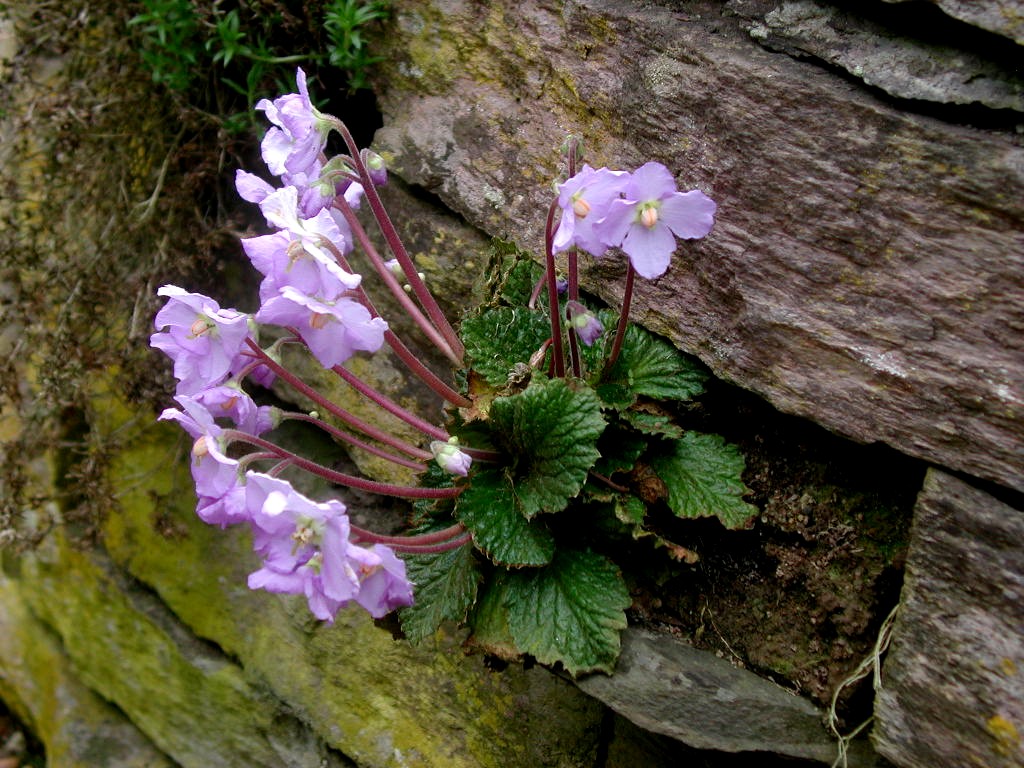
The national flower of Serbia is Natalie's ramonda (Ramonda nathaliae). It is considered a symbol of Serbia's struggle and victory in World War I, with the country suffering the largest casualty rate relative to its population. To commemorate Serbian soldiers who died in the war, as well as the resurrection of the country after the devastation, people wear artificial Natalie's ramonda as a symbol of remembrance, especially during the week leading up to Armistice Day, which is a public holiday.
Slovakia
- Slovakia – Tilia
Slovenia
The national flower of Slovenia is a carnation. It is traditionally present at all significant moments of someone's life. White carnations can be traditionally present at Slovenian christenings and at Slovenian weddings, where the bride has a white carnation flower stuck in her hair and the groom wears a white carnation pinned to his breast pocket or buttonhole. While white carnation represents happiness and celebration, red carnation has a more diverse meaning in Slovenian culture. First meaning comes from French and Russian revolutionaries and symbolises revolution and workers. Red carnations also symbolise love and courtship. In folksongs and folk traditions, when young men in the country villages were calling girls in the night under their windows and serenading them, receiving a red carnation bouquet meant, that the serenaded girl accepted their courtship. Finally, at the funeral of a loved one, their acquaintances, friends and family bid a final farewell to the deceased by each throwing a red carnation into the open grave.
Furthermore, carnations often appear embroidered on tablecloths, handkerchiefs, blouses, bed linen, lace and on parts of Slovenian national costume, such as skirts, trouser legs and traditional headwear, especially avba. Additionally, carnations are often flowers hanging from flowerbeds on balconies and windows, which is a source of pride for Slovenian homes. This can be observed throughout Slovenia, most prominently in Gorenjska and Štajerska regions.
Spain
- Spain – carnation
Sweden
The national flower of Sweden is Campanula rotundifolia. It won a public vote in 2021.
Switzerland
The national flower of Switzerland is edelweiss (Leontopodium nivale).
Turkey
The national flower of Turkey is the tulip.
Ukraine
- Ukraine – sunflower, guelder rose
United Kingdom
Each of the United Kingdom's four constituent countries has one or more national flower:
- England – Tudor rose
- Wales – daffodil, leek
- Northern Ireland – flax flower, clover leaf
- Scotland – thistle,
North America
Canada
The maple leaf is widely used as a symbol for Canada. The maple tree was officially recognized as Canada's arboreal emblem in 1996.
Canada's provinces and territories also have official provincial or territorial floral emblems:
- Ontario: white trillium (Trillium grandiflorum), adopted in 1937.
- Quebec: blue flag (Iris versicolor), adopted in November 1999.
- Nova Scotia: mayflower (Epigea repens), adopted in 1901.
- New Brunswick: purple violet (Viola cucullata), adopted in 1936.
- Manitoba: prairie crocus (Pulsatilla ludoviciana), adopted in 1906.
- British Columbia: Pacific dogwood (Cornus nuttallii), adopted in 1956.
- Prince Edward Island: lady's slipper (Cypripedium acaule), a species of orchid, adopted in 1947.
- Saskatchewan: western red lily (Lilium philadelphicum var. andinum), adopted in 1941.
- Alberta: wild rose (Rosa acicularis), also known as the prickly rose, adopted in 1930.
- Newfoundland and Labrador: northern pitcher plant (Sarracenia purpurea), adopted in 1954. It was first chosen as a symbol of Newfoundland by Queen Victoria, and was used on the island's coinage until 1938.
- Northwest Territories: mountain avens (Dryas octopetala), adopted in 1957.
- Yukon: fireweed (Epilobium angustifolium), adopted in 1957.
- Nunavut: purple saxifrage (Saxifraga oppositifolia), unanimously adopted by the Legislative Assembly of Nunavut on 1 May 2000.
Many Canadian flags and coats-of-arms have floral emblems on them. The flag of Montreal has four floral emblems. On the right side of the flag of Saskatchewan overlapping both green and gold halves is the western red lily, the provincial floral emblem. The coat of arms of Port Coquitlam has the city's floral emblem, the azalea, displayed on a collar. The coat of arms of Prince Edward Island displays lady's slippers, the floral emblem of the island. When coat of arms of Nova Scotia were reassumed in 1929, the trailing arbutus or mayflower, the floral emblem of Nova Scotia, was added.
Mexico
The national flower of Mexico is the dahlia (Dahlia pinnata).
United States
Main article: List of U.S. state and territory flowers
In 1986, President Ronald Reagan signed legislation to make the rose the national floral emblem of the United States. Adopted as representative symbols by state legislatures, each of the 50 states has a state flower and tree. Each of the five inhabited territories, namely American Samoa, Guam, the Northern Mariana Islands, Puerto Rico, and the U.S. Virgin Islands, also have an official territory flower.
Central America and the Caribbean
Antigua and Barbuda
The national flower of Antigua and Barbuda is Agave karatto, also known as "dagger log" or "batta log".
The Bahamas
The national flower of the Bahamas is the Yellow Elder (Tecoma stans).
Barbados
The national flower of Barbados is known locally as the Pride of Barbados (Caesalpinia pulcherrima).
Belize
The national flower of Belize is the black orchid (Prosthechea cochleata).
Costa Rica
The national flower of Costa Rica is the guaria morada (Guarianthe skinneri).
Cuba
The national flower of Cuba since 13 October 1936, is the white ginger lily.
Dominica
The national flower of Dominica is Sabinea carinalis, commonly known as Carib wood or Bois Caraibe.
Dominican Republic
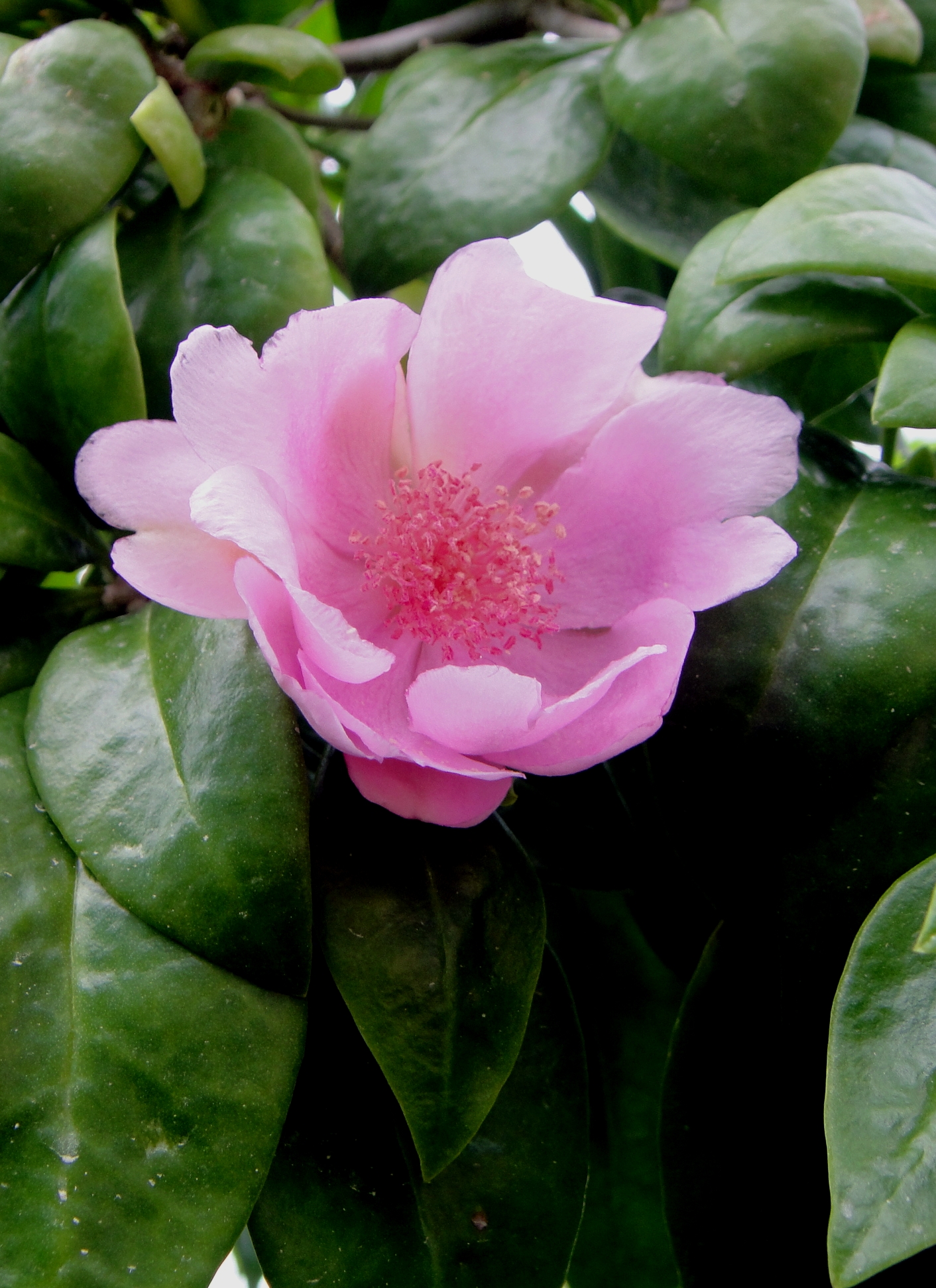
The Dominican Republic's national flower was originally the flower of the caoba (West Indian mahogany tree, Swietenia mahagoni). In 2011, the mahogany was instead dubbed the national tree, vacating the national flower spot for the Bayahíbe rose (Leuenbergeria quisqueyana) in order to bring attention to its conservation.
El Salvador
The national flower of El Salvador is the flor de izote, of the Yucca gigantea.
Guatemala
The national flower of Guatemala is the monja blanca (Lycaste skinneri var. alba).
Haiti
The national flower of Haiti is the Choeblack or rose kayenn (Hibiscus).
Honduras
The national flower of Honduras is the orchid Rhyncholaelia digbyana.
Jamaica
The national flower of Jamaica is the lignum vitae (Guaiacum officinale).
Nicaragua

The national flower of Nicaragua is known as the sacuanjoche (Plumeria rubra), which grows on a conical tree that flowers around May. Sacuanjoche flowers are most fragrant at night in order to lure sphinx moths to pollinate them. The flowers have no nectar, and simply dupe their pollinators.
Oceania


Australia
The golden wattle (Acacia pycnantha) was officially proclaimed the floral emblem of Australia on 1 September 1988.
Fiji
The national flower of Fiji is tagimaucia (Medinilla waterhousei), a vine with red and white flowers endemic to the highlands of the island of Taveuni.
French Polynesia
The Tahitian gardenia (tiare flower) is the national flower of Tahiti, French Polynesia, and the Cook Islands.
New Zealand
New Zealand does not have an official national flower, but the silver fern (foliage) is acknowledged as its national emblem. The Kōwhai (Sophora spp., native trees with yellow cascading flowers) is usually regarded as the national flower. Other plant emblems are Koru (a curled fern symbol) and the crimson-flowered Pohutukawa (Metrosideros excelsa), also called New Zealand's Christmas tree.
Tonga
The heilala (Garcinia sessilis) is Tonga's national flower. The name of Tonga's beauty pageant, the Heilala Festival, is taken from this flower. Resorts as well as consumer products are also often named after this flower, such as the Heilala Lodge and Heilala Vanilla. The flower is also used in Tonga for medicinal and ornamental purposes.
South America
Argentina
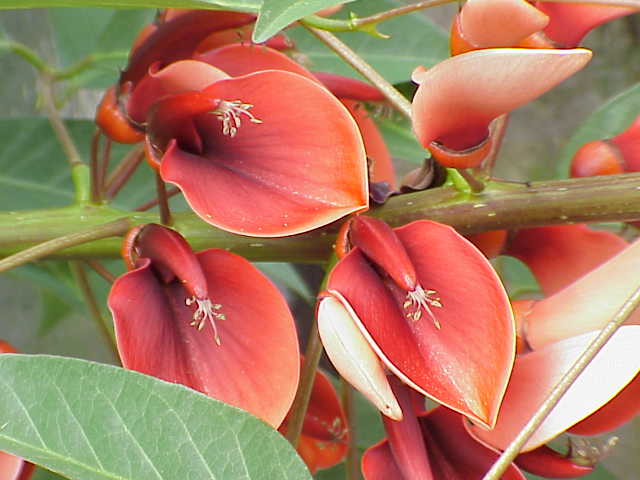
The national flower of Argentina is the flower of the ceibo tree (Erythrina crista-galli), also known as seibo or bucaré.
Bolivia
Bolivia has two national flowers: the kantuta (Cantua buxifolia) and patujú (Heliconia rostrata).
Brazil
Brazil has no official national flower. It is popularly considered to be the flower of the golden trumpet tree (Handroanthus chrysotrichus; ) – so much so that multiple proposals have been put forth over the last 70 years to recognize it officially. However, for various reasons, none have ever been voted on by Congress to be ratified.
Chile

The national flower of Chile is the copihue (Lapageria rosea).
Colombia
Cattleya trianae is the national flower of Colombia and is the orchid which flowers in May. The May flower was chosen because the colors are the same as those of the Colombian flag.
Guyana
The national flower of Guyana is the Victoria regia lily (Victoria amazonica).
Paraguay
The national flower of Paraguay is mburucuyá (Passiflora caerulea).
Peru
The national flower of Peru is Cantua buxifolia (cantuta, also spelled kantuta or qantuta, from Quechua qantu).
Suriname
Called faya lobi ("fiery love") in Sranantongo, the jungle geranium (Ixora coccinea) is commonly considered a symbol of Suriname.
Uruguay
The national flower of Uruguay is the flower of the ceibo tree (Erythrina crista-galli).
Venezuela
The national flower of Venezuela is the Flor de Mayo (Cattleya mossiae), an orchid.
Subnational plants
| Country | Subdivision | Name | Pictures | Notes | ||
|---|---|---|---|---|---|---|
| Canada | Alberta | Wild Rose | [[File:Rosa acicularis 8448.JPG | 90px]] | ||
| British Columbia | Pacific Dogwood | [[File:Cornus_nuttallii_08546.JPG | 90px]] | |||
| Manitoba | Prairie Crocus | [[File:Pasque Flower (Pulsatilla vulgaris) (17022184800).jpg | 90px]] | |||
| New Brunswick | Purple Violet | [[File:Viola cucullata flower.jpg | 90px]] | |||
| Newfoundland and Labrador | Pitcher plant | [[File:Sarracenia purpurea Flowers.JPG | 90px]] | The pitcher plant was officially declared as the provincial flower in 1954, but had appeared on the colony's coinage as early as the 1880s. It can be found in the marshlands of the province feeding on insects that fall into its leaves and drown. | ||
| Northwest Territories | Mountain Avens | [[File:Dryas octopetala LC0327.jpg | 90px]] | |||
| Nova Scotia | Mayflower | [[File:Trailing arbutus 2006.jpg | 90px]] | |||
| Nunavut | Purple Saxifrage | [[File:Purpsaxifrage2.jpg | 90px]] | |||
| Ontario | White Trillium | [[File:Trillium_grandiflorum_042316.jpg | 90px]] | |||
| Prince Edward Island | Pink Lady's Slipper | [[File:Cypripedium acaule - Sasata edit1.jpg | 90px]] | |||
| Quebec | Blue Flag Iris | [[File:Blue Flag, Ottawa.jpg | 90px]] | The Blue Flag Iris replaced the Madonna Lily in 1999, since the lily was not native to Quebec. | ||
| Saskatchewan | Western Red Lily | [[File:Lilium philadelphicum var. philadelphicum.jpg | 90px]] | |||
| Yukon | Fireweed | [[File:EpilobiumAngustifolium 6184.jpg | 90px]] | |||
| Sweden | Småland | *Linnaea borealis* | [[File:Linnaea borealis 1190.JPG | 90px]] | The Swedish botanist Carl Linnaeus, sw. Carl von Linné (1707–1778), often called the father of taxonomy or "The flower-king", was born in Älmhult in Småland. He gave the Twinflower its Latin name based on his own (*Latin: Linnaea borealis*), because of his particular fondness of it. The flower has become Småland's provincial flower. | |
| China | Hong Kong | *Bauhinia blakeana* | [[File:Bauhinia blakeana (Key West).jpg | 90px | The Bauhinia, the national flower of the Hong Kong Special Administrative Region.]] | The blossom, native to the territory was chosen as the logo of the Urban Council in 1965 and was later incorporated into the flag and emblem of the Hong Kong Special Administrative Region of the People's Republic of China after the 1997 transfer of sovereignty. |
| Macau | Nelumbo nucifera | [[File:Sacred lotus Nelumbo nucifera.jpg | 90px]] | A stylised depiction of the flower can be seen in the territory's flag. | ||
| Ireland | County Offaly | Bog-rosemary | [[File:Andromeda polifolia bloom.jpg | 90px]] | ||
| Pakistan | [[File:Proposed Flag of Islamabad Capital Territory.svg | 22px]] Islamabad Capital Territory | Neeli Gulmohur | |||
| Hybrid tea rose | [[File:Jacarandá Mimoso(Jacaranda mimosifolia) na entrada da cidade de Jardinópolis - panoramio.jpg | 90px]] | ||||
| [[File:Mainzer Fastnacht.JPG | 90px]] | The floral emblems of the four constituting provinces of Pakistan; however, they are all unofficial and are not recognised by the new Federal Government of Pakistan. | ||||
| [[File:Flag of Balochistan.svg | 22px]] Balochistan | Silver date palm tree | ||||
| Tulipa sylvestris | [[File:A tree in desert.jpg | 90px]] | ||||
| [[File:Lajvar (3).JPG | 90px]] | |||||
| [[File:Flag of Khyber Pakhtunkhwa.svg | 22px]] Khyber Pakhtunkhwa | Afghan pine | ||||
| Tulipa clusiana | [[File:Kızılçam ağacı - Pinus brutia 02.JPG | 90px]] | ||||
| [[File:Tulipa clusiana1ScottZona.jpg | 90px]] | |||||
| [[File:Flag of Punjab.svg | 22px]] The Punjab | Indian rosewood | ||||
| Sadabahar | [[File:Blackwood Tree (4656262165).jpg | 90px]] | ||||
| [[File:Catharanthus roseus-1.jpg | 90px]] | |||||
| [[File:Flag of Sindh.svg | 22px]] Sindh | Indian lilac tree | ||||
| Sindhi lotus | [[File:Neem tree and shrubs (2011).jpg | 90px]] | ||||
| [[File:White Lotus Blossom.JPG | 90px]] | |||||
| Gilgit–Baltistan | Himalayan deodar | |||||
| Alpine Blue Star | [[File:Alpine in Kalam.jpg | 90px]] | ||||
| [[File:Columbine (Aquilegia caerulea) - 26.JPG | 90px]] | |||||
| [[File:Flag of Azad Kashmir.svg | 22px]] Azad Jammu and Kashmir | Chinar tree/Kashmir maple tree | ||||
| Snow Rose | [[File:Platanus orientalis tree.JPG | 90px]] | ||||
| [[File:Rhododendron ferrugineux-Rose des Alpes (Rhododendron ferrugineum) en Vanoise.jpg | 90px]] | |||||
| Spain | Catalonia Catalonia | Weaver's Broom | ||||
| (*Spartium junceum*) | [[File:Spartium junceum flower.jpg | 90px]] | Usually along with red poppies | |||
| Galicia Galicia | Gorse flower | |||||
| (*Ulex europaeus*) | [[File:Ulex europaeus flowers.jpg | 90px]] |
Australia
Main article: List of Australian floral emblems
- Australian Capital Territory – Royal bluebell (Wahlenbergia gloriosa)
- New South Wales – New South Wales waratah (Telopea speciosissima)
- Northern Territory – Sturt's desert rose (Gossypium sturtianum)
- Queensland – Cooktown orchid (Dendrobium phalaenopsis)
- South Australia – Sturt's desert pea (Swainsona formosa)
- Tasmania – Tasmanian blue gum (Eucalyptus globulus)
- Victoria – Pink (common) heath (Epacris impressa)
- Western Australia – Red and green kangaroo paw (Anigozanthos manglesii)
Norway
- Lily-of-the-valley was chosen as the county flower of Østfold
- Globe flower is the county flower of Troms
United Kingdom
Each of the four countries of the United Kingdom has a traditional floral emblem:
- England – officially the Tudor rose or unofficially the red rose and English oak.
- Northern Ireland – the flax, orange lily, or shamrock.
- Scotland – the Scotch thistle, Scottish bluebell (harebell), or heather.
- Wales – the daffodil, leek, Tudor Rose, or sessile oak.
County flowers
Main article: County flowers of the United Kingdom
A county flower is a flowering plant chosen to symbolise a county. They exist primarily in the United Kingdom, but some counties in other countries also have them.
One or two county flowers have a long history in England – the red rose of Lancashire dates from the Middle Ages, for instance. However, the county flower concept was only extended to cover the whole United Kingdom in 2002, as a promotional tool by a charity. In that year, the plant conservation charity Plantlife ran a competition to choose county flowers for all counties, to celebrate the Golden Jubilee of Queen Elizabeth II.
Plantlife's scheme is loosely based on Britain's historic counties, and so some current local government areas are not represented by a flower, and some of the counties included no longer exist as administrative areas. Flowers were also chosen for thirteen major cities: Belfast, Birmingham, Bristol, Cardiff, Edinburgh, Glasgow, Leeds, Liverpool, London, Manchester, Newcastle upon Tyne, Nottingham and Sheffield. The Isles of Scilly was also treated as a county (distinct from Cornwall) for the purpose of the scheme. The Isle of Man was included, even though it is not a county, but a self-governing territory outside of the United Kingdom with an existing national flower: the ragwort or cushag. The Channel Islands were not included.
A total of 94 flowers were chosen in the competition. 85 of the 109 counties have a unique county flower, but several species were chosen by more than one county. Foxglove or Digitalis purpurea was chosen for four counties – Argyll, Birmingham, Leicestershire and Monmouthshire – more than any other species. The following species were chosen for three counties each:
- Bog Rosemary Andromeda polifolia (Cardiganshire, Kirkcudbright and Tyrone)
- Cowslip Primula veris (Northamptonshire, Surrey and Worcestershire)
- Harebell Campanula rotundifolia (Antrim, Dumfriesshire and Yorkshire)
- Thrift Armeria maritima (Buteshire, Pembrokeshire and the Isles of Scilly) And the following species were chosen for two counties:
- Grass-of-parnassus Parnassia palustris (Cumberland and Sutherland)
- Pasqueflower Pulsatilla vulgaris (Cambridgeshire and Hertfordshire)
- Common Poppy Papaver rhoeas (Essex and Norfolk) In addition, Sticky Catchfly Lychnis viscaria was chosen for both Edinburgh and Midlothian, the county containing Edinburgh.
For most counties, native species were chosen, but for a small number of counties, non-natives were chosen, mainly archaeophytes.
Sri Lanka
The flame lily was designated as the national flower of the unrecognised state of Tamil Eelam by the Liberation Tigers of Tamil Eelam (LTTE), because it contains all the colours contained in the Tamil Eelam national flag and because it grows during November, coinciding with Maaveerar Naal.
Unofficial plants
Armenia
No plant or flower seems to be among the current official symbols. Some flowering plants from the area include Althaea armeniaca, Armenian Basket, Muscari armeniacum, Papaver lateritium, Armenian vartig (vargit), and Tulipa armena.
Azerbaijan
Azerbaijan currently has no official national flower. Traditionally, various regions have different designations where national symbols are concerned. The city of Shusha named the Khari Bulbul (Ophrys caucasica) the floral emblem of the Nagorno-Karabakh.
Belarus
The unofficial national flower of Belarus is wild blue flax, Centaurea.
China
China currently has no official national flower. Traditionally, various regions have different designations where national symbols are concerned.
In 1903, the Qing dynasty named the peony (牡丹) the floral emblem of the nation. The peony has long been considered a flower of wealth and honor in China.
The puppet state Manchukuo followed Japan's model of dual floral emblems: the "spring orchid" (Cymbidium goeringii) for the Emperor and the imperial household, and the sorghum blossom (Sorghum bicolor) for the state and the nation.
The plum blossom, meihua (), has also been one of the most beloved flowers in Chinese culture. The Republic of China government named the plum blossom as the national flower in 1964. The plum blossom is symbol for resilience and perseverance in the face of adversity, because plum blossoms often bloom most vibrantly even amidst the harsh winter snow.
The People's Republic of China, established in 1949, has not yet designated an official floral emblem. There have been several petitions in recent years to officially adopt one. However, the government has not taken any action yet. A poll in 2005 showed that 41% of the public supports peony as the national flower while 36% supported the plum blossom. Some scholars have suggested that the peony and plum blossoms may be designated as dual national flowers. In addition, the orchid, jasmine, daffodil and chrysanthemum have also been held as possible floral symbols of China.
Ecuador
No flower has been officially declared as a national symbol. Unofficially the rose and the orchid are claimed to hold that title.
Egypt
Both Blue Egyptian Lotus and White Egyptian Lotus are regarded as Egypt's national flowers, and they appear in many Ancient Egyptian paintings and monuments.
France
While France does not have an official national flower, the fleur-de-lis, which was a symbol of the royal family, as well as the cornflower (blue), marguerite (white), and red poppy, which together represent the tri-colored national flag, are also generally treated as French national flowers.
Guinea
In a 2018 public vote Vernonia djalonensis was voted as the national flower of Guinea, a decision which is currently awaiting government approval
Japan
Japan's national government has never formally named a national flower, as with other symbols such as the green pheasant, which was named as national bird by a non-government body in 1947. In 1999, the national flag and anthem were standardised by law.
A de facto national flower for Japan for many is the sakura (cherry blossom), while a stylised depiction of a Chrysanthemum morifolium is used as the official emblem of the imperial family (Imperial Seal of Japan). The Paulownia blossom was also used by the imperial family in the past, but has since been appropriated by the Prime Minister and the government in general (Government Seal of Japan).
Vietnam
While Vietnam does not have an official flower, four plants are traditional regarded as the four graceful plants, namely: the lotus, the pine, bamboo, and the chrysanthemum. The lotus (Nelumbo nucifera) is generally regarded as the unofficial national flower of Vietnam, as portrayed, for example, on their postage stamps. In Vietnamese tradition, the lotus is regarded as the symbol of purity, commitment and optimism for the future.
References
References
- James B. Minahan. (2009). "The Complete Guide to National Symbols and Emblems". [[Bloomsbury Publishing]].
- "Republic of Mauritius- National Flower".
- "The National Flower of Nigeria: Costus Spectabilis {{!}} Nigerian Embassy in Tel-Aviv, Israel".
- (March 2012). "The Mysterious and Exotic Plants of Seychelles {{!}} {{!}} International Magazine Kreol".
- "South Africa's National Flower".
- "Flora of Zimbabwe: Species information: Gloriosa superba".
- "Gloriosa superba {{!}} PlantZAfrica".
- "Meaning of Khatol in English or Pashto".
- "Constitution Of The People's Republic Of Bangladesh". [[Supreme Court of Bangladesh]].
- "National Symbols". Tourism Council of Bhutan.
- (30 March 2017). "National flower renamed as Meconopsis gakyidiana". Bhutan Broadcasting Service Corporation Limited.
- "ASEAN National Flowers". [[Association of Southeast Asian Nations]] (ASEAN).
- "ROYAL DECREE on Designation of Animals and Plants as National Symbols of the Kingdom of Cambodia". Forestry Administration of Cambodia.
- "Sphaerocoryne affinis (Teijsm. & Binn.) Ridl.".
- "ASEANWEB - ASEAN National Flowers".
- [http://www.proxsis.com/perundangan/LH/doc/uu/F00-1993-00004.pdf Keputusan Presiden No. 4 Tahun 1993] {{webarchive. link. (2 April 2012)
- (25 November 1394). "بررسی سیر تاریخی مفاهیم گل نیلوفر آبی(لوتوس) در هنرومعماری اسلامی و ایرانی تاملی اجمالی بر تجلی نماد نیلوفرآبی در هنرهای آریائی ، شرقی وایرانی – اسلامی".
- [http://www.ynet.co.il/articles/0,7340,L-4457684,00.html הכלנית: הזוכה בתחרות "הפרח של ישראל"] {{Webarchive. link. (3 January 2018 , [[ynet]], 25 November 2013.)
- (25 November 2013). "'Calanit' (the anemone) crowned as Israel's national flower - National News - Jerusalem Post".
- "Wildlife and Vegetation". Government of Jordan.
- "KUNA: "Arfaj" is Kuwait''s nat''l flower - Health - 03/07/2008".
- Lian, Michelle. "Hibiscus – Malaysia's national pride". AllMalaysia.info.
- "Sponsored by Maldives Airports Company Limited - A tribute to the Maldives Environment".
- Б. МӨНГӨНТАМИР. (27 October 2014). "Mongolia has named its national flower". News.MN.
- Rohit Kumar. (1999). "Nepal, Nature's Paradise: Insight Into Diverse Facets of Topography, Flora & Ecology". M. Devi.
- (1988). "North Korea Quarterly". Institute of Asian Affairs.
- "The National Flower of Palestine: Faqqua Iris".
- "National Symbols of Pakistan". Official Gateway to the Government of Pakistan.
- [[William Henry Scott (historian)
- Jean-Paul G. POTET, 2013, Arabian and Persian loanwords in Tagalog, p. 250.
- M.c. Halili, 2004, [https://books.google.com/books?id=gUt5v8ET4QYC&dq=sampaguita+originally+from+sanskrit&pg=PA49 Philippine History], [[Rex Bookstore]], p. 49.
- Cecilio D. Duka, 2008, [https://books.google.com/books?id=4wk8yqCEmJUC&dq=sampaguita+originally+from+sanskrit&pg=PA35 Struggle for Freedom], [[Rex Bookstore]], p. 35.
- "Saudi Arabia – World Sensorium / Conservancy".
- "National Flower". [[National Heritage Board (Singapore)]].
- "Korea.net".
- (8 May 2018). "The Korean rose".
- "National Administration> National Symbols of the Republic of Korea> the National Flower - Mugunghwa".
- "Sri Lanka National Flower". [[Government of Sri Lanka]].
- "Zeylanica (Nymphaea stellata)".
- "National Stats of Bangladesh".
- "National Flower".
- [http://www.gio.gov.tw/taiwan-website/aboutroc/national_flower.htm Government Information Office, Taiwan - National Flower] {{webarchive. link. (5 August 2011)
- (January 2003). "The Three Friends of Winter: Paintings of Pine, Plum, and Bamboo from the Museum Collection". [[National Palace Museum]].
- [https://web.archive.org/web/20200221050821/https://www.mofa.gov.tw/webapp/np.asp?ctNode=446 National Flag, Anthem and Flower]
- Katemopoulos, Maureen. (2017-09-21). "Types Of Flowers In Dubai".
- (2025-03-28). "National Flower Of UAE – Fascinating Facts And Meaning".
- (May 2014). "Progress on International Lotus Registration and Construction of International Nelumbo Database". Acta Horticulturae.
- admin. (1 August 2015). "De iris".
- NWS, VRT. (20 January 2024). "Jouw vraag over Brussel: Waarom is de iris het symbool van Brussel?".
- "National, Native and Popular Flower of Belgium - The Flower Expert - Flowers Encyclopedia".
- James Minahan {{google books. jfrWCQAAQBAJ. The Complete Guide to National Symbols and Emblems Vol.1
- "ΤΟ ΕΘΝΙΚΟ ΦΥΤΟ ΤΗΣ ΚΥΠΡΟΥ".
- "Lípa - český národní strom".
- "Nationalplanter og -dyr". Naturstyrelsen, Danish Ministry of the Environment.
- "Lily-of-the-valley - Nationalparks.fi".
- Pinoteau, Hervé. "Fleurs de lis".
- (4 April 2017). "It's time nerines got more recognition". Guernsey Press.
- (1964). "National Flower Or Floral Emblem: Hearing". [[United States Congress]].
- (7 April 1912). "Giovanni Pascoll, Poet, Dead.". [[The New York Times]].
- "Il fiore nazionale dell'Italia (e quello degli altri Paesi del mondo)".
- {{in lang. it various authors - Guida pratica agli alberi e arbusti in Italia; Biblioteca per chi ama la natura - Selezione dal Reader's Digest Milano 1983, 1991.
- (3 October 2011). "Il corbezzolo simbolo dell'Unità d'Italia. Una specie che resiste agli incendi".
- Giovanni Pascoli, in the autograph note to his poem "Il corbezzolo" ("The strawberry tree"), compared the [[virgil]]ian, deposed after death on branches of a strawberry tree, to the Italian martyrs wrapped up, during the burial ceremonies, in the Italian flag.
- James Minahan. ''The complete guide to national symbols and emblems, Vol. 1''. Greenwood Press. 2009.
- Stevens, D.. (2006). "''Cheirolophus crassifolius''".
- "Winnaar: Madeliefje is onze Nationale Bloem - Vroege Vogels - BNNVARA".
- (2019). "North Macedonia". [[Bradt Travel Guides]].
- "Wirtualny atlas roślin: Wyka kaszubska / Vicia cassubica".
- "Portugal's national flower".
- (15 December 2020). "20 Flores nacionais de diferentes países e alguns dados curiosos sobre elas". incrivel.club.
- Nora de Angelli. (20 May 2023). "Bujorul românesc, cel mai cunoscut bujor de la noi".
- "President honors Serbian WW1 soldiers in Greece: In commemoration of Armistice Day, President Tomislav Nikolić paid homage to fallen Serbian soldiers at the Greek island of Vido.".
- (9 November 2012). "Serbia to mark Armistice Day as state holiday".
- "Simbol slovenstva - ob krstu je bel, na krsti rdeč".
- (23 September 2016). "Red Carnation: The National flower of Spain".
- (5 August 2016). "Red Carnation: The National Flower of Spain".
- (13 March 2021). "Sveriges nationalblomma".
- (13 March 2021). "Resultat Nationalblomman".
- (28 February 2022). "How sunflowers officially connect Kansas and Ukraine".
- (31 March 2022). "Why Sunflowers Are Ukraine's National Flower". [[Smithsonian Institution]].
- Hassan, Jennifer. (2 March 2022). "The sunflower, Ukraine's national flower, is becoming a global symbol of solidarity". [[The Washington Post]].
- [[United States Congress]]. (1959). "Congressional Record: Proceedings and Debates of the 86th Congress, First Session". [[United States Government Printing Office]].
- Heeland, Kelsey. (14 March 2023). "The National Flowers of the United Kingdom".
- (2002). "Compendium of Symbolic and Ritual Plants in Europe: Herbs". Man & Culture Publishers.
- Minahan, James. (23 December 2009). "The Complete Guide to National Symbols and Emblems". [[ABC-Clio]].
- (3 March 2014). "Official symbols of Canada". Government of Canada.
- (13 August 2013). "Ontario". Government of Canada.
- (13 August 2013). "Quebec". Government of Canada.
- (3 January 2014). "L'iris versicolore". Gouvernement du Québec.
- (13 August 2013). "Nova Scotia". Government of Canada.
- (28 August 2013). "New Brunswick". Government of Canada.
- (20 August 2013). "Manitoba". Government of Canada.
- (13 August 2013). "British Columbia". Government of Canada.
- (4 September 2013). "Prince Edward Island". Government of Canada.
- (20 August 2013). "Saskatchewan". Government of Canada.
- (13 August 2013). "Alberta". Government of Canada.
- (4 September 2013). "Newfoundland and Labrador". Government of Canada.
- (4 September 2013). "Northwest Territories". Government of Canada.
- (4 September 2013). "Yukon". Government of Canada.
- (4 September 2013). "Nunavut". Government of Canada.
- "National Floral Emblem".
- (6 May 2014). "National Flower {{!}} The Rose".
- "National Symbols". Government of Antigua & Barbuda.
- "The Yellow Elder – The National Flower of the Bahamas". The Government of The Bahamas.
- "The National Flower of Barbados". The Government of Barbados.
- "National Symbols". Government of Belize.
- (24 May 2017). "Guaria Morada". CostaRica.Org.
- "Mi País - Portal Cuba.cu".
- "National Flower - Office of the President".
- (17 July 2011). "The Rose of Bayahibe, our national flower". Dominican Central.
- Spurrier, Jeff. (30 April 2013). "The giant yucca's edible bounty: seeds, fruit, even flowers". [[Los Angeles Times]].
- (1 February 2017). "La Monja Blanca, Flor Nacional de Guatemala {{!}} Aprende Guatemala.com". Aprende Guatemala.com.
- {{usurped
- Graves, Kerry A.. (2002). "Haiti". Capstone.
- (16 August 2012). "Flor Nacional de Honduras - Orquidea Rhyncholaelia Digbyana". XplorHonduras Honduras.
- "National Symbols of Jamaica". jis.gov.jm.
- "Australia's Floral Emblem". Australian National Botanic Gardens.
- [http://www.teara.govt.nz/en/nation-and-government/page-9 Nationhood and identity] {{Webarchive. link. (6 January 2015 ''teara.govt.nz'')
- "About Argentina". www.argentina.gov.ar.
- "Constitution of Bolivia". Plurinational State of Bolivia.
- Bizzarro, Salvatore. (2017). "Historical Dictionary of Chile". [[Bloomsbury Publishing]].
- "About Paraguay: national flower".
- (2002). "Peru and Bolivia". [[Bradt Travel Guides]].
- "Ceibo (''Erythrina crista–galli'')". Museo Nacional de Antropología.
- "La Orquídea: Flor Nacional de Venezuela". Páginas Amarillas Cantv.
- (13 December 2013). "Canada.ca".
- "Floral Emblem Act, R.S.O. 1990, c. F.21".
- "Offaly (South)".
- "La Ginesta, flor nacional de Catalunya".
- [http://www.converxencia.eu/?page_id=442 Chorima]
- Australian National Botanic Gardens, Parks Australia. "Floral Emblems - Australian Plant Information".
- "Østfold".
- [http://www.tromsofoto.net/troms_county.htm Troms] {{webarchive. link. (26 March 2007)
- [http://www.number-10.gov.uk/output/Page828.asp National Flowers of the UK] {{webarchive. link. (9 January 2009 , 10 Downing Street. Retrieved 12 May 2009.)
- (10 May 2007). "Island Facts - Isle of Man Government -".
- "Karthigaipoo declared as National flower of Eelam Tamils".
- "State symbols of the Republic of Armenia". Website of the President of Armenia.
- "Monument to Khari bulbul to be erected in Turkey".
- [http://news.xinhuanet.com/newscenter/2005-07/22/content_3253762.htm 民众呼吁尽快确定国花 梅花还是牡丹引起激辩 (Chinese: The public calls for speedy designation of national flower; debates between plum blossom and peony)] {{webarchive. link. (24 April 2012)
- "Google Translate".
- O'Mahony, Jennifer. (12 June 2018). "Guinea selects national flower for the first time with help from Kew Gardens". The Telegraph.
- (3 November 2013). "Floral emblems of Vietnam and South East Asian nations". VietNamNet Online Newspaper.
- "Symbol of Vietnam: Vietnam National flower". Vietnam Travel.
- Scott Publishing Company. (2008). "2009 Scott Standard Stamp Catalogue: Vietnam".
This article was imported from Wikipedia and is available under the Creative Commons Attribution-ShareAlike 4.0 License. Content has been adapted to SurfDoc format. Original contributors can be found on the article history page.
Ask Mako anything about List of national flowers — get instant answers, deeper analysis, and related topics.
Research with MakoFree with your Surf account
Create a free account to save articles, ask Mako questions, and organize your research.
Sign up freeThis content may have been generated or modified by AI. CloudSurf Software LLC is not responsible for the accuracy, completeness, or reliability of AI-generated content. Always verify important information from primary sources.
Report