From Surf Wiki (app.surf) — the open knowledge base
List of mammals of Madagascar
none
_(44120142915)_2.jpg)
none
This is a list of the native wild mammal species recorded in Madagascar. As of June 2014 (following the IUCN reassessment of the lemurs) there are 241 extant mammal species recognized in Madagascar, of which 22 are critically endangered, 62 are endangered, 32 are vulnerable, 9 are near threatened, 72 are of least concern and 44 are either data deficient or not evaluated. All of the critically endangered species are lemurs.
The mammalian fauna of Madagascar is highly distinctive and largely endemic. The extant nonmarine, nonchiropteran taxa constitute (as of June 2014) 168 species, 40 genera and 9 families; of these, besides a probably introduced shrew, endemic taxa make up all the species, all the genera, and all but one of the families. This endemic terrestrial fauna, consisting of lemurs, tenrecs, nesomyine rodents and euplerid carnivorans, is thought to have colonized the island from Africa via four (or five, if aye-ayes arrived separately) rafting events. The other historic terrestrial or semiterrestrial mammal group, the extinct hippopotamuses, is thought to have colonized the island possibly several times, perhaps via swimming.
Earlier in the Holocene, Madagascar had a number of megafaunal mammals: giant lemurs such as Archaeoindris which at over 200 kg was comparable in mass to the largest gorillas, as well as the hippopotamuses. The island also hosted flightless elephant birds weighing up to 700 kg, the largest known birds of all time. All of these went extinct following the first appearance of humans about 2000 years ago. Today, the largest surviving native mammals of the island, such as the indri and fossa, have weights only approaching 10 kg. Most if not all of the 29 listed extinct species are believed to have died out in prehistoric times; none of these are known to have survived into the post-European contact period.
The following tags are used to highlight each species' conservation status as assessed by the International Union for Conservation of Nature; those on the left are used here, those in the second column in some other articles:
| **Not evaluated** | The conservation status of the species has not been studied. |
|---|
Order: [[Afrosoricida]] (tenrecs, otter shrews and golden moles)


.jpg)
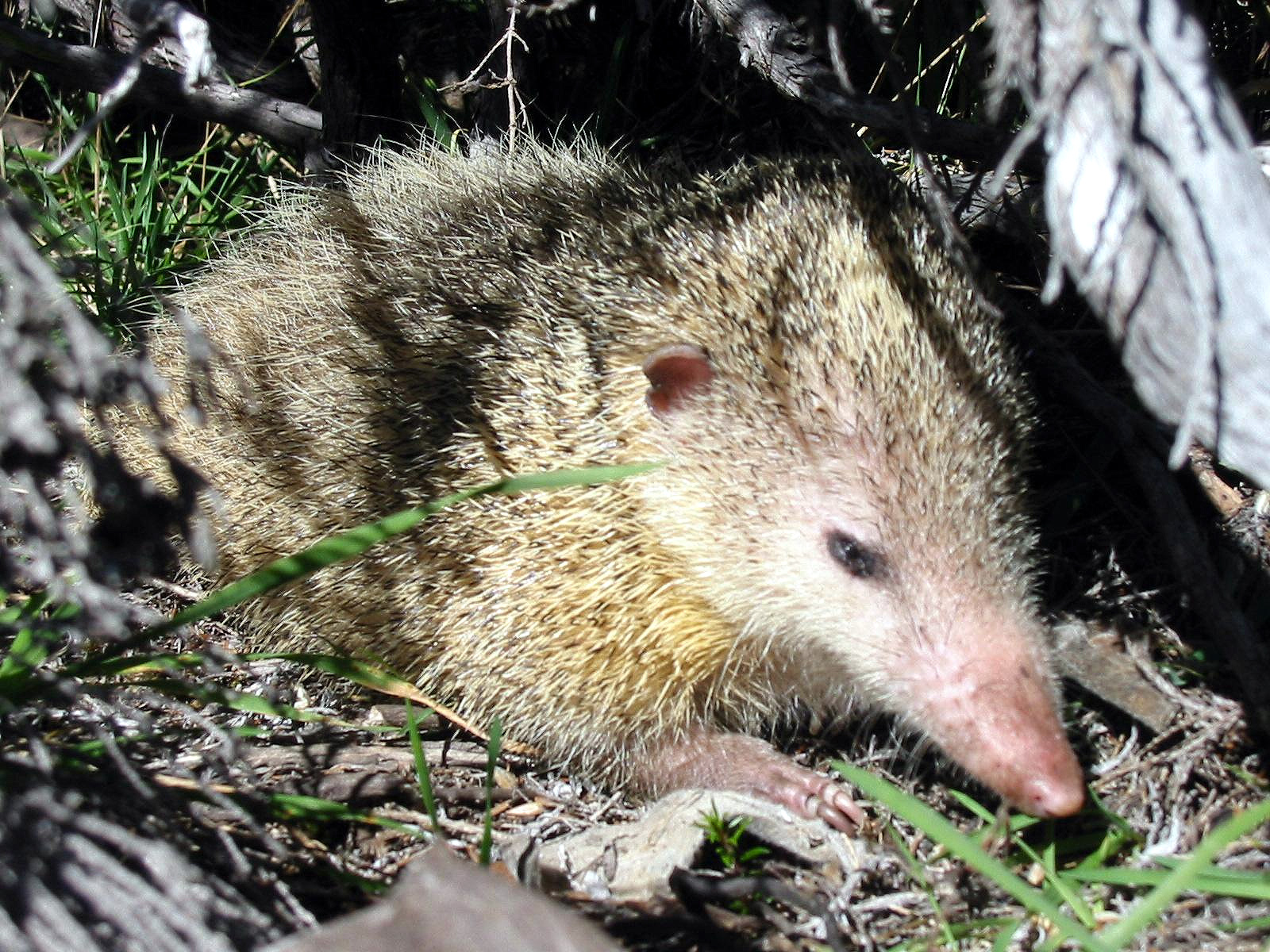
The afrotherian order Afrosoricida contains the golden moles and otter shrews of sub-Saharan Africa and the tenrecs of Madagascar, families of small mammals that were traditionally part of the order Insectivora. All native tenrecs of Madagascar are believed to descend from a common ancestor that lived 29–37 million years (Ma) ago after rafting from Africa, with the split from their closest relatives, the otter shrews of equatorial Africa, dated to about 47–53 Ma ago.
Afrosoricida also contains the enigmatic extinct genus Plesiorycteropus, represented by two extinct species of dog-sized, probably insectivorous mammals restricted to Madagascar. Morphological analyses have tended to place them within Afrotheria close to aardvarks (order Tubulidentata), perhaps due to convergent specializations for digging. Analysis of preserved collagen sequences, however, places them in Afrosoricida closest to (and possibly within) tenrecs. The two species differ in size and aspects of morphology.{{cite journal
- Family: Tenrecidae (tenrecs)
- Subfamily: Geogalinae
- Genus: Geogale
- Large-eared tenrec, G. aurita
- Genus: Geogale
- Subfamily: Oryzorictinae
- Genus: Microgale
- Short-tailed shrew tenrec, Microgale brevicaudata
- Cowan's shrew tenrec, Microgale cowani
- Drouhard's shrew tenrec, Microgale drouhardi
- Dryad shrew tenrec, Microgale dryas
- Pale shrew tenrec, Microgale fotsifotsy
- Gracile shrew tenrec, Microgale gracilis
- Grandidier's shrew tenrec, Microgale grandidieri
- Naked-nosed shrew tenrec, Microgale gymnorhyncha
- Jenkins's shrew tenrec, Microgale jenkinsae
- Northern shrew tenrec, Microgale jobihely
- Lesser long-tailed shrew tenrec, Microgale longicaudata
- Major's long-tailed tenrec, (Microgale majori)
- Web-footed tenrec, Microgale mergulus
- Montane shrew tenrec, Microgale monticola
- Nasolo's shrew tenrec, Microgale nasoloi
- Pygmy shrew tenrec, Microgale parvula
- Greater long-tailed shrew tenrec, Microgale principula
- Least shrew tenrec, Microgale pusilla
- Shrew-toothed shrew tenrec, Microgale soricoides
- Taiva shrew tenrec, Microgale taiva
- Thomas's shrew tenrec, Microgale thomasi
- Genus: Nesogale
- Dobson's shrew tenrec, Nesogale dobsoni
- Talazac's shrew tenrec, Nesogale talazaci
- Genus: Oryzorictes
- Mole-like rice tenrec, Oryzorictes hova
- Four-toed rice tenrec, Oryzorictes teradactylus
- Genus: Microgale
- Subfamily: Tenrecinae
- Genus: Echinops
- Lesser hedgehog tenrec, Echinops telfairi
- Genus: Hemicentetes
- Highland streaked tenrec, Hemicentetes nigriceps
- Lowland streaked tenrec, Hemicentetes semispinosus
- Genus: Setifer
- Greater hedgehog tenrec, Setifer setosus
- Genus: Tenrec
- Tailless tenrec, Tenrec ecaudatus
- Genus: Echinops
- Subfamily: Geogalinae
Order: [[Sirenia]] (manatees and dugongs)
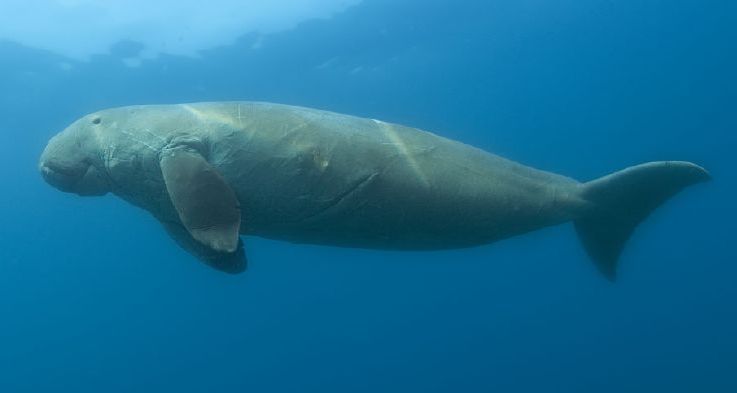
Sirenia is an order of fully aquatic, herbivorous mammals that inhabit rivers, estuaries, coastal marine waters, swamps, and marine wetlands. All four species are endangered. The dugong ranges widely along coastlines from east Africa to Australasia. It and the tenrecs are Madagascar's only extant afrotherians.
- Family: Dugongidae
- Genus: Dugong
- Dugong, D. dugon
- Genus: Dugong
Order: [[Primates]]
Main article: List of lemur species





.jpg)

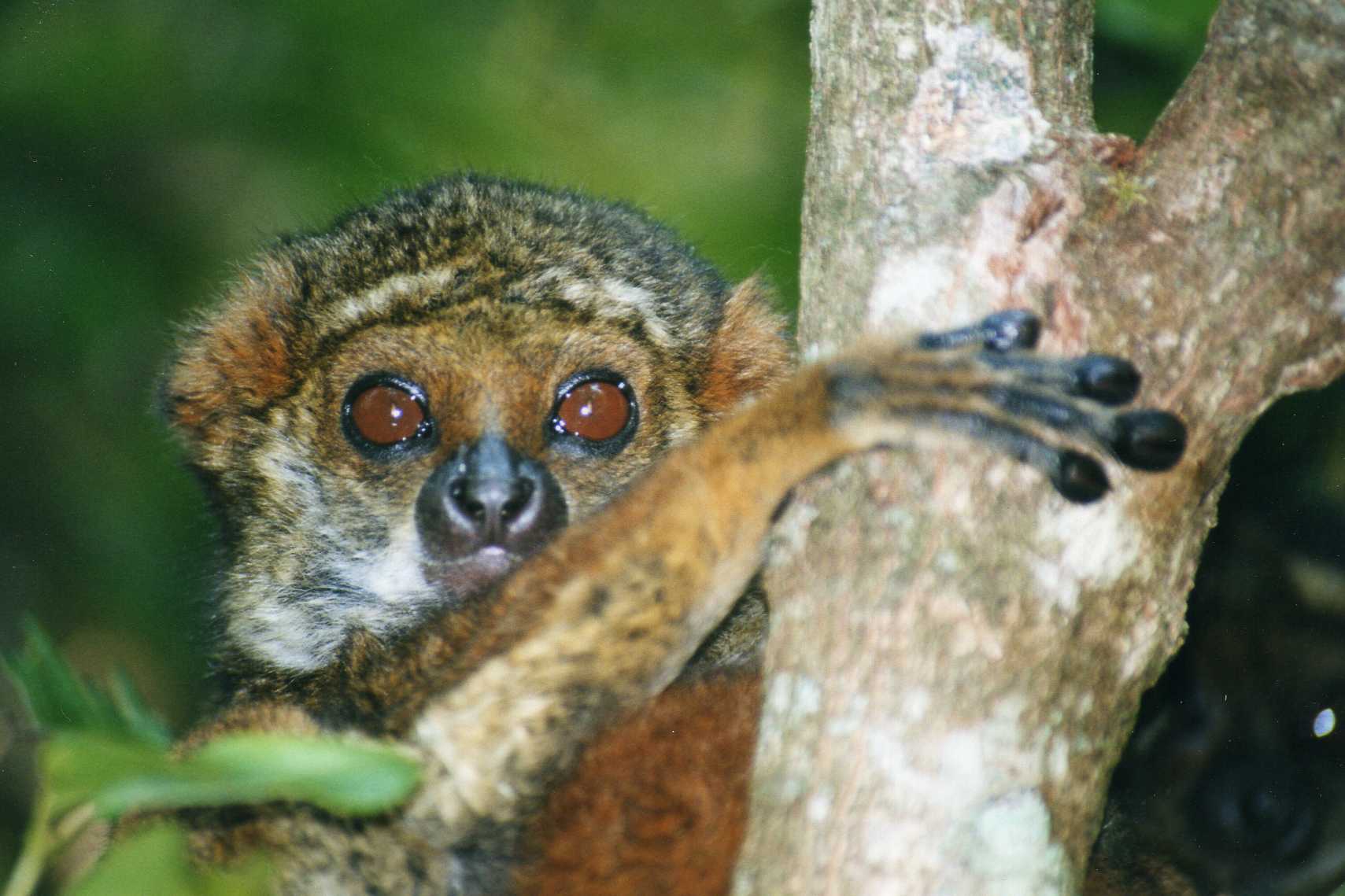
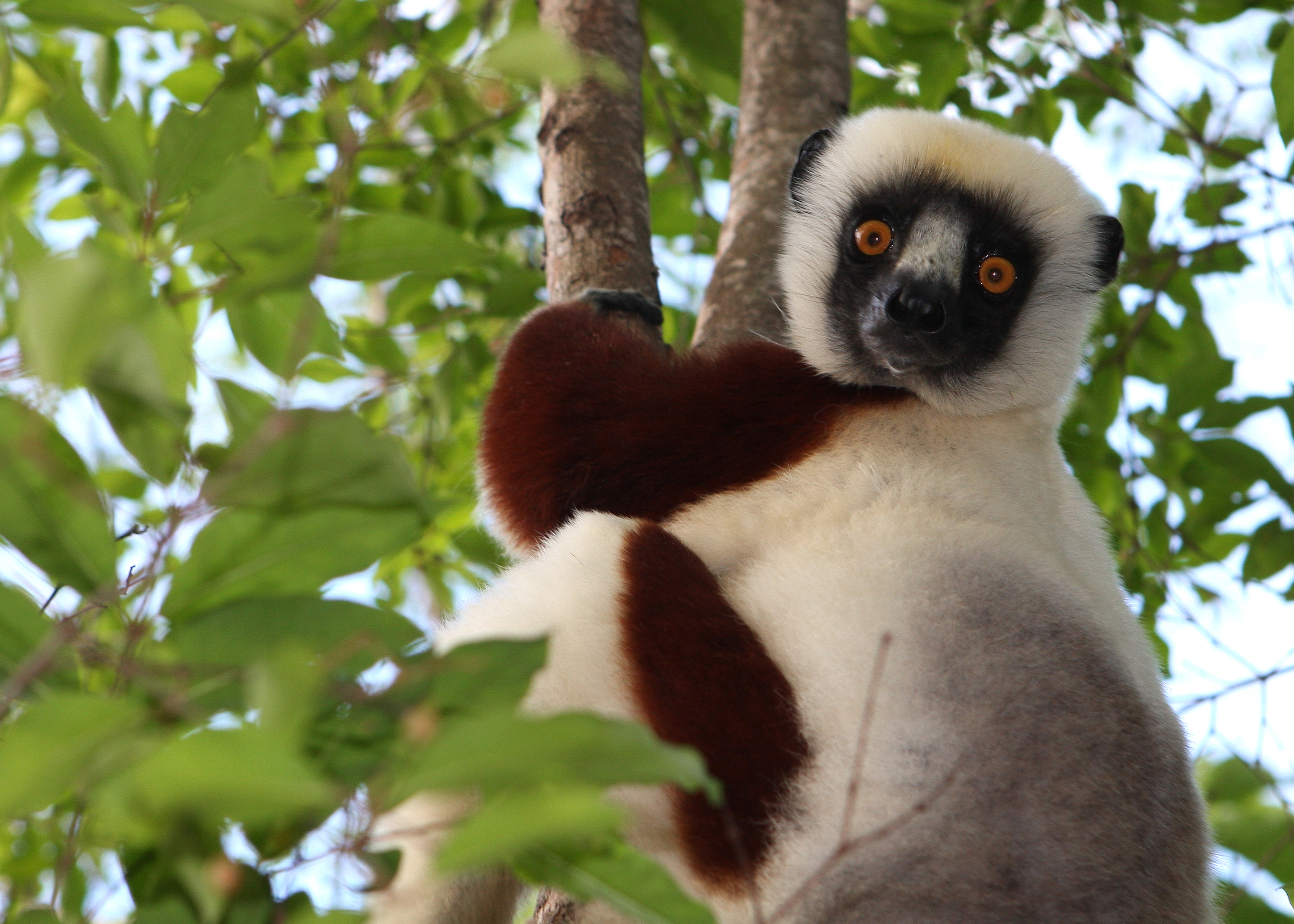
The endemic primates of Madagascar, the lemurs, constitute a single clade and are the largest branch of strepsirrhines. It has been proposed that a common ancestor of all Madagascar's lemurs rafted across the Mozambique Channel from Africa between 50 and 60 million years ago. However, findings of similarities in dentition between several African primate fossils and aye-ayes, the most basal of lemurs, have led to the alternate proposal that the ancestors of aye-ayes colonized Madagascar separately from other lemurs.
Between 2000 and 2008, 39 new lemur species were described, bringing the total number of recognized species and subspecies to 99; by 2014, the number of extant species and subspecies recognized had increased to 105. Of these, the IUCN classified 24 as critically endangered, 49 as endangered, 20 as vulnerable, three as near threatened, three as of least concern and four as data deficient; two were yet to be evaluated.
- Suborder: Strepsirrhini
- Infraorder: Lemuriformes
- Family: Cheirogaleidae
- Genus: Allocebus
- Hairy-eared dwarf lemur, Allocebus trichotis
- Genus: Cheirogaleus
- Montagne d'Ambre dwarf lemur, Cheirogaleus andysabini
- Furry-eared dwarf lemur, Cheirogaleus crossleyi
- Groves' dwarf lemur, Cheirogaleus grovesi
- Lavasoa dwarf lemur, Cheirogaleus lavasoensis
- Greater dwarf lemur, Cheirogaleus major
- Fat-tailed dwarf lemur, Cheirogaleus medius
- Lesser iron-gray dwarf lemur, Cheirogaleus minusculus NE
- Ankarana dwarf lemur, Cheirogaleus shethi
- Sibree's dwarf lemur, Cheirogaleus sibreei
- Genus: Microcebus
- Arnhold's mouse lemur, Microcebus arnholdi
- Madame Berthe's mouse lemur, Microcebus berthae
- Bongolava mouse lemur, Microcebus bongolavensis
- Boraha mouse lemur, Microcebus boraha
- Danfoss' mouse lemur, Microcebus danfossi
- Ganzhorn's mouse lemur, Microcebus ganzhorni
- Gerp's mouse lemur, Microcebus gerpi
- Reddish-gray mouse lemur, Microcebus griseorufus
- Jolly's mouse lemur, Microcebus jollyae
- Goodman's mouse lemur, Microcebus lehilahytsara
- MacArthur's mouse lemur, Microcebus macarthurii
- Claire's mouse lemur, Microcebus mamiratra
- Manitatra mouse lemur, Microcebus manitatra
- Margot Marsh's mouse lemur, Microcebus margotmarshae
- Marohita mouse lemur, Microcebus marohita
- Mittermeier's mouse lemur, Microcebus mittermeieri
- Gray mouse lemur, Microcebus murinus NE
- Pygmy mouse lemur, Microcebus myoxinus
- Golden-brown mouse lemur, Microcebus ravelobensis
- Brown mouse lemur, Microcebus rufus
- Sambirano mouse lemur, Microcebus sambiranensis
- Simmons' mouse lemur, Microcebus simmonsi NE
- Anosy mouse lemur, Microcebus tanosi
- Northern rufous mouse lemur, Microcebus tavaratra
- Genus: Mirza
- Coquerel's giant mouse lemur, Mirza coquereli
- Northern giant mouse lemur, Mirza zaza
- Genus: Phaner
- Amber Mountain fork-marked lemur, Phaner electromontis
- Masoala fork-marked lemur, Phaner furcifer
- Pale fork-marked lemur, Phaner pallescens
- Pariente's fork-marked lemur, Phaner parienti
- Genus: Allocebus
- Family: Daubentoniidae
- Genus: Daubentonia
- Aye-aye, Daubentonia madagascariensis
- Genus: Daubentonia
- Family: Indriidae
- Genus: Avahi
- Betsileo woolly lemur, Avahi betsileo
- Bemaraha woolly lemur, Avahi cleesei
- Eastern woolly lemur, Avahi laniger
- Southern woolly lemur, Avahi meridionalis
- Moore's woolly lemur, Avahi mooreorum
- Western woolly lemur, Avahi occidentalis
- Peyrieras's woolly lemur, Avahi peyrierasi
- Ramanantsoavana's woolly lemur, Avahi ramanantsoavanai VU
- Sambirano woolly lemur, Avahi unicolor
- Genus: Indri
- Indri, Indri indri
- Genus: Propithecus
- Silky sifaka, Propithecus candidus
- Coquerel's sifaka, Propithecus coquereli
- Crowned sifaka, Propithecus coronatus
- Von der Decken's sifaka, Propithecus deckenii
- Diademed sifaka, Propithecus diadema
- Milne-Edwards's sifaka, Propithecus edwardsi
- Perrier's sifaka, Propithecus perrieri
- Golden-crowned sifaka, Propithecus tattersalli
- Verreaux's sifaka, Propithecus verreauxi
- Genus: Avahi
- Family: Lemuridae (large lemurs)
- Genus: Eulemur
- White-headed lemur, Eulemur albifrons
- Gray-headed lemur, Eulemur cinereiceps
- Collared brown lemur, Eulemur collaris
- Crowned lemur, Eulemur coronatus
- Blue-eyed black lemur, Eulemur flavifrons
- Common brown lemur, Eulemur fulvus
- Black lemur, Eulemur macaco
- Mongoose lemur, Eulemur mongoz
- Red-bellied lemur, Eulemur rubriventer
- Red-fronted lemur, Eulemur rufifrons
- Red lemur, Eulemur rufus
- Sanford's brown lemur, Eulemur sanfordi
- Genus: Hapalemur
- Lac Alaotra bamboo lemur, Hapalemur alaotrensis
- Golden bamboo lemur, Hapalemur aureus
- Eastern lesser bamboo lemur, Hapalemur griseus
- Beanamalao bamboo lemur, Hapalemur griseus gilberti
- Eastern lesser bamboo lemur, Hapalemur griseus griseus
- Ranomafana bamboo lemur, Hapalemur griseus ranomafanensis
- Southern lesser bamboo lemur, Hapalemur meridionalis
- Western lesser bamboo lemur, Hapalemur occidentalis
- Greater bamboo lemur, Hapalemur simus
- Genus: Lemur
- Ring-tailed lemur, Lemur catta
- Genus: Varecia
- Red ruffed lemur, Varecia rubra
- Black-and-white ruffed lemur, Varecia variegata
- Southern black-and-white ruffed lemur, Varecia variegata editorum
- White-belted black-and-white ruffed lemur, Varecia variegata subcincta
- Black-and-white ruffed lemur, Varecia variegata variegata
- Genus: Eulemur
- Family: Lepilemuridae
- Genus: Lepilemur
- Antafia sportive lemur, Lepilemur aeeclis
- Ahmanson's sportive lemur, Lepilemur ahmansonorum
- Ankarana sportive lemur, Lepilemur ankaranensis
- Betsileo sportive lemur, Lepilemur betsileo
- Gray-backed sportive lemur, Lepilemur dorsalis
- Milne-Edwards' sportive lemur, Lepilemur edwardsi
- Fleurete's sportive lemur, Lepilemur fleuretae
- Grewcock's sportive lemur, Lepilemur grewcockorum
- Holland's sportive lemur, Lepilemur hollandorum
- Hubbard's sportive lemur, Lepilemur hubbardorum
- James' sportive lemur, Lepilemur jamesorum
- White-footed sportive lemur, Lepilemur leucopus
- Small-toothed sportive lemur, Lepilemur microdon
- Daraina sportive lemur, Lepilemur milanoii
- Mittermeier's sportive lemur, Lepilemur mittermeieri
- Weasel sportive lemur, Lepilemur mustelinus
- Otto's sportive lemur, Lepilemur otto
- Petter's sportive lemur, Lepilemur petteri
- Randrianasolo's sportive lemur, Lepilemur randrianasoloi
- Red-tailed sportive lemur, Lepilemur ruficaudatus
- Sahamalaza sportive lemur, Lepilemur sahamalazensis
- Scott's sportive lemur, Lepilemur scottorum
- Seal's sportive lemur, Lepilemur seali
- Northern sportive lemur, Lepilemur septentrionalis
- Hawks' sportive lemur, Lepilemur tymerlachsonorum
- Wright's sportive lemur, Lepilemur wrightae
- Genus: Lepilemur
- Family: Cheirogaleidae
- Infraorder: Lemuriformes
Order: [[Rodent]]ia (rodents)

.jpg)
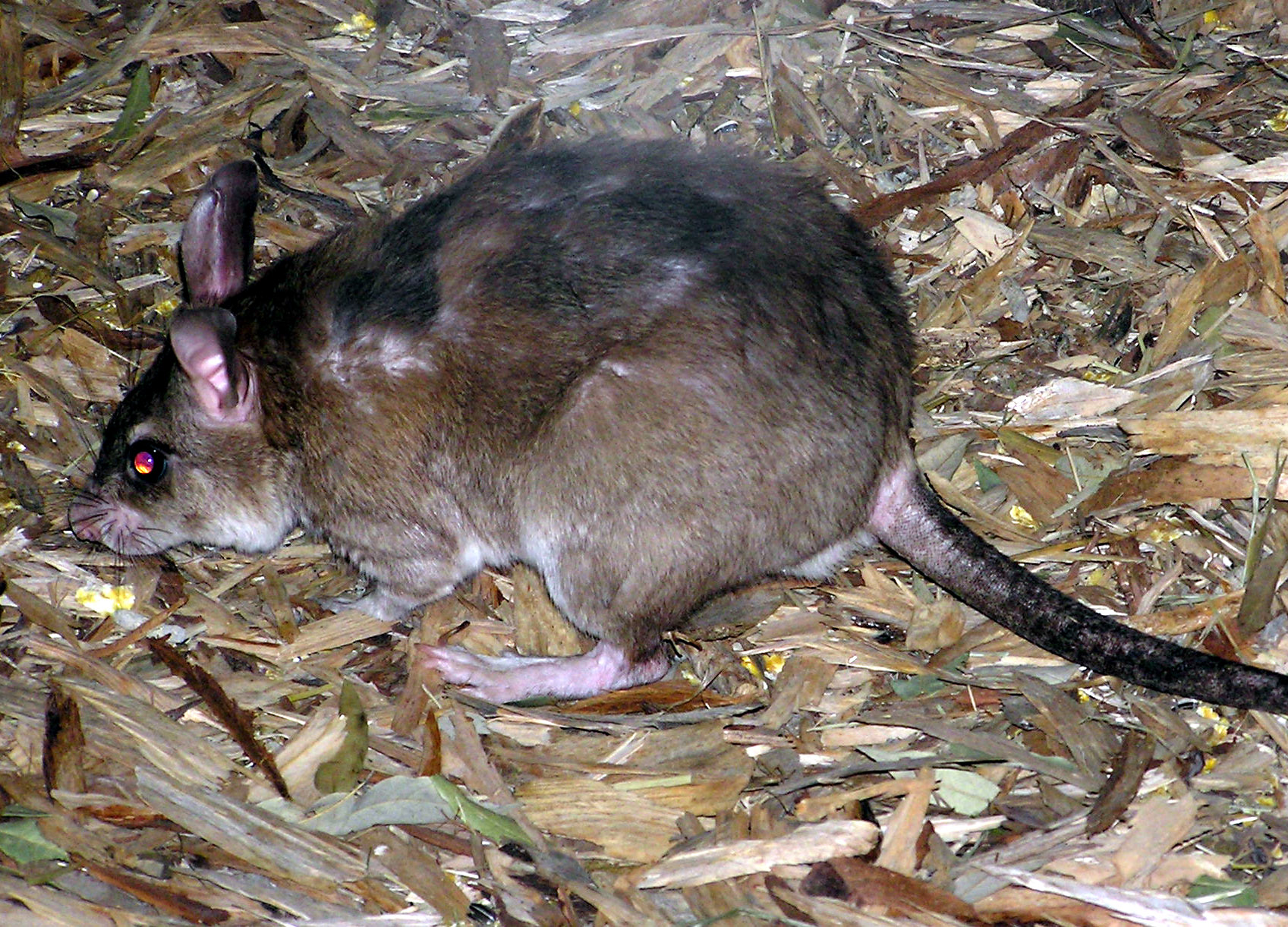
Rodents make up the largest order of mammals, with over 40% of mammalian species. They have two incisors in the upper and lower jaw which grow continually and must be kept short by gnawing. Most rodents are small though the capybara can weigh up to 45 kg. All the native nesomyid rodents of Madagascar are believed to descend from a common ancestor that rafted over from Africa 20–24 million years ago. There are about 39 nesomyid species in five subfamilies in Africa, compared to 27 in one subfamily extant in Madagascar. While nesomyids make up all of the native rodent species of Madagascar, they constitute less than 10% of those of Africa.
- Suborder: Sciurognathi
- Family: Nesomyidae
- Subfamily: Nesomyinae
- Genus: Brachytarsomys
- White-tailed antsangy, Brachytarsomys albicauda
- Hairy-tailed antsangy, Brachytarsomys villosa
- Genus: Brachyuromys
- Betsileo short-tailed rat, Brachyuromys betsileoensis
- Gregarious short-tailed rat, Brachyuromys ramirohitra
- Genus: Eliurus
- Tsingy tufted-tailed rat, Eliurus antsingy
- Ankarana Special Reserve tufted-tailed rat, Eliurus carletoni
- Daniel's tufted-tailed rat, Eliurus danieli
- Ellerman's tufted-tailed rat, Eliurus ellermani
- Grandidier's tufted-tailed rat, Eliurus grandidieri
- Major's tufted-tailed rat, Eliurus majori
- Lesser tufted-tailed rat, Eliurus minor
- Dormouse tufted-tailed rat, Eliurus myoxinus
- White-tipped tufted-tailed rat, Eliurus penicillatus
- Petter's tufted-tailed rat, Eliurus petteri
- Tanala tufted-tailed rat, Eliurus tanala
- Webb's tufted-tailed rat, Eliurus webbi
- Genus: Gymnuromys
- Voalavoanala, Gymnuromys roberti
- Genus: Hypogeomys
- Malagasy giant rat, Hypogeomys antimena
- Genus: Macrotarsomys
- Bastard big-footed mouse, Macrotarsomys bastardi
- Greater big-footed mouse, Macrotarsomys ingens
- Petter's big-footed mouse, Macrotarsomys petteri
- Genus: Monticolomys
- Malagasy mountain mouse, Monticolomys koopmani
- Genus: Nesomys
- White-bellied nesomys, Nesomys audeberti
- Western nesomys, Nesomys lambertoni
- Island mouse, Nesomys rufus
- Genus: Voalavo
- Eastern voalavo, Voalavo antsahabensis
- Naked-tailed voalavo, Voalavo gymnocaudus
- Genus: Brachytarsomys
- Subfamily: Nesomyinae
- Family: Nesomyidae
Order: [[Eulipotyphla]] (shrews, hedgehogs, moles, and solenodons)
Eulipotyphlans are insectivorous mammals. Shrews and solenodons closely resemble mice, hedgehogs carry spines, while moles are stout-bodied burrowers. There is one species of shrew on Madagascar, which is often considered to be conspecific with the widely distributed Etruscan shrew, Suncus etruscus, and likely to have been introduced to Madagascar from South or Southeast Asia by humans.
- Family: Soricidae (shrews)
- Subfamily: Crocidurinae
- Genus: Suncus
- Madagascan pygmy shrew, S. madagascariensis
- Genus: Suncus
- Subfamily: Crocidurinae
Order: [[Chiroptera]] (bats)
Main article: List of bats of Madagascar


.jpg)
The bats' most distinguishing feature is that their forelimbs are developed as wings, making them the only mammals capable of flight. Bat species account for about 20% of all mammals. Of the 46 species, 22 genera and 8 families of bats present on Madagascar, 36 species but only Myzopoda and Myzopodidae are endemic (the family was formerly present, however, on the African mainland). Paratriaenops is endemic to Madagascar plus the Seychelles.
- Family: Pteropodidae (flying foxes, Old World fruit bats)
- Subfamily: Pteropodinae
- Genus: Eidolon
- Madagascan fruit bat, Eidolon dupreanum
- Genus: Pteropus
- Madagascan flying fox, Pteropus rufus
- Genus: Rousettus
- Madagascan rousette, Rousettus madagascariensis
- Genus: Eidolon
- Subfamily: Pteropodinae
- Family: Vespertilionidae
- Subfamily: Myotinae
- Genus: Myotis
- Malagasy mouse-eared bat, Myotis goudoti
- Genus: Myotis
- Subfamily: Vespertilioninae
- Genus: Hypsugo
- Anchieta's pipistrelle, Hypsugo anchietae
- Genus: Neoromicia
- Isalo serotine, Neoromicia malagasyensis
- Malagasy serotine, Neoromicia matroka
- Neoromicia robertsi
- Genus: Pipistrellus
- Dusky pipistrelle, Pipistrellus hesperidus
- Racey's pipistrelle, Pipistrellus raceyi
- Genus: Scotophilus
- Lesser yellow bat, Scotophilus borbonicus
- Marovaza house bat, Scotophilus marovaza
- Robust yellow bat, Scotophilus robustus
- Western yellow bat, Scotophilus tandrefana
- Genus: Hypsugo
- Subfamily: Myotinae
- Family: Miniopteridae
- Genus: Miniopterus
- Miniopterus aelleni
- Miniopterus brachytragos
- Eger's long-fingered bat, Miniopterus egeri
- Glen's long-fingered bat, Miniopterus gleni
- Griffith's long-fingered bat, Miniopterus griffithsi
- Miniopterus griveaudi
- Miniopterus mahafaliensis
- Major's long-fingered bat, Miniopterus majori
- Manavi long-fingered bat, Miniopterus manavi
- Peterson's long-fingered bat, Miniopterus petersoni
- Sororcula long-fingered bat, Miniopterus sororculus
- Genus: Miniopterus
- Family: Molossidae
- Genus: Chaerephon
- Chaerephon atsinanana
- Black and red free-tailed bat, Chaerephon jobimena
- Grandidier's free-tailed bat, Chaerephon leucogaster
- Genus: Mops
- Malagasy white-bellied free-tailed bat, Mops leucostigma
- Midas free-tailed bat, Mops midas
- Genus: Mormopterus
- Peter's wrinkle-lipped bat, Mormopterus jugularis
- Genus: Otomops
- Madagascar free-tailed bat, Otomops madagascariensis
- Genus: Tadarida
- Madagascan large free-tailed bat, Tadarida fulminans
- Genus: Chaerephon
- Family: Emballonuridae
- Genus: Coleura
- African sheath-tailed bat, Coleura afra
- Genus: Emballonura
- Peters's sheath-tailed bat, Emballonura atrata
- Genus: Paremballonura
- Western sheath-tailed bat, Paremballonura tiavato
- Genus: Taphozous
- Mauritian tomb bat, Taphozous mauritianus
- Genus: Coleura
- Family: Nycteridae
- Genus: Nycteris
- Malagasy slit-faced bat, Nycteris madagascariensis
- Genus: Nycteris
- Family: Hipposideridae
- Genus: Hipposideros
- Genus: Macronycteris
- Commerson's roundleaf bat, Macronycteris commersoni
- Macronycteris cryptovalorona
- Genus: Paratriaenops
- Grandidier's trident bat, Paratriaenops auritus
- Trouessart's trident bat, Paratriaenops furcula
- Genus: Triaenops
- Triaenops menamena
- Family: Myzopodidae
- Genus: Myzopoda
- Madagascar sucker-footed bat, Myzopoda aurita
- Western sucker-footed bat, Myzopoda schliemanni
- Genus: Myzopoda
Order: [[Carnivora]] (carnivorans)
.jpg)
.jpg)


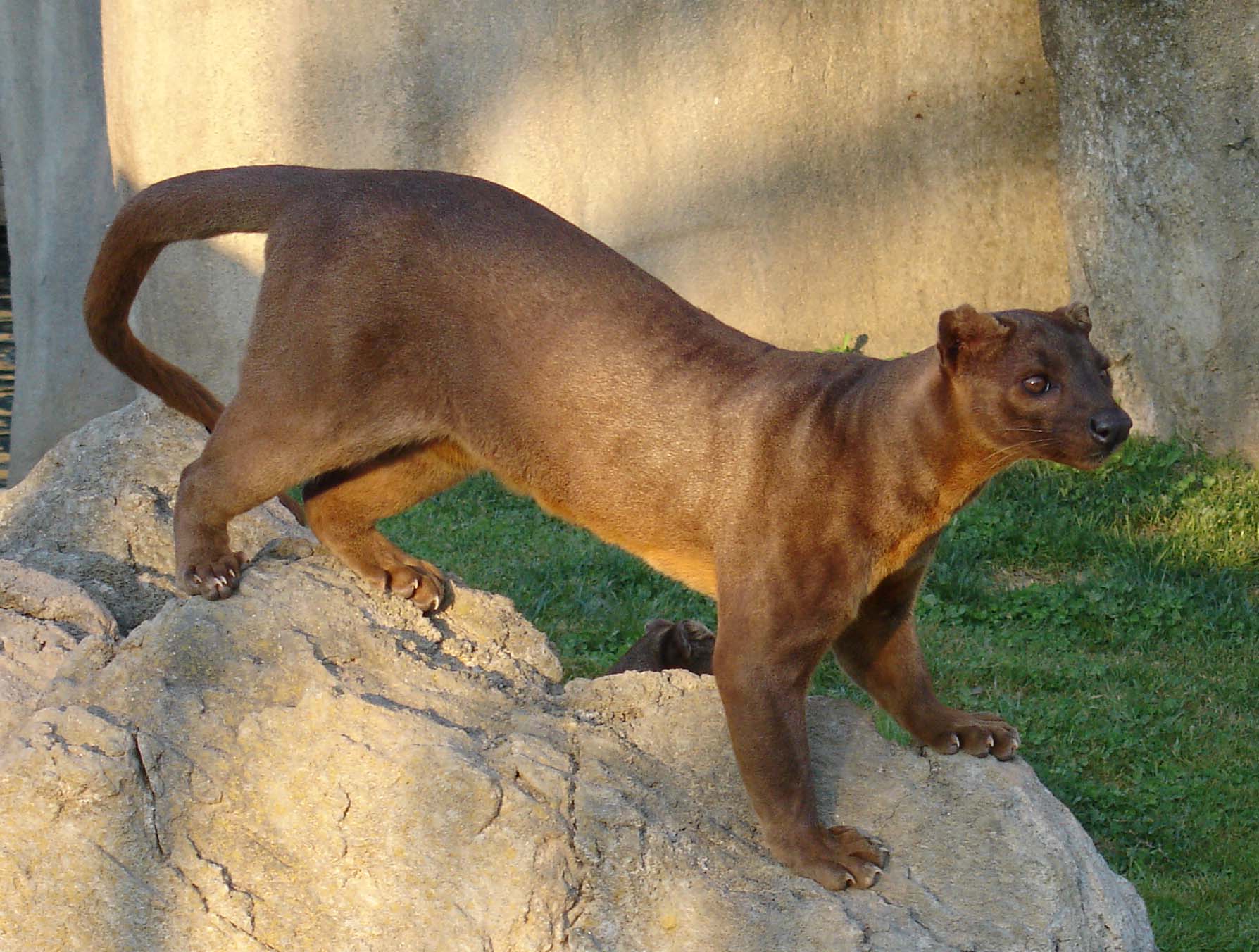
There are over 260 species of carnivorans, the majority of which feed primarily on meat. They have a characteristic skull shape and dentition. The native terrestrial carnivorans of Madagascar are all euplerids, which are believed to descend from a common ancestor that rafted over from Africa 19–26 million years ago. Their closest relatives are the herpestids, the African and Eurasian mongooses. Malagasy mongooses are not "true" mongooses but rather are thought to represent an example of convergent or parallel evolution. About 30% of African terrestrial carnivoran species are herpestids.
- Suborder: Feliformia
- Family: Eupleridae
- Subfamily: Euplerinae
- Genus: Cryptoprocta
- Fossa, Cryptoprocta ferox
- Genus: Eupleres
- Eastern falanouc, Eupleres goudotii
- Western falanouc, Eupleres major
- Genus: Fossa
- Malagasy civet, Fossa fossana
- Genus: Cryptoprocta
- Subfamily: Galidiinae
- Genus: Galidia
- Ring-tailed vontsira, Galidia elegans
- Genus: Galidictis
- Broad-striped Malagasy mongoose, Galidictis fasciata
- Grandidier's vontsira, Galidictis grandidieri
- Genus: Mungotictis
- Narrow-striped mongoose, Mungotictis decemlineata
- Genus: Salanoia
- Brown-tailed mongoose, Salanoia concolor
- Durrell's vontsira, Salanoia durrelli NE
- Genus: Galidia
- Subfamily: Euplerinae
- Family: Eupleridae
- Suborder: Caniformia
- Clade Pinnipedia (seals, sea lions and walruses)
- Family: Otariidae (eared seals, sealions)
- Genus: Arctophoca
- Subantarctic fur seal, Arctophoca tropicalis
- Genus: Arctophoca
- Family: Otariidae (eared seals, sealions)
- Clade Pinnipedia (seals, sea lions and walruses)
Order: [[Artiodactyla]] (even-toed ungulates and cetaceans)
- Family: Suidae (suids)
- Genus: Potamochoerus
- Bushpig, Potamochoerus larvatus introduced
- Genus: Potamochoerus
Order: [[Cetacea]] (whales, dolphins and porpoises)


- Parvorder: Mysticeti
- Family: Balaenopteridae
- Subfamily: Balaenopterinae
- Genus: Balaenoptera
- Common minke whale, Balaenoptera acutorostrata
- Antarctic minke whale, Balaenoptera bonaerensis
- Sei whale, *Balaenoptera borealis *
- Southern sei whale, B. b. schlegelii
- Bryde's whale, Balaenoptera edeni
- Pygmy blue whale, Balaenoptera musculus brevicauda
- Southern blue whale, Balaenoptera musculus
- Southern blue whale, B. m. intermedia
- Omura's whale, Balaenoptera omurai
- Fin whale, Balaenoptera physalus
- Southern fin whale, B. p. quoyi
- Genus: Balaenoptera
- Subfamily: Megapterinae
- Genus: Megaptera
- Humpback whale, Megaptera novaeangliae
- Genus: Megaptera
- Subfamily: Balaenopterinae
- Family: Cetotheriidae
- Subfamily: Neobalaeninae
- Genus: Caperea
- Pygmy right whale, Caperea marginata
- Genus: Caperea
- Subfamily: Neobalaeninae
- Family: Balaenidae
- Genus: Eubalaena
- Southern right whale, *Eubalaena australis *
- Genus: Eubalaena
- Family: Balaenopteridae
- Parvorder: Odontoceti
- Family: Physeteridae
- Genus: Physeter
- Sperm whale, Physeter macrocephalus
- Genus: Physeter
- Family: Kogiidae
- Genus: Kogia
- Pygmy sperm whale, Kogia breviceps
- Dwarf sperm whale, Kogia sima
- Genus: Kogia
- Family: Ziphidae
- Genus: Indopacetus
- Tropical bottlenose whale, Indopacetus pacificus
- Genus: Ziphius
- Cuvier's beaked whale, Ziphius cavirostris
- Subfamily: Hyperoodontinae
- Genus: Mesoplodon
- Blainville's beaked whale, Mesoplodon densirostris
- Gray's beaked whale, Mesoplodon grayi
- Hector's beaked whale, Mesoplodon hectori
- Layard's beaked whale, Mesoplodon layardii
- True's beaked whale, Mesoplodon mirus
- Genus: Mesoplodon
- Genus: Indopacetus
- Superfamily: Delphinoidea
- Family: Delphinidae (marine dolphins)
- Genus: Steno
- Rough-toothed dolphin, Steno bredanensis
- Genus: Grampus
- Risso's dolphin, Grampus griseus
- Genus: Globicephala
- Short-finned pilot whale, Globicephala macrorhynchus
- Genus: Sousa
- Indian Ocean humpback dolphin, Sousa plumbea
- Genus: Tursiops
- Indo-Pacific bottlenose dolphin, Tursiops aduncus
- Common bottlenose dolphin, Tursiops truncatus
- Genus: Stenella
- Pantropical spotted dolphin, Stenella attenuata
- Striped dolphin, Stenella coeruleoalba
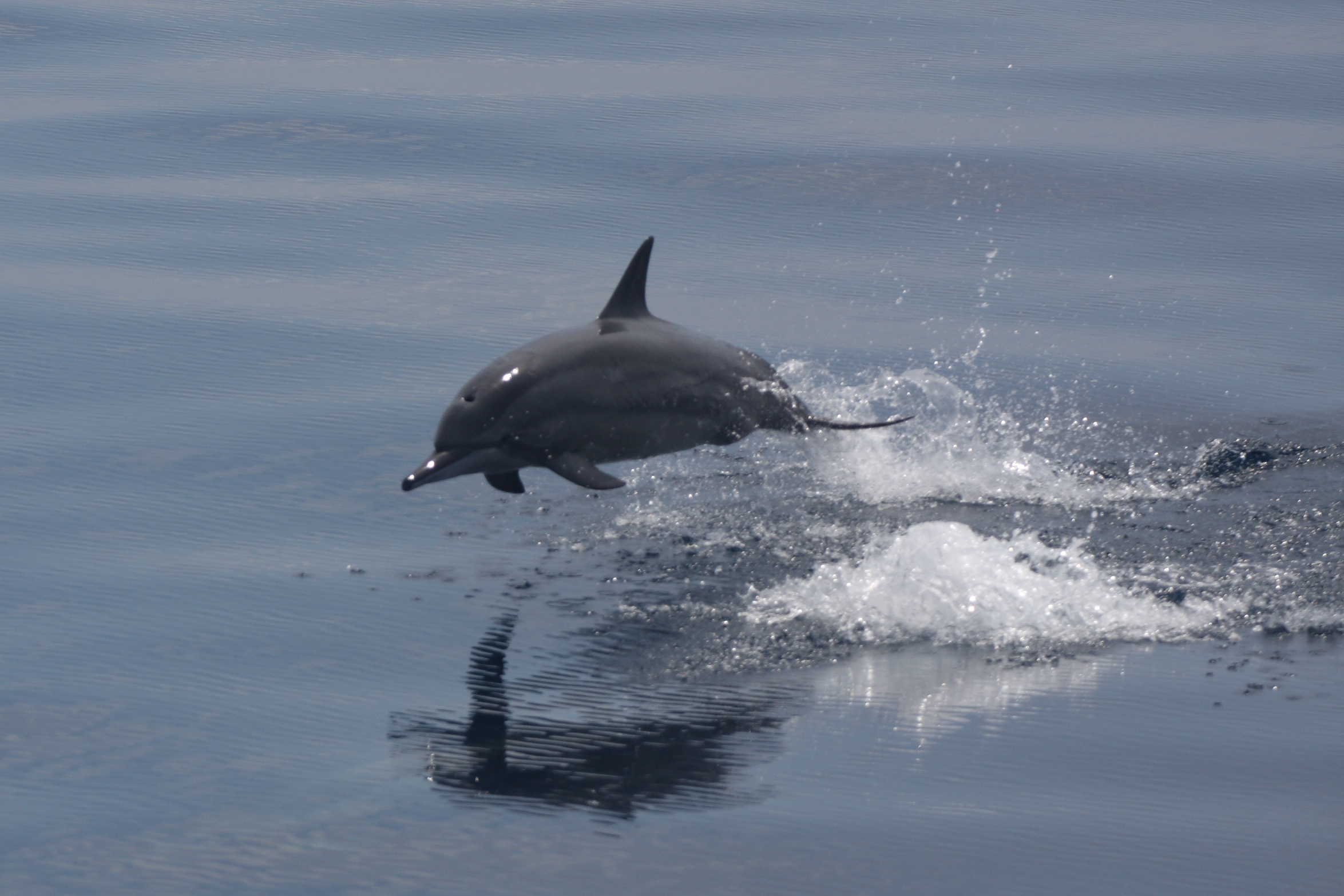
- Spinner dolphin, Stenella longirostris
- Genus: Delphinus
- Long-beaked common dolphin, Delphinus capensis
- Genus: Lagenodelphis
- Fraser's dolphin, Lagenodelphis hosei
- Genus: Peponocephala
- Melon-headed whale, Peponocephala electra
- Genus: Pseudorca
- False killer whale, Pseudorca crassidens
- Genus: Feresa
- Pygmy killer whale, Feresa attenuata
- Genus: Orcinus
- Orca, Orcinus orca
- Genus: Steno
- Family: Delphinidae (marine dolphins)
- Family: Physeteridae
Globally extinct


The following species are globally extinct:
- "Subfossil/giant lemurs"
- Archaeoindris fontoynonti (c. 350 BC)
- Archaeolemur edwardsi (c. 1047 - 1280 AD)
- Archaeolemur majori (c. 1047 - 1280 AD)
- Giant aye aye, Daubentonia robusta (c. 1000 AD)
- Pachylemur insignis (c. 680 - 960 AD)
- Pachylemur jullyi (c. 680 - 960 AD)
- Megaladapis edwardsi (c. 1280 - 1420 AD)
- Megaladapis madagascariensis (c. 1280 - 1420 AD)
- Megaladapis grandidieri (c. 1280 - 1420 AD)
- Hadropithecus stenognathus (c. 444 - 772 AD)
- Babakotia radofilai (c. 1000 AD)
- Mesopropithecus dolichobrachion (570 - 679 AD)
- Mesopropithecus globiceps (570 - 679 AD)
- Mesopropithecus pithecoides (570 - 679 AD)
- Palaeopropithecus ingens (1620)
- Palaeopropithecus maximus (PH)
- Palaeopropithecus kelyus (PH)
- Plesiorycteropus germainepetterae (c. 1000 AD)
- Plesiorycteropus madagascariensis (c. 1000 AD)
- Microgale macpheei (PH)
- Hypogeomys australis (c. 1536 BP)
- Giant fossa, Cryptoprocta spelea (pre-1658)
- Malagasy hippopotamus
- Lesser Malagasy hippopotamus, Hippopotamus laloumena (possibly c. 1800 AD)
- Malagasy dwarf hippopotamus, Hippopotamus lemerlei (possibly c. 1800 AD)
- Malagasy pygmy hippopotamus, Hippopotamus madagascariensis (possibly c. 1800 AD)
Malagasy mammal names
Main article: List of Malagasy mammal common names
Notes
References
- {{cite web |access-date = 22 May 2007
- {{cite web |access-date = 22 May 2007
References
- (July 2012). "Similarities in ''Leptospira'' Serogroup and Species Distribution in Animals and Humans in the Indian Ocean Island of Mayotte". American Journal of Tropical Medicine and Hygiene.
- (2011-03-28). "Wings or winds: Inferring bat migration in a stepping-stone archipelago". Journal of Evolutionary Biology.
- Some authorities view it as conspecific with the widespread [[Etruscan shrew]].{{MSW3 Soricomorpha| id = 13700275 | page = 259 | heading = ''Suncus madagascariensis''}}
- Stephenson, P.J.. (2016). "''Tenrec ecaudatus''".
- (2003). "A molecular approach to comparative phylogeography of extant Malagasy lemurs". Proceedings of the National Academy of Sciences.
- (2014-05-23). "Ancient DNA reveals elephant birds and kiwi are sister taxa and clarifies ratite bird evolution". Science.
- (2003). "''Sporormiella'' and the late Holocene extinctions in Madagascar". Proceedings of the National Academy of Sciences.
- (July 2004). "A chronology for late prehistoric Madagascar". Journal of Human Evolution.
- (July 2005). "Fifty millennia of catastrophic extinctions after human contact". Trends in Ecology & Evolution.
- (2008). "Lemur Diversity in Madagascar". International Journal of Primatology.
- (2009). "Handbook of the Mammals of the World. Volume 1: Carnivores". [[Lynx Edicions]].
- (2002). "Molecular Evidence for the Monophyly of Tenrecidae (Mammalia) and the Timing of the Colonization of Madagascar by Malagasy Tenrecs". Molecular Phylogenetics and Evolution.
- (2008). "Molecular phylogeny and divergence times of Malagasy tenrecs: Influence of data partitioning and taxon sampling on dating analyses". BMC Evolutionary Biology.
- (2016). "Multiple Loci and Complete Taxonomic Sampling Resolve the Phylogeny and Biogeographic History of Tenrecs (Mammalia: Tenrecidae) and Reveal Higher Speciation Rates in Madagascar's Humid Forests". Systematic Biology.
- (December 2004). "Eutherian Mammal Systematics and the Origins of South American Ungulates As Based on Postcranial Osteology". Bulletin of Carnegie Museum of Natural History.
- (2013). "A Molecular Phylogeny of Plesiorycteropus Reassigns the Extinct Mammalian Order 'Bibymalagasia'". PLOS ONE.
- (1999). "Walker's Mammals of the World". Johns Hopkins University Press.
- Cawthon Lang KA. 2005 July 18. [http://pin.primate.wisc.edu/factsheets/entry/owl_monkey/taxon Primate Factsheets: Owl monkey (''Aotus'') Taxonomy, Morphology, & Ecology]. Accessed 2015 March 26.
- Horvath, J.. (2008). "Development and application of a phylogenomic toolkit: Resolving the evolutionary history of Madagascar's lemurs". Genome Research.
- Garbutt, N.. (2007). "Mammals of Madagascar, A Complete Guide". A&C Black Publishers.
- (2006). "Lemurs of Madagascar". [[Conservation International]].
- (2018). "Fossil lemurs from Egypt and Kenya suggest an African origin for Madagascar's aye-aye". Nature Communications.
- [[Russell Mittermeier. (December 2008). "Lemur Diversity in Madagascar". International Journal of Primatology.
- Kinver, M.. (2010-01-20). "Mammals 'floated to Madagascar'". [[BBC]].
- Ali, J. R.. (2010-01-20). "Mammalian biodiversity on Madagascar controlled by ocean currents". [[Nature (journal).
- Omar, H.; Adamson, E.A.S.; Bhauur, S.; Goodman, S.M.; Soarimalala, V.; Hashim, R.; Ruedi, M. (2011). [https://umexpert.um.edu.my/file/publication/00009664_100020.pdf Phylogenetic relationships of Malayan and Malagasy pygmy shrews of the genus ''Suncus'' (Soricomorpha: Soricidae) inferred from mitochondrial cytochrome b gene sequences]. ''The Raffles Bulletin of Zoology'' 59(2): 237-243.
- (2016). "How many species of ''Hipposideros'' have occurred on Madagascar since the Late Pleistocene?". Zoological Journal of the Linnean Society.
- (2010-02-25). "Species limits and distribution of the Malagasy carnivoran genus ''Eupleres'' (Family Eupleridae)". Mammalia.
- Cerchio S.. (2015). "Omura's whales (Balaenoptera omurai) off northwest Madagascar: ecology, behaviour and conservation needs". [[Royal Society Open Science]].
- Sea Alarm Foundation. 2010 [http://www.sea-alarm.org/wp-content/uploads/2010/07/madagascar.pdf Madagascar - Country Wildlife Response Profiles - A Summary of oiled wildlife response arrangements and resources worldwide]. Retrieved on 13 June 2014
- (2010). "Lemurs of Madagascar". Conservation International.
- Jungers, W.L., Lemelin, P., Godfrey, L.R., et al. (2005). The hands and feet of Archaeolemur: metrical affinities and their functional significance. Journal of Human Evolution, 49, 36-55. doi: 10.1016/j.jhevol.2005.03.001
- Nowak, Ronald M.. (1999). "Walker's mammals of the world". Johns Hopkins University Press.
- Crowley, Brooke E.. (2010-09-01). "A refined chronology of prehistoric Madagascar and the demise of the megafauna". Quaternary Science Reviews.
- Muldoon, Kathleen M.. (April 2010). "Paleoenvironment of Ankilitelo Cave (late Holocene, southwestern Madagascar): implications for the extinction of giant lemurs". Journal of Human Evolution.
- (2006). "Lemurs of Madagascar". Conservation International.
- Godfrey, L.R.; Jungers, W.L.; Burney, D.A. (2010). ''Chapter 21: Subfossil Lemurs of Madagascar''.
- Godfrey, L.. (2021). "''Palaeopropithecus ingens''".
- MacPhee, 1994, p. 159
- Hoffmann, M.. (2015). "''Cryptoprocta spelea''".
- (2019-11-16). "Madagascar Dwarf Hippo {{!}} Extinct or Alive".
This article was imported from Wikipedia and is available under the Creative Commons Attribution-ShareAlike 4.0 License. Content has been adapted to SurfDoc format. Original contributors can be found on the article history page.
Ask Mako anything about List of mammals of Madagascar — get instant answers, deeper analysis, and related topics.
Research with MakoFree with your Surf account
Create a free account to save articles, ask Mako questions, and organize your research.
Sign up freeThis content may have been generated or modified by AI. CloudSurf Software LLC is not responsible for the accuracy, completeness, or reliability of AI-generated content. Always verify important information from primary sources.
Report