From Surf Wiki (app.surf) — the open knowledge base
List of mammals of Liberia
none

none
This is a list of the mammal species recorded in Liberia. Of the mammal species in Liberia, nine are endangered, twelve are vulnerable, and eleven are near threatened.
The following tags are used to highlight each species' conservation status as assessed by the International Union for Conservation of Nature:
| **Data deficient** | There is inadequate information to make an assessment of the risks to this species. |
|---|
Order: [[Afrosoricida]] (tenrecs and golden moles)
The order Afrosoricida contains the golden moles of southern Africa and the tenrecs of Madagascar and Africa, two families of small mammals that were traditionally part of the order Insectivora.
- Family: Tenrecidae (tenrecs)
- Subfamily: Potamogalinae
- Genus: Micropotamogale
- Nimba otter shrew, Micropotamogale lamottei
- Genus: Micropotamogale
- Subfamily: Potamogalinae
Order: [[Hyracoidea]] (hyraxes)
The hyraxes are any of four species of fairly small, thickset, herbivorous mammals in the order Hyracoidea. About the size of a domestic cat they are well-furred, with rounded bodies and a stumpy tail. They are native to Africa and the Middle East.
- Family: Procaviidae (hyraxes)
- Genus: Dendrohyrax
- Western tree hyrax, Dendrohyrax dorsalis
- Genus: Dendrohyrax
Order: [[Proboscidea]] (elephants)
The elephants comprise three living species and are the largest living land animals.
- Family: Elephantidae (elephants)
- Genus: Loxodonta
- African forest elephant, L. cyclotis
- Genus: Loxodonta
Order: [[Sirenia]] (manatees and dugongs)
Sirenia is an order of fully aquatic, herbivorous mammals that inhabit rivers, estuaries, coastal marine waters, swamps, and marine wetlands. All four species are endangered.
- Family: Trichechidae
- Genus: Trichechus
- African manatee, Trichechus senegalensis
- Genus: Trichechus
Order: [[Primate]]s

The order Primates contains humans and their closest relatives: lemurs, lorisoids, tarsiers, monkeys, and apes.
- Suborder: Strepsirrhini
- Infraorder: Lemuriformes
- Superfamily: Lorisoidea
- Family: Lorisidae (lorises, bushbabies)
- Genus: Perodicticus
- Potto, Perodicticus potto
- Genus: Perodicticus
- Family: Galagidae
- Genus: Galagoides
- Prince Demidoff's bushbaby, Galago demidovii
- Genus: Galago
- Senegal bushbaby, Galago senegalensis
- Genus: Galagoides
- Family: Lorisidae (lorises, bushbabies)
- Superfamily: Lorisoidea
- Infraorder: Lemuriformes
- Suborder: Haplorhini
- Infraorder: Simiiformes
- Parvorder: Catarrhini
- Superfamily: Cercopithecoidea
- Family: Cercopithecidae (Old World monkeys)
- Genus: Chlorocebus
- Green monkey, Chlorocebus sabaeus
- Genus: Cercopithecus
- Campbell's mona monkey, Cercopithecus campbelli
- Diana monkey, Cercopithecus diana
- Greater spot-nosed monkey, Cercopithecus nictitans
- Lesser spot-nosed monkey, Cercopithecus petaurista
- Genus: Cercocebus
- Sooty mangabey, Cercocebus atys
- Subfamily: Colobinae
- Genus: Colobus
- King colobus, Colobus polykomos
- Genus: Procolobus
- Western red colobus, Procolobus badius
- Olive colobus, Procolobus verus
- Genus: Colobus
- Genus: Chlorocebus
- Family: Cercopithecidae (Old World monkeys)
- Superfamily: Hominoidea
- Family: Hominidae (great apes)
- Subfamily: Homininae
- Tribe: Panini
- Genus: Pan
- Common chimpanzee, Pan troglodytes
- Genus: Pan
- Tribe: Panini
- Subfamily: Homininae
- Family: Hominidae (great apes)
- Superfamily: Cercopithecoidea
- Parvorder: Catarrhini
- Infraorder: Simiiformes
Order: [[Rodent]]ia (rodents)
Rodents make up the largest order of mammals, with over 40% of mammalian species. They have two incisors in the upper and lower jaw which grow continually and must be kept short by gnawing. Most rodents are small though the capybara can weigh up to 45 kg.
- Suborder: Hystricognathi
- Family: Hystricidae (Old World porcupines)
- Genus: Atherurus
- African brush-tailed porcupine, Atherurus africanus
- Genus: Hystrix
- Crested porcupine, Hystrix cristata
- Genus: Atherurus
- Family: Thryonomyidae (cane rats)
- Genus: Thryonomys
- Greater cane rat, Thryonomys swinderianus
- Genus: Thryonomys
- Family: Hystricidae (Old World porcupines)
- Suborder: Sciurognathi
- Family: Anomaluridae
- Subfamily: Anomalurinae
- Genus: Anomalurus
- Lord Derby's scaly-tailed squirrel, Anomalurus derbianus
- Pel's scaly-tailed squirrel, Anomalurus pelii
- Genus: Anomalurops
- Beecroft's scaly-tailed squirrel, Anomalurops beecrofti
- Genus: Anomalurus
- Subfamily: Zenkerellinae
- Genus: Idiurus
- Long-eared flying mouse, Idiurus macrotis
- Genus: Idiurus
- Subfamily: Anomalurinae
- Family: Sciuridae (squirrels)
- Subfamily: Xerinae
- Tribe: Protoxerini
- Genus: Epixerus
- Western palm squirrel, Epixerus ebii
- Genus: Funisciurus
- Fire-footed rope squirrel, Funisciurus pyrropus
- Genus: Heliosciurus
- Gambian sun squirrel, Heliosciurus gambianus
- Small sun squirrel, Heliosciurus punctatus
- Red-legged sun squirrel, Heliosciurus rufobrachium
- Genus: Paraxerus
- Green bush squirrel, Paraxerus poensis
- Genus: Protoxerus
- Slender-tailed squirrel, Protoxerus aubinnii
- Forest giant squirrel, Protoxerus stangeri
- Genus: Epixerus
- Tribe: Protoxerini
- Subfamily: Xerinae
- Family: Gliridae (dormice)
- Subfamily: Graphiurinae
- Genus: Graphiurus
- Jentink's dormouse, Graphiurus crassicaudatus
- Lorrain dormouse, Graphiurus lorraineus
- Nagtglas's African dormouse, Graphiurus nagtglasii
- Genus: Graphiurus
- Subfamily: Graphiurinae
- Family: Nesomyidae
- Subfamily: Dendromurinae
- Genus: Dendromus
- Gray climbing mouse, Dendromus melanotis
- Genus: Dendromus
- Subfamily: Cricetomyinae
- Genus: Cricetomys
- Emin's pouched rat, Cricetomys emini
- Genus: Cricetomys
- Subfamily: Dendromurinae
- Family: Muridae (mice, rats, voles, gerbils, hamsters, etc.)
- Subfamily: Deomyinae
- Genus: Lophuromys
- Rusty-bellied brush-furred rat, Lophuromys sikapusi
- Genus: Uranomys
- Rudd's mouse, Uranomys ruddi
- Genus: Lophuromys
- Subfamily: Murinae
- Genus: Colomys
- African wading rat, Colomys goslingi
- Genus: Dasymys
- West African shaggy rat, Dasymys rufulus
- Genus: Dephomys
- Defua rat, Dephomys defua
- Ivory Coast rat, Dephomys eburnea
- Genus: Grammomys
- Bunting's thicket rat, Grammomys buntingi
- Shining thicket rat, Grammomys rutilans
- Genus: Hybomys
- Miller's striped mouse, Hybomys planifrons
- Temminck's striped mouse, Hybomys trivirgatus
- Genus: Hylomyscus
- Allen's wood mouse, Hylomyscus alleni
- Genus: Lemniscomys
- Typical striped grass mouse, Lemniscomys striatus
- Genus: Malacomys
- Edward's swamp rat, Malacomys edwardsi
- Genus: Mastomys
- Guinea multimammate mouse, Mastomys erythroleucus
- Genus: Mus
- Peters's mouse, Mus setulosus
- Genus: Oenomys
- Ghana rufous-nosed rat, Oenomys ornatus
- Genus: Praomys
- Dalton's mouse, Praomys daltoni
- Forest soft-furred mouse, Praomys rostratus
- Tullberg's soft-furred mouse, Praomys tullbergi
- Genus: Colomys
- Subfamily: Deomyinae
- Family: Anomaluridae
Order: [[Soricomorpha]] (shrews, moles, and solenodons)
The "shrew-forms" are insectivorous mammals. The shrews and solenodons closely resemble mice while the moles are stout-bodied burrowers.
- Family: Soricidae (shrews)
- Subfamily: Crocidurinae
- Genus: Crocidura
- Buettikofer's shrew, Crocidura buettikoferi
- Crosse's shrew, Crocidura crossei
- Doucet's musk shrew, Crocidura douceti
- Large-headed shrew, Crocidura grandiceps
- Lamotte's shrew, Crocidura lamottei
- West African long-tailed shrew, Crocidura muricauda
- Nimba shrew, Crocidura nimbae
- African giant shrew, Crocidura olivieri
- Fraser's musk shrew, Crocidura poensis
- Therese's shrew, Crocidura theresae
- Genus: Sylvisorex
- Climbing shrew, Sylvisorex megalura
- Genus: Crocidura
- Subfamily: Crocidurinae
Order: [[Chiroptera]] (bats)
The bats' most distinguishing feature is that their forelimbs are developed as wings, making them the only mammals capable of flight. Bat species account for about 20% of all mammals.
- Family: Pteropodidae (flying foxes, Old World fruit bats)
- Subfamily: Pteropodinae
- Genus: Eidolon
- Straw-coloured fruit bat, Eidolon helvum
- Genus: Epomophorus
- Gambian epauletted fruit bat, Epomophorus gambianus
- Genus: Epomops
- Buettikofer's epauletted fruit bat, Epomops buettikoferi
- Genus: Hypsignathus
- Hammer-headed bat, Hypsignathus monstrosus
- Genus: Lissonycteris
- Smith's fruit bat, Lissonycteris smithi
- Genus: Micropteropus
- Peters's dwarf epauletted fruit bat, Micropteropus pusillus
- Genus: Myonycteris
- Little collared fruit bat, Myonycteris torquata
- Genus: Nanonycteris
- Veldkamp's dwarf epauletted fruit bat, Nanonycteris veldkampi
- Genus: Rousettus
- Egyptian fruit bat, Rousettus aegyptiacus
- Genus: Scotonycteris
- Pohle's fruit bat, Scotonycteris ophiodon
- Zenker's fruit bat, Scotonycteris zenkeri
- Genus: Eidolon
- Subfamily: Macroglossinae
- Genus: Megaloglossus
- Woermann's bat, Megaloglossus woermanni
- Genus: Megaloglossus
- Subfamily: Pteropodinae
- Family: Vespertilionidae
- Subfamily: Kerivoulinae
- Genus: Kerivoula
- Lesser woolly bat, Kerivoula lanosa
- Spurrell's woolly bat, Kerivoula phalaena
- Genus: Kerivoula
- Subfamily: Myotinae
- Genus: Myotis
- Rufous mouse-eared bat, Myotis bocagii
- Cape hairy bat, Myotis tricolor
- Genus: Myotis
- Subfamily: Vespertilioninae
- Genus: Glauconycteris
- Abo bat, Glauconycteris poensis
- Genus: Mimetillus
- Moloney's mimic bat, Mimetillus moloneyi
- Genus: Neoromicia
- Dark-brown serotine, Neoromicia brunneus
- Cape serotine, Neoromicia capensis
- Banana pipistrelle, Neoromicia nanus
- Somali serotine, Neoromicia somalicus
- White-winged serotine, Neoromicia tenuipinnis
- Genus: Pipistrellus
- Tiny pipistrelle, Pipistrellus nanulus
- Genus: Scotophilus
- African yellow bat, Scotophilus dinganii
- Nut-colored yellow bat, Scotophilus nux
- Genus: Glauconycteris
- Subfamily: Miniopterinae
- Genus: Miniopterus
- Greater long-fingered bat, Miniopterus inflatus
- Common bent-wing bat, Miniopterus schreibersii
- Genus: Miniopterus
- Subfamily: Kerivoulinae
- Family: Molossidae
- Genus: Chaerephon
- Gland-tailed free-tailed bat, Chaerephon bemmeleni
- Lappet-eared free-tailed bat, Chaerephon major
- Genus: Mops
- Sierra Leone free-tailed bat, Mops brachypterus
- Spurrell's free-tailed bat, Mops spurrelli
- Railer bat, Mops thersites
- Genus: Chaerephon
- Family: Emballonuridae
- Genus: Saccolaimus
- Pel's pouched bat, Saccolaimus peli
- Genus: Saccolaimus
- Family: Nycteridae
- Genus: Nycteris
- Bate's slit-faced bat, Nycteris arge
- Large slit-faced bat, Nycteris grandis
- Hairy slit-faced bat, Nycteris hispida
- Large-eared slit-faced bat, Nycteris macrotis
- Ja slit-faced bat, Nycteris major
- Genus: Nycteris
- Family: Rhinolophidae
- Subfamily: Rhinolophinae
- Genus: Rhinolophus
- Halcyon horseshoe bat, Rhinolophus alcyone
- Rüppell's horseshoe bat, Rhinolophus fumigatus
- Guinean horseshoe bat, Rhinolophus guineensis
- Hill's horseshoe bat, Rhinolophus hillorum
- Lander's horseshoe bat, Rhinolophus landeri
- Bushveld horseshoe bat, Rhinolophus simulator
- Ziama horseshoe bat, Rhinolophus ziama
- Genus: Rhinolophus
- Subfamily: Hipposiderinae
- Genus: Hipposideros
- Benito roundleaf bat, Hipposideros beatus
- Cyclops roundleaf bat, Hipposideros cyclops
- Sooty roundleaf bat, Hipposideros fuliginosus
- Jones's roundleaf bat, Hipposideros jonesi
- Aellen's roundleaf bat, Hipposideros marisae
- Noack's roundleaf bat, Hipposideros ruber
- Genus: Hipposideros
- Subfamily: Rhinolophinae
Order: [[Pholidota]] (pangolins)
The order Pholidota comprises the eight species of pangolin. Pangolins are anteaters and have the powerful claws, elongated snout and long tongue seen in the other unrelated anteater species.
- Family: Manidae
- Genus: Manis
- Giant pangolin, Manis gigantea
- Long-tailed pangolin, Manis tetradactyla
- Tree pangolin, Manis tricuspis
- Genus: Manis
Order: [[Cetacea]] (whales)
The order Cetacea includes whales, dolphins and porpoises. They are the mammals most fully adapted to aquatic life with a spindle-shaped nearly hairless body, protected by a thick layer of blubber, and forelimbs and tail modified to provide propulsion underwater.
- Suborder: Mysticeti
- Family: Balaenopteridae
- Subfamily: Balaenopterinae
- Genus: Balaenoptera
- Common minke whale, Balaenoptera acutorostrata
- Sei whale, Balaenoptera borealis
- Bryde's whale, Balaenoptera brydei
- Blue whale, Balaenoptera musculus
- Fin whale, Balaenoptera physalus
- Genus: Balaenoptera
- Subfamily: Megapterinae
- Genus: Megaptera
- Humpback whale, Megaptera novaeangliae
- Genus: Megaptera
- Subfamily: Balaenopterinae
- Family: Balaenopteridae
- Suborder: Odontoceti
- Superfamily: Platanistoidea
- Family: Phocoenidae
- Genus: Phocoena
- Harbour porpoise, Phocoena phocoena
- Genus: Phocoena
- Family: Physeteridae
- Genus: Physeter
- Sperm whale, Physeter macrocephalus
- Genus: Physeter
- Family: Kogiidae
- Genus: Kogia
- Pygmy sperm whale, Kogia breviceps
- Dwarf sperm whale, Kogia sima
- Genus: Kogia
- Family: Ziphidae
- Genus: Mesoplodon
- Blainville's beaked whale, Mesoplodon densirostris
- Gervais' beaked whale, Mesoplodon europaeus
- Genus: Ziphius
- Cuvier's beaked whale, Ziphius cavirostris
- Genus: Mesoplodon
- Family: Delphinidae (marine dolphins)
- Genus: Orcinus
- Killer whale, Orcinus orca
- Genus: Feresa
- Pygmy killer whale, Feresa attenuata
- Genus: Pseudorca
- False killer whale, Pseudorca crassidens
- Genus: Delphinus
- Short-beaked common dolphin, Delphinus delphis
- Genus: Lagenodelphis
- Fraser's dolphin, Lagenodelphis hosei
- Genus: Stenella
- Pantropical spotted dolphin, Stenella attenuata
- Clymene dolphin, Stenella clymene
- Striped dolphin, Stenella coeruleoalba
- Atlantic spotted dolphin, Stenella frontalis
- Spinner dolphin, Stenella longirostris
- Genus: Steno
- Rough-toothed dolphin, Steno bredanensis
- Genus: Tursiops
- Common bottlenose dolphin, Tursiops truncatus
- Genus: Globicephala
- Short-finned pilot whale, Globicephala macrorhynchus
- Genus: Grampus
- Risso's dolphin, Grampus griseus
- Genus: Peponocephala
- Melon-headed whale, Peponocephala electra
- Genus: Orcinus
- Family: Phocoenidae
- Superfamily: Platanistoidea
Order: [[Carnivora]] (carnivorans)
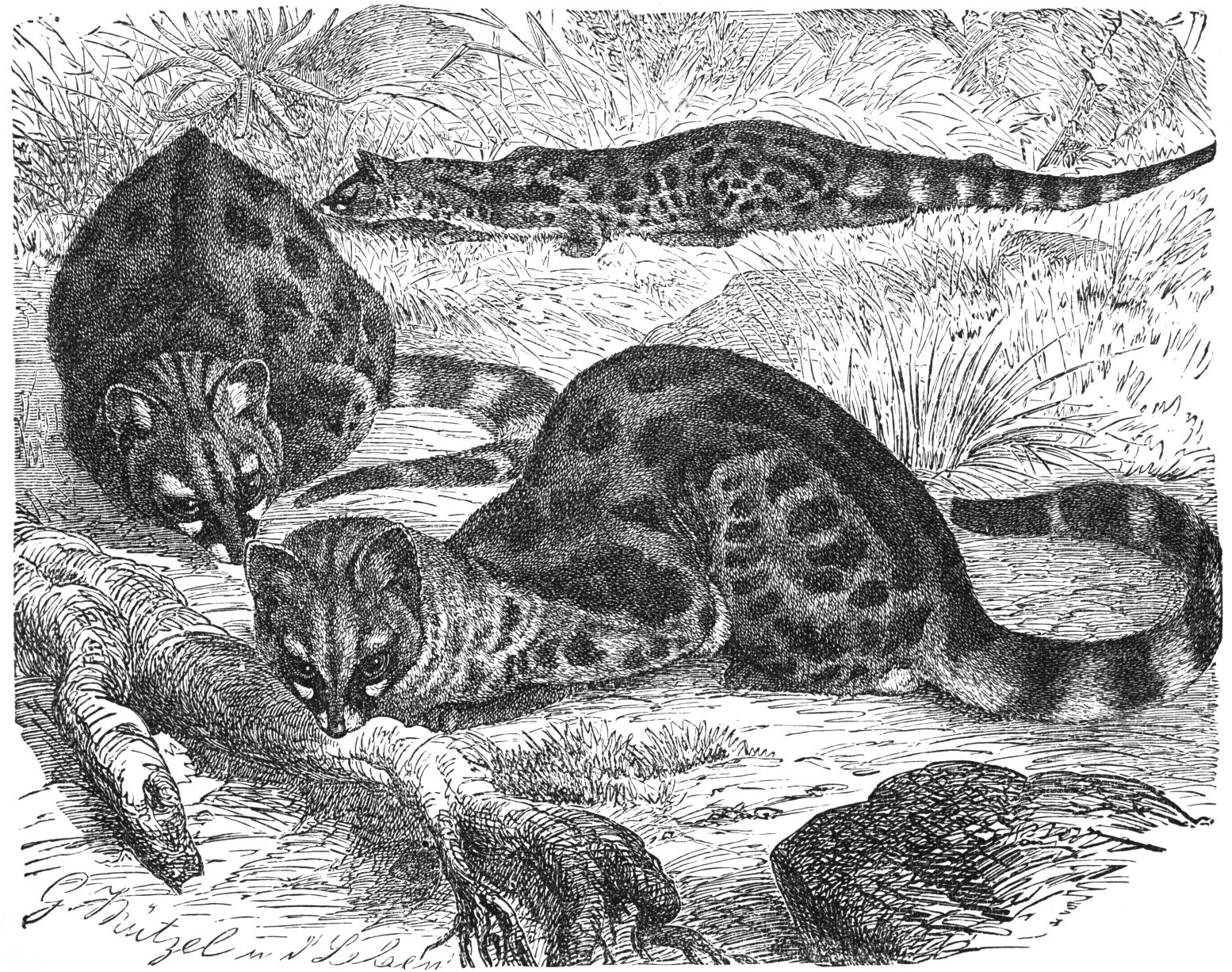

There are over 260 species of carnivorans, the majority of which feed primarily on meat. They have a characteristic skull shape and dentition.
- Suborder: Feliformia
- Family: Felidae (cats)
- Subfamily: Felinae
- Genus: Leptailurus
- Serval, L. serval
- Genus: Caracal
- African golden cat, C. aurata
- Genus: Leptailurus
- Subfamily: Pantherinae
- Genus: Panthera
- Leopard, P. pardus
- Genus: Panthera
- Subfamily: Felinae
- Family: Viverridae (civets, mongooses, etc.)
- Subfamily: Viverrinae
- Genus: Civettictis
- African civet, Civettictis civetta
- Genus: Genetta
- Johnston's genet, Genetta johnstoni
- Genus: Poiana
- Leighton's linsang, Poiana leightoni
- Genus: Civettictis
- Subfamily: Viverrinae
- Family: Nandiniidae
- Genus: Nandinia
- African palm civet, Nandinia binotata
- Genus: Nandinia
- Family: Herpestidae (mongooses)
- Genus: Atilax
- Marsh mongoose, Atilax paludinosus
- Genus: Crossarchus
- Common kusimanse, Crossarchus obscurus
- Genus: Herpestes
- Egyptian mongoose, Herpestes ichneumon
- Common slender mongoose, Herpestes sanguineus
- Genus: Liberiictis
- Liberian mongoose, Liberiictis kuhni
- Genus: Atilax
- Family: Felidae (cats)
- Suborder: Caniformia
- Family: Mustelidae (mustelids)
- Genus: Mellivora
- Honey badger, Mellivora capensis
- Genus: Hydrictis
- Speckle-throated otter, H. maculicollis
- Genus: Aonyx
- African clawless otter, Aonyx capensis
- Genus: Mellivora
- Family: Mustelidae (mustelids)
Order: [[Artiodactyla]] (even-toed ungulates)
.jpg)

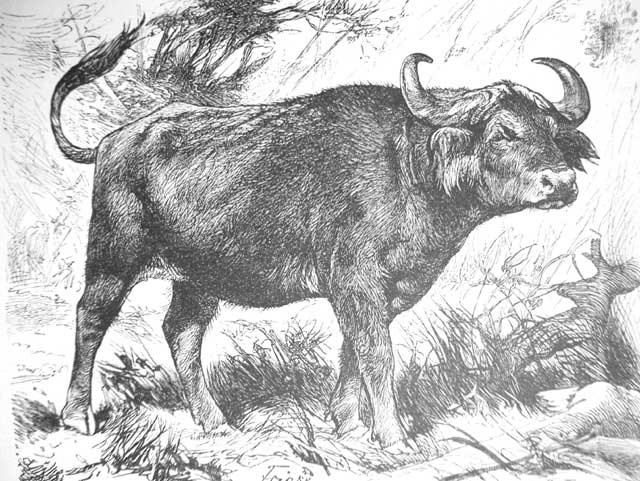
The even-toed ungulates are ungulates whose weight is borne about equally by the third and fourth toes, rather than mostly or entirely by the third as in perissodactyls. There are about 220 artiodactyl species, including many that are of great economic importance to humans.
- Family: Suidae (pigs)
- Subfamily: Phacochoerinae
- Genus: Phacochoerus
- Common warthog, Phacochoerus africanus
- Genus: Phacochoerus
- Subfamily: Suinae
- Genus: Hylochoerus
- Giant forest hog, Hylochoerus meinertzhageni
- Genus: Potamochoerus
- Red river hog, Potamochoerus porcus
- Genus: Hylochoerus
- Subfamily: Phacochoerinae
- Family: Hippopotamidae (hippopotamuses)
- Genus: Choeropsis
- Pygmy hippopotamus, Choeropsis liberiensis
- Genus: Hippopotamus
- Hippopotamus, Hippopotamus amphibius extirpated
- Genus: Choeropsis
- Family: Tragulidae
- Genus: Hyemoschus
- Water chevrotain, Hyemoschus aquaticus
- Genus: Hyemoschus
- Family: Bovidae (cattle, antelope, sheep, goats)
- Subfamily: Antilopinae
- Genus: Neotragus
- Royal antelope, Neotragus pygmaeus
- Genus: Neotragus
- Subfamily: Bovinae
- Genus: Syncerus
- African buffalo, Syncerus caffer
- Genus: Tragelaphus
- Bongo, Tragelaphus eurycerus
- Bushbuck, Tragelaphus scriptus
- Genus: Syncerus
- Subfamily: Cephalophinae
- Genus: Cephalophus
- Bay duiker, Cephalophus dorsalis
- Jentink's duiker, Cephalophus jentinki
- Maxwell's duiker, Cephalophus maxwellii
- Black duiker, Cephalophus niger
- Ogilby's duiker, Cephalophus ogilbyi
- Yellow-backed duiker, Cephalophus silvicultor
- Zebra duiker, Cephalophus zebra
- Genus: Cephalophus
- Subfamily: Antilopinae
References
References
- This list is derived from the [[IUCN Red List]] which lists species of mammals and includes those mammals that have recently been classified as extinct (since 1500 AD). The taxonomy and naming of the individual species is based on those used in existing Wikipedia articles as of 21 May 2007 and supplemented by the common names and taxonomy from the IUCN, Smithsonian Institution, or University of Michigan where no Wikipedia article was available.
- Gobush, K.S.. (2021). "''Loxodonta africana''".
- Bahaa-el-din, L.. (2015). "''Caracal aurata''".
- Lewison, R.. (2017). "''Hippopotamus amphibius''".
This article was imported from Wikipedia and is available under the Creative Commons Attribution-ShareAlike 4.0 License. Content has been adapted to SurfDoc format. Original contributors can be found on the article history page.
Ask Mako anything about List of mammals of Liberia — get instant answers, deeper analysis, and related topics.
Research with MakoFree with your Surf account
Create a free account to save articles, ask Mako questions, and organize your research.
Sign up freeThis content may have been generated or modified by AI. CloudSurf Software LLC is not responsible for the accuracy, completeness, or reliability of AI-generated content. Always verify important information from primary sources.
Report