From Surf Wiki (app.surf) — the open knowledge base
List of mammals of Cuba
none
none
This is a list of the mammal species recorded in Cuba. Of the mammal species in Cuba, twelve of the species listed are considered to be extinct.
The following tags are used to highlight each species' conservation status as assessed by the International Union for Conservation of Nature:
| **Data deficient** | There is inadequate information to make an assessment of the risks to this species. |
|---|
Order: [[Sirenia]] (manatees and dugongs)
Sirenia is an order of fully aquatic, herbivorous mammals that inhabit rivers, estuaries, coastal marine waters, swamps, and marine wetlands. All four species are endangered.
- Family: Trichechidae
- Genus: Trichechus
- West Indian manatee, T. manatus
- Genus: Trichechus
Order: [[Rodent]]ia (rodents)

Rodents make up the largest order of mammals, with over 40% of mammalian species. They have two incisors in the upper and lower jaw which grow continually and must be kept short by gnawing. Most rodents are small though the capybara can weigh up to 45 kg.
- Suborder: Hystricomorpha
- Family: Dasyproctidae
- Genus: Dasyprocta
- Mexican agouti, D. mexicana introduced
- Central American agouti, D. punctata introduced
- Genus: Dasyprocta
- Family: Cuniculidae
- Genus: Cuniculus
- Lowland paca, C. paca introduced
- Genus: Cuniculus
- Family: Capromyidae
- Subfamily: Capromyinae
- Genus: Capromys
- Desmarest's hutia, C. pilorides
- Genus: Mesocapromys
- Cabrera's hutia, M. angelcabrerai
- Eared hutia, M. auritus
- Dwarf hutia, M. nanus , possibly
- San Felipe hutia, M. sanfelipensis , possibly
- Genus: Mysateles
- Garrido's hutia, M. garridoi , possibly
- Gundlach's hutia, M. gundlachi
- Black-tailed hutia, M. melanurus
- Southern hutia, M. meridionalis
- Prehensile-tailed hutia, M. prehensilis
- Genus: Capromys
- Subfamily: Capromyinae
- Family: Dasyproctidae
- Suborder: Muridae
- Family: Muridae
- Genus: Mus
- House mouse, M. musculus introduced
- Genus: Rattus
- Brown rat, R. norvegicus introduced
- Black rat, R. rattus introduced
- Genus: Mus
- Family: Muridae
Order: [[Eulipotyphla]] (shrews, hedgehogs, moles, and solenodons)
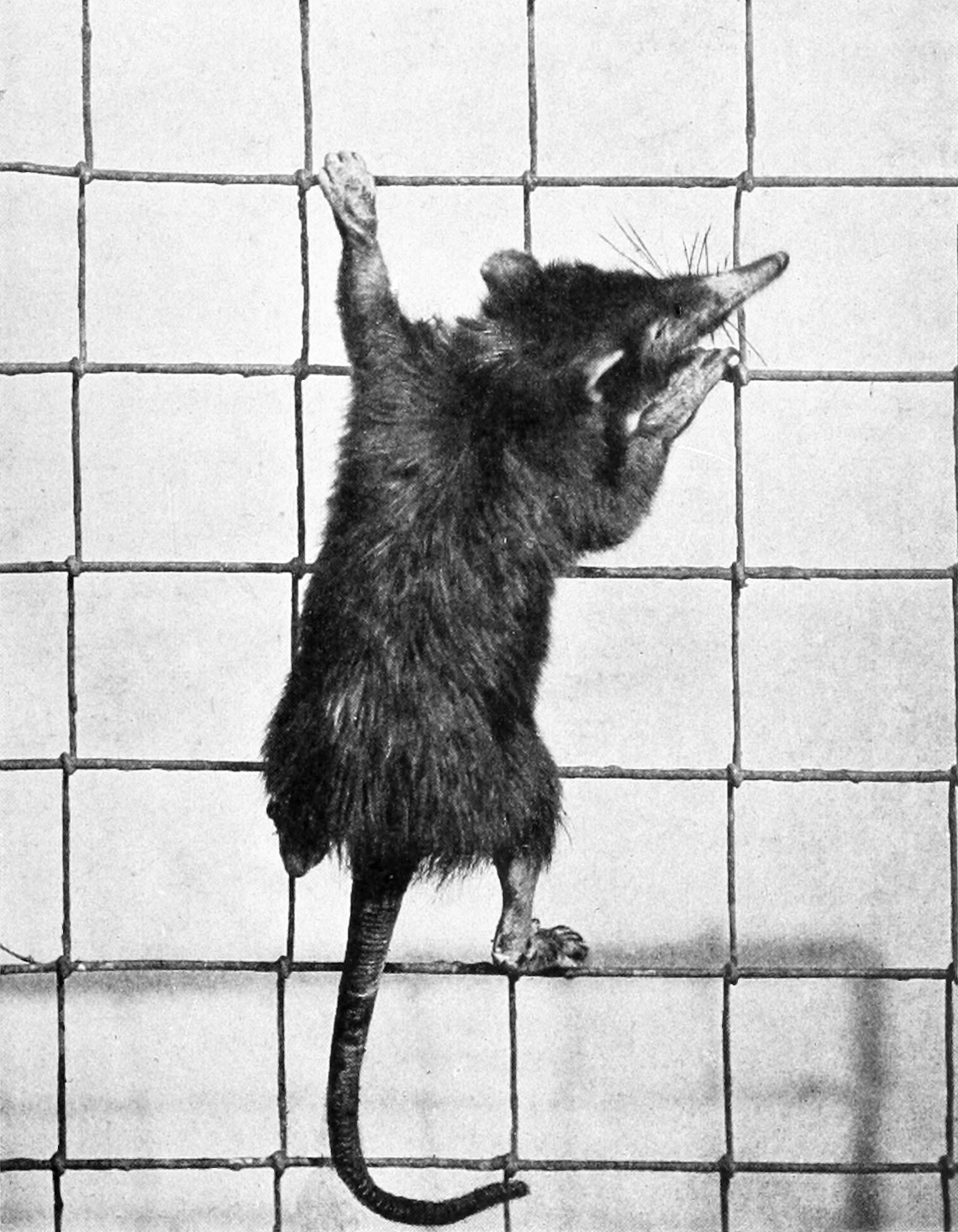
Eulipotyphlans are insectivorous mammals. Shrews and solenodons closely resemble mice, hedgehogs carry spines, while moles are stout-bodied burrowers.
- Family: Solenodontidae
- Genus: Atopogale
- Cuban solenodon, A. cubana
- Genus: Atopogale
Order: [[Chiroptera]] (bats)
The bats' most distinguishing feature is that their forelimbs are developed as wings, making them the only mammals capable of flight. Bat species account for about 20% of all mammals.
- Family: Noctilionidae
- Genus: Noctilio
- Greater bulldog bat, N. leporinus
- Genus: Noctilio
- Family: Vespertilionidae
- Subfamily: Vespertilioninae
- Genus: Antrozous
- Pallid bat, A. pallidus
- Genus: Eptesicus
- Big brown bat, E. fuscus
- Genus: Lasiurus
- Eastern red bat, L. borealis
- Genus: Antrozous
- Subfamily: Vespertilioninae
- Family: Molossidae
- Genus: Eumops
- Wagner's bonneted bat, E. glaucinus
- Genus: Mormopterus
- Little goblin bat, M. minutus
- Genus: Nyctinomops
- Broad-eared bat, N. laticaudatus
- Big free-tailed bat, N. macrotis
- Genus: Tadarida
- Mexican free-tailed bat, T. brasiliensis
- Genus: Eumops
- Family: Mormoopidae
- Genus: Mormoops
- Antillean ghost-faced bat, M. blainvillii
- Ghost-faced bat, M. megalophylla extirpated
- Genus: Pteronotus
- Macleay's mustached bat, P. macleayii
- Parnell's mustached bat, P. parnellii
- Sooty mustached bat, P. quadridens
- Genus: Mormoops
- Family: Phyllostomidae
- Subfamily: Phyllostominae
- Genus: Macrotus
- Waterhouse's leaf-nosed bat, M. waterhousii
- Genus: Macrotus
- Subfamily: Brachyphyllinae
- Genus: Brachyphylla
- Cuban fruit-eating bat, B. nana
- Genus: Brachyphylla
- Subfamily: Phyllonycterinae
- Genus: Erophylla
- Buffy flower bat, E. sezekorni
- Genus: Phyllonycteris
- Cuban flower bat, P. poeyi
- Genus: Erophylla
- Subfamily: Glossophaginae
- Genus: Monophyllus
- Leach's single leaf bat, M. redmani
- Genus: Monophyllus
- Subfamily: Stenodermatinae
- Genus: Artibeus
- Jamaican fruit bat, A. jamaicensis
- Genus: Phyllops
- Cuban fig-eating bat, P. falcatus
- Genus: Artibeus
- Subfamily: Desmodontinae
- Genus: Desmodus
- Common vampire bat, D. rotundus extirpated
- Genus: Desmodus
- Subfamily: Phyllostominae
- Family: Natalidae
- Genus: Chilonatalus
- Cuban funnel-eared bat, C. micropus
- Genus: Nyctiellus
- Gervais's funnel-eared bat, N. lepidus
- Genus: Chilonatalus
Order: [[Cetacea]] (whales)


The order Cetacea includes whales, dolphins and porpoises. They are the mammals most fully adapted to aquatic life with a spindle-shaped nearly hairless body, protected by a thick layer of blubber, and forelimbs and tail modified to provide propulsion underwater.
- Suborder: Mysticeti
- Family: Balaenopteridae (baleen whales)
- Family: Balaenidae
- Genus: Eubalaena
- North Atlantic right whale, Eubalaena glacialis
- Genus: Balaenoptera
- Common minke whale, B. acutorostrata
- Sei whale, B. borealis
- Bryde's whale, B. brydei
- Blue whale, B. musculus
- Genus: Megaptera
- Humpback whale, M. novaeangliae
- Genus: Eubalaena
- Suborder: Odontoceti
- Superfamily: Platanistoidea
- Family: Delphinidae (marine dolphins)
- Genus: Delphinus
- Short-beaked common dolphin, D. delphis
- Genus: Feresa
- Pygmy killer whale, F. attenuata
- Genus: Globicephala
- Short-finned pilot whale, G. macrorhyncus
- Genus: Lagenodelphis
- Fraser's dolphin, L. hosei
- Genus: Grampus
- Risso's dolphin, G. griseus
- Genus: Orcinus
- Killer whale, O. orca
- Genus: Peponocephala
- Melon-headed whale, P. electra
- Genus: Pseudorca
- False killer whale, P. crassidens
- Genus: Stenella
- Pantropical spotted dolphin, Stenella attenuata
- Clymene dolphin, S. clymene
- Striped dolphin, S. coeruleoalba
- Atlantic spotted dolphin, S. frontalis
- Spinner dolphin, S. longirostris
- Genus: Steno
- Rough-toothed dolphin, S. bredanensis
- Genus: Tursiops
- Common bottlenose dolphin, T. truncatus
- Genus: Delphinus
- Family: Physeteridae (sperm whales)
- Genus: Physeter
- Sperm whale, P. macrocephalus
- Genus: Physeter
- Family: Kogiidae (dwarf sperm whales)
- Genus: Kogia
- Pygmy sperm whale, K. breviceps
- Dwarf sperm whale, K. sima
- Genus: Kogia
- Family: Delphinidae (marine dolphins)
- Superfamily Ziphioidea
- Family: Ziphidae (beaked whales)
- Genus: Mesoplodon
- Gervais' beaked whale, M. europaeus
- Blainville's beaked whale, M. densirostris
- True's beaked whale, M. mirus
- Genus: Ziphius
- Cuvier's beaked whale, Z. cavirostris
- Genus: Mesoplodon
- Family: Ziphidae (beaked whales)
- Superfamily: Platanistoidea
Order: [[Carnivora]] (carnivorans)

There are over 260 species of carnivores, the majority of which eat meat as their primary dietary item. They have a characteristic skull shape and dentition.
- Suborder: Procyonidae
- Family: Procyonidae
- Genus: Procyon
- Raccoon, P. lotor introduced, extirpated
- Genus: Procyon
- Family: Herpestidae
- Genus: Urva
- Small Indian mongoose, U. auropunctata introduced
- Genus: Urva
- Family: Procyonidae
Order: [[Artiodactyla]] (even-toed ungulates)

The even-toed ungulates are ungulates – hoofed animals – which bear weight equally on two (an even number) of their five toes: the third and fourth. The other three toes are either present, absent, vestigial, or pointing posteriorly.
- Family: Cervidae
- Subfamily: Capreolinae
- Genus: Odocoileus
- White-tailed deer, O. virginianus introduced
- Genus: Odocoileus
- Subfamily: Capreolinae
- Family Suidae (pigs)
- Genus: Sus
- Wild boar, S. scrofa introduced
- Genus: Sus
- Family: Tayassuidae (peccaries)
- Genus: Tayassu
- White-lipped peccary, T. pecari introduced, extirpated
- Genus: Tayassu
Globally extinct
The following species are globally extinct:
- Oriente cave rat, Boromys offella
- Torre's cave rat, Boromys torrei
- Cuban coney, Geocapromys columbianus
- Western Cuban nesophontes, Nesophontes micrus
- Giant solenodon, Atopogale arredondoi
- Cuban sloth, Acratocnus antillensis
- Cuban giant sloth, Megalocnus rodens
- Matthew's ground sloth, Parocnus brownii
- Giant ghost-faced bat, Mormoops magna
- Anthony's fruit-eating bat, Artibeus anthonyi
- Lesser falcate-winged bat, Phyllops vetus
- Caribbean monk seal, Neomonachus tropicalis
Notes
References
-
{{cite web |access-date = 22 May 2007
-
{{cite web |access-date=22 May 2007 |archive-url=https://web.archive.org/web/20070427043030/http://nmnhgoph.si.edu/msw/ |archive-date=27 April 2007
-
{{cite web |access-date = 22 May 2007
References
- This list is derived from the [[IUCN Red List]] which lists species of mammals and includes those mammals that have recently been extinct since the early [[Holocene]]. The taxonomy and naming of the individual species is based on those used in existing Wikipedia articles as of May 21, 2007 and supplemented by the common names and taxonomy from the [[International Union for Conservation of Nature. IUCN]], [[Smithsonian Institution]], or [[University of Michigan]] where no Wikipedia article was available.
- (2020-12-01). "Assessing the role of humans in Greater Antillean land vertebrate extinctions: New insights from Cuba". Quaternary Science Reviews.
- Orihuela, J. (2010). Late Holocene fauna from a cave deposit in Western Cuba: post-Columbian occurrence of the vampire bat Desmodus rotundus (Phyllostomidae: Desmodontinae). ''Caribbean Journal of Science'', 46(2–3), 297–312.
- Whitt D.A.. (2012). "A review of marine mammal records of Cuba". Latin American Journal of Aquatic Mammals.
- Jennings, A.. (2016). "''Herpestes auropunctatus''".
- Keuroghlian, A.. (2013). "''Tayassu pecari''".
- Borroto-Páez, R., Mancina, C. A., Woods, C. A., & Kilpatrick, C. W. (2012) ''Updated checklist of endemic terrestrial mammals of the West Indies.'' In: Borroto-Páez, R., Woods, C.A., Sergile, F.E. (eds) ''Terrestrial mammals of the West Indies: Contributions.'' Wacahoota Press/ University of Vermont, Burlington.
- (2005-08-16). "Asynchronous extinction of late Quaternary sloths on continents and islands". Proceedings of the National Academy of Sciences of the United States of America.
- MacPhee, R. D. E. (2009). Insulae infortunatae: establishing a chronology for Late Quaternary mammal extinctions in the West Indies. In ''American megafaunal extinctions at the end of the Pleistocene'' (pp. 169–193). Springer, Dordrecht.
This article was imported from Wikipedia and is available under the Creative Commons Attribution-ShareAlike 4.0 License. Content has been adapted to SurfDoc format. Original contributors can be found on the article history page.
Ask Mako anything about List of mammals of Cuba — get instant answers, deeper analysis, and related topics.
Research with MakoFree with your Surf account
Create a free account to save articles, ask Mako questions, and organize your research.
Sign up freeThis content may have been generated or modified by AI. CloudSurf Software LLC is not responsible for the accuracy, completeness, or reliability of AI-generated content. Always verify important information from primary sources.
Report