From Surf Wiki (app.surf) — the open knowledge base
List of European windstorms
None
None
The following is a list of notable European windstorms.
Windstorms
Before 1800
| Event | Date | Notes | ||||||||||||
|---|---|---|---|---|---|---|---|---|---|---|---|---|---|---|
| Grote Mandrenke (known as St Maury's wind in Ireland) | 15–16 January 1362 | A southwesterly Atlantic gale swept across England, the Netherlands, northern Germany and southern Denmark, killing over 25,000 and changing the Dutch-German-Danish coastline. | ||||||||||||
| All Saints' Flood | 1 November 1570 (11 November, New Style) | last1=Lamb | first1=Hubert | title=Historic storms of the North Sea, British Isles and Northwest Europe | date=1991 | publisher=Cambridge Univ. Press | location=Cambridge u.a. | isbn=978-0-521-37522-1 | edition=1. publ.}} | |||||
| Spanish Armada storms | 1588 | After the Battle of Gravelines, the Armada was forced to flee northwards, and attempted to return to Spain by sailing around Scotland and Ireland. Here, the ships ran into a series of powerful westerly gales. Already in poor condition after an extended period at sea, many ships were sunk, or driven onto the coast and wrecked, with over 50 ships lost. The late 16th century, and especially 1588, was marked by unusually strong North Atlantic storms, perhaps associated with a high accumulation of polar ice off the coast of Greenland, a characteristic phenomenon of the "Little Ice Age." | ||||||||||||
| Hard Candlemas | 2 February 1602 | last1=Guttesen | first1=Rolf | title=New Geographical and Historical Information from Lucas Janz Waghenaer's Faroe-chart | journal=Geografisk Tidsskrift | date=1992 | volume=92 | issue=1 | pages=22–28 | doi=10.1080/00167223.1992.10649311 | bibcode=1992GeTid..92...22G | url=https://tidsskrift.dk/index.php/geografisktidsskrift/article/viewFile/5857/11134 | access-date=18 May 2015 | url-access=subscription}} |
| Burchardi Flood | 11–12 October 1634 | Also known as "second Grote Mandrenke", hit North Frisia, drowned about 8,000–15,000 people and destroyed the island of Strand. | ||||||||||||
| Culbin Sands storm | Autumn 1694 | A storm saw 20 - of farmland overwhelmed by sand at the Culbin Estate, Moray Scotland. | ||||||||||||
| Great Storm of 1703 | 26 November 1703 | Severe gales affected south coast of England. Between 8,000 and 15,000 lives were lost overall. | ||||||||||||
| Portugal and Madeira storm | 18–19 November 1724 | last1=Liberato | first1=Margarida L.R. | title=The 19 January 2013 windstorm over the north Atlantic: Large-scale dynamics and impacts on Iberia | journal=Weather and Climate Extremes | volume=5–6 | pages=16–28 | doi=10.1016/j.wace.2014.06.002 | year=2014 | bibcode=2014WCE.....5...16L | doi-access=free}} causing damage to the east coast of Madeira and central and northern Portugal (though unclear if it was not a tropical system such as Hurricane Vince, which impacted Europe in 2005). | |||
| St Hilaire–Prisca storms | 14–18 January 1739 | last1=Pfister | first1=Christian | title=The meteorological framework and the cultural memory of three severe winter-storms in early eighteenth-century Europe | journal=Climatic Change | volume=101 | issue=1–2 | pages=281–310 | date=2010 | doi=10.1007/s10584-009-9784-y | bibcode=2010ClCh..101..281P | hdl=10174/4221 | s2cid=67759442 | url=http://doc.rero.ch/record/321679/files/10584_2009_Article_9784.pdf}} |
| St Barbara storm | 4 December 1739 | Affected Portugal. |
1800–1899
| Event | Date | Notes | |||
|---|---|---|---|---|---|
| Galnemåndagen | 11 March 1822 | A severe storm in Norway which may have caused over 300 deaths in the country of fishermen. | |||
| February 1825 | |||||
| Night of the Big Wind | 6–7 January 1839 | The most severe windstorm to hit Ireland in recent centuries, with hurricane-force winds, killed between 250 and 300 people and rendered hundreds of thousands of homes uninhabitable. | |||
| Moray Firth fishing disaster | August 1848 | ||||
| 1850 | Winter 1850 | ||||
| Royal Charter Storm | 25–26 October 1859 | The Royal Charter Storm was considered to be the most severe storm to hit the British Isles in the 19th century, with a total death toll estimated at over 800. It takes its name from the Royal Charter ship, which was driven by the storm onto the east coast of Anglesey, Wales with the loss of over 450 lives. | |||
| Great Gale of 1871 | 10 February 1871 | A severe storm affected England with 28 ships wrecked on the northeast coast, total fatalities are estimated at over 50. | |||
| "Lothar's big brother" | 12 March 1876 | title=Severe weather events in the late 19th century and their potential impact on insurance today Winter storms in Europe: messages from forgotten catastrophes | url=http://media.swissre.com/documents/Swiss_Re_Winter_storms.pdf | access-date=29 October 2015 | publisher=Swiss Re}} |
| The Tay Bridge Disaster | 28 December 1879 | Severe gales (estimated to be Force 10–11) swept the east coast of Scotland, infamously resulting in the collapse of the Tay Rail Bridge and the loss of 75 people who were on board the ill-fated train. | |||
| Eyemouth Disaster | 14 October 1881 | A severe storm struck the southeast coast of Scotland. 189 fishermen were killed, most of whom were from the small village of Eyemouth. | |||
| The Ochtertyre storm | 19–28 January 1884 | A series of deep Atlantic depressions crossed the northwestern areas of the UK, a storm on 26 January saw the UK's record lowest air pressure measured at Ochtertyre, Perthshire of 925.6 hPa. Swiss Re stated the storm's damaging swathe of winds were larger than those of the Burns Day storm of 1990. | |||
| The great storm of November 1893 | 16–20 November 1893 | ||||
| "North German Express" | 12 February 1894 | A rapidly moving storm brought high winds to Northern Ireland, Scotland, Northern England and northern Germany, reaching a maximum depth estimated at 945 hPa over Norway. |
1900–1974
| Event | Date | Notes | ||||||||
|---|---|---|---|---|---|---|---|---|---|---|
| Christmas Hurricane of 1902 | 25–26 December 1902 | The Danish Meteorological Institute report a single measurement from a balloon at Hald in central Jutland with an hourly mean wind value of 35 m/s. DMI estimate the strongest winds probably reached 50 m/s or more. The storm was relatively short-lived and caused extensive damage to forestry as it passed from southern Norway to the Gulf of Riga, with a swathe of damage stretching from north Jutland to Bornholm. The storm also saw significant flooding. | ||||||||
| Storm Ulysses | 26–27 February 1903 | Probably the most severe to affect Ireland since the Night of the Big Wind, with an estimated 1000–3000 trees uprooted in Phoenix Park, Dublin. Following a stormy period between the 18–26 which saw several depressions pass close by to the west coast of Ireland. The storm's low pressure was estimated at 975 mb (Lamb, 1991). A quote from Ulysses by James Joyce is likely based on the aftermath of this storm- "O yes, J.J. O'Molloy said eagerly. Lady Dudley was walking home through the park to see all the trees that were blown down by that cyclone last year and thought she'd buy a view of Dublin." | ||||||||
| Ulvsund storm | 23–24 October 1921 | last1=Rasmussen | first1=Leif | title=Et uvejr med flere navne En stormfuld nat, som en tolvårs dreng oplevede den | journal=Vejret | date=February 2016 | volume=146 | url=http://dams.dk/Vejret/Vejret146.pdf | access-date=19 April 2018 | language=da}} |
| Halaveðrið | 7–8 February 1925 | A deep storm affected Iceland with the loss of two trawlers and over 60 men. | ||||||||
| 28 January 1927 | A storm strongly affected the UK and Ireland, with a gust of 90 kn recorded in Paisley. | |||||||||
| Cleggan Bay Disaster | 28 October 1927 | Storm affected the west coast of Ireland, with 45 people drowned, led to the abandonment of the Inishkea Islands. There was also coastal flooding in the Irish Sea along Cardigan Bay and 5 fatalities in Fleetwood, Lancashire. | ||||||||
| 1928 Thames flood | 6–7 January 1928 | Snow melt combined with heavy rainfall and a storm surge in the North Sea led to flooding in central London and the loss of 14 lives. | ||||||||
| Western Europe windstorm | 23–25 November 1928 | A windstorm affected parts of Northwestern Europe for more than two days and killed 38 people, mainly in England. | ||||||||
| Central Europe windstorm | Early July 1929 | A severe and deadly windstorm moved through central Europe in early July 1929 and killed 38 people. | ||||||||
| Southern and central England gales | 5–8 December 1929 | A stormy period from 5 to 8 December 1929 saw two depressions (central pressure of 950 mb), move north-eastwards across Ireland bringing severe gales in south-west England. Mean hourly wind speeds around 55 - with gusts exceeding 80 kn at Falmouth on each day from the 5th to the 8th and at Scilly from the 6th to the 8th. Extremes during this period were: mean hourly winds of 61 and at Falmouth on the 5th and 6th and 59 kn at Scilly on the 7th, and gusts of 89 kn at Falmouth on the 6th and 7th and Scilly on the 7th, while on the evening of the 6th Scilly registered a gust of 96 kn, equalling the then highest ever recorded at a low-level station in Great Britain in December. Mean wind speeds between 40 and, and gusts between 65 and, occurred in many parts of the country during the period. | ||||||||
| 16–17 September 1935 | Formed as a secondary depression west of Ireland, before moving over southern Ireland to Northern England. The low brought severe gales to south western England, Wales and southern England. | |||||||||
| Iberian windstorm | 13–15 February 1941 | A storm made a direct hit on Lisbon while damaging winds affected the whole of Portugal. Low of 950 hPa, reaching winds up to 180 km/h in San Sebastián, Spain. It remains one of the top five most severe windstorms across Europe during the 20th century. | ||||||||
| October Gales | 24–26 October 1945 | Gales in October 1945 killed two and washed up many mines along the south coast of England with winds over 90 mph. | ||||||||
| North Sea storm disturbance | 8 January 1949 | |||||||||
| North Sea Flood of 1953 | 31 January–1 February 1953 | Considered to be the worst natural disaster of the 20th century both in the Netherlands and the United Kingdom, claiming over two thousand lives altogether. A storm originating over Ireland moved around the Scottish west coast, over Orkney, down the east coast of Scotland and England and across the North Sea to the Netherlands. Sea defences in the Netherlands and eastern England were overwhelmed. The ferry MV Princess Victoria, travelling between Scotland and Northern Ireland, was lost with 133 people drowned, and over a quarter of the Scottish fishing fleet was also lost. In the Netherlands, flooding killed 1,835 people and forced the emergency evacuation of 70,000 more as sea water inundated 1365 km2 of land. An estimated 30,000 animals drowned, and 47,300 buildings were damaged of which 10,000 were destroyed. Total damage was estimated at that time at 895 million Dutch guilders. | ||||||||
| Sweden snowstorm | 3–4 January 1954 | |||||||||
| Hurricane Debbie | 17 September 1961 | North-west Ireland, much of Scotland and the Northern Isles hit by severe gales, which were the residuals of Hurricane Debbie. | ||||||||
| Vincinette | ||||||||||
| Great Sheffield Gale | ||||||||||
| (North Sea flood of 1962) | 16–17 February 1962 | Including the Great Sheffield Gale, westerly gales swept the entire United Kingdom during 16 and 17 February 1962, a "resonant lee wave effect" over the Pennines led to over 150,000 houses in Sheffield, nearly two-thirds of the city's entire housing stock being damaged. The storm moved south-east and reached the German coast of the North Sea with wind speeds up to 200 km/h. The accompanying storm surge combined with high tide pushed water up the Weser and Elbe, breaching dikes and caused extensive flooding, especially in Hamburg. 315 people were killed, around 60,000 were left homeless. | ||||||||
| Channel Islands storm | 9 October 1964 | A storm tracked along the English Channel bringing intense winds and damage to the Channel Islands. | ||||||||
| Ferrybridge cooling tower collapse | 1 November 1965 | Ferrybridge power station near Pontefract saw three cooling towers collapse due to vibrations in 85 mph winds. The grouped shape of the cooling towers meant that westerly winds were funnelled into the towers themselves, creating a vortex. Three out of the original eight cooling towers were destroyed and the remaining five were severely damaged. The towers were rebuilt and all eight cooling towers were strengthened to tolerate adverse weather conditions. | ||||||||
| "Adolph Bermpohl" storm | 23–24 February 1967 | Named after the ** which was lost in the storm. The German Naval Observatory at the time reported the storm brought the highest winds ever measured in the North Sea. | ||||||||
| Scandinavian storm (Lena) | 17–18 October 1967 | October 1967 was one of the wettest in Denmark with several areas of low pressure passing the country. Wind speeds over 40 m/s were recorded across Denmark and at the southern tip of Öland, Sweden. | ||||||||
| 1968 Scotland storm | 15 January 1968 | This storm tracked north up the west coast of Scotland. In Glasgow, some 20 people were killed, 40 injured and 2,000 people made homeless, Ayrshire and Argyll also affected. | ||||||||
| Sweden storm | 22 September 1969 | |||||||||
| Quimburga | 11–14 November 1972 | A storm that struck northern Europe in mid-November 1972 and spawned a tornado that killed 28 in Germany. The MV Mebo II radio ship of RNI ran adrift losing one of her anchors. The crew managed to start the engines, and after sailing back to her original anchoring spot near Scheveningen, the spare anchor was securing the vessel's position again. | ||||||||
| Unnamed | 13 April 1973 | A storm affecting the north and west coastal areas of the Netherlands, northern German and western Danish coastal areas, getting the unmotorised MV Norderney radio ship of Radio Veronica stranded at the Scheveningen coast. Widespread destruction of ca. 2 million trees at the Veluwe. | ||||||||
| Irish windstorm | 11–12 January 1974 | Record winds, sometimes of hurricane force, recorded in many parts of Ireland. The strongest ever sea level gust in Ireland, at exactly 200 km/h, was recorded in Kilkeel, County Down. Many trees and buildings were damaged and 250,000 premises were left without electricity (approx 1 in 4 in the county). | ||||||||
| Norway windstorm | Mid February 1974 | Winds up to 100 mph battered the United Kingdom and Norway in mid February 1974, killing 19. |
1975–1999
| Event | Date | Notes | |||||||||||
|---|---|---|---|---|---|---|---|---|---|---|---|---|---|
| Gale of January 1976 ("Capella storm") | 2–5 January 1976 | Central UK windspeed gusts of 105 mph were measured at RAF Wittering. Middlesbrough saw winds of 114 mph. Widespread wind damage was reported across Europe from Ireland to Central Europe. Coastal flooding of 400 homes occurred in Cleethorpes, United Kingdom. In Ruisbroek, Antwerp, Belgium, dike failures and floods on the Scheldt estuary led to the adoption of the Sigmaplan (the Belgian equivalent of the Dutch Delta Works). The highest storm surge of the 20th century was recorded on the German North Sea coast, with some flooding of coastal marshes. | |||||||||||
| Fastnet disaster storm | 13–14 August 1979 | An unusual storm during the 1979 Fastnet yachting race resulted in 24 yachts being disabled or lost and 15 fatalities. | |||||||||||
| 1981 storm series | November and December 1981 | ||||||||||||
| Christiansborg storm | 18 January 1983 | url=https://www.europeana.eu/resolve/record/2023707/BE6EDDECA6A36ECAC243AAC2C5D6C81CC56771F5 | archive-url=https://archive.today/20131216213817/http://www.europeana.eu/resolve/record/2023707/BE6EDDECA6A36ECAC243AAC2C5D6C81CC56771F5 | url-status=dead | archive-date=2013-12-16 | title=Christiansborg, Accident at Christiansborg | first=Steen | last=Jacobsen | access-date=2013-12-16 | publisher=Europeana }} | |||
| Unnamed | 13 January 1984 | A Class 4 storm affected Denmark. | |||||||||||
| Ex-Hurricane Charley | 25 August 1986 | Rainfall records were broken in Ireland (e.g. 200 mm in Kippure) with consequent flooding, up to 2.4 m in Dublin, and the storm also caused flooding in Wales and England. At least eleven people were killed in Ireland and Britain. | |||||||||||
| Unnamed | 20 October 1986 | A windstorm primarily affecting the Netherlands, Germany and Poland. | |||||||||||
| Great Storm of 1987 | 15–16 October 1987 | This storm mainly affected southeastern England and northern France. In England maximum mean wind speeds of 70 kn (an average over 10 minutes) were recorded. The highest gust of 117 kn was recorded at Pointe du Raz in Brittany. In all, 19 people were killed in England and 4 in France. 15 million trees were uprooted in England. This storm received much media attention, not so much because of its severity, but because these storms do not usually track so far south, the trees and buildings are not used to such winds (indeed, in mid-October most deciduous trees still have their leaves and were therefore more susceptible to windstorm damage and, following weeks of wet weather, the ground was sodden, providing little grip for the trees' roots), the severity of the storm was not forecast until approximately 3 hrs before it hit and it struck after midnight, meaning few people had advance warning. | |||||||||||
| Scottish windstorm | 13 February 1989 | During this storm, a gust of 123 kn was recorded at the Kinnaird Lighthouse (Fraserburgh) on the north-east coast of Scotland. This broke the highest low-level wind speed record for the British Isles. Much higher (unofficial) windspeeds have been recorded on the summit of Cairn Gorm and on Unst in Shetland. | |||||||||||
| 1990 Storm series | 25 January – 1 March 1990 | 1990 saw 8 storms impacting Europe between January and March. | |||||||||||
| Undine | 5–6 January 1991 | Undine crossed Ireland, the UK and Germany becoming one of the costliest storms of the 1990s with and estimated cost of £545m. A storm surge was noted with the storm's passage with waves up to 30 m high recorded out at sea. The storm was one of three which affected Europe in two weeks. | |||||||||||
| Unnamed | 9 January 1991 | A class 4 storm affected Denmark. | |||||||||||
| last1=Kristjansson | first1=Jon Egill | last2=Thorsteinsson | first2=Sigurdur | title=The structure and evolution of an explosive cyclone near Iceland | journal=Tellus A | date=October 1995 | volume=47 | issue=5 | pages=656–670 | doi=10.1034/j.1600-0870.1995.00111.x | bibcode=1995TellA..47..656K}} | 3 February 1991 | A severe storm in Iceland saw in the Vestmannaeyjar (south of the Icelandic mainland) winds up to 56 m/s with gusts probably exceeding 62 m/s, which was then the maximum the measuring stations were able to measure. Reykjavík reported hurricane-force winds with gusts up to 41 m/s. In the capital winds blew the roof off the Landspítali National University Hospital, while in Kópavogur the wind was filmed blowing over parked cars. 944 hPa. |
| New Year's Day Storm (Nyttårsorkanen) (Hogmanay hurricane) | 1 January 1992 | This storm affected much of northern Scotland and western Norway, unofficial records of gusts in excess of 130 kn were recorded in Shetland, while Statfjord-B in the North Sea recorded wind gusts in excess of 145 kn. DNMI estimated the strongest sustained winds (10 min average) to have reached 90 kn, comparable to a Category 3 hurricane on the Saffir–Simpson scale. Very few fatalities occurred, mainly due to the very low population of the islands and the fact that the islanders are used to very high winds. | |||||||||||
| 1993 Storm series | 8–17 January 1993 | ||||||||||||
| Lore | 28 January 1994 | ||||||||||||
| Christmas Eve storm (Yuma) | 23–25 December 1997 | On Christmas Eve, an intense secondary depression tracked north-east across Scotland, bringing severe gales and heavy rain. The storm caused 6 fatalities, extensive structural damage and disruption to National Grid. Blackpool's North Pier in north-west England was also damaged. | |||||||||||
| Fanny | 1–5 January 1998 | An intense secondary depression crossed Ireland and northern England bringing severe gales to Wales and southern England, with winds gusting up to 77 mph. This was probably the most severe storm since the Burns Day Storm of 1990 in southern England and Wales, bringing widespread disruption to power and communications and property, including river and coastal flooding. | |||||||||||
| Xylia | 28 October 1998 | ||||||||||||
| Boxing Day Storm (Stephen) | 26 December 1998 | Severe gales over Ireland, northern England, and southern Scotland. Winds speeds of 103 mph were recorded at Prestwick airport, and 93 mph in Glasgow. Widespread disruption and power outages in Northern Ireland and southern Scotland. The Forth Road Bridge was fully closed for the first time since its construction in 1964. | |||||||||||
| Anatol | 3 December 1999 | Hurricane like storm Anatol hits Denmark and neighbouring countries. Killing 7 in Denmark alone. Pressure: 952.4 hPa. Wind speeds above 85 mph, gusts up to 115 mph. Worst storm in Denmark since 1871. | |||||||||||
| Cyclone Lothar and Martin | 26–28 December 1999 | France, Switzerland and Germany were hit by severe storms and rain. Over 100 people were killed, and the storm caused extensive damage to property and trees and the French and German national power grids, including an emergency due to flooding at the Blayais Nuclear Power Plant. The first storm in the series, dubbed Lothar by European forecasters, rapidly developed just off of the French coast and swept inland. Each of these systems was associated with an intense jet stream aloft and benefitted from latent heat release through atmosphere-ocean exchange processes. "Lothar" and "Martin", as the second storm was dubbed, were extratropical cyclones and had a hurricane-like shape, with an eye at the center. In the first storm, a gust of 184 km/h was recorded at Ushant (in French Ouessant) in Brittany and in the second storm, the highest gust was of 200 km/h at Île de Ré in France. |
2000–2009
| Name (other name) | Dates | Minimum pressure | Meteorological history |
|---|---|---|---|
| Oratia | A deep area of low pressure swept across the United Kingdom bringing gusts in excess of 90 mph and severe flooding to Southern England, it was the strongest system of its kind to hit the UK since the Burns Day Storm of 1990. Contributing to the Autumn 2000 western Europe floods. | ||
| Janika | A severe windstorm hit southern and central Finland, causing damage worth €20 million. Northerly winds trailing the low pressure were exceptionally gusty, with F2 damage on Fujita scale. | ||
| Jeanett | A strong windstorm ripped through the British Isles, killing 24. Winds peaked at 95 mph. | ||
| Elizabeth | 19–20 November 2004 | A storm with 170 - wind speed hit the Tatras National Park in Slovakia killed a driver and destroyed 12600 ha of protected forests changing the landscape forever. The estimated damage is €194,966,211. | |
| Dagmar | A storm generating 80 mph winds hit northern France, including Paris, killing 6 people and leaving thousands of homes without power. | ||
| January 2005 | 944 hPa | ||
| Renate | A powerful storm battered the south west coast of France with gusts of 150 km/h in the coastal areas. The storm uprooted many trees, and many homes remained without power for many hours. Two people were badly injured in a helicopter crash. One person died in a house fire, which originated from a candle that he was using for illumination. | ||
| Britta | In the afternoon of the second and in the night a storm made its way through the North Sea with gusts reaching 174 mph in Denmark and southern Sweden. The countries affected were Denmark, Sweden, Norway, Germany and Scotland. The storm killed 15 people and detached an oil rig, which then was rescued and pulled back to safety. | ||
| Franz | A strong depression north of Scotland brought high winds to most of the United Kingdom. A strong jet stream was also present at the time. This system was one of several strong storms to hit the United Kingdom during the winter of 2006–2007, linked to the strong North Atlantic Oscillation event taking place at the time. With a central pressure of 951 hPa, sustained winds exceeded 60 mph and a gust of 94 mph was recorded in Benbecula late on 10 January. Additional hurricane-force gusts were recorded in Scotland. Gale-force winds were recorded in the south of the United Kingdom and in the Midlands, and gusts of over 50 mph affected the entire country. Northern areas received gusts of between 60 and. The depression was named Franz by the Free University of Berlin. | ||
| Hanno (Per) | The powerful storm Per hit south-western Sweden with wind gusts up to about 90 mph. Six people were reported dead in different storm-related accidents, thousands of trees were blown down, and thousands of households lost electricity. This storm also caused damage and flooding in Lithuania. | ||
| Kyrill | In the wake of Kyrill, already regarded as one of the most violent and destructive storms in more than a century, storm-warnings were given for many countries in western, central and northern Europe with severe storm-warnings for some areas. Schools in particularly threatened areas had been closed by mid-day, to allow children to get home safely before the storm reached its full intensity in the late afternoon. At least 53 people were killed in northern and central Europe, causing travel chaos across the region. Britain and Germany were the worst hit, with eleven people killed as rain and gusts of up to 99 mph with sustained windspeeds of up to 73 mph swept the UK. Thirteen people were killed in Germany, with the weather station on top of the Brocken in the Saxony-Anhaltian Harz mountain range recording wind speeds of up to 121 mph. Direct damage in Germany was estimated to amount to €4.7bn. Five people were killed in the Netherlands and three in France. The gusts reached 151 km/h at the Cap Gris Nez and 130 km/h in many places in the north of France. In both Germany and the Netherlands the national railways were closed. At Frankfurt International Airport over 200 flights were cancelled. | ||
| Uriah | A rather unseasonal weather system brought gale-force winds to the UK, but was more memorable for causing severe flooding, with many areas receiving more than a months' rainfall in a single day. The storm exacerbated existing flooding problems (caused by violent thunderstorms a week earlier) and areas such as Sheffield were worst affected. Over 102 flood warnings were issued, and by 29 June, five people were dead, many areas flooded and there was severe damage to the Ulley reservoir, where cracks appeared in the dam wall, causing fears that it might collapse. 700 people were evacuated from the area. Over 3000 properties were flooded across the country and more than 3,500 people were evacuated from their homes. See June 2007 United Kingdom floods. | ||
| Tilo (Andrea) | A strong European windstorm struck Northern Scotland. All schools in Orkney were closed and hundreds of homes lost power. Gusts as high as 90 mph were reported, along with early snow for the Scottish highlands. The Northlink ferry company cancelled sailings between Lerwick and Aberdeen. There were also reports of trees and roofs being blown down, such as in Grampian. The combination of Northwesterly winds exceeding 60 mph, low pressure and high spring tides led authorities to expect severe flooding in the east of England, to close the Thames Barrier. Many said that these conditions mirrored the North Sea Flood of 1953. In the Netherlands, the Eastern Scheldt storm surge barrier and the gigantic Maeslantkering (sealing off the Rotterdam harbor) were closed. For the first time since 1976, the entire coastline was put on alert and under round-the-clock surveillance. The tidal surge traveling down the North Sea turned out to be too weak to cause any significant problems to the strong Dutch coastal defenses. | ||
| Paula | A strong European windstorm, Paula hit Poland, Germany, Austria, Denmark, Norway and Sweden. At least one person died in Poland. The gusts reached 165 km/h in the Eastern Alps, 155 km/h in Poland, 150 km/h in Norway and 140 km/h in Germany. | ||
| Emma | A strong European windstorm, Emma hit Germany, Austria, Czech Republic and Poland. At least 12 people died. The gusts reached 190 km/h in Eastern Alps, 170 km/h in Poland and 140 km/h in Germany and Czech Republic. The results were catastrophic. | ||
| Klaus | A European windstorm that hit southern France and northern Spain, said to be the most damaging in the area since that of December 1999. The storm caused widespread damage across the countries, especially in northern Spain. Twelve fatalities have been reported as of 24 January, as well as extensive disruptions of public transport. Many homes lost power, including over a million in southwestern France. The gusts reached 206 km/h. Wildfires were also in Catalonia and Benidorm. | ||
| Quinten | Severe windstorm across France, the Benelux and Germany in early February. Highest winds were recorded at the Feldberg-Mountain (Black Forest), Germany. Here the gusts reached 166 km/h. |
2010–2018
| Name (other name) | Dates | Season | Minimum pressure | Meteorological history | ||||||
|---|---|---|---|---|---|---|---|---|---|---|
| Storm Xynthia | A severe windstorm which was generated close to Madeira and from there moved across to the Canary Islands, then Portugal and much of western and northern Spain, before moving on to hit western and southwestern France. The highest gust speeds recorded as of midnight were at approximately 21:30 UTC at Alto de Orduña (228 km/h). 50 people have been reported to have died. | |||||||||
| Storm Becky | Becky originated from a low-pressure area that formed off the southeast coast of Greenland on 7 November 2010. It moved rapidly towards the United Kingdom, deepening to 960 hPa on 8 November. While Becky was making landfall on Cornwall on 9 November, a low-pressure area over Nova Scotia was named Carmen. By 10 November, Becky had weakened and become more elongated, Carmen had moved offshore and began strengthening. On 11 November, Becky had been absorbed by Cyclone Anneli and Carmen had rapidly deepened to 965 hPa. Carmen strengthened slightly on 12 November, while centred just offshore Aberdeen, Scotland. On 13 November, it was centred over Scandinavia. It had split into two vortexes by that time. It began moving rapidly to the northeast, and moved out of the Free University of Berlin's tracking charts on 16 November. | |||||||||
| Ex-Hurricane Katia | A tropical depression formed near the Cape Verde Islands in late-August, and strengthened into a Category 4 hurricane on 5 September. However, it later weakened rapidly to a Category 1 the next day. It later struck the United Kingdom with near hurricane-force winds and moved across the rest of northern Europe in the next few days. The remnants of Katia killed a man when a tree blew down on his car. A maximum gust of 132 km/h was recorded, and caused widespread power outages throughout Europe, as far east as Russia. | |||||||||
| Storm Berit (Storm Xaver) | A tropical wave that developed east of the Lesser Antilles was first noted for a 10% chance of becoming a tropical or subtropical cyclone by the National Hurricane Center on 19 November. The center then said on 21 November that the wave had a 60% chance of becoming a subtropical cyclone, and was also gaining frontal characteristics. The system then acquired extratropical features and on 22 November, it was named Xaver by the Free University of Berlin. Xaver then began a rapid strengthening phase, and deepened almost 30 to. Wind gusts reached 184 km/h in the Faroe Islands causing widespread damage. One woman died after her car got blown into a loch in Scotland. | |||||||||
| Storm Friedhelm (Hurricane Bawbag) | The system that would become Friedhelm formed over the Labrador Sea on 5 December 2011 with a central pressure of 997 mb. As the system moved into the North Atlantic Ocean, it was named Friedhelm by the Free University of Berlin. On 8 December at midnight, Friedhelm was located west of the British Isles with a central pressure of 977 mb. By the next day, 9 December, the large system was located over the North Sea with a deep central pressure of 956 mb. Friedhelm then weakened as it moved over Scandinavia. | |||||||||
| Storm Hergen | title=Windstorm Hergen analysis | work=Institute of Meteorology | publisher=Free University of Berlin | author=Jasmin Krummel | url=http://www.met.fu-berlin.de/wetterpate/Lebensgeschichten/Tief_HERGEN_11_12_11.htm | language=de}} By the next day, Hergen intensified rapidly as it sped across the Atlantic, deepening to 980 mb. Bombing occurred within the center of the storm and it attained peak intensity on 13 December with a central pressure of 945 mb, equivalent to a category 4 hurricane. Hergen was so strong that it had absorbed the circulation of another low named 'Gunther'. By this time, the Cairn Gorm weather station had recorded a 111 mph wind gust. As Hergen moved northeastwards, it began to weaken while located over the Shetland Isles on 14 December. The storm remained stationary until 16 December offshore the west coast of Norway. The vortex continued to weaken until it dissipated on 20 December. | ||||
| Storm Joachim | A low-pressure area formed north of Puerto Rico on 13 December and rapidly moved towards Europe. The storm caused power outages and travel disruption in France, Germany, and Switzerland. | |||||||||
| Storm Patrick | Formed as secondary low to Cato, affecting central Norway, Sweden and Finland. A F2 tornado was reported in Hellesylt, Norway. | |||||||||
| Storm Ulli | A weak low pressure system formed over the Mid-west of the United States on 30 December. This low moved into the Atlantic Ocean the next day and was named Ulli by the FU-Berlin. On 2 January, the Met Office began issuing weather warnings for most of the country. Blizzard warnings were issued for northern Scotland, while a heavy rain advisory was issued for southern England. SkyWarn UK also issued their first Particularly Dangerous Situation warning of the year, along with a severe weather warning. The storm rapidly deepened 9 millibars in just less than six hours. One person was killed after an oak tree fell on his car. This storm was described as the worst in Scotland since the Boxing Day Storm of 1998 by the UK Met Office. | |||||||||
| Storm Andrea | title=Extratropical Cyclone Andrea Summary | url=http://alert.air-worldwide.com/EventSummary.aspx?e=599&tp=31&c=1 | publisher=Air-worldwide | access-date=30 January 2012}} | ||||||
| Storm Gong | An explosively deepening cyclone from the Atlantic brought high wind to Portugal. The cities of Lisbon and Porto registered wind gusts of 29 and. Widespread fallen trees and power cables left more than 1 million people without power. | |||||||||
| Storm Christian (St. Jude Storm) | Named after the feast of Saint Jude the Apostle on 28 October, impact N Europe from 27 October. The storm was widely reported in the British press on 25 October, with predicted intensity comparisons made to the Great storm of 1987 and the Burns' Day storm of 1990. It hit the UK, and parts of northern Europe with gusts of up to 120 mph recorded in Denmark. More than 10 people were killed in the storm. | |||||||||
| 2013 Nordic storms | 13 November – 19 December 2013 | |||||||||
| Storm Xaver | Force 12 winds were forecast over the North Sea on 5 December. The system impacted densely populated areas in the UK, Denmark, Sweden, Germany and Poland. In Denmark, the storm was named Bodil. | |||||||||
| 2013–2014 Atlantic winter storms in Europe | ||||||||||
| Nordic Spring Storms | last=Toppe | first=Ronald | title=Mars var mild og våt | url=http://www.tv2.no/2014/04/03/storm/manedsoversikt/vinter/5468935#.Uz055RDPbAm | access-date=4 April 2014 | newspaper=TV2 | date=3 April 2014}} | |||
| Storm Lena | An unusually powerful area of low pressure for the time of year brought record winds to the west of Norway ahead of ex-Hurricane Bertha, the highest gust of 42.0 m/s was recorded at Kråkenes Lighthouse. | |||||||||
| Storm Alexandra | ||||||||||
| Storm Elon | ||||||||||
| Storm Ole | 965 hPa | Ole named by the Norwegian Meteorological Institute (Othmar FUB, Laina Finland) brought record breaking winds to some locations in Northern Norway and Swedish Lapland. | ||||||||
| Storm Niklas | 971.4 hPa | Niklas is believed to be one of the strongest storms in Germany in recent years, preceded by the low Mike which also brought hurricane strength winds to Europe. also named Lentestorm (spring storm) by KNMI, affected areas of western and central Europe with widespread disruption to air, shipping and road transport at the end of March 2015. The storm also caused forestry and property damage, power outages, and led to the loss of several lives. | ||||||||
| Storm Zeljko | 995 hPa | An unusually strong storm developed over the North Sea for the time of year, which according to KNMI is the strongest storm of its type witnessed in the Netherlands during summer.(NL) | ||||||||
| Storm Diddú | 2015–2016 | 944 hPa | A severe storm affected Iceland, and was given the local name Diddú on Twitter. The storm brought maximum wind gusts of 72.6 m/s to the East Iceland weather station at Hallormsstaðaháls, with hurricane-force winds reported from 33 weather stations in the country, and was the worst storm to affect Iceland since 1991. | |||||||
| Storm Egon | 2016–2017 | 981 hPa | Egon was the first storm to surpass the Perils.org reporting threshold of €200 million since storm Niklas in 2015. | |||||||
| Storm Doris | 2016–2017 | 974 hPa | ||||||||
| Storm Zeus | 2016–2017 | 996 hPa | Zeus affected France on a trajectory stretching from Brittany to the Italian border. Zeus was not named by a national meteorological agency but was widely used in French media, believed to be a misappellation of another low named by the Free University of Berlin charts | |||||||
| Storm Xavier | 2017–2018 | 985 hPa | ||||||||
| Ex-Hurricane Ophelia | 2017–2018 | 959 hPa | ||||||||
| Storm Herwart | 2017–2018 | 970 hPa | ||||||||
| Storm Eleanor | 2017–2018 | 966 hPa | ||||||||
| Storm David | 2017–2018 | 974 hPa | url=http://www.sueddeutsche.de/panorama/fernverkehr-friederike-deutsche-bahn-nimmt-betrieb-wieder-auf-1.3832103 | title=Die Bilanz von "Friederike" | date=2018-01-19 | newspaper=Sueddeutsche.de}} Record winds recorded at Brocken: 203 km/h. Damage estimated at €1 billion to €2.6bn. Deutsche Bahn has decided to hire an additional 150 foresters because of damaged incurred by the storm. |
Since 2019
| Official name | Formed | Dissipated | Season | Minimum pressure | Highest wind gust | Damage (GBP/EUR) | Areas affected | Notes |
|---|---|---|---|---|---|---|---|---|
| Ex-Hurricane Lorenzo | 2019–2020 | 954 hPa | 101 mph | £284 million / €330 million | West Africa, Cape Verde, Lesser Antilles, Eastern United States, Azores, United Kingdom, Ireland, France | |||
| Storm Ciara | 2019–2020 | 943 hPa | 136 mph | United Kingdom, Ireland, Isle of Man, Northern Europe, Western Europe, Eastern Europe, Central Europe, Spain | ||||
| Storm Dennis | 2019–2020 | 920 hPa | 140 mph | United Kingdom, Ireland, Iceland, Norway, Sweden, Netherlands, Denmark, Germany | ||||
| Storm Ellen | 18 August 2020 | 20 August 2020 | 2019–2020 | 966 hPa | 89 mph | United Kingdom, Ireland | ||
| Storm Alex | 2020–2021 | 969 hPa | 116 mph | United Kingdom, Spain, Portugal, France, Italy, Austria, Poland, Czech Republic | ||||
| Storm Malik | 2021–2022 | 965 hPa | 122 mph | €382 million | United Kingdom, Ireland, Denmark, Norway, Sweden, Finland, Lithuania, Latvia, Estonia, Germany, Poland, Czech Republic | |||
| Storm Eunice | 2021–2022 | 960 hPa | 122 mph | €1.83 billion | United Kingdom, Ireland, Netherlands, Belgium, Germany, Poland, Lithuania, Russia, Belarus | |||
| Storm Poly | 2022–2023 | 987 hPa | 92 mph | United Kingdom, Northern France, Belgium, Netherlands, Germany, Denmark | ||||
| Storm Daniel | 2022–2023 | 1009 hPa | 55 mph | €19.9 billion | Bulgaria, Egypt, Syria, Greece, Israel, Libya, Turkey | |||
| Storm Babet | 2023–2024 | 977 hPa | 115 mph | €691 million | Denmark, France, Germany, Ireland, Norway, Portugal, Spain, Sweden, United Kingdom | |||
| Storm Ciarán | 2023–2024 | 951 hPa | 129 mph Non-tornadic | €1.91 billion | Ireland, United Kingdom, Channel Islands, Benelux, France, Spain, Czech Republic, Italy | |||
| Storm Ingunn | 2023–2024 | 941 hPa | 155 mph | Norway, United Kingdom, Sweden | ||||
| Storm Éowyn | 2024–2025 | 941.9 hPa | 135 mph | United Kingdom, Ireland, Norway | ||||
| Storm Amy | 2025–2026 | 942 hPa | 139 mph | Belgium, Denmark, France, Ireland, Netherlands, Norway, Sweden, United Kingdom | ||||
| Storm Johannes | 2025–2026 | 985 hPa | 76 mph | Norway, Sweden, Finland, the Baltics |
References
References
- (January 2000). "A three-century storm climatology for Dublin 1715–2000". Irish Geography.
- (1991). "Historic storms of the North Sea, British Isles and Northwest Europe". Cambridge Univ. Press.
- Fagan, Brian. (2000). "The Little Ice Age: How Climate Made History 1300–1850". Basic Books.
- (1992). "New Geographical and Historical Information from Lucas Janz Waghenaer's Faroe-chart". [[Danish Journal of Geography.
- (2014). "The 19 January 2013 windstorm over the north Atlantic: Large-scale dynamics and impacts on Iberia". Weather and Climate Extremes.
- (21 November 2012). "The first meteorological measurements in the Iberian Peninsula: evaluating the storm of November 1724". Climatic Change.
- (2010). "The meteorological framework and the cultural memory of three severe winter-storms in early eighteenth-century Europe". Climatic Change.
- (31 January 2013). "Glesvær - Trading post".
- "Den galne måndagen og anna uvèr {{!}} Fylkesarkivet i Sogn og Fjordane".
- (11 December 2012). "Yrväderstisdagen 1850". SMHI.
- "1850-1899". booty.org.uk.
- [http://www.liverpoolmuseums.org.uk/maritime/collections/emigration/royalcharter/ Merseyside Maritime Museum site] {{webarchive. link. (6 August 2011)
- [http://www.ancientdestructions.com.au/site/destructions/goldglam.php Ancient Destructions website] {{webarchive. link. (26 April 2012)
- "Severe weather events in the late 19th century and their potential impact on insurance today Winter storms in Europe: messages from forgotten catastrophes". Swiss Re.
- "The Tay Bridge Disaster".
- (6 July 2007). "The great storm of November 16th-20th, 1893". Quarterly Journal of the Royal Meteorological Society.
- Cappelen, John. (24 July 2019). "Bodil og det beskidte dusin". DMI.
- "Exceptional weather events". Met Éireann.
- (February 2016). "Et uvejr med flere navne En stormfuld nat, som en tolvårs dreng oplevede den". Vejret.
- "Exceptional weather events: October 1927 storm". Met Eireann.
- (December 1990). "Storm in a Teacup or Winds of Change?". Weather.
- (February 1970). "Notable British Gales of the Past 50 Years". Weather.
- (18 November 1928). "Dead In Gale Sweeping Europe". Daily Boston Globe.
- (6 July 1929). "38 KILLED IN STORM IN CENTRAL EUROPE; 20 Die in Austria, Where Wind Wrecks Buildings and Hail Damages Crops. 10 DROWN IN YUGOSLAVIA Entire Train Toppled From Rails in Czeehoalovakia--Wide Damage In Southern Germany". The New York Times.
- Muir-Wood, Robert. (2011). "The 1941 February 15th Windstorm in the Iberian Peninsula". RMS Risk Management Solutions.
- Freitas, J. G.. (2013). "1941 windstorm effects on the Portuguese Coast". Journal of Coastal Research.
- (26 October 1945). "Gales Sweep Britain". Adelaide Advertiser.
- "Monthly Weather Report: October 1945". Met Office.
- (4 July 1950). "The Levels in the North Sea Associated with the Storm Disturbance of 8 January 1949". Philosophical Transactions of the Royal Society A: Mathematical, Physical and Engineering Sciences.
- "Stormar i Sverige". www.smhi.se.
- (23 April 2014). "Oväder i januari 1954". www.smhi.se.
- "1961 Hurricane/Tropical Data for Atlantic".
- (2012). "The Sheffield Gale of 1962". Royal Meteorological Society.
- (2006-05-10). "Change in the Weather". A&C Black.
- (1967). "Collapse of Cooling Towers in a Gale, Ferrybridge, 1 November 1965". Weather.
- (1993). "When technology fails : significant technological disasters, accidents, and failures of the twentieth century.". Gale Research.
- "Orkanen Lena 1967". myndigheten för samhällsskydd och beredskap.
- (23 April 2014). "Den svåra oktoberstormen 1967". SMHI.
- (16 October 2017). "Oktoberstormen har 50 års fødselsdag: DMI". www.dmi.dk.
- "The Glasgow 'hurricane'". Weatheronline.
- "50 år sedan den svåra septemberorkanen".
- (14 November 1972). "European Wind Storm Kills 28". The Palm Beach Post.
- "Storms Of January 1974". Met Éireann.
- (12 February 1974). "Windstorm Kills 19 In Coastal Europe". The Pittsburgh Press.
- "Jan 1976 Storm". Met Eireann.
- "REPORTAGE. Ruisbroek, dertig jaar later". De Standaard.
- "Hoe is het Sigmaplan ontstaan?". Sigmaplan.
- (2011-11-24). "I dag for 30 år siden: Danmark ramt af voldsom storm". tv2.dk.
- (August 1985). "Britain's Greatest Tornado Outbreak". Weather.
- (1989). "Storm surge prediction in the Bristol Channel—the floods of 13 December 1981". Continental Shelf Research.
- [http://www.burnham-on-sea.com/1981-storm.shtml "1981 Storm in photos – 13 December 1981"]. {{Webarchive. link. (18 July 2012 ''Burnham-On-Sea.com''. 13 December 2006. Retrieved 5 March 2011.)
- {{lang. fr. [http://pluiesextremes.meteo.fr/1981-12-13/inondations-generalisees-sur-le-sud-ouest.html "Inondations généralisées sur le Sud-Ouest"]. ''[[Météo-France]]''. Retrieved 25 March 2011.
- (30 March 2006). "Storm event: 13th December 1981 Severe coastal floods in Somerset".
- (2010). "Hinkley Point sediment transport, potential impacts of and on new structures".
- Jacobsen, Steen. "Christiansborg, Accident at Christiansborg". Europeana.
- (20 October 2016). "Some places in W #Germany such as #Münster and #Cologne Airport had record #October wind speeds, comparable to the 'big' ones in 1990".
- (20 October 2016). "A closer look at the model profiles shows that a #stingjet may well have been responsible for the most intense #winds in the late afternoon".
- (20 October 2016). "30 years ago today: one of the less well known #windstorms in W #Europe: WRF #reanalysis showing simulated IR, SLP + 600m #winds >60-80 kts".
- (2011). "Non-Convective High Winds Associated with Extratropical Cyclones". Geography Compass.
- (2010-02-18). "Looking back at the Towyn floods of February 1990". BBC.
- (1994). "The winterstorm 'Vivian' of 27 February 1990: About the meteorological development, wind forces and damage situation in the forests of Switzerland". Theoretical and Applied Climatology.
- (23 January 2014). "The top 10 worst UK storms". Telegraph.
- (October 1995). "The structure and evolution of an explosive cyclone near Iceland". Tellus A.
- (21 November 2016). "CatInsight - Catastrophe model validation, evaluation, research".
- (8 December 2015). "Uhyggelig voldsom: Island ramt af den værste orkan i 25 år i nat". TV2.
- (7 December 2015). "How Bad Was the Weather 25 Years Ago?".
- (1991). "Islands-orkanen den 3. februar 1991". Vejret.
- "Braer Storm – 10 January 1993". Met Office.
- (27 February 2012). "BBC Forecast on Braer storm".
- "'Jan Heweliusz' spoczywa na dnie Bałtyku już 15 lat". Rzeczpospolita.
- (14 January 1993). "Der Orkan "Verena". Wetteronline.
- (17 March 2010). "Extreme wind climatology of winter storms in Germany". Climate Research.
- "Lore". Met Office, University of Reading and University of Exeter.
- "Storm-hit homes still without power". BBC News.
- "1990-1999".
- "Xylia". Met Office, University of Reading and University of Exeter.
- (2001). "The North Sea storm of 30 October 2000". Weather.
- (27 December 2011). "Storm damages may rise to millions of euros". YLE.
- "Weather in Finland in 2001". Finnish Meteorological Institute.
- "October 27, 2002 surface analysis". Met Office.
- (28 October 2002). "Powerful Windstorm In Europe Kills At Least 24". Southeast Missourian.
- a.s., Petit Press. "High winds again topple trees in High Tatras". spectator.sme.sk.
- (2006-11-01). "Vetrová kalamita z 19. novembra 2004".
- "December 20, 2004 surface analysis". Met Office.
- "January 9, 2005 surface analysis". Met Office.
- "January 12, 2005 surface analysis". Met Office.
- "Eastern North Atlantic Storm of January 10–12". NOAA.
- "October 4, 2006 surface analysis". Met Office.
- "November 1, 2006 surface analysis". Met Office.
- "January 11, 2007 surface analysis". Met Office.
- "January 14, 2007 surface analysis". Met Office.
- "January 19, 2007 surface analysis". Met Office.
- "EUSF".
- "June 27, 2007 surface analysis". Met Office.
- "November 9, 2007 surface analysis". Met Office.
- "January 25, 2008 surface analysis". Met Office.
- (27 January 2008). "Wind storm causes outages across Europe". NBC News.
- "March 1, 2008 surface analysis". Met Office.
- "January 24, 2009 surface analysis". Met Office.
- "February 10, 2009 surface analysis". Met Office.
- "February 28, 2010 surface analysis". Met Office.
- (28 February 2009). "At least 50 dead in western Europe storms". BBC.
- "November 11, 2010 surface analysis". Met Office.
- "November 7, 2010 surface analysis". Free University of Berlin.
- "November 8, 2010 surface analysis". Free University of Berlin.
- "November 9, 2010 surface analysis". Free University of Berlin.
- "November 10, 2010 surface analysis". Free University of Berlin.
- "November 11, 2010 surface analysis". Free University of Berlin.
- "November 12, 2010 surface analysis". Free University of Berlin.
- "November 13, 2010 surface analysis". Free University of Berlin.
- ["Hurricane Lorenzo Tropical Cyclone Report"]({{NHC TCR url). NOAA.
- (12 September 2011). "Driver killed as hurricane winds batter parts of UK". BBC.
- (15 September 2011). "Петербург оправляется от урагана: повалены десятки деревьев, повреждены автомобили". NR2.
- "November 25, 2011 surface analysis". Met Office.
- "November 17, 2011 Atlantic Tropical Weather Outlook". NOAA.
- "November 21, 2011 Atlantic Tropical Weather Outlook". NOAA.
- (25 November 2011). "Massive damage as Faroe Islands battered by hurricane-force storm". IceNews.
- (25 November 2011). "Severe winds and snow expected across Scotland". STV.
- "December 9, 2011 surface analysis". Met Office.
- "Met Office December 5, 2011 surface analysis". Met Office.
- "Met Office December 8, 2011 surface analysis". Met Office.
- "Met Office December 9, 2011 surface analysis". Met Office.
- "Met Office December 10, 2011 surface analysis". Met Office.
- (7 December 2011). "Red alert as weather warning issued for Lothians". The Scotsman.
- (8 December 2011). "Scottish Government asks schools to close for severe gales". The Courier.
- (8 December 2011). "Stormy winds disrupt schools and transport". The Independent.
- (8 December 2011). "Scotland storm blackout hitting thousands". BBC.
- (9 December 2011). "Scotland hammered by severe wind storm". 3news.
- (8 December 2011). "Warnings as winter storm heads toward Sweden".
- "December 13, 2011 surface analysis". Met Office.
- Jasmin Krummel. "Windstorm Hergen analysis". Free University of Berlin.
- "December 17, 2011 surface analysis". Met Office.
- "Alert Worldwide Extratropical Cyclone Joachim".
- "December 26, 2011 surface analysis". Met Office.
- (2011-12-27). "Norway counts cost of Christmas hurricane".
- (2011-12-26). "Storm Dagmar leaves 'chaos' in its wake".
- "Storm Dagmar cuts power, causes damage across Nordic region". Business Week.
- "Windstorm Ulli". RMS.
- "SkyWarn UK weather warning". SkyWarn UK.
- (3 January 2012). "Man killed by falling tree as violent storms batter Britain". Guardian.
- "Winter storms, early January 2012". Met Office.
- "January 5, 2012 surface analysis". Met Office.
- "Extratropical Cyclone Andrea Summary". Air-worldwide.
- "Europe and the Middle East". Bulletin of the American Meteorological Society: State of the Climate in 2013.
- "October 29, 2013 surface analysis". Free University Berlin.
- Rao, Nathan. (24 October 2013). "Lightning strikes as biggest storm since 1987 sweeps in". Daily Express.
- "November 17, 2013 surface analysis". Free University Berlin.
- "December 1, 2013 surface analysis". Met Office.
- "Stormen mattas av före tio". Hufudstadsbladet.
- "December 13, 2013 surface analysis". Met Office.
- (13 December 2013). "Storm Ivar leaves thousands without power". The Local (se).
- (13 December 2013). "Storm brings near-record high winds". YLE.
- (13 December 2013). "Storm Damage: 45,000 Households Without Power". Estonian Public Broadcasting.
- "December 16, 2013 surface analysis". Met Office.
- Brandt, Anders. (15 December 2013). "Færøerne ramt af rekordvoldsomt vindstød". TV2.
- "December 6, 2013 surface analysis". Met Office.
- "Stormen "Bodil" rammer Danmark og går i land over Vestjylland torsdag middag". Danish Meteorological Institute.
- (19 December 2013). "Christmas will be a washout as storms continue". AOL Travel.
- (March 2014). "Britain's lowest barometric pressure since 1886". Weather.
- (19 December 2013). "19 Dec 2013: Ireland, UK, Brazil – Severe Weather". EU European Response Centre, ECHO Daily Map.
- "Analysis 24/12/2013". NOAA.
- (12 February 2014). "Winter storms, December 2013 to January 2014". Met Office.
- "Another December storm and the chance of a White Christmas". Met Office.
- "February 1, 2014 surface analysis". Free University Berlin.
- (3 February 2014). "Teenager missing as fierce storms lash Spain". The Local es.
- "February 5, 2014 surface analysis". Free University Berlin.
- "February 7, 2014 surface analysis". Free University Berlin.
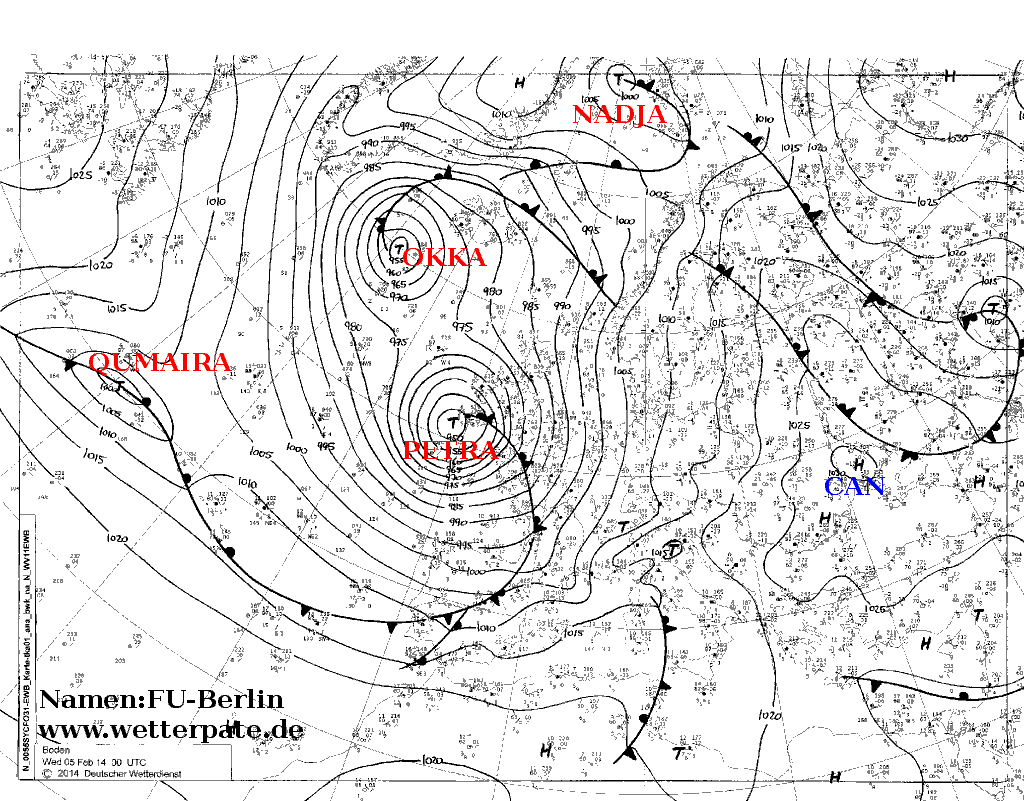
- (6 February 2014). "La tempête Qumeira menace le tiers nord-ouest, 36 départements en vigilance orange". Liberation.
- "February 8, 2014 surface analysis". Free University Berlin.
- Mainwaring, Rachel. (9 February 2014). "Wales weather: Storm Ruth batters the country, causing flooding, power delays and traffic chaos". Wales Online.
- "February 10, 2014 surface analysis". NOAA Ocean Prediction Center.
- (10 February 2014). "The Day's Best". News Observer.
- "February 13, 2014 surface analysis". Free University Berlin.
- "February 15, 2014 surface analysis". Free University Berlin.
- (16 February 2014). "Dépression Ulla – tempête et inondations en Bretagne". Meteo-Paris.com.
- Toppe, Ronald. (3 April 2014). "Mars var mild og våt". TV2.
- Schafernaker, Tomasz. (7 March 2014). "High times for the UK". BBC Weather.
- (15 March 2014). "Stormen Carl er blæst videre efter et kort visit". Politiken.
- (22 March 2014). "Sähkökatkot Pentti-myrskyn jäljiltä pääosin korjattu". YLE.
- (10 August 2014). "Ekstremværet Lena har blåst fra seg". Norwegian Meteorological Institute.
- (10 August 2014). ""Lena" satte over 40 vindrekorder". NRK.
- (9 December 2014). "December 9, 2014 surface analysis".
- (13 December 2014). "December 13, 2014 surface analysis".
- (10 December 2014). "Power restored as 'weather bomb' storm subsides". BBC.
- (13 December 2014). "Stormen Alexander har dragit förbi". SMHI.
- (14 December 2014). "Zwei Tote nach Sturm "Billie" in Deutschland".
- (9 January 2015). "January 10, 2015 surface analysis".
- (8 January 2015). "Stormen hedder Dagmar". DMI.
- (9 January 2015). "Engineers battle to reopen Scotland's railways after 110mph winds". Guardian.
- (9 January 2015). "Weekendens anden storm hedder Egon". DMI.
- (9 January 2015). "Lørdag kommer "Nina"". yr.no.
- (9 February 2015). "Ole gav några nya vindrekord i norr". SMHI.
- (9 February 2015). "Her blåste det mest under ekstremværet Ole". Norwegian Meteorological Institute.
- (1 April 2015). "Orkantief NIKLAS wütet am 31.März 2015 über Deutschland". Deutscher Wetterdienst.
- (31 March 2015). "Storm Niklas kills at least three, stops trains". The Local (de).
- (26 July 2015). "Weeralarm voor zware zomerstorm". KMNI.
- (25 July 2015). "Strong July storm "Zeljko" affects parts of central Europe « CIMSS Satellite Blog". cimss.ssec.wisc.edu.
- (7 December 2015). "Extreme Storm to Hit Iceland: Stay Inside!". Icenews.
- (7 December 2015). "Voldsomt uvær herjer på Island – myndighetene har erklært unntakstilstand". Aftenposten.
- (9 December 2015). "Storm Diddú has passed – but who is Diddú?". Iceland Monitor.
- (8 December 2015). "Iceland sees double hurricane force winds". Iceland Monitor.
- (23 February 2017). "Europe's Windstorm Egon to Cost Insurers an Estimated US$223.3M: PERILS". Insurance Journal.
- (24 February 2017). "European windstorm Thomas/Doris could be costliest of season". Artemis.bm - The Catastrophe Bond, Insurance Linked Securities & Investment, Reinsurance Capital, Alternative Risk Transfer and Weather Risk Management Blog.
- (2018-01-19). "Die Bilanz von "Friederike"". Sueddeutsche.de.
- (25 January 2018). ""Friederike" kostet rund eine Milliarde Euro". Tagesschau (ARD).
- (26 January 2018). "Storm Friederike insured losses mount".
- (21 January 2018). "Bahn will mehr Geld in Sturmsicherheit investieren". Frankfurter Allgemeine Zeitung.
- "Furacão "Lorenzo" provocou prejuízos de 330 milhões de euros - JN".
- "ALERT :: Event Summary".
- Lucas, Paul. "Revealed – initial loss estimate for Storm Dennis".
- (2020-08-20). "NI avoids worst of Storm Ellen but warnings remain". BBC News.




This article was imported from Wikipedia and is available under the Creative Commons Attribution-ShareAlike 4.0 License. Content has been adapted to SurfDoc format. Original contributors can be found on the article history page.
Ask Mako anything about List of European windstorms — get instant answers, deeper analysis, and related topics.
Research with MakoFree with your Surf account
Create a free account to save articles, ask Mako questions, and organize your research.
Sign up freeThis content may have been generated or modified by AI. CloudSurf Software LLC is not responsible for the accuracy, completeness, or reliability of AI-generated content. Always verify important information from primary sources.
Report