From Surf Wiki (app.surf) — the open knowledge base
LGBTQ (term)
Initialism for "lesbian, gay, bisexual, transgender and queer"
Initialism for "lesbian, gay, bisexual, transgender and queer"
****** is an initialism for lesbian, gay, bisexual, transgender, and queer. LGBTQ and related initialisms are umbrella terms, originating in the United States, broadly referring to all sexual and gender minorities. Many variants of the initialism are used to encompass intersex, asexual, aromantic, agender and other identities.
In the 1970s, the expression commonly used by activists was “gay and lesbian,” in full. In the 1990s, the initialism GLBT (later LGBT) was gradually adopted, as bisexual and transgender people gained recognition. Around that time, some activists began to reclaim the term queer, seeing it as a more radical and inclusive umbrella term, though others reject it, due to its history as a pejorative. In recognition of this, the 2010s saw the adoption of LGBTQ, and other more inclusive variants.
LGBTQ people collectively form the LGBTQ community, though not all LGBTQ people participate in or consider themselves part of a broader community. These labels are not universally agreed upon by everyone that they are intended to include. For example, some intersex people prefer to be included in this grouping, while others do not. Various alternative umbrella terms exist across various cultures, including queer; same-gender loving (SGL); and gender, sexual and romantic minorities (GSRM).
Some versions of the term add a plus sign (+) to represent additional identities not captured by the letters within the initialism. Many further variants exist which add additional identities, such as 2SLGBTQ (for two-spirit), LGBTQQ (for queer and questioning), or, rarely, the letters ordered differently, as in GLBT and GLBTQ.
History
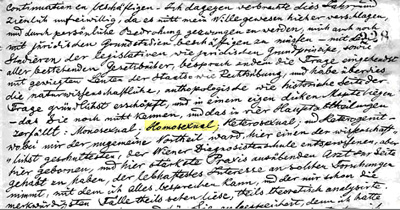
The first widely used term, homosexual, now a term used primarily in scientific contexts, has at times carried negative connotations in the United States. Gay became a popular term in the 1970s.
As lesbians forged more public identities, the phrase gay and lesbian became more common. A dispute as to whether the primary focus of their political aims should be feminism or gay rights led to the dissolution of some lesbian organizations, including Daughters of Bilitis, which was founded by Del Martin and Phyllis Lyon, but disbanded in 1970 following disputes over which goal should take precedence. As equality was a priority for lesbian feminists, disparity of roles between men and women or butch and femme were viewed as patriarchal. Lesbian feminists eschewed gender role play that had been pervasive in bars as well as the perceived chauvinism of gay men; many lesbian feminists refused to work with gay men or take up their causes.
Lesbians who held the essentialist view that they had been born homosexual and used the descriptor lesbian to define sexual attraction often considered the separatist opinions of lesbian-feminists to be detrimental to the cause of gay rights. Bisexual and transgender people also sought recognition as legitimate categories within the larger minority community.
In the late 1970s and the early 1980s, after the elation of change following group action in the 1969 Stonewall riots in New York City, some gays and lesbians became less accepting of bisexual or transgender people. The Gay Liberation Front, which was less assimiliationist, remained more accepting. Critics said that transgender people were acting out stereotypes, and bisexuals were simply gay men or lesbian women who were afraid to come out and be honest about their identity. Each community has struggled to develop its own identity including whether, and how, to align with other gender and sexuality-based communities, at times excluding other subgroups; these conflicts continue to this day. LGBTQ activists and artists have created posters to raise consciousness about the issue since the movement began.
From about 1988, activists began to use the initialism LGBT in the United States. Not until the 1990s within the movement did gay, lesbian, bisexual, and transgender people gain equal respect. Among others, bisexual activist Maggie Rubenstein and transgender activist Susan Stryker pushed to represent bisexual and trans identities explicitly. This spurred some organizations to adopt new names, as the GLBT Historical Society did in 1999. Although the LGBT community has seen much controversy regarding universal acceptance of different member groups (bisexual and transgender individuals, in particular, have sometimes been marginalized by the larger LGBT community), the term LGBT has been a positive symbol of inclusion.
Beginning in the 1990s, the term queer began to be reclaimed from its earlier pejorative use, particularly by radical activists who sought to reject causes they viewed as assimilationist, such as marriage, military inclusion and adoption. Academic fields of study such as queer studies and queer theory build on this reclamation. The term queer is now in use as an umbrella term and as a distinct self-identity term analogous to gay, lesbian, and bisexual. The initialism LGBT eventually evolved to LGBTQ in recognition of the unique meaning of queer within the community.
In 2016, GLAAD's Media Reference Guide states that LGBTQ is the preferred initialism, being more inclusive of younger members of the communities who embrace queer as a self-descriptor. Some people consider queer to be a derogatory term originating in hate speech and reject it, especially among older members of the community.
Variants
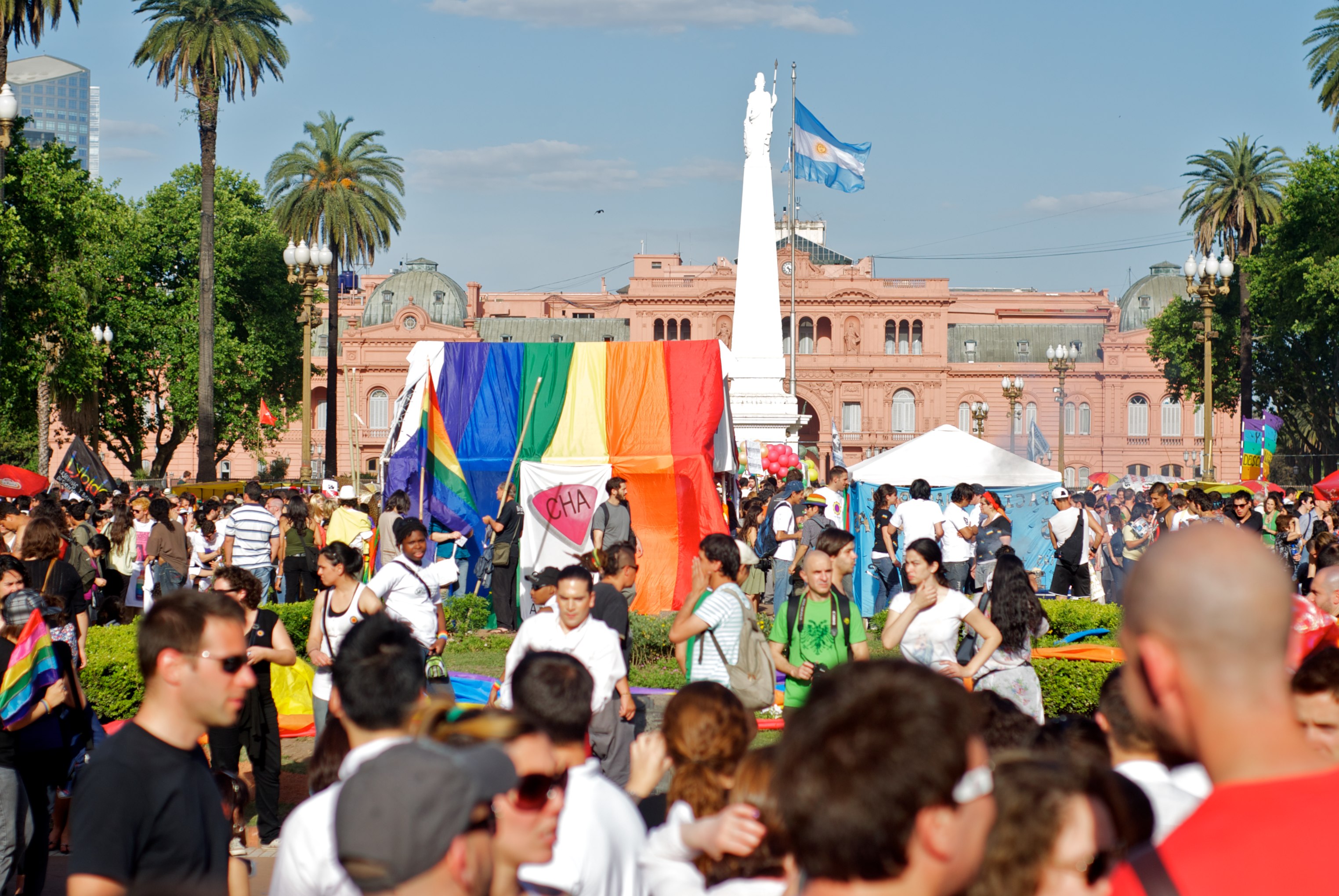
Many variants of the term LGBTQ exist, such as the more inclusive ******, and variations that change the order of the letters or include additional letters. At least some of the components of sexuality (regarding hetero, bi, straight), and also gender are stated to be on different spectrums of sexuality. Other common variants also exist, such as LGBTQIA, with the I standing for intersex and the A standing for asexual, aromantic, or agender, and LGBTQIA+, where "the '+' represents those who are part of the community, but for whom LGBTQ does not accurately capture or reflect their identity".
Longer initialisms have been criticized as confusing or unwieldy, sometimes being referred to as "alphabet soup", and mocked with labels such as , , and . The implication that the initialism refers to a single community is also controversial.
Although identical in meaning, LGBT may have a more feminist connotation than ** as it places the "L" (for "lesbian") first. It gradually replaced GLBT as the most commonly used acronym in the mid-2000s, the political reason being lesbian underrepresentation in comparison to gay men. In Brazil, GLBT replaced GLS (Gays, Lesbians and Sympathizers), while LGBT was adopted in 2008 during the First LGBT National Conference. LGBT may also include additional Qs for "queer" or "questioning" (sometimes abbreviated with a question mark and sometimes used to mean anybody not literally L, G, B or T) producing the variants LGBTQ and **.
The order of the letters has not been standardized. In addition to the variations between the positions of the initial "L" or "G", the mentioned, less common letters, if used, may appear in almost any order. In Hebrew and Peninsular Spanish, LGTB (להט"ב) is used, that is, reversing the letters "B" and "T". Variant terms do not typically represent political differences within the community, but arise simply from the preferences of individuals and groups.
The terms pansexual, omnisexual, fluid and queer-identified are regarded as falling under the umbrella term bisexual (and therefore are considered a part of the bisexual community). Some use LGBT+ to mean "LGBT and related communities". Other variants may have a "U" for "unsure"; a "C" for "curious"; another "T" for "transvestite"; a "TS", "2S", or "2" for "two-spirit" persons; or an "SA" for "straight allies".
The inclusion of straight allies in the LGBTQ initialism has proven controversial, as many straight allies have been accused of using LGBTQ advocacy to gain popularity and status in recent years, and various LGBTQ activists have criticised the heteronormative worldview of certain straight allies. Some may also add a "P" for "polyamorous" or "pangender", an "H" for "HIV-affected", or an "O" for "other". The initialism ** has seen use in India to encompass the hijra third gender identity and the related subculture.
Adding the term allies to the initialism has sparked controversy, with some seeing the inclusion of ally in place of asexual/aromantic/agender as a form of LGBT erasure. There is also the acronym ** (queer and questioning, unsure, intersex, lesbian, transgender and two-spirit, bisexual, asexual and aromantic, and gay and genderqueer).LGBTIQA+ Similarly ** stands for "lesbian, gay, bisexual, transgender, intersex, queer/questioning, asexual and many other terms (such as non-binary and pansexual)".
The initialism LGBTQIAPK is sometimes used to represent lesbian, gay, bisexual, trans, queer and questioning, intersex, asexual and aromantic, pansexual and panromantic, kink. "Kink", less categorical than “BDSM,” can refer to any non-‘vanilla’ sexuality, ‘vanilla’ being precisely defined as “conventional” and genital-centered sexuality. The inclusion of kinkiness/BDSM in the LGBTQ community has proven controversial.
, the Government of Canada's official term is 2SLGBTQI+, with the first two characters standing for two-spirit. Trudeau's new initialism was criticized by some social media users. For some indigenous people, two-spirit invokes a combination of identities, including sexual, gender, cultural, and spiritual. The government previously used LGBTQ2.
Transgender inclusion
The term trans* has been adopted by some groups as a more inclusive alternative to "transgender", where trans (without the asterisk) has been used to describe trans men and trans women, while trans* covers all non-cisgender (genderqueer) identities, including transgender, transsexual, genderqueer, genderfluid, non-binary, genderfuck, genderless, agender, non-gendered, third gender, two-spirit, bigender, and trans man and trans woman. Likewise, the term transsexual commonly falls under the umbrella term transgender, but some transsexual people object to this.
Intersex inclusion
Main article: Intersex and LGBTQ
Those who add intersex people to LGBTQ groups or organizations may use the extended initialism LGBTQI.
The relationship of intersex to lesbian, gay, bisexual, trans, and queer communities is complex, but intersex people are often added to the LGBTQ category to create an LGBTQI community. Some intersex people prefer the initialism LGBTQI, while others would rather that they not be included as part of the term. Emi Koyama describes how inclusion of intersex in LGBTQI can fail to address intersex-specific human rights issues, including creating false impressions "that intersex people's rights are protected" by laws protecting LGBTQ people, and failing to acknowledge that many intersex people are not LGBTQ.
Asexual, aromantic and agender inclusion
Main article: Asexuality, Aromanticism, Agender
In the early 2010s, asexuality and aromanticism started gaining wider recognition. Around 2015, they were included in the expanded initialism LGBTQIA, with the A standing for asexual, aromantic, commonly grouped together as a-spec along with agender.
Some people have mistakenly claimed the A stands for "ally", but allies are not a marginalized group and mentions of A for ally have regularly sparked controversy as a form of LGBTQ erasure.
Criticism
The initialisms LGBT or GLBT are not agreed to by everyone that they encompass. For example, some argue that transgender and transsexual causes are not the same as that of lesbian, gay, and bisexual (LGB) people. This argument centers on the idea that being transgender or transsexual has to do more with gender identity, or a person's understanding of being or not being a man or a woman irrespective of their sexual orientation. LGB issues can be seen as a matter of sexual orientation or attraction. These distinctions have been made in the context of political action in which LGB goals, such as same-sex marriage legislation and human rights work (which may not include transgender and intersex people), may be perceived to differ from transgender and transsexual goals.
A belief in "lesbian and gay separatism", not to be confused with the related "lesbian separatism", holds that lesbians and gay men form, or should form, a community distinct and separate from other groups normally included in the LGBTQ sphere. While not always appearing in sufficient numbers or organization to be called a movement, separatists are a significant, vocal, and active element within many parts of the LGBTQ community. In some cases separatists will deny the existence or right to equality of bisexual orientations and of transsexuality, sometimes leading to public biphobia and transphobia. In contrasts to separatists, Peter Tatchell of the LGBTQ human rights group OutRage! argues that to separate the transgender movement from the LGB would be "political madness", stating that:
Queers are, like transgender people, gender deviant. We don't conform to traditional heterosexist assumptions of male and female behaviour, in that we have sexual and emotional relationships with the same sex. We should celebrate our discordance with mainstream straight norms.
The portrayal of an all-encompassing "LGBT community" or "LGB community" is also disliked by some lesbian, gay, bisexual, and transgender people.{{cite book | last=Carlsson | first=Chris | title=The Political Edge | publisher=City Lights Books | year=2005|isbn=978-1-931404-05-1|url = https://archive.org/details/politicaledge00carl | url-access=registration |access-date=5 July 2008}} Some do not subscribe to or approve of the political and social solidarity, and visibility and human rights campaigning that normally goes with it, including LGBT pride marches and events. Some of them believe that grouping together people with non-heterosexual orientations perpetuates the myth that being gay/lesbian/bi/asexual/pansexual/etc. makes a person deficiently different from other people. These people are often less visible compared to more mainstream gay or LGBTQ activists.
Since this faction is difficult to distinguish from the heterosexual majority, it is common for people to assume all LGBTQ people support LGBTQ liberation and the visibility of LGBTQ people in society, including the right to live one's life differently from the majority. In the 1996 book Anti-Gay, a collection of essays edited by Mark Simpson, the concept of a 'one-size-fits-all' identity based on LGBT stereotypes is criticized for suppressing the individuality of LGBTQ people.
Drop the TWriting in the BBC News Magazine in 2014, Julie Bindel questions whether the various gender groupings now, "bracketed together[,] ... share the same issues, values and goals?" Bindel refers to a number of possible new initialisms for differing combinations and concludes that it may be time for the alliances to either be reformed or go their "separate ways". In 2015, the slogan "Drop the T" was coined to encourage LGBT organizations to stop support of transgender people as they say that sexual orientation, LGB, does not share similarity with gender identity, the T. The campaign has been condemned by many LGBT groups as transphobic.
Alternatives
Queer
Main article: Queer
Many have expressed desire for an umbrella term to replace existing initialisms. Queer gained popularity as an umbrella term for sexual and gender minorities in the 21st century. The term remains controversial, particularly among older LGBTQ people who perceive it as offensive due to its historical usage as a slur, as well as those who wish to dissociate themselves from queer radicalism, and those who see it as amorphous or trendy. Some people feel queer is a more politically charged, more powerful term than LGBT. Recent studies have found that 5–20% of non-heterosexuals and 21–36% of trans, nonbinary, and gender nonconforming people identify as queer.
Sexual and gender minorities
Main article: Sexual and gender minorities
In academic and professional contexts, sexual and gender minorities (SGM) is sometimes used as an alternative to LGBTQ to include individuals who may not self-identify as LGBTQ (such as men who have sex with men, women who have sex with women, and some intersex people). A UK government paper favors SGM because initials like LGBTQ stand for terms that, especially outside the Global North, are "not necessarily inclusive of local understandings and terms used to describe sexual and gender minorities".
Gender, sexual and romantic minorities (GSRM) includes individuals of a minority romantic orientation such as aromanticism.
Further umbrella terms
Other rare umbrella terms are Gender and Sexual Diversities (GSD), MOGII (Marginalized Orientations, Gender Identities, and Intersex) and MOGAI (Marginalized Orientations, Gender Alignments and Intersex).
SGL (same-gender loving) is sometimes favored among gay male African Americans as a way of distinguishing themselves from what they regard as white-dominated LGBTQ communities.
Clinical
In public health settings, MSM ("men who have sex with men") is clinically used to describe men who have sex with other men without referring to their sexual orientation, with WSW ("women who have sex with women") also used as an analogous term.
MVPFAFF
MVPFAFF is an abbreviation for Māhū, Vakasalewa, Palopa, Fa'afafine, Akava'ine, Fakaleitī (Leiti), and Fakafifine. This term was developed by Phylesha Brown-Acton in 2010 at the Asia Pacific Games Human Rights Conference. This refers to those in the rainbow Pacific Islander community, who may or may not identify with the LGBTQ initialism.
Notes
References
References
- "Definition of LGBTQIA".
- Zak, Emily. (10 January 2013). "LGBPTTQQIIAA+: How We Got Here from Gay". Ms. Magazine.
- [https://www.glaad.org/reference/style Media Reference Guide] {{Webarchive. link. (27 December 2019 (citing AP, [[The Washington Post). Washington Post]] style guides), [[GLAAD]]. Retrieved 23 December 2019.
- Ross, E. Wayne. (2006). "The Social Studies Curriculum: Purposes, Problems, and Possibilities". SUNY Press.
- (2001). "Rebels, Rubyfruit, and Rhinestones: Queering Space in the Stonewall South - James Thomas Sears - Google Books". Rutgers University Press.
- (1994). "From Accommodation to Liberation: A Social Movement Analysis of Lesbians in the Homophile Movement". Gender and Society.
- Faderman, Lillian (1991). ''Odd Girls and Twilight Lovers: A History of Lesbian Life in Twentieth Century America'', Penguin Books. {{ISBN. 0-14-017122-3, p. 210–211.
- Faderman (1991), p. 217–218.
- Swain, Keith W.. (21 June 2007). "Gay Pride Needs New Direction". [[Denver Post]].
- (2005). "Transgender Subjectivities: A Clinician's Guide". Haworth Press.
- (2003). "Bisexuality and Transgenderism: InterSEXions of The Others". Haworth Press.
- Erickson-Schroth, Laura. (2022). "Trans Bodies, Trans Selves: A Resource by and for Transgender Communities". Oxford University Press.
- "Out of the Closet and Into the Streets".
- Cahill, Sean, and Bryan Kim-Butler. "Policy priorities for the LGBT community: Pride Survey 2006." New York, NY: National Gay and Lesbian Task Force (2006).
- link. (19 June 2019, American Educational Research Association Verlag AERA, 1988.)
- Koskovich, Gerard. "Our History".
- Shankle, Michael D.. (2006). "The Handbook of Lesbian, Gay, Bisexual, and Transgender Public Health: A Practitioner's Guide To Service". Haworth Press.
- Sycamore, Mattilda. (2008). "That's Revolting! Queer Strategies for Resisting Assimilation". Soft Skull Press.
- (2016). "Social Movements and the Construction of Queer Identity". Oxford University Press.
- (19 October 2021). "From LGBT to LGBTQIA+: The Evolving Recognition of Identity".
- (22 January 2019). "How the word 'queer' was adopted by the LGBTQ community".
- (17 July 2024). "What Does LGBTQ Stand For?".
- (26 October 2016). "Expanding the Acronym: GLAAD Adds the Q to LGBT". Advocate.
- Nadal, Kevin. (15 April 2017). "The SAGE Encyclopedia of Psychology and Gender". SAGE Publications.
- "Marcha del Orgullo LGBTIQ". Comisión Organizadora de la Marcha (C.O.M.O).
- "LGBT+".
- "LGBT+ mental health".
- Vikhrov, Natalie. (26 April 2019). "Armenia's LGBT+ community still waits for change one year after revolution".
- "Definition of LGBTQIA".
- (11 February 2015). "A is for Asexual, Agender, Aromantic".
- Kuykendall, Emily. (20 June 2016). "What the A in LGBTQIA+ Stands For".
- "LGBTQIA+".
- (12 June 2018). "The new rainbow pride flag is a design disaster—but a triumph for LGBTQ inclusiveness". Quartz.
- (24 September 2019). "Coming to terms with terms".
- Oli. (4 December 2019). "The challenge of generosity".
- (18 July 2012). "No More Alphabet Soup". The Huffington Post.
- Burchill, Julie. (6 January 2023). "Radio 4 is becoming a parody of itself".
- (15 August 2022). "'Klanned Parenthood': Bailey's running mate's old social media posts surface".
- Seitzer, Helen. (2022). "The Diffusion of Workplace Antidiscrimination Regulations for the LGBTQ+ Community". Springer International Publishing.
- (2002). "Counseling Lesbian, Gay, Bisexual, and Transgender Substance Abusers: Dual Identities". Haworth Press.
- Garlbacik, Jaimee. (2013). "Gender and Sexuality for Beginners". Steerforth Press.
- Glassman, Julia. (15 July 2022). "Here’s Why the ‘L’ Comes First in LGBTQ?". The Mary Sue.
- Vianna, Cláudia Pereira. (2015). "The LGBT movement and the gender and sexual diversity education policies: losses, gains and challenges". Educação e Pesquisa.
- Bloodsworth-Lugo, Mary K.. (2007). "In-Between Bodies: Sexual Difference, Race, and Sexuality". SUNY Press.
- (2007). "Advocacy Research in Literacy Education: Seeking Higher Ground". Routledge.
- נגר, רעות. (20 October 2017). "למה ה'ל' באה לפני ה'ה'? האיש שהמציא את ראשי התיבות 'להט"ב' מסביר".
- (22 September 2011). "LGTB, en mayúsculas".
- (2006). "Narrative Therapy: Making Meaning, Making Lives". Sage Publications Inc.
- (2005). "Oberlin College: Oberlin, Ohio". College Prowler, Inc.
- (2006). "Teaching about Asian Pacific Americans: Effective Activities, Strategies, and Assignments for Classrooms and Communities (Critical Perspectives on Asian Pacific Americans)". Rowman & Littlefield.
- Babb, Florence E.. (2001). "After Revolution: Mapping Gender and Cultural Politics in Neoliberal Nicaragua". University of Texas Press.
- Padilla, Yolanda C.. (2003). "Gay and Lesbian Rights Organizing: Community-based Strategies". Haworth Press.
- (2001). "From Hate Crimes to Human Rights: A Tribute to Matthew Shepard". Haworth Press.
- Becker, Ron. (2006). "Gay-Themed Television and the Slumpy Class: The Affordable, Multicultural Politics of the Gay Nineties". Television & New Media.
- DeTurk, Sara. (2011). "Allies in Action: The Communicative Experiences of People Who Challenge Social Injustice on Behalf of Others". Communication Quarterly.
- O'Rourke, P. J.. (2001). "Peace Kills: America's Fun New Imperialism". Grove Press.
- "Maiden stage act by city's LGBT face gets censor's chop". Pune Mirror.
- "Gay Leeds — Your comprehensive guide to all things gay in Leeds".
- "Adding 'allies' to LGBT acronym sparks controversy". Iowa State Daily.
- (8 June 2017). "Why People Are Upset About Equinox Gym's Pride Video".
- (19 May 2020). "Why the A doesn't stand for Ally".
- "Column: "A" stands for asexuals and not allies". The Maroon.
- (6 March 2012). "Reaching into the QUILTBAG: The Evolving World of Queer Speculative Fiction". Apex Magazine.
- University, La Trobe. "What does LGBTIQA+ mean".
- "LGBTIQA+ glossary of common terms".
- George, Marie-Amélie. (2021). "Expanding LGBT.". HeinOnline.
- Pepponi, Elena. (224). "Parole arcobaleno: storia del lessico LGBT+ in Italia". Mimesis.
- Gilles Chantraine and Gwenola Ricordeau. (2021). "Introduction. Sexualités minoritaires Expériences subjectives, communautés érotiques et politiques de reconnaissance.". L'Homme & la Société.
- Nea, Chingy. (17 June 2019). "Why Kink, BDSM, and Leather Should Be Included at Pride". Them.
- Canada, Women and Gender Equality. (19 August 2020). "2SLGBTQI+ terminology – Glossary and common acronyms".
- "Trudeau criticized for upgrading "LGBTQ+ to 2SLGBTQI+"".
- (2022). "Power and Resistance, 7th ed.: Critical Thinking About Canadian Social Issues". Fernwood Publishing.
- Allen, Nick. (April 2025}} for using the ''2SLGBTQQIA+'' initialism.{{Cite news). "Justin Trudeau mocked for using 2SLGBTQQIA+ acronym for sexual identities". The Telegraph.
- Mitchell, Charlie. (17 July 2023). "Justin Trudeau mocked for using extended LGBT acronym". [[The Times]].
- Ryan, Hugh. (10 January 2014). "What Does Trans* Mean, and Where Did It Come From?'". [[Slate (magazine).
- (14 February 2014). "Glossary of Transgender Terms". Vaden Health Center Stanford University.
- link. (6 September 2015, Mosby Year Book, 1999, {{ISBN). 978-0-8151-2797-0
- Siddharta, Amanda. (28 April 2019). "Trans Women March for Their Rights in Conservative Indonesia".
- Dreger, Alice. (4 May 2015). "Reasons to Add and Reasons NOT to Add "I" (Intersex) to LGBT in Healthcare". [[Association of American Medical Colleges]].
- Aragon, Angela Pattatuchi. (2006). "Challenging Lesbian Norms: Intersex, Transgender, Intersectional, and Queer Perspectives". Haworth Press.
- (2008). "The Fenway Guide to Lesbian, Gay, Bisexual, and Transgender Health". ACP Press.
- Koyama, Emi. "Adding the "I": Does Intersex Belong in the LGBT Movement?". Intersex Initiative.
- Wilcox, Melissa M.. (2003). "Coming Out in Christianity: Religion, Identity, and Community". Indiana University Press.
- Mohr, Richard D.. (1988). "Gays/Justice: A Study of Ethics, Society, and Law". Columbia University Press.
- Blasius, Mark. (1994). "Gay and Lesbian Politics: Sexuality and the Emergence of a New Ethic". Temple University Press.
- (24 June 2009). "LGB - but why T?". Mothership Blog.
- Leondar-Wright, Betsy. (2005). "Class Matters: Cross-Class Alliance Building for Middle-Class Activists". New Society Publishers.
- "Anti-Gay". Marksimpson.com.
- Julie Bindel. (2 July 2014). "Viewpoint: Should gay men and lesbians be bracketed together?". [[BBC News Magazine]].
- (6 November 2015). "LGBT Groups Respond to Petition Asking to 'Drop the T'".
- (12 November 2015). "Signatures for 'Drop The T' counter-petition surpass original - PinkNews · PinkNews".
- (9 November 2015). "Why More Than 1,000 People Have Signed a Petition to Drop the "T" From LGBT".
- (12 November 2015). "Gay Transphobia, 2015 Style".
- Atkins, Dawn. (1998). "Looking Queer: Body Image and Identity in Lesbian, Bisexual, Gay, and Transgender Communities". Haworth Press.
- "Glossary of Terms".
- Worthen, Meredith G. F.. (1 February 2023). "Queer identities in the 21st century: Reclamation and stigma". Current Opinion in Psychology.
- McHanon, Mary. (23 May 2024). "Is "Queer" a Derogatory Word?".
- Gamson, Joshua. (1995). "Must Identity Movements Self-Destruct? A Queer Dilemma". Social Problems.
- (20 October 2014). "LGBT Activism and the Making of Europe: A Rainbow Europe?". Springer.
- Armstrong, Elizabeth A.. (2002). "Forging Gay Identities: Organizing Sexuality in San Francisco, 1950–1994". University of Chicago Press.
- "NIH FY 2016-2020 - Strategic Plan to Advance Research on the Health and Well-being of Sexual and Gender Minorities".
- (January 2020). "Gender and Strategic Communications in Conflict and Stabilisation Contexts". HM Government.
- (2019-09-20). "Multiplicity of LGBTQ+ Identities, Intersections, and Complexities". Routledge.
- Lapointe, Alicia. (2016). "Postgay". Palgrave Macmillan US.
- [http://www.pinknews.co.uk/2013/02/25/organisation-proposes-replacing-the-limiting-term-lgbt-with-more-inclusive-gsd/ Organisation proposes replacing the 'limiting' term LGBT with 'more inclusive' GSD] {{Webarchive. link. (16 June 2018, 25 February 2013.)
- (25 February 2013). "'Gender And Sexual Diversities,' Or GSD, Should Replace 'LGBT,' Say London Therapists". The Huffington Post.
- "Pride on the prowl". Dalhousie News.
- (2006). "The Politics of Gay Rights". University of Chicago Press.
- Young, R M & Meyer, I H (2005) The Trouble with "MSM" and "WSW": Erasure of the Sexual-Minority Person in Public Health Discourse American Journal of Public Health July 2005 Vol. 95 No. 7.
- Glick, M Muzyka, B C Salkin, L M Lurie, D (1994) Necrotizing [[Periodontitis. ulcerative periodontitis]]: a marker for immune deterioration and a predictor for the diagnosis of [[AIDS]] Journal of Periodontology 1994 65 p. 393–397.
- Brown-Acton, Phylesha. (25 February 2020). "Hands and feet: A reflection on Polynesian navigation—a Niue Fakafifine community practitioner perspective in Aotearoa-New Zealand". Te Kaharoa.
- "Rainbow".
This article was imported from Wikipedia and is available under the Creative Commons Attribution-ShareAlike 4.0 License. Content has been adapted to SurfDoc format. Original contributors can be found on the article history page.
Ask Mako anything about LGBTQ (term) — get instant answers, deeper analysis, and related topics.
Research with MakoFree with your Surf account
Create a free account to save articles, ask Mako questions, and organize your research.
Sign up freeThis content may have been generated or modified by AI. CloudSurf Software LLC is not responsible for the accuracy, completeness, or reliability of AI-generated content. Always verify important information from primary sources.
Report