From Surf Wiki (app.surf) — the open knowledge base
Levantine cuisine
Cuisine of the Eastern Mediterranean
Cuisine of the Eastern Mediterranean
Levantine cuisine is the traditional cuisine of the Levant, in the sense of the rough area of former Bilad al-Sham (the Arabic term for the Levant region). The cuisine has similarities with Egyptian cuisine, North African cuisine and Ottoman cuisine. It is particularly known for its meze spreads of hot and cold dishes, most notably among them Manakish pies, kibbeh, ful medames, hummus, tabbouleh and baba ghanoush, accompanied by bread.
History
The history of Levantine cuisine can be traced back to the early civilizations that flourished in the region, such as the Arameans, Canaanites, Israelites, Phoenicians, Hittites, and Arabians. These ancient cultures developed complex agricultural systems, producing grains, legumes, fruits, and vegetables that would become staples of the Levantine diet. Bread, olive oil, and wine were integral to the cuisine from the very beginning, and remain so today.
Many recipes and practices common to Levantine cuisine were recorded in historical cookbooks, like the 13th century Kitab al-Wuslah ila l-habib from Aleppo and Ustadh al-Tabbakhin by 19th century Lebanese author .
Levantine diets shifted drastically between the 1960s and the 1990s, early studies from that era described them as largely seasonal, plant-based, and low to moderate in animal product consumption, whereas later studies described them as consuming more processed foods, animal products and refined carbohydrates. Such seasonal foods were traditionally preserved using pickling, fermentation, and drying.
Levantine dishes
Classic

Mezes or small dishes
- Baba ghanoush (بابا غنوج)—a dip made from baked, mashed eggplant mixed with lemon, garlic, olive oil and various seasonings
- Chickpea salad or salatat hummus (سلطة حمص)—an Arab salad with cooked chickpeas, lemon juice, garlic, tahini, salt, olive oil, and cumin
- Falafel (فلافل)—spiced mashed chickpeas formed into balls or fritters and deep fried, usually eaten with or in pita bread with hummus
- Fattoush (فتوش)—a salad of chopped cucumber, radish, tomato and other vegetables, with fried or toasted pita bread
- Ful medames (فول مدمس)—ground fava beans and olive oil also prepared in Syria as a salad with fava beans, chopped tomatoes, onion, parsley, lemon juice, olive oil, pepper and salt
- Hummus (حمّص)—a thick paste or spread made from ground chickpeas and olive oil, lemon, and garlic; also common in Egypt
- Kibbeh (كبة)—a dumpling-like dish of ground lamb with bulgur wheat or rice and seasonings, eaten cooked or raw
- Kibbeh nayyeh (كبة نيئة)—a mezze of minced raw meat mixed with fine bulgur and various seasonings
- Labneh (لبنة)—yogurt that has been strained to remove its whey; most popular as a breakfast food
- Lentil soup (شوربة عدس)—may be vegetarian or include meat, using brown, red, yellow or black lentils, with or without the husk
- Makanek—Arabic sausage made from ground meat spiced with pine nuts, cumin, cloves, cinnamon and nutmeg and served with pomegranate molasses.
- Manakish (مناقيش)—a pizza-like flatbread garnished with minced meat, thyme or za'atar, commonly eaten for breakfast or dinner
- Mfarakeh (مفركة)—an Arab dish made of potato, egg, ghee, cumin powder, salt and pepper, with chopped coriander leaf as garnish
- Muhammara (محمرة)—a hot pepper dip made from fresh or dried peppers, breadcrumbs, olive oil, spices and ground walnuts
- Raheb (سلطة راهب)—a salad with aubergines and tomatoes, popular in the Middle East.
- Sambusac (سمبوسك)—a triangular savory pastry fried in ghee or oil with spiced vegetables or meat
- Sfiha (صفيحة)—open-faced meat pies made with ground mutton, lamb or beef
- Shanklish (شنكليش)—cow's or sheep's milk cheese formed into balls, rolled in Aleppo pepper and za'atar, then aged and dried
- Shawarma (شاورما)—roasted meat, cooked on a revolving spit and shaved for serving in sandwiches
- Tabbouleh (تبولة)—a salad of bulgur mixed with finely chopped parsley, minced onions and tomatoes
Main dishes
- Bamia (بامية)—a stew prepared with chunks of lamb meat with okra in a tomato-based sauce, served over rice
- Dolma (محشي)—vegetables, typically eggplants, zucchinis, onions, peppers or tomatoes, stuffed with minced meat and rice
- Fasoulia (فاصوليا)—a stew prepared with white beans and meat served over rice
- Fatteh (فتّة)—chicken over rice, topped with yogurt and pita bread
- Freekeh (فريكة)—a cereal food made from green durum wheat that is roasted and rubbed to create its flavour, then served with cumin, cinnamon, and fresh lamb-tail fat
- Harees–Cracked wheat and meat porridge or gruel with seasoning
- Kabsa (كبسة)—a rice-based dish commonly eaten with meat, lamb or chicken, cooked in a variety of spices and topped with nuts over rice and prepared in Syria and Gaza
- Kebab (كباب)—a dish of ground beef or lamb, grilled or roasted on a skewer
- Kebab karaz (كباب كرز)—a type of kebab made of lamb meatballs in a cherry-based broth with pine nuts and sour cherries over pita bread
- Kousa mahshi (كوسا محشي)—zucchinis baked and stuffed with minced meat and rice in a tomato-based sauce
- Malfouf (ملفوف)–rolled cabbage leaves stuffed with rice, meat and spices

- Mansaf (منسف)—lamb or chicken cooked in a sauce of fermented dried yogurt and served over rice
- Maqluba (مقلوبة)—a rice-based casserole with meat, rice, and fried vegetables in a pot, which is flipped upside down when served, hence the name, which literally translates as "upside-down"
- Mujaddara (مجدرة)—cooked lentils with groats, generally rice, garnished with sautéed onions
- Mulukhiyah (ملوخية)—a stew cooked with mallow leaves, mucillagenous like okra, eaten with chicken in a thick broth
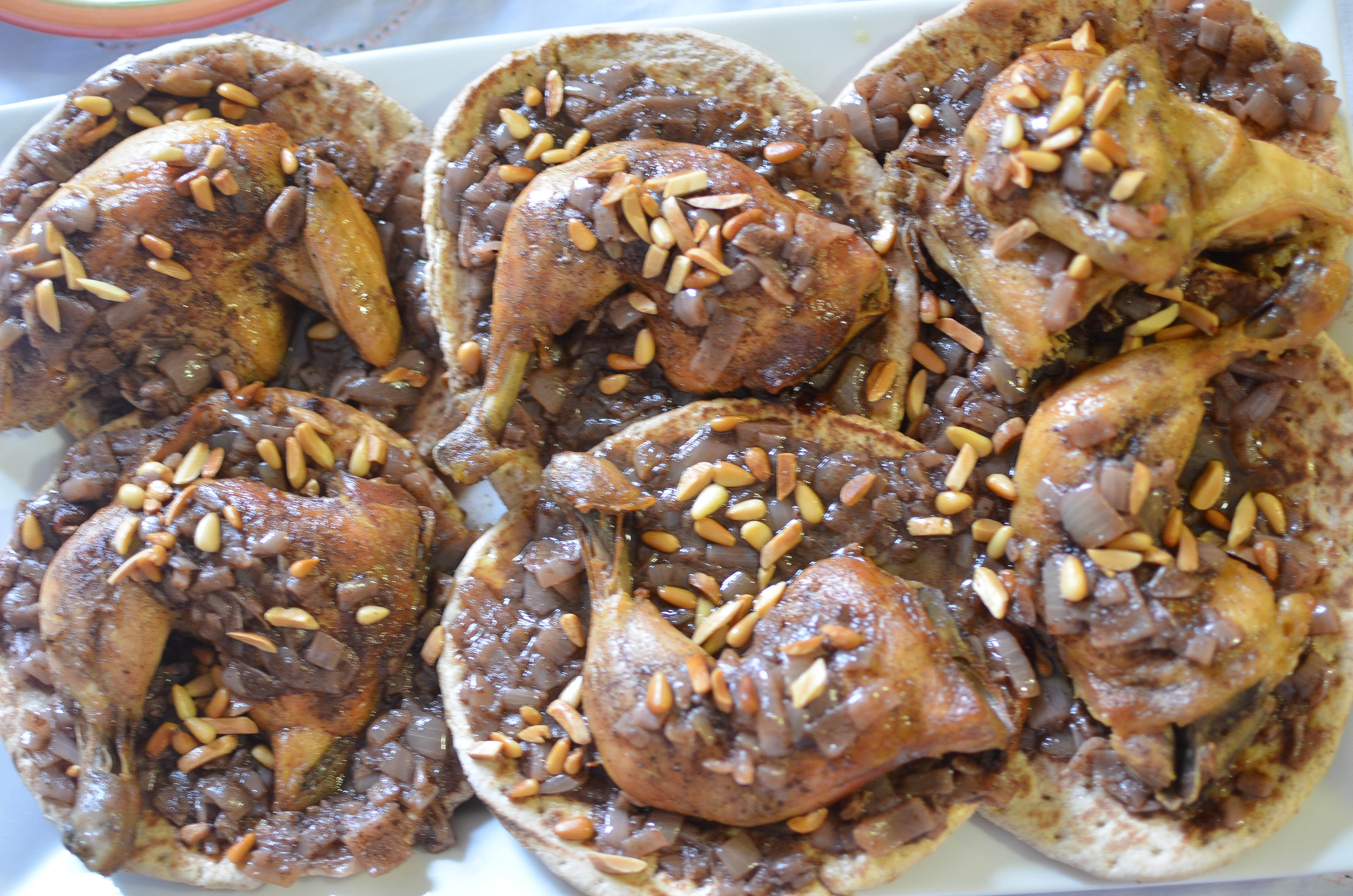
- Musakhan (مسخّن)—a classic Palestinian dish, a whole roasted chicken baked with onions, sumac, allspice, saffron, and fried pine nuts served over taboon bread
- Qarymutah (القريموطة), a simple way to prepare bulgur in rural areas of Homs, Hama and Salamiyah. Bulgur is cooked with vegetables and wrapped in grape leaves
- Qidreh (قدرة)—a lamb stew with chickpeas, garlic and spices, commonly served over rice
- Quzi (قوزي)—a hearty dish of roasted lamb with raisins, nuts and spices over rice or wrapped in taboon bread
- Shish kebab (شيش كباب)—grilled or roasted chunks of meat on a skewer, commonly served over flatbread or rice
- Sumaghiyyeh (سماقية)—ground sumac is soaked in water then mixed with tahina (sesame-seed paste), water and flour, added to sautéed chopped chard, pieces of slow-stewed beef, and garbanzo beans
- Zibdieh (زبدية)—a clay-pot dish of shrimp baked in a stew of olive oil, garlic, hot peppers, and peeled tomatoes
Breads
- Ka'ak (كعك)—a type of biscuit/cookie shaped into a ring, occasionally sprinkled with sesame seeds
- Markook (مرقوق)—a thin, unleavened flatbread baked on an iron griddle known as saj
- Pita (خبز عربي)—a soft, slightly leavened flatbread baked from wheat flour
Condiments

- Tahini (طحينة)—condiment made of ground and hulled sesame seeds, primary ingredient baba ghanoush and hummus
- Toum (توم)—a paste containing garlic, olive oil and salt, typically used as a dip
- Za'atar (زَعْتَر)—a condiment of dried herbs mixed with sesame seeds, dried sumac, and often salt, as well as other spices
Sweets
- Awameh (عوامة)—a fried-dough Levantine pastry similar to doughnut holes, made of deep-fried dough soaked in sugar syrup or honey and cinnamon, sometimes sprinkled with sesame seeds
- Basbousa (بسبوسة)—a Middle-Eastern small, sweet cake of cooked semolina soaked in rose water syrup, topped with almonds or walnuts
- Halawet el Jibn (حلاوة الجبن)—is a Levantine dessert made of a semolina and cheese dough, filled with qishta. Its origins are somewhere from central Syria.
- Knafeh (كنافة)—a dessert made with shredded filo and melted cheese soaked in a sugary syrup
- Ma'amoul (معمول)—semolina shortbread cookies filled with dates or walnuts, commonly sprinkled with sugar
- Meghli (مغلي)–a floured rice pudding spiced with anise, caraway and cinnamon and garnished with coconut flakes and nuts
- Qatayef (قطايف)—a dessert commonly served during the month of Ramadan, a sweet dumpling filled with cream or nuts
- Warbat (وربات)—a sweet pastry with thin layers of phyllo pastry filled with custard, popularly eaten during Ramadan
- Zalabia (زلابية)—a fried dough pastry shaped as balls or discs, often dipped in a sweet syrup
Drinks
- Limonana (ليمون نعناع)—lemonade made from freshly-squeezed lemon juice and mint leaves
- Qamar al-Din (قمر الدين)—a thick, cold apricot drink typically served during the month of Ramadan
Preserved foods

In Levantine countries, mouneh () is the practice of preserving seasonal foods for times of scarcity, these includes syrups, jams, dried foods, pickles, among others. Brining in salt is traditionally one of the primary preservaton methods, meats were traditionally preserved in fat.
- Jameed (جميد)-dried yogurt
- Makdous (مكدوس)-oil-cured miniature aubergines
- Murabba (مربى)-spiced sweet fruit preserves
- Dibs (دبس)-grape syrup
- Pomegranate molasses (دبس الرمان)-sweet and sour syrup made by boiling pomegranates
- Samneh (سمنة)-spiced clarified butter
- Bastirma (بسطرمة)-preserved spiced meat
- Maqaniq (مقانق)-intestine sausages
Contemporary
- Malfouf salad (سلطة ملفوف)—a cabbage salad with lemon juice, olive oil, garlic, salt, and mint
Geographical varieties of Levantine cuisine
Lebanese writer Anissa Helou noted that Palestinian, Jordanian, and southern Syrian cuisines are higher in fat and more subdued in flavor compared to other Levantine cuisines.
- Assyrian cuisine
- Cypriot cuisine
- Israeli cuisine
- Jordanian cuisine
- Lebanese cuisine
- Ottoman cuisine
- Palestinian cuisine
- Syrian cuisine
References
Bibliography
References
- Bissonnette, D.. (2022). "Mediterranean: The Ultimate Cookbook". Simon and Schuster.
- (2021-12-08). "Making Levantine Cuisine: Modern Foodways of the Eastern Mediterranean". University of Texas Press.
- (24 April 2025). "Shifts in food consumption patterns in the Levant: a systematic review of the last six decades". International Journal of Behavioral Nutrition and Physical Activity.
- Shavit, E.. (2008). "Truffles roasting in the evening fires: Pages from the history of desert truffles". Fungi.
- Raviv, Yael. (2003). "Falafel: A National Icon". [[Gastronomica]].
- Wright, 2003, [https://books.google.com/books?id=x3t2IJeFIh8C&pg=PA241 p. 241]
- Philip Mattar. (2004). "Encyclopedia of the Modern Middle East & North Africa: D-K". Macmillan Reference USA.
- Klema, M.. (2020). "A Crisis within a Crisis: Investigating the Economic Domino Effects of COVID-19 on the Food Security of Displaced Syrians".
- Helou, Anissa. (2018). "Feast: Food of the Islamic World". Bloomsbury.
- (9 July 2017). "Malfouf". Middle East Monitor.
- Samira. (2021-10-25). "Ashta".
- (25 January 2017). "Berlin now 'home sweet home' for Syrian pastry chefs". [[The Express Tribune]].
- (12 May 2023). "Resilient Kitchens: American Immigrant Cooking in a Time of Crisis, Essays and Recipes". Rutgers University Press.
- (21 Dec 2014). "مونة الشتاء.. أمـان لكـل منــزل!". [[Ad-Dustour (Jordan).
- (28 August 2016). "ما هي المونة؟". [[Enab Baladi]].
- (29 July 2024). "المونة اللبنانية تراث ممتع و"بركة" في المنزل". Independent Arabia.
This article was imported from Wikipedia and is available under the Creative Commons Attribution-ShareAlike 4.0 License. Content has been adapted to SurfDoc format. Original contributors can be found on the article history page.
Ask Mako anything about Levantine cuisine — get instant answers, deeper analysis, and related topics.
Research with MakoFree with your Surf account
Create a free account to save articles, ask Mako questions, and organize your research.
Sign up freeThis content may have been generated or modified by AI. CloudSurf Software LLC is not responsible for the accuracy, completeness, or reliability of AI-generated content. Always verify important information from primary sources.
Report