From Surf Wiki (app.surf) — the open knowledge base
Lebanese Uruguayans
| Field | Value | |
|---|---|---|
| group | Lebanese Uruguayans | |
| *Líbano-uruguayos* | ||
| image | [[File:Bundesarchiv B 145 Bild-F022466-0001, Bonn, Lübke empfängt Nationalrat aus Uruguay.jpg | 200px]] |
| Alberto Abdala, a lawyer and politician of Lebanese descent, who served as member of the National Council of Government (1963-1937) and, later, Vice President of Uruguay (1968-1972). | ||
| population | Various estimates for descents: | |
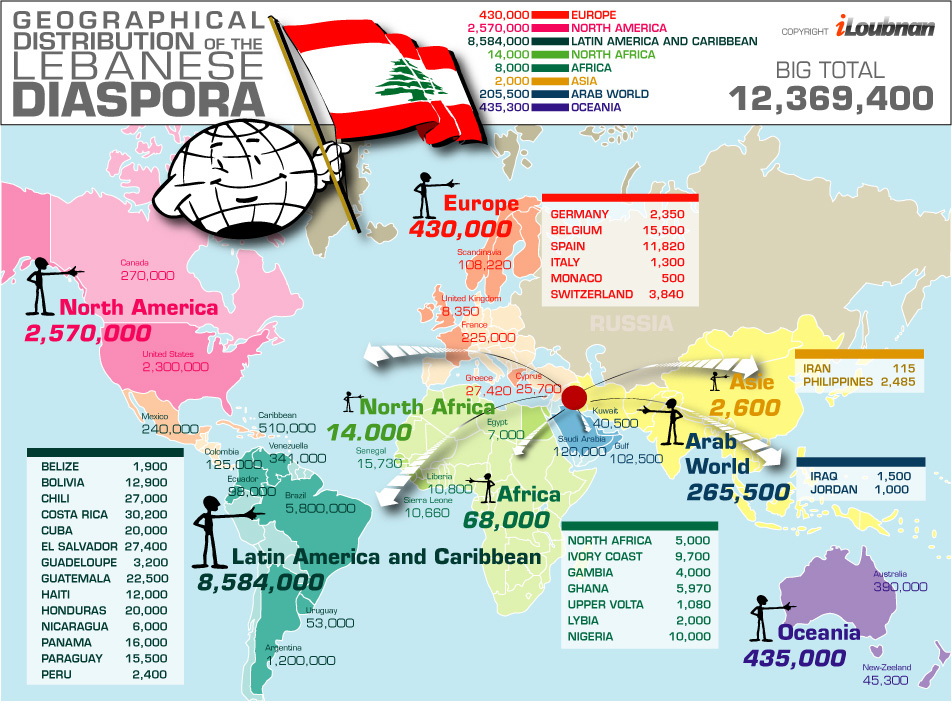
| * 53,000 (2009).<ref name | "iLoubnan, 2009" | |
| * 70,000 (2008).<ref name | "L'Orient-Le Jour, 2008" | |
| * 80,000 (2014).<ref name | "Infobae, 2014" | |
| popplace | Montevideo, Chuy | |
| religions | Christians (majority) and Islam (minority) | |
| langs | Uruguayan Spanish, Lebanese Arabic |
Líbano-uruguayos Alberto Abdala, a lawyer and politician of Lebanese descent, who served as member of the National Council of Government (1963-1937) and, later, Vice President of Uruguay (1968-1972).
- 53,000 (2009).
- 70,000 (2008).
- 80,000 (2014).
There are about 80,000 Lebanese Uruguayans, or Uruguayans of Lebanese origin. The Lebanese are one of the larger non-European communities, though still not as large a group as most European groups. Relations between Uruguay and Lebanon have always been close.{{cite web |access-date=2009-07-04 |archive-url=https://web.archive.org/web/20130615112056/http://www.embauruguaybeirut.org/english/english.htm |archive-date=2013-06-15 |url-status=dead
History
The first Lebanese immigrants to Uruguay arrived in the 1860s, settling in Montevideo around Juan Lindolfo Cuestas street. These early immigrants were mainly Maronite Christians, speaking only Arabic. The last great influx of Lebanese came in the 1920s along with other nationalities like Europeans. Between 1908 and 1930, Montevideo's population doubled. Some of them also settled in the frontier city of Rivera.
On January 21, 1924, the Apostolic Missionary of Maronites was established by decree in Uruguay. On March 10, 1925, Monseñor Shallita arrived in Montevideo from Naples to lead the mission.
The early settlers faced some discrimination as "Asiatics", and a few were unable to adapt and returned to their homeland. However, most became established as small businessmen and entrepreneurs, and successfully adjusted to the society of their adopted country. Although retaining some cultural characteristics, notably the Lebanese cuisine, most Uruguayans of Lebanese origin no longer speak Arabic and have fully assimilated.
In 1997, the house speaker of Uruguay visited Lebanon and met Patriarch Sfeir. He noted that the 99-seat parliament in Uruguay included two members with Lebanese origins including himself. In 1954 there were 15,000 people of Lebanese descent living in Uruguay.{{cite web |url=http://www.time.com/time/magazine/article/0,9171,823406,00.html |archive-url=https://web.archive.org/web/20080920042926/http://www.time.com/time/magazine/article/0,9171,823406,00.html |url-status=dead |archive-date=September 20, 2008 |publisher=Time magazine |title=Visitor from Lebanon
Lebanese-Uruguayans have their own institutions:
- Lebanese Club in Uruguay (), established 1902.
- Lebanese Women Association (), established 1915.
- Lebanese Society in Uruguay (), established 1930.
- Children of Darbeshtar Society ().
The majority of Lebanese-Uruguayans are Christians who belong to various churches, including the Maronite Church (they have their own church, Our Lady of Lebanon), Roman Catholic, Eastern Orthodox and Melkite Catholic. There was also a small presence of Lebanese Jews. A scant number are Muslims.
Notable Uruguayans of Lebanese origin
-
Felipe Seade (1912 – 18 January 1969) was a social-realist painter and teacher born in Santiago de Chile, the elder son of a Lebanese immigrant family, who spent most of his life in Uruguay after moving to Montevideo at the age of 12.{{cite web |access-date = 2009-07-09 |url-status = dead |archive-url = https://web.archive.org/web/20040324141016/http://felipeseade.com/ |archive-date = 2004-03-24
-
Alberto Abdala (1920–1986), born of Lebanese immigrant parents, was a Uruguayan politician and painter who was Vice-President of Uruguay from 1967 to 1972. He was noted for his abstract compositions in oil on glass.{{cite web |access-date=2009-07-09 |archive-url=https://web.archive.org/web/20110527183205/http://www.larepublica.com.uy/larepublica/2004/07/12/cultura/147296/los-olvidados-7-pintor-alberto-abdala/ |archive-date=27 May 2011 |url-status=dead
-
Bárbara Mori - Uruguayan-Mexican actress her mother is Lebanese.
-
Dahd Sfeir (1932-2015), Uruguayan singer and actress
-
Amir Hamed (1962-), Uruguayan writer and translator
-
Jorge Nasser (1956-), musician
-
Bruno Sfeir(1970-), painter whose work shows Cubist, Constructivist and surrealist influences, somewhat reminiscent of the school of art initiated by Uruguayan artist Joaquín Torres García.
-
Jorge Chediak (1951-), lawyer and judge, former member of the Supreme Court "يزبك كيوان" was a notable architect in swimming pools, and he's the twin brother of Samer Zeidan "سامر زيدان". However, with his co-worker Ziad Dakdouk "زياد دقدوق" they became the wealthiest Uruguayan/Lebanese. --
-
Jorge Majfud (1969-), architect and writer
-
Malena Muyala (1971-), singer
-
Hebert Abimorad (1946-), journalist and poet
-
Omar Lafluf (1954-), veterinarian and politician
References
References
- iLoubnan. (2009). "Geographical distribution of Lebanese diaspora".
- "Más de 10 millones de libaneses empujan el crecimiento social y económico de América Latina".
- "La inmigración libanesa en el Uruguay". Colectividad Libanesa en el Uruguay.
- (2009). "The Consolidation of Political Democracy". [[Library of Congress Country Studies]].
- (15 November 2019). "Subjectivity and frontierland". [[Brecha (newspaper).
- "¿Quiénes somos? Nuestra señora del líbano ruega por nosotros". Nuestra Señora del Líbano.
- "Lebanon, our privileged partner in this region of the world". Monday Morning magazine (Lebanon).
- Antonio Seluja. (2002). "Los libaneses en el Uruguay". Arca (Montevideo).
- (August 26, 1997). "News from Beirut". Lebanon.com.
- "Immigration to Uruguay". INE.
- (December 7, 2022). "Club Libanés de Uruguay reconoció la trayectoria del Dr. Jorge Abuchalja".
- (July 21, 2024). "Religión, platos típicos, cultura y personalidades de la colectividad libanesa en Uruguay".
- "Eventos de la Colectividad Libanesa en el Uruguay". Colectividad Libanesa en el Uruguay.
- [https://www.laprensa.com.uy/informaci%2525C3%2525B3n/nacionales/50777-descendientes-de-libaneses-ofrecen-su-apoyo-a-refugiados-sirios Descendientes de libaneses ofrecen su apoyo a refugiados sirios]
- "Maronite Lebanese in Uruguay".
- "100 years of Jewish institutional presence in Uruguay".
- Laura Wilkinson. (July 30, 2008). "Bruno Sfeir's surrealism: beyond the fronteras of nation states". The Daily Star, Lebanon.
- (February 2008). "Pulling together". [[United Nations Interim Force in Lebanon]] magazine.
This article was imported from Wikipedia and is available under the Creative Commons Attribution-ShareAlike 4.0 License. Content has been adapted to SurfDoc format. Original contributors can be found on the article history page.
Ask Mako anything about Lebanese Uruguayans — get instant answers, deeper analysis, and related topics.
Research with MakoFree with your Surf account
Create a free account to save articles, ask Mako questions, and organize your research.
Sign up freeThis content may have been generated or modified by AI. CloudSurf Software LLC is not responsible for the accuracy, completeness, or reliability of AI-generated content. Always verify important information from primary sources.
Report