From Surf Wiki (app.surf) — the open knowledge base
Laki
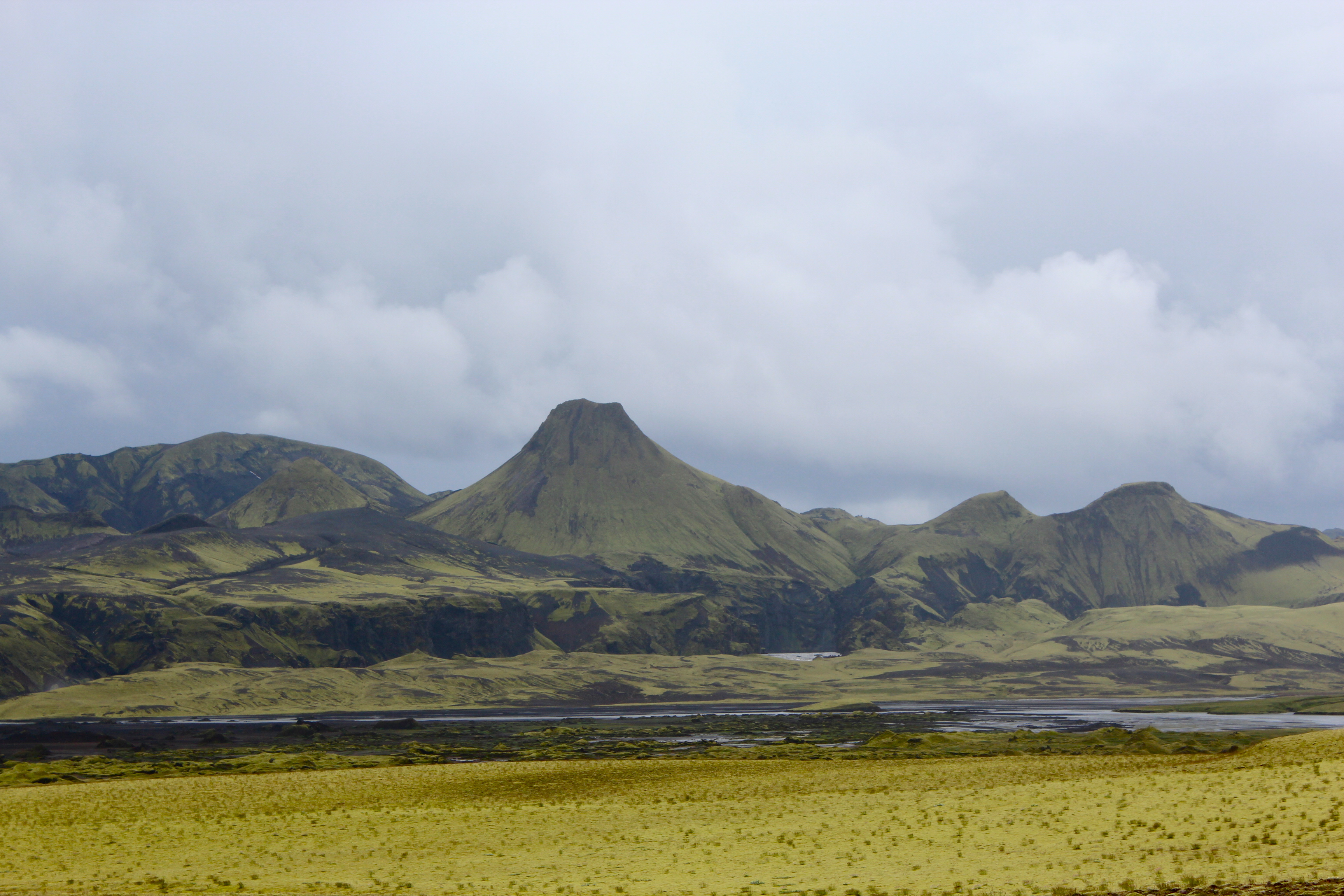
Volcanic fissure in Iceland
.jpg)
Volcanic fissure in Iceland
| Field | Value | ||||||||
|---|---|---|---|---|---|---|---|---|---|
| name | Laki | ||||||||
| photo | Laki fissure (3).jpg | ||||||||
| elevation | Varies: canyon to 1725 m | ||||||||
| map | Iceland | ||||||||
| map_size | 280 | ||||||||
| label_position | right | ||||||||
| location | Iceland | ||||||||
| coordinates | |||||||||
| type | Fissure vents | ||||||||
| last_eruption | 1784 | ||||||||
| map_image | {{maplink | frame=yes | frame-align=center | frame-width=260 | frame-height=340 | frame-long=-17.3 | frame-lat=64.2 | zoom=7 | raw=[,,,,,,] |
| text | Geological features near the Grímsvötn fissure swarm. | ||||||||
| {{collapsible list | title | Legend | |||||||
| {{legend-line | red solid 2px | Grímsvötn fissure swarm | inline | no}} | |||||
| {{legend-line | orange solid 2px | calderas | inline | no}} |
| |Laki surface lava flows | |central volcano area |fissure swarms |subglacial terrain above1100 m |seismically active areas |Clicking on the rectangle icon enables full window and mouse-over with more detail.
Laki () or Lakagígar (, Craters of Laki) is a volcanic fissure in the western part of Vatnajökull National Park, Iceland, not far from the volcanic fissure of Eldgjá and the small village of Kirkjubæjarklaustur. The fissure is properly referred to as Lakagígar, while Laki is a mountain that the fissure bisects. Lakagígar is part of a volcanic system centered on the volcano Grímsvötn and including the volcano Þórðarhyrna.{{cite gvp | access-date = March 26, 2010 }}{{cite web | access-date = March 26, 2010 }}{{cite journal|last= Gudmundsson
The system erupted violently over an eight-month period between June 1783 and February 1784 from the Laki fissure and the adjoining volcano Grímsvötn. It poured out an estimated 42 billion tonnes or 14 km3 of basalt lava as well as clouds of poisonous hydrofluoric acid and sulfur dioxide compounds that contaminated the soil, leading to the death of over 50% of Iceland's livestock population, and the destruction of the vast majority of all crops. This led to a famine which then killed at least a fifth of the island's human population, although some have claimed a quarter.
The Laki eruption and its aftermath caused a drop in global temperatures, as 120 million tonnes of sulfur dioxide was spewed into the Northern Hemisphere. This caused crop failures in Europe and may have caused droughts in North Africa and India.
1783 eruption
|photo-size = |map-size = |map-caption = On 8 June 1783, a 25 km fissure of at least 130 vents opened with phreatomagmatic explosions because of the groundwater interacting with the rising basalt magma. Over a few days the eruptions became less explosive, Strombolian, and later Hawaiian in character, with high rates of lava effusion. This event is rated as 4 on the Volcanic Explosivity Index, but the eight-month emission of sulfuric aerosols resulted in one of the most important climatic and socially significant natural events of the last millennium.
The eruption, also known as the Skaftáreldar ("Skaftá fires") or Síðueldur produced an estimated 14 km3 of basalt lava, and the total volume of tephra emitted was 0.91 km3. Lava fountains were estimated to have reached heights of 800 to. The gases were carried by the convective eruption column to altitudes of about 15 km.
The eruption continued until 7 February 1784, but most of the lava was ejected in the first five months. One study states that the event "occurred as ten pulses of activity, each starting with a short-lived explosive phase followed by a long-lived period of fire-fountaining". Grímsvötn volcano, from which the Laki fissure extends, also erupted at the time, from 1783 until 1785. The outpouring of gases, including an estimated 8 million tonnes of fluorine and an estimated 120 million tonnes of sulfur dioxide, gave rise to what has since become known as the "Laki haze" across Europe.
Consequences in Iceland
The consequences for Iceland, known as the Móðuharðindin (mist hardships), were disastrous. An estimated 20% of the population died in the famine after the fissure eruptions ensued with about 8,000 excess deaths. Approximately 80% of sheep (190,500 head), 50% of cattle (11,500 head) and 50% of horses (28,000 head) died because of dental fluorosis and skeletal fluorosis from the 8 million tons of fluorine that were released. Milk yields halved. The livestock deaths were primarily caused by eating contaminated grass, while humans deaths were from the subsequent famine not fluorine poisoning.
The parish minister and provost of Vestur-Skaftafellssýsla, Jón Steingrímsson (1728–1791), grew famous for the eldmessa ("fire mass") that he delivered on 20 July 1783. The church farm of Kirkjubæjarklaustur was endangered by a branch of the lava flow that halted not far from the farm while the Rev. Jón and his parishioners were worshipping in the church. The spot at which the lava diverted away from the church became known thereafter as Eldmessutangi ("Fire Mass Point").
This past week, and the two prior to it, more poison fell from the sky than words can describe: ash, [[Pele's hair
Consequences in monsoon regions
There is evidence that the Laki eruption weakened African and Indian monsoon circulations, leading to between 1 and less daily precipitation than normal over the Sahel of Africa, resulting in, among other effects, low flow in the River Nile. The resulting famine that afflicted Egypt in 1784 cost it roughly one-sixth of its population. The eruption was also found to have affected South Arabia and the already ongoing Chalisa famine in India.
Consequences in East Asia
The Great Tenmei famine of 1782–1788 in Japan may have been worsened by the Laki eruption. In the same year, Mount Asama erupted in Japan (Tenmei eruption). The eruption may have affected a drought in eastern China.
Consequences in Europe
An estimated 120,000,000 tonnes of sulfur dioxide was emitted, about three times the total annual European industrial output in 2006 (but delivered to higher altitudes, hence its persistence), and equivalent to six times the total 1991 Mount Pinatubo eruption. This outpouring of sulfur dioxide during unusual weather conditions caused a thick haze to spread across western Europe, resulting in many thousands of deaths throughout the remainder of 1783 and the winter of 1784.
The summer of 1783 was the hottest on record and a rare high-pressure zone over Iceland caused the winds to blow to the south-east. The poisonous cloud drifted to Bergen in Denmark–Norway, then spread to Prague in the Kingdom of Bohemia (now the Czech Republic) by 17 June, Berlin by 18 June, Paris by 20 June, Le Havre by 22 June, and Great Britain by 23 June. The fog was so thick that ships stayed in port, unable to navigate, and the sun was described as "blood coloured".
Inhaling sulfur dioxide gas causes victims to choke as their internal soft tissues swell – the gas reacts with the moisture in the lungs and produces sulfurous acid. The local death rate in Chartres was up by 5% during August and September, with more than 40 dead. In Great Britain, the east of England was most affected. The records show that the additional deaths were among outdoor workers; the death rate in Bedfordshire, Lincolnshire, and the east coast was perhaps two or three times the normal rate. It has been estimated that 23,000 British people died from the poisoning.
The weather became very hot, causing severe thunderstorms with large hailstones that were reported to have killed cattle, until the haze dissipated in the autumn. The winter of 1783–1784 was very severe; the naturalist Gilbert White in Selborne, Hampshire, reported 28 days of continuous frost. The extreme winter is estimated to have caused 8,000 additional deaths in the UK. During the spring thaw, Germany and Central Europe reported severe flood damage. This is considered part of a volcanic winter.
The meteorological impact of Laki continued, contributing significantly to several years of extreme weather in Europe. In France, the sequence of extreme weather events included a failed harvest in 1785 that caused poverty for rural workers, as well as droughts, bad winters and summers. These events contributed significantly to an increase in poverty and famine that may have contributed to the French Revolution in 1789. Laki was only one factor in a decade of climatic disruption, as Grímsvötn was erupting from 1783 to 1785, and there may have been an unusually strong El Niño effect from 1789 to 1793.
Consequences in North America
In North America, the winter of 1784 was the longest and one of the coldest on record. It was the longest period of below-zero temperatures in New England, with the largest accumulation of snow in New Jersey, and the longest freezing over of Chesapeake Bay. At the time, the capital of the United States was situated on the Chesapeake at Annapolis, Maryland; the weather delayed Congressmen who were traveling there to vote for the Treaty of Paris, which formally ended the American Revolutionary War. A huge snowstorm hit the South; the Mississippi River froze at New Orleans and there were reports of ice floes in the Gulf of Mexico.
Contemporaneous reports
Gilbert White recorded his perceptions of the event at Selborne, Hampshire, England:
Benjamin Franklin recorded his observations in America in a 1784 lecture:
During several of the summer months of the year 1783, when the effect of the sun's rays to heat the earth in these northern regions should have been greater, there existed a constant fog over all Europe, and a great part of North America. This fog was of a permanent nature; it was dry, and the rays of the sun seemed to have little effect towards dissipating it, as they easily do a moist fog, arising from water. They were indeed rendered so faint in passing through it, that when collected in the focus of a burning glass they would scarce kindle brown paper. Of course, their summer effect in heating the Earth was exceedingly diminished. Hence the surface was early frozen. Hence the first snows remained on it unmelted, and received continual additions. Hence the air was more chilled, and the winds more severely cold. Hence perhaps the winter of 1783–84 was more severe than any that had happened for many years.
The cause of this universal fog is not yet ascertained ... or whether it was the vast quantity of smoke, long continuing, to issue during the summer from Hekla in Iceland, and that other volcano which arose out of the sea near that island, which smoke might be spread by various winds, over the northern part of the world, is yet uncertain.}}
According to contemporary records, Hekla did not erupt in 1783; its previous eruption was in 1766. The Laki fissure eruption was 45 mi east and the Grímsvötn volcano was erupting about 75 mi northeast. Katla, only 31 mi southeast, was still renowned after its spectacular eruption 28 years earlier in 1755.
Sir John Cullum of Bury St Edmunds, Suffolk, England, recorded his observations on 23 June 1783 (the same date on which Gilbert White noted the onset of the unusual atmospheric phenomena), in a letter to Sir Joseph Banks, then President of the Royal Society:
Sir John goes on to describe the effect of this "frost" on trees and crops:
The [[Awn (botany)
References
References
- Gunnar Karlsson (2000), ''Iceland's 1100 Years'', p. 181.
- {{EB1911
- (8 May 2017). "Grimsvotn – Eruptive History". [[Smithsonian Institution]].
- (December 19, 2007). "The Summer of acid rain". The Economist.
- Brayshay and Grattan, 1999; Demarée and Ogilvie, 2001.
- {{cite gvp
- (2003). "Atmospheric and environmental effects of the 1783–1784 Laki eruption: A review and reassessment". Journal of Geophysical Research: Atmospheres.
- (2013). "Laki eruption, Iceland". UK Research and Innovation.
- (April 16, 2010). "The eruption that changed Iceland forever". BBC News.
- (2024-09-04). ""More poison than words can describe": what did people die of after the 1783 Laki eruption in Iceland?". Natural Hazards and Earth System Sciences.
- (19 January 2007). "Killer Cloud".
- Stone. (November 19, 2004). "Volcanology: Iceland's Doomsday Scenario?".
- (1998). "Fires of the earth: the Laki eruption, 1783–1784". University of Iceland Press.
- (September 30, 2006). "High-latitude eruptions cast shadow over the African monsoon and the flow of the Nile". Geophysical Research Letters.
- Rutgers, the State University of New Jersey. (November 22, 2006). "Icelandic Volcano Caused Historic Famine In Egypt, Study Shows". [[Science Daily]].
- (29 December 2022). "Facing natural extremes: The catastrophe of the Laki eruption in Iceland, 1783–1784". 1700-tal: Nordic Journal for Eighteenth-Century Studies.
- (April 30, 2022). link
- (April 2021). "Hydroclimatic anomalies in China during the post-Laki years and the role of concurring El Niño". Advances in Climate Change Research.
- "Acid Rain Effects on Buildings". [[Elmhurst College]].
- (January 2007). "When a killer cloud hit Britain". BBC News.
- "Volcano Seasons: Weather reports from northern Britain, 1783".
- "Volcano Seasons: Weather reports from northern Britain, 1784".
- (1992). "The Year Without a Summer?". Canadian Museum of Nature.
- (1998). "Global impact of the 1789–93 El Niño". Nature.
- (16 March 2011). "The anomalous winter of 1783–1784: Was the Laki eruption or an analog of the 2009–2010 winter to blame?". Geophysical Research Letters.
- "Volcanoes from Iceland: Laki". lave club-internet fr.
- Gilbert White. (1870). "The natural history of Selborne: with observations on various parts of nature and the Naturalist's calendar". Bell & Daldy.
- (1785). "Meteorological imaginations and conjectures". Memoirs of the Literary and Philosophical Society of Manchester.
- (1809). "The Philosophical Transactions of the Royal Society of London – Abridged with notes and biographical illustrations – Volume 15 – from 1781 to 1785".
This article was imported from Wikipedia and is available under the Creative Commons Attribution-ShareAlike 4.0 License. Content has been adapted to SurfDoc format. Original contributors can be found on the article history page.
Ask Mako anything about Laki — get instant answers, deeper analysis, and related topics.
Research with MakoFree with your Surf account
Create a free account to save articles, ask Mako questions, and organize your research.
Sign up freeThis content may have been generated or modified by AI. CloudSurf Software LLC is not responsible for the accuracy, completeness, or reliability of AI-generated content. Always verify important information from primary sources.
Report