From Surf Wiki (app.surf) — the open knowledge base
Lake View Cemetery
Historic cemetery in Cleveland, Ohio, US

Historic cemetery in Cleveland, Ohio, US
| Field | Value |
|---|---|
| image | Daffodil Hill 02 - Lake View Cemetery (31618850224).jpg |
| caption | Daffodil Hill and a nearby funerary monument at Lake View Cemetery |
| established | July 28, 1869 |
| country | United States |
| location | Cleveland, Ohio |
| coordinates | |
| type | Private |
| style | Garden |
| owner | Lake View Cemetery Association |
| size | 285 acre |
| graves | 104,000 (2007) |
| website | |
| findagraveid | 41762 |
| politicalgeo | OH/CU-buried.html#cms00167 |
Lake View Cemetery is a privately owned, nonprofit garden cemetery located in the cities of Cleveland, Cleveland Heights, and East Cleveland in the U.S. state of Ohio. Founded in 1869, the cemetery was favored by wealthy families during the Gilded Age, and today the cemetery is known for its numerous lavish funerary monuments and mausoleums. The extensive early monument building at Lake View helped give rise to the Little Italy neighborhood, but over-expansion nearly bankrupted the burial ground in 1888. Financial recovery only began in 1893, and took several years. Lake View grew and modernized significantly from 1896 to 1915 under the leadership of president Henry R. Hatch. The cemetery's cautious management allowed it to avoid retrenchment and financial problems during the Great Depression.
Two sites within the cemetery are listed on the National Register of Historic Places. The first is the James A. Garfield Memorial, erected in 1890 as the tomb of assassinated President James A. Garfield. The second is Wade Memorial Chapel, which began construction in 1898 and was completed in 1901. It honors the memory of Jeptha Wade, one of the cemetery's co-founders, and was donated by his grandson.
Founding of the cemetery
Creation of the Lake View Cemetery Association
In 1868, prominent Cleveland businessmen Jeptha Wade, Henry B. Payne, and Joseph Perkins began discussing the need for a new cemetery for the city of Cleveland. They believed that the city's then-preeminent burial ground, Woodland Cemetery, was too small for the growing city as well as overcrowded, ill-maintained, and not scenic enough. They issued an invitation on May 8, 1869, to about 40 of the city's other leading businessmen, asking them to meet at the end of the month to discuss the organization of a new cemetery. Thirty of them showed up to the meeting on May 24.
The group of 30 formed the nonprofit The trustees were Hinman B. Hurlbut (banking executive), Henry B. Payne (railroad investor), Joseph Perkins (banking and railroad executive), U.S. District Court Judge Charles Taylor Sherman, Amasa Stone (steelmaker and railroad investor), Worthy S. Streator (railroad executive and investor), Jeptha Wade (co-founder of Western Union), and Stillman Witt (railroad investor). Wade was named president, the association clerk. The group resolved to build a garden cemetery in the style of Mount Auburn Cemetery near Boston, Massachusetts, or Spring Grove Cemetery in Cincinnati, Ohio, and Judge Sherman chose the name: Lake View Cemetery. Lake View was "non-sectarian" and open to all, which (in the 19th century) meant that its intended clientele were Protestant.
The group sold 7 percent annual interest Selah Chamberlain (ironmaker, railroad investor, banker), Payne, Perkins, Stone, Wade, and Witt held $60,000 ($ in dollars) in bonds, while another 11 individuals held $55,000 ($ in dollars) in bonds.
Site selection, design, and construction
A committee was formed to choose a site for the new cemetery. Its members consisted of Holden, Payne, Perkins, Sherman, and J.C. Buell (a local banking executive). The committee wanted a location on the lake shore, but found nothing suitable. While traveling on Euclid Avenue, Holden came upon the cemetery site by chance. The area was known as "Smith Run". Beginning on the Erie Plain in the northwest, the site rose into the foothills of the Portage Escarpment. Dugway Brook (which bisected the site) and several small streams ran south-to-north through the area, carving out a number of ravines The Dugway Brook ravine was particularly deep, and Euclid bluestone (a bluish-colored sandstone) had once been quarried there.
By late September 1869, the Lake View Association had purchased 175 acre of land on this ridge adjacent to Euclid Avenue. Located in what was then East Cleveland Township, the site was somewhat isolated. With the city pushing eastward at a swift pace, city and county government officials were already planning additional roads in the area, several of which would reach the new cemetery.}}
Landscape architect Adolph Strauch, who designed Cincinnati's celebrated Spring Grove Cemetery, was hired in October 1869 to design Lake View.
The 300 plots in the first section went on sale on June 23, 1870, according to The Plain Dealer newspaper. The cost of a standard size in-ground grave was set at $4.00 ($ in dollars). Larger sites for families, monuments, or mausoleums went for 20 cents ($ in dollars) a square foot. The cemetery's distance from Cleveland's population center and the price of its plots meant that only those with a middle class income or better could afford to be buried at Lake View.
Early years: 1869 to 1880

It's not clear when the first interments at Lake View Cemetery were made, but several plots were in use by October 21, 1870.
Improvements to and expansion of the cemetery continued over the next few years. The first ravine was bridged in November 1870, and in December the association purchased an unspecified number of acres that doubled the length of its frontage on Euclid Avenue. The cemetery sold $400,000 ($ in dollars) in bonds in 1871 to pay for more improvements. To secure the bonds, the cemetery pledged all but sold lots, roads, and water features. By August 1871, six sections of the cemetery were laid out and the receiving vault for use by plot-holders, designed by local architect Joseph Ireland, was almost finished. A superintendent's lodge at the front gate on Euclid Avenue was finished at the end of the year. By this time, several large, artistic funerary monuments had been erected at Lake View. The association purchased another 41 acre of land in October 1872 and 2.17 acre in January 1873. By June 1873, the cemetery had a total of 266 acre. It had spent $65,643 ($ in dollars) on landscaping, with eight sections landscaped, plotted, and open for burials. The cemetery even dammed Dugway Brook in places to create ponds.
Plots at Lake View Cemetery in its first three years sold for half the average price of plots in established cemeteries. and the cemetery's acreage totalled 304 acre in 1876.
Euclid Avenue was paved up to Lake View Cemeteryn in 1874. Lake View Cemetery purchased another 100 acre of land in 1875, issuing $150,000 ($ in dollars)
By 1877, The Plain Dealer estimated, more than $100,000 ($ in dollars) in funerary monuments dotted the landscape at Lake View Cemetery. These included the highly visible obelisks and shafts over the Doan, Kelley, McDermott, Potter, and Tisdale plots; the Goodrich and Jaynes memorials; the Keynes column (topped with a funerary urn); the Jeptha Wade shaft, which was topped by an angel; and the Hurlbut pillar topped with a weeping figure. There were also a number of monuments with well-designed, expertly carved bas-relief or freestanding sculptures. These included the angel atop the Truman P. Handy memorial, the weeping woman atop the Bucher and Hanna monuments, the group of angels supporting a cross atop the Cross grave, figures carved on the upright slabs over the Johnson and Garretson plots, a sculptural group named "Hope" atop the Perkins monument, and another sculptural group atop the Chamberlain monument. Although a number of large mausoleums had been built in the cemetery, the newspaper noted that the most elaborate of these was the tomb being erected by H.J. Wilcox. Wilcox had visited Italy, where he employed artisans to design a vault that mimicked the look of an Italian Renaissance chapel.
With lots selling quickly, cemetery officials used the revenue to redeem debt. By 1878, only $10,000 of the 1871 bond issue remained unredeemed, and just $30,000 of the 1875 bond issue. The trustees decided to retire both debts by issuing $40,000 ($ in dollars) in new bonds at 7 percent annual interest. Although the new bonds were sold, the old debt was inexplicably not retired.
Expansion: 1881 to 1890
.jpg)
Building the Garfield Memorial
Main article: James A. Garfield Memorial
President James A. Garfield, a resident of nearby Mentor, Ohio, was shot in Washington, D.C., on July 2, 1881. He died on September 19, 1881. Garfield himself had expressed the wish to be buried at Lake View Cemetery, and the cemetery offered a burial site free of charge to his widow, Lucretia Garfield.
Mrs. Garfield agreed to bury her husband at Lake View. Garfield was temporarily interred in the cemetery's public vault on September 26, 1881, then transferred on October 22 to an empty mausoleum owned and designed by noted local architect Levi Scofield. Even before Garfield's funeral, plans were laid by his friends and admirers for a grand tomb to be erected at the highest point in the cemetery.
The popularity of the garden-like cemetery and the public's desire to see Garfield's resting place were such that large crowds began thronging Lake View every Sunday. Roughly 50,000 people a year were visiting the crypt. The cemetery received no revenues from the memorial committee despite the wear and tear on its property. Cemetery officials began requiring tickets in the summer of 1882 to enter the grounds in order to control the crowds and maintain a suitable atmosphere for mourning. Relic hunters were so willing to vandalize the Scofield tomb (they even ripped up the grass around it) that a wire fence had to be erected to keep them away. In 1891, the cemetery barred all non-lotholding visitors from the cemetery on Sundays unless they had a pass. With only about 230 Sunday passes available, hundreds of people were turned away.
The Garfield Memorial Committee selected the highest point in the cemetery in June 1883 for the president's final resting place. The Garfield Memorial was dedicated on May 30, 1890. Lucretia Garfield, the president's widow, died on March 13, 1918, and was interred in the Garfield Memorial on March 21.
Rise of Little Italy
Little Italy largely owes its inception to funerary monument maker Joseph Carabelli. In 1870, the 20-year-old northern Italian journeyman stonecarver emigrated to the United States. He spent 10 years in New York City, where he dressed stone and carved the statue Industry for the Federal Building and Post Office in Brooklyn. Carabelli relocated to Cleveland in 1880, establishing the Lake View Granite and Monumental Works on Mayfield Road adjacent to the cemetery. Carabelli began encouraging other Italian sculptors, stonecutters, and artisans to settle in Cleveland near his works, and by 1885 a substantial enclave of Italians, mostly immigrants, had grown up there.
By 1892, the neighborhood adjacent to the cemetery's southwestern corner had become known as Little Italy. It was largely inhabited by Italian immigrants who worked as groundskeepers at Lake View or who worked in the funeral monument companies making headstones or memorials for placement in the cemetery. 1892 also saw the city of Cleveland annex Little Italy. The annexation included all of Lake View Cemetery west of a line running from the end of Brightwood Avenue south to Mayfield Road.
Streetcar access
Lake View, Collamer & Euclid Railway, a streetcar line, proposed a line to reach Lake View's main gate in July 1874.
The first streetcar to reach Lake View Cemetery was the East Cleveland Railway Euclid Avenue Line in 1886. The company extended its tracks from its existing terminus at E. 107th Street up Euclid Avenue to Rosedale Avenue in East Cleveland (just short of the major thoroughfare of Noble Road). The East Cleveland Railway opened a second set of tracks, an extension of its Cedar Avenue Line, in 1889. This line began at the company's car barn at the intersection of Euclid Avenue and Coltman Road. The line traveled south on Coltman to reach Mayfield Road, then south down Murray Hill Road to Cedar Avenue. A year after the Cedar Avenue Line extension opened, the Cleveland Electric Railway Company opened its Mayfield Road Line. This line went past Lake Views Mayfield Road gate. The line began at the East Cleveland Railway's car barn, went south down Coltman to Mayfield, and then east on Mayfield to Lee Road. This line closed in 1907.
In 1902, Lake View Cemetery gave permission for the Cleveland Electric Railway to build a spur into the cemetery so that the streetcar firm's funeral car could be used to transport caskets and funeral parties to the cemetery.
Financial difficulties
Emergence of the financial crisis
As of 1888, Lake View Cemetery had 300 acre of land. About 70 acre had been laid out, but only half had been sold. The cemetery association had spent $800,000 ($ in dollars) buying land and improving it. By the end of 1888, about 14 percent of Lake View's 300 acre had been sold, bringing in $406,000 ($ in dollars). The price of a single-burial lot had more than doubled since the cemetery opened, to ($ to $ in dollars) a square foot.
By late 1888, Lake View Cemetery was nearing bankruptcy. Mismanagement was part of the problem, and The Plain Dealer newspaper said the cemetery's financial records were in "deplorable" shape. The cemetery superintendent had spent $150,000 to $200,000 ($ to $ in dollars) on improvements, a figure officials privately admitted was too much. Lot sales fell below expectations, and the cemetery had never established a reserve fund to see the organization through difficult economic times. Cemetery trustees were aware of the worsening deficit many years earlier, and believed the cemetery should stop paying interest on its bonds to bring its finances back in order. This step was not taken because the trustees believed many bondholders relied on interest for income. The cemetery began quietly borrowing money from the Citizens Savings and Loan Association, a local bank, in order to pay interest on its bonds.
The association paid out only 4 percent of the 7 percent annual interest due on its bonds at the end of 1888, creating a severe financial hardship for bondholders who relied on the interest for their living expenses. Bonds which formerly sold for $108 to $110 (the par value was $100) now began selling at $50 to $75.
Quietly, the cemetery began accepting bonds as payment for lots. Usually, purchasers held few bonds, with those holding large amounts of bonds refusing to sell. Although the exchange of bonds for lots would impact revenues, cemetery officials believed that only $7,000 to $8,000 in bonds would be redeemed.
February 1889 proposed rescue plan

The initial plan to save Lake View Cemetery, proposed by association officials,{{Efn|The plan was proposed at a meeting of Lake View Cemetery Association officials and representatives of bondholders. Cemetery leaders present were P.H. Babcock, William Bingham, Selah Chamberlain, T.D. Crocker, and Edward Williams. Bondholder representatives present were S.F. Adams, B.W. Haskins, and Harry F. Hayes.
The plan was amended at the end of April 1889 so that all interest coming due that year was paid in scrip. Excess income (after expenditures for maintenance and cash interest) would go toward the sinking funds, redemption of scrip, a fund to pay the next year's cash interest, and to pay other debts. Significant bondholder opposition to the plan began to emerge.
In June 1889, the Lake View Cemetery Association paid only 3 percent of the 7 percent annual interest due in cash, the remainder in scrip. The redemption of bonds significantly impacted the cemetery's cash flow, and by the end of 1889 it could not pay any interest in cash. Angry bondholders began to threaten lawsuits to personally hold the trustees responsible for the payment of interest.
The bonds-for-lots exchange program proved financially disastrous. Lake View sold lots worth $12,000 in September 1889 but received only $1,000 in cash as the remainder was paid in bonds. In the same month, maintenance expenses amounted to $5,000. At the beginning of October 1889, the association stopped accepting the full amount of bonds for the purchase of lots, and said it would accept bonds for only one-third of the lot sale price. The cemetery also agreed to accept scrip for up to a third of a lot's cost as well.
November 1889 proposed rescue plan
Local banker and cemetery trustee Daniel P. Eells proposed in November 1889 to form a syndicate to raise $200,000 ($ in dollars) and redeem two-thirds of all outstanding bonds at the current market price. A trustee would hold the redeemed bonds until January 1, 1893, paying interest on them from net cash income. The trustee would distribute the bonds on a pro rata basis on January 2, 1893. Subscribers to the redemption fund were essentially betting that the price of the bonds in 1893 would have risen more than enough to not only cover their investment but also offset the loss of income from the reduced interest payments. Eells said the cemetery faced bankruptcy if the syndicate scheme was not adopted.
Gaining acceptance from the bondholders was complicated. C.F. Houghton, a banker and bond dealer based on the East Coast, held all $10,000 of the outstanding 1871 bonds and $7,000 of the 1875 bonds. Samuel E. Williamson, a local judge, held $13,000 of the 1875 issue.
A recession hit the U.S. economy in 1890 followed by a brief depression in 1891, further depressing lot sales.
By 1892, the grounds at Lake View Cemetery were seriously neglected. Sections ready for sale were unmown, weeds and other plants grew wild, and erosion and drought had left some areas bare of vegetation. Only a small percentage of the cemetery's roads were paved, and the remainder, all dirt roads, were heavily eroded and rutted. Lake View's finances were so poor that many residents believed it was close to bankruptcy. The association needed revenue so badly that its trustees considered lowering the price of lots so that the poor could afford to be buried there. The cemetery generated so little revenue that it had incurred about $365,700 ($ in dollars) in debt above and beyond interest and principal owed on bonds.
1892 approved rescue plan

With revenues extraordinarily low and the association not having paid any interest in cash since 1889, cemetery trustees formed a committee consisting of Daniel P. Eels, Henry R. Hatch, and Edwin R. Perkins to see what level of cash interest could be sustained. The committee proposed a new plan in February 1892: All 1871 and 1878 bondholders could turn in their bonds and receive a new "refunding bond" paying lower annual interest. To cover all outstanding debt, about $400,000 ($ in dollars) in "refunding bonds", back-dated to December 1, 1891, would be issued. They would have a $1,000 par value, and be payable in 50 years.
Interest for the last six months of 1892 would be paid in cash at a 7 percent annual rate. The new bonds would carry coupons for all other past-due interest, to be paid at a 6 percent annual rate. Additionally, redeemed bondholders would receive an income debenture equal to 20 percent of the bond's face value. Only $100,000 ($ in dollars) in income debentures would be issued, carrying a 7 percent (or less) annual interest rate. To ensure payment of the interest on the debentures, the cemetery agreed to establish a sinking fund whose proceeds would pay the interest.
Lake View Cemetery agreed that revenues would go toward maintenance and cemetery expenses first. Excess revenues would be applied first to the income debentures, second to interest on the 1878 and refunding bonds, third to sinking fund payments, and lastly to any reasonable improvements to be made to the cemetery. The cemetery staff believed that only about $4,000 ($ in dollars) a year was needed to maintain the cemetery. Interest on the 1875 bond issue (of which only $35,000 was outstanding) amounted to $2,100 a year ($ in dollars), while interest on the refunding bonds would amount to $16,000 a year ($ in dollars).
About half the outstanding bondholders approved of Lake View's plan, but it needed 90 percent to do so before the financial recovery plan could be implemented. Five months after Garfield began his lobbying effort, 75 percent of bondholders approved the plan. The remaining approvals were received in June 1892, and the LVCA board of directors authorized issuance of the refunding bonds. Legal work took longer than usual, however, and it was not until December that the bonds were finally issued.
The cemetery's financial condition improved significantly over the next few years. Although some board members felt the cemetery should still be sold to the city of Cleveland, the board rejected this proposal overwhelmingly in June 1895. The cemetery board approved the erection of a crematorium in 1900, but no action was taken on the plan.
Renewed improvement
In 1896, Lake View Cemetery's entrance was unprepossessing. Located next to Mayfield Road about 200 ft southwest of the current entrance, it consisted of a small wooden gate, a two-room office in a wooden shack just inside the gate, and a small wood-frame home for the superintendent adjacent to the office.
Henry R. Hatch was elected Lake View's president in June 1896. and cemetery engineering was improved. Lake View had long laid out lots according to the contour of the ground. Steep slopes were avoided, and roads with storm drains laid out before a section was plotted. The new engineering standards required that all sections have a 3 ft wide infrastructure border around them. The outermost tier of graves was intended for monuments, and lots were 12 ft deep. All other tiers had lots just 9 ft in length, with a 3 ft walkway between tiers. Any section deeper than 150 ft in depth also needs to have an 8 ft wide service road bisecting it. All ground was roughly graded before the construction of infrastructure and roads; wet ground was drained after rough grading. Section and lot corners were marked with cornerstones, and all permanent fixtures were recorded on the cemetery engineer's maps.
With the Long Depression ending in the United States, the board believed lot sales would rise significantly. With the board's backing, Hatch began making new improvements to the cemetery and converting undeveloped land into sections 4, 10, and 26 at a cost of $10,000 ($ in dollars). Realizing that lot sizes were too large and expensive for middle-class purchasers, Hatch ordered that lots in what is now Section 26 be small and affordable like those at Woodland Cemetery. Unsold large lots in what is now Section 1 were subdivided into smaller lots as well. Terra cotta markers were placed to mark section boundaries, and new maps of the cemetery produced for the first time in several years. Cemetery-wide improvements included the laying of 600 ft of fresh water pipe for irrigation purposes, 2400 ft of drainage pipe to reclaim soggy land for burial purposes, 800 ft of new fencing around the exterior of the cemetery, 1017 ft of new concrete sidewalks, and extensive graveling of dirt roads. Cemetery staff were given uniforms to wear for the first time, and a marquee purchased to provide cover for funeral attendees during inclement weather. In sections with large lots intended for funerary monuments, Hatch ordered that lot corners by marked with a 6 by piece of polished dark Quincy granite with lot numbers carved into each corner. Where section lots contained just two to six graves, corners were marked with a 3 by piece of Georgia marble or slate.
Hatch also hired landscape architect Ernest W. Bowditch with a new circle just inside the cemetery gate. and the cost of its construction donated by Hatch.
Construction of Wade Memorial Chapel
Main article: Wade Memorial Chapel

In 1896, Wade asked the newly founded Cleveland architectural firm of Hubbell & Benes to create a preliminary design. He was so happy with their work that he chose this concept as the design for the chapel and commissioned Hubbell & Benes to finalize the blueprints. The association did not formally accept the new chapel until the plans were done.
The site chosen for the chapel was between two existing lakes, diagonally across a road from the existing public vault. Tiffany artist Frederick Wilson designed the wall mosaics, which feature verses from the Christian Bible (I Corinthians, the Book of John, and the Book of Job). The Favrile glass and gold tile mosaics depicted the passage of life to death. The left side mosaic became known as "The River of Life", while the other had the title "The River of Death". The chapel featured a casket pedestal in place of an altar. This pedestal could be lowered mechanically through the floor into crypt, where the receiving vault was located. The "public" portion of the crypt could hold as many as 96 coffins. Two private receiving vaults also existed on the crypt level, closed off by marble doors.
Ground for the new chapel was broken on February 19, 1898. The hillside was excavated 25 ft down to bedrock, and the foundations and crypt level finished in late December 1898. Completing the interior took much longer than expected, and the chapel was not finished until 1901. The cost was variously reported to be $350,000 ($ in dollars), $150,000 ($ in dollars), $140,000 ($ in dollars), and "more than $100,000" ($ in dollars).
Erecting the Rockefeller Monument
In 1898, John D. Rockefeller, the co-founder and largest stockholder in Standard Oil and one of the wealthiest men in the United States, began the erection of a funerary monument in Lake View Cemetery. Some time before 1882, Rockfeller purchased a 17000 sqft family plot on one of the cemetery's highest points, slightly northeast of the Garfield Memorial. Three people were buried in the John D. Rockefeller plot. Two of them were children of Frank Rockefeller, John's brother. They were William Scofield Rockefeller (81 days old, died on March 17, 1878) and Myra Rockefeller, 2 years and 81 days old, died on August 23, 1886).{{Efn|Frank Rockefeller had an extremely poor relationship with John D. Rockefeller, leading to a breach between the two which never healed. In 1900, Frank disinterred his two children from John's plot, and had them reinterred in his own family plot a short distance away at Lake View.
Construction began on the Rockefeller Monument in 1898. Quarried in Barre, Vermont, by the Wetmore and Morse Granite Co. of Montpelier, Vermont, several hundred tons of rock had to be blown before a piece of rock big enough for the obelisk could be found. alone was 51 ft high with a bottom 5 by square. The Plain Dealer newspaper believed it to be the tallest shaft ever erected over a private grave anywhere in the world. The first base of the pedestal was 14 by square and 3 ft high. The second base was 9 ft by 9 ft and 3 ft high. The die was 6 ft by 6 ft and 7 ft high. The total height of the monument was 65 ft.
The Rockefeller obelisk was dressed in Vermont. It had minimal if graceful ornamental elements on the base,
The Rockefeller monument arrived in Cleveland on Sunday, February 11, 1899. but the delays in moving the obelisk meant the derrick's use was required elsewhere. The derrick was erected again at Lake View about August 26. The obelisk was hoisted upright on September 11. The derrick's wooden superstructure proved too weak to lift the obelisk into the air, and had to be reinforced. The shaft was finally lifted into and cemented in place on September 12 while a large crowd of onlookers watched. Stoneworkers applied the finishing touches to the monument on September 13, 1899.
The Rockefeller Monument cost $50,000 ($ in dollars) to quarry and erect, and another $10,000 ($ in dollars) to move.
Continued improvement: 1900 to the Great Depression

In 1900, Lake View Cemetery had just over 10 percent (34 acre) of its land developed into cemetery plots. Lakes, streams, roads, and other features took up another 68 acre. Undeveloped land remained heavily forested, with beech, elm, maple, and oak trees predominating.
Financial prosperity
Lot sales were extremely high in 1895, 1896, 1897, and 1898, Lot sales declined significantly in 1899 and early 1900, but the cemetery still grossed $35,500 ($ in dollars) in sales revenue Lake View was paying interest on its debt every six months, and the sinking fund was ample. the first of several donations. Rockefeller's gift was used to open a section for the poor, to lay fresh water pipes in several sections, and for other improvements. The cemetery received another $15,000 ($ in dollars) in other cash donations during year as well.
Lake View Cemetery reported lot sales of $40,778 ($ in dollars) in 1901, assets of $1.19 million ($ in dollars), and debts of just $626,290 ($ in dollars). The following year, lot sales increased and the cemetery spent $25,000 ($ in dollars) to make an unusually large number of improvements, rebuilding old roads, adding new roads, draining some land, and opening a number of new sections. John D. Rockefeller made another $10,000 donation ($ in dollars), and the cemetery received another $12,272 ($ in dollars) in donations from other sources. Lot sales rose again in 1903. Rockefeller made a third donation of $10,000 ($ in dollars), and other donations totaled about $7,000 ($ in dollars).
Lake View Cemetery continued to see lot sales rise in 1904, generating $55,230 ($ in dollars). Donations brought in another $8,186 ($ in dollars). The cemetery made $20,040 ($ in dollars) in improvements during the year, adding fresh water pipes, stormwater sewers, and building three tool houses (each with a telephone) in the cemetery. With expenses and supplies requiring just $22,148 ($ in dollars), the cemetery had more than enough cash on hand for interest payments, the sinking fund, and scrip interest and redemption. Lot sales and associated revenues were even higher in 1905 ($63,201 [$ in dollars]), with expenses and supplies rising to $37,915 ($ in dollars) and improvement spending dropping to $14,840 ($ in dollars). Lake View was so flush with cash that it made an extraordinary $10,000 ($ in dollars) payment to the sinking fund. For the first time in years, Lake View Cemetery Association trustees discussed opening a number of new sections, and began discussing setting aside sections solely for the construction of large, expensive mausoleums.
Section 23 experiment and the death of Hatch
The 1910s and 1920s continued to be years of prosperity for Lake View Cemetery. Its maintenance staff had grown so much that it built an addition to its maintenance shop in 1909. It opened Section 23 in 1913. This section was "pre-designed" by cemetery staff, architects, landscape architects, and sculptors, many of them associated with the Cleveland School of Art. The landscaping around the lot's borders and at strategic points in its interior was designed to accommodate and complement only certain types of funerary monuments. In 18 of the 32 lots in these areas, the cemetery issued highly specific, narrow rules regulating the size and type of monument which could be erected. In the remaining 14 key lots, the cemetery "strongly suggested" to buyers that only certain kinds of funerary monuments be used in these locations (explicitly ruling out funerary vases). Headstones were allowed to rise only 4 in above the surface of the earth. All local funerary monument companies were furnished with a booklet on monument design to assist them in designing gravestones appropriate for Section 23, and for all other sections at Lake View.
Lake View Cemetery suffered two setbacks in 1915. On January 28, the cemetery's old two-story wood office building burned to the ground. Maps, plot plans, and the blueprints for hundreds of mausoleums and monuments were lost. On May 20, Henry R. Hatch died suddenly, depriving Lake View of the energetic and visionary president who had led the organization since 1896.
Hatch left a cemetery in excellent financial condition. Lake View was making so much money that cemetery was able to purchase $50,000 ($ in dollars) worth of Liberty Loan bonds in 1917 to support the American cause in World War I. In a snapshot of the cemetery's financial success, the trustees reported that it made a surplus of $62,165 ($ in dollars) in 1922. It had assets totaling $3,021,888 ($ in dollars), which included an endowment and sinking fund of $1,704,737 ($ in dollars). Its outstanding debts were $2,016,192 ($ in dollars).
Modernization, ownership of the Garfield Memorial, and push east
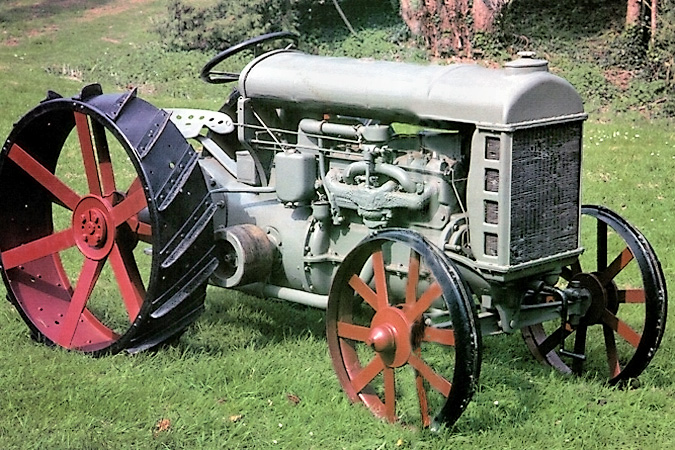
Part of the cemetery's success was attributed to its use of modern technology. For years, Lake View maintenance staff had used 50 lawn mowers and 30 hand-held scythe lawn trimmers. In 1917, the cemetery purchased a two-ton truck from the Acme Motor Truck Co. of Cadillac, Michigan. The truck was used to haul materials from Lake View's quarry around the cemetery for the construction of buildings and macadam roads and the setting of headstone foundations. By 1922, the cemetery also used Fordson tractors to dig graves, place monuments, clear snow, and maintain roads. About 1923, Lake View purchased two one-ton Ford trucks for general-duty use around the cemetery. Cemetery shops manufactured a "tent wagon", a "grave wagon" and both metal- and concrete-lined "dump carts". Originally developed in 1913, the dump carts were used to carry earth from graves. Up to six carts could be attached to a single Ford truck.
In late October 1923, the Garfield National Monument Association turned the Garfield Memorial over to Lake View Cemetery. Most of the Monument Association's members had died, and its charter did not permit for a self-perpetuating board. After accepting title to the memorial and its land, Lake View Cemetery immediately ended the practice of charging a 10 cent ($ in dollars) admission fee to the memorial. Lake View also began cleaning, repairing, and rehabilitating the memorial.
Increasingly, Lake View Cemetery turned its attention to its Mayfield Road border and entrance. The city of Cleveland Heights, incorporated as a hamlet in 1901, included within its boundaries the southern portion of Lake View. Cleveland Heights grew very rapidly. Its population rose from 1,564 at the time of incorporation to 2,576 in 1910, a 64.7 percent increase. By 1920, Cleveland Heights had 15,264 residents, a six-fold increase. Cleveland Heights incorporated as a city in 1921. Lake View Cemetery was the burial ground of choice for the upper-middle class suburb. Although the Mayfield Road gate was locked, the cemetery gave keys to the gate to those Cleveland Heights residents who were lotholders.
Great Depression and war: 1929 to 1945
The Great Depression put significant financial stress on Lake View Cemetery. Those who had purchased large lots often failed to keep up payments. Cemetery officials allowed them to sell back a portion of their lots in order to retain at least some burial ground. When the owners of large lots defaulted on their purchase contracts completely, Lake View threatened to disinter the bodies in the plot and move them to single-grave lots in another part of the cemetery and re-sell the large plot. The cemetery responded to the economic crisis with retrenchment as well. It lowered the price of a single grave by 20 percent, to $60 ($ in dollars). The cemetery also cut wages for all maintenance workers and grave diggers making more than 55 cents an hour ($ in dollars), and laid off 10 men. In response, workers organized a trade union in 1937 under the auspices of the Arborists and Landscapers Union, LIUNA Local 344, AFL.
Manpower shortages hit Lake View Cemetery during World War II as laborers enlisted in the military or were drafted. To assist in the war effort, the cemetery allowed large portions of unused land to be converted into Victory gardens. Wartime inflation and the rapidly declining number of wealthy families in the Cleveland area hurt lot sales. The cemetery subsequently shifted its marketing efforts to focus on middle and working class families.
Latter half of the 20th century
As more people chose cremation as a burial option in the latter half of the 20th century, Lake View Cemetery responded by constructing and opening a cremains mausoleum in 1990. Any member of the public may purchase a niche in the mausoleum for cremains.
21st century
Lake View Cemetery has been under persistent financial stress since the start of the new millennium. Operating deficits are common, and the LVCA has occasionally cut back services and staff. Even though the cemetery is a significant tourist attraction and the site of a presidential memorial, Lake View received no local, state, or federal funding as of 2017.
In 2006, the Lake View Cemetery Foundation made education and tourism its top priorities. From 2001 to 2010, the number of individuals participating in officially sponsored foundation tours increased to 10,000 from 3,000, while the number of sponsored educational programs nearly doubled from 10 to 19.
Lake View Cemetery spent $5 million in 2016 and 2017 conserving, repairing, and upgrading the James A. Garfield Memorial's structural elements. This included reinforcing beams and columns in the basement,
In 2019, the cemetery began a multi-million-dollar project to clean the exterior and repoint any damaged or missing mortar.
Lake View Cemetery celebrated its 150th anniversary with two years of events in 2019 and 2020.
About the cemetery
The garden cemetery is located in the "heights" area of Greater Cleveland, with a view of Lake Erie to the north. The burying ground had 285 acre of land in 2007, with more than 104,000 burials. There are two entrances, on Euclid Avenue and Mayfield Road.
The cemetery provides a plot in its Veterans Section free of charge to all honorably discharged U.S. armed forces veterans.
Governance
The nonprofit Lake View Cemetery Association owns and governs the cemetery. Originally, membership in the association was open to anyone who purchased a lot, making the association akin to a church or a club. Members elected a 20-member board of trustees (with four seats up each year), and a board secretary. The board met quarterly, while a five-member executive committee of the board met monthly. The board appointed the cemetery's president, vice president, and superintendent. Income from lot sales was used primarily to pay for staff salaries and the maintenance and improvement of the grounds. Among the many board and executive office positions, only the superintendent and the board secretary received pay.
The Lake View Cemetery Association reincorporated as a nonprofit organization in 1926, with the LVCA now acting as a nonprofit association for the benefit for lotholders. Annual meetings of lotholders to elect directors and officers were no longer held. Instead, a self-perpetuating board of directors was elected which continues to own and govern the cemetery.
Lake View's annual budget in 2012 was $6.1 million ($ in dollars). Income from lots sales and services to families made up 60 percent of all cemetery revenue in 2001, and 80 percent of all revenue in 2012. Charitable contributions make up much of the remaining income. The Lake View Cemetery Foundation provides a significant portion of this charitable income. Foundation donations were 6 percent of all cemetery revenue in 2001, rising to 16 percent of all revenues in 2011. As of 2017, roughly half of the cemetery's annual costs were spent on maintaining the grounds, headstones, monuments, and mausoleums. The other half goes to staff and office operations.
Leadership
Following is a partial list of the presidents of the Lake View Cemetery Association. The president oversaw the day-to-day operations of the cemetery along with the superintendent.
- Jeptha H. Wade, 1869 to 1879
- Joseph Perkins, 1879 to 1885 (his death)
- Jeptha H. Wade, 1885 to 1890 (his death)
- William Edwards, 1890 to 1893
- Timothy Doane Crocker, 1893 to 1896
- Henry R. Hatch, 1896
- Douglas Perkins, 1915 to 1921 (his death)
- Jerome B. Zerbe, 1921 to 1924
- Francis F. Prentiss, 1925
Lake View Cemetery Foundation
The Lake View Cemetery Foundation was established by the Lake View Cemetery Association in 1986 as a 501(c)(13) organization. The foundation was originally chartered to raise money to repair and restore the James A. Garfield Memorial and to establish a fund for its ongoing maintenance. After the renovation was completed, the foundation expanded its goals to include enhancing, maintaining, and preserving the botanical gardens, buildings, horticulture, landscape, monuments, and areas at Lake View Cemetery to benefit the general public. The foundation's new mission specifically embraced education and outreach programs.
Although the foundation provides assistance to the cemetery in maintaining historic buildings and monuments and historic or horticulturally significant aspects of the grounds, it is both separately governed and administered from the cemetery. The foundation's 2012 annual budget was $567,000 ($ in dollars). Foundation assistance is not unrestricted, but targeted to meet the goals established by the foundation's board of directors and its strategic plan. Charitable donations make up roughly half of the foundation's annual income, although these can vary widely from year to year. Donations provided 65 percent of income in 2013. Investment income also varies considerably over time, but has averaged about 30 percent of all foundation revenues between 2002 and 2012. Service fee income is a relatively negligible 2 percent of all revenues.
Notable sites and funerary monuments
The James A. Garfield Memorial is the most prominent point of interest at Lake View Cemetery. The ornate interior features a large marble statue, stained glass, bas relief, and various historical relics from Garfield's life and presidency. The monument also serves as a scenic observation deck and picnic area. President and Mrs. Garfield are entombed in the lower level crypt, their coffins placed side by side and visible to memorial visitors.
Lake View Cemetery is home to the Wade Memorial Chapel, which features an interior designed by Louis Tiffany. Behind the chapel is a large pond.
The cemetery is famous for its numerous statues of angels, sculpted in a Victorian style. A well-known memorial, the Angel of Death Victorious at the gravesite of the Haserot family, was created by sculptor Herman Matzen.
In popular culture
The cemetery is among those profiled in the 2005 PBS documentary A Cemetery Special.
Scenes of the 2014 film Captain America: The Winter Soldier were filmed at the flood control dam at the cemetery.
Notable interments
Notable people buried at Lake View Cemetery include:
- Newton D. Baker (1871–1937), Mayor of Cleveland and U.S. Secretary of War during World War I
- Ernest Ball (1878–1927), composer and author of "When Irish Eyes are Smiling"
- Frances Payne Bolton (1885–1977), Member, U.S. House of Representatives
- Helene Hathaway Britton (1879–1950), owner of the St. Louis Cardinals
- Charles Francis Brush (1849–1929), inventor of the modern arc light and businessman
- Theodore E. Burton (1851–1929), Member, U.S. Senate
- William B. Castle (1814–1872), last Mayor of Ohio City, Mayor of Cleveland
- Ray Chapman (1891–1920), baseball player for the Cleveland Indians
- Charles W. Chesnutt (1858–1932), an African-American attorney and author
- Henry Chisholm (1822–1891), father of the Cleveland steel industry
- Henry D. Coffinberry (1841–1912), industrialist, founder of the Cleveland Shipbuilding Company
- James Corrigan (1846–1908), industrialist, founder of Corrigan, McKinney & Co.
- George Washington Crile (1864–1943), co-founder of the Cleveland Clinic and the first surgeon to successfully perform a blood transfusion
- Harvey Cushing (1869–1939), pioneer neurosurgeon
- Robert B. Dennis (1819–1884), member of the Ohio House of Representatives
- John A. Ellsler (1821–1903), actor and theatre manager
- Lethia Cousins Fleming (1876–1963), American suffragist, teacher, civil rights activist and politician.
- Alan Freed (1921–1965), radio disc jockey who popularized the term "rock and roll "
- Abram Garfield (1872–1958), architect
- James A. Garfield (1831–1881), President of the United States
- Lucretia Garfield (1832–1918), First Lady of the United States
- Edward B. Greene (1878—1957), banking, mining, and steel company executive; chairman of Cleveland-Cliffs
- Marcus A. Hanna (1837–1904), U.S. Senator and Republican Party boss
- Gertrude Harrison (1871–1938), professional golfer
- Stephen V. Harkness (1818–1888), investor and founding co-partner of Standard Oil
- Minnie Hartness (1867-1957), stenographer, writer, lecturer, and lady of letters
- John Hay (1838–1905), former United States Secretary of State and aide to President Abraham Lincoln
- Myron T. Herrick (1854–1929), Governor of Ohio, U.S. ambassador to France
- Adella Prentiss Hughes (1869–1950), founder of the Cleveland Orchestra
- Mortimer Dormer Leggett (1821–1896), lawyer, educator, Union Army Major General, Commissioner of Patents
- Al Lerner (1933–2002), owner of the Cleveland Browns
- Flora Stone Mather (1852–1909), philanthropist
- Garrett Morgan (1877–1963), inventor of the gas mask and the three-colored traffic light
- Eliot Ness (Cenotaph, 1903–1957), Cleveland Safety Director and a member of The Untouchables
- George Willis Pack (1831–1906), timber tycoon
- Charles A. Otis Sr. (1827–1905), businessman and Mayor of Cleveland
- Arthur L. Parker (1885–1945), founder of Parker Hannifin Corporation
- George W. "Peggy" Parratt (1883–1959), a professional football player who threw the first legal forward pass in a professional game
- Oliver Hazard Payne (1839–1917) American businessman and organizer of the American Tobacco trust
- Harvey Pekar (1939–2010), comic book writer known for the American Splendor series
- Dave Pope (1921–1999), professional baseball player
- John D. Rockefeller (1839–1937), founder of the Standard Oil Company and philanthropist
- James Salisbury (1823–1905), inventor of the Salisbury steak
- Viktor Schreckengost (1906–2008), industrial designer, teacher, sculptor, and artist
- Heinrich Christian Schwan (1819–1905), third president of the Lutheran Church–Missouri Synod
- Henry Alden Sherwin (1842–1916), co-founder of the Sherwin-Williams Company
- Anthony J. Stastny (1885–1923), composer, founder and president of Tin Pan Alley music publisher, A. J. Stasny Music Co.
- Carl B. Stokes (1927–1996), Mayor of Cleveland, United States ambassador
- Louis Stokes (1925–2015), Member, U.S. House of Representatives
- Amasa Stone (1818–1883), industrialist and philanthropist
- Worthy S. Streator (1816–1902), physician, railroad baron, founder of Streator, Illinois, Ohio State Senator, first mayor of East Cleveland, Ohio
- Mantis James Van Sweringen (1881–1935), railroad and real estate baron
- Oris Paxton Van Sweringen (1879–1936), railroad and real estate baron
- Jeptha Homer Wade (1811–1890), founder of Western Union
- Thomas H. White (1836-1914) founder of the White Sewing Machine Company.
References
;Notes
;Citations
Bibliography
References
- (August 3, 1870). "The Lake View Cemetery". The Plain Dealer.
- (July 29, 1869). "Lake View Cemetery". The Plain Dealer.
- (2019). "Bingham, William".
- (2019). "Hurlbut, Hinman B.".
- (2019). "Payne, Henry B.".
- (2019). "Perkins, Joseph".
- Lucas, Myrtle I.. (February 1944). "Charles T. Sherman". Journal of the Cleveland Bar Association.
- (2019). "Stone, Amasa".
- (2019). "Wade, Jeptha Homer I".
- (2019). "Witt, Stillman".
- (October 8, 1889). "Here Is A Mess". The Plain Dealer.
- (2019). "Chamberlain, Selah".
- (September 25, 1869). "Lake View Cemetery. The Stock Books Still Open". The Plain Dealers.
- (May 23, 1916). "Funerals Cost Million Yearly". The Plain Dealer.
- (October 21, 1869). "Lake View Cemetery". The Plain Dealer.
- (February 2, 1870). "Lake View Cemetery". The Plain Dealer.
- (June 23, 1870). "Lake View Cemetery". The Plain Dealer.
- (June 23, 1920). "Fifty Years Ago". The Plain Dealer.
- (October 21, 1870). "Lake View Cemetery". The Plain Dealer.
- (November 12, 1870). "East Cleveland Items". The Plain Dealer.
- (December 3, 1870). "Lake View Cemetery". The Plain Dealer.
- (March 7, 1889). "Bad Blunder". The Plain Dealer.
- (August 22, 1871). "Lake View Cemetery". The Plain Dealer.
- (December 18, 1871). "Lake View Cemetery". The Plain Dealer.
- (October 24, 1872). "Real Estate Transfers". The Plain Dealer.
- (January 27, 1873). "Real Estate Transfers". The Plain Dealer.
- (June 4, 1873). "Real Estate Transfers". The Plain Dealer.
- (July 31, 1877). "Cleveland's Charms". The Plain Dealer.
- (August 25, 1873). "Real Estate Transfers". The Plain Dealer.
- (July 17, 1874). "To the City Limit on Euclid Avenue". The Plain Dealer.
- (October 14, 1889). "Lakeview's Debts". The Plain Dealer.
- (May 18, 1877). "A Lovely Resting Place". The Plain Dealer.
- (September 20, 1881). "At Lake View". The Plain Dealer.
- (September 20, 1881). "Dispatch to Mrs. Garfield Tendering Grounds in Lake View Cemetery". The Plain Dealer.
- (September 21, 1881). "In Mourning". The Plain Dealer.
- (October 21, 1881). "Garfield". The Plain Dealer.
- (September 28, 1881). "Notes of the Day". The Plain Dealer.
- (December 20, 1896). "To Be Beautified". The Plain Dealer.
- (June 27, 1882). "Lake View Cemetery Not a Picnic Resort". The Plain Dealer.
- (June 27, 1883). "Garfield's Grave". The Plain Dealer.
- (June 22, 1891). "How It Works". The Plain Dealer.
- (September 10, 1885). "The East End". The Plain Dealer.
- (March 22, 1918). "Garfield Remains Laid at Rest Here". The Plain Dealer.
- Coulter, Charles W.. (1919). "The Italians of Cleveland". Cleveland Americanization Committee.
- (December 5, 1892). "Italian Homes Where Foreigners Live In Large Numbers". The Plain Dealer.
- (June 23, 1876). "The Newest Railway". The Plain Dealer.
- Kelly, S.J.. (March 25, 1941). "Three Dummy Lines of Yesterday's Cleveland". The Plain Dealer.
- (May 17, 1902). "Funeral Cars to Be Operated In Cemetery". Street Railway Journal.
- (November 5, 1889). "The Lakeview Bonds". The Plain Dealer.
- (April 6, 1889). "Cemetery Bonds". The Plain Dealer.
- (March 11, 1889). "Local Securities". The Plain Dealer.
- (April 4, 1889). "The Lakeview Cemetery Bonds". The Plain Dealer.
- (May 11, 1889). "Cemetery Bonds". The Plain Dealer.
- (July 30, 1889). "Among the Investors". The Plain Dealer.
- (May 16, 1889). "Cheap Cemetery Lots". The Plain Dealer.
- (April 8, 1889). "Lakeview Cemetery". The Plain Dealer.
- (April 26, 1889). "Lakeview Cemetery Bonds". The Plain Dealer.
- (October 4, 1889). "Lakeview Cemetery Bonds". The Plain Dealer.
- (June 4, 1889). "Cemetery Trustees". The Plain Dealer.
- (November 5, 1889). "Lakeview Affairs". The Plain Dealer.
- (December 9, 1889). "Lakeview Bonds". The Plain Dealer.
- (February 5, 1892). "Plan Proposed To Aid the Lakeview Cemetery". The Plain Dealer.
- (August 3, 1892). "Lakeview Cemetery Bonds". The Plain Dealer.
- (December 2, 1892). "Half Million Trust Mortgage". The Plain Dealer.
- (June 4, 1895). "Lake View Cemetery Will Not be Sold to the City". The Plain Dealer.
- (January 12, 1900). "To Further Cremation". The Plain Dealer.
- (October 21, 1897). "New Entrance to Lake View". The Plain Dealer.
- (December 15, 1897). "The New Entrance to Lake View Cemetery". The Plain Dealer.
- (August 30, 1896). "This and That". The Plain Dealer.
- (November 1921). "Asked and Answered". Park and Cemetery.
- (November 9, 1897). "New Office Building". The Plain Dealer.
- (February 20, 1898). "Chapel and Marble Crypt". The Plain Dealer.
- (March 1898). "Cemetery Notes". Park and Cemetery.
- (December 25, 1898). "The Wade Memorial Chapel". The Plain Dealer.
- (1990). "The Gamut - Issues 29-30". [[Cleveland State University]].
- Adams, David. (January 2007). "Painting with Glass: The Opalescent Glass Art of Frederick Stymetz Lamb". Stained Glass Quarterly.
- (23 July 2018). "Wade Memorial Chapel". SAH Archipedia.
- (September 1900). "Annual Convention of Cemetery Superintendents". Park and Cemetery.
- (October 12, 1900). "Put Them In New Graves". The Plain Dealer.
- (April 1, 1889). "Laid To Rest". The Plain Dealer.
- (August 11, 1915). "Rockefeller Buries Wife In Cleveland". The Plain Dealer.
- (September 30, 1898). "A Huge Obelisk". The Plain Dealer.
- (September 1, 1016). "Monument Dealers of America at Cleveland". American Stone Trade.
- (June 1916). "Best Cemetery Monuments in Cleveland". Monumental News.
- (June 25, 1899). "Rockefeller Monument". The Plain Dealer.
- (March 3, 1899). "Rockefeller Monolith". The Plain Dealer.
- (November 12, 1898). "Big Monolith For Cleveland". The Plain Dealer.
- (August 22, 1899). "The Rockefeller Monolith". The Plain Dealer.
- (July 30, 1899). "Rockefeller Monument". The Plain Dealer.
- (September 2, 1899). "Rockefeller Monolith". The Plain Dealer.
- (September 12, 1899). "Scaffolding Too Weak". The Plain Dealer.
- (September 13, 1899). "Lifted in Place". The Plain Dealer.
- Dollar, George. (November 1899). "Biggest on Record". The Strand Magazine.
- (January 31, 1900). "Financial". The Plain Dealer.
- (July 30, 1899). "Gift From Rockefeller". The Plain Dealer.
- (December 13, 1899). "Gave Lakeview $10,000". The Plain Dealer.
- (June 9, 1899). "To Keep Cemetery In Order". The Plain Dealer.
- (June 11, 1901). "City of Dead Prospers". The Plain Dealer.
- (June 10, 1902). "$20,272 in Donations". The Plain Dealer.
- (June 9, 1903). "Many Gifts for Cemetery". The Plain Dealer.
- (June 14, 1904). "William Bingham Missed". The Plain Dealer.
- (June 13, 1905). "Surplus Of $15,704". The Plain Dealer.
- (October 3, 1909). "Building Permits for the Week". The Plain Dealer.
- (January 29, 1915). "Cemetery Building Burned". The Plain Dealer.
- (May 21, 1915). "Henry R. Hatch Dies, Ill Only One Day". The Plain Dealer.
- (October 16, 1917). "Loan's Total Here Exceeds 20 Millions". The Plain Dealer.
- (August 1923). "Lake View Annual Report". Park and Cemetery.
- (January 1922). "Lawn Mower Upkeep". Park and Cemetery.
- (July 1920). "Motor Truck Operation and Accounting". Municipal and County Engineering.
- (January 15, 1922). "Popular Make of Tractor Finds Work to Do—Even in Cemetery!". The Plain Dealer.
- (October 19, 1923). "James A. Garfield Monument Taken Over By Cemetery". The Plain Dealer.
- Webb, J.H.. (June 28, 1931). "Recalling Garfield's Assassination". The Plain Dealer.
- (May 20, 1938). "Sign Cemetery Wage Pact". The Plain Dealer.
- Kilpatrick, Mary. (February 6, 2020). "What the heck is happening to the Garfield monument in Cleveland's Lake View Cemetery?". The Plain Dealer.
- Rice, Karin Connelly. (September 12, 2019). "150 years of solitude at Lake View Cemetery".
- DiPiazza, Adrienne. (May 27, 2019). "Red, white and blue tribute to veterans buried at Lake View Cemetery". WJW-TV.
- (June 20, 1926). "Legal Notice". The Plain Dealer.
- (June 17, 1879). "The Lake View Cemetery". The Plain Dealer.
- (September 1, 1885). "Joseph Perkins". The Plain Dealer.
- (August 10, 1890). "Jeptha H. Wade". The Plain Dealer.
- (September 14, 1890). "Notice". The Plain Dealer.
- (June 17, 1893). "Lake View Cemetery Association". The Plain Dealer.
- (1916). "Cleveland City Directory for the Year Ending August, 1917". The Cleveland Directory Company.
- (June 19, 1920). "Legal Notices". The Plain Dealer.
- (June 21, 1921). "Notice of Meeting". The Plain Dealer.
- (June 24, 1924). "Notice of Meeting". The Plain Dealer.
- (June 20, 1925). "Notice of Meeting". The Plain Dealer.
- (June 27, 1926). "Notice of Meeting". The Plain Dealer.
- "Lake View Cemetery". Case Western Reserve University.
- "Lake View Cemetery". forgottenoh.com.
- (December 28, 1937). "Simple Rites Pay Baker Last Honor". The Plain Dealer.
- (May 8, 1927). "'Mother Machree' Grieves for 'Rolly'". The Plain Dealer.
- {{CongBio. b000607
- (1950-01-10). "Obituary for Helene Hathaway Britton (Aged 71)". Newspapers.com.
- https://bioguide.congress.gov/search/bio/B001159
- Washington, Roxanne. (January 11, 2019). "Monroe Street Cemetery in Ohio City steeped in history, architecture". The Plain Dealer.
- (1999). "The First and Last Mayor".
- (November 19, 1932). "Chestnutt Rites Held". The Plain Dealer.
- Brill, Jason. (December 1, 2016). "Hidden Cleveland: Chisholm Mausoleum". Cleveland Magazine.
- (May 12, 1881). "In Woodland's Peace". The Plain Dealer.
- (January 21, 1912). "Ex-Treasurer Is Buried". The Plain Dealer.
- (December 26, 1908). "Corrigan Buried Today". The Plain Dealer.
- (October 11, 1939). "Cushing Burial Rites". The New York Times.
- (1957). "Some Descendants of Robert Dennis of Portsmouth, Rhode Island".
- (August 26, 1903). "Funeral of John A. Ellsler". The New York Times.
- Lasser, Carol. (2002). "Biographical Sketch of Lethia Cousins Fleming, 1876–1963".
- Feran, Tom. (May 8, 2016). "Alan Freed, 'father of rock,' gets a memorial in stone". The Plain Dealer.
- (1958-10-18). "Garfield is Dead; Son of President". [[The Cincinnati Enquirer]].
- (May 30, 1890). "Dedication Day". The Plain Dealer.
- (October 23, 1957). "E.B. Greene Is Buried In Family Plot". The Plain Dealer.
- (February 4, 1906). "Memorial Rapidly Nearing Completion". The Plain Dealer.
- Woods, Tori. (July 25, 2007). "Buried Treasures". Cleveland Magazine.
- (March 31, 1926). "Mrs. Harkness Buried". The Plain Dealer.
- (26 June 1957). "Mrs. Hartness Dies At 90 At Rest-A-While". Springfield Reporter.
- (January 1915). "News From the Retail Field". Monumental News.
- (April 16, 1929). "Bugle Sounds Taps, Herrick Laid to Rest". The Plain Dealer.
- (August 27, 1950). "200 at Rites for Adella P. Hughes". The Plain Dealer.
- (January 9, 1896). "A Simple Burial". The Plain Dealer.
- DeMarco, Laura. (June 30, 2019). "Common grounds: Lake View Cemetery celebrates its 150th anniversary". The Plain Dealer.
- (July 28, 1963). "Hero of Crib Explosion Dies at 86". The Plain Dealer.
- Whitaker, Bruce. (2020-09-02). "George Willis Pack".
- (July 1, 1905). "Last Tribute to Dead". The Plain Dealer.
- (January 2, 1945). "Arthur L. Parker Dies in His Sleep". The Plain Dealer.
- (January 6, 1959). "Ohio Sports 'Great' G. W. Parratt Dies". The Plain Dealer.
- Rose, W.R.. (June 29, 1917). "All in the Day's Work". The Plain Dealer.
- Grzegorek, Vince. (October 19, 2011). "Harvey Pekar Memorial Will Be at Library, Not Lake View Cemetery". Cleveland Scene.
- Bona, Marc. (April 25, 2018). "9 Famous Baseball Graves in Lake View Cemetery". The Plain Dealer.
- (May 28, 1937). "Old Home Visited By Rockefellers". The Plain Dealer.
- (January 29, 2008). "Schreckengost Funeral Services Announced". The Plain Dealer.
- "President Schwan".
- (April 17, 1923). "Died". The Plain Dealer.
- (April 9, 1996). "Family and Friends Bid Farewell to Carl Stokes". The Plain Dealer.
- {{CongBio. s000948
- (May 14, 1883). "Simple Services at the Funeral of Amasa Stone To-Day". The Plain Dealer.
- (March 5, 1902). "Home Where Dr. W. S. Streator Died". The Plain Dealer.
- (December 14, 1935). "500 Pay Tribute Today in Van Sweringen Rites". The Plain Dealer.
- (November 24, 1936). "Tomlinson, Ball Keep Rail Control As O. P. Van Sweringen Dies in Sleep". The Plain Dealer.
This article was imported from Wikipedia and is available under the Creative Commons Attribution-ShareAlike 4.0 License. Content has been adapted to SurfDoc format. Original contributors can be found on the article history page.
Ask Mako anything about Lake View Cemetery — get instant answers, deeper analysis, and related topics.
Research with MakoFree with your Surf account
Create a free account to save articles, ask Mako questions, and organize your research.
Sign up freeThis content may have been generated or modified by AI. CloudSurf Software LLC is not responsible for the accuracy, completeness, or reliability of AI-generated content. Always verify important information from primary sources.
Report