From Surf Wiki (app.surf) — the open knowledge base
Laguna (province)
Province in Calabarzon, Philippines

Province in Calabarzon, Philippines
| Field | Value |
|---|---|
| name | Laguna |
| settlement_type | |
| image_skyline | {{multiple image |
| border | infobox |
| total_width | 300 |
| image_style | border:1; |
| perrow | 2/2/2 |
| image2 | Paete Church, Laguna, December 2023 (2).jpg |
| image3 | Raring to go under Pagsanjan falls.jpg |
| image4 | Rizal Shrine (Back view), Calamba, Laguna, March 2023.jpg |
| image5 | Southwoods Mall, Biñan, Laguna, Jul 2024 (1).jpg |
| image6 | Nagcarlan.jpg |
| image_caption | From left-right, top-bottom: Laguna Provincial Capitol • Paete Church • Pagsanjan Falls • Rizal Shrine • Southwoods Mall • Nagcarlan Underground Cemetery |
| image_flag | File:PH-LAG_Flag.svg |
| flag_size | 120x80px |
| image_seal | File:Laguna_Province,_Philippines_Seal.svg |
| seal_size | 100x80px |
| motto | *"Laban, Laguna!" * |
| anthem | Martsa ng Laguna (Laguna March) |
| image_map | |
| map_caption | Location in the Philippines |
| coordinates | |
| named_for | Laguna de Bay |
| subdivision_type | Country |
| subdivision_name | |
| subdivision_type1 | Region |
| subdivision_name1 | |
| established_title | Founded |
| established_date | July 28, 1571 |
| seat_type | Capital |
| seat | Santa Cruz |
| leader_title | Governor |
| leader_name | Marisol C. Aragones-Sampelo (AKAY) |
| leader_title1 | Vice Governor |
| leader_name1 | Magtangol Jose C. Carait III (Lakas) |
| leader_title2 | Legislature |
| leader_name2 | Laguna Provincial Board |
| area_footnotes | |
| area_total_km2 | |
| area_rank | 63rd out of 82 |
| elevation_max_m | 2,170 |
| elevation_max_point | Mount Banahaw |
| population_footnotes | |
| population_total | |
| population_as_of | |
| population_rank | 3rd out of 82 |
| population_density_km2 | auto |
| population_density_rank | 3rd out of 82 |
| population_demonym | |
| demographics_type1 | Divisions |
| demographics1_title1 | Independent cities |
| demographics1_info1 | 0 |
| demographics1_title2 | Component cities |
| demographics1_info2 | {{Collapsible list |
| titlestyle | font-weight:normal;text-align:left;background-color:WhiteSmoke; |
| title | 6 |
| demographics1_title3 | Municipalities |
| demographics1_info3 | {{Collapsible list |
| titlestyle | font-weight:normal;text-align:left;background-color:WhiteSmoke; |
| title | 24 |
| demographics1_title4 | Barangays |
| demographics1_info4 | 681 |
| demographics1_title5 | Districts |
| demographics1_info5 | *Legislative districts of Laguna |
| demographics_type2 | Demographics |
| demographics2_title1 | Ethnic groups |
| demographics2_info1 | |
| demographics2_title2 | Languages |
| demographics2_info2 | |
| timezone | PHT |
| utc_offset | +8 |
| postal_code_type | ZIP Code |
| postal_code | |
| area_code_type | |
| area_code | |
| iso_code | |
| blank1_name_sec1 | HDI |
| blank1_info_sec1 | 0.732 () |
| blank2_name_sec1 | HDI rank |
| blank2_info_sec1 | 8th (2015) |
| blank3_name_sec1 | Income classification |
| blank3_info_sec1 | 1st class |
| website | |
| seat1 | Biñan |
| seat1_type | Largest city |
| mapframe | yes |
| mapframe-zoom | 8 |
Laguna Provincial Capitol, Dec 2023 (1).jpg | Biñan | Cabuyao | Calamba | San Pablo | San Pedro | Santa Rosa | Alaminos | Bay | Calauan | Cavinti | Famy | Kalayaan | Liliw | Los Baños | Luisiana | Lumban | Mabitac | Magdalena | Majayjay | Nagcarlan | Paete | Pagsanjan | Pakil | Pangil | Pila | Rizal | Santa Cruz | Santa Maria | Siniloan | Victoria
- Legislative district of Biñan
- Legislative district of Calamba
- Legislative district of Santa Rosa | mapframe-zoom = 8
Laguna , officially the Province of Laguna (), is a province in the Philippines located in the Calabarzon region in Luzon. Its capital is Santa Cruz while its largest city is Biñan. The province is situated southeast of Metro Manila, south of the province of Rizal, west of Quezon, north of Batangas and east of Cavite. Laguna straddles the southern shores of Laguna de Bay, the largest lake in the country. As of the 2024 census, the total population of Laguna is 3,687,345. Among all 82 provinces in the Philippines, Laguna accounted for the largest share (5%) of the national Gross Domestic Product (GDP) with a total of Php 990.69 billion in 2022.
Laguna is notable as the birthplace of José Rizal, the country's de facto national hero. It has numerous natural and cultural attractions such as Cavinti Falls aka Pagsanjan Falls, the University of the Philippines Los Baños and the University of the Philippines Open University in Los Baños, the hot spring resorts of Calamba on the slopes of Mount Makiling, Pila historic town plaza, Taytay Falls in Majayjay, the wood carvings and papier-mâché created by the people of Paete, the annual Sampaguita Festival in San Pedro, the turumba of Pakil, the tsinelas footwear from Liliw, the Pandan Festival of Luisiana, the Pinya Festival of Calauan, the Seven Lakes of San Pablo, and the Nagcarlan Underground Cemetery in Nagcarlan.
Laguna is part of the Greater Manila Area alongside Cavite, Rizal, and Bulacan.
History
Early history
Pre-Hispanic settlement in the area can be dated to prehistoric times, as evidenced in the names of towns such as Pila, Laguna, whose name can be traced to the straight mounds of dirt that form the boundaries of the rice paddy, or Pilapil. The written history of the province of Laguna, (Lagoon in Spanish) and that of the Southern Tagalog region, dates to 900 AD. The Laguna Copperplate Inscription is the oldest known written document found in the Philippines. It notes that its subject was released from a debt to the King of Tondo.
A prominent figure during the time of pre-Hispanic contact is Gat Pangil, a powerful native ruler in the area. The towns of Bay, Pangil and Pakil were reputed to have once been a part of his domain, although accounts vary about his identity.
Spanish colonial period
The province of Laguna, which was formerly called La Laguna and La Provincia de la Laguna de Bay, was named after Laguna de Bay, the body of water that forms its northern boundary. Laguna de Bay, in turn, was named after the town of Bay, the first provincial capital. Captain Juan de Salcedo with a band of one hundred Spanish-Mexican soldiers conquered the province and its surrounding regions for Spain in 1571. The province of La Laguna comprised the modern province of Laguna, as well as parts of what are now known as Rizal and Quezon provinces.
In 1577, Spanish Franciscan missionaries arrived in Manila, and in 1578 they started evangelizing Laguna, Morong (now Rizal), Tayabas (now Quezon) and the Bicol Peninsula as part of the colonizing effort. Juan de Plasencia and Diego de Oropesa were the earliest Franciscans sent to these places. From 1580, the towns of Bay, Caliraya, Majayjay, Nagcarlan, Liliw, Pila, Santa Cruz, Lumban, Pangil and Siniloan were founded. During the time of Governor-General Gómez Pérez Dasmariñas, the province of La Laguna was divided into the following encomiendas:
- Maribago – Currently the area of Balibago in Santa Rosa
- Tabuco – Currently the areas surrounding San Pedro, Biñan, Santa Rosa, Cabuyao, and Calamba
- Taitay – Currently Taytay, Rizal
- Bay – The area surrounding Bay, Laguna, and Los Baños, Laguna
- Pila – The area that is now Pila, Victoria, Pililla, and Jalajala, Rizal
- Mahaihai – Currently the area around Majayjay, Magdalena, and Luisiana
- Lumbang – The largest encomienda, containing what is now known as Lumban, Santa Cruz, Paete, Pakil, Cavinti, and Pagsanjan
- Tayaval – Tayabas, now known as Quezon province
- Panguil – Now Pangil
- Sinaloa – The area surrounding Siniloan, Famy and Mabitac
- Morong – Currently the areas surrounding Morong, including the town of Santa Maria, formerly known as Caboan
- Nayun – Nayum, currently Tiaong, Quezon
By 1591, there were approximately 48,400 people living in the province.
Laguna was the site of multiple engagements during the Sangley Rebellion, made up of Chinese-Filipino mestizos. In 1603, Antonio de Morga relates how the Chinese rebels scattered to three divisions, one of which went to the mountains of San Pablo. Captain Don Luys de Velasco, aided by Spanish and Filipino forces, was successful in pursuing the rebels. Eventually the Chinese were able to kill Luys de Velasco and ten of his men, before securing themselves in San Pablo while waiting for reinforcement from the mainland. On October 20, 1603, Governor-General Pedro Bravo de Acuña then sent Captain Cristoval de Axqueta Menchaca to pursue and crush the rebellion and was successful after twenty days of fighting.
Around this time the hot springs of Los Baños and San Pablo were known to the Spanish, and a hospital was built in the area. By 1622, the hospital was notable enough to be mentioned by the Archbishop of Manila at the time, Miguel García Serrano in his letter to King Philip IV.
In 1639, a second rebellion involving the Chinese occurred, and the rebels fortified themselves in the highlands of Cavinti and Lumban before surrendering in Pagsanjan a year later.
In 1670, a delimitation of borders were made between Lucban, Majayjay and Cavite. The most populous town at that time, Bay, was capital of the province until 1688, when the seat of the provincial government was moved to Pagsanján. Pagsanján would be the provincial seat until 1858 when it was moved once again to Santa Cruz. In 1754, the province of Laguna and Tayabas were divided, with the Malinao River separating the towns of Majayjay and Lucban.
In 1678, Fray Hernando Cabrera founded San Pablo de los Montes (now San Pablo City) and built a wooden church and convent considered as the best and finest in the province.
Fighting extended to Laguna during the British occupation of Manila between the years of 1762–64. A detachment of British troops under Captain Thomas Backhouse entered the province in search of the silver cargo of the galleon Filipina while Francisco de San Juan led a band of volunteers that fought them in several engagements in and around the then provincial capital of Pagsanjan. Backhouse plundered the town and burned its newly reconstructed church but San Juan succeeded in escaping with the precious hoard to Pampanga where the treasure greatly bolstered the defense effort of Governor-General Simón de Anda y Salazar. For his actions, San Juan was made a brigade commander and alcalde mayor of Tayabas (now Quezon) province.
In 1774, authorities from Bulacan, Tondo, Laguna Bay, and other areas surrounding Manila reported with consternation that discharged soldiers and deserters (from Mexico, Spain and Peru) were providing Indios military training for the weapons that had been disseminated all over the territory during the British war.
By the end of the 1700s, Laguna was a major province of 14,392 native families and 336 Spanish Filipino families. There were also 2,000 Chinese-Filipino farmers/families.
A major event in Laguna occurred in 1840, when religious intolerance led the people of Majayjay, Nagcarlan, Bay, and Biñan to join the revolt of Hermano Pule (Apolinario de la Cruz) of Lucban, Tayabas. This revolt was eventually crushed by Governor-General Marcelino de Oraá Lecumberri.
As part of political restructuring during the 19th century, the municipalities of Morong, Pililla, Tanay, Baras, Binangonan, Jalajala, Angono and Cardona were separated from Laguna and re-organized to the province Politico-Militar Distrito de Morong. In 1858, the provincial capital was once again moved from Pagsanjan to Santa Cruz, where it stands until today.
In 1861, José Rizal was born in Calamba to Francisco Mercado and Teodora Alonso. Rizal would become one of the leading members of the Propaganda Movement, who advocated political reforms for the colony. Rizal would go on to write two novels, Noli Me Tángere and El filibusterismo, which in part fueled additional anti-colonial sentiment, contributing to the eventual Philippine Revolution. In 1896, thousands of inhabitants, especially of Bay, Los Baños, Nagcarlan, Magdalena, Santa Cruz, and Pagsanjan had joined the revolutionary Katipunan. Rizal was executed on December 30, 1896, on charges of rebellion. Today, Rizal is recognized as a national hero of the Philippines.
Philippine Revolution
Laguna was one of the eight provinces to rise in revolt against the Spanish misrule led by Generals Paciano Rizal in Calamba, Severino Taiño in Pagsanjan, Agueda Kahabagan in Calauan, and Miguel Malvar in Batangas. Emilio Jacinto, known as the "brains of the Katipunan", also led forces in the province at the time.
One of the early engagements of the revolution was the Battle of Sambat, in Pagsanjan. Katipuneros from Laguna, led by Severino Taiño, took the city of Pagsanjan and attempted to use it as a starting point towards the liberation of the province, but was quelled by forces led by Basilio Augustín.
The defeat in Sambat meant the end of large-scale organized revolt in Laguna, the Malungingnging chapter of the Katipunan failing to replicate the relative success of the revolution in Cavite. The revolutionaries resorted to hit-and-run and guerrilla tactics against the Spanish, lasting until the Pact of Biak-na-Bato on December 14 to 15, 1897.
Some revolutionaries continued the armed struggle after the Pact of Biak-na-Bato in refusal of Emilio Aguinaldo's orders. Jacinto led a battle against Spanish troops in Magdalena in February 1898, but had to retreat after being shot in the hip. Jacinto would take refuge at the nearby church but was then arrested and jailed in Santa Cruz. Jacinto would escape by pretending to be a double agent for the Spanish, but would eventually contract malaria and die in April 1899. Pio del Pilar and Paciano Rizal led revolutionary troops to victory in the Battle of Calamba in May 1898, and the surrender of the last Spanish garrison in Laguna in Santa Cruz, on August 31 of the same year.
Laguna actively supported the First Philippine Republic proclaimed at Malolos on January 23, 1899. Its two delegates to the Malolos Congress were Don Higino Benítez and Don Graciano Cordero, both natives of Pagsanján.
American colonial period
On the outbreak of the Philippine–American War, Generals Juan Cailles and Paciano Rizal led the defense of Laguna during the war's early stages. The Battle of Mabitac was fought in defense of the town of Mabitac and was won by Filipino forces. However, forces led by Henry W. Lawton fought and won in Santa Cruz, Pagsanjan, and Paete, effectively securing the province for American forces.
By the end of the war, the entire country was occupied by American forces and was taken as a colony. The Taft Commission was established to govern the Philippines during the interim period, which appointed Juan Cailles as the provincial governor of Laguna. Act No. 83, or the Provincial Government Act, established a civilian government under American occupation. During this time, roads were built, schools were established, and in 1917, the Manila Railroad Company extended its line to Laguna as far as Pagsanjan.
In 1903, the town of Muntinlupa became part of La Laguna and was annexed to the town of Biñan, but was later returned to the province of Rizal in 1905.
Resistance against the American occupation continued in Laguna. Teodoro Asedillo organized peasants in Longos, Cavinti, Paete, and Sampaloc in Tayabas province under the Katipunan ng mga Anak-Pawis sa Pilipinas, a labor federation opposed to American colonization. Asedillo became a local legend in the area as a Robin Hood figure. A manhunt on Asedillo began in November 1935, eventually leading to his capture and execution.
On May 2, 1935, members of the Sakdalista party in Cabuyao and nearby towns took over the municipal hall and church as part of a general uprising with the main goal of achieving immediate independence from the United States. Led by Salud Algabre, approximately 300 Sakdalistas occupied the town hall and church of Cabuyao. The uprising was quelled the next day after members of the Philippine Constabulary led by Governor Cailles clamped down on the Sakdalistas. 50 Sakdalistas were killed with 22 suffering injuries.
Japanese occupation during the Second World War
During the Japanese occupation of the Philippines (1942–1945), Laguna was a center of Filipino resistance despite the presence of Makapili collaborators.
Marking's Guerrillas raided the Cine Lumban in Laguna in June 1942 in an attempt to free the 115 American POWs. Only one American was rescued, Corporal George Lightman of the 3rd Pursuit Squadron, because the ranking American captain ordered his men to stay where they were. The Japanese executed 10 American prisoners in retribution.
The establishment of the military general headquarters and military camp bases of the Philippine Commonwealth Army and the Philippine Constabulary is a military unit organization was founded on January 3, 1942, to June 30, 1946, in the province of Laguna, and aided of the local military regular units of the Philippine Commonwealth Army 4th and 42nd Infantry Division and the Philippine Constabulary 4th Constabulary Regiment. Started the engagements of the Anti-Japanese Military Operations in Southern Luzon, Mindoro and Palawan from 1942 to 1945 against the Japanese Imperial forces.
Beginning in 1945, attacks by the Filipino soldiers of the 4th, 42nd, 43rd, 45th, 46th and 47th Infantry Division of the Philippine Commonwealth Army, 4th Constabulary Regiment of the Philippine Constabulary and the recognized guerrillas against Japanese forces in Laguna increased in anticipation of the Liberation of the Philippines by joint Filipino & American forces.
The postwar era
Establishment of the International Rice Research Institute
The International Rice Research Institute was established in 1960, during the presidency of Carlos P. Garcia, and a site in Los Baños was selected to be its headquarters. By 1962 during the presidency of Diosdado Macapagal, IRRI had begun research to develop the new high yield "Miracle Rice" (IR8) variety. Enhanced by the extensive use of chemical fertilizers, IR8 would serve as the foundation for the brief success of the Philippine Government's Masagana 99 agricultural program during the 1970s, although the program would fail in the 1980s mostly because of the Marcos administration's credit scheme did not work.
During the Marcos dictatorship era
The social unrest which arose when Ferdinand Marcos' debt-driven campaign spending led to the 1969 Philippine balance of payments crisis spread beyond the capital and also triggered protests by students in Laguna, especially UP Los Baños. When martial law was declared in September 1972, Marcos cracked down on any form of criticism or activism, leading to the arrest of many of Laguna citizens. Among those who experienced arrest and torture during martial law were Dr. Aloysius Baes, while among those who became desaparecidos were Tish Ladlad, Cristina Catalla, Gerardo "Gerry" Faustino, Rizalina Ilagan, Ramon Jasul, Professor Jessica Sales, and Philippine Council for Agricultural Research and Resource Development artist-illustrator Manuel Ontong. Among those confirmed to have been martyred for their beliefs were Modesto "Bong" Sison, and Manuel Bautista. Camp Vicente Lim in the Canlubang district of Calamba was among the many sites where prisons were put up to contain detainees who dared to criticize the Marcos administration.
Laguna has been the victim of perennial flooding along the south and eastern coasts of Laguna de Bay due to the 1977 cancellation of the Parañaque spillway project. The spillway had been the second part of a plan to reduce flooding on the lakeshore towns of Metro Manila in the 1970s, but the various economic crises of the 1970s led to a lack of budget, which meant that only the Manggahan Floodway in Rizal province was built. The Floodway drew waters away from the Metro Manila lakeshore towns, but dumped them on to the lake. The cancellation of the Parañaque spillway meant that there was no way for the water levels of the lake to be reduced in turn. Within the first year of Manggahan Floodway's completion in 1986, Laguna was hit by an unusual large flood which lasted for 2 months and resulted in high mortality and morbidity rates due to gastroenteritis and other water-borne diseases.
Geography
Laguna covers a total area of 1,917.85 km2 occupying the northcentral section of the Calabarzon region in Luzon. The province is situated southeast of Metro Manila, south of Rizal province, west of Quezon, north of Batangas and east of Cavite. Laguna is the third largest province in the Calabarzon region and the 63rd largest in the entire country. The municipalities of Cavinti and the city of San Pablo have the largest land areas with 203.58 km2 and 197.56 km2, respectively. The municipality of Victoria has the smallest land area with 57.46 km2.
Laguna lies on the southern shores of Laguna de Bay, the largest lake in the country. The land near Laguna de Bay can be considered to be narrow and flat, while become more rugged going further inland towards the mountainous areas of Sierra Madre, Mount Makiling, and Mount Banahaw.

Laguna is home to 24 mountains, most of which are inactive volcanoes. The highest peak in Laguna is Mt. Banahaw, with an elevation of 2170 m. Banahaw, unlike most other volcanoes in Laguna, is an active complex stratovolcano, which last erupted in 1843. Banahaw is located in the boundary of Laguna and Quezon and is home to multiple hot springs. Laguna is also home to the Laguna Volcanic Field, which can be found near San Pablo. The Laguna Volcanic Field is composed of over 200 dormant and monogenetic maars, crater lakes, scoria cones and stratovolcanoes, the tallest of which is Mount Makiling at 1090 m in elevation.
San Pablo itself is known for its seven crater lakes, the largest of which is Lake Sampaloc. Apart from Laguna de Bay and the Seven Lakes of San Pablo, there are also two reservoir lakes that can be found in Laguna, the Lake Caliraya and Lumot Lake. These two man-made lakes were formed by the creation of the Caliraya Dam and the Lumot Dam.

Due to its proximity to Laguna de Bay, Laguna is home to a large number of its tributaries. One of the most famous rivers in Laguna is the Bumbungan River, also known as the Pagsanjan River, named after the town of Pagsanjan and its falls. The Cavinti Falls, also known as Pagsanjan Falls, lie at the end of the river. The Cavinti Falls are a three-drop waterfall with a longest drop of 120 m.
Laguna has 60624 ha of alienable and disposable agricultural land, mostly found near the low-lying areas. Around 41253 ha, or 23.44% of Laguna's total land area is forest land, situated near Mount Makiling and further south towards Quezon. Laguna has an estimated 16205 ha of forest cover, ranking it third in the region.
Climate
The province is relatively dry from November to April and wet during the rest of the year for a small portion near the southern boundary. The other parts, west of Santa Cruz municipality, experience a dry season from November to April and rainy season during the rest of the year. The eastern and southernmost portions do not have distinct season, with rainfall more evenly distributed throughout the year. Laguna is classified under the Köppen climate classification as predominantly having a Tropical monsoon climate, mostly centered around the areas of Calamba to Calauan. The area stretching from Biñan to Cabuyao is classified as having a Tropical savanna climate, while the area from Luisiana to Pangil has a tropical rainforest climate.
Administrative divisions

Laguna comprises 24 municipalities and 6 cities. The provincial capital of Laguna is Santa Cruz. As of the 2024 census, there are 3,687,345 people in the province.
The province is divided into four parts. The northwestern half consists of the component cities of San Pedro, Biñan, Santa Rosa, Cabuyao, and Calamba. The northeastern half is made up of the municipalities of Santa Maria, Mabitac, Famy, Siniloan, Pangil, Pakil, Paete, Kalayaan, and Lumban. The western half includes the municipalities of Los Baños, Bay, Calauan, Alaminos, and the component city of San Pablo. The eastern half is composed of the municipalities of Victoria, Pila, Santa Cruz (the capital), Rizal, Nagcarlan, Liliw, Magdalena, Majayjay, Pagsanjan, Luisiana, and Cavinti. Much of the population is concentrated in the northwestern and western halves of the province.
|
|
|
| City or municipality | District | Population | Area | Density | Barangay | Coordinates | (2024) | (2020) | km2 | sq mi | /km2 | /sq mi | Alaminos | Bay | Biñan | Cabuyao | Calamba | Calauan | Cavinti | Famy | Kalayaan | Liliw | Los Baños | Luisiana | Lumban | Mabitac | Magdalena | Majayjay | Nagcarlan | Paete | Pagsanjan | Pakil | Pangil | Pila | Rizal | San Pablo | San Pedro | Santa Cruz | Santa Maria | Santa Rosa | Siniloan | Victoria | Total | 3,687,345 | 3,382,193 | 1,928.23 | 1,928.23 km2 | {{significant figures | 3687345/1,928.23 | 2}} PD/km2 | 681 | (see GeoGroup box) |
|---|---|---|---|---|---|---|---|---|---|---|---|---|---|---|---|---|---|---|---|---|---|---|---|---|---|---|---|---|---|---|---|---|---|---|---|---|---|---|---|---|---|---|---|---|---|---|---|---|---|---|---|---|
| 3rd | 51,619 | 57.46 km2 | {{significant figures | 53589/57.46 | 2}} PD/km2 | 15 | ||||||||||||||||||||||||||||||||||||||||||||||
| 2nd | 67,182 | 42.66 km2 | {{significant figures | 69802/42.66 | 2}} PD/km2 | 15 | ||||||||||||||||||||||||||||||||||||||||||||||
| ∗ | Lone | 407,437 | 40.27 km2 | {{significant figures | 584479/40.27 | 2}} PD/km2 | 24 | |||||||||||||||||||||||||||||||||||||||||||||
| ∗ | 2nd | 355,330 | 43.30 km2 | {{significant figures | 365202/43.30 | 2}} PD/km2 | 18 | |||||||||||||||||||||||||||||||||||||||||||||
| ∗ | Lone | 539,671 | 149.50 km2 | {{significant figures | 575046/149.50 | 2}} PD/km2 | 54 | |||||||||||||||||||||||||||||||||||||||||||||
| 3rd | 87,693 | 77.85 km2 | {{significant figures | 89670/77.85 | 2}} PD/km2 | 17 | ||||||||||||||||||||||||||||||||||||||||||||||
| 4th | 23,980 | 203.58 km2 | {{significant figures | 24740/203.58 | 2}} PD/km2 | 19 | ||||||||||||||||||||||||||||||||||||||||||||||
| 4th | 16,791 | 53.06 km2 | {{significant figures | 17668/53.06 | 2}} PD/km2 | 20 | ||||||||||||||||||||||||||||||||||||||||||||||
| 4th | 24,755 | 46.60 km2 | {{significant figures | 25243/46.60 | 2}} PD/km2 | 3 | ||||||||||||||||||||||||||||||||||||||||||||||
| 3rd | 39,491 | 39.10 km2 | {{significant figures | 39976/39.10 | 2}} PD/km2 | 33 | ||||||||||||||||||||||||||||||||||||||||||||||
| 2nd | 115,353 | 54.22 km2 | {{significant figures | 117030/54.22 | 2}} PD/km2 | 14 | ||||||||||||||||||||||||||||||||||||||||||||||
| 4th | 20,859 | 73.31 km2 | {{significant figures | 21824/73.31 | 2}} PD/km2 | 23 | ||||||||||||||||||||||||||||||||||||||||||||||
| 4th | 33,330 | 40.53 km2 | {{significant figures | 32793/40.53 | 2}} PD/km2 | 16 | ||||||||||||||||||||||||||||||||||||||||||||||
| 4th | 21,275 | 80.76 km2 | {{significant figures | 21748/80.76 | 2}} PD/km2 | 15 | ||||||||||||||||||||||||||||||||||||||||||||||
| 4th | 27,816 | 35.00 km2 | {{significant figures | 28131/35.00 | 2}} PD/km2 | 24 | ||||||||||||||||||||||||||||||||||||||||||||||
| 4th | 27,893 | 69.58 km2 | {{significant figures | 28504/69.58 | 2}} PD/km2 | 40 | ||||||||||||||||||||||||||||||||||||||||||||||
| 3rd | 64,866 | 78.10 km2 | {{significant figures | 66351/78.10 | 2}} PD/km2 | 52 | ||||||||||||||||||||||||||||||||||||||||||||||
| 4th | 24,945 | 55.02 km2 | {{significant figures | 25254/55.02 | 2}} PD/km2 | 9 | ||||||||||||||||||||||||||||||||||||||||||||||
| 4th | 44,325 | 27.40 km2 | {{significant figures | 45602/27.40 | 2}} PD/km2 | 16 | ||||||||||||||||||||||||||||||||||||||||||||||
| 4th | 23,495 | 46.50 km2 | {{significant figures | 23972/46.50 | 2}} PD/km2 | 13 | ||||||||||||||||||||||||||||||||||||||||||||||
| 4th | 25,025 | 45.03 km2 | {{significant figures | 25318/45.03 | 2}} PD/km2 | 8 | ||||||||||||||||||||||||||||||||||||||||||||||
| 4th | 54,613 | 31.20 km2 | {{significant figures | 57776/31.20 | 2}} PD/km2 | 17 | ||||||||||||||||||||||||||||||||||||||||||||||
| 3rd | 18,332 | 27.90 km2 | {{significant figures | 18864/27.90 | 2}} PD/km2 | 11 | ||||||||||||||||||||||||||||||||||||||||||||||
| ∗ | 3rd | 285,338 | 197.56 km2 | {{significant figures | 300166/197.56 | 2}} PD/km2 | 80 | |||||||||||||||||||||||||||||||||||||||||||||
| ∗ | 1st | 326,001 | 24.05 km2 | {{significant figures | 348968/24.05 | 2}} PD/km2 | 27 | |||||||||||||||||||||||||||||||||||||||||||||
| † | 4th | 123,574 | 38.59 km2 | {{significant figures | 126844/38.59 | 2}} PD/km2 | 26 | |||||||||||||||||||||||||||||||||||||||||||||
| 4th | 34,511 | 108.40 km2 | {{significant figures | 34102/108.40 | 2}} PD/km2 | 25 | ||||||||||||||||||||||||||||||||||||||||||||||
| ∗ | Lone | 414,812 | 54.84 km2 | {{significant figures | 430920/54.84 | 2}} PD/km2 | 18 | |||||||||||||||||||||||||||||||||||||||||||||
| 4th | 39,460 | 64.51 km2 | {{significant figures | 42533/64.51 | 2}} PD/km2 | 20 | ||||||||||||||||||||||||||||||||||||||||||||||
| 4th | 43,408 | 22.35 km2 | {{significant figures | 45239/22.35 | 2}} PD/km2 | 9 | ||||||||||||||||||||||||||||||||||||||||||||||
| Coordinates mark the town center, and are sortable by latitude. | style = padding-left:2em; | Los Baños was declared as the *Special Science and Nature City of the Philippines* through *Presidential Proclamation No. 349*. | ||||||||||||||||||||||||||||||||||||||||||||||||||
| The proclamation, however, does not convert the municipality to a city or give it corporate powers that are accorded to other cities. |
Demographics
The population of Laguna in the 2024 census was 3,687,345 people, with a density of {{significant figures|3,687,345/1,917.85|2}} PD/km2. Biñan is the most populous city in Laguna, accounting for 15.9% of the provincial population with 584,479 inhabitants, while Famy is the smallest municipality in Laguna with a total population of 17,668. In terms of population density, San Pedro and Biñan have the largest with both having a density of 15000 PD/km2, while Cavinti is the smallest with a density of 120 PD/km2. Most of the people in Laguna live in the cities of San Pedro, Biñan, Santa Rosa, Cabuyao, Calamba and San Pablo accounting to 70.7% of the population of the province. Laguna is the 3rd most populous province in the Philippines and also the 3rd densest. Laguna has a median age of 24.9 years.
Languages
Being in the middle of the Southern Tagalog Region, almost all people in Laguna speak Tagalog, with 99.2% of the population being fluent in it. It is spoken with a dialect greatly influenced from those spoken in the neighboring Cavite, Batangas, Rizal, Quezon and Bulacan, and has several variants in each municipality. There is a minority of people fluent in Bicolano, Hiligaynon, Karay-a, Ilocano, Cuyunon, Pangasinan and Waray. A significant portion of the workforce in Laguna can read and speak English and Filipino. In 2015, literacy in Laguna was at 99.6%.
Religion
Main article: Religion in the Philippines
According to the 2020 Philippine Statistics Authority census, 3.327 million Lagunenses identify as members of a religion, spread across 127 churches and denominations. The largest religion in Laguna is the Roman Catholic Church which represents 2.974 million Lagunenses or 88% of the population. There are 88 Catholic churches in Laguna, including some of the oldest churches in the Philippines. Catholics in Laguna also follow cultural and religious observances practiced in the country, such as the Visita Iglesia and other observances.
Outside of Catholicism, the Iglesia ni Cristo has 4-5% of the Listing Members in the province, Iglesia Filipina Independiente, and Jesus is Lord Church have relatively significant population of Christian adherents. Other denominations such as mainline Protestantism, charismatics, and evengalicals also have churches in Laguna. Overall, these non-Catholic denominations make up for 10.12% of the total population of Laguna.
Non-Christian adherents practice Islam, Buddhism, Anitism, or some other religion. Some number of Lagunenses also identified as atheist. The City of Binan has an Office of Muslim Affairs to handle concerns from the Muslim community within the city.
Economy
Economic history
No other province besides Cavite experienced the rapid economic growth of Laguna between the late 1960s to the mid-1980s.
Present-day Laguna shows a thriving highly developed mixed economy. With a population of 3,382,193 (2020 census), and a total area of 1760 km2 of land, Laguna produces millions of pesos worth of coconuts, rice, sugar, citrus fruits, lanzones and other products. Tourists flock to its beauty spots, especially Pagsanjan Falls, Calamba and Los Baños hot springs, Mount Makiling, Caliraya Lake and many others. Levels of development vary. The towns near Metro Manila have become industrialized whereas the inner towns continue to engage in agricultural production or pursue agri-based industries and cottage and small-scale industries. In 2015, Laguna was reported to have an equity of billion, the second highest in the region behind Cavite.
Laguna is labeled as the "Detroit of the Philippines" because of the presence of major vehicle manufacturers in the city of Santa Rosa. It is also considered the "Silicon Valley of the Philippines" because of the vast number of electronic and semi-conductor companies operating in the province. Laguna is also the "Resort Capital of the Philippines", for it houses more than 700 hot spring resorts in the areas of Calamba and Los Baños.
Natural resources

The main natural resources of Laguna are in its agriculture and fisheries, owing to its position near Laguna de Bay and the surrounding lowlands.
There are about forty rivers in Laguna with a total area of almost 0.5 km2. Laguna de Bay has an approximate area of 3800 km2 broken down into 2900 km2 of land and 900 km2 of lake proper with 220 km shoreline. The shores of Laguna de Bay provide fishing grounds capable of producing 41000 MT of fish, or roughly two-thirds of the fresh water fish requirements of Metro Manila.
Laguna has an estimated 300000000 USgal of underground water. At least seven principal water basins in the province with a total of 5,773 km2 drainage area and 1,316 km2 level area provide an estimated 9.238 km2 total run-off annually. There are two major watershed reserves in Laguna, the Malabanban Cabunsod Watershed Forest Reserve in San Pablo, and the Caliraya-Lumot River Watershed Forest Reserve, which spans the municipalities of Paete, Cavinti, Kalayaan, and Lumban. Overall, these two watersheds span an area of 11164.71 ha.
Laguna has a relatively small mining industry compared to the other provinces in the region, with only 11 non-metallic mines registered in the region, and only 8 of which are operating. These mines are found in Santa Cruz, Magdalena, Siniloan, Lumban, and San Pablo. A total of 39.7823 ha are used for mining purposes. Aggregates make up the largest amount in Laguna's mineral industry, with a value of . Overall, Laguna's mining economy contributes 8.87% to the region's total mining economy.
Agricultural activities

Laguna has 60,624 ha of alienable and disposable agricultural land. About 41,253 ha or 23.44% of Laguna's total land area is forest land. In 2002, there were 38,445 farms in Laguna. The top five crops produced in Laguna are rice, maize, coconuts, mangoes, and bananas. Other crops grown in the province include Robusta coffee, pineapple, lanzones, rambutan, and sugarcane. Calamba was once the site of a sugar cane mill, although the decline of the sugar industry during the 1970s and 1980s resulted in its eventual shutdown.
Rice farming is an important part of Laguna's agriculture, with approximately 30619 ha of land used for cultivating 130904 MT of rice. Los Baños is also the site of multiple research institutions specializing in rice, such as the International Rice Research Institute (IRRI), the ASEAN Center for Biodiversity (ACB) and the Southeast Asian Regional center for Graduate Study and Research in Agriculture (SEARCA), among others.
Laguna de Bay, with a surface area of 900 km, is the province's main fishing ground producing 410000 MT of fish. Carp and tilapia fingerlings are also being grown in inland ponds and freshwater fish pens. There are a total of 457 operators utilizing an area of 1839 ha for fish pens and fish cages. Aside from Laguna de Bay, approximately 12% of the area in the Seven Lakes of San Pablo is being used for aquaculture.
Industry and commerce
Laguna hosts numerous industrial estates and IT parks registered with the Philippine Economic Zone Authority (PEZA), with major concentrations in the cities of Santa Rosa, Biñan, and Calamba.
In 2019, a 2.16 MWp commercial rooftop solar project at New Zealand Creamery in Calamba received the Asian Power Awards’ “Solar Power Project of the Year – Philippines”.
The province also has a growing IT–business process management (IT–BPM) presence in its urban centers; PEZA lists several IT parks and an IT center in Laguna.
Infrastructure
Road network
Laguna has a total of 348 km of national roads, all paved. Daang Maharlika/Manila South Road (Route 1, AH26), Calamba–Pagsanjan Road (Route 66) and Manila East Road (Route 601, Route 602), Pagsanjan–Lucban Road (Route 603) and Bay–Calauan–San Pablo Road (Route 67), form the highway network backbone, and secondary and tertiary national roads interconnect most municipalities, with Magdalena only connected by provincial road. Provincial roads serves as a supplement to the national roads, and connects barangays and municipalities not connected to the main network. The highway network is interconnected with nearby provinces and Metro Manila.
The South Luzon Expressway (SLEX) passes through Laguna. The Cavite–Laguna Expressway begins in Biñan and connects the province to Cavite. A public-private partnership initiative of the national government include plans to build a circumferential road along Laguna de Bay shoreline, the Laguna Lakeshore Expressway Dike (or C-6 Extension), from San Pedro to Los Baños. Some of the proposed road networks include the Calamba–Los Baños Expressway.
Power
Three power generating plants are operating in the province.
- Botocan Hydro-electric Plant (25MW) – Majayjay
- Caliraya Hydro-electric Plant (23.5 MW) – Kalayaan
- Mak-Ban Geothermal Plant (20MW) – Bay

Meralco, the main electricity distributor of Metro Manila, has also the franchise for most of Laguna. Most of the municipalities in the 4th District, however, are franchise areas of First Laguna Electric Cooperative (FLECO).
Government
Marisol Aragones-Sampelo Magtangol Jose Carait III
.jpg)
.jpg)
The seat of the provincial government of Laguna is Santa Cruz, and has been the capital since 1858. Historically, the provincial government was seated in Bay (1581–1688) and Pagsanjan (1688–1858) before setting in Santa Cruz.
The provincial government is organized under a governor and vice governor, as well as the Laguna Provincial Board. Laguna is divided to four districts and one district each for Biñan, Calamba, and Santa Rosa for the purposes of electing members of the provincial board and a member of the House of Representatives. On a municipal level, the province is governed by mayors and their own legislatures, the Sangguniang Panlungsod and Sangguniang Bayan for cities and municipalities, respectively. Each municipality is further composed for barangays, which are headed by a Punong Barangay and legislated by a Sangguniang Barangay.
Provincial government
The governor of Laguna is Sol Aragones since June 2025.
| Governor | Vice governor | Provincial board | 1st District | 2nd District | 3rd District | 4th District | Biñan | Calamba | Santa Rosa | ABC | PCL | SK |
|---|---|---|---|---|---|---|---|---|---|---|---|---|
| Marisol Aragones-Sampelo | ||||||||||||
| Magtangol Jose Carait III | ||||||||||||
| Rafael Campos | Bernadeth Olivares | |||||||||||
| Neptali Bagnes | Tito Fortunato Caringal II | |||||||||||
| Karla Monica Adajar-Lajara | Angelica Jones Alarva | |||||||||||
| Jam Agarao | Rai-Ann San Luis | |||||||||||
| Wilfredo Bejasa Jr. | Flaviano "Jigcy" D. Pecaña Jr. | |||||||||||
| Princess Lajara | Dyan Espiridion | |||||||||||
| Jose Cartaño | Arnel Gomez | |||||||||||
| Lorenzo Zuñiga Jr. | ||||||||||||
| Arvin L. Manguiat | ||||||||||||
| Bhenj Stephen Felismino |
House of Representatives
On the legislative level, the province is divided into seven legislative districts, each of which elect their own representative to the House of Representatives.
| District | Representative | 1st District | 2nd District | 3rd District | 4th District | Lone District of Biñan | Lone District of Calamba | Lone District of Santa Rosa |
|---|---|---|---|---|---|---|---|---|
| Ann Matibag | ||||||||
| Ramil Hernandez | ||||||||
| Loreto Amante | ||||||||
| Benjamin Agarao Jr. | ||||||||
| Arman Dimaguila | ||||||||
| Charisse Anne Hernandez | ||||||||
| Roy M. Gonzales |
Arts and culture

Laguna is a major contributor to the development of arts in the Philippines. Paete is known as the "Woodcarving Capital of the Philippines" for the murals found in the Saint James the Apostle Parish Church. The church houses three murals created by Luciano Dans depicting images of Heaven, Earth, and Hell, as well as other murals of Saint Christopher. Some of these murals, however, need restoration as they have been infested by termites. Manuel Baldemor is an internationally acclaimed woodcarver born in Paete. Another famous icon in Laguna is the Our Lady of Turumba, found in Pakil.
Much like the rest of the country, Laguna celebrates multiple feasts and festivals throughout the year. Each barangay has their own fiesta in homage to a patron saint. Some of Laguna's famous festivals include the Turumba Festival in Pakil, the Pinya Festival in Calauan, and the Tsinelas Festival in Liliw.
Tourism
Laguna has a large tourist industry, owing to its historical and natural resources. The Department of Tourism currently accredits two hotels, one inn, six resorts, one establishment, one restaurant, four tour operations, four tour guides, and two museums in the province. Laguna also has a total of 239 accredited tourist attractions, the second largest in the region behind Batangas. Tourism in Laguna is significant, although most of the visitors to tourist spots are foreigners, as opposed to other provinces in Calabarzon.
_(Calamba,_Laguna;_2017-02-16).jpg)
Owing to its long history, Laguna has a host of sites that showcase the different periods of history in Laguna. The Rizal Shrine in Calamba is the ancestral home of the Philippines' national hero, José Rizal. Other historical sites include the Alberto House in Biñan, the Cuartel de Santo Domingo in Santa Rosa, the Pagsanjan Municipal Hall, the Pagsanjan Arch, the Nagcarlan Underground Cemetery, the ancestral homes and Pinagbayanan crematorium in Pila, Emilio Jacinto Shrine in Santa Cruz, the Baker Memorial Hall in UP Los Baños, and the Tipakan in Luisiana.
Other historical markers include the Japanese Garden in Cavinti and the Homma-Yamashita Shrine in Los Baños, both of which commemorate the Japanese occupation of the Philippines during the Second World War, the memorial sites of the Battle of Sambat in Pagsanjan and the Battle of Mabitac in Mabitac, and the Bantayog ng Kagitingan, Bantayog ng mga Bayani, Trece Martires Monument, and the Bonifacio Monument in San Pablo.
There are multiple historical and educational museums in Laguna in addition to its historical sites, such as the Pila Memorial Museum in Pila, the Salvador Laurel Museum and Library in San Pedro, the Museo de Santa Rosa in Santa Rosa, the Danilo Daleňa House of Paintings in Pakil, the Bahay Laguna in Magdalena, and the Monterola Museum in Nagcarlan. Los Baños is home to multiple museums, such as the IRRI Riceworld Museum, the Museum of Natural History, the Museum of the Wildlife Collections of Dr. Dioscoro Rabor, and the Entomology Museum.
Laguna is home to some of the oldest churches in the Philippines, dating back to the end of the 16th century. The St. James the Apostle Parish Church in Paete, and the Saint Gregory the Great Parish Church in Majayjay are considered to be some of the oldest in the province, dating as far back as 1578 and 1571, respectively.
Other historical churches in the provinces include the Saint Paul the First Hermit Cathedral in San Pablo (the see of the Bishop of the Roman Catholic Diocese of San Pablo), the Transfiguration of our Lord Parish Church in Cavinti, the Nuestra Señora de Candelaria Parish Church in Mabitac, the Immaculate Conception Parish Church in Los Baños, the Saint John the Baptist Church in Liliw, the St. John the Baptist Church in Calamba, where Rizal was baptized, the Saint Peter of Alcantara Parish Church in Pakil, which houses the Our Lady of Turumba painting, the Immaculate Conception Parish Church in Santa Cruz, St. Polycarp Church and the Diocesan Shrine of San Vicente Ferrer in Cabuyao, Santa Rosa de Lima Parish Church in Santa Rosa, and the Diocesan Shrine of Jesus in the Holy Sepulchre (Lolo Uweng) and the San Pedro Apostol Parish Church in San Pedro. Lolo Uweng Church was known as the "Quiapo Church of the South."

Laguna contains many natural tourist spots, owing to its geography and climate. Laguna is home to the Laguna Volcanic Field, a group of 200 volcanoes and maars. The highest feature of these fields is Mount Makiling, which is also considered to be a holy mountain. The Seven Lakes of San Pablo are also part of this field. The highest peak in Laguna is Mount Banahaw, which it shares with the province of Quezon. Laguna also features multiple waterfalls, such as the Pagsanjan Falls, the Buruwisan Falls in Siniloan, the Botocan and Taytay Falls in Majayjay, the Talon ng Aliw and the Hulugan Falls, both in Luisiana. Other attractions in the province include the Cavinti Underground River and Caves Complex, the Simbahang Bato in Luisiana, the Dalitiwan River in Majayjay, and the Crocodile Park in Los Baños.
There are also multiple man-made tourist attractions and parks located in Laguna. The Enchanted Kingdom theme park is found in Santa Rosa and is accredited by the Department of Tourism. Other parks in Laguna include the Valesol Haven, the Boy Scouts of the Philippines Camp, the Maria Makiling Park, and the Makiling Botanical Garden, all found in Los Baños; the Wawa Park in Paete, and the Public Plaza of San Pablo.
Calamba and Los Baños are famous for its resorts and hot springs, lending to it the title of "Resort Capital of the Philippines". Other sites include the Turumba Swimming Pool in Pakil, the Caliraya Lake, Dagatan Boulevard in San Pablo, and the Sampaloc Lake Staircase.
Education
Education rates in Laguna are high. In 2015, there were approximately 2,734,045 out of 3,035,081 people, which 90.1% of the total population, having attained some form of education. The literacy rate of Laguna in 2015 was 99.6%. Most people in Laguna are high school graduates, while most overseas workers from Laguna have a college degree.
There are 586 public schools in Laguna, composed of 458 public schools and 128 secondary schools. The city of San Pablo has the greatest number of public schools with 79, while the municipality of Rizal has the least with four.
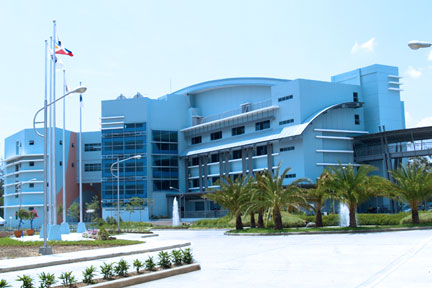
Laguna is home to multiple schools and universities. There are an estimated 18 universities and 37 colleges in the province. There are three state universities in Laguna with a total of 11 campuses: Laguna State Polytechnic University, Pamantasan ng Cabuyao, Polytechnic University of the Philippines, and the University of the Philippines Los Baños. UPLB is also one of the oldest universities in the Philippines, having been established in 1909. The International Rice Research Institute can be found within the UPLB campus and is known internationally for its work in developing rice technologies.
There are also multiple private colleges in Laguna. Some colleges and universities with main campuses in Metro Manila have also established satellite campuses in Laguna, such as Lyceum of the Philippines University-Laguna, De La Salle University – Laguna Campus, Colegio San Agustin, La Consolacion College, San Sebastian College – Recoletos, Colegio de San Juan de Letran, Mapúa Malayan Colleges Laguna, National University Laguna, and Our Lady of Fatima University – Laguna Campus. Most recently, the University of Santo Tomas and University of the East have announced that they will establish their respective campus in Santa Rosa.
Notable alumni from colleges in Laguna include Teodoro Casiño, a former member of the House of Representatives; Eduardo Cojuangco Jr., the chairman of San Miguel Corporation; and Jerrold Tarog, film director.
Notable people
National heroes and patriots
- José Rizal – writer, propagandist, national hero of the Philippines (Calamba)
- Pedro Pelaez – educator, priest, known as the "father of Filipinization of the Church" (Pagsanjan)
- Ambrosio Rianzares Bautista – lawyer and author of the Declaration of Philippine Independence (Biñan)
- Paciano Rizal – military general and revolutionary; older brother of José Rizal (Calamba)
- Agueda Kahabagan – Filipina general of the Philippine Revolutionary Army (Santa Cruz)
- Fernando Canon – Filipino revolutionary general, poet, inventor, engineer, musician (Biñan)
- Juan Cailles – Filipino general during the Philippine-American War and first Governor of Laguna (Santa Cruz)
- Vicente Lim – World War II general (Calamba)
- Delfina Herbosa de Natividad – one of the three women, together with Marcela Agoncillo and her daughter Lorenza, who sewed together the Flag of the Philippines; niece of José Rizal (Calamba)
- Trinidad Rizal – feminist leader and co-founder of the Philippines' first feminist organization, the Asociacion Femenista Filipina. (Calamba)
- Saturnina Rizal Hidalgo – José Rizal's eldest sister (Calamba)
- Salud Algabre – Filipina leader of the Sakdal movement (Cabuyao)
- Rizalina Ilagan – anti-martial law activist who was abducted by state security agents and disappeared along with nine other activists in what is believed to be the single biggest case of involuntary disappearance during Ferdinand Marcos' martial law in the Philippines (Los Baños)
- Florencio Pesquesa – farm worker and labor leader during the Martial law era that was abducted and disappeared. His name is inscribed in the Bantayog ng mga Bayani (Calamba)
Sciences
- Encarnacion Alzona – National Scientist of the Philippines for Philippine History (Biñan)
- Dioscoro L. Umali – National Scientist of the Philippines for Agriculture and Rural Development (Biñan)
- Eduardo Quisumbing – National Scientist of the Philippines for Plant Taxonomy, Systematics, and Morphology (Santa Cruz)
- Ricardo Lantican – National Scientist of the Philippines for Plant Breeding (Los Baños)
- Dolores Ramirez – National Scientist of the Philippines for Biochemical Genetics & Cytogenetics (Calamba)
- Bienvenido O. Juliano – National Scientist of the Philippines for Biochemistry (Calamba)
- Gelia Tagumpay Castillo – National Scientist of the Philippines for Rural Sociology (Pagsanjan)
- Emil Q. Javier – National Scientist of the Philippines for Agriculture, and 17th President of the University of the Philippines (Santa Cruz)
- José Fabella – Filipino physician and a public health advocate, Father of Public Health and Social Welfare in the Philippines. (Pagsanjan)
- Bonifacio Arévalo – founder of the Sociedad Dental de Filipinas, which is now known as the Philippine Dental Association (Biñan)
- Jose Juliano – Filipino nuclear physicist and chemist (Calamba)
- Rogel Mari Sese – Filipino astrophysicist who is known for being a proponent of space science in the Philippines.(Los Baños)
- Francisco E. Baisas – entomologist regarded as the "dean of Philippine culicidologists" (Paete)
- Mercedes Delfinado – acarologist (Cabuyao)
- Aloysius Baes – environmental chemist, environmental and pro-democracy activist, educator, and musician (Los Baños)
- Gregorio F. Zaide – historian, author, known as the Dean of Filipino Historiographers (Pagsanjan)
- Leandro H. Fernandez – educator, author, and historian (Pagsanjan)
- Alfredo E. Evangelista – archaeologist (San Pedro)
- Vicente Fabella – first Filipino certified public accountant and founder of José Rizal University (Pagsanjan)
- Emerlinda R. Roman – educator, university administrator, and 19th President of the University of the Philippines (Los Baños)
Arts
- Marcelo Adonay – pioneer Filipino church composer and musical director (Pakil)
- José Maceda – National Artist of the Philippines for Music (Pila)
- Tony Mabesa – National Artist of the Philippines for Theater (Los Baños)
- Jonas Baes – composer of Experimental music in the Philippines (Los Baños)
- Alice Doria-Gamilla – composer (Nagcarlan)
- Cesar Alzona – military music composer and military official (Biñan)
- Maria Carpena – stage actress and soprano singer known as the first recording artist in the Philippine music industry; dubbed the country's "Nightingale of Zarzuela" (Santa Rosa)
- Gerry Alanguilan – comic book artist, writer, and architect (San Pablo)
- Sonny Trinidad – comic book artist (Santa Rosa)
- Manuel Baldemor – painter, sculptor, printmaker, writer, and book illustrator (Paete)
- Nena Saguil – modernist and abstract art painter (Santa Cruz)
- Danilo Echavaria Dalena – modern and contemporary painter (Pakil)
- Celso Al. Carunungan – writer, novelist, and film scriptwriter (San Pablo)
- Bonifacio Ilagan – playwright, screenwriter, filmmaker, journalist, editor, and activist (Los Baños)
- Frank G. Rivera – playwright, actor and production designer (Paete)
- Edgar Calabia Samar – poet and novelist (San Pablo)
- Celso Ad. Castillo – film director and screenwriter (Siniloan)
- Emmanuel Borlaza – film director and screenwriter (Liliw)
- Jerrold Tarog – film director and screenwriter (Calamba)
- Louie Ignacio – TV director (Pagsanjan)
- Rene Alviar - journalist (San Pedro)
- Tony Calvento, journalist (San Pedro)
- HaveYouSeenThisGirl – author of the books Diary ng Panget, Voiceless and She Died (San Pablo)
Religion
- Dalisay Lazaga – Roman Catholic Canossian nun and Servant of God (Santa Rosa)
- Leo M. Drona – Catholic Bishop, Second Bishop of the Roman Catholic Diocese of San Jose (Nueva Ecija) and Third Bishop of the Roman Catholic Diocese of San Pablo, Laguna (Pangil)
- Efren V. Esmilla – Catholic Bishop, Auxiliary Bishop of the Archdiocese of Philadelphia (Nagcarlan)
- Timoteo Ofrasio, S.J. – Filipino Jesuit priest, liturgist and lyricist; known for liturgical Catholic songs produced under the Jesuit Music Ministry such as "Paghahandog ng Sarili", "Isang Bansa", "Panalangin sa Pagiging Bukas-Palad", and "Alay sa Diyos", used during the 2015 papal visit to the Philippines (Alaminos)
Business
- Socorro Ramos – entrepreneur and co-founder of National Book Store, the largest bookstore chain in the Philippines (Santa Cruz)
- Jaime Aristotle Alip – social entrepreneur, and the founder and chairman emeritus of the CARD Mutually Reinforcing Institutions (San Pablo)
- John Rivera – logistics analyst, and the co-founder, Rightway foundation (Magdalena)
Politics, government, and civil society
- Rustico de los Reyes Jr. – Member of the Philippine Constitutional Commission of 1986 and former member of the Regular Batasang Pambansa (Santa Cruz)
- Crispino de Castro– Member of the Philippine Constitutional Commission of 1986 and first chairman of National Police Commission (NAPOLCOM) (Biñan)
- Ernesto Maceda – 15th President of the Senate of the Philippines, columnist, and lawyer (Pagsanjan)
- Pedro Guevara – former senator and former Resident Commissioner to the U.S. House of Representatives from the Philippine Islands (Santa Cruz)
- Wenceslao Lagumbay – former senator and former member of the Regular Batasang Pambansa (Kalayaan)
- Alexander Gesmundo – 27th Chief Justice of the Supreme Court of the Philippines (San Pablo)
- Estanislao Fernandez – 88th Associate Justice of the Supreme Court of the Philippines and former senator (Liliw)
- Lorenzo Relova – 103rd Associate Justice of the Supreme Court of the Philippines.(Pila)
- Conrado M. Vasquez – first Ombudsman of the Philippines and 102nd Associate Justice of the Supreme Court of the Philippines (Biñan)
- Arturo Brion – 161st Associate Justice of the Supreme Court of the Philippines, and 26th Secretary of the Department of Labor and Employment (San Pablo)
- Conrado Benitez – statesman, writer, educator, and one of the drafters of the 1935 Constitution of the Philippines (Pagsanjan)
- Crispin Oben – lawyer, member of the First Philippine Assembly (Lumban)
- Joey Lina – 15th Governor of Laguna, 20th Secretary of the Interior and Local Government, and former senator (Victoria)
- Cielito Habito – economist, professor, former NEDA Director-General (Cabuyao)
- Antonio C. Delgado – former Philippine Ambassador to the Vatican (San Pablo)
- ER Ejercito – 17th Governor of Laguna, actor, and former mayor of Pagsanjan (Pagsanjan)
- Norberto S. Amoranto – 5th Mayor of Quezon City (Biñan)
- Liza Maza – former Gabriela Partylist and Bayan Muna Partylist Representative (San Pablo)
- Sol Aragones – former news reporter and host of ABS-CBN News and Current Affairs, former legislator (San Pablo)
- Angelica Jones – actress and singer, former 3rd District board member of the Laguna Provincial Board (San Pablo)
- Cha Hernandez incumbent congresswoman (Calamba)
- Benjamin Madrigal Jr. – 51st Chief of Staff of the Armed Forces of the Philippines (Los Baños)
- Victor Corpus – military officer and public official (San Pablo)
- Jeff Cagandahan – prominent Filipino intersex man and intersex human rights activist who first successfully petitioned the Philippine courts to change name and sex markers (Pakil)
Sports and beauty pageants
- Anthony Villanueva – boxer, 1964 Summer Olympics silver medalist (Cabuyao)
- Ariella Arida – fashion model, television personality, Miss Universe-Philippines 2013, Miss Universe 2013 3rd Runner-up (Alaminos)
- Ronato Alcano – professional pool player (Calamba)
- Maybelline Masuda – Filipino Brazilian Jiu-Jitsu practitioner (Calamba)
- Jema Galanza – volleyball player (San Pedro)
- John Vic De Guzman – volleyball player and actor (Calamba)
- Trisha Genesis – volleyball player (Sta. Rosa)
- Joshua Retamar – volleyball player (San Pedro)
- Mafe Galanza – volleyball player (San Pedro)
- Gilbert Malabanan – basketball player and coach (San Pedro)
- Kyla Atienza – volleyball player (San Pedro)
- Mean Mendrez – volleyball player (San Pedro)
- Yllana Aduana – Miss Philippines Earth 2023 and Miss Earth Air 2023 (Siniloan)
- Roberta Tamondong – Binibining Pilipinas Grand International 2022 (San Pablo)
Entertainment
- Marco Sison – singer, actor, politician (Binan)
- Jake Zyrus – singer (Cabuyao)
- Didith Reyes – actress, singer
- Rico Blanco – singer, songwriter
- Julia Clarete – host, singer, actress
- Sabrina – singer
- Karylle – It's Showtime host, actress, daughter of Zsa Zsa Padilla
- Mario Montenegro – actor
- Bayani Casimiro – tap dancer
- Dencio Padilla – actor and comedian
- Palito – comedian and actor (Calamba)
- Teody Belarmino – film actor (Calamba)
- Alden Richards – model and actor (Santa Rosa)
- Angeli Gonzales – actress
- Alfie Anido – actor, matinee idol
- Paw Diaz – actress, model, TV host
- Dion Ignacio – actor
- C. J. Muere – actor
- Ronnie Alonte – actor, singer, dancer, It's Showtime, Hashtags member
- Jane de Leon – It's Showtime GirlTrend member, actress
- Sabrina Man – child actress
- Princess Snell – actress
- Halina Perez – model, actress
- Carmina Villarroel – actress
- Charo Ronquillo – fashion model
- Charlene Almarvez – fashion model
- Barbie Forteza – actress, model
- Joan Da – finalist of the X Factor Philippines
- Thea Tolentino – female winner of GMA Network's Protégé Season 2 (Calamba)
- Jeric Gonzales – male winner of GMA Network's Protégé Season 2 (Calamba)
- Zephanie Dimaranan – an Idol Philippines Grand Winner, singer, (Biñan)
- Jak Roberto – actor, model
- Sanya Lopez – actress, model
- Stephanie Retuya – contestant and runner-up on Asia's Next Top Model (cycle 1)
- Jiggly Caliente – actress, contestant on RuPaul's Drag Race season 4 and All Stars 6, and judge on Drag Race Philippines
- Jhoanna Robles – singer, member of p-pop group Bini (Calamba)
Others
- Teodoro Asedillo – Filipino labor leader and revolutionary who was branded as a "bandit"; popularized as a folk hero because of the film Asedillo (Kalayaan)
- Flor Contemplacion – Filipina domestic helper executed in Singapore after being convicted of murder (San Pablo)
References
References
- [https://independent.academia.edu/PepeAlas/Papers/1753105/28_JULY_1571_THE_FOUNDATION_DATE_OF_THE_PROVINCE_OF_LA_LAGUNA "28 JULY 1571: The Foundation date of the Province of Laguna"]. Academia.edu.
- [http://newsinfo.inquirer.net/282428/young-historian-finds-laguna-birth-date Young historian finds Laguna birth date. Inquirer News] {{webarchive. link. (October 8, 2012)
- "List of Provinces". National Statistical Coordination Board.
- https://laguna.gov.ph/news/2613{{Dead link. (July 2025)
- "History of Laguna".
- "The Philippine Islands, 1493 - 1898, Volume VIII".
- "The Philippine Islands, 1493–1898, Volume V".
- "Ano at Saan ang Lumban".
- "History of the Philippine Islands".
- "The Philippine Islands, 1493 - 1898 Volume XX".
- "History – Laguna, Philippines.".
- link. (May 16, 2022 From the original Spanish language source in the archives of Mexico: "CSIC ser. Consultas riel 208 leg.14 (1774)")
- "ESTADISMO DE LAS ISLAS FILIPINAS TOMO PRIMERO By Joaquín Martínez de Zúñiga (Original Spanish)".
- [https://ia601608.us.archive.org/10/items/bub_gb_ElhFAAAAYAAJ_2/bub_gb_ElhFAAAAYAAJ.pdf ESTADISMO DE LAS ISLAS FILIPINAS TOMO SEGUNDO By Joaquín Martínez de Zúñiga (Original Spanish)]
- Conquest and Pestilence in the Early Spanish Philippines By Linda A. Newson[Page 124](Citing: 4. AGI PAT 23-9 and BR 5: 157–159 Miguel de Loarca [1582]; Quirino and García, “Manners,” 410–411; Morga, Sucesos, 275; Phelan, Hispanization, 19; Scott, Barangay, 141.)
- "Why Laguna deserves a ray of sun in the Philippine National Flag".
- (5 May 2019). "'Brains of the Katipunan' honored in Magdalena, Laguna". Lifestyle.INQ.
- (February 6, 1901). "A General Act For The Organization Of Provincial Governments In The Philippine Islands".
- (November 25, 1903). "An Act Amending Act Numbered Nine hundred and thirty-nine, entitled "An Act reducing the thirty municipalities of the Province of La Laguna to nineteen," and Act Numbered Nine hundred and forty-two, entitled "An Act reducing the thirty - two municipalities of the Province of Rizal to fifteen," and providing that the boundary line between the Provinces of La Laguna and Rizal be changed so as to include in La Laguna the municipality of Muntinlupa now a part of Rizal.".
- (March 22, 1905). "An Act providing for the return of the former municipality of Muntinlupa from the Province of La Laguna to the Province of Rizal, repealing paragraph (e) of section one and sections two and three of Act Numbered One thousand and eight, and changing the name of the municipality of Pateros, of the Province of Rizal, to Taguig.".
- "About the City".
- (23 April 2010). "Ang mga Kilusang radikal 1890-1990: Ilang Mahahalagang Tala {{!}} Philippine Social Sciences Review". Philippine Social Sciences Review.
- (1975). "A History of the Philippines: From the Spanish Colonization to the Second World War". Monthly Review Press.
- (2014). "Sakdalistas' struggle for Philippine independence, 1930-1945". Ateneo de Manila University Press.
- (February 1962). "Sakdalism and Philippine Radicalism". The Journal of Asian Studies.
- (2016). "Angels of the Underground". Oxford University Press.
- (1950). "The Crucible: An Autobiography by Colonel Yay, Filipina American Guerrilla". Rutgers University Press.
- Ganzel, Bill. (2007). "The Development of "Miracle Rice" Varieties". Ganzel Group.
- "'Success' of Masagana 99 all in Imee's head – UP researchers". Vera Files.
- Balbosa, Joven Zamoras. (1992). "IMF Stabilization Program and Economic Growth: The Case of the Philippines". Journal of Philippine Development.
- Diola, Camille. "Debt, deprivation and spoils of dictatorship {{!}} 31 years of amnesia". The Philippine Star.
- (2020-12-01). "Experiences of selected University of the Philippines Los Banos (UPLB) community members during Martial Law in the Philippines". U.P. Los Baños Journal.
- (2015). "Ang mamatay nang dahil sa 'yo". [[National Historical Commission of the Philippines]].
- "ONTONG, Manuel F".
- "Martyrs and Heroes: MENDOZA, Armando Lano".
- (December 9, 2020). "VERA FILES FACT CHECK: Claim on Cory Aquino scrapping Marcos-era floodway NEEDS CONTEXT".
- (October 2020). "Republic of The Philippines Follow-Up Study on Parañaque Spillway Project – Final Report". Department of Public Works and Highways, Republic of The Philippines.
- "Laguna de Bay Masterplan". Laguna Lake Development Authority.
- Alcazaren, Paulo. (June 15, 2013). "City Sense: 10 reasons why it floods in Manila". STAR Group of Publications.
- S.E. Jorgensen and R.A. Vollenweider, ''Guidelines of Lake Management, Volume 1 – Principles of Lake Management'', International Lake Environment Committee ([http://www.ilec.or.jp/eg/pubs/guideline/chapter/Vol.1_chapter/Vol.1_Chapter9.pdf Online version] {{webarchive. link. (2011-05-23 ))
- "About Region 4a, The CaLaBaRzon Region".
- "Banahaw Volcano".
- [http://laguna.com.ph/content/province-profile "Province Profile"] {{Webarchive. link. (August 29, 2012 . Provincial Government of Laguna.)
- "Forest Cover in Calabarzon as of CY 2003 (in hectare)".
- "Physical and Socio-Economic Profile".
- "CLIMATE: LAGUNA".
- (September 17, 2000). "Los Baños". Laguna Travel Guide.
- "Laguna Quickstat - June 2018".
- "Ethnicity in the Philippines (2020 Census of Population and Housing)". Philippine Statistics Authority.
- "Philippine Sites – Laguna".
- (13 April 2017). "Laguna churches are feast for eyes, soul". INQUIRER.net.
- "Religious Affiliation in the Philippines (2020 Census of Population and Housing) {{!}} Philippine Statistics Authority {{!}} Republic of the Philippines".
- "Which regions, provinces, cities are Philippines' richest?".
- link. (December 21, 2012 . Philippine Information Agency.)
- "Proclaimed Watershed Forest Reserve".
- "Directory of Non-Metallic Mines and Quarries".
- "Region IV-A Mineral Production by Province, by Mineral 2015".
- "Performance of Philippine Agriculture January-March 2012".
- "Top Five Permanent Crops in Terms of Number of Trees/Vines/Hills by Province : Calabarzon, 1991 and 2002".
- "Region IV-A Profile".
- "List of Economic Zones".
- (5 September 2019). "Find out who emerged as the victors in the Asian Power Awards 2019".
- (5 September 2019). "PROINSO, SOLAREN Win Asian Power Award for 2.16 MWp Commercial Solar Rooftop Project".
- Kilometer count tabulated from data for the e district engineering offices in Laguna in the [http://www.dpwh.gov.ph/dpwh/atlas/2015%20DPWH%20Road%20Data/Road%20Data%202015/region_iv_a.htm 2015 Road Data] {{Webarchive. link. (April 7, 2017 by the [[Department of Public Works and Highways]])
- [http://www.dpwh.gov.ph/bureau_services/PPP/projects/c6_extension.htm dpwh.gov.ph "Private-Public Partnership - Laguna de Bay Flood Control Dike Expressway (C-6 Extension)"] {{webarchive. link. (July 27, 2012)
- link. (July 11, 2012)
- "Paete, the Wood Carving Capital of the Philippines".
- "Laguna".
- (2014). "Tourism Development in Region IV: Employment Prospects and Opportunities of Tourism Graduates of Lyceum of the Philippines University". Strategic Development Policies and Impact Studies.
- "Laguna: Historical".
- "Salvador H Laurel museum and library".
- "Museums".
- "Laguna: Museums".
- "Lolo Uweng:Quiapo Church of the South".
- "Laguna: Natural".
- "Laguna: Man-Made".
- "DepEd: Datasets".
- (2016-07-13). "PESQUESA, Florencio S.".
- Angelo, Mikael. (January 8, 2019). "Dr. Ricardo M. Lantican: The Filipino whose research changed four industries – FlipScience – Top Philippine science news and features for the inquisitive Filipino". Flipscience.ph.
- "Ben Juliano, cereal chemist second to none – Manila Bulletin".
- GOVPH. "Gelia T. Castillo: Distinguished Rural Sociologist, 89". Nast.ph.
- (June 3, 2018). "9 Kickass Women in Philippine History You've Never Heard Of". FilipiKnow.
- "Sta. Rosa, Laguna honors 1st Filipino soprano recording artist". Philippine News Agency.
- "Danilo E. Dalena Biography".
- "The art of Danilo Dalena and the Filipino everyman". CNN Philippines.
- "Blog Archive » Sister Dalisay Lazaga". CatholicSaints.Info.
- "Pope Francis Names New Auxiliary Bishops of Philadelphia".
- (25 June 2024). "LEADER OF THE PACK: 8 STARTER-FACTS ABOUT BINI MEMBER JHOANNA". Zeen Magazine.
This article was imported from Wikipedia and is available under the Creative Commons Attribution-ShareAlike 4.0 License. Content has been adapted to SurfDoc format. Original contributors can be found on the article history page.
Ask Mako anything about Laguna (province) — get instant answers, deeper analysis, and related topics.
Research with MakoFree with your Surf account
Create a free account to save articles, ask Mako questions, and organize your research.
Sign up freeThis content may have been generated or modified by AI. CloudSurf Software LLC is not responsible for the accuracy, completeness, or reliability of AI-generated content. Always verify important information from primary sources.
Report