From Surf Wiki (app.surf) — the open knowledge base
Kurdistan province
Province of Iran

Province of Iran
| Field | Value |
|---|---|
| name | Kurdistan province |
| native_name | |
| settlement_type | Province |
| image_skyline | Miyane village.jpg |
| image_caption | Miyane village |
| image_map | IranKurdistan-SVG.svg |
| map_alt | Map of Iran with Kurdistan Province highlighted |
| map_caption | Location of Kurdistan Province within Iran |
| coordinates | |
| coordinates_footnotes | |
| subdivision_type | Country |
| subdivision_name | Iran |
| subdivision_type1 | Region |
| subdivision_name1 | Region 3 |
| seat_type | Capital |
| seat | Sanandaj |
| parts_type | Counties |
| parts_style | para |
| p1 | 10 |
| leader_party | Reformist |
| leader_title | Governor-general |
| leader_name | Arash Zarehtan Lahoni |
| unit_pref | Metric |
| area_total_km2 | 29137 |
| population_total | 1603011 |
| population_as_of | 2015 |
| population_footnotes | |
| population_density_km2 | auto |
| timezone1 | IRST |
| utc_offset1 | +03:30 |
| blank_name_sec1 | Main language(s) |
| blank_info_sec1 | Persian (official) |
| local languages: | |
| Ardalan languages | |
| Kurdish | |
| blank_name_sec2 | HDI (2017) |
| blank_info_sec2 | 0.743 |
| · 30th | |
| website | |
| official_name | استان کردستان |
local languages: Ardalan languages Kurdish · 30th
Kurdistan province () is one of 31 provinces of Iran. The province is 28,817 km2 in area and its capital is the city of Sanandaj.
Kurdistan province is located in the west of Iran, in Region 3. It borders the Kurdistan region of Iraq to the west, and the Iranian provinces of West Azerbaijan to the north, Zanjan to the northeast, Hamadan to the east, and Kermanshah to the south.
History
thumb|160px|right|A soldier statue from [[Ziwiye hoard]]
The earliest human occupation of Kurdistan dates back to the Paleolithic Period when Neanderthals lived in the Sirwan Valley of Kurdistan more than 40,000 years ago.
Demographics
Language and ethnicity
Whilst most of the people of this province speak Kurdish, other languages such as Azerbaijani and Persian are also common.
Iranian Kurds make up the majority of the population, but Iranian Azeris populate the eastern provincial borderlands. Most of the Kurdish population speak Sorani Kurdish, but Southern Kurdish is spoken in the eastern parts of the province, including in Bijar and Dezej, while Gorani is the main language in many villages in the southwestern part of the province. Oghuz Turkic varieties can be found in the far-eastern part of the province, including in the cities of Delbaran, Pir Taj, Serishabad, Yasukand, and Tup Aghaj. These varieties are described as distinct from Iranian Azerbaijani, although they are closely related to it. While not being the primary language in any settlement in the province, Persian is increasingly becoming the first language, especially among the population in the eastern parts of the province.
Religion
A significant majority of the people of Kurdistan province follow the Sunni denomination of Islam. A minority of Shia, Yarsanism and Christian followers also live in this province.
Population
At the time of the 2006 National Census, the province's population was 1,416,334 inhabitants in 337,179 households. The following census in 2011 counted 1,493,645 living in 401,845 households. The 2016 census measured the population of the province as 2,152,471 in 471,310 households.
Administrative divisions
.svg)
The population history and structural changes of Kurdistan province's administrative divisions over three consecutive censuses are shown in the following table. Each county is named after the city that serves as its administrative capital.
| Counties | 2006 | 2011 | 2016 |
|---|---|---|---|
| Baneh | 116,773 | 132,565 | 158,690 |
| Bijar | 95,461 | 93,714 | 89,162 |
| Dehgolan | — | 62,844 | 64,015 |
| Divandarreh | 82,628 | 81,963 | 80,040 |
| Ghorveh | 196,972 | 136,961 | 140,192 |
| Kamyaran | 104,704 | 105,996 | 102,856 |
| Marivan | 150,926 | 168,774 | 195,263 |
| Sanandaj | 409,628 | 450,167 | 501,402 |
| Saqqez | 205,250 | 210,820 | 226,451 |
| Sarvabad | 53,992 | 49,841 | 44,940 |
| **Total** | **1,416,334** | **1,493,645** | **1,603,011** |
Cities
According to the 2016 census, 1,134,229 people (over 70% of the population of Kurdistan province) live in the following cities:
| City | Population |
|---|---|
| Armardeh | 2,305 |
| Babarashani | 509 |
| Baneh | 110,218 |
| Bardeh Rasheh | 1,020 |
| Bijar | 50,014 |
| Bolbanabad | 3,193 |
| Buin-e Sofla | 1,518 |
| Chenareh | 455 |
| Dehgolan | 25,992 |
| Delbaran | 6,713 |
| Dezej | 2,219 |
| Divandarreh | 34,007 |
| Ghorveh | 78,276 |
| Kamyaran | 57,077 |
| Kani Dinar | 13,059 |
| Kani Sur | 1,284 |
| Marivan | 136,654 |
| Muchesh | 3,370 |
| Pir Taj | 1,199 |
| Saheb | 3,101 |
| **Sanandaj** | **412,767** |
| Saqqez | 165,258 |
| Sarvabad | 5,121 |
| Serishabad | 7,196 |
| Shuyesheh | 1,302 |
| Tup Aghaj | 1,645 |
| Uraman Takht | 3,176 |
| Yasukand | 3,490 |
| Zarrineh | 2,091 |
Most populous cities
The following sorted table lists the most populous cities in Kurdistan in 2016.
| Rank | City | County | Population | 1 | 2 | 3 | 4 | 5 | 6 | 7 | 8 | 9 | 10 |
|---|---|---|---|---|---|---|---|---|---|---|---|---|---|
| Sanandaj | Sanandaj | 412,767 | |||||||||||
| Saqqez | Saqqez | 165,258 | |||||||||||
| Marivan | Marivan | 136,654 | |||||||||||
| Baneh | Baneh | 110,218 | |||||||||||
| Qorveh | Qorveh | 78,276 | |||||||||||
| Kamyaran | Kamyaran | 57,077 | |||||||||||
| Bijar | Bijar | 50,014 | |||||||||||
| Divandarreh | Divandarreh | 34,007 | |||||||||||
| Dehgolan | Dehgolan | 25,992 | |||||||||||
| Kani Dinar | Marivan | 13,059 |
Culture
Main article: Kurdish Cultural Region
Clothing
Main article: Kurdish clothing
The people of this province have special clothes that they have been wearing for centuries. The important point about the clothes of the people of this province is that even after the spread of modernism all over the world, the people of this province still try to be faithful to their past traditions in the field of lifestyle.
Dance and music
Main article: Kurdish music
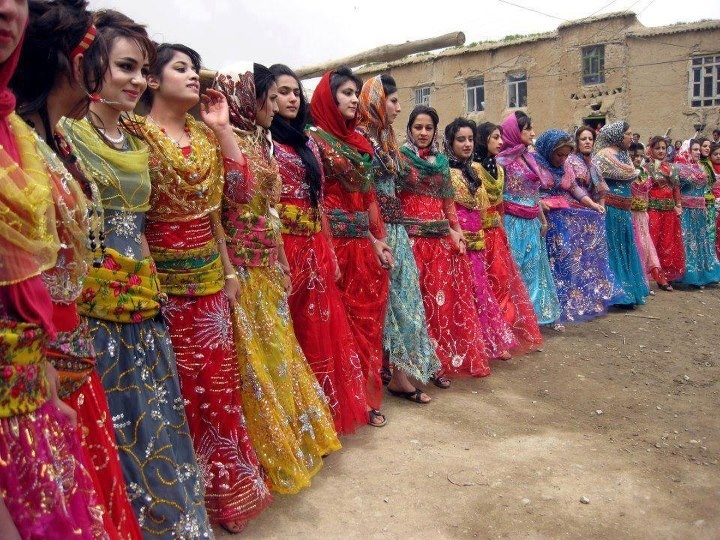
Among the cultural symbols of Kurdistan people are Kurdish dance and singing. This cultural tradition is very popular not only in this province but also throughout the country.
Important annual celebrations
Chaharshanbeh Suri
Main article: Chaharshanbe Suri
Chaharshanbeh Suri or Charshanbeh Suri is an Iranian festival of the fire dance celebrated on the eve of the last Wednesday of the year, of ancient Zoroastrian origin. It is the first festivity of Nowruz, the Iranian New Year. In this celebration, people light fires on the mountains and on the roofs of houses, dance, and rejoice.
Nowruz
Main article: Nowruz
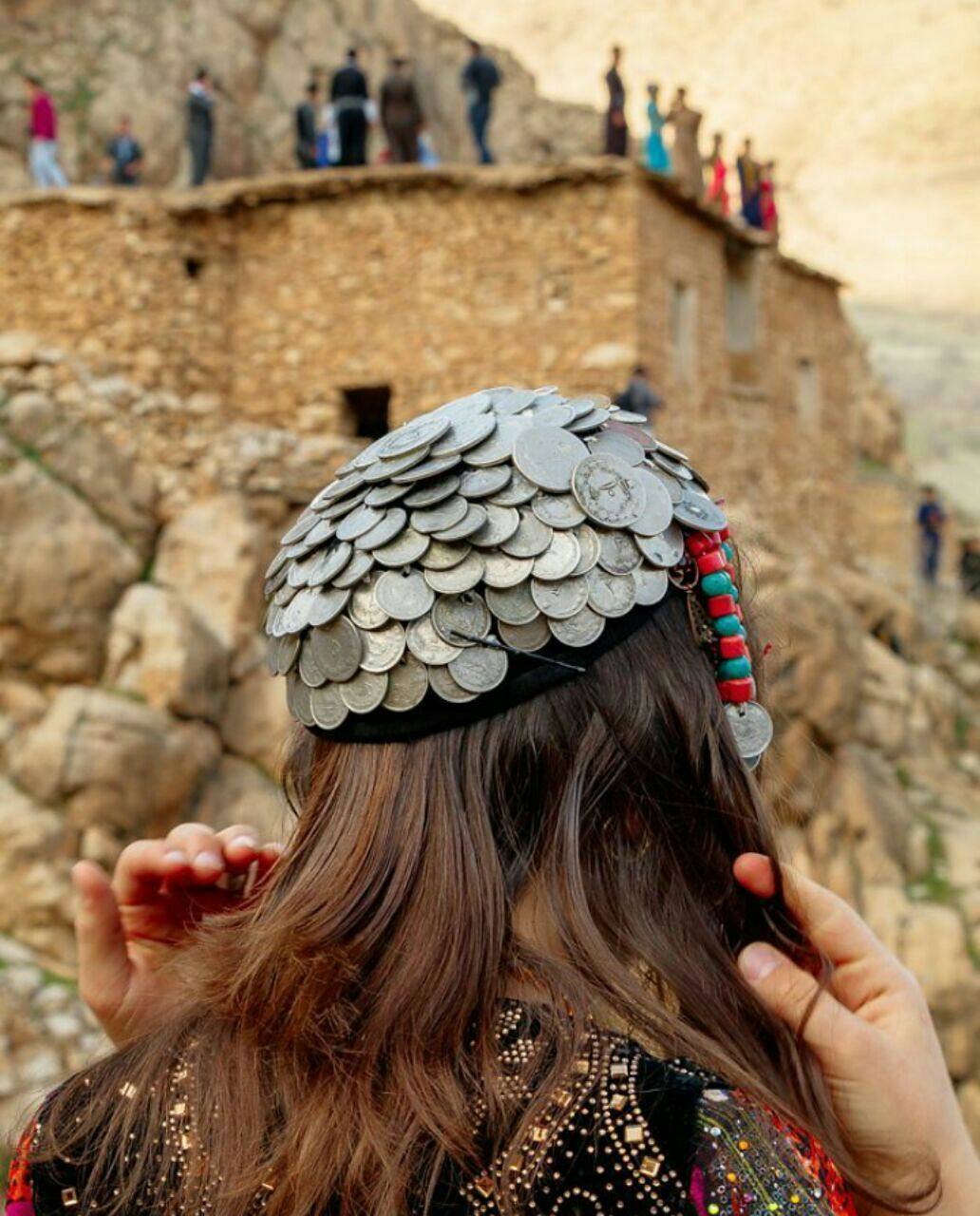


Nowruz is one of the most important ceremonies that has been celebrated by Iranians for millennia. Nowruz and related ceremonies are celebrated in the most opulent way possible in Kurdistan province. As the spring equinox, Nowruz marks the beginning of spring in the Northern Hemisphere, better i.e. the moment at which the Sun crosses the celestial equator and equalizes night and day is calculated exactly every year. Traditional customs of Nowruz include fire and water, ritual dances, gift exchanges, reciting poetry, symbolic objects and more.
Economy
The major activities of the inhabitants are agriculture and modern livestock farming. Wheat, barley, grains and fruits are the major agricultural products. The chemical, metal, textile, leather and food industries are the main industrial activities in this province. This province has one of the largest rates of unemployment in Iran. According to Iranian statistics, more than twenty thousand people depend on being a kolbar for sustenance.
Colleges and universities
- Kurdistan University of Medical Sciences
- Tohid Medical Center
- University of Kurdistan
- Islamic Azad University of Sanandaj
Notes
References
Bibliography
References
- ((OpenStreetMap contributors)). (26 December 2024). "Kurdistan Province".
- "Sub-national HDI - Area Database - Global Data Lab".
- "ئەنجوومەنی دادوەری ئێران بەدواداچوون بۆ دۆسیەی گەندەڵی لە پارێزگای کوردستان دەکات". Naskurd.
- (16 September 2017). "Parêzgeha Kurdistanê qaremana pêşbirkên werzişên zorxaneyî yên Îranê". Sahar.
- Habibi, Hassan. (2 November 2017). "Approval of the organization and chain of citizenship of the elements and units of the national divisions of Kurdistan province, centered in the city of Sanandaj". Ministry of the Interior, Defense Political Commission of the Government Board.
- (22 June 2014). "همشهری آنلاین-استانهای کشور به ۵ منطقه تقسیم شدند (Provinces were divided into 5 regions)". Hamshahri Online.
- Biglari, F and S. Shidrang (2019) Rescuing the Paleolithic Heritage of Hawraman, Kurdistan, Iranian Zagros, Near Eastern Archaeology 82 (4): 226-235.https://doi.org/10.1086/706536
- "Ahmady, Kameel. 2023. [[From Border to Border]] (Comprehensive research study on identity and ethnicity in Iran), Scholars' Press publishes, Moldova.".
- Mohammadirad, Masoud. (2016). "Language distribution: Kordestan Province".
- Ahmady, Kameel. (2022-08-25). "Ethnicity and Identities in Iran: Progress and Equality". International Journal of Kurdish Studies.
- Department Of State. The Office of Electronic Information, Bureau of Public Affairs. (2007-09-14). "Iran".
- (2017-11-07). "The World Factbook — Central Intelligence Agency".
- "Mamouri, Ali (December 1, 2013). "Iranian government builds bridges to Sunni minority". Al-Monitor. Retrieved January 25, 2015.".
- "Census of the Islamic Republic of Iran, 1385 (2006): Kurdistan Province". The Statistical Center of Iran.
- "Census of the Islamic Republic of Iran, 1390 (2011): Kurdistan Province". The Statistical Center of Iran.
- "Census of the Islamic Republic of Iran, 1395 (2016): Kurdistan Province". The Statistical Center of Iran.
- Davodi, Parviz. (8 August 1390). "Letter of approval regarding the reforms of national divisions in Kurdistan province". Ministry of the Interior, Political-Defense Commission of the Government Board.
- Ahmady, Kameel. (2022-01-25). "A Peace-Oriented Investigation of the Ethnic Identity Challenge in Iran (A Study of Five Iranian Ethnic Groups with the GT Method)". International Journal of Kurdish Studies.
- Condra, Jill. (2013-04-09). "Encyclopedia of National Dress [2 volumes]". Bloomsbury Publishing USA.
- "Kurdish photos – 'A little Kurdish girl' Archived 2008-10-22 at the Wayback Machine".
- Foundation, Encyclopaedia Iranica. "Welcome to Encyclopaedia Iranica".
- "Clothing".
- (2013-03-13). "Persian fire-jumping festival delights Berkeley residents".
- Razavi, Mahboobeh. (2019-03-01). "Chaharshanbe Suri: Experiencing Iran's Fiery Festival".
- ''They celebrate the new year, which they call ''Chār shanba sur'', on the first Wednesday of April, slightly later than the Iranian new year, Now-Ruz, on 21 March. (...) . The fact that Kurds celebrate the Iranian new year (which they call "Nawrôz" in Kurdish) does not make them Zoroastrian"'' – Richard Foltz (2017). "The 'Original' Kurdish Religion? Kurdish Nationalism and the False Conflation of the Yezidi and Zoroastrian Traditions". ''Journal of Persianate Studies''. Volume 10: Issue 1. pp. 93, 95.
- Nations, United. "International Nowruz Day".
- "Kurdish Newroz".
- Plimmer, Joe. (2023-03-21). "Nowruz: Kurdish new year 2023 celebrations – in pictures". the Guardian.
- "Nowruz: The Rebirth of Nature {{!}} Silk Roads Programme".
- Khalid, Hewa Salam. (2020). "Newroz from Kurdish and Persian Perspectives – A Comparative Study". Journal of Ethnic and Cultural Studies.
- (2023-11-15). "Nowruz Brings Kurdish Unrest In Iran's North West".
- (2023-03-24). "Nowruz 2023: Kurdish new year celebrations in pictures".
- [https://www.farsnews.ir/news/13970226000111 Fars News: The situation of kolbars vaguer than ever.]
This article was imported from Wikipedia and is available under the Creative Commons Attribution-ShareAlike 4.0 License. Content has been adapted to SurfDoc format. Original contributors can be found on the article history page.
Ask Mako anything about Kurdistan province — get instant answers, deeper analysis, and related topics.
Research with MakoFree with your Surf account
Create a free account to save articles, ask Mako questions, and organize your research.
Sign up freeThis content may have been generated or modified by AI. CloudSurf Software LLC is not responsible for the accuracy, completeness, or reliability of AI-generated content. Always verify important information from primary sources.
Report