From Surf Wiki (app.surf) — the open knowledge base
Korean Empire
Empire in East Asia (1897–1910)
.jpg)
Empire in East Asia (1897–1910)
| Field | Value | |
|---|---|---|
| native_name | ko | |
| 大韓帝國(Hanja) | ||
| conventional_long_name | Empire of Korea | |
| common_name | Korean Empire | |
| status | Sovereign state (1897–1905) | |
| Protectorate of Japan (1905–1910) | ||
| era | New Imperialism | |
| government_type | Unitary absolute monarchy (de jure)Unitary constitutional monarchy (de facto) | |
| year_start | 1897 | |
| year_end | 1910 | |
| event_start | Empire proclaimed | |
| date_start | 13 October | |
| event_end | Annexed by Japan | |
| date_end | 29 August | |
| event1 | Constitution adopted | |
| date_event1 | 17 August 1899 | |
| event2 | Eulsa Treaty | |
| date_event2 | 17 November 1905 | |
| event3 | Hague Secret Emissary Affair | |
| date_event3 | 15 June 1907 | |
| event4 | Abdication of Emperor Gojong | |
| date_event4 | 19 July 1907 | |
| demonym | Korean | |
| p1 | Joseon | |
| flag_p1 | Flag of South Korea.svg | |
| s1 | Korea under Japanese ruleChōsen | |
| flag_s1 | Flag of Japan (1870–1999).svg | |
| flag_s2 | Flag of Japan (1870–1999).svg | |
| s2 | Empire of Japan | |
| image_flag | Flag of Korea (1899).svg | |
| flag | List of Korean flags#National | |
| flag_type | Flag | |
| image_coat | Imperial Seal of the Korean Empire.svg | |
| symbol_type | Imperial emblem | |
| symbol | Imperial emblem of Korea | |
| other_symbol | **National seal:** | |
| 大韓國璽 | ||
| [[File:Seal of the Korean Empire.svg | 85px]]**Emblem:** | |
| [[File:Imperial emblem of Korean empire.svg | 85px]] | |
| image_map | Map of the Greater Korean Empire.svg | |
| image_map_caption | Territory of the Korean Empire 1903–1905. The disputed Gando and Samjiyon regions are shaded in lighter green. | |
| capital | Hanseong (present-day Seoul) | |
| national_motto | 광명천지 | |
| 光明天地 | ||
| englishmotto | "Illuminate Heaven and Earth" | |
| national_anthem | 대한제국 애국가 | |
| 大韓帝國愛國歌 | ||
| "Patriotic Hymn of the Great Korean Empire" | ||
| (1902–1910)[[File:Imperial korean anthem.ogg]] | ||
| common_languages | Korean | |
| religion | ||
| currency | Yang (1897–1900) | |
| Won (1900–1910) | ||
| title_leader | Emperor | |
| leader1 | Gojong | |
| year_leader1 | 1897–1907 | |
| leader2 | Sunjong | |
| year_leader2 | 1907–1910 | |
| title_representative | Resident-General | |
| representative1 | Itō Hirobumi | |
| year_representative1 | 1905–1909 | |
| representative2 | Sone Arasuke | |
| year_representative2 | 1909–1910 | |
| representative3 | Terauchi Masatake | |
| year_representative3 | 1910 | |
| title_deputy | Prime Minister{{efn | Style: *Naegak chongri daesin* (1894–1896); |
| Ui jeong (1896–1905); Ui jeong daesin (1905–1907); Chongri daesin (1907–1910) | name | "PrimeMinister"}} |
| deputy1 | Kim Hong-jip | |
| year_deputy1 | 1894–1895 (first) | |
| deputy2 | Yi Wan-yong | |
| year_deputy2 | 1907–1910 (last) | |
| legislature | Jungchuwon (until 1907) | |
| None (rule by decree) (from 1907) | ||
| stat_year1 | 1900 | |
| stat_pop1 | 17,082,000 | |
| today |
大韓帝國(Hanja)
Protectorate of Japan (1905–1910) 大韓國璽 光明天地 大韓帝國愛國歌 "Patriotic Hymn of the Great Korean Empire" (1902–1910)[[File:Imperial korean anthem.ogg]] Won (1900–1910) Ui jeong (1896–1905); Ui jeong daesin (1905–1907); Chongri daesin (1907–1910)|name="PrimeMinister"}} None (rule by decree) (from 1907)
The Korean Empire, officially the Empire of Korea or Imperial Korea, was a Korean monarchical state proclaimed in October 1897 by King Gojong of the Joseon dynasty. The empire lasted until the Japanese annexation of Korea in August 1910.
During this period, Emperor Gojong oversaw the Gwangmu Reform, a partial modernization and westernization of Korea's military, economy, land system, education system, and various industries. In 1905, the Korean Empire became a protectorate of the Empire of Japan. After the Japanese annexation in 1910, the Korean Empire ceased to exist.
History
Formation
Resistance against Korea having a tributary relationship with China increased in the 17th century. As the Ming dynasty was replaced by Qing dynasty, Western ideas entering Korea had caused anti-tributary sentiments to rise in Korea. Moreover, after the opening of Korea, members of the Gaehwa Party often declared independence from China, but China increased its interference in Korean affairs after the Imo Incident and Kapsin Coup.
However, following the Japanese victory in the First Sino-Japanese War, Joseon won independence from the Qing dynasty. Proclaiming an empire was seen by many politicians as a good way to maintain independence. After Gojong of Korea returned from his exile in the Russian legation, many officials requested Gojong to proclaim an empire to strengthen the country, and build a firm framework as an independent state. Moreover, Gojong realized that Korea needed a new constitution to gain public support, and an opportunity to start drastic reforms. He established Gyo Junso () to manage the reformed constitution. The Gyo Junso included all factions of Koreans, which impeded it from making notable achievements. The main conflict between the members was about the authority of the king. The Gyo Junso was dissolved in 1899, without having achieved success.
In October 1897, Gojong was crowned in Hwangudan. The coronation included both Western style coronation and a traditional Asian one. Gojong named the new empire Daehan and changed the regnal year to Gwangmu, with 1897 being the first year of Gwangmu. Gojong implemented the constitution of the country in 1898, which gave the whole authority to the emperor.
At first, most nations did not accept the proclamation of the empire. The negative foreign response to the new empire was due to the independence of Korea from foreign influence, which had dominated its political and economic landscape. Among foreign nations, Qing showed their opposition most explicitly. They regarded the formation of the Korean Empire as a more embarrassing event than the loss of the First Sino-Japanese War. Eventually foreign monarchs acknowledged Gojong as an emperor.
Reforms
Gwangmu Reform
Main article: Gwangmu Reform
Rise of civil rights and the Independence Club
Even though all authority resided with the emperor, popular influence in politics increased from the Joseon era. Many newspapers such as Tongnip sinmun were established, promoting political awareness. Many organizations were established, including the Independence Club. Moreover, protests were not banned and people protested for reforms in Seoul. The Independence Club tried to bring many reforms to the country to improve civil rights. The club established the Junchuwon, which was a westernized senate of the Korean Empire. In October 1898, the Independence Club made six requests to the emperor:
- Neither officials nor people shall depend upon foreign aid, but shall do their best to strengthen and uphold the imperial power.
- All documents pertaining to foreign loans, the hiring of foreign soldiers, the granting of concessions, etc., in fact every document drawn up between the Korean government and a foreign party or firm, shall be signed and sealed by all the Ministers of State and the President of the Privy Council.
- Important offenders shall be punished only after they have been given a public trial and ample opportunity to defend themselves.
- To his Majesty shall belong the power to appoint Ministers, but in case a majority of the Cabinet disapproves of the Emperor's nominee he shall not be appointed.
- All sources of revenue and methods of raising taxes shall be placed under the control of the Finance Department, no other department, officer or corporation being allowed to interfere therewith; and the annual estimates and balances shall be made public.
- The existing laws and regulations shall be enforced without fear or favour.
However, the Sugu Party, which was in opposition to the Independence Party, spread false rumors that the club was attempting to depose the Emperor, establish a republic, and make Bak Jeongyang President with Yun Chi-ho as Vice President. Upon hearing this rumor, Gojong ordered the immediate apprehension of members of the Independence Club. Among the 20 leaders of the club, 17 were arrested. Members of the Sugu Party wanted to execute these leaders, but the exile of President Yun Chi-ho led the party to focus on arresting Yun. On November 5, 1898, Gojong banned the club through an imperial decree. Moreover, he replaced ministers who had signed the six requests of the Independence Club. The new cabinet was formed with many politicians who were more conservative compared to the members of the Independence Club.
Another part of reform under Korean Empire was military reform. Both conservatives and the progressives agreed with strengthening military. However, they faced obstacles as the Kabo Reform seriously weakened Korean armed forces.
1898–1904
Right after dissolving the Independence Club and People's Joint Association by force, Gojong sought to design his new cabinet with conservative politicians. Liberal officials, such as Min Young-hwan, Han Kyu-seol, Yi Hak-gyun, and Yi Jong-geon, received their dismissal, while conservative counterparts experienced rise to the power: Shim Sang-hun as the Uijeongbu Chanjung, Yu Gi-hwan as the Minister, Min Young-gi as the Minister of Economy, Shin Gi-sun as the Minister of Education, Min Byeong-seok as the Minister of Military, and Yi Gi-dong as the 1st Siwi Regiment 1st Battalion commander. Furthermore, many Bobusangs were integrated into the officialdom, that 46 Bobusangs received position in the officialdom; this rise of Bobusangs was a torment for commoners who suffered from their tyranny as local officials.
Even though the Independence Club was banned, reforms were not stopped and the Gwangmu Reform continued. Conservative or left of center Politicians such as Min Young-hwan, Han Kyu-seol, Yi Yong-ik, Shim Soon-taek, Yun Ung-nyeol, and Shim Sang-hun led the reforms. Among these ministers, Yun Ung-nyeol. Yi Yong-ik and Shim Sang-hun were hated by the former members of the Independence Club. These officials tried to reform the country conservatively. The new cabinet formed with conservative politicians wanted to strengthen the power of the emperor. This required more taxes from the citizens. As a result, many minor taxes that were abolished by Kabo Reform were revived. These increased taxes enabled the Imperial Government to be rich enough to perform reform.
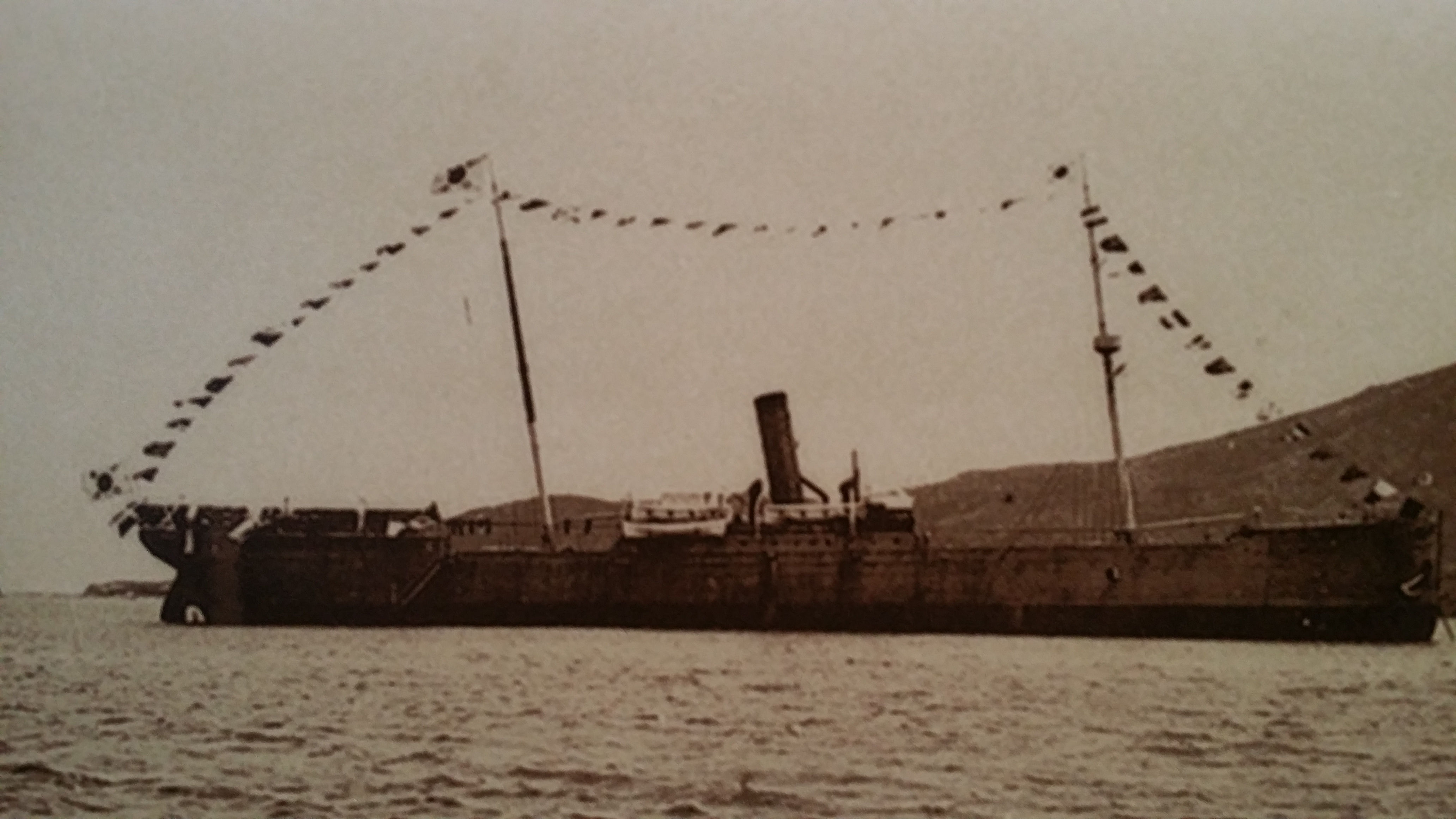
The new cabinet also emphasized the independence of the country, leading to the enlargement of the Imperial Korean Army. Colonel Dmitry Putyata and some officers were sent from Russia to Korea. However, Putyata had conflicts with Min Young-hwan, who was the former ambassador to Russia. He returned to Russia on 26 November 1897 after assisting in the modernizing of the army. In 1898, 10 more battalions were formed. By sending troops, the empire tried to protect its people. Jinwidae forces were deployed in Jiandao, where many Koreans lived. The new cabinet also wanted to establish a modern navy by buying ships with KIS Yangmu being the first ship to be bought, for only 451,605 won.
The government tried to industrialize the country by sending many students abroad to learn modern skills. Many new technologies were brought in to Korea and many companies were established. Formalizing land ownership records also enabled better land tax collection. These reforms were able to bring changes to the Korean Empire that made the country richer and stronger.
Moreover, land system reforms were initiated to establish a proper land ownership. Under the leadership of Minister of Interior Bak Jeongyang, and Minister of Agriculture and Industry Yi Tojae, land system reforms were purposed in June 1898. The new system not only included the land or house itself but also the surroundings of the land. As only 4 out of 10 ministers agreed with the proposal, it did not pass. However, when Gojong reviewed this cabinet conference, he ordered the reform proposal to proceed regardless.
Foreign affairs
One of the key problems of the Korean Empire was its foreign affairs. Despite its official neutrality, the country had many policies that favored the Russian Empire. Russia frequently intervened in Korea and many of Korea's natural resources were sent to Russia.
Historians are still unsure what Russia's true intentions were towards Korea at the time. According to a dispatch sent from Shanghai, Russia tried to make the Korean Empire a protectorate of the Russian Empire. But Tsar Nicholas II himself did not desire colonizing Korea. In 1901, Nicholas told Prince Henry of Prussia, "I do not want to seize Korea but under no circumstances can I allow Japan to become firmly established there. That would be a casus belli."
Taft-Katsura Agreement and the Russo-Japanese War
Before the Russo-Japanese War, Korea tried to show its neutrality to different Western countries. On 27 January 1904, Russia, France, Germany, and the United Kingdom formally commended Korea's declaration of neutrality.
Later that year on August 22, the first treaty between Japan and Korea, known as the First Japan–Korea Convention, was signed. This allowed the creation of a Japanese garrison in Korea, the Japanese Korean Army. The Taft–Katsura Agreement (more appropriately known as the Taft–Katsura Memorandum) was issued on July 17, 1905. It was not actually a secret pact or agreement between the United States and Japan, but rather a set of notes regarding discussions on U.S.-Japanese relations between members of the governments of both countries, hence its more appropriate name memorandum. The Japanese Prime Minister Taro Katsura used the opportunity presented by Secretary of War William Howard Taft's stopover in Tokyo to extract a statement from Taft on the Korean question, in his capacity as a representative of the Roosevelt Administration. Taft expressed in the memorandum that a suzerain relationship with Japan guiding Korea would "contribute to permanent peace in the Far East."
In September 1905, Russia and Japan signed the Treaty of Portsmouth, ending the Russo-Japanese War and firmly establishing Japan's influence in Korea. Secret diplomatic contacts were sent by the Gwangmu Emperor in the fall of 1905 to entities outside of Korea presenting Korea's desperate case to preserve their sovereignty, as normal diplomatic channels were no longer an option, due to the constant surveillance by the Japanese.
Eulsa Treaty
Main article: Japan–Korea Treaty of 1905
Korean resistance
In order to manifest the invalidity of the Eulsa Treaty, Gojong sent several secret embassies to plea for support. Korean secret diplomacy's first target was Russia. Koreans believed that Russia would help the Korean independence as several Koreans who fled to Shanghai after Japan–Korea Treaty of February 1904, such as Yi Hak-gyun, had sent letters from former Russian minister to Korea Pavlov, which said that Japan would be withdrawn by Russian forces, and Russia would ensure Korean independence.
Another response to Eulsa Treaty was committing suicide. Yi Han-eung and Min Young-hwan are examples for such resistance. Many joined the righteous armies and some even attempted to assassinate the five Korean ministers who consented to the treaty also known as the Five Eulsa Traitors.
Often the Gojong of Korea himself led the resistance. He sent many messages to European monarchs such as Wilhelm II, George V, or Nicholas II. He sent Homer Hulbert, an American missionary and journalist, to the United States as an emissary in order to repudiate the treaty. In June 1906, Nicholas II secretly sent Gojong an invitation for the Hague Convention of 1907. He sent emissaries to the Hague in order to repudiate the Eulsa Treaty. However, the emissaries were not accorded recognition. The houses of Ye Wanyong were burned by the people and the Japanese Korean Army intervened to suppress public discontent. These acts against the terms of the treaty led to the abdication of Gojong, who was succeeded by Sunjong on 19 July 1907.
Japanese protectorate and annexation
After Sunjong became emperor, the Japan–Korea Treaty of 1907 was signed. Under the treaty, more Japanese were employed in the Korean government and started to intervene closely in Korean affairs. Forces of General Hasegawa garrisoned the palace. Some regiments of the Imperial Korean Army were disarmed. The Pyongyang Jinwidae, which was the elite unit of the Imperial Korean Army, was disarmed. Starting this reduction of Jinwidae, many regiments of the Imperial Korean Army were dissolved starting from 31 July 1907. These Japanese interventions fueled the righteous armies and various local peasant militias to fight against the Japanese, but with little success. From 1909, the Japanese suppressed all of the righteous armies. Many of their members fled to Manchuria or other parts of China to join the Independence Army.
Japanese officials were implanted into the Korean officialdom. According to the Japan-Korea Treaty of 1907, Japanese who served as advisors for Korea were incorporated to the Korean central government. By 31 December 1908, 40.7 percent of all officials and 36.9 percent of high-ranking officials were Japanese, with the result of many Korean officials losing their jobs.
Under Terauchi Masatake, Japan prepared to annex Korea. After the Japan–Korea Treaty of 1910 was signed on 22 August 1910, the Korean Empire was annexed. The annexation was announced on 29 August 1910.
Military
Main article: Imperial Korean Armed Forces
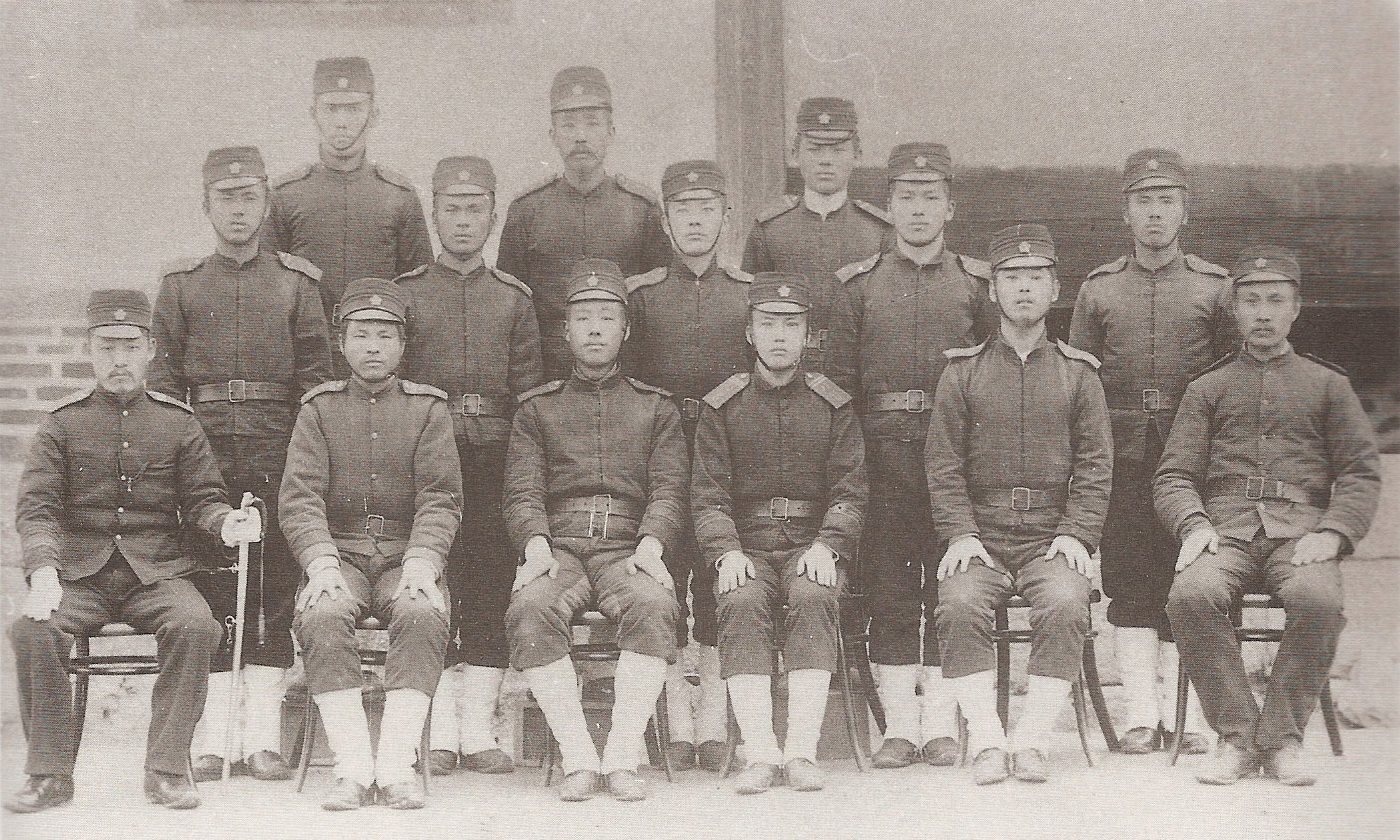
The Imperial Armed Forces () was the military of the Korean Empire.
Composition
The Imperial Armed Forces comprised the Imperial Korean Army and the Imperial Korean Navy. With the central and provincial armies, the Korean Imperial grew immensely to 28,000 before 1907.
Organization
Succeeding the former Joseon Army and Navy, the Gwangmu Reform reorganized the military into a modern, Western-style one. Unlike in the Joseon dynasty, service was voluntary. It had a size of about 30,000, including soldiers and cadets.
Dissolution
The military disbanded on August 1, 1907, due to the Japan-Korea Treaty of 1907. Major Park Seung-hwan protested by committing suicide, sparking a revolt led by former imperial soldiers leading to the battle at Namdaemun Gate. Emperor Sunjong incorporated the remaining soldiers into the Imperial Guards until 1910, while others formed the foundations of the Righteous armies.
Economy
Some modern enterprises emerged in the Korean Empire, including some hand-operated machinery. These enterprises faced a crisis when Japanese products were imported into the country and the enterprises lacked capital intensity. Although limited banking infrastructure existed, it was not able to adequately support economic development. Large Korean (South Korean) companies existing to this day such as Doosan and Korea Electric Power Corporation originated during the Imperial period.
Nonetheless, the Korean Empire was able to have good economic growth. The GDP per capita of the Korean Empire was $850 in 1900, which was 26th highest in the world and 2nd highest in Asia.
The economic progress of the Korean Empire was reflected in a secret report that Hayashi Gonsuke sent to Aoki Shūzō, indicating that the Korean Empire was becoming an economic participant on the global stage.
Era of Korean Empire was a period when modern companies were established. At the dawn of the Korean Empire, officials from Gaehwa Party such as Ahn Gyeong-su, Yun Chi-ho, and Yi Chae-yeon led the establishments of companies. However, as the absolute government of Gojong was established, those who were close to the Emperor including Yi Yong-ik, Min Young-hwan, and Yi Yun-yong were highly interested in the establishments of companies.
Tax revenue of the Korean Empire during 1895–1905:
| Year | 1895 | 1896 | 1897 | 1898 | 1899 | 1900 | 1901 | 1902 | 1903 | 1904 | 1905 |
|---|---|---|---|---|---|---|---|---|---|---|---|
| Amount of tax revenue in Won | 4,557,587 | 4,809,410 | 4,191,192 | 4,527,476 | 6,473,222 | 6,162,796 | 9,079,456 | 7,586,530 | 10,766,115 | 14,214,573 | 14,960,574 |
Annual expenditure of the Korean Empire during 1895–1905:
| Year | 1895 | 1896 | 1897 | 1898 | 1899 | 1900 | 1901 | 1902 | 1903 | 1904 | 1905 |
|---|---|---|---|---|---|---|---|---|---|---|---|
| Amount of annual expenditure in Won | 3,244,910 | 5,144,531 | 3,967,647 | 4,419,432 | 6,128,229 | 5,558,972 | 8,020,151 | 6,932,037 | 9,697,371 | 12,370,795 | 12,947,624 |
Diplomatic relationships
- Empire of Japan: 1876–1910
- United States: 1882–1905
- German Empire: 1883–1905
- United Kingdom of Great Britain and Ireland: 1883–1905
- Russian Empire: 1884–1905
- Kingdom of Italy: 1884–1905
- French Third Republic: 1886–1905
- Austria-Hungary: 1892–1905
- Qing dynasty: 1899–1905
- Kingdom of Belgium: 1901–1905
- Denmark: 1902–1905
Gallery
File:National Seal of Korea.svg|Emblem File:Coat of arms of Korean empire (1900).svg|Coat of arms File:Former Russia legation of Korea 02.JPG|Part of the old Russian legation building in Seoul. In 1896, King Gojong and the crown prince fled from the Gyeongbok Palace to the Russian legation in Seoul. File:Joseon New-Style Policeman.JPG|In 1900, Western attire became the official uniform for Korean civil officials. Several years later, all Korean policemen were ordered to wear modernized uniforms. File:Lee Yong-ik Portrait.jpg|Yi Yong-ik, Chief of the Bureau of Currency during the Korean Empire File:Streetcar1903.jpg|A streetcar in Seoul, 1903 File:SeoulElectricCompany.jpg|The headquarters of the Hanseong Electric Company File:JAPANESE OCCUPATION OF SEOUL.jpg|Japanese infantry marching through Seoul during the Russo-Japanese War in 1904 File:Yi Beomjin.jpg|Yi Beom-jin, an official and later independence fighter against the Japanese. He supported secret emissaries sent by Gojong to The Hague in 1907. File:Hague Secret Emissary Affair.jpg|Three secret emissaries, Yi Tjoune, Yi Sang-seol, and Yi Wi-jong, who were sent to The Hague in 1907 by Emperor Gojong (for further reading, see Hague Secret Emissary Affair) File:Gojong Stamp.jpg|alt=|Replica of a stamp that Gojong used in his capacity as emperor
In popular culture
- The 1904 American comedic opera, The Sho-Gun, written by George Ade and Gustav Luders, is set in the Korean Empire.
- The 2018 South Korean TV series, Mr. Sunshine, is set in the last days of the Korean Empire.
- The 2018 South Korean TV series, The Last Empress, depicts a modern-day Korean Empire in an alternate reality along with a dark secret of the imperial family leading to its demise.
- The 2020 South Korean TV series, The King: Eternal Monarch, takes place in an alternate reality where the Korean Empire continues to exist in the modern world.
Footnotes
References
Citations
Sources
- Dong-no Kim, John B. Duncan, Do-hyung Kim (2006), Reform and Modernity in the Taehan Empire (Yonsei Korean Studies Series No. 2), Seoul: Jimoondang Publishing Company
- Jae-gon Cho, The Industrial Promotion Policy and Commercial Structure of the Taehan Empire.
- Pratt, Keith L., Richard Rutt, and James Hoare. (1999). Korea: a historical and cultural dictionary, Richmond: Curzon Press. ; ; OCLC 245844259
- The Special Committee for the Virtual Museum of Korean History (2009), Living in Joseon Part 3: The Virtual Museum of Korean History-11, Paju:
References
- 권태환 신용하. (1977)
- [https://www.much.go.kr/L/oSFDZp4lv4.do Passport of Korean Empire from National Museum of Korean Contemporary History]
- "Korean History".
- "Korean History".
- "Korean History".
- link
- "Korean History".
- link
- "Korean History".
- "Korean History".
- "Korean History".
- link
- link
- link
- link
- link
- "Korean History".
- (1896-02-18). "Russia's Intentions in Corea.". [[The New York Times]].
- Clark, Christopher. (2012-09-27). "The Sleepwalkers: How Europe Went to War in 1914". Penguin Books Limited.
- "Korean History".
- link
- link
- link
- "Korean History".
- link
- link
- (2009-09-29). link
- (1905-12-13). "KOREA REPUDIATES TREATY.; Emperor Wires to Mr. Hulbert That Japan Obtained It by Force.". [[The New York Times]].
- link
- (1907-07-21). "Front Page 4 – No Title; Attempt to Murder Ministers. Korean Regiment Disarmed. Crown Prince Now Emperor.". [[The New York Times]].
- link
- link
- link
- link
- link
- Seth, Michael J.. (2010-10-16). "A History of Korea: From Antiquity to the Present". Rowman & Littlefield Publishers.
- Chu. Zin-oh. link
- "Countries Compared by Economy > GDP per capita in 1900. International Statistics at NationMaster.com".
- 배. 영대. (2017-12-03). link
- "Korean History".
- link
- link
- "Gustav Luders – Broadway Cast & Staff | IBDB".
- "The Sho-Gun".
- (12 August 2021). "The Sho-Gun – A 1904 Broadway Comic Opera | Postcard History".
- link. (2018-08-20)
- "The King: Eternal Monarch".
This article was imported from Wikipedia and is available under the Creative Commons Attribution-ShareAlike 4.0 License. Content has been adapted to SurfDoc format. Original contributors can be found on the article history page.
Ask Mako anything about Korean Empire — get instant answers, deeper analysis, and related topics.
Research with MakoFree with your Surf account
Create a free account to save articles, ask Mako questions, and organize your research.
Sign up freeThis content may have been generated or modified by AI. CloudSurf Software LLC is not responsible for the accuracy, completeness, or reliability of AI-generated content. Always verify important information from primary sources.
Report