From Surf Wiki (app.surf) — the open knowledge base
Korean Committee of Space Technology
Former North Korean space agency
Former North Korean space agency
| Field | Value |
|---|---|
| agency_name | Korean Committee of Space Technology (KCST) |
| native_name_a | 조선우주공간기술위원회 |
| jurisdiction | Government of North Korea |
| minister1_name | Kim Yong-chun |
| minister1_pfo | Minister of People's Armed Forces |
| chief1_name | Ryu Kum Chol |
| chief1_position | Deputy director of Space Development Department of Korean Committee for Space Technology |
| embed | {{infobox Korean name/auto |
| hangul | ^조선_우주_공간_기술_위원회 |
| hanja | 朝鮮宇宙空間技術委員會 |
| child | yes |
The Korean Committee of Space Technology (KCST; ) was the agency of the government of the Democratic People's Republic of Korea (North Korea) responsible for the country's space program. The agency was terminated and succeeded by the National Aerospace Development Administration in 2013 after the Law on Space Development was passed in the 7th session of the 12th Supreme People's Assembly.
History
Very little information on it is publicly available. It is known to have been founded sometime in the 1980s, and most likely is connected to the Artillery Guidance Bureau of the Korean People's Army.
Operations
The KCST was responsible for all operations concerning space exploration and construction of satellites. On 12 March 2009, North Korea signed the Outer Space Treaty and the Registration Convention, after a previous declaration of preparations for a new satellite launch.
Facilities
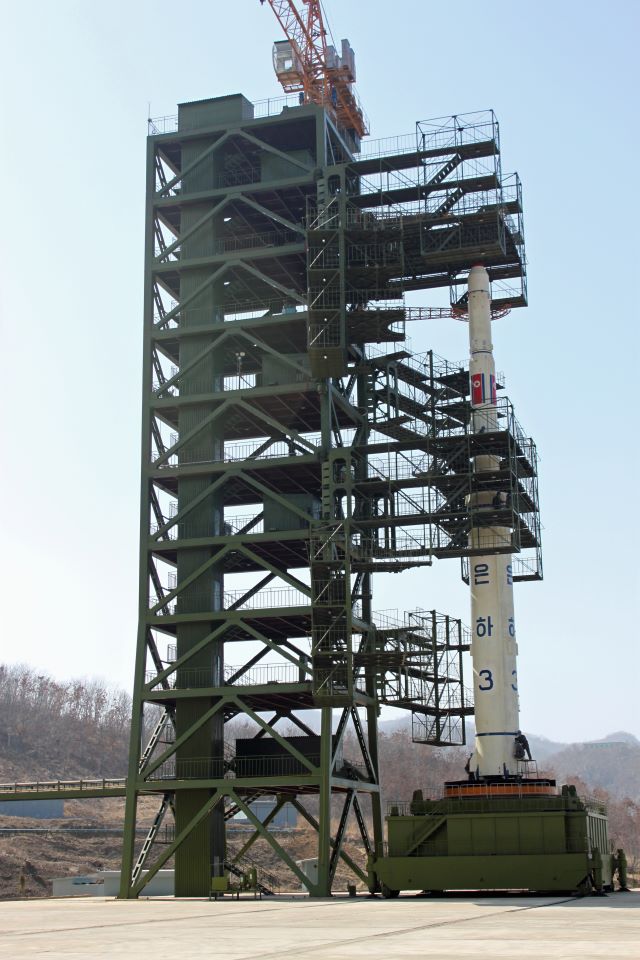
The KCST operated the Tonghae Satellite Launching Ground and Sohae Satellite Launching Station rocket launching sites, Paektusan-1 and Unha launchers, Kwangmyŏngsŏng satellites.
South Korea and the United States accused North Korea of using these facilities and the rockets as a cover for a military ballistic missile testing program.
- Sohae Satellite Launching Station built from the 2000s to 2010s with a launch pad completed in 2011.
- Tonghae Satellite Launching Ground built from the 2000s to 2010s with a launch pad completed in 2011.
Projects
The DPRK twice announced that it had launched satellites: Kwangmyŏngsŏng-1 on 31 August 1998 and Kwangmyŏngsŏng-2 on 5 April 2009. The US and South Korea predicted that the launches would in actuality be military ballistic missile tests, but later confirmed that they had followed orbital launch trajectories.
In 2009, the DPRK announced more ambitious future space projects including its own crewed space flights and development of a crewed partially reusable launch vehicle. Kwangmyŏngsŏng-3 was launched on 13 April 2012 and ended in failure shortly after launch. A follow-up attempt the following December, Kwangmyŏngsŏng-3 Unit 2 entered polar orbit as confirmed by various countries.
Launch history
This is a list of satellites launched.
| Kwangmyŏngsŏng-4 | 7 February 2016 | Unha | Sohae Satellite Launching Station | Observation satellite |
|---|
References
References
- "Despite Clinton, Korea has rights".
- (2009-03-12). "KCNA Report on DPRK's Accession to International Space Treaty and Convention". [[Korean Central News Agency.
- Choe Sang-Hun. (23 December 2012). "North Korean Missile Said to Have Military Purpose". New York Times.
- "UN Security Council condemns North Korea rocket launch". BBC News.
- (2009-02-08). "朝鲜宣布发展太空计划抗衡"西方强权"". [[Rodong Sinmun]].
- (April 13, 2012). "North Korea rocket launch 'fails'".
This article was imported from Wikipedia and is available under the Creative Commons Attribution-ShareAlike 4.0 License. Content has been adapted to SurfDoc format. Original contributors can be found on the article history page.
Ask Mako anything about Korean Committee of Space Technology — get instant answers, deeper analysis, and related topics.
Research with MakoFree with your Surf account
Create a free account to save articles, ask Mako questions, and organize your research.
Sign up freeThis content may have been generated or modified by AI. CloudSurf Software LLC is not responsible for the accuracy, completeness, or reliability of AI-generated content. Always verify important information from primary sources.
Report