From Surf Wiki (app.surf) — the open knowledge base
Johor Bahru
| Field | Value |
|---|---|
| name | Johor Bahru |
| settlement_type | State capital city and district capital |
| official_name | City of Johor Bahru |
| ms | |
| nicknames | JB, |
| Bandaraya Selatan (Southern City) | |
| image_skyline | {{multiple image |
| border | infobox |
| total_width | 290 |
| image_style | border:1; |
| perrow | 1/2/3/2 |
| image1 | Johor Bahru skyline at night.jpg |
| caption1 | City centre skyline at night |
| image2 | Jalan Wong Ah Fook 1.jpg |
| caption2 | Wong Ah Fook Street |
| image3 | 富力公主湾 R&F Princess Cove (cropped).jpg |
| caption3 | Permaisuri Zarith Sofiah Opera House |
| image4 | Figure Museum.JPG |
| caption4 | Figure Museum |
| image5 | Istana Bukit Serene - The Royal Crown (night, 2015).jpg |
| caption5 | Istana Bukit Serene |
| image6 | Perspective View of Sultan Ibrahim Building.jpg |
| caption6 | Sultan Ibrahim Building |
| image7 | City Rainforest, Johor Bahru.jpg |
| caption7 | Urban Forest |
| image8 | Masjid Sultan Abu Bakar 3.jpg |
| caption8 | Sultan Abu Bakar Mosque |
| image_flag | Flag of Johor Bahru.svg |
| image_shield | Crest of Johor Bahru.svg |
| mapframe | yes |
| mapframe-zoom | 11 |
| mapframe-point | none |
| map_caption | Location of Johor Bahru in Johor |
| pushpin_map | Malaysia Johor#Malaysia#Southeast Asia#Asia |
| pushpin_mapsize | 275px |
| pushpin_map_caption | **Johor Bahru** in **Johor** |
| coordinates | |
| motto | ms |
| "Service, Cultural, Visionary" | |
| (motto of Johor Bahru City Council) | |
| subdivision_type | Country |
| subdivision_name | Malaysia |
| subdivision_type1 | State |
| subdivision_name1 | Johor |
| subdivision_type2 | District |
| subdivision_name2 | Johor Bahru District |
| established_title | Founded |
| established_date | 10 March 1855 |
| (as Tanjung Puteri) | |
| established_title1 | Establishment of the Town Board |
| established_date1 | 1910 |
| established_title2 | Establishment of the Town Council |
| established_date2 | 1950 |
| established_title3 | Municipality status |
| established_date3 | 1 April 1977 |
| established_title4 | City status |
| established_date4 | |
| government_type | City council |
| governing_body | Johor Bahru City Council |
| leader_title | Mayor |
| leader_name | Noorazam Osman |
| area_total_km2 | 373.18 |
| area_footnotes | |
| elevation_m | 32 |
| elevation_footnotes | |
| population_footnotes | |
| population_as_of | 2020 |
| population_total | 858,118 |
| population_density_km2 | auto |
| population_density_sq_mi | |
| population_metro | 2,487,601 |
| population_demonym | Johor Bahru |
| timezone1 | MST |
| utc_offset1 | +8 |
| timezone1_DST | Not observed |
| utc_offset1_DST | +8 |
| postal_code_type | Postal code |
| postal_code | 80xxx to 81xxx |
| blank_name | Area code(s) |
| blank_info | 07 |
| blank1_name | Vehicle registration |
| website |
the city
ms Bandaraya Selatan (Southern City) | mapframe-zoom = 11 | mapframe-point = none "Service, Cultural, Visionary" (motto of Johor Bahru City Council) (as Tanjung Puteri)
Johor Bahru (JB) is the capital city of the Malaysian state of Johor. It is the core city of Johor Bahru District, Malaysia's second-largest district by population and economy. Covering an area of 373.18 km2, Johor Bahru had a population of 858,118 people in 2020, making it the nation's largest state capital city by population. It is located at the southern end of the Malay Peninsula, bordering the city-state of Singapore.
As a major financial and business centre in Malaysia, Johor Bahru is Malaysia's second best-performing city behind only Kuala Lumpur, in terms of economic competitiveness, prosperity, and ease of doing business, according to the World Bank. It has the fastest urbanisation growth and internet speed among Malaysian cities. As one of the most visited cities globally, Johor Bahru also has the world's busiest land border crossing, via the Johor-Singapore Causeway, KTM Intercity and the future RTS Link to Singapore. Johor Bahru is served by Senai International Airport and the world's 15th-busiest port, Tanjung Pelepas.
During the reign of Sultan Abu Bakar between 1886 and 1895, the city witnessed modernisation from a fishing village, with the construction of administrative centres, offices, schools, civic and religious buildings, and railways to Woodlands, Singapore. Japanese forces occupied Johor Bahru during the Pacific War. Johor Bahru thus became the post-war cradle of Malay nationalism, forming a major political party, UMNO at the Istana Besar in 1946. Granted city status in 1994, Johor Bahru is currently part of the Johor-Singapore Special Economic Zone and Iskandar Malaysia, the nation's largest special economic zone by investment value.
Etymology
The present area of Johor Bahru was originally known as Tanjung Puteri, and was a fishing village of the Malays. Temenggong Daeng Ibrahim then renamed Tanjung Puteri to Iskandar Puteri upon his arrival to the area in 1858, after acquiring the territory from Sultan Ali. It was renamed to Johor Bahru by Sultan Abu Bakar following the Temenggong's death. The word "Bah(a)ru" means "new" in Malay; thus, Johor Bahru means "New Johor". Bahru is normally written as "baru" in English (Roman) characters, today, although the word appears in other place names with several English spelling variants, such as in Kota Bharu, Kelantan, and Pekanbaru, Riau (Indonesia). The British preferred to write it as Johore Bahru or Johore Bharu, though the currently-accepted western spelling is Johor Bahru—Johore is only spelt Johor, without the letter "e" at the end of the word, in the Malay language. The city's name is also spelt as Johor Baru or Johor Baharu.
Johor Bahru was once known as Shantou, or "Little Swatow", by the city's Chinese community, as most of the Chinese residents are Teochew whose ancestry can be traced back to Shantou, China; they arrived in the mid-19th century, during the reign of Temenggong Daeng Ibrahim. The city, however, is generally known in Chinese as Xinshan, meaning "New Mountain" (), as "mountain" may be used to mean "territory" or "land". The name "New Mountain" distinguished it from "Old Mountain" (Jiushan), once used to refer to Kranji and Sembawang (in Singapore), where the Chinese first cultivated black pepper and gambier on plantations before relocating to new lands in Johor Bahru in 1855.
A further Chinese transliteration of Johor is 柔佛 (), literally meaning "gentle Buddha", which is for example part of the official name of Johor Bahru Old Chinese Temple (柔佛古廟).
History
Due to a dispute between the Malays and the Bugis, the Johor-Riau Sultanate was split in 1819 with the mainland portion of the Johor Sultanate coming under the control of Temenggong Daeng Ibrahim while the Riau-Lingga Sultanate came under the control of the Bugis. The Temenggong intended to create a new administration centre for the Johor Sultanate to create a dynasty under the entity of Temenggong. As the Temenggong already had a close relationship with the British and the British intended to have control over trade activities in Singapore, a treaty was signed between Sultan Ali and Temenggong Ibrahim in Singapore on 10 March 1855. According to the treaty, Ali would be crowned as the Sultan of Johor and receive $5,000 (in Spanish dollars) with an allowance of $500 per month. In return, Ali was required to cede the sovereignty of the territory of Johor (except Kesang of Muar which would be the only territory under his control) to Temenggong Ibrahim. When both sides agreed on Temenggong acquiring the territory, he renamed it Iskandar Puteri and began to administer it from Telok Blangah in Singapore.
As the area was still an undeveloped jungle, Temenggong encouraged the migration of Chinese and Javanese to clear the land and to develop an agricultural economy in Johor. The Chinese planted the area with black pepper and gambier, while the Javanese dug parit (canals) to drain water from the land, build roads and plant coconuts. During this time, a Chinese businessman, pepper and gambier cultivator, Wong Ah Fook arrived; at the same time, the Kangchu and Javanese labour contract systems were introduced by the Chinese and Javanese communities. After Temenggong's death on 31 January 1862, the town was renamed "Johor Bahru" and his position was succeeded by his son, Abu Bakar, with the administration centre in Telok Blangah being moved to the area in 1889.
British administration
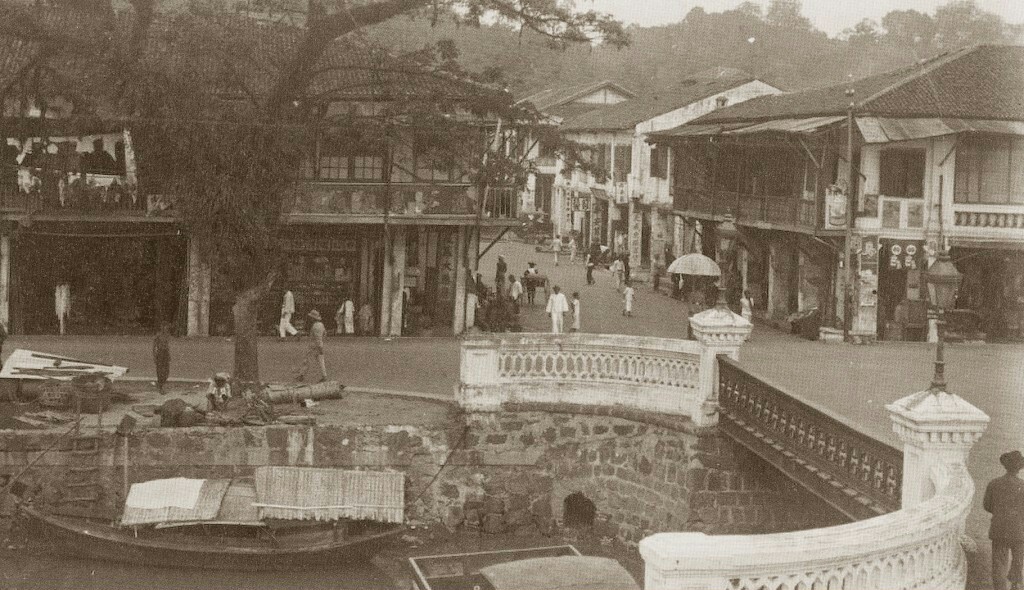
In the first phase of Abu Bakar's administration, the British only recognised him as a maharaja rather than a sultan. In 1855, the British Colonial Office began to recognise his status as a Sultan after he met Queen Victoria. He managed to regain Kesang territory for Johor after a civil war with the aid of British forces and he boosted the town's infrastructure and agricultural economy. Infrastructure such as the State Mosque and Royal Palace was built with the aid of Wong Ah Fook, who had become a close patron for the Sultan since his migration during the Temenggong reign. As the Johor-British relationship improved, Abu Bakar also set up his administration under a British style and implemented a constitution known as Undang-undang Tubuh Negeri Johor (Johor State Constitution). Although the British had long been advisers for the Sultanate of Johor, the Sultanate never came under direct colonial rule of the British. The direct colonial rule only came into effect when the status of the adviser was elevated to a status similar to that of a Resident in the Federated Malay States (FMS) during the reign of Sultan Ibrahim in 1914.
In Johor Bahru, the Malay Peninsula railway extension was finished in 1909, and in 1923 the Johor–Singapore Causeway was completed. Johor Bahru developed at a modest rate between the First and Second World Wars. The secretariat building—Sultan Ibrahim Building—was completed in 1940 as the British colonial government attempted to streamline the state's administration.
World War II
The continuous development of Johor Bahru was, however, halted when the Japanese under General Tomoyuki Yamashita invaded the town on 31 January 1942. As the Japanese had reached northwest Johor by 15 January, they easily captured major towns of Johor such of Batu Pahat, Yong Peng, Kluang and Ayer Hitam. The British and other Allied forces were forced to retreat towards Johor Bahru; however, following a further series of bombings by the Japanese on 29 January, the British retreated to Singapore and blew up the causeway the following day as a final attempt to stop the Japanese advance in British Malaya. The Japanese then used the Sultan's residence of Bukit Serene Palace located in the town as their main temporary base for their future initial plans to conquer Singapore while waiting to reconnect the causeway. The Japanese chose the palace as their main base because they already knew the British would not dare to attack it as this would harm their close relationship with Johor.
In less than a month, the Japanese repaired the causeway and invaded the Singapore island easily. Soon after the war ended in 1946, the town became the main hotspot for Malay nationalism in Malaya. Onn Jaafar, a local Malay politician who later became the Chief Minister of Johor, formed the United Malay National Organisation party on 11 May 1946 when the Malays expressed their widespread disenchantment over the British government's action for granting citizenship laws to non-Malays in the proposed states of the Malayan Union. An agreement over the policy was then reached in the town with Malays agreeing with the dominance of economy by the non-Malays and the Malays' dominance in political matters being agreed upon by non-Malays. Racial conflict between the Malay and non-Malays, especially the Chinese, is being provoked continuously since the Malayan Emergency.
Post-independence

After the formation of the Federation of Malaysia in 1963, Johor Bahru continued as the state capital and more development was carried out, with the town's expansion and the construction of more new townships and industrial estates. The Indonesian confrontation did not directly affect Johor Bahru as the main Indonesian landing point in Johor was in Labis and Tenang in Segamat District as well Pontian District. There was only one active Indonesian spy organisation in the town, known as Gerakan Ekonomi Melayu Indonesia (GEMI). They frequently engaged with the Indonesian communities living there to contribute information for Indonesian commandos until the bombing of the MacDonald House in Singapore in 1965. By the early 1990s, the town had considerably expanded in size, and was officially granted a city status on 1 January 1994. Johor Bahru City Council was formed and the city's current main square, Johor Bahru City Square, was constructed to commemorate the event. A central business district was developed in the centre of the city from the mid-1990s in the area around Wong Ah Fook Street. The state and federal government channelled considerable funds for the development of the city—particularly more so after 2006, when the Iskandar Malaysia was formed.
For more than ten years of building construction and rapid urbanisation in Johor Bahru, the city has experienced a series of property boom with many new higher-end high-rise apartments and commercial property, including The Astaka, which has been the tallest building in the city and outside Kuala Lumpur since 2018, and is one of the tallest twin towers in the world. With the gradual improvement of quality of life and infrastructure, Johor Bahru has also been ranked one of the global cities with the highest living quality, the third highest in Southeast Asia after Singapore and Kuala Lumpur, according to Mercer, as of 2024. Today, it is also Malaysia's fastest city in terms of internet speed, second only after Singapore in Southeast Asia.
Governance
As the capital city of Johor, the city plays an important role in the economic welfare of the entire state's population. According to the Doing Business Ranking published by the World Bank, Johor Bahru had the second most efficient governance in Malaysia in terms of property registration, only after Kuala Lumpur. There is one member of parliament (MP) representing the single parliamentary constituency (P.160) in the city. The city also elects two representatives to the state legislature from the state assembly districts of Larkin and Stulang.
Local authority and city definition
The city is administered by its local authority – Johor Bahru City Council, which is currently headquartered at MBJB Tower in Bukit Senyum, Plentong, just outside the city centre. It is headed by mayor Mohd Haffiz Ahmad, who took office since 3 January 2025.
When Johor Bahru obtained city status on 1 January 1994, it had an initial area of 186 km2 through merger of the original Johor Bahru municipality area and four housing areas of Taman Daya, Taman Megah Ria, Kota Puteri Township and Taman Rinting that were transferred from Johor Bahru Tengah. This was increased to 220 km2 in the year 2000 after first parts of Tebrau area were transferred from Johor Bahru Tengah municipality. On 2 July 2014, the Johor State Government decided to cede parts of Pulai Mukim across Skudai River along Jalan Ismail Sultan, Second parts of Tebrau Mukim, West parts of Plentong Mukim and a small portion of Sungai Tiram Mukim from Johor Bahru Tengah through a redelination exercise that took effect on 1 January 2016. At the same time, areas around Taman Rinting and Sierra Perdana were ceded to Pasir Gudang Municipal Council. Thus, the city limit increased to 373.18 km2.
Courts of law and legal enforcement
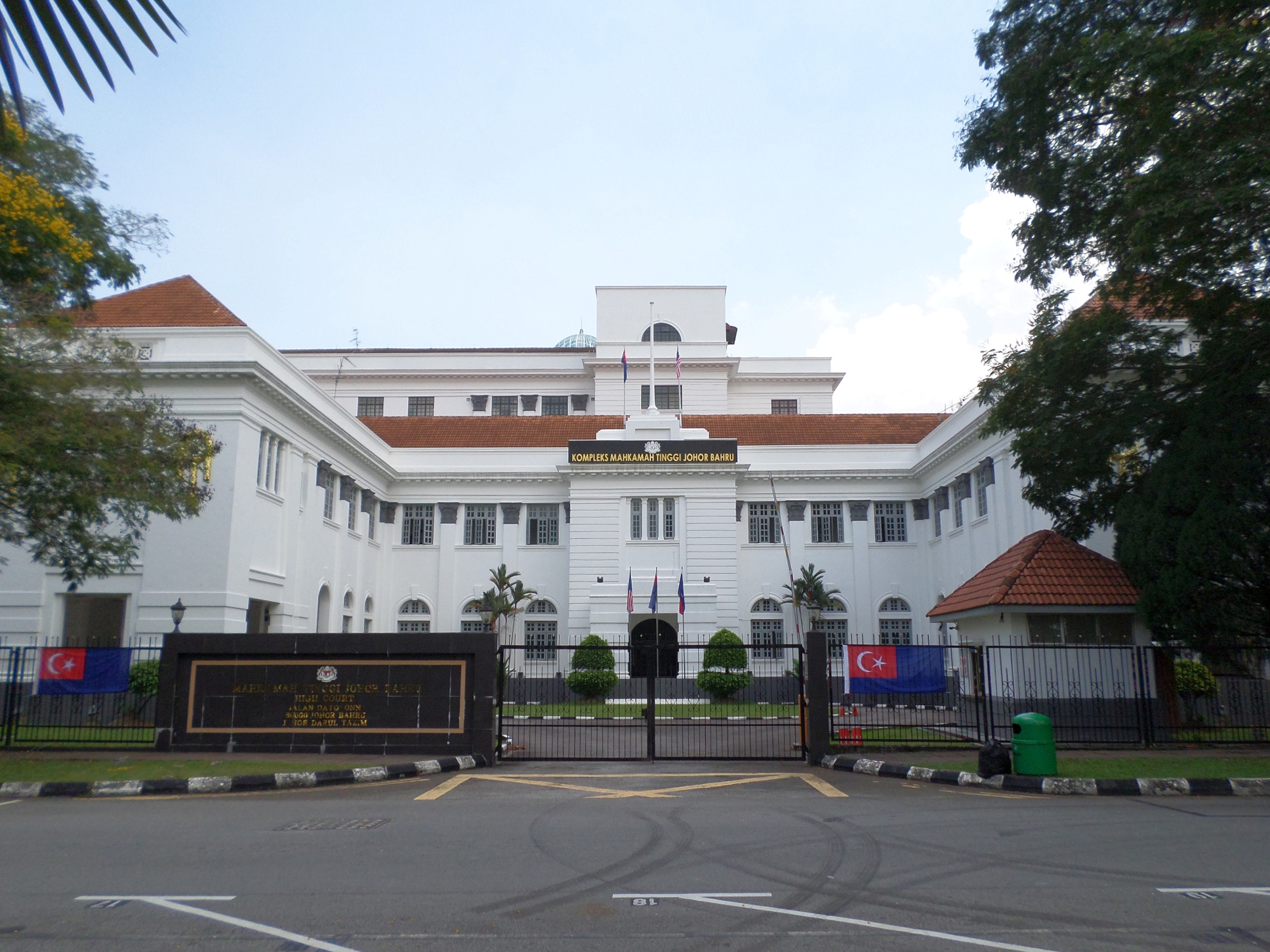
The city high court complex is located along Dato' Onn Road. The Sessions and Magistrate Courts is located on Ayer Molek Road, while another court for Sharia law is located on Abu Bakar Road. The Johor (state) Police Contingent Headquarters is located on Tebrau Road. Johor Bahru's Southern District police headquarters, which also operates as a police station, is on Meldrum Road in the city centre. The Johor Bahru Southern District traffic police headquarters is a separate entity along Tebrau Road, close to the city centre. Johor Bahru's Northern District police headquarters and Northern District Traffic Police headquarters are co-located in Skudai, about 20 km north of the city centre. There are around eleven police stations and seven police substations (Pondok Polis) in the greater Johor Bahru area. Johor Bahru Prison was located in the city along Ayer Molek Road, but was closed down after 122 years operation in December 2005, its function being transferred to an expanded prison in the town of Kluang about 110 km from Johor Bahru. Other temporary lock-ups or prison cells are available in most police stations in the city, as in other parts of Malaysia.
Geography
Johor Bahru is located along the Straits of Johor at the southern end of Peninsular Malaysia with mostly flat landscape, save for some hills dotted around the city area.
Climate
The city has an equatorial climate with consistent temperatures, a considerable amount of rain, and high humidity throughout the course of the year. An equatorial climate is a tropical rainforest climate more subject to the Intertropical Convergence Zone than the trade winds and with no cyclone. Daily average temperatures range from 26.4 C in January to 27.8 C in April with an average annual rainfall of around 2350 mm. The wettest months, with 19 to 25 per cent more rain than average, are April, November and December.{{cite web | access-date = 25 March 2015|archive-url=https://web.archive.org/web/20131023032749/http://worldweather.wmo.int/020/c00078.htm|archive-date=23 October 2013|url-status=dead}} Although the climate is relatively uniform, it does show some seasonal variation due to the effects of monsoons, with noticeable changes in wind speed and direction, cloud cover and amount of rainfall. There are two monsoon periods each year, the first one between mid-October and January, which is the north-east Monsoon. This period is characterised by heavier rainfall and wind from the north-east. The second one is the south-west Monsoon, which hardly affects the rainfall in Johor Bahru, where winds are from the south and south-west. This occurs between June and September.
Urban Planning
Johor Bahru is a largely suburban city, which has considerable urban sprawl and a high degree of car dependency. The state government has acknowledged the high degree of traffic congestion within the city, and has been making plans for the implementation of a Light Rail Transit (LRT) or Bus Rapid Transit (BRT) system since at least 2017. As of 2024, the state government is commencing plans to construct an elevated Autonomous Rail Rapid Transit (ART) network in the city.
Demographics
Johor Bahru has an official demonym where people are commonly referred to as "Johor Bahruans". The terms "J.B-ites" and "J.B-ians" have also been used to a limited extent. People from Johor are called Johoreans.
Ethnicity and religion
The Malaysian Census in 2020 reported the population of Johor Bahru as 858,118, making it the largest state capital city in Malaysia by population. It also forms the capital of Johor Bahru District, which includes Iskandar Puteri and Pasir Gudang, and is the second largest district in Malaysia with a population of 1.8 million, as of 2023. The city's population today is a mixture of three main ethnicities – Malays, Chinese and Indians- along with other bumiputras. The Malays in Johor Bahru are strongly related to the neighbouring Riau Malays in Riau Islands, Indonesia with significant populations of Javanese, Bugis and Banjarese among the local Johorean Malay population. The Chinese mainly are from the majority Hokkien and Teochew (among the local Chinese) subgroups with minorities of Hakka, Cantonese, Henghua, Foochow and Hainanese among its local Chinese dominant minority populace, while the Indian community are majoritally Tamils (including Ceylonese), there are also small populations of Telugus, Malayalis, Gujaratis, Bengalis, Sindhis, Pashtuns and Sikh Punjabis among the Indian populace. The Malays are necessarily Muslims, while the Chinese are predominantly Buddhists/Taoists and the Indians are mostly Hindus/Buddhists despite there is also a small numbers from the two ethnic groups that are Christians and Muslims. A small number of Sikhs, Animists and secularists can also be found in the city.
File:Sultan Abu Bakar State Mosque.jpg|Sultan Abu Bakar State Mosque, the main mosque in the city. File:Arulmigu Sri Rajakaliamman Glass Temple, JB (2025) - img 91.jpg|Arulmigu Sri Rajakaliamman Glass Temple, the world's first glass temple. File:JB Old Chinese Temple 3.JPG|Johor Bahru Old Chinese Temple, the oldest Chinese temple in the city. File:Wikimania 2023 - Johor Bahru Photo Walk - Cathedral of the Holy Immaculate Conception 4.jpg|Church of the Immaculate Conception, the oldest church in the city.
Languages
The local ethnic Malays speak the Malay language, while the language primarily spoken by the local Chinese is Mandarin Chinese. The Chinese community is represented by several dialect groups: Hokkien, Teochew, Hakka and Hainanese with small minorities of Foochow, Henghua and Cantonese.
The Indian community predominantly speaks Tamil, with a minority of Malayalam, Telugu and Punjabi speakers. 60% of the city's population is fluent in English with a higher rate among younger people.
Economy

Johor Bahru is the fastest-growing city in terms of urbanisation in Malaysia, according to Euromonitor International. It is the main commercial centre for Johor and is located in the Indonesia–Malaysia–Singapore Growth Triangle. Johor Bahru is also the core city of Johor Bahru District, the second-largest district economy in Malaysia. It ranks second in the nation behind the capital, Kuala Lumpur, in terms of economic competitiveness and prosperity, according to the United Nations and Resonance, and is currently the 29th best Asian city, second in Malaysia after Kuala Lumpur.
It is classified as Zone A of Iskandar Malaysia, the nation's largest special economic zone by investment value. Under this flagship zone, Johor Bahru has been designated by the government to develop various economic activities, such as finance, commerce and retail, and hospitality. It is also the centre of arts and culture, hospitality, urban tourism, plastic manufacturing, electrical and electronics and food processing. The main shopping districts are located within the city, with a number of large shopping malls located in the suburbs.
Johor Bahru hosts numerous international conferences, congress and trade fairs, such as the Nikkei Forum, Eastern Regional Organisation for Planning and Housing and World Islamic Economic Forum. The city is the first in Malaysia to practise a low-carbon economy. In 2021, Johor Bahru was ranked 432nd globally in the Global City Lab's global cities report that assesses cities' economic brand values, the second in Malaysia after Kuala Lumpur.
Tertiary-based industry dominates the economy with many international tourists from the regions visiting the city. The city has a very close economic relationship with Singapore. Many of the city's residents work in Singapore. Around 3,000 logistic lorries travel between Johor Bahru and Singapore every day for delivering goods and trading activities. Many residents in Singapore frequently visit the city; some of them have also chosen to live in the city. In 2025, Johor Bahru is ranked the world's 20th most attractive city for businesses, second in Malaysia after Kuala Lumpur, according to Oliver Wyman.
Transportation
Land
The internal roads linking different parts of the city are mostly federal roads constructed and maintained by the Malaysian Public Works Department (JKR). There are five major highways linking the Johor Bahru Central Business District to outlying suburbs: the Tebrau Highway and Johor Bahru Eastern Dispersal Link Expressway in the northeast, Skudai Highway in the northwest, Iskandar Coastal Highway in the west and the Johor Bahru East Coast Highway in the east. The Pasir Gudang Highway and the connecting Johor Bahru Parkway both cross the Tebrau and Skudai Highways, which serve as the middle ring road of the metropolitan area.
The Johor Bahru Inner Ring Road, which connects with the Southern Integrated Gateway, aids in controlling the traffic in and around the central business district. Access to the national expressway system is provided through the North–South Expressway and the Senai–Desaru Expressway. The Johor–Singapore Causeway links the city to Woodlands, Singapore with a six-lane road and a single-track railway line terminating at the Southern Integrated Gateway.
Bus
The main bus terminals of the city are Johor Bahru Sentral (JB Sentral), and Larkin Sentral located in Larkin. Major local bus operators in the city are the Causeway Link, MyBAS, Maju and S&S. Buses in Johor Bahru currently accept cashless payments such as credit cards, NFC using smartphone sor smartwatches, and QR code payment, making it the first Malaysian city to support contactless payment using smart devices on urban bus network.
_Handal_Indah_JWF8589_T30_2024-03-08_(2).jpg)
Other bus terminals include the Taman Johor Jaya Bus Terminal and Ulu Tiram Bus Terminal. Larkin Sentral has direct bus services to and from many destinations in West Malaysia, Thailand and Singapore, while Taman Johor Jaya and Ulu Tiram Bus Terminals serve local destinations.
Taxi
Two types of taxi services operate in the city; the main type is either in red and yellow, blue, green or just red while the larger, less common type is known as a limousine taxi, which is more comfortable but expensive. Most taxis in the city do not use their meter.
Railway and metro system
The city is served by two railway stations, and . Operated by Keretapi Tanah Melayu (KTM), both stations are currently served by intercity train services to Kuala Lumpur, Padang Besar and Tumpat. Since 2015, KTM also operates an international cross-border shuttle train service to the Woodlands Train Checkpoint in Singapore from JB Sentral station. The shuttle train runs along the Johor-Singapore Causeway. The under-construction Johor Bahru–Singapore Rapid Transit System (RTS Link) connecting Singapore, is Malaysia's first light rail transit (LRT) line outside the Klang Valley, and will start operation in December 2026.
The Johor state government has acknowledged the high degree of traffic congestion within the city, and has been making plans for the implementation of a light rapid transit (LRT) or bus rapid transit (BRT) system since at least 2017. Johor's Chief Minister, Onn Hafiz Ghazi, acknowledged that "an efficient public transportation system in Johor Bahru is no longer a luxury but a necessity." Plans for an LRT system were, however, shelved in 2024. The government claimed that the long wait-time of five to seven years needed for the completion of an LRT network was prohibitive, given the city's pressing need for a public transport network as soon as possible, owing to the opening of the RTS Link in 2028. They instead opted for an elevated autonomous rail rapid transit (ART) network, with construction works slated to begin by the end of 2025. The upcoming Bukit Chagar RTS station will provide cross-border rapid transit train services to Singapore on the future RTS Link line, which will replace KTM's shuttle service upon completion.
On 23 October 2025, the Johor Bahru Draft Local Plan 2035 (RTJB 2035) was released, with plans for four bus, and eventually ART, lines unveiled – the Skudai, Iskandar Puteri, Tebrau and Pasir Gudang Transit Corridors. The total cost of the ART lines is predicted to be around RM17 billion.
Air
The city is served by Senai International Airport located at the neighbouring Senai town and connected through Skudai Highway. Five airlines, AirAsia (and its subsidiaries Indonesia AirAsia and Thai AirAsia), Firefly, Malaysia Airlines, Batik Air Malaysia and TransNusa, provide flights domestically as well as international flights to Guangzhou, Jakarta Soekarno–Hatta, Surabaya, Hồ Chí Minh City, Kunming and Bangkok Don Mueang.
Changi Airport is 36.3 km southeast of the city centre, across the border in Singapore, and is linked by a frequent cross-border coach service operated by Transtar Travel.
Sea
Boat services are available to ports in Batam and Bintan Islands in Indonesia from Stulang Laut Ferry Terminal, located near the suburb of Stulang. The city is also served by Port of Tanjung Pelepas and Johor Port, the former is currently the 15th-busiest port in the world, and the largest transshipment hub in Malaysia.
Other utilities
Healthcare

There are three public hospitals, four health clinics and thirteen 1Malaysia clinics in Johor Bahru. Sultanah Aminah Hospital, which is located along Persiaran Road, is the largest public hospital in Johor Bahru as well as in Johor with 989 beds. Another government funded hospital is the Sultan Ismail Specialist Hospital with 700 beds. Another large private health facility is the KPJ Puteri Specialist Hospital with 158 beds. Further healthcare facilities are currently being expanded to improve healthcare services in the city.
Education
Many government or state schools are available in the city. The secondary schools include English College Johore Bahru, Sekolah Menengah Kebangsaan Engku Aminah, Sekolah Menengah Kebangsaan Sultan Ismail, Sekolah Menengah Infant Jesus Convent, Sekolah Menengah Kebangsaan (Perempuan) Sultan Ibrahim and Sekolah Menengah Saint Joseph. There are also a number of international schools in the city. These include Marlborough College Malaysia, Shattuck-St. Mary's Forest City International School, Raffles American School, Sunway International School. The other private universities are Monash University Malaysia (Clinical School), City University Malaysia, Newcastle University Medicine Malaysia, University of Reading Malaysia, University of Southampton Malaysia, and others. There are also a number of private college campuses and one polytechnic operating in the city; these are Crescendo International College, KPJ College, Olympia College, Sunway College Johor Bahru, Taylor's College and College of Islamic Studies Johor.
Libraries
.jpg)
The Johor State Library, also known as the Johor Public Library Corporation headquarters is the main library in the state, located off Yahya Awal Road. Another public library branch is the University Park in Kebudayaan Road, while there are other libraries or private libraries in schools, colleges, and universities. Two village libraries are available in the district of Johor Bahru.
Culture and attractions
Attractions and recreation spots
Main article: Johor Bahru landmarks
Johor Bahru was ranked the world's 39th most visited city by international tourists, according to Euromonitor International in 2019, making it Malaysia's second most visited city by international tourists, only after Kuala Lumpur.
Cultural attractions
There are a number of cultural attractions in Johor Bahru. The Royal Abu Bakar Museum located within the Grand Palace building is the main museum in the city. The Johor Bahru Kwong Siew Heritage located in Wong Ah Fook Street housed the former Cantonese clan house that was donated by Wong Ah Fook. The Foon Yew High School houses many historical documents of the city history with a Chinese cultural heritage. The Johor Bahru Chinese Heritage Museum on Ibrahim Road includes the history of Chinese migration to Johor along with a collection of documents, photos, and other artefacts.
The Johor Art Gallery in Petrie Road is a house gallery built in 1910, known as the house for the former third Chief Minister of Johor, Abdullah Jaafar. The house features old architecture and became the centre for the collection of artefacts related to Johor's cultural history since its renovation in 2000.
Chingay parade

The Chinese community holds the Chingay parade annually by the Johor Bahru Old Chinese Temple, which unites the five Chinese ethnic groups in Johor, namely Cantonese, Hainanese, Hakka, Hoklo and Teochew. This co-operation among different Chinese cultures under a voluntary organisation became a symbol of harmony among the different Chinese people that deepens their sense of heritage to preserve their cultural traditions. The Johor Bahru Chinese Heritage Museum describes the history of Chinese migration into Johor from the 14th to 19th centuries during the Ming and Qing dynasties. The ruler of Johor encouraged the Chinese community to plant gambier and pepper in the interior. Many of these farmers switched to pineapple cultivation in the 20th century, making Johor one of Malaysia's top fruit producers.
Historical attractions
The Grand Palace is one of the historical attractions in the city, and is an example of Victorian-style architecture with a garden. Figure Museum is another historical colonial building since 1886 which ever become the house for the Johor first Menteri Besar Jaafar Muhammad; it is located on the top of Smile Hill (Bukit Senyum). The English College (now Maktab Sultan Abu Bakar) established in 1914 was located close to the Sungai Chat Palace before being moved to its present location at Sungai Chat Road; some of the ruins are visible at the old site. The Sultan Ibrahim Building is another historical building in the city; built in 1936 by British architect Palmer and Turner, it was the centre of the administration of Johor as since the relocation from Telok Blangah in Singapore, the Johor government never had its own building. Before the current railway station was built, there was Johor Bahru railway station (formerly Wooden Railway) which has now been turned into a museum after serving for 100 years since the British colonial era.
Sultan Abu Bakar State Mosque, located along Skudai Road, is the main and the oldest mosque in the state. It was built with a combination of Victorian, Moorish and Malay architectures. The Johor Bahru Old Chinese Temple, which is the oldest Chinese temple in the city, is located on the Trus Road, dedicated to the Five Patron Deities from the five Southern Chinese Clans (Hokkien, Teochew, Hakka, Cantonese & Hainanese) in the city. It was built in 1875 and renovated by the Persekutuan Tiong Hua Johor Bahru (Johor Bahru Tiong Hua Association) in 1994–95 with the addition of a small L-shaped museum in one corner of the square premises. The Wong Ah Fook Mansion, the home of the late Wong Ah Fook, was a former historical attraction. It stood for more than 150 years but was demolished illegally by its owner in 2014 to make way for a commercial housing development without informing the state government. Other historical religious buildings include the Arulmigu Sri Rajakaliamman Hindu Temple, which is the first glass temple in the world, Sri Raja Mariamman Hindu Temple, Gurdwara Sahib and Church of the Immaculate Conception.
Leisure and conservation areas
The Danga Bay is a 25 km area of recreational waterfront. There are around 15 established golf courses, of which two offer 36-hole facilities; most of these are located within resorts. The city also features several paintball parks which are also used for off-road motorsports activities.
The Johor Zoo is the oldest zoo in Malaysia, built in 1928. It covers 4 ha of land, it was originally called "animal garden" before being handed to the state government for renovation in 1962. The zoo has around 100 species of animals, including wild cats, camels, chimpanzees, gorillas, orangutans, and tropical birds. Visitors can participate in activities such as horse riding or using pedalos. The largest park in the city is the Independence Park.
Other attractions

Dataran Bandaraya was built after Johor Bahru was proclaimed as a city. The site features a clock tower, fountain and a large field. The Wong Ah Fook Street is named after Wong Ah Fook. The Tan Hiok Nee Street is named after Tan Hiok Nee, who was the leader of the former Ngee Heng Kongsi, a secret society in Johor Bahru. Together with the Dhoby Street, both are part of a trail known as Old Buildings Road; they feature a mixture of Chinese and Indian heritages, reflected by their forms of ethnic business and architecture.
Shopping

The Mawar Handicrafts Centre, a government-funded exhibition and sales centre, is located along the Sungai Chat road and sells various batik and songket clothes. Opposite this is the Johor Area Rehabilitation Organisation (JARO) Handicrafts Centre which sells items such as hand-made cane furniture, soft toys and rattan baskets made by the physically disabled. [[File:KSL City.jpg|thumb|[[KSL City|KSL City Mall]]]] As of 2024, Johor has the most shopping centres out of any state in Malaysia, with a total of 156 within the state—primarily concentrated within Johor Bahru. Some prominent shopping centres in the city include Mid Valley Southkey, Paradigm Mall Johor Bahru, Toppen Shopping Centre, IKEA Tebrau, AEON Mall Tebrau City, Johor Bahru City Square, and others.
Entertainment
.jpg)
The oldest cinema in the city was the Broadway Theatre which mostly screened Tamil and Hindi movies. Other cinemas available in the city located inside shopping malls. JLand Tower, located in the city centre, also features a glass-floored skybridge and the city's tallest observation deck.
Sports

The city's main football club is Johor Darul Ta'zim. Its home stadium is Sultan Ibrahim Stadium with a capacity of around 40,000. There is also a futsal centre, known as Sports Prima, which has eight minimum-sized FIFA approved futsal courts; it is the largest indoor sports centre in the city.
Radio stations
Two radio stations have their offices in the city: Best FM (104.1) and Johor FM (101.9).
International relations
Several countries have set up their consulates in Johor Bahru, including Indonesia and Singapore.
Twin towns – Sister cities
Johor Bahru's sister cities are:
- CHN Changzhou, Jiangsu, China
- CHN Shantou, China
- MAS Kuching, Sarawak, Malaysia
- TUR Istanbul, Türkiye (Turkey)
- KOR Daegu, South Korea
Notable people
- Hishammuddin Hussein (born 1961), Malaysian senior politician belonging to the UMNO party
- Sultan Ibrahim Ismail (born 1958), current sultan cum 16th reigning Yang di-Pertuan Agong
- Joyce Chu (born 1997), singer-actress
- Onn Jaafar (1895–1962), founder of the UMNO political party
- Christina Jordan (born 1962), Malaysian-born British politician
- Vivien Yeo (born 1984), Malaysian actress based in Hong Kong
- Gin Lee (born 1987), Malaysian singer based in Hong Kong
- Robert Kuok (born 1923), Business magnate, investor, and philanthropist. Top 100 wealthiest people in world.
- Ng Tze Yong (born 2000), national badminton player
- Ronny Chieng (born 1985), Malaysian comedian and actor based in United States
- Tunku Abdul Rahman Hassanal Jeffri (born 1993), racing driver and member of the Johor Royal Family
- Hussein Onn (1922–1990), 3rd Prime Minister of Malaysia from 1976 to 1981
- Sebastian Francis (born 1951), fifth bishop of Roman Catholic Diocese of Penang and cardinal of the Catholic Church
Notes
References
Bibliography
References
- "Malaysia Elevation Map (Elevation of Johor Bahru)". Flood Map : Water Level Elevation Map.
- (2010). "Total population by ethnic group, Local Authority area and state, Malaysia". Statistics Department, Malaysia.
- Zainol Abidin Idid (Syed.). "Pemeliharaan warisan rupa bandar: panduan mengenali warisan rupa bandar berasaskan inventori bangunan warisan Malaysia". Badan Warisan Malaysia.
- (12 March 2013). "Background of Johor Bahru City Council and History of Johor Bahru". Malaysian Digital Repository.
- (October 1985). "Cities of the world: a compilation of current information on cultural, geograph. and polit. conditions in the countries and cities of 6 continents, based on the Dep. of State's "Post Reports".". Gale.
- Cheah Boon Kheng. (1 January 2012). "Red Star Over Malaya: Resistance and Social Conflict During and After the Japanese Occupation, 1941–1946". NUS Press.
- Carl Parkes. (1994). "Southeast Asia Handbook". Moon Publications.
- Library of Congress. (2009). "Library of Congress Subject Headings". Library of Congress.
- (24 July 2010). "Keeping the art of Teochew opera alive". [[AsiaOne]].
- Heng, Jason. (2021). "Decoding Sejarah Melayu: The Hidden History of Ancient Singapore". Jason Heng.
- Patricia Pui Huen Lim. (2002). "Wong Ah Fook: Immigrant, Builder, and Entrepreneur". Times Editions.
- Donald B. Freeman. (17 April 2003). "Straits of Malacca: Gateway or Gauntlet?". McGill-Queen's Press – MQUP.
- Kanji Nishio. (2007). "Bangsa and Politics: Melayu-Bugis Relations in Johor-Riau and Riau-Lingga".
- M. A. Fawzi Mohd. Basri. (1988). "Johor, 1855–1917: pentadbiran dan perkembangannya". Fajar Bakti.
- (10 March 1855). "Johor Treaty is signed". National Library Board.
- Abdul Ghani Hamid. (3 October 1988). "Tengku Ali serah Johor kepada Temenggung (Kenangan Sejarah)". [[Berita Harian (Singapore).
- (2015). "History of the Johor Sultanate". Coronation of HRH Sultan Ibrahim.
- S. Muthiah. (19 June 2015). "The city that gambier built". [[The Hindu]].
- Carl A. Trocki. (2007). "Prince of Pirates: The Temenggongs and the Development of Johor and Singapore, 1784–1885". NUS Press.
- Patricia Pui Huen Lim. (1 July 2000). "Oral History in Southeast Asia: Theory and Method". Institute of Southeast Asian Studies.
- Patricia (2002), p. 129–132
- (14 September 2011). "Concise History of Islam". Vij Books India Pvt Ltd.
- Dominique Grele. (1 January 2004). "100 Resorts Malaysia: Places with a Heart". Asiatype, Inc..
- Cheah Jin Seng. (15 March 2008). "Malaya: 500 Early Postcards". Didier Millet Pte, Editions.
- (28 February 2014). "Maps of Malaysia and Borneo: Discovery, Statehood and Progress". Editions Didier Millet.
- (12 May 1914). "Johor is brought under British control". National Library Board.
- Winstedt (1992), p. 141
- Winstedt (1992), p. 143
- Oakley (2009), p. 181
- (1 January 2000). "War and Memory in Malaysia and Singapore". Institute of Southeast Asian Studies.
- Richard Reid. "War for the Empire: Malaya and Singapore, Dec 1941 to Feb 1942". Australia-Japan Research Project.
- Bill Yenne. (20 September 2014). "The Imperial Japanese Army: The Invincible Years 1941–42". Osprey Publishing.
- Wendy Moore. (1998). "West Malaysia and Singapore". Tuttle Publishing.
- Swan Sik Ko. (1990). "Nationality and International Law in Asian Perspective". Martinus Nijhoff Publishers.
- Ooi. (1 January 2004). "Southeast Asia: A Historical Encyclopedia, from Angkor Wat to East Timor". ABC-CLIO.
- (2011). "Malaysia and the European Union: Perspectives for the Twenty-first Century". LIT Verlag Münster.
- M. Stenson. (1 November 2011). "Class, Race, and Colonialism in West Malaysia". UBC Press.
- Arthur Cotterell. (15 July 2014). "A History of South East Asia". Marshall Cavendish International Asia Pte Ltd.
- K. Vara. (16 February 1989). "Quiet town with a troubled past". New Straits Times.
- "Indonesian Confrontation, 1963–66". Australian War Memorial.
- (2014). "MacDonald House bomb explosion". National Library Board.
- "Background". Johor Bahru City Council.
- Zaini Ujang. (2009). "The Elevation of Higher Learning". ITBM.
- (2010). "The Report: Malaysia 2010 – Oxford Business Group". Oxford Business Group.
- (21 June 2024). "The Edge Malaysia {{!}} KGV International Property Consultants Johor Bahru Housing Property Monitor 1Q2024: Johor Bahru's property market poised for next growth cycle this year".
- "StarProperty – News : Johor's property market stands at a pivoting point".
- (19 December 2023). "Top 10 Most Searched Areas by Homebuyers in Malaysia in 2023".
- "Quality of Living City Ranking 2024".
- Zuhair, Qalif. "Johor Bahru speeds ahead as Malaysia's fastest mobile internet city".
- "Speedtest Global Index – Internet Speed around the world".
- (2020). "Doing Business in Malaysia 2020". World Bank Group.
- "List of Parliamentary Elections Parts and State Legislative Assemblies on Every States". Ministry of Information Malaysia.
- (3 January 2025). "Setinggi-tinggi Tahniah dan Selamat Datang".
- "Administrative areas of Johor Bahru City Council". Johor Bahru City Council.
- "Background (Total Area)". [[Johor Bahru City Council]].
- "Iskandar Puteri Official Book 1st Edition".
- "Info MBJB".
- "Senarai Mahkamah Johor". Johor Law Courts Official Website.
- "Johore Syariah Court Directory". E-Syariah Malaysia.
- "Johor Police Contingent". Johor Police Contingent.
- "Direktori PDRM Johor – Johor Bahru (Utara)". [[Royal Malaysia Police]].
- "Direktori PDRM Johor – Johor Bahru (Selatan)". Royal Malaysia Police.
- (12 December 2007). "Penjara Johor Bahru Dalam Kenangan". [[Prison Department of Malaysia]].
- "Prison Address & Directory". Prison Department of Malaysia.
- "Soalan Lazim (Frequently Asked Questions)". Prison Department of Malaysia.
- Eric Wolanski. (18 January 2006). "The Environment in Asia Pacific Harbours". Springer Science & Business Media.
- (25 February 2019). "Weather Data For Johor Bahru".
- (25 February 2019). "Malaysia".
- (2024-01-16). "How to make Johor Bahru an international metropolis of Southeast Asia".
- (2024-01-23). "JB needs LRT system to disperse traffic coming in from Singapore via the RTS, says project proponent".
- "Malaysia government picks bus-tram network over light rail transit system for southern Johor: Transport minister".
- Nelson Benjamin. (28 April 2015). "Sultan wants all Johoreans to unite". The Star.
- (February 2024). "MyCensus 2020: Mukim/Town/Pekan". [[Department of Statistics Malaysia]].
- Malaysia, Department of Statistics. "Population Table: Administrative Districts {{!}} OpenDOSM".
- (9 November 2023). "Cultural Heritage of Johor Bahru {{!}} Possible Future Studio".
- Susanna Cumming. (9 August 2011). "Functional Change: The Case of Malay Constituent Order". Walter de Gruyter.
- Peter Borschberg. (2016). "Singapore and its Straits, c.1500–1800". [[Taylor & Francis]].
- Samachar, Asia. (6 April 2024). "Work starts on state-of-the-art Sikh crematorium in Johor Bahru".
- "Multi-religious temples in the Johor Bahru Downtown".
- Nalanda. (15 January 2016). "Johor Sultan meets religious leaders – Nalanda Buddhist Society".
- "GURDWARA SAHIB SIKH TEMPLE".
- (2022-07-28). "Arulmigu Sri Rajakaliamman Glass Temple".
- Robbie B.H. Goh. (1 March 2005). "Contours of Culture: Space and Social Difference in Singapore". Hong Kong University Press.
- McKiernan, Thomas. (December 2021). "The linguistic landscape of a Malaysian border town: How English language is allowed to thrive outside of the law". English Today.
- "Households: Malaysia".
- Ni Pengfei, Marco Kamiya, Guo Jing, Zhang Yi, etc. "Global Urban Competitiveness Report (2020–2021)". United Nations Human Settlements Programme.
- Aman, Azanis Shahila. (3 November 2024). "Petaling district has Malaysia's next highest GDP after KL, says DOSM {{!}} New Straits Times".
- Mail, Malay. (2025-02-13). "KL, JB, Penang and Ipoh are among Asia-Pacific's best 100 cities in 2025 — here are the reasons why".
- "2025 Asia-Pacific's Best Cities".
- Lee, Shaun. (14 January 2019). "An international metropolis 13 years in the making".
- "Business as usual for Malaysia's economic corridors, says Guan Eng".
- "Cover Story: Snapshot of Iskandar Malaysia".
- "Flagship A: Johor Bahru City". Iskandar Malaysia.
- (2013). "46th EAROPH Regional Conference, Iskandar, Malaysia, Thistle Hotel, Johor Bahru". Eastern Regional Organisation for Planning and Housing.
- (2012). "8th WIEF Johor Bahru, Malaysia". 8th World Islamic Economic Forum.
- nftadmin. (2025-06-13). "Malaysia to Host Inaugural Nikkei Forum 2025, Positioning Johor as Asia's Next Innovation Powerhouse {{!}} NewFortuneTimes.com".
- (17 July 2014). "Low carbon city report focus on Johor Bahru, Malaysia". [[Government of the United Kingdom]].
- (2021). "Global Top 500 Cities Report". Global City Lab.
- Zazali Musa. (14 July 2015). "Lure of the Singapore dollar". The Star.
- (15 July 2015). "More M'sians prefer to earn S'pore wages". [[Daily Express (Malaysia).
- (9 January 2018). "Malaysian transport, logistics providers welcome change in Woodlands Checkpoint toll charges". The Straits Times.
- (31 August 1996). "Johor Bahru, a city on the move". [[South China Morning Post]].
- Aldo Tri Hartono. (11 August 2014). "Wisata Belanja di Malaysia, Johor Bahru Tempatnya". [[DetikCom]].
- (4 July 2015). "Menikmati Johor Bahru Selangkah dari Singapura". Jawa Pos Group.
- (7 July 2013). "JB calling". The Straits Times.
- Tash Aw. (13 May 2015). "With more Singaporeans in Iskandar, signs of accelerating détente with Malaysia". [[The New York Times]].
- Wyman, Oliver. "The Full Ranking Of The Cities Shaping The Future".
- (24 January 2021). "Johor to get RM36.29m to maintain federal roads in the state".
- "At the centre of Johor's economic growth".
- "Chapter 15: Urban Linkage System (Section B: Planning and Implementation)". Iskandar Malaysia.
- "Larkin Bus Terminal". Express Bus Malaysia.
- "Stage Bus".
- (2022-12-05). "ManjaPay – Manja".
- (2022-06-23). "Transit with VISA".
- (September 2015). "Johor Jaya Bus Terminal".
- (September 2015). "Ulu Tiram Bus Terminal".
- "Johor Bahru Taxi". Taxi Johor Bahru.
- "From Singapore to KL by train". The Malaysia Site.
- (8 June 2024). "Transport Ministry receives first set of ETS3 trains".
- (5 July 2015). "Singapore to Malaysia in just 5 minutes? It's now possible". [[Philippine Daily Inquirer]].
- Tham, Davina. (30 June 2025). "First train unveiled for Johor Bahru-Singapore RTS Link; service will run from 6am to 12am". [[CNA (TV network).
- Yee, Xiang Yun. (13 March 2025). "Johor hopes to kick off elevated ART project in third quarter of 2025, says exco man". The Star MY.
- (23 October 2025). "Portal Rasmi PLANMalaysia".
- (December 2006). "Malaysia, Singapore & Brunei. Ediz. Inglese". Lonely Planet.
- (18 March 2015). "Malaysia's new airline in $1.5bn deal with Bombardier". [[BBC News]].
- John Gilbert. (30 October 2015). "October Launch For Flymojo Cancelled". The Malaysian Reserve.
- (2025-02-07). "Flights from Johor Bahru (JHB)".
- "Stulang Laut Ferry Terminal". Easybook.
- BERNAMA. (6 November 2024). "Port Of Tanjung Pelepas Top 5 In Global Efficiency Ranking".
- BIRRUNTHA, S.. (2 January 2025). "PTP handles record-breaking 12.5mil TEUs in 2024 {{!}} New Straits Times".
- "Direktori Hospital-Hospital Kerajaan". Johor State Health Department.
- "Academic (Clinical) Vacancies". [[Newcastle University Medical School]].
- "Direktori Hospital-Hospital Kerajaan". Johor State Health Department.
- "About Us". KPJ Puteri Specialist Hospital.
- "Healthcare projects in Iskandar Malaysia". Iskandar Malaysia.
- "Senarai Sekolah Menengah Di Negeri Johor (List of Secondary Schools in Johor) – See Johor". Educational Management Information System.
- "Home". Kolej Pengajian Islam Johor.
- "Lokasi Perbadanan Perpustakaan Awam Johor". Johor Public Library.
- "Perpustakaan Cawangan Seluruh Negeri Johor (Public Branches whole over the state of Johor)". Johor Public Library.
- "Perpustakaan Desa (Village Libraries)". Johor Public Library.
- Barry, Laura. (2024-12-24). "World's top 100 city destinations revealed for 2024".
- Peggy Loh. (18 December 2014). "Added advantage". New Straits Times.
- Lim Mun Fah. (10 August 2007). "Rise Up, Foon Yew! Move On, Independent Schools!". Sin Chew Daily.
- Yee Xiang Yun. (19 May 2013). "Great memories as Foon Yew High School turns 100". The Star.
- "Lokasi-lokasi Menarik Berhampiran HSAJB (Interesting Spots Near Sultanah Aminah Hospital)". [[Sultanah Aminah Hospital]].
- Natalya. (14 April 2013). "Chinese Heritage Museum". Johor Travel.
- "Guide to Iskandar Malaysia's Places of Interests". Iskandar Malaysia.
- "History, Heritage, Arts and Culture, Crafts". Malaysian Urological Conference.
- "Sultan Ibrahim Building". [[National Archives (Malaysia).
- "Sultan Abu Bakar Mosque". [[Tourism Malaysia]].
- Desiree Tresa Gasper. (2 May 2014). "150-year-old building torn down in middle of the night". The Star.
- (9 May 2014). "Johor govt issues writ of summons against Wong Ah Fook mansion owner for demolishment". Antara Pos.
- Bernama. (2023-02-12). "Oldest zoo in Malaysia to undergo facelift {{!}} New Straits Times".
- "Zoo Johor". Tourism Malaysia.
- Dees Stribling. "Zoos in Johor, Malaysia". [[USA Today]].
- "Taman Merdeka Johor Bahru – Visit Malaysia 2020".
- Pink. (2018-10-21). "Jalan Wong Ah Fook: 13 Food, 10 Attraction & 15 Hotels (Near CS)".
- (2017-11-17). "South-East Asia's largest IKEA opens doors in Johor".
- "Top 5 Places to Shop in Iskandar Malaysia". Iskandar Malaysia.
- (4 Oct 2024). "Experts' view: Why the writing is on the wall for Malaysian malls taking second bite at the cherry".
- "More megamalls are being built in Johor Bahru, but how viable are they in the long term?".
- "Menara JLand {{!}} Skyscape {{!}}".
- "About us". Sports Prima.
- Mohd al Qayum Azizi. (12 February 2015). "Best FM Bakal Beroperasi Di KL Awal Tahun Depan". mStar.
- (4 October 2015). "FKE Seniors Gained First Hand Experience on Radio Station Operations For Their Capstone Projects". [[Universiti Teknologi Malaysia]].
- "Consulate General of the Republic of Indonesia, Johor Bahru". Consulate General of Indonesia, Johor Bahru, Johor, Malaysia.
- Amanda. (10 November 2016). "Changzhou, Johor Bahru of Malaysia become sister-cities". JSChina.com.cn.
- Liuxi. (2012-02-16). "First Cultural Exchange after Shantou and Johor Bahru becomes Sister Cities". Shantou Government.
- "International Connections". Shantou Government.
- Yu Ji. (27 August 2011). "Kuching bags one of only two coveted 'Tourist City Award' in Asia". The Star.
- (31 March 2012). "Cultures and Globalization: Cities, Cultural Policy and Governance". SAGE Publications.
- "Relations between Turkey and Malaysia". [[Ministry of Foreign Affairs (Turkey).
- (28 June 2024). "Johor Bahru-Daegu: Formalising Friendship City to Work Hand in Hand".
- "Hishamuddin Bin Datuk HusseinISHAMMUDDIN BIN DATUK HUSSEIN".
- (16 May 2014). "DYMM Sultan Johor".
- "Joyce Chu – Biography".
- (30 May 2018). "Dato' Onn Jaafar – UMNO Online".
- "Home {{!}} Christina Sheila Jordan {{!}} MEPs {{!}} European Parliament".
- "Vivien Yeo – Biography".
- (12 November 2023). "Meet Gin Lee, the Malaysian singer-songwriter who rose to Cantopop fame".
- Asia, Tatler. "Tan Sri Robert Kuok".
- Cheah Chor Sooi. (7 August 2022). "No pushover Ng Tze Yong has stepped out of Lee Zii Jia's shadow". Focus Malaysia.
- "Ronny Chieng – Biography".
- (22 January 2015). "The Royal Children".
- "FRANCIS Card. Sebastian".
This article was imported from Wikipedia and is available under the Creative Commons Attribution-ShareAlike 4.0 License. Content has been adapted to SurfDoc format. Original contributors can be found on the article history page.
Ask Mako anything about Johor Bahru — get instant answers, deeper analysis, and related topics.
Research with MakoFree with your Surf account
Create a free account to save articles, ask Mako questions, and organize your research.
Sign up freeThis content may have been generated or modified by AI. CloudSurf Software LLC is not responsible for the accuracy, completeness, or reliability of AI-generated content. Always verify important information from primary sources.
Report