From Surf Wiki (app.surf) — the open knowledge base
Jan z Jani
Medieval voivode of Pomerelia
Medieval voivode of Pomerelia
| Field | Value | |
|---|---|---|
| name | Jan z Jani | |
| title | {{Plainlist | |
| CoA | [[File:POL COA Ostoja średniowieczna.svg | 120px]] |
| more | no | |
| noble_family | Clan of Ostoja | |
| birth_date | ||
| birth_place | Prussia, State of the Teutonic Order | |
| death_date |
- Starost of Gniew
- Voivode of Pomerania | reign-type = | suc-type = | spouse-type = | issue-type = | issue-link = | issue-pipe = | house-type =
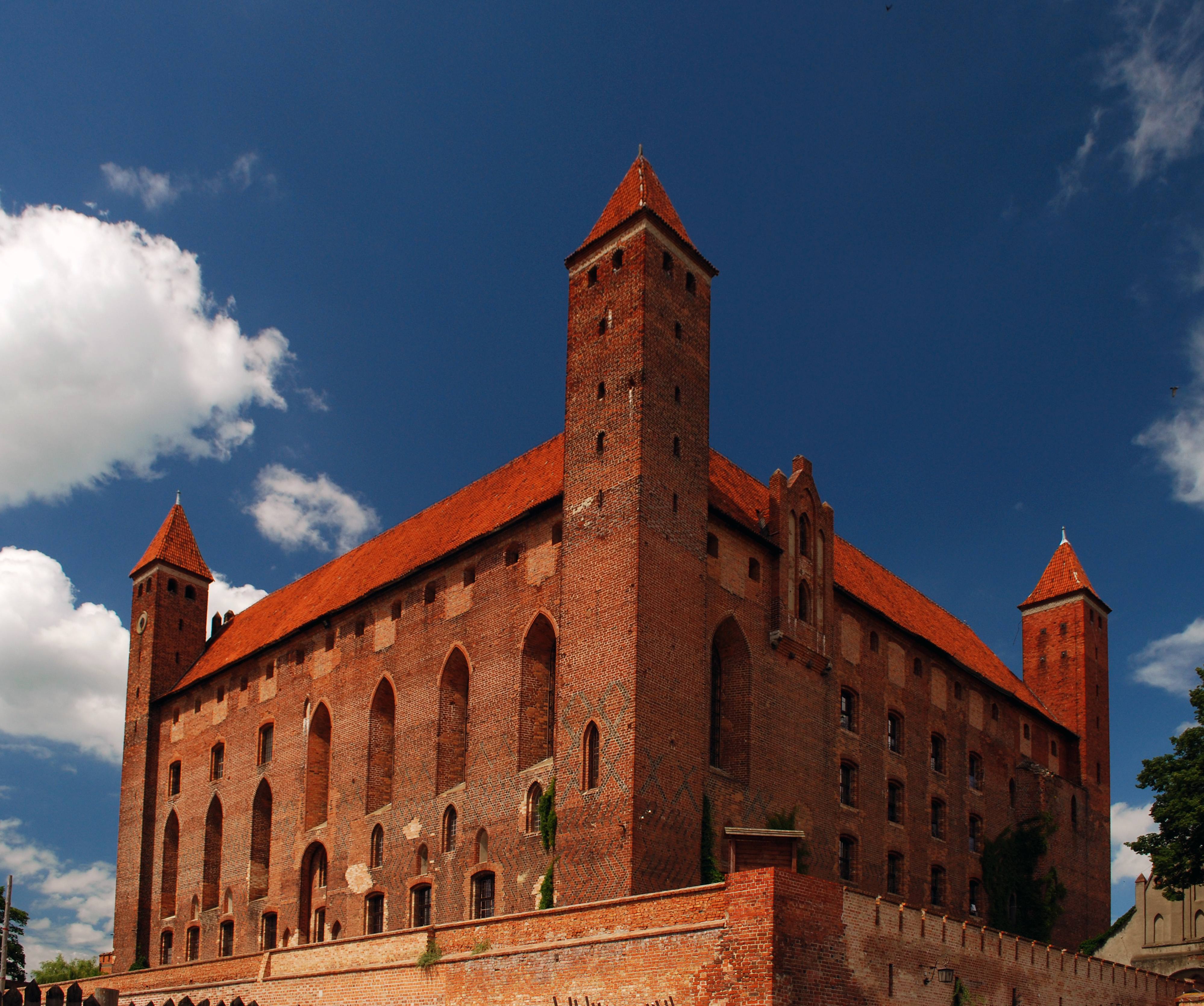
Jan z Jani (Joannes de Janie in Medieval Latin, Jan von der Jane in German) (1400–1461) - of the Clan of Ostoja was the first Polish voivode of Pomerelia (from 1454 to 1461) and one of the leaders of the Prussian Confederation, serving as a commander in the Thirteen Years' War. He was also the Lord of Regality of Tczew, Nowe and Kiszewskie, Lord of Starogard, Rabelnaw, Robaw, Pancze, Wonental, Szwarczenwalt, Weisenwalt, Moealwalt, Landesende, Turze, and Lord of Gniew.
Jan z Jani's origin was from a noble family that entered the Clan Ostoja through marriage with the sister of Mikołaj Szarlejski, who was part of the Clan of Ostoja and Duke of Inowrocław and Kujawy, Lord of Bydgoszcz, and member of the Prussian Confederation. Together with Szarlejski, Jan z Jani raised army units in Pomerania during the Thirteen Years' War and the conflict with the Teutonic Knights. He also cooperated with another member of the Clan of Ostoja, Stibor of Poniec, Lord of Regality of Greater Poland and the renowned diplomat in order to raise funds to attack Malbork, the headquarters of the Teutonic Knights.
A local legend speaks of the mighty knight Jan z Jani who designed a new coat of arms and called it the Ostoja.
References
References
- Note that Jan z Jani was originally of Dutch ethnic origins and this form of the name is a Medieval/Renaissance-era Latinized form of a Dutch name altered by the [[Macaronic language. macaronic influence]] of vernacular French, then the [[lingua franca]] throughout Europe. During the reign of French Kings Philip the Bald and Charles the Bold, and the expansion of the Holy Roman Empire's influence throughout the European continent (especially eastward), documents were written in a language that unified Latin and French with local vernaculars (including Dutch). See: Van der Schaar, J., ''Woordenboek van Voornamen: inventarisatie van de doop- en roepnamen met hunetymologie.'' (Utrecht & Antwerpen: Aula-Boeken, 1967); For more information on this Latin-vernacular onamastic and etymological shifts, see Wright, Roger. ''Latin and the Romance Languages in the Early Middle Ages''. (London, New York: Routledge, 1991); and ''Late Latin and Early Romance in Spain and Carolingian France''. (Liverpool: F. Cairns, 1982).
- Seweryn Uruski, ''Rodzina, Herbarz szlachty polskiej'', T.5, page 344 (electronic p. 348)
- Seweryn Uruski, ''Rodzina, Herbarz szlachty polskiej'', T.5, page 344 (electronic p. 348)
- Zyglewski Zbigniew. Późnośredniowieczne urzędy i urzędnicy w powiecie bydgoskim. Urzędnicy ziemscy – starostowie, burgrabiowie [w.] Prace Komisji Historii Bydgoskiego Towarzystwa Naukowego. T.16. Bydgoszcz jako ośrodek administracyjny na przestrzeni wieków. Zbiór studiów pod red. Zdzisława Biegańskiego i Włodzimierza Jastrzębskiego. Bydgoszcz 1998
- Antoni Eckstein, Historia Ponieca do połowy XVI wieku, Roczniki Historyczne, T.II, str.92, IH PAN, 1926
This article was imported from Wikipedia and is available under the Creative Commons Attribution-ShareAlike 4.0 License. Content has been adapted to SurfDoc format. Original contributors can be found on the article history page.
Ask Mako anything about Jan z Jani — get instant answers, deeper analysis, and related topics.
Research with MakoFree with your Surf account
Create a free account to save articles, ask Mako questions, and organize your research.
Sign up freeThis content may have been generated or modified by AI. CloudSurf Software LLC is not responsible for the accuracy, completeness, or reliability of AI-generated content. Always verify important information from primary sources.
Report