From Surf Wiki (app.surf) — the open knowledge base
Irish people
Ethnic group native to the island of Ireland
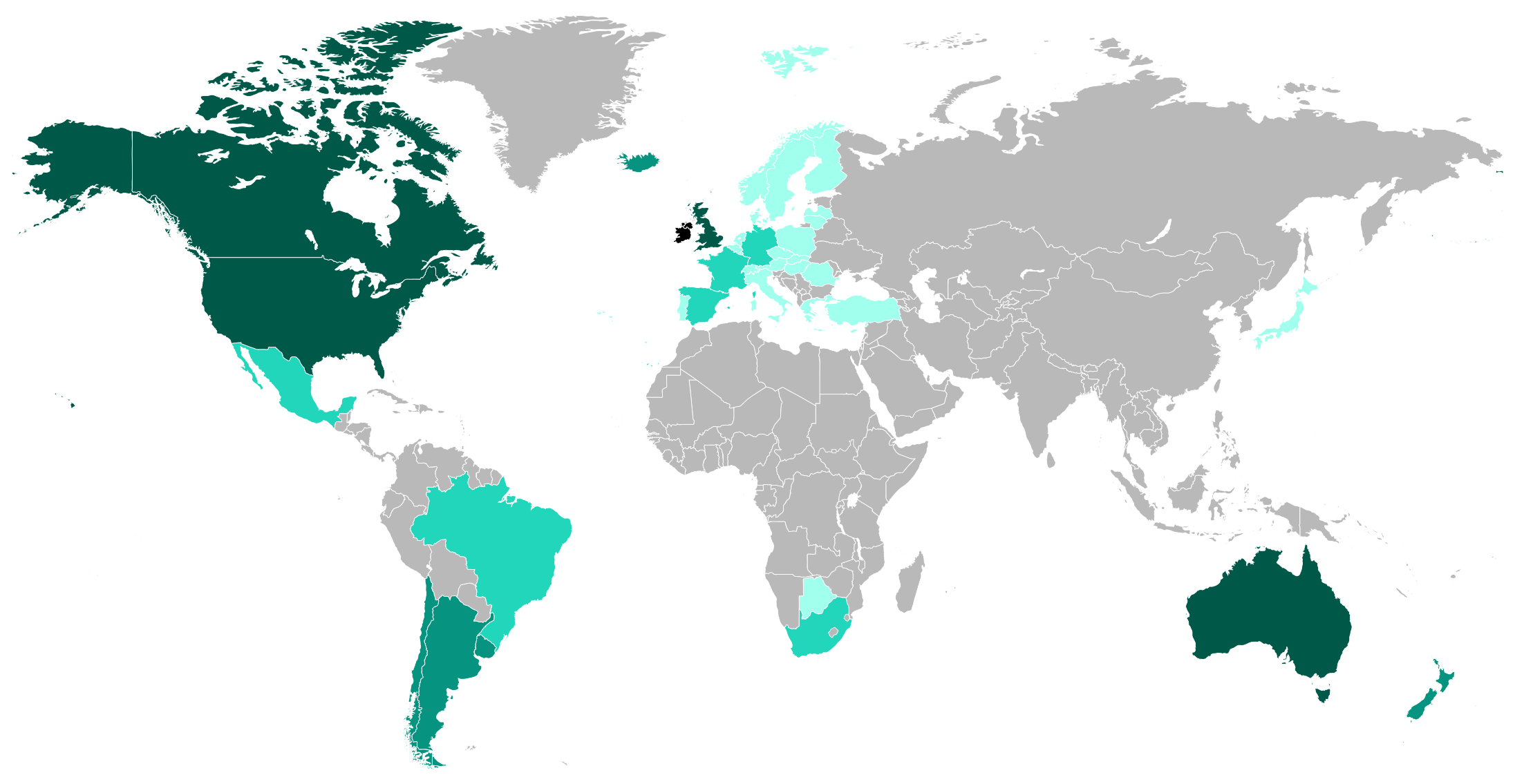
Ethnic group native to the island of Ireland
| Field | Value | ||||||||
|---|---|---|---|---|---|---|---|---|---|
| group | Irish people | ||||||||
| native_name | ga | ||||||||
| native_name_lang | ga | ||||||||
| pop | –80 million worldwide | ||||||||
| regions | {{Plainlist | ||||||||
| * Republic of Ireland5,149,139 (2022)<ref>{{Cite web | url | https://www.cso.ie/en/releasesandpublications/ep/p-cpsr/censusofpopulation2022-summaryresults/keyfindings/ | title = Census of Population 2022 – Summary Results | website = cso.ie | date = 3 April 2022 | access-date = 7 August 2023 | archive-date = 7 August 2023 | archive-url = https://web.archive.org/web/20230807181457/https://www.cso.ie/en/releasesandpublications/ep/p-cpsr/censusofpopulation2022-summaryresults/keyfindings/ | url-status = live}} |
| * Northern Ireland627,814 (2021){{refn | group | N | 2021 census, Irish alone and other national identifications}} | ||||||
| region1 | United States | ||||||||
| pop1 | 36,000,000 (self-identified, figure includes both Irish nationals and expats living in America, along with Americans that have either primary or partial Irish ancestry) | ||||||||
| ref1 | |||||||||
| region2 | United Kingdom (excl. NI) | ||||||||
| pop2 | 14,000,000 (650,000 first generation) | ||||||||
| ref2 | |||||||||
| region3 | Australia | ||||||||
| pop3 | 7,000,000 | ||||||||
| ref3 | |||||||||
| region4 | Canada | ||||||||
| pop4 | 4,627,000 | ||||||||
| ref4 | |||||||||
| region5 | New Zealand | ||||||||
| pop5 | 600,000 | ||||||||
| ref5 | |||||||||
| region6 | Argentina | ||||||||
| pop6 | 500,000 | ||||||||
| ref6 | |||||||||
| region7 | Chile | ||||||||
| pop7 | 120,000 | ||||||||
| ref7 | |||||||||
| region9 | Germany | ||||||||
| pop9 | 35,000 | ||||||||
| ref9 | |||||||||
| region10 | France | ||||||||
| pop10 | 20,000–24,000 | ||||||||
| ref10 | |||||||||
| region11 | Netherlands | ||||||||
| pop11 | 11,308 (2021) | ||||||||
| ref11 | |||||||||
| region12 | Colombia | ||||||||
| pop12 | 10,000 | ||||||||
| ref12 | |||||||||
| langs | {{Plainlist | ||||||||
| * Irish{{refn | group | N | Historical and native}} | ||||||
| * English (Hiberno-English dialects){{refn | group | N | Dominant}} | ||||||
| rels | {{Plainlist | ||||||||
| related | Irish Travellers, Gaels, Anglo-Irish, Bretons, Cornish, English, Icelanders, Manx, Scots, Ulster Scots, Welsh |
the Irish as an ethnic group and nation
- Republic of Ireland5,149,139 (2022)
- Northern Ireland627,814 (2021)
- Irish
- English (Hiberno-English dialects)
- Scots (Ulster Scots dialects)
- Irish Sign
- Northern Ireland Sign
- Predominantly Roman Catholicism
- minority Protestantism: Presbyterianism, Anglicanism, Methodism)
- See also: Religion in Ireland The Irish ( or Na hÉireannaigh) are an ethnic group and nation native to the island of Ireland, who share a common ancestry, history and culture. There have been humans in Ireland for about 33,000 years, and it has been continually inhabited for more than 10,000 years (see Prehistoric Ireland). For most of Ireland's recorded history, the Irish have been primarily a Gaelic people (see Gaelic Ireland). From the 9th century, small numbers of Vikings settled in Ireland, becoming the Norse–Gaels. Anglo-Normans also conquered parts of Ireland in the 12th century, while England's 16th/17th century conquest and colonisation of Ireland brought many English and Lowland Scots to parts of the island, especially the north. Today, Ireland is made up of the Republic of Ireland (officially called Ireland) and Northern Ireland (a part of the United Kingdom). The people of Northern Ireland hold various national identities including Irish, British or some combination thereof.
The Irish have their own unique customs, language, music, dance, sports, cuisine and mythology. Although Irish (Gaeilge) was their main language in the past, today most Irish people speak English as their first language. Historically, the Irish nation was made up of kin groups or clans, and the Irish also had their own religion, law code, alphabet and style of dress.
There have been many notable Irish people throughout history. After Ireland's conversion to Christianity, Irish missionaries and scholars exerted great influence on Western Europe, and the Irish came to be seen as a nation of "saints and scholars". The 6th-century Irish monk and missionary Columbanus is regarded as one of the "fathers of Europe", followed by saints Cillian and Fergal. The scientist Robert Boyle is considered the "father of chemistry", and Robert Mallet one of the "fathers of seismology". Irish literature has produced famous writers in both Irish- and English-language traditions, such as Eoghan Rua Ó Súilleabháin, Dáibhí Ó Bruadair, Jonathan Swift, Oscar Wilde, W. B. Yeats, Samuel Beckett, James Joyce, Máirtín Ó Cadhain, Eavan Boland, and Seamus Heaney. Notable Irish explorers include Brendan the Navigator, Sir Robert McClure, Sir Alexander Armstrong, Sir Ernest Shackleton and Tom Crean. By some accounts, the first European child born in North America had Irish descent on both sides. Many presidents of the United States have had some Irish ancestry.
The population of Ireland is about 6.9 million, but it is estimated that 50 to 80 million people around the world have varying degrees of Irish ancestry. Historically, emigration from Ireland has been the result of conflict, famine and economic issues. People of Irish descent are found mainly in English-speaking countries, especially Great Britain, the United States, Canada, New Zealand and Australia. There are also significant numbers in Argentina, Mexico, Brazil, Germany, and The United Arab Emirates. The United States has the most people of Irish descent, while in Australia those of Irish descent are a higher percentage of the population than in any other country outside Ireland. Many Icelanders have Irish and Scottish Gaelic ancestors due to transportation there as slaves by the Vikings during their settlement of Iceland.
Origins and antecedents
Prehistoric and legendary ancestors
Main article: Prehistoric Ireland, Early history of Ireland
During the past 33,000 years, Ireland has witnessed different peoples arrive on its shores.
Pytheas made a voyage of exploration to northwestern Europe in about 325 BC, but his account of it, known widely in Antiquity, has not survived and is now known only through the writings of others. On this voyage, he circumnavigated and visited a considerable part of modern-day Great Britain and Ireland. He was the first known scientific visitor to see and describe the Celtic and Germanic tribes.
The terms Irish and Ireland are probably derived from the goddess Ériu. A variety of tribal groups and dynasties have inhabited the island, including the Airgialla, Fir Ol nEchmacht, Delbhna, the mythical Fir Bolg, Érainn, Eóganachta, Mairtine, Conmaicne, Soghain, and Ulaid. In the cases of the Conmaicne, Delbhna, and perhaps Érainn, it can be demonstrated that the tribe took their name from their chief deity, or in the case of the Ciannachta, Eóganachta, and possibly the Soghain, a deified ancestor. This practice is paralleled by the Anglo-Saxon dynasties.
One legend states that the Irish were descended from the Milesians, who supposedly conquered Ireland around 1000 BC or later.
Genetics
The key traits of the Irish genome have been borne by people in Ireland since the early Bronze Age, around 4,000 years ago. The world's highest frequencies of the R-L21 Y-chromosome haplotype and lactase persistence (the ability to digest milk into adulthood) are found among people in Ireland.
Haplogroup R1b is the dominant haplogroup among Irish males, reaching a frequency of almost 80%. This is also the dominant haplogroup in most of Western Europe. R1b-L21 is the dominant sub-clade throughout Ireland, reaching a frequency of 65%. This subclade is also dominant in Scotland, Wales and Brittany and descends from a common ancestor who lived in about 2,500 BC.
Modern Irish people have a small amount of ancestry from the Early European Farmers who lived in Ireland during the Neolithic (New Stone Age). Irish people derive most of their ancestry from Western Steppe Herders who originally came from the Pontic–Caspian steppe and arrived in western Europe during the early Bronze Age.
A recent archaeogenetics study of ancient remains from Ireland found that the older Neolithic farming population was most similar to present-day Sardinians. Meanwhile, three Bronze Age men buried on Rathlin Island between 2000–1500 BC were most similar to present-day Irish people. They all belonged to Haplogroup R-L21 and had the gene for lactase persistence. This shows strong genetic continuity in Ireland from the Bronze Age to the modern era.
It is most likely that these Bronze Age people of the R-L21 haplogroup brought the Bell Beaker culture to Ireland, and it is suggested that they also brought an Indo-European language that was an ancestor to the Insular Celtic and Gaelic languages. Today, R-L21 is the dominant haplogroup throughout the island of Ireland as well as western Scotland, Wales and Brittany. It is therefore associated with the Insular Celtic peoples.
A 2017 genetic study shows that the Irish population can be divided into ten geographic genetic clusters; seven of 'Gaelic' Irish ancestry, and three of shared Irish-British ancestry. The differences between the 'Gaelic' clusters are small, and are "surprisingly faithful to the historical boundaries of Irish provinces and kingdoms". The largest difference is between native 'Gaelic' Irish populations and those of Ulster Protestants known to have recent, partial British ancestry. They were also found to have most similarity to two main ancestral sources: a 'Northwestern France' component which reached highest levels in the Irish and other Celtic populations (Welsh, Highland Scots and Cornish); and a 'West Norway' component related to the Viking era.
Irish people have the least amount of ancestry from the Anglo-Saxons in the British Isles at around 10%, which is significantly lower than their Celtic neighbours in Scotland and Wales who have got around 30% of their respective genomes being of Anglo-Saxon origin.
TermBlackIrish As of 2016, 10,100 Irish nationals of African descent referred to themselves as "Black Irish" in the national census. The term "Black Irish" is sometimes used outside Ireland to refer to Irish people with black hair and dark eyes. One theory is that they are descendants of Spanish traders or of the few sailors of the Spanish Armada who were shipwrecked on Ireland's west coast, but there is little evidence for this.
Irish Travellers
Irish Travellers are an ethnic people of Ireland. A DNA study found they originally descended from the general Irish population, however, they are now very distinct from it. The emergence of Travellers as a distinct group occurred long before the Great Famine, a genetic analysis shows. The research suggests that Traveller origins may in fact date as far back as 420 years to 1597. The Plantation of Ulster began around that time, with native Irish displaced from the land, perhaps to form a nomadic population.
History
Early expansion and the coming of Christianity
One Roman historian records that the Irish people were divided into "sixteen different nations" or tribes. Traditional histories assert that the Romans never attempted to conquer Ireland, although it may have been considered. The Irish were not, however, cut off from Europe; they frequently raided the Roman territories, and also maintained trade links.
Among the most famous people of ancient Irish history are the High Kings of Ireland, such as Cormac mac Airt and Niall of the Nine Hostages, and the semi-legendary Fianna. The 20th-century writer Seumas MacManus wrote that even if the Fianna and the Fenian Cycle were purely fictional, they would still be representative of the character of the Irish people:
The introduction of Christianity to the Irish people during the 5th century brought a radical change to the Irish people's foreign relations. The only military raid abroad recorded after that century is a presumed invasion of Wales, which according to a Welsh manuscript may have taken place around the 7th century. In the words of Seumas MacManus:
Following the conversion of the Irish to Christianity, Irish secular laws and social institutions remained in place.
Migration and invasion in the Middle Ages
The 'traditional' view is that, in the 4th or 5th century, Goidelic language and Gaelic culture was brought to Scotland by settlers from Ireland, who founded the Gaelic kingdom of Dál Riata on Scotland's west coast. This is based mostly on medieval writings from the 9th and 10th centuries. The archaeologist Ewan Campbell argues against this view, saying that there is no archaeological or placename evidence for a migration or a takeover by a small group of elites. He states that "the Irish migration hypothesis seems to be a classic case of long-held historical beliefs influencing not only the interpretation of documentary sources themselves but the subsequent invasion paradigm being accepted uncritically in the related disciplines of archaeology and linguistics." Dál Riata and the territory of the neighbouring Picts merged to form the Kingdom of Alba, and Goidelic language and Gaelic culture became dominant there. The country came to be called Scotland, after the Roman name for the Gaels: Scoti. The Isle of Man and the Manx people also came under massive Gaelic influence in their history.
Irish missionaries such as Saint Columba brought Christianity to Pictish Scotland. The Irishmen of this time were also "aware of the cultural unity of Europe", and it was the 6th-century Irish monk Columbanus who is regarded as "one of the fathers of Europe". Another Irish saint, Aidan of Lindisfarne, has been proposed as a possible patron saint of the United Kingdom, while Saints Kilian and Vergilius became the patron saints of Würzburg in Germany and Salzburg in Austria, respectively. Irish missionaries founded monasteries outside Ireland, such as Iona Abbey, the Abbey of St Gall in Switzerland, and Bobbio Abbey in Italy.
Common to both the monastic and the secular bardic schools were Irish and Latin. With Latin, the early Irish scholars "show almost a like familiarity that they do with their own Gaelic". There is evidence also that Hebrew and Greek were studied, the latter probably being taught at Iona.
Since the time of Charlemagne, Irish scholars had a considerable presence in the Frankish court, where they were renowned for their learning. The most significant Irish intellectual of the early monastic period was the 9th century Johannes Scotus Eriugena, an outstanding philosopher in terms of originality. He was the earliest of the founders of scholasticism, the dominant school of medieval philosophy. He had considerable familiarity with the Greek language, and translated many works into Latin, affording access to the Cappadocian Fathers and the Greek theological tradition, previously almost unknown in the Latin West.
The influx of Viking raiders and traders in the 9th and 10th centuries resulted in the founding of many of Ireland's most important towns, including Cork, Dublin, Limerick, and Waterford (earlier Gaelic settlements on these sites did not approach the urban nature of the subsequent Norse trading ports). The Vikings left little impact on Ireland other than towns and certain words added to the Irish language, but many Irish taken as slaves inter-married with the Scandinavians, hence forming a close link with the Icelandic people. In the Icelandic Laxdœla saga, for example, "even slaves are highborn, descended from the kings of Ireland." The first name of Njáll Þorgeirsson, the chief protagonist of Njáls saga, is a variation of the Irish name Neil. According to Eirik the Red's Saga, the first European couple to have a child born in North America was descended from the Viking Queen of Dublin, Aud the Deep-minded, and a Gaelic slave brought to Iceland.
The arrival of the Anglo-Normans brought also the Welsh, Flemish, Anglo-Saxons, and Bretons. Most of these were assimilated into Irish culture and polity by the 15th century, with the exception of some of the walled towns and the Pale areas. The Late Middle Ages also saw the settlement of Scottish gallowglass families of mixed Gaelic-Norse and Pict descent, mainly in the north; due to similarities of language and culture they too were assimilated.
Surnames
Main article: Irish name
The Irish were among the first people in Europe to use surnames as we know them today. It is very common for people of Gaelic origin to have the English versions of their surnames beginning with 'Ó' or 'Mac' (Over time however many have been shortened to 'O' or Mc). 'O' comes from the Irish Ó which in turn came from Ua, which means "grandson", or "descendant" of a named person. Mac is the Irish for son.
Names that begin with "O'" include: Ó Bánion (O'Banion), Ó Briain (O'Brien), Ó Ceallaigh (O'Kelly), Ó Conchobhair (O'Connor, O'Conor), Ó Chonaill (O'Connell), O'Coiligh (Cox), Ó Cuilinn (Cullen), Ó Domhnaill (O'Donnell), Ó Drisceoil (O'Driscoll), Ó hAnnracháin, (Hanrahan), Ó Máille (O'Malley), Ó Mathghamhna (O'Mahony), Ó Néill (O'Neill), Ó Sé (O'Shea), Ó Súilleabháin (O'Sullivan), Ó Caiside/Ó Casaide (Cassidy), Ó Brádaigh/Mac Bradaigh (Brady) and Ó Tuathail (O'Toole).
Names that begin with Mac or Mc include: Mac Cárthaigh (McCarthy), Mac Diarmada (McDermott), Mac Domhnaill (McDonnell), and Mac Mathghamhna (McMahon) Mac(g) Uidhir (Maguire), Mac Dhonnchadha (McDonagh), Mac Conmara (MacNamara), Mac Craith (McGrath), Mac Aodha (McGee), Mac Aonghuis (McGuinness), Mac Cana (McCann), Mac Lochlainn (McLaughlin) and Mac Conallaidh (McNally). Mac is commonly anglicised Mc. However, "Mac" and "Mc" are not mutually exclusive, so, for example, both "MacCarthy" and "McCarthy" are used. Both "Mac" and "Ó'" prefixes are both Irish in origin, Anglicized Prefix Mc is far more common in Ireland than Scotland with 2/3 of all Mc Surnames being Irish in origin However, "Mac" is more common in Scotland and Ulster than in the rest of Ireland; furthermore, "Ó" surnames are less common in Scotland having been brought to Scotland from Ireland. The proper surname for a woman in Irish uses the feminine prefix nic (meaning daughter) in place of mac. Thus a boy may be called Mac Domhnaill whereas his sister would be called Nic Dhomhnaill or Ní Dhomhnaill – the insertion of 'h' follows the female prefix in the case of most consonants (bar H, L, N, R, & T).
A son has the same surname as his father. A female's surname replaces Ó with Ní (reduced from Iníon Uí – "daughter of the grandson of") and Mac with Nic (reduced from Iníon Mhic – "daughter of the son of"); in both cases the following name undergoes lenition. However, if the second part of the surname begins with the letter C or G, it is not lenited after Nic. Thus the daughter of a man named Ó Maolagáin has the surname Ní Mhaolagáin and the daughter of a man named Mac Gearailt has the surname Nic Gearailt. When anglicised, the name can remain O' or Mac, regardless of gender.
There are a number of Irish surnames derived from Norse personal names, including Mac Suibhne (Sweeney) from Swein and McAuliffe from "Olaf". The name Cotter, local to County Cork, derives from the Norse personal name Ottir. The name Reynolds is an Anglicization of the Irish Mac Raghnaill, itself originating from the Norse names Randal or Reginald. Though these names were of Viking derivation some of the families who bear them appear to have had Gaelic origins.
"Fitz" is an old Norman French variant of the Old French word fils (variant spellings filz, fiuz, fiz, etc.), used by the Normans, meaning son. The Normans themselves were descendants of Vikings, who had settled in Normandy and thoroughly adopted the French language and culture. With the exception of the Gaelic-Irish Fitzpatrick (Mac Giolla Phádraig) surname, all names that begin with Fitz – including FitzGerald (Mac Gearailt), Fitzsimons (Mac Síomóin/Mac an Ridire) and FitzHenry (Mac Anraí) – are descended from the initial Norman settlers. A small number of Irish families of Goidelic origin came to use a Norman form of their original surname—so that Mac Giolla Phádraig became Fitzpatrick—while some assimilated so well that the Irish name was dropped in favour of a new, Hiberno-Norman form. Another common Irish surname of Norman Irish origin is the 'de' habitational prefix, meaning 'of' and originally signifying prestige and land ownership. Examples include de Búrca (Burke), de Brún, de Barra (Barry), de Stac (Stack), de Tiúit, de Faoite (White), de Londras (Landers), de Paor (Power). The Irish surname "Walsh" (in Irish Breathnach) was routinely given to settlers of Welsh origin, who had come during and after the Norman invasion. The Joyce and Griffin/Griffith (Gruffydd) families are also of Welsh origin.
The Mac Lochlainn, Ó Maol Seachlainn, Ó Maol Seachnaill, Ó Conchobhair, Mac Loughlin and Mac Diarmada families, all distinct, are now all subsumed together as MacLoughlin. The full surname usually indicated which family was in question, something that has been diminished with the loss of prefixes such as Ó and Mac. Different branches of a family with the same surname sometimes used distinguishing epithets, which sometimes became surnames in their own right. Hence the chief of the clan Ó Cearnaigh (Kearney) was referred to as An Sionnach (Fox), which his descendants use to this day. Similar surnames are often found in Scotland for many reasons, such as the use of a common language and mass Irish migration to Scotland in the late 19th and early to mid-20th centuries.
Late Medieval and Tudor Ireland
.jpg)
The Irish people of the Late Middle Ages were active as traders on the European continent. They were distinguished from the English (who only used their own language or French) in that they only used Latin abroad—a language "spoken by all educated people throughout Gaeldom". According to the writer Seumas MacManus, the explorer Christopher Columbus visited Ireland to gather information about the lands to the west, a number of Irish names are recorded on Columbus' crew roster preserved in the archives of Madrid and it was an Irishman named Patrick Maguire who was the first to set foot in the Americas in 1492; however, according to Morison and Miss Gould, who made a detailed study of the crew list of 1492, no Irish or English sailors were involved in the voyage.

An English report of 1515 states that the Irish people were divided into over sixty Gaelic lordships and thirty Anglo-Irish lordships. The English term for these lordships was "nation" or "country". The Irish term "oireacht" referred to both the territory and the people ruled by the lord. Literally, it meant an "assembly", where the Brehons would hold their courts upon hills to arbitrate the matters of the lordship. Indeed, the Tudor lawyer John Davies described the Irish people with respect to their laws:
Another English commentator records that the assemblies were attended by "all the scum of the country"—the labouring population as well as the landowners. While the distinction between "free" and "unfree" elements of the Irish people was unreal in legal terms, it was a social and economic reality. Social mobility was usually downwards, due to social and economic pressures. The ruling clan's "expansion from the top downwards" was constantly displacing commoners and forcing them into the margins of society.
As a clan-based society, genealogy was all important. Ireland 'was justly styled a "Nation of Annalists"'. The various branches of Irish learning—including law, poetry, history and genealogy, and medicine—were associated with hereditary learned families. The poetic families included the Uí Dhálaigh (Daly) and the MacGrath. Irish physicians, such as the O'Briens in Munster or the MacCailim Mor in the Western Isles, were renowned in the courts of England, Spain, Portugal and the Low Countries. Learning was not exclusive to the hereditary learned families, however; one such example is Cathal Mac Manus, the 15th century diocesan priest who wrote the Annals of Ulster. Other learned families included the Mic Aodhagáin and Clann Fhir Bhisigh. It was this latter family which produced Dubhaltach Mac Fhirbhisigh, the 17th century genealogist and compiler of the Leabhar na nGenealach. (see also Irish medical families).
Plantations
The 16th century Age of Discovery brought an interest among the English to colonize Ireland with the reign of the Tudors. King Henry IV established surrender and regrants to the Irish, but it was not until the Catholic queen Mary I of England who started the first plantations in Ireland in 1550, this would become the model for English colonization moving forward in Ireland and would later form the British imperial model The 1550 plantation counties were known as Philipstown (now Daingean) and Maryborough (now Portlaoise) named by the English planters at the time. A group of explorers, known as the West Country Men, were active in Ireland at around this time.
The Enterprise of Ulster which pitted Shane O'Neill (Irish chieftain) against Queen Elizabeth I was a total failure This was followed by the somewhat successful first British-English colony the Munster planations which had a population of 4,000 in 1580 and in the 1620s may have grown to 16,000
After the defeat of the Irish in Ulster in the Nine Years' War (Ireland); which was not exclusively confined to Ulster. The English would try again to colonize Ireland fearing another rebellion in Ulster, using previous colonial Irish endeavours as their influence. King James would succeed Queen Elizabeth the I, because King James I was previously King James VI of Scotland, he would plant both English and Scottish in the plantations of Ulster drawing upon the Munster Plantations, this proved to be the most successful they were settled in what's mostly Now Northern Ireland. The Plantations of Ireland introduced Tudor English settlers to Ireland, while The Plantation of Ulster in the 17th century introduced a great number of Scottish and to a lesser extent English as well as French Huguenots as colonists. All previous endeavours were solely an English venture. The Lord Protector Oliver Cromwell (1653–1658) after the defeat of the Irish rebels would also plant New English in Ireland, known as the Protestant ascendency.
Enlightenment Ireland
There have been notable Irish scientists. The Anglo-Irish scientist Robert Boyle (1627–1691) is considered the father of chemistry for his book The Sceptical Chymist, written in 1661. Boyle was an atomist, and is best known for Boyle's Law. The hydrographer Rear Admiral Francis Beaufort (1774–1857), an Irish naval officer of Huguenot descent, was the creator of the Beaufort scale for indicating wind force. George Boole (1815–1864), the mathematician who invented Boolean algebra, spent the latter part of his life in Cork. The 19th century physicist George Stoney introduced the idea and the name of the electron. He was the uncle of another notable physicist, George FitzGerald.
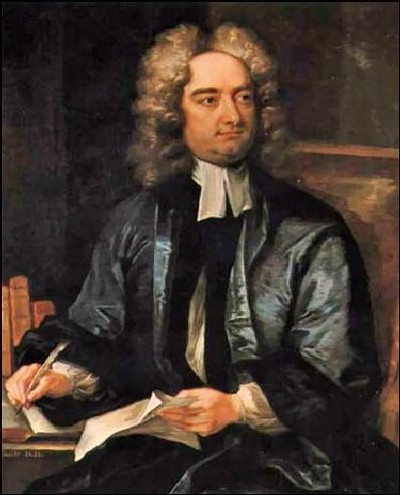
The Irish bardic system, along with the Gaelic culture and learned classes, were upset by the plantations and went into decline. Among the last of the true bardic poets were Brian Mac Giolla Phádraig (c. 1580–1652) and Dáibhí Ó Bruadair (1625–1698). The Irish poets of the late 17th and 18th centuries moved toward more modern dialects. Among the most prominent of this period were Séamas Dall Mac Cuarta, Peadar Ó Doirnín, Art Mac Cumhaigh, Cathal Buí Mac Giolla Ghunna, and Seán Clárach Mac Domhnaill. Irish Catholics continued to receive an education in secret "hedgeschools", in spite of the Penal laws. A knowledge of Latin was common among the poor Irish mountaineers in the 17th century, who spoke it on special occasions, while cattle were bought and sold in Greek in the mountain market-places of County Kerry.
For a comparatively small population of about 6 million people, Ireland made an enormous contribution to literature. Irish literature encompasses the Irish and English languages. Notable Irish writers, playwrights and poets include Jonathan Swift, Laurence Sterne, Oscar Wilde, Oliver Goldsmith, James Joyce, George Bernard Shaw, Samuel Beckett, Bram Stoker, W.B. Yeats, Séamus Heaney and Brendan Behan.
19th century
Main article: Anti-Irish racism
The Great Famine / An Górta Mór
Known as An Górta Mór ("The Great Hunger") in the Irish language, during the famine millions of Irish people died and emigrated during Ireland's largest famine. The famine lasted from 1845 – 1849, and it was worst in the year 1847, which became known as Black '47. The famine occurred due to the extremely impoverished Irish population's staple food the potato being infected with Blight, and the British administration appropriating all other crops and livestock to feed her armies abroad. This meant the crop failed and turned black. Starving people who tried to eat them would only vomit it back up soon afterwards. Soup kitchens were set up but made little difference. The British government produced little aid, only sending raw corn known as 'Peel's Brimstone' to Ireland. It was known by this name after the British Prime Minister at the time, Robert Peel, and the fact that many Irish weren't aware of how to cook corn. This led to little or no improvement. The British government set up workhouses which were disease-ridden (with cholera, TB and others) but they also failed as little food was available and many died on arrival as they were overworked. Some British political figures at the time saw the famine as a purge from God to exterminate the majority of the native Irish population. Irish people emigrated to escape the famine journeying predominantly to the east coast of the United States, especially Boston and New York, as well as Liverpool in England, Australia, Canada and New Zealand. Many records show the majority of Irish emigrants to Australia were in fact prisoners. A substantial proportion of these committed crimes in hopes of being extradited to Australia, favouring it to the persecution and hardships they endured in their homeland. Emigrants travelled on 'Coffin Ships', which got their name from the often high mortality rates on board. Many died of disease or starved. Conditions on board were abysmal - tickets were expensive so stowaways were common, and little food stuff was given to passengers who were simply viewed as cargo in the eyes of the ship workers. Notable coffin ships include the Jeanie Johnston and the Dunbrody.
There are statues and memorials in Dublin, New York and other cities in memory of the famine. The Fields of Athenry is a late-20th century song about the Great Famine and is often sung at national team sporting events in memory and homage to those affected by the famine.
The Great Famine is one of the biggest events in Irish history and is ingrained in the identity on the nation to this day. It was a major factor in Irish nationalism and Ireland's fight for independence during subsequent rebellions, as many Irish people felt a stronger need to regain independence from British rule after the famine.
20th century
.jpg)
After the Irish War of Independence (1919–1921) the Anglo-Irish Treaty was signed which led to the formation of the independent Irish Free State (now the independent Republic of Ireland) which consisted of 26 of Ireland's 32 traditional counties. The remaining six counties in the northeast remained in the United Kingdom as Northern Ireland. It is predominantly religion, historical, and political differences that divide the two communities of (nationalism and unionism). Four polls taken between 1989 and 1994 revealed that when asked to state their national identity, over 79% of Northern Irish Protestants replied "British" or "Ulster" with 3% or less replying "Irish", while over 60% of Northern Irish Catholics replied "Irish" with 13% or less replying "British" or "Ulster". A survey in 1999 showed that 72% of Northern Irish Protestants considered themselves "British" and 2% "Irish", with 68% of Northern Irish Catholics considering themselves "Irish" and 9% "British". The survey also revealed that 78% of Protestants and 48% of all respondents felt "Strongly British", while 77% of Catholics and 35% of all respondents felt "Strongly Irish". 51% of Protestants and 33% of all respondents felt "Not at all Irish", while 62% of Catholics and 28% of all respondents felt "Not at all British".
Recent history
Religion in Ireland
In the Republic of Ireland, as of 2022, 3.5 million people or about 69.1% of the population are Catholic. In Northern Ireland, about 41.6% of the population are Protestant (19.1% Presbyterian, 13.7% Church of Ireland, 3.0% Methodist, 5.8% other Christian) whilst approximately 40.8% are Catholic as of 2011.
The 31st International Eucharistic Congress was held in Dublin in 1932, that year being the supposed 1,500th anniversary of Saint Patrick's arrival. Ireland was then home to 3,171,697 Catholics, about a third of whom attended the Congress. It was noted in Time Magazine that the Congress' special theme would be "the Faith of the Irish". The massive crowds were repeated at Pope John Paul II's Mass in Phoenix Park in 1979. The idea of faith has affected the question of Irish identity even in relatively recent times, apparently more so for Catholics and Irish-Americans. Today the majority of Irish people in the Republic of Ireland identify as Catholic, although church attendance has significantly dropped in recent decades. In Northern Ireland, where almost 50% of the population is Protestant, there has also been a decline in attendances.
This has been a matter of concern over the last century for the followers of nationalist ideologists such as D. P. Moran.
Irish identity

Thomas Davis, a prominent Protestant Irish nationalist and founder of the Irish nationalist Young Ireland movement, identified the Irish as a Celtic nation. He estimated that ethnically, 5/6ths of the nation were either of Gaelic Irish-origin, or descended from returned Scottish Gaels (including much of the Ulster Scots) and some Celtic Welsh (such as his own ancestors and those carrying surnames such as Walsh and Griffiths). As part of this he was a staunch supporter of the Irish language as the "national language". In regards to the Germanic minority in Ireland (of Norman and Anglo-Saxon origin) he believed that they could be assimilated into Irishness if they had a "willingness to be part of the Irish Nation".
Europe
The Republic of Ireland and the United Kingdom joined the European Community in 1973, and Irish citizens became additionally Citizens of the European Union with the Maastricht Treaty signed in 1992. This brought a further question for the future of Irish identity; whether Ireland was "closer to Boston than to Berlin:"
Irish diaspora
Main article: Irish diaspora

The Irish diaspora consists of Irish emigrants and their descendants in countries such as the United States, Great Britain, Canada, Australia, New Zealand, South Africa, and nations of the Caribbean such as Jamaica and Barbados. These countries all have large minorities of Irish descent, who in addition form the core of the Catholic Church in those countries.
Many famous and influential figures have claimed Irish ancestry such as Che Guevara, Walt Disney, Barack Obama, JFK, Muhammad Ali and Maréchal The 1st Duke of Magenta, the second President of the Third Republic.
Many Irish people were also transported to the island of Montserrat, to work as indentured servants, exiled prisoners or slaves. Unlike African chattel slaves, the majority of Irish labourers who were sent to Montserrat did so by personal choice. Some were Irish Confederate troops exiled by the English Parliamentarian Oliver Cromwell following the Irish Confederate Wars. The African slave population on the island attempted a rebellion against the Irish plantation owners on 17 March 1768. The date was chosen with the idea that the plantation owners would be distracted by St. Patrick's day festivities, but the plot was ultimately discovered and several of those involved were put to death. To this day, the Island celebrates St. Patrick's Day as a public holiday to commemorate the revolt and honour those who lost their lives. People of Irish descent also feature strongly in Latin America, especially in Argentina and important minorities in Brazil, Chile, and Mexico. In 1995, President Mary Robinson reached out to the "70 million people worldwide who can claim Irish descent". Today the diaspora is believed to contain an estimated 80 million people.
There are also large Irish communities in some mainland European countries, notably in Spain, France and Germany. Between 1585 and 1818, over half a million Irish departed Ireland to serve in the wars on the Continent, in a constant emigration romantically styled the"Flight of the Wild Geese" and, before that, in the 'Flight of the Earls', just before the Plantation of Ulster. In the early years of the English Civil War, a French traveller remarked that the Irish "are better soldiers abroad than at home". Later, Irish brigades in France and Spain would fight in the Wars of the Spanish and Austrian Succession and the Napoleonic Wars. In the words of Field Marshal The 1st Duke of Wellington, the Irish-born 'Iron Duke', a notable representative of the Irish military diaspora, "Ireland was an inexhaustible nursery for the finest soldiers".
The British Legions were units that fought under Simón Bolívar against Spain for the independence of Colombia, Venezuela, Ecuador, and Peru. Venezuelans called them the Albion Legion. They were composed of over seven thousand volunteers, mainly Napoleonic War veterans from Great Britain and Ireland. Volunteers in the British Legion were motivated by a combination of both genuine political and mercenary motives. The most famous cause of emigration was the Great Famine of the late 1840s. A million are thought to have emigrated to Liverpool as a result of the famine. For both the Irish in Ireland and those in the resulting diaspora, the famine entered folk memory and became a rallying point for various nationalist movements.
There are Afro-Caribbean people descended from Irish immigrants in the Caribbean, especially on Barbados, Jamaica, and Montserrat. They often have Irish surnames, speak a form of Caribbean English influenced by the Irish vernacular and, in some cases, sing Irish songs.
People of Irish descent are the second largest self-reported ethnic group in the United States, after German Americans. Nine of the signatories of the American Declaration of Independence were of Irish origin. Among them was the sole Catholic signatory, Charles Carroll of Carrollton, whose family were the descendants of Ely O'Carroll, an Irish prince who had suffered under Cromwell. At least twenty-five presidents of the United States have some Irish ancestral origins, including George Washington. Since John F. Kennedy took office in 1961, every American President (with the exception of Gerald Ford and Donald Trump) has had some Irish blood. An Irish-American, James Hoban, was the designer of the White House. Commodore John Barry, who was born in County Wexford, was the "Father of the United States Navy".
In the mid-19th century, large numbers of Irish immigrants were conscripted into Irish regiments of the United States Army at the time of the Mexican–American War. The vast majority of the 4,811 Irish-born soldiers served in the U.S. Army, but some deserted to the Mexican Army, primarily to escape mistreatment by Protestant officers and the strong anti-Catholic discrimination in America. These were the San Patricios, or Saint Patrick's Battalion—a group of Irish led by Galway-born John O'Riley, with some German, Scottish and American Catholics. They fought until their surrender at the decisive Battle of Churubusco, and were executed outside Mexico City by the American government on 13 September 1847. The battalion is commemorated in Mexico each year on 12 September.
During the 18th and 19th centuries, 300,000 free emigrants and 45,000 convicts left Ireland to settle in Australia. Today, Australians of Irish descent are one of the largest self-reported ethnic groups in Australia, after English and Australian. In the 2006 Census, 1,803,741 residents identified themselves as having Irish ancestry either alone or in combination with another ancestry. However this figure does not include Australians with an Irish background who chose to nominate themselves as 'Australian' or other ancestries. The Australian embassy in Dublin states that up to thirty per cent of the population claim some degree of Irish ancestry.
It is believed that as many as 30,000 Irish people emigrated to Argentina between the 1830s and the 1890s. This was encouraged by the clergy, as they considered a Catholic country, Argentina, preferable to a more Protestant United States. This flow of emigrants dropped sharply when assisted passage to Australia was introduced at which point the Argentine government responded with their own scheme and wrote to Irish bishops, seeking their support. However, there was little or no planning for the arrival of a large number of immigrants, no housing, no food. Many died, others made their way to the United States and other destinations, some returned to Ireland, a few remained and prospered. Thomas Croke Archbishop of Cashel, said: "I most solemnly conjure my poorer countrymen, as they value their happiness hereafter, never to set foot on the Argentine Republic however tempted to do so they may be by offers of a passage or an assurance of comfortable homes." Some notable Argentines of Irish descent and Irish people who settled in Argentina include Che Guevara, former president Edelmiro Julián Farrell, and admiral William Brown.
There are people of Irish descent all over South America, such as the Chilean liberator Bernardo O'Higgins and the Peruvian photographer Mario Testino. Although some Irish retained their surnames intact, others were assimilated into the Spanish vernacular. The last name O'Brien, for example, became Obregón.
People of Irish descent are also one of the largest self-reported ethnic groups in Canada, after English, French and Scottish Canadians. As of 2006, Irish Canadians number around 4,354,155.
Notes
Citations
- Lehmann, Winfred P., 1997. 'Early Celtic among the Indo-European Dialects'. Zeitschrift für Celtische Philologie 49–50. 440–454. Irish people in New Zealand --
References
- Irish Names - origins and meanings at Library Ireland
References
- ceu@scotland.gsi.gov.uk, Scottish Government, St. Andrew's House, Regent Road, Edinburgh EH1 3DG Tel:0131 556 8400. (29 May 2009). "The Scottish Diaspora and Diaspora Strategy: Insights and Lessons from Ireland".
- (3 April 2022). "Census of Population 2022 – Summary Results".
- Ethnic Irish at Ethnologue (22nd ed., 2020)
- (2022-09-07). "Census 2021 main statistics identity tables".
- American FactFinder, United States Census Bureau. "U.S. Census Bureau, 2007". Factfinder.census.gov.
- (16 March 2001). "One in four Britons claim Irish roots". BBC.
- Maybin, Simon. (2 September 2016). "How many Britons are entitled to an Irish passport?". [[BBC News]].
- (28 July 2013). "Department of Foreign Affairs – Emigrant Grants".
- (20 February 2019). "Ethnic Origin, both sexes, age (total), Canada, 2016 Census – 25% Sample data". [[Statistics Canada]].
- (2011). "Ethnic Origin (264), Single and Multiple Ethnic Origin Responses (3), Generation Status (4), Age Groups (10) and Sex (3) for the Population in Private Households of Canada, Provinces, Territories, Census Metropolitan Areas and Census Agglomerations, 2011 National Household Survey". [[Statistics Canada]].
- (14 June 2003). "The Irish in New Zealand: Historical Contexts and Perspectives – Brian Easton".
- (14 March 2008). "Flying the Irish flag in Argentina". Western People.
- O'Higgins Tours. "Los irlandeses en Chile".
- "estimated 35,000-more than 1 million enjoy Irish culture".
- (18 January 2019). "Who are the Irish in France, and what are they doing there?". Irish Times.
- (22 July 2021). "Bevolking; geslacht, leeftijd, generatie en migratieachtergrond, 1 januari". Central Bureau of Statistics (CBS).
- "Irlandeses en Colombia y Antioquia".
- (2000). "Estimating Scandinavian and Gaelic ancestry in the male settlers of Iceland". The American Journal of Human Genetics.
- (11 July 2007). "Pope Calls Irish Monk a Father of Europe". [[Zenit News Agency.
- Smiley, p. 630
- (29 April 1987). "Dáil Éireann – 29/Apr/1987 Ceisteanna—Questions. Oral Answers. – Australian Bicentenary". Oireachtasdebates.oireachtas.ie.
- (6 Jun 2018). "DNA study reveals fate of Irish women taken by Vikings as slaves to Iceland". irishtimes.com.
- (18 April 2021). "First humans came here 33,000 years ago, reindeer bones show".
- Roseingrave, Louise. "Reindeer bone found in Cork cave shows human activity in Ireland 33,000 years ago".
- "Pytheas | Greek explorer".
- {{cite EB1911
- Mac Manus, p 1 & 7
- "FamilyTreeDNA Discover™".
- [https://www.academia.edu/24686284/The_phylogenealogy_of_R_L21_four_and_a_half_millennia_of_expansion_and_redistribution "The phylogenealogy of R-L21: Four and a half millennia of expansion and redistribution."] {{Webarchive. link. (11 November 2022 (Joe Flood))
- (2015). "Massive migration from the steppe is a source for Indo-European languages in Europe". Nature.
- (2015). "Population genomics of Bronze Age Eurasia". Nature.
- (2015). "Eight thousand years of natural selection in Europe".
- Radford, Tim. (28 December 2015). "Irish DNA originated in Middle East and eastern Europe". [[The Guardian]].
- Lara M. Cassidy. (28 December 2015). "Neolithic and Bronze Age migration to Ireland and establishment of the insular Atlantic genome". PNAS.
- (8 December 2017). "The Irish DNA Atlas: Revealing Fine-Scale Population Structure and History within Ireland". Scientific Reports.
- (2018). "Insular Celtic population structure and genomic footprints of migration". PLOS Genetics.
- Wade, Nicolas. (5 March 2007). "English, Irish, Scots: They're All One, Genes Suggest".
- Schiffels, Haak, Paajanen, Popescu, Loe, Clarke, Lyons, Mortimer, Sayer, Tyler-Smith, Cooper, Durbin, Stephan, Wolfgang, Pirita, Bastien, Elizabeth, Louise, Rachel, Alice, Richard, Duncan, Chris, Alan, Richard. (19 January 2016). "Iron Age and Anglo-Saxon genomes from East England reveal British migration history". Nature Communications.
- "Census of Population 2016 – Profile 8 Irish Travellers, Ethnicity and Religion".
- [http://www.irishcentral.com/roots/Who-were-the-Black-Irish-92376439.html Who were the Black Irish? What is the origin of the Irish with swarthy dark features? A subject of historical discussion, the subject is almost never referred to in Ireland] {{Webarchive. link. (25 May 2013 . IrishCentral.com. Staff Writers, 26 March 2013. Retrieved 6 August 2013.)
- Ahlstrom, Dick. "Travellers as 'genetically different' from settled Irish as Spanish". The Irish Times.
- MacManus, p 86
- MacManus, p 87
- MacManus, p67
- MacManus, p 89
- Jones, Charles. (1997). "The Edinburgh history of the Scots language". Edinburgh University Press.
- Nora Kershaw Chadwick, Myles Dyllon. (1972). "The Celtic Realms". Weidenfeld & Nicolson.
- Campbell, Ewan. "[http://www.electricscotland.com/history/articles/scotsirish.htm Were the Scots Irish?] {{Webarchive. link. (10 November 2012 " in ''Antiquity'' #75 (2001).)
- (23 April 2008). "Home-grown holy man: Cry God for Harry, Britain and... St Aidan". The Independent.
- MacManus, p 221
- MacManus, p 221–222
- MacManus, p 215
- (17 October 2004). "John Scottus Eriugena". [[Stanford University]].
- Toman, p 10: "[[Peter Abelard. Abelard]] himself was... together with John Scotus Erigena (9th century), and [[Lanfranc]] and [[Anselm of Canterbury]] (both 11th century), one of the founders of scholasticism."
- Smiley, p. 274
- Woulfe, Patrick. (1923). "Sloinnte Gaedheal is Gall: Irish names and surnames". M. H. Gill & son.
- Burdess, Neil. (25 October 2016). "A dozen things you might not know about Irish names". The Irish Times.
- (July 2023). "ScottishHistory.com".
- Richard Hooker. (July 2023). "The Normans". [[Washington State University]].
- "Théâtre de tous les peuples et nations de la terre avec leurs habits et ornemens divers, tant anciens que modernes, diligemment depeints au naturel par Luc Dheere peintre et sculpteur Gantois[manuscript]".
- MacManus, p 343
- MacManus, p 340
- MacManus, p 343–344
- Taviani, Paolo Emilio. (1985). "Christopher Columbus". Orbis.
- Nicholls
- MacManus, p 352
- Jefferies, Dr. Henry A. "Culture and Religion in Tudor Ireland, 1494–1558". [[University College Cork]].
- MacManus, p 348
- "History Revision – The Plantations".
- (1977). "The Subjugation and Division of Ireland: Testing Ground for Colonial Policy". Crime and Social Justice.
- An Act whereby the King and Queen's Majesties, and the Heires and Successors of the Queen, be entituled to the Countries of Leix, Slewmarge, Irry, Glimnaliry, and Offaily, and for making the same Countries Shire Grounds."; Phil. & Mar., 1556 c.2
- Martin Marix Evans; David Lyons (October 2003). A terrible beauty. Gill & Macmillan. Retrieved 25 February 2013.
- Andrews, Kenneth. (1984). "Trade, Plunder and Settlement: Maritime Enterprise and the Genesis of the British Empire, 1480–1630". Cambridge University Press.
- Lennon p. 279
- MacCarthy-Morrogh, Michael. (1983). "The Munster Plantation, 1583–1641". Royal Holloway College, London University.
- Canny, Making Ireland British, p. 146
- ''Boyle on Atheism'' by J.J. MacIntosh (University of Toronto Press {{ISBN. 978-0-8020-9018-8), page 6
- MacManus, p 461
- MacManus, p 461–462
- David R. Montgomery. (14 May 2007). "Dirt: The Erosion of Civilizations". University of California Press.
- "in, Social Attitudes in Northern Ireland: The Fifth Report". Cain.ulst.ac.uk.
- (9 May 2003). "Northern Ireland Life and Times Survey". Ark.ac.uk.
- (12 May 2003). "Northern Ireland Life and Times Survey". Ark.ac.uk.
- (9 May 2003). "Northern Ireland Life and Times Survey". Ark.ac.uk.
- (30 May 2023). "Population Usually Resident and Present in the State". CSO.ie.
- (20 June 1932). "In Dublin". Time Magazine.
- John Paul McCarthy. "The 31st International Eucharistic Congress, Dublin, 1932". [[University College Cork]].
- The figure 1,250,000 is mentioned on the commemorative stone at the Papal Cross in the Phoenix Park, Dublin; a quarter of the population of the island of Ireland, or a third of the population of Republic of Ireland
- Pearce, Joseph. (March–April 2007). "Editorial: The Celtic Enigma". Sapientia Press.
- Thomas Davis. (28 February 2013). "Our National Language". From-Ireland.net.
- Thomas Davis – Dame Street. (17 March 2012). "90,000 Photographs By William Murphy – 90,000 Photographs By William Murphy". Dublinstreets.osx128.com.
- Aldous, p 185
- (29 February 2016). "The Irish in the Anglo-Caribbean: servants or slaves? - History Ireland".
- Fergus, Howard A. (1996). "Gallery Montserrat: some prominent people in our history". Canoe Press University of West Indies.
- "Ireland's Diaspora". Irelandroots.com.
- [http://www.discoverireland.com/us/about-ireland/history/ The island history] {{Webarchive. link. (4 August 2013 , discoverireland.com)
- "The Wild Geese, Men-at-Arms 102". [[Osprey Publishing]].
- McLaughlin, p4
- Davies, p 832
- Brown, Matthew. (2006). "Adventuring through Spanish Colonies: Simón Bolívar, Foreign Mercenaries and the Birth of New Nations". [[Liverpool University Press]].
- David Ross, ''Ireland: History of a Nation'', New Lanark: Geddes & Grosset, 2002, p. 226. {{ISBN. 1-84205-164-4
- The Famine that affected Ireland from 1845 to 1852 has become an integral part of folk legend. Kenealy, ''This Great Calamity'', p. 342.
- "Montserrat Article".
- "The Black Irish".
- "Irish-American History Month, 1995". irishamericanheritage.com.
- [http://www.visitmaryland.org/PressRoom/Pages/MarylandTracesitsIrishRootsar.aspx Maryland Traces Its Irish Roots] {{Webarchive. link. (19 June 2013 , Maryland Office of Tourism)
- "Presidents of the United States with "Irish Roots"". irishamericanheritage.com.
- Marck, John T. "William H. Taft". aboutfamouspeople.com.
- "Warren Gamaliel Harding". thinkquest.com.
- Marck, John T. "Harry S. Truman". aboutfamouspeople.com.
- "American Presidents with Irish Ancestors". Directory of Irish Genealogy.
- "The Man Who Made Trump Who He Is". Politico.
- (2 November 2016). "Donald Trump's Scottish roots: How a tiny island could shape a President". CNN.
- John Barry Kelly. "Commodore Barry".
- Michael G. Connaughton. (September 2005). "Beneath an Emerald Green Flag, The Story of Irish Soldiers in Mexico". The Society for Irish Latin American Studies.
- Mark R. Day. "The San Patricios: Mexico's Fighting Irish".
- Ryan, Sean. (2006). "Botany Bay 1791–1867". Wild Geese Heritage Museum and Library Portumna, Co. Galway.
- {{Census 2006 AUS
- "Australia- Ireland relationship – Australian Embassy". Ireland.embassy.gov.au.
- (29 March 1889). "Irish Emigrants to the Argentine Republic". Western Daily Press.
- (16 March 2010). "The Irish in Argentina". Wander Argentina.
This article was imported from Wikipedia and is available under the Creative Commons Attribution-ShareAlike 4.0 License. Content has been adapted to SurfDoc format. Original contributors can be found on the article history page.
Ask Mako anything about Irish people — get instant answers, deeper analysis, and related topics.
Research with MakoFree with your Surf account
Create a free account to save articles, ask Mako questions, and organize your research.
Sign up freeThis content may have been generated or modified by AI. CloudSurf Software LLC is not responsible for the accuracy, completeness, or reliability of AI-generated content. Always verify important information from primary sources.
Report