From Surf Wiki (app.surf) — the open knowledge base
Internet meme
Cultural item spread via the Internet
Cultural item spread via the Internet
An Internet meme, or meme (), is a cultural item (such as an idea, behavior, or style) that spreads across the Internet, now primarily through social media platforms. Internet memes manifest in a variety of formats, including images, videos (e.g. GIFs), and other viral content. Key characteristics of memes include their tendency to be parodied, their use of intertextuality, their viral dissemination, and their continual evolution. The term meme was originally introduced by Richard Dawkins in his 1976 book The Selfish Gene to describe the concept of cultural transmission of a singular unit, analogous to biology.
The term Internet meme was coined by Mike Godwin in 1993 in reference to the way memes proliferated through early online communities, including message boards, Usenet groups, and email. The emergence of social media platforms such as YouTube, Twitter, Facebook, and Instagram further diversified memes and accelerated their spread. Dank and surrealist memes are some of the newer genres, with newer formats like short-form videos popularized by platforms like Vine and TikTok. Newer internet memes (specifically those of low quality) are often classified as brain rot.
Memes are now recognized as a significant aspect of Internet culture and are the subject of academic research. They appear across a broad spectrum of contexts, including marketing, economics, finance, politics, social movements, religion, and healthcare. While memes are often viewed as falling under fair use protection, their incorporation of material from pre-existing works can result in copyright disputes.
Characteristics
Internet memes derive from the original concept of memes as units of cultural transmission, passed from person to person. In the digital realm, this transmission occurs primarily through online platforms, such as social media. Although related, internet memes differ from traditional memes in that they often represent fleeting trends, whereas the success of traditional memes is measured by their endurance over time. Additionally, internet memes tend to be less abstract in nature compared to their traditional counterparts. They are highly versatile in form and purpose, serving as tools for light entertainment, self-expression, social commentary, and even political discourse.
Two fundamental characteristics of internet memes are creative reproduction and intertextuality. Creative reproduction refers to the adaptation and transformation of a meme through imitation or parody, either by reproducing the meme in a new context ("mimicry") or by remixing the original material ("remix"). In mimicry, the meme is recreated in a different setting, as seen when different individuals replicate the viral video "Charlie Bit My Finger". Remix, on the other hand, involves technological manipulation, such as altering an image with Photoshop, while retaining elements of the original meme.
Intertextuality in memes involves the blending of different cultural references or contexts. An example of this is the combination of US politician Mitt Romney's phrase "binders full of women" from the 2012 US presidential debate with a scene from the Korean pop song "Gangnam Style". In this case, the phrase "my binders full of women exploded" is superimposed on a frame from Psy's music video, creating a new meaning by merging political and cultural references from distinct contexts.
Internet memes can also function as in-jokes within specific online communities, where they convey insider knowledge that may be incomprehensible to outsiders. This fosters a sense of collective identity within the group. Conversely, some memes achieve widespread cultural relevance, being understood and appreciated by broader audiences outside of the originating subculture.
A study by Michele Knobel and Colin Lankshear examined how Richard Dawkins' three characteristics of successful traditional memes—fidelity, fecundity, and longevity—apply to internet memes. It was found that fidelity in the context of internet memes is better described as replicability, as memes are frequently modified through remixing while still maintaining their core message. Fecundity, or the ability of a meme to spread, is promoted by factors such as humor (such as the comically translated video game line "All your base are belong to us"), intertextuality (as in the various pop culture-referencing renditions of the "Star Wars Kid" viral video), and juxtaposition of seemingly incongruous elements (exemplified in the "Bert is Evil" meme). Finally, longevity is essential for a meme's continued circulation and evolution over time.
Evolution and propagation
Internet memes can either remain consistent or evolve over time. This evolution may involve changes in meaning while retaining the meme’s structure, or vice versa, with such transformations occurring either by chance or through deliberate efforts like parody. A study by Miltner examined the lolcats meme, tracing its development from an in-joke within computer and gaming communities on the website 4chan to a broader source of humor and emotional support. As the meme entered mainstream culture, it lost favor with its original creators. Miltner explained that as content moves through different communities, it is reinterpreted to suit the specific needs and desires of those communities, often diverging from the creator’s original intent. Modifications to memes can lead them to transcend social and cultural boundaries.
Memes spread virally, in a manner similar to the SIR (Susceptible-Infectious-Recovered) model used to describe the transmission of diseases. Once a meme has reached a critical number of individuals, its continued spread becomes inevitable. Research by Coscia examined the factors contributing to a meme’s propagation and longevity, concluding that while memes compete for attention—often resulting in shorter lifespans—they can also collaborate, enhancing their chances of survival. A meme that experiences an exceptionally high peak in popularity is unlikely to endure unless it is uniquely distinct. Conversely, a meme without such a peak, but that coexists with others, tends to have greater longevity. In 2013, Dominic Basulto, writing for The Washington Post, argued that the widespread use of memes, particularly by the marketing and advertising industries, has led to a decline in their original cultural value. Once considered valuable cultural artifacts meant to endure, memes now often convey trivial rather than meaningful ideas.
History
Origins and early memes

The word meme was coined by Richard Dawkins in his 1976 book The Selfish Gene as an attempt to explain how aspects of culture replicate, mutate, and evolve (memetics). Emoticons are among the earliest examples of internet memes, specifically the smiley emoticon ":-)", introduced by Scott Fahlman in 1982. The concept of memes in an online context was formally proposed by Mike Godwin in the June 1993 issue of Wired. In 2013, Dawkins characterized an Internet meme as being a meme deliberately altered by human creativity—distinguished from biological genes and his own pre-Internet concept of a meme, which involved mutation by random change and spreading through accurate replication as in Darwinian selection. Dawkins explained that Internet memes are thus a "hijacking of the original idea", evolving the very concept of a meme in this new direction. Nevertheless, by 2013, Limor Shifman solidified the relationship of memes to internet culture and reworked Dawkins' concept for online contexts. Such an association has been shown to be empirically valuable as internet memes carry an additional property that Dawkins' "memes" do not: internet memes leave a footprint in the media through which they propagate (for example, social networks) that renders them traceable and analyzable.
However, before internet memes were considered truly academic, they were initially a colloquial reference to humorous visual communication online in the mid-late 1990s among internet denizens; examples of these early internet memes include the Dancing Baby and Hampster Dance. Memes of this time were primarily spread via messageboards, Usenet groups, and email, and generally lasted for a longer time than modern memes.
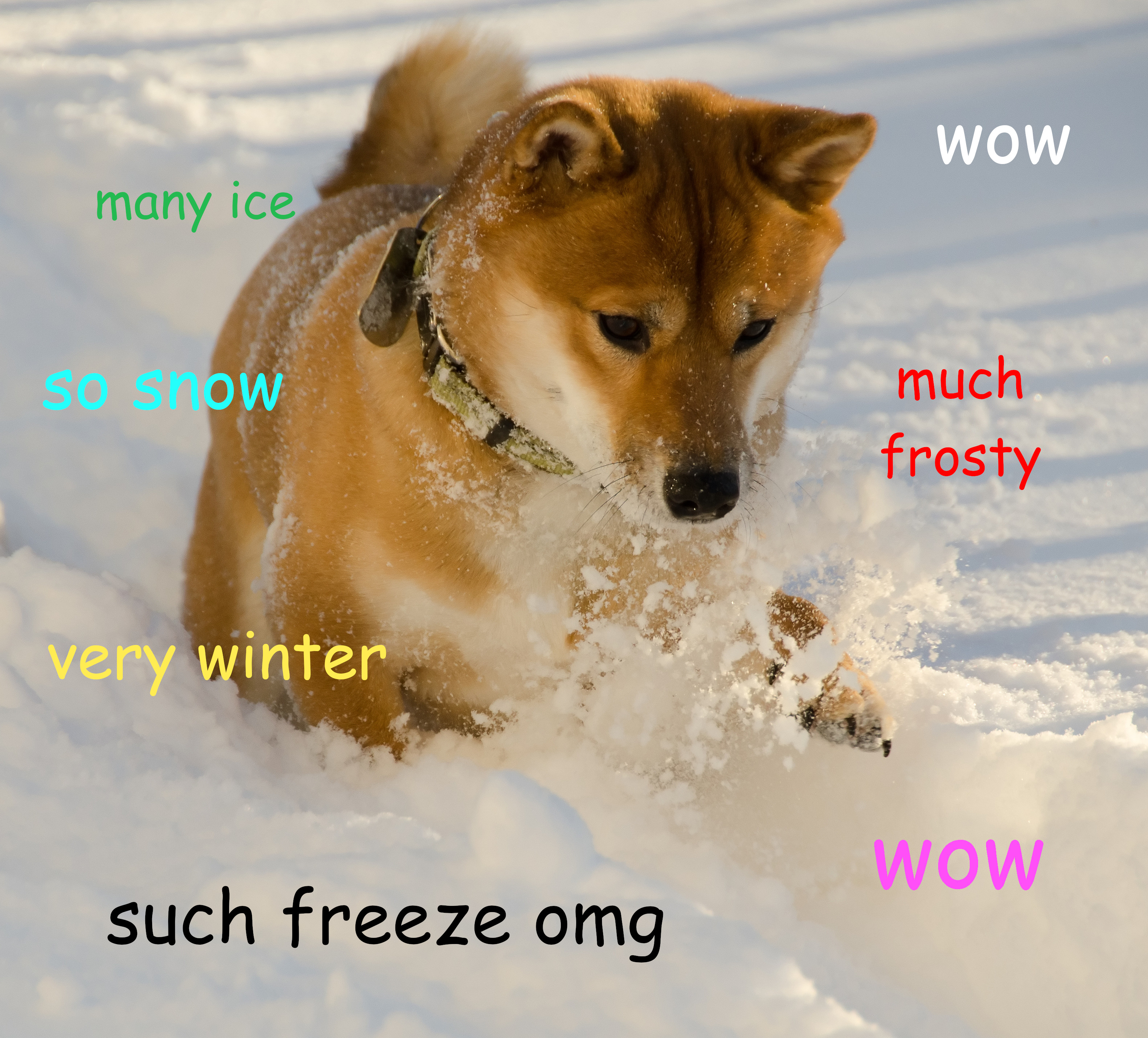
As the Internet protocols evolved, so did memes. Lolcats originated from imageboard website 4chan, becoming the prototype of the "image macro" format (an image overlaid by large text). Other early forms of image-based memes included demotivators (parodized motivational posters), photoshopped images, comics (such as rage comics), and anime fan art, sometimes made by doujin circles in various countries. After the release of YouTube in 2005, video-based memes such as Rickrolling and viral videos such as "Gangnam Style" and the Harlem shake emerged. The appearance of social media websites such as Twitter, Facebook, and Instagram provided additional mediums for the spread of memes, and the creation of meme-generating websites made their production more accessible.
Contemporary memes
"Dank memes" are a genre of internet memes that reached mainstream prominence around 2014. Dank memes refer to deliberately zany or odd memes with features such as oversaturated colors, compression artifacts, crude humor, strange captions, and overly loud sounds (termed ear rape). The term dank, which refers to cold, damp places, was adapted as a way to describe memes that fit the aforementioned criteria of a dank meme. The term may also be used to describe memes that have become overused and stale to the point of paradoxically becoming humorous again. Despite having lost popularity since the late 2010s, dank memes have seen several "revival" attempts, popularised on platforms such as TikTok. The phenomenon of dank memes sprouted a subculture called the "meme market", satirizing Wall Street and applying the associated jargon (such as "stocks") to internet memes. Originally started on Reddit as /r/MemeEconomy, users jokingly "buy" or "sell" shares in a meme reflecting opinion on its potential popularity.
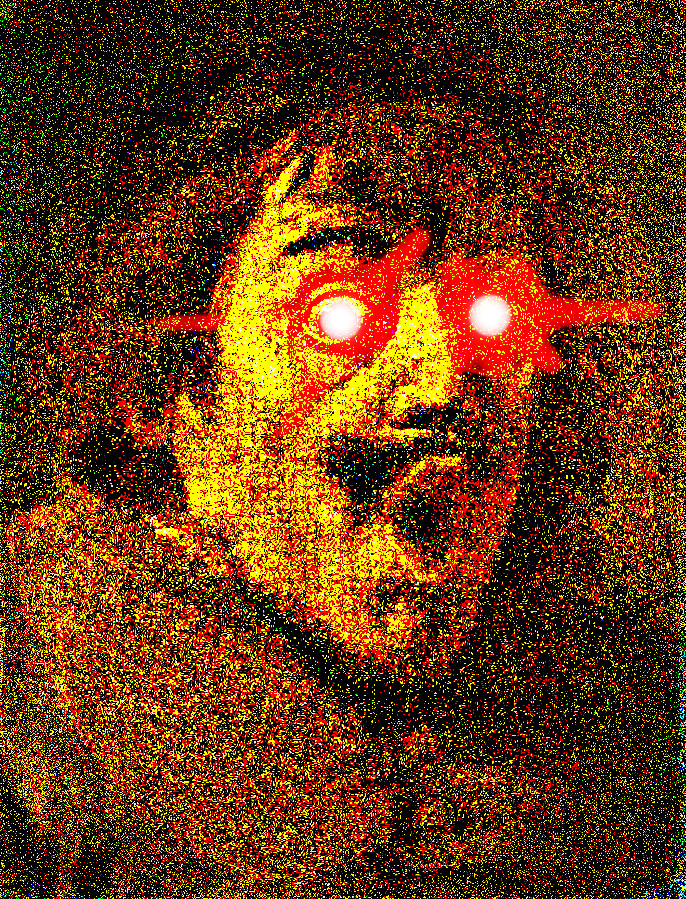
deep-fried"Deep-fried" memes refer to those that have been distorted and run through several filters and/or layers of lossy compression. An example of these is the "E" meme, a picture of YouTuber Markiplier photoshopped onto Lord Farquaad from the film Shrek, in turn photoshopped into a scene from businessman Mark Zuckerberg's hearing in Congress and captioned with a lone 'E'. Elizabeth Bruenig of the Washington Post described this as a "digital update to the surreal and absurd genres of art and literature that characterized the tumultuous early 20th century". Many modern memes make use of humorously absurd and even surrealist themes. Examples of the former include "they did surgery on a grape", a video depicting a Da Vinci Surgical System performing test surgery on a grape, and the "moth meme", a close-up picture of a moth with captions humorously conveying the insect's love of lamps. Surreal memes incorporate layers of irony to make them unique and nonsensical, often as a means of escapism from mainstream meme culture.

After the success of the application Vine, a format of memes emerged in the form of short videos and scripted sketches. An example is the "What's Nine Plus Ten?" meme, a Vine video depicting a child humorously providing an incorrect answer to a math problem. After the shutdown of Vine in 2017, the de facto replacement became the social network TikTok, which similarly utilizes the short video format. The platform has become immensely popular, and is the source of many genres of internet memes as of the mid 2020s.
The Great Meme ResetIn 2022, the term brain rot became used to reflect a shift in how memes, particularly TikTok videos, were being interacted with. The term describes content lacking in quality and meaning, often associated with slang and trends popular among Generation Alpha, such as "skibidi", "rizz", "gyatt", "sigma" and "fanum tax". The name comes from the perceived negative psychological and cognitive effects caused by exposure to such content.

By 2024, news outlets documented the spread of AI-generated memes on major platforms, noting their growing role in shaping online discourse. In 2025, some TikTok users expressed concern over a "meme drought", which was said to be caused by a cringe culture community known as SlimeTok. The meme drought was also used to criticize AI-inspired brainrot trends and deliberately meaningless content by Gen Alpha and younger Gen Z, such as 6 7, for being "oversaturated and unfunny". They called for a "Great Meme Reset" on January 1, 2026, returning to memes from the 2010s such as Nyan Cat and Big Chungus.
By context
Marketing
The practice of using memes to market products or services has been termed "memetic marketing". Internet memes allow brands to circumvent the conception of advertisements as irksome, making them less overt and more tailored to the likes of their target audience. Marketing personnel may choose to utilize an existing meme, or create a new meme from scratch. Fashion house Gucci employed the former strategy, launching a series of Instagram ads that reimagined popular memes featuring its watch collection. The image macro "The Most Interesting Man in the World" is an example of the latter, a meme generated from an advertising campaign for the Dos Equis beer brand. Products may also gain popularity through internet memes without intention by the producer themselves; for instance, the film Snakes on a Plane became a cult classic after creation of the website SnakesOnABlog.com by law student Brian Finkelstein.
Use of memes by brands, while often advantageous, has been subject to criticism for seemingly forced, unoriginal, or unfunny usage of memes, which can negatively impact a brand's image. For example, the fast food company Wendy's began a social media-based approach to marketing that was initially met with success (resulting in an almost 50% profit growth that year), but received criticism after sharing a controversial Pepe meme that was negatively perceived by consumers.
Economics and finance
Meme stocks are a phenomenon where stock values for a company rise significantly in a short period due to a surge in interest online and subsequent buying by investors. Video game retailer GameStop is recognized as the first meme stock. r/WallStreetBets, a subreddit where participants discuss stock trading, and Robinhood Markets, a financial services company, became notable in 2021 for their involvement in the popularisation of meme stocks. "YOLO investors" are a phenomenon that emerged during the COVID-19 pandemic, who are less risk averse in their investments compared to their traditional counterparts.
Additionally, memes have developed an association with cryptocurrency with the development of meme currencies such as Dogecoin, Shiba Inu Coin, and Pepe Coin. Meme cryptocurrencies have suggested comparisons between meme value and monetary markets.
Politics
Internet memes are a medium for fast communication to large online audiences, which has led to their use by those seeking to express a political opinion or actively campaign for (or against) a political entity. In some ways, they can be seen as a modern form of the political cartoon, offering a way to democratize political commentary.

Among the earliest political memes were those arising from the viral Dean scream, an excerpt from a speech delivered by Vermont governor Howard Dean. Over time, Internet memes have become an increasingly important element in political campaigns, as online communities contribute to broader discourse through the use of memes. For example, Ted Cruz's 2016 Republican presidential bid was damaged by a meme that jokingly speculated he was the Zodiac Killer.
Research has shown the use of memes during elections has a role to play in informing the public on political themes. A study explored this in relation to the 2017 UK general election, and concluded that memes acted as a widely shared conduit for basic political information to audiences who would usually not seek it out. They also found that memes may play some role in increasing voter turnout.
Some political campaigns have begun to explicitly taken advantage of the increasing influence of memes; as part of the 2020 US presidential campaign, Michael Bloomberg sponsored a number of Instagram accounts (with over 60 million followers collectively) to post memes related to the Bloomberg campaign. The campaign was faulted for treating memes as a commodity that can be bought.
Beyond their use in elections, Internet memes can become symbols for various political ideologies. A salient example is Pepe the Frog, which has been used as a symbol for the alt-right political movement, as well as for pro-democracy ideologies in the 2019–2020 Hong Kong protests.
Social movements

Internet memes can be powerful tools in social movements, constructing collective identity and providing platform for discourse. During the 2010 It Gets Better Project for LGBTQ+ empowerment, memes were used to uplift LGBTQ+ youth while negotiating the community's collective identity. In 2014, the viral Ice Bucket Challenge raised money and awareness for Amyotrophic Lateral Sclerosis/Motor Neurone Disease (ALS/MND). Furthermore, internet memes proved an important medium in the discourse surrounding the Occupy Wall Street (OWS) movement.
Religion
Internet memes have also been used in the context of religion. They create a participatory culture that enables individuals to collectively make meaning of religious beliefs, reflecting a form of lived religion. Aguilar et al. of Texas A&M University identified six common genres of religious memes: non-religious image macros with religious themes, image macros featuring religious figures, memes reacting to religion-related news, memes deifying non-religious figures such as celebrities, spoofs of religious images, and video-based memes.
Healthcare
Social media platforms can increase the speed of dissemination of evidence-based health practices. A study by Reynolds and Boyd found the majority of participants (who were healthcare staff) felt that memes could be an appropriate means of improving healthcare worker's knowledge of and compliance with infection prevention practices. Internet memes were also used in Nigeria to raise awareness of the COVID-19 pandemic, with healthcare professionals using the medium to disseminate information on the virus and its vaccine.
Copyright
Since many memes are derived from pre-existing works, it has been contended that memes violate the copyright of the original authors. However, some view memes as falling under the ambit of fair use in the United States. This dilemma has caused conflict between meme producers and copyright owners; for example, Getty Images' demand for payment from the blog Get Digital for publishing the "Socially Awkward Penguin" meme without permission.
United States
Under United States copyright law, copyright protection subsists in "original works of authorship fixed in any tangible medium of expression, now known or later developed, from which they can be perceived, reproduced, or otherwise communicated, either directly or with the aid of a machine or device". It is disputed whether the use of memes constitutes copyright infringement.
Fair use is a defense under US copyright law which protects work made using other copyrighted works. Section 107 of the 1976 Copyright Act outlines four factors for analysis of fair use:
- The purpose and character of the use,
- The nature of the copyrighted work,
- The amount and substantiality of the portion used, and
- The effect of the use upon the potential market for or value of the copyrighted work.
The first factor implies the secondary use of a copyrighted work should be "transformative" (that is, giving novel meaning or expression to the original work); many memes fulfil this criterion, placing pieces of media in a new context to serve a different purpose to that of the original author. The second factor favors copied works drawing from factual sources, which may be problematic for memes derived from fictional works (such as films). Many of these memes, however, only use small portions of such works (such as still images), favoring an argument of fair use per the third factor. With regards to the fourth factor, most memes are non-commercial in nature and thus would not have adverse effects on the potential market for the copyright work. Given these factors, and the overall reliance of memes on appropriation of other sources, it has been argued that they deserve protection from copyright infringement suits.
Non-fungible tokens
Some individuals who are subjects of memes (and thus the copyright holders) have made money through sale of non-fungible tokens (NFTs) in auctions. Ben Lashes, a manager of numerous memes, stated their sales as NFTs made over US$2 million and established memes as serious forms of art. One example is Disaster Girl, based on a photo of Zoe Roth at age 4 taken in Mebane, North Carolina, in January 2005. After this photo became famous and had attained widespread usage on the Internet, Roth decided to sell it as an NFT for US$539,973 (), with an agreement for a further 10 percent share of any future sales.
References
References
- Benveniste, Alexis. (January 26, 2022). "The Meaning and History of Memes". The New York Times.
- (April 2013). "Memes in a Digital World: Reconciling with a Conceptual Troublemaker". Journal of Computer-Mediated Communication.
- Brown, Helen. (September 29, 2022). "The surprising power of internet memes".
- (2013). "Memes in Digital Culture". MIT Press.
- (2018). "A New Literacies Sampler". [[Peter Lang Publishing]].
- (September 25, 2013). "Defining and characterizing the concept of Internet Meme". CES Psicología.
- (August 1, 2014). "'There's no place for lulz on LOLCats': The role of genre, gender, and group identity in the interpretation and enjoyment of an Internet meme". First Monday.
- (August 3, 2021). "Insights into Internet Memes". Proceedings of the International AAAI Conference on Web and Social Media.
- (November 2011). "An epidemiological approach to model the viral propagation of memes". Applied Mathematical Modelling.
- Zetter, K.. (February 29, 2008). "Humans Are Just Machines for Propagating Memes".
- Coscia, Michele. (April 5, 2013}} Paper explained for laymen by {{Cite web). "Competition and Success in the Meme Pool: a Case Study on Quickmeme.com".
- Basulto, Dominic. (July 5, 2013). "Have Internet memes lost their meaning?". The Washington Post.
- Dawkins, Richard. (1989). "The Selfish Gene". Oxford University Press.
- (June 3, 2017). "Internet Meme and Political Discourse: A Study on the Impact of Internet Meme as a Tool in Communicating Political Satire". Journal of Content, Community & Communication Amity School of Communication.
- Godwin. (October 1, 1994). "Meme, Counter-meme".
- Solon, Olivia. (June 20, 2013). "Richard Dawkins on The Internet's hijacking of the word 'meme'".
- (April 2013). "Memes in a Digital World: Reconciling with a Conceptual Troublemaker". Journal of Computer-Mediated Communication.
- Keep, Lennlee. (October 8, 2020). "From Kilroy to Pepe: A Brief History of Memes".
- (December 11, 2013). "We who spoke LOLcat now speak Doge". Gizmodo.
- Boutin, Paul. (May 9, 2012). "Put Your Rage Into a Cartoon and Exit Laughing". [[The New York Times]].
- Denisova, Anastasia. (2020). "Internet Memes and Society: Social, Cultural, and Political Contexts". [[Routledge]].
- (2019). "It Came from Something Awful: How a Toxic Troll Army Accidentally Memed Donald Trump into Office". St. Martin's Publishing Group.
- Michaels, Sean. (March 19, 2008). "Taking the Rick".
- (January 15, 2021). "Internet Memes: Leaflet Propaganda of the Digital Age". Frontiers in Communication.
- (April 1, 2018). "The WIRED Guide to Memes".
- (2022). "The SAGE Handbook of Social Media Marketing". SAGE.
- "Dank meme".
- (February 2, 2018). "Donald Trump Jr. Just Became a Dank Meme, Literally".
- (March 9, 2018). "What does "dank" mean? A definition of everyone's new favourite adjective".
- Plaugic, Lizzie. (January 10, 2017). "How a group of Redditors is creating a fake stock market to figure out the value of memes".
- Günseli. (November 11, 2022). "Deep-fried memes: what are they and why do they matter?".
- Matsakis. (August 30, 2017). "How to Deep-Fry a Meme".
- Hathaway, Jay. (November 5, 2018). "The 'E' meme shows just how weird memes can get".
- Bruenig, Elizabeth. (August 11, 2017). "Why is millennial humor so weird?". [[The Washington Post]].
- Lee, Bruce Y.. (December 2, 2018). "They Did Surgery On A Grape: What Is This New Viral Meme?".
- Ktena, Natalie. (September 28, 2018). "Why does everybody love moth memes?".
- Bryan, Chloe. (February 6, 2019). "Surreal memes deserve their own internet dimension".
- Andaloro, Angela. (July 22, 2024). "Origins of the Thousand Yard Stare meme".
- Bain, Ellissa. (September 10, 2021). "9/10/21 meme explained: What is happening today?".
- Herrman, John. (February 22, 2020). "Vine Changed the Internet Forever. How Much Does the Internet Miss It?". [[The New York Times]].
- Carman, Ashley. (April 29, 2020). "TikTok reaches 2 billion downloads".
- Jennings, Rebecca. (February 4, 2020). "The most popular dances now come from TikTok. What happens to their creators?".
- (August 10, 2024). "Parents and Gen Alpha kids are having unintelligible convos because of 'brainrot' language".
- Roy, Jessica. (June 13, 2024). "If You Know What 'Brainrot' Means, You Might Already Have It". The New York Times.
- (2025-10-29). "Dictionary.com picks "67," a "nonsensical and playfully absurd" slang term, as the 2025 word of the year - CBS News".
- Linden, Sander van der. "AI-Generated Fake News Is Coming to an Election Near You".
- Bremner, Broom. (2025-04-02). "The Great Meme Depression and "SlimeTok" - Binghamton Review".
- (November 19, 2025). "The 'Great Meme Reset' Is Coming".
- Flor, Nick. (December 11, 2000). "Memetic Marketing". [[InformIT]].
- McCrae, James. (May 8, 2017). "Meme Marketing: How Brands Are Speaking A New Consumer Language".
- Carr, David. (May 29, 2006). "Hollywood bypassing critics and print as digital gets hotter - Business - International Herald Tribune". [[The New York Times]].
- (February 6, 2021). "Why Memes Will Never Be Monetized".
- Whitten, Sarah. (January 4, 2017). "A Wendy's tweet just went viral for all the wrong reasons". [[CNBC]].
- Rossolillo, Nicholas. (September 23, 2021). "What Are Meme Stocks?".
- (August 4, 2021). "Robinhood's shares jump as much as 65 percent, like the meme stocks it enabled". [[The New York Times]].
- (January 29, 2021). "The 'Roaring Kitty' Rally: How a Reddit User and His Friends Roiled the Markets". [[The New York Times]].
- (2023). "Activist Retail Investors and the Future of Financial Markets".
- (December 2022). "The doge worth 88 billion dollars: A case study of Dogecoin". Convergence: The International Journal of Research into New Media Technologies.
- (April 2023). "Meme Stock Values Can Persist in Bankruptcy, but Cannot Prevail Without Business Justification". American Bankruptcy Institute Journal.
- (August 2018). "Memes as games: The evolution of a digital discourse online". New Media & Society.
- Grygiel, Jennifer. (May 17, 2019). "Political cartoonists are out of touch – it's time to make way for memes".
- (April 19, 2016). "How the Myth of the "Irish slaves" Became a Favorite Meme of Racists Online".
- Murray, Mark. (January 18, 2019). "As the 'Dean scream' turns 15, its impact on American politics lives on".
- (February 2019). "Book review: Kill all normies: Online culture wars from 4chan and Tumblr to Trump and the alt-right". New Media & Society.
- (February 26, 2016). "Is Ted Cruz the Zodiac Killer? Maybe, Say Florida Voters".
- (February 2021). "By any memes necessary? Small political acts, incidental exposure and memes during the 2017 UK general election". The British Journal of Politics and International Relations.
- Lorenz, Taylor. (February 13, 2020). "Michael Bloomberg's Campaign Suddenly Drops Memes Everywhere". The New York Times.
- Tiffany, Kaitlyn. (February 28, 2020). "You Can't Buy Memes". The Atlantic.
- Placido, Dani Di. (May 9, 2017). "How 'Pepe The Frog' Became A Symbol Of Hatred".
- Victor, Daniel. (August 19, 2019). "Hong Kong Protesters Love Pepe the Frog. No, They're Not Alt-Right.". [[The New York Times]].
- (December 2022). "Internet memes as knowledge practice in social movements: Rethinking Economics' delegitimization of economists". Discourse, Context & Media.
- (September 2016). "'It Gets Better': Internet memes and the construction of collective identity". New Media & Society.
- (July 27, 2016). "How the ice bucket challenge led to an ALS research breakthrough". [[The Guardian]].
- (October 2013). "Pop polyvocality: internet memes, public participation, and the occupy wall street movement". International Journal of Communication.
- (January 2, 2020). "Synecdoche, Aesthetics, and the Sublime Online: Or, What's a Religious Internet Meme?". Journal of Media and Religion.
- (October 3, 2017). "Communicating mixed messages about religion through internet memes". Information, Communication & Society.
- (August 27, 2019). "Using social media to disseminate research in infection prevention, hospital epidemiology, and antimicrobial stewardship". Infection Control & Hospital Epidemiology.
- (July 2021). "Healthcare worker's perspectives on use of memes as an implementation strategy in infection prevention: An exploratory descriptive analysis". American Journal of Infection Control.
- (March 15, 2020). "Internet Meme as a Campaign Tool to the Fight against Covid-19 in Nigeria". Global Journal of Human-Social Science.
- Scialabba, Elena E.. "A Copy of a Copy of a Copy: Internet Mimesis and the Copyrightability of Memes". Duke Law & Technology Review.
- (August 5, 2022). "Who Owns Memes?". [[The National Law Review]].
- (February 26, 2017). "A critical analysis of memes and fair use". Rostrum's Law Review.
- (March 2021). "Copyright, Transformativeness, and Protection for Internet Memes". Journalism & Mass Communication Quarterly.
- Pritchard, Will. (April 16, 2021). "They were ancient internet memes. Now NFTs are making them rich".
- Fazio, Marie. (April 29, 2021). "The World Knows Her as 'Disaster Girl.' She Just Made $500,000 Off the Meme". [[The New York Times]].
- Howard, Jacqueline. (April 30, 2021). "'Disaster girl', now aged 21, sells original meme photo as an NFT for an eye-watering $650,000". ABC News.
This article was imported from Wikipedia and is available under the Creative Commons Attribution-ShareAlike 4.0 License. Content has been adapted to SurfDoc format. Original contributors can be found on the article history page.
Ask Mako anything about Internet meme — get instant answers, deeper analysis, and related topics.
Research with MakoFree with your Surf account
Create a free account to save articles, ask Mako questions, and organize your research.
Sign up freeThis content may have been generated or modified by AI. CloudSurf Software LLC is not responsible for the accuracy, completeness, or reliability of AI-generated content. Always verify important information from primary sources.
Report