From Surf Wiki (app.surf) — the open knowledge base
Indolamines
Family of neurotransmitters
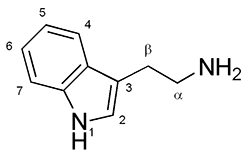
Family of neurotransmitters
Indolamines are a family of neurotransmitters that share a common molecular structure. Indolamines are a classification of monoamine neurotransmitter, along with catecholamines and ethylamine derivatives. A common example of an indolamine is the tryptophan derivative serotonin, a neurotransmitter involved in mood and sleep. Another example of an indolamine is melatonin.
In biochemistry, indolamines are substituted indole compounds that contain an amino group. Examples of indolamines include the lysergamides.
Synthesis
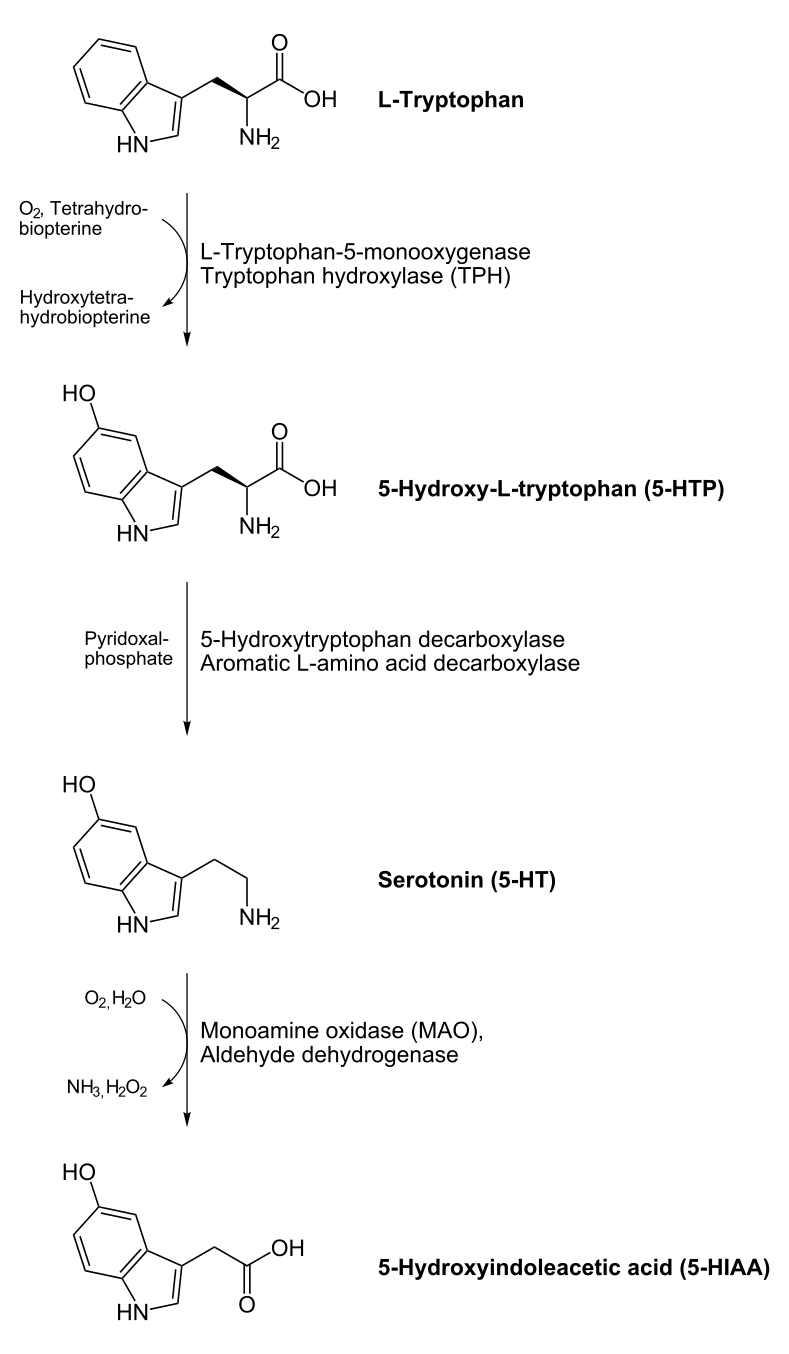
Indolamines are biologically synthesized from the essential amino acid tryptophan. Tryptophan is synthesized into serotonin through the addition of a hydroxyl group by the enzyme tryptophan hydroxylase and the subsequent removal of the carboxyl group by the enzyme 5-HTP decarboxylase.
References
References
- (2007). "How to increase serotonin in the human brain without drugs". Journal of Psychiatry & Neuroscience.
- Carlson, Neil R. ''Physiology of Behavior''. 11th ed. Vol. 1. N.p.: Pearson Education, n.d. Print.
This article was imported from Wikipedia and is available under the Creative Commons Attribution-ShareAlike 4.0 License. Content has been adapted to SurfDoc format. Original contributors can be found on the article history page.
Ask Mako anything about Indolamines — get instant answers, deeper analysis, and related topics.
Research with MakoFree with your Surf account
Create a free account to save articles, ask Mako questions, and organize your research.
Sign up freeThis content may have been generated or modified by AI. CloudSurf Software LLC is not responsible for the accuracy, completeness, or reliability of AI-generated content. Always verify important information from primary sources.
Report