From Surf Wiki (app.surf) — the open knowledge base
In vivo
Process of testing biological interventions on whole, living organisms
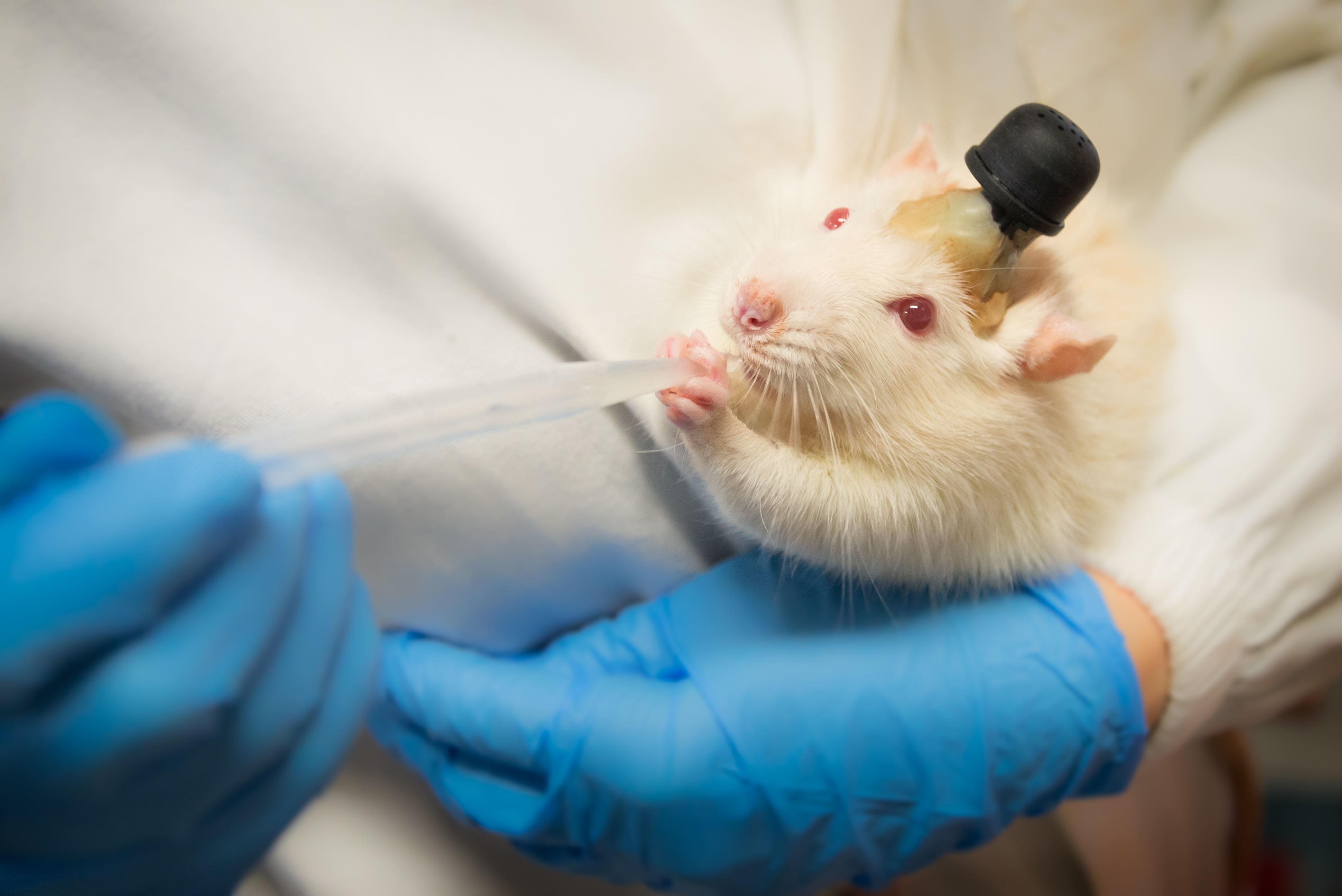
Process of testing biological interventions on whole, living organisms
Studies that are in vivo (Latin for "within the living"; often not italicized in English) are those in which the effects of various biological entities are tested on whole, living organisms or cells, usually animals, including humans, and plants, as opposed to a tissue extract or dead organism.
Examples of investigations in vivo include: the pathogenesis of disease by comparing the effects of bacterial infection with the effects of purified bacterial toxins; the development of non-antibiotics, antiviral drugs, and new drugs generally; and new surgical procedures. Consequently, animal testing and clinical trials are major elements of in vivo research. In vivo testing is often employed over in vitro because it is better suited for observing the overall effects of an experiment on a living subject. In drug discovery, for example, verification of efficacy in vivo is crucial, because in vitro assays can sometimes yield misleading results with drug candidate molecules that are irrelevant in vivo (e.g., because such molecules cannot reach their site of in vivo action, for example as a result of rapid catabolism in the liver).
The English microbiologist Professor Harry Smith and his colleagues in the mid-1950s found that sterile filtrates of serum from animals infected with Bacillus anthracis were lethal for other animals, whereas extracts of culture fluid from the same organism grown in vitro were not. This discovery of anthrax toxin through the use of in vivo experiments had a major impact on studies of the pathogenesis of infectious disease.
The maxim in vivo veritas ("in a living thing [there is] truth") is a play on in vino veritas, ("in wine [there is] truth"), a well-known proverb.
Levels of closeness to the natural state
Latin phrases used to describe the closeness of a wet lab experiment setup to the natural state include:
- In natura ("in nature"), the exact natural state{{Cite journal
- In vivo ("in the living"), with a living being (usually the whole organism, in a controlled environment)
- Ex vivo ("out of the living"), with part of a living being (usually tissues, organs, or cells)
- In vitro ("in the glass"), usually either a cell culture or a mixture of sub-cellular components (disrupted cell, purified biomolecules)
Different subfields of biology have a tendency to use each word differently. Notable variations from the above include:
- Toxicologists lump ex vivo into in vitro: any data not obtained using a whole animal is in vitro.
- Molecular biologists working on single-celled organisms may refer to a living microbe culture as in vivo, reserving in vitro for cell-free systems.
- There are also cases of mammalian cell cultures being referred to as in vivo.
Methods of use
According to Christopher Lipinski and Andrew Hopkins, "Whether the aim is to discover drugs or to gain knowledge of biological systems, the nature and properties of a chemical tool cannot be considered independently of the system it is to be tested in. Compounds that bind to isolated recombinant proteins are one thing; chemical tools that can perturb cell function another; and pharmacological agents that can be tolerated by a live organism and perturb its systems are yet another. If it were simple to ascertain the properties required to develop a lead discovered in vitro to one that is active in vivo, drug discovery would be as reliable as drug manufacturing." Studies on In vivo behavior, determined the formulations of set specific drugs and their habits in a Biorelevant (or Biological relevance) medium.
References
References
- Merriam-Webster. "Merriam-Webster's Collegiate Dictionary". Merriam-Webster.
- (2007). "AMA Manual of Style". [[Oxford University Press]].
- American Psychological Association. (2010). "The Publication Manual of the American Psychological Association". APA.
- (December 2015). "Discovery and resupply of pharmacologically active plant-derived natural products: A review". Biotechnology Advances.
- (2007). "Life Science Technologies, Cell Signaling: In Vivo Veritas". Science Magazine.
- (2017). "Ex vivo lung perfusion review of a revolutionary technology". Annals of Translational Medicine.
- Griffiths, John R.. (2022). "Magnetic resonance spectroscopy ex vivo: A short historical review". NMR in Biomedicine.
- (2023). "Closing the gap between in vivo and in vitro omics: using QA/QC to strengthen ex vivo NMR metabolomics". NMR in Biomedicine.
- "In vitro methods - ECHA".
- (2001). "Experimental Animal and In Vitro Study Designs". National Academies Press (US).
- (18 October 2019). "In vivo DNA assembly using common laboratory bacteria: A re-emerging tool to simplify molecular cloning.". The Journal of Biological Chemistry.
- (14 November 2024). "In vivo assembly of complete eukaryotic nucleosomes and (H3-H4)-only non-canonical nucleosomal particles in the model bacterium Escherichia coli". Communications Biology.
- (March 2013). "In Vivo Cross-linking Reveals Principally Oligomeric Forms of α-Synuclein and β-Synuclein in Neurons and Non-neural Cells". Journal of Biological Chemistry.
- (2020). "Biotin proximity tagging favours unfolded proteins and enables the study of intrinsically disordered regions". Communications Biology.
- (December 2004). "Navigating chemical space for biology and medicine". Nature.
- (September 2010). "The use of biorelevant dissolution media to forecast the in vivo performance of a drug". The AAPS Journal.
This article was imported from Wikipedia and is available under the Creative Commons Attribution-ShareAlike 4.0 License. Content has been adapted to SurfDoc format. Original contributors can be found on the article history page.
Ask Mako anything about In vivo — get instant answers, deeper analysis, and related topics.
Research with MakoFree with your Surf account
Create a free account to save articles, ask Mako questions, and organize your research.
Sign up freeThis content may have been generated or modified by AI. CloudSurf Software LLC is not responsible for the accuracy, completeness, or reliability of AI-generated content. Always verify important information from primary sources.
Report