From Surf Wiki (app.surf) — the open knowledge base
Immunosuppression
Decreased resistance to infection

Decreased resistance to infection
| Field | Value | |
|---|---|---|
| Name | Immunosuppression | |
| Image | Polyomavirus.jpg | |
| Caption | Micrograph showing an opportunistic infection due to immunosuppression - large (blue) cell below-center-left infected with a polyomavirus. Urine cytology specimen. | |
| ICD10 | D89.9 | |
| ICD9unlinked | ||
| MeshID | D007165 | |
| OPS301 | ||
| OtherCodes |
Name = Immunosuppression | Image = Polyomavirus.jpg | Caption = Micrograph showing an opportunistic infection due to immunosuppression - large (blue) cell below-center-left infected with a polyomavirus. Urine cytology specimen. | ICD10 = D89.9| ICD9unlinked = | MeshID = D007165 | OPS301 = | OtherCodes = |
Immunosuppression is a reduction of the activation or efficacy of the immune system. Some portions of the immune system itself have immunosuppressive effects on other parts of the immune system, and immunosuppression may occur as an adverse reaction to treatment of other conditions.
In general, deliberately induced immunosuppression is performed to prevent the body from rejecting an organ transplant. Additionally, it is used for treating graft-versus-host disease after a bone marrow transplant, or for the treatment of auto-immune diseases such as systemic lupus erythematosus, rheumatoid arthritis, Sjögren's syndrome, or Crohn's disease. This is typically done using medications, but may involve surgery (splenectomy), plasmapheresis, or radiation. A person who is undergoing immunosuppression, or whose immune system is weak for some other reasons (such as chemotherapy or HIV), is said to be immunocompromised.
Deliberately induced

Administration of immunosuppressive medications or immunosuppressants is the main method for deliberately inducing immunosuppression; in optimal circumstances, immunosuppressive drugs primarily target hyperactive components of the immune system. People in remission from cancer who require immunosuppression are not more likely to experience a recurrence. Throughout its history, radiation therapy has been used to decrease the strength of the immune system. Dr. Joseph Murray of Brigham and Women's Hospital was given the Nobel Prize in Physiology or Medicine in 1990 for work on immunosuppression.
Immunosuppressive drugs have the potential to cause immunodeficiency, which can increase susceptibility to opportunistic infection and decrease cancer immunosurveillance. Immunosuppressants may be prescribed when a normal immune response is undesirable, such as in autoimmune diseases.
Steroids were the first class of immunosuppressant drugs identified, though side-effects of early compounds limited their use. The more specific azathioprine was identified in 1960, but it was the discovery of ciclosporin in 1980 (together with azathioprine) that allowed significant expansion of transplantation to less well-matched donor-recipient pairs as well as broad application to lung transplantation, pancreas transplantation, and heart transplantation.
Non-deliberate immunosuppression
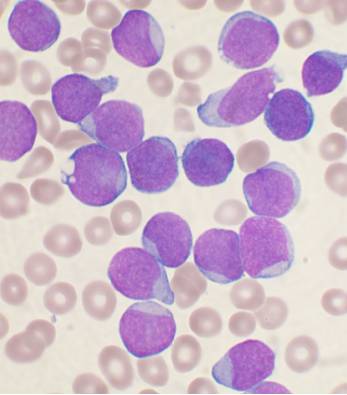
Non-deliberate immunosuppression can occur in, for example, ataxia–telangiectasia, complement deficiencies, many types of cancer, and certain chronic infections such as human immunodeficiency virus (HIV). The unwanted effect in non-deliberate immunosuppression is immunodeficiency that results in increased susceptibility to pathogens, such as bacteria and viruses.
Immunodeficiency is also a potential adverse effect of many immunosuppressant drugs, in this sense, the scope of the term immunosuppression in general includes both beneficial and potential adverse effects of decreasing the function of the immune system.
B cell deficiency and T cell deficiency are immune impairment that individuals are born with or are acquired, which in turn can lead to immunodeficiency problems. Nezelof syndrome is an example of an immunodeficiency of T-cells.
References
References
- "Immunodeficiency disorders: MedlinePlus Medical Encyclopedia".
- (2011-02-02). "NCI Dictionary of Cancer Terms".
- (2017-01-06). "Immunosuppression: Overview, History, Drugs".
- (2011-02-02). "NCI Dictionary of Cancer Terms".
- Wiseman, Alexander C.. (2016-02-05). "Immunosuppressive Medications". Clinical Journal of the American Society of Nephrology.
- (July 2016). "Cancer Recurrence Following Immune-Suppressive Therapies in Patients With Immune-Mediated Diseases: A Systematic Review and Meta-analysis". Gastroenterology.
- (2016-03-15). "Mosby's Guide to Nursing Diagnosis - E-Book". Elsevier Health Sciences.
- "Joseph E. Murray - Facts".
- (2015-04-29). "Immunosuppression".
- Chandrashekara, S.. (2012). "The treatment strategies of autoimmune disease may need a different approach from conventional protocol: A review". Indian Journal of Pharmacology.
- "Transplant rejection: MedlinePlus Medical Encyclopedia".
- (2017-03-09). "Immunology of Transplant Rejection: Overview, History, Types of Grafts".
- (2001). "Responses to alloantigens and transplant rejection". Garland Science.
- (2011). "Toxicities of Immunosuppressive Treatment of Autoimmune Neurologic Diseases". Current Neuropharmacology.
- "Immunodeficiency (Primary and Secondary). Information.".
- (2003). "NORD Guide to Rare Disorders". Lippincott Williams & Wilkins.
This article was imported from Wikipedia and is available under the Creative Commons Attribution-ShareAlike 4.0 License. Content has been adapted to SurfDoc format. Original contributors can be found on the article history page.
Ask Mako anything about Immunosuppression — get instant answers, deeper analysis, and related topics.
Research with MakoFree with your Surf account
Create a free account to save articles, ask Mako questions, and organize your research.
Sign up freeThis content may have been generated or modified by AI. CloudSurf Software LLC is not responsible for the accuracy, completeness, or reliability of AI-generated content. Always verify important information from primary sources.
Report