From Surf Wiki (app.surf) — the open knowledge base
Hyrcanian forests
Ecoregion in Iran and Azerbaijan
Ecoregion in Iran and Azerbaijan
| Field | Value | ||||||||||||||||||||||||||
|---|---|---|---|---|---|---|---|---|---|---|---|---|---|---|---|---|---|---|---|---|---|---|---|---|---|---|---|
| name | Caspian Hyrcanian mixed forests | ||||||||||||||||||||||||||
| image | 3615554 تصاویر هوایی جاده های پاییزی جنگل های هیرکانی.jpg | ||||||||||||||||||||||||||
| image_caption | Sisangan National Forest, Mazandaran Iran | ||||||||||||||||||||||||||
| map | File:Ecoregion PA0407.svg | ||||||||||||||||||||||||||
| map_caption | Hyrcanian mixed forests (purple) | ||||||||||||||||||||||||||
| country | Iran | ||||||||||||||||||||||||||
| country1 | Azerbaijan | ||||||||||||||||||||||||||
| border | Caspian lowland desert | ||||||||||||||||||||||||||
| border1 | Kopet Dag semi-desert | ||||||||||||||||||||||||||
| border2 | Kopet Dag woodlands and forest steppe | ||||||||||||||||||||||||||
| border3 | Elburz Range forest steppe | ||||||||||||||||||||||||||
| border4 | Eastern Anatolian montane steppe | ||||||||||||||||||||||||||
| border5 | Azerbaijan shrub desert and steppe | ||||||||||||||||||||||||||
| bird_species | 296 | ||||||||||||||||||||||||||
| {{cite book | last1 | Hoekstra | first1=J. M. | last2=Molnar | first2=J. L. | last3=Jennings | first3=M. | last4=Revenga | first4=C. | last5=Spalding | first5=M. D. | last6=Boucher | first6=T. M. | last7=Robertson | first7=J. C. | last8=Heibel | first8=T. J. | last9=Ellison | first9=K. | title=The Atlas of Global Conservation: Changes, Challenges, and Opportunities to Make a Difference | publisher=University of California Press | editor1-last=Molnar | editor1-first=J. L. | year=2010 | isbn=978-0-520-26256-0 | url=https://archive.org/details/atlasofglobalcon0000unse | url-access=registration}} |
| mammal_species | 98 | ||||||||||||||||||||||||||
| habitat_loss | 51 | ||||||||||||||||||||||||||
| habitat_loss_ref | |||||||||||||||||||||||||||
| protected | 10.30 | ||||||||||||||||||||||||||
| protected_ref | |||||||||||||||||||||||||||
| area | 55100 | ||||||||||||||||||||||||||
| biome | Temperate broadleaf and mixed forests | ||||||||||||||||||||||||||
| embedded | {{Infobox designation list | ||||||||||||||||||||||||||
| embed | yes | ||||||||||||||||||||||||||
| designation1 | WHS | ||||||||||||||||||||||||||
| designation1_offname | Hyrcanian Forests | ||||||||||||||||||||||||||
| designation1_date | 2019 (43rd session) | ||||||||||||||||||||||||||
| designation1_number | [1584](https://whc.unesco.org/en/list/1584) | ||||||||||||||||||||||||||
| designation1_criteria | (ix) | ||||||||||||||||||||||||||
| Year | 2019 | ||||||||||||||||||||||||||
| area | 129,485 ha | ||||||||||||||||||||||||||
| buffer_zone | 177,129 ha | ||||||||||||||||||||||||||
| designation1_free1name | Region | ||||||||||||||||||||||||||
| designation1_free1value | Western Asia, Caucasus |
The Hyrcanian forests (; ) are a zone of lush lowland and montane forests covering about 55000 km2 near the shores of the Caspian Sea in Iran and Azerbaijan. The forest is named after the ancient region of Hyrcania. The World Wide Fund for Nature refers to the ecoregion as the Caspian Hyrcanian mixed forests. Since 5 July 2019, the Hyrcanian Forests have been designated a UNESCO World Heritage Site. In September 2023, the heritage site expanded to incorporate portions of the forest located in Azerbaijan.
Geography
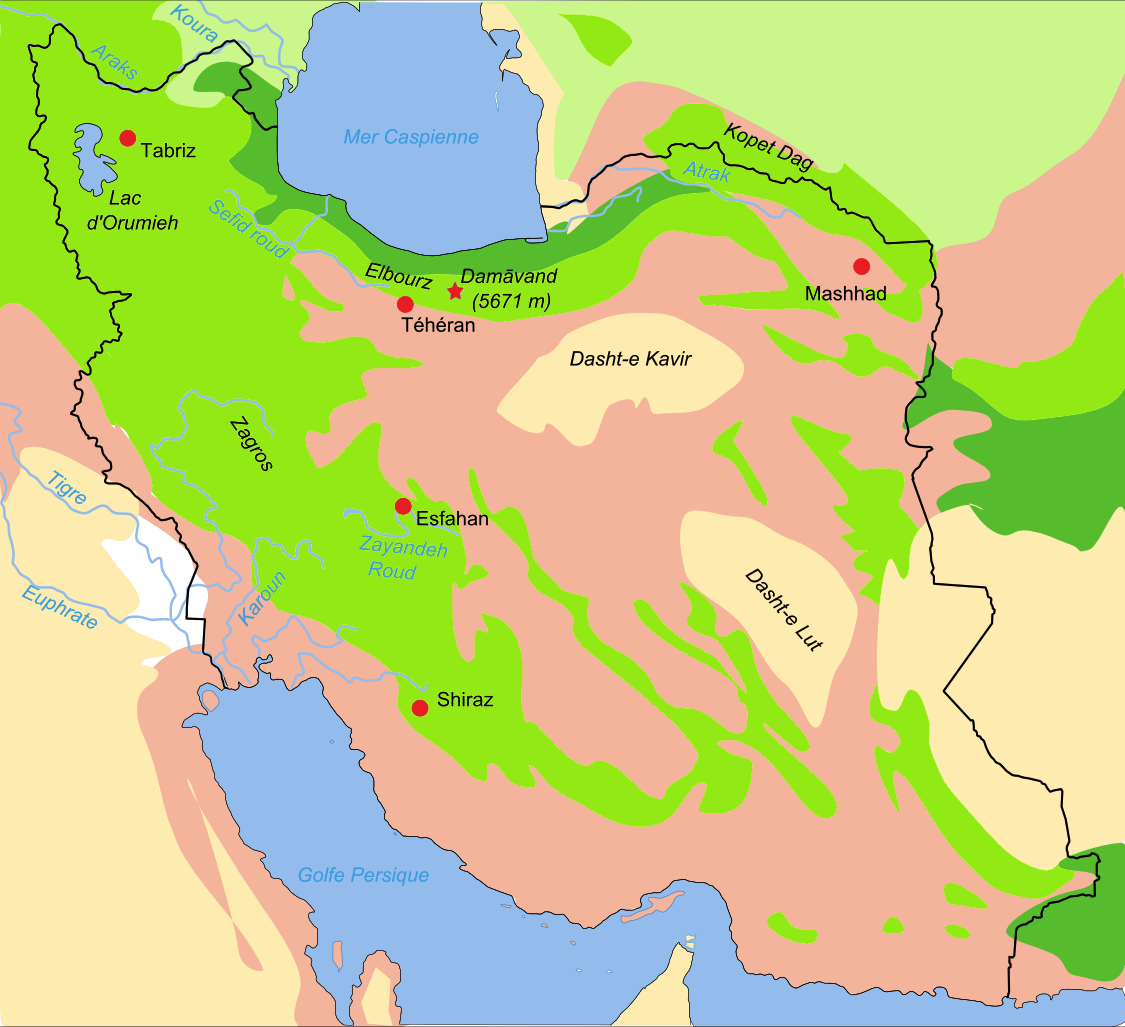
In Iran, the Hyrcanian ecoregion comprises a long strip along the southern coast of the Caspian Sea and the northern slopes of the Alborz mountains. It covers parts of five provinces, from east to west: North Khorasan, Golestan (421373 ha being its south and southwest plus eastern regions of the Gorgan plain), Mazandaran, Gilan and Ardabil.
The Golestan National Park spans the boundary of Golestan and Mazandaran provinces. In the Mazandaran province, where the Hyrcanian forest is estimated at 965000 ha, 487195 ha are used commercially, 184000 ha are protected and the rest are regarded as forest lands or over-used forests. The total of the forest woods used in this province is estimated at 770551 m3. The Kojoor, Dohezar and Sehezar forest watersheds are in Mazandaran province, Gilan province (these forests are graded from 1 to 3 with an area of 107894 ha; 182758 ha and 211972 ha, respectively. The commercial utilization is 184202 m3 and the non-commercial utilization is 126173 m3. The Masooleh, Ghaleh Roodkhan and Astara forest watersheds are in Gilan province) and Ardabil Province. At higher elevations to the south, the ecoregion grades into the Elburz Range forest steppe.
In southeastern Azerbaijan the ecoregion spans through the Lankaran Lowland and the Talysh Mountains.
The ecoregion's climate is humid subtropical at lower altitudes; at mid-altitudes it has oceanic features, while in the mountains it is humid continental. Summer is a humid but low-precipitation season. Alborz is the highest mountain range in the Middle East and it captures, by relief precipitation and dew point mists, much of the evaporation of the southern Caspian Sea. Annual rainfall ranges from 900 mm in the east to 1600 mm in the west, making the forests much lusher than the desert, semi-desert, and steppe regions which it borders.
Flora
]]
The natural forest vegetation is temperate deciduous broadleaved forest. 32.7 percent of volume of Hyrcanian forest is of oriental beech (Fagus orientalis). A main feature of the region is the lack of conifers; only relics of coniferous species are present, which include European yew (Taxus baccata), junipers (Juniperus spp.), Mediterranean cypress (Cupressus sempervirens var. horzontalis) and Chinese arborvitae (Platycladus orientalis).
The Caspian Sea coastal plains were once covered by chestnut-leaved oak (Quercus castaneifolia), European box (Buxus sempervirens), black alder (Alnus glutinosa subsp. barbata), Caucasian alder (Alnus subcordata), Caspian poplar (Populus alba var. caspica) and Caucasian wingnut (Pterocarya fraxinifolia), but these forests have been almost entirely converted to urban and agricultural land. (Mosadegh, 2000; Marvie Mohadjer, 2007)
The lower slopes of Talysh and Alborz Mountains below 700 m harbor diverse humid forests containing chestnut-leaved oak, European hornbeam (Carpinus betulus), Persian ironwood (Parrotia persica), Caucasian zelkova (Zelkova carpinifolia), Persian silk tree (Albizia julibrissin), and date-plum (Diospyros lotus) along with shrubs holly (Ilex hyrcana), Ruscus hyrcanus, Danae racemosa and Atropa pallidiflora, and lianas Smilax excelsa and Hedera pastuchovii (Mosadegh, 2000; Marvie Mohadjer, 2007). Persian Ironwood is endemic to the Talysh Mountains and northern Iran and nearly pure stands of the tree can be particularly dramatic, with lichen-covered branches twisting together and only dead leaves in the deep shade of the forest floor. In addition, the ironwood's yellow leaves turn a faint lilac in the fall.
At the medium elevations between 700 and, oriental beech is the dominant tree species in this cloudy zone in pure and mixed stands with other noble hardwoods such as chestnut-leaved oak, Caucasian oak (Quercus macranthera), European hornbeam (Carpinus betulus), Oriental hornbeam (C. orientalis) and sweet chestnut (Castanea sativa). From its floristic composition, these beech forests are linked with European forests and with affinities to the beech forests of the Balkans. However, local conditions of aspect and edaphic factors, such as soil moisture and depth, are all of importance in determining the composition of the vegetation, which leads to the establishment of different beech subcommunities. (Mosadegh, 2000; Marvie Mohadjer, 2007)
Upper mountain and subalpine zones are characterized by Caucasian oak, Oriental hornbeam, shrublands and steppes. Alpine tundra and meadows occur at the highest elevations.
Other native tree species include Caspian locust (Gleditsia caspica), velvet maple (Acer velutinum), Cappadocian maple (Acer cappadocicum), European ash (Fraxinus excelsior), Wych elm (Ulmus glabra), wild cherry (Prunus avium), wild service tree (Sorbus torminalis) and lime tree (Tilia platyphyllos).
Fauna
The Caspian tiger (Panthera tigris tigris) was once the apex predator of the biome before its extinction. The remaining large mammals include the Persian/Caucasian leopard (Panthera pardus tulliana), Eurasian lynx (Lynx lynx), brown bear (Ursus arctos), wild boar (Sus scrofa), wolf (Canis lupus), golden jackal (Canis aureus), jungle cat (Felis chaus), Caucasian badger (Meles canescens), and Eurasian otter (Lutra lutra).
This ecoregion is the main green resting area for birds migrating between central-northern Russia and Africa and thus is a key habitat for many bird species. Notable birds seen here are the greylag goose (Anser anser), white-fronted goose (Anser albifrons), little bustard (Tetrax tetrax), glossy ibis (Plegadis falcinellus), Eurasian spoonbill (Platalea leucorodia), night heron (Nycticorax nycticorax), red-breasted goose (Branta ruficollis), peregrine falcon (Falco peregrinus), Dalmatian pelican (Pelecanus crispus), cattle egret (Bubulcus ibis), squacco heron (Ardeola ralloides), greater flamingo (Phoenicopterus roseus), white-headed duck (Oxyura leucocephala), and Caspian snowcock (Tetraogallus caspius).
Endemic species
The Hyrcanian forests are thought to have served as a refugium for certain species during changing climatic conditions. The Iranian edible dormouse (Glis persicus) is an endemic of this ecoregion, and is thought to have evolved when mid-Miocene climatic change led to the fragmentation of the ancestral Glis population, with one such population fragment surviving in these forests and evolving into a new species. The bat Myotis hyrcanicus is likely also endemic to this region. The region is also known to preserve a unique lineage of bicolored shrew (Crocidura leucodon) that diverged from the other lineages during the mid-Pleistocene, about 1 million years ago. The Persian mountain salamander (Paradactylodon persicus) is an aquatic salamander endemic to high rainfall regions of the Hyrcanian forest. It is primarily known from its aquatic larvae which live in permanent streams with forest cover. This is a very understudied species and very few adults have ever been found. It is under threat from habitat loss due to logging, agricultural development, and urban sprawl.
Protected areas
The diversity and endemism of the species make the Caspian Hyrcanian forests a priority and unique feature for species conservation. Habitats are threatened by conversion into tea, vegetable, fruit, and vine plantations, unsustainable forestry and poaching.
Protected areas in Azerbaijan include:
- Gizil-Agach State Reserve – 88.4 km2
- Hirkan National Park - 427.97 km2
Protected areas in Iran include:
- Golestan National Park
- Jahan Nama Protected Area
- Central Alborz Protected Area
- Lisar Protected Area
- Siah Keshim Protected Area
- Dodangeh Wildlife Refuge
- Neka Miankaleh Wildlife Refuge
- Selkeh Wildlife Refuge
- Dashtenaz Wildlife Refuge
References
References
- (5 July 2019). "Iran's Hyrcanian Forests Added to UNESCO World Heritage List".
- "Hyrcanian Forests". UNESCO World Heritage Centre.
- (197). "Flora Iranica: Flora des iranischen Hochlandes und der umrahmenden Gebirge; Persien, Afghanistan, Teile von West-Pakistan, Nord-Iraq, Azerbaidjan, Turkmenistan".
- {{WWF ecoregion. World Wildlife Fund
- "Ornamental plants from Azerbaijan". Missouri Botanical Garden.
- "Ecosystem Profile: Caucasus". Conservation International.
- (2022). "Plant diversity of Hyrcanian relict forests: An annotated checklist, chorology and threat categories of endemic and near endemic vascular plant species". Plant Diversity.
- (1992). "Mlekopitajuščie Sovetskogo Soiuza. Moskva: Vysšaia Škola". Smithsonian Institution and the National Science Foundation.
- (2021-07-01). "A taxonomic revision of fat dormice, genus Glis (Rodentia)". Mammalia.
- (2019-02-04). "The species diversity, distribution, and conservation status of the terrestrial mammals of Iran". Journal of Mammalogy.
- (2019-03-01). "Mitochondrial sequences retrieve an ancient lineage of Bicolored shrew in the Hyrcanian refugium". Mammalian Biology.
- IUCN. (2008-12-14). "Iranodon persicus: Papenfuss, T., Anderson, S., Kuzmin, S., Rastegar-Pouyani, N., Nilson, G. & Sharifi, M.: The IUCN Red List of Threatened Species 2009: e.T2665A86081638". International Union for Conservation of Nature.
- "Caucasus-Anatolian-Hyrcanian Temperate Forests". World Wildlife Fund.
This article was imported from Wikipedia and is available under the Creative Commons Attribution-ShareAlike 4.0 License. Content has been adapted to SurfDoc format. Original contributors can be found on the article history page.
Ask Mako anything about Hyrcanian forests — get instant answers, deeper analysis, and related topics.
Research with MakoFree with your Surf account
Create a free account to save articles, ask Mako questions, and organize your research.
Sign up freeThis content may have been generated or modified by AI. CloudSurf Software LLC is not responsible for the accuracy, completeness, or reliability of AI-generated content. Always verify important information from primary sources.
Report