From Surf Wiki (app.surf) — the open knowledge base
Hindustani language
Indo-Aryan language
Indo-Aryan language
| Field | Value | |||||||
|---|---|---|---|---|---|---|---|---|
| name | Hindustani | |||||||
| nativename | ||||||||
| pronunciation | ||||||||
| altname | Hindi–Urdu | |||||||
| image | Hindustani.svg | |||||||
| imagescale | 0.7 | |||||||
| imagecaption | The word *Hindustani* in the Devanagari and the Nastaliq-style Perso-Arabic scripts | |||||||
| states | India and Pakistan | |||||||
| region | Western Uttar Pradesh/Delhi (Hindustani Belt) | |||||||
| and Deccan (South India), | ||||||||
| Pakistan | ||||||||
| speakers | L1 speakers: million | |||||||
| date | 2011 & 2017 censuses | |||||||
| ref | ||||||||
| speakers2 | L2 speakers: ~500 million (1999–2016) | |||||||
| speakers_label | Speakers | |||||||
| familycolor | Indo-European | |||||||
| fam2 | Indo-Iranian | |||||||
| fam3 | Indo-Aryan | |||||||
| fam4 | Central Zone | |||||||
| fam5 | Western Hindi | |||||||
| ancestor | Shauraseni Prakrit | |||||||
| ancestor2 | Apabhraṃśa | |||||||
| ancestor3 | Old Hindi | |||||||
| stand1 | Hindi | |||||||
| stand2 | Urdu | |||||||
| dia1 | Andaman Creole Hindi | |||||||
| dia2 | Arunachali Hindi | |||||||
| dia3 | Begamati | |||||||
| dia4 | Bihari Hindi | |||||||
| dia5 | Bangalori Urdu | |||||||
| dia6 | Bombay Hindi | |||||||
| dia7 | Dhakaiya Urdu | |||||||
| dia8 | Deccani | |||||||
| dia9 | Haflong Hindi | |||||||
| dia10 | Hyderabadi Urdu | |||||||
| dia11 | Kalkatiya Urdu | |||||||
| dia12 | Karkhandari Urdu | |||||||
| dia13 | Kauravi | |||||||
| dia14 | Judeo-Urdu | |||||||
| dia15 | Rekhta | |||||||
| script | {{Unbulleted list | |||||||
| Devanagari (Hindi)<ref name | "Grierson"/ | |||||||
| Perso-Arabic Nastaliq (Urdu alphabet) (Urdu)<ref name | "Grierson"/ | |||||||
| Laṇḍā (historical)<ref>{{Cite book | last | Gangopadhyay | first=Avik | title=Glimpses of Indian Languages | publisher=Evincepub publishing | year=2020 | isbn=9789390197828 | pages=43}} |
| sign | Indian Signing System (ISS) | |||||||
| nation | {{plainlist | |||||||
| *Fiji <br/>(as Hindi) <ref>https://constitutionnet.org/sites/default/files/1997_constitution.pdf {{Bare URL PDF | date | December 2025}} | ||||||
| minority | {{ublist | |||||||
| South Africa (Hindi and Urdu - protected language)<ref name | "auto1" | |||||||
| United Arab Emirates (Hindi - third official court language)<ref name | "thehindu.com"}} | |||||||
| agency | {{plainlist | |||||||
| *Central Hindi Directorate (Hindi, India)<ref>The Central Hindi Directorate regulates the use of Devanagari and Hindi spelling in India. Source: [http://hindinideshalaya.nic.in/hindi/introduction.html Central Hindi Directorate: Introduction] {{webarchive | url | https://web.archive.org/web/20100415010138/http://hindinideshalaya.nic.in/hindi/introduction.html | date=15 April 2010 }} | |||||
| *National Council for Promotion of Urdu Language (Urdu, India)<ref>{{cite web | url | http://www.urducouncil.nic.in/ | title=National Council for Promotion of Urdu Language | website=www.urducouncil.nic.in}} | ||||
| *National Language Promotion Department (Urdu, Pakistan)<ref>Zia, K. (1999). [http://users.skynet.be/hugocoolens/urdu-code/standardcodetableurdu.htm Standard Code Table for Urdu] {{Webarchive | url | https://web.archive.org/web/20190408004715/http://users.skynet.be/hugocoolens/urdu-code/standardcodetableurdu.htm | date=8 April 2019 }}''. 4th Symposium on Multilingual Information Processing, (MLIT-4), Yangon, Myanmar. CICC, Japan. Retrieved on 28 May 2008.}} | |||||
| lingua | 59-AAF-qa to -qf | |||||||
| glotto | hind1270 | |||||||
| glottorefname | Hindustani | |||||||
| map | Hindustani-speaking world nations.png | |||||||
| mapcaption | Spread of Hindustani across the world | |||||||
| mapcaption2 | ||||||||
| notice | IPA | |||||||
| {{InterWiki | code | hi}} | ||||||
| {{InterWiki | code | ur}} |
and Deccan (South India), Pakistan |Devanagari (Hindi) |Perso-Arabic Nastaliq (Urdu alphabet) (Urdu) |Kaithi (historical) |Bengali–Assamese script (for Urdu in Bangladesh) |Hebrew (Judeo-Urdu) |Laṇḍā (historical) |Hindi Braille |Urdu Braille}}
- India (as Hindi and Urdu)
- Pakistan (as Urdu)
- Fiji (as Hindi) | South Africa (Hindi and Urdu - protected language) | United Arab Emirates (Hindi - third official court language)}}
- Central Hindi Directorate (Hindi, India)
- National Council for Promotion of Urdu Language (Urdu, India)
- National Language Promotion Department (Urdu, Pakistan)}}
Hindustani{{efn|; Devanagari: हिन्दुस्तानी, Perso-Arabic: {{nq|ہندوستانی}}, transliteration: inc, ,
- }} is an Indo-Aryan language spoken in North India and Pakistan as the lingua franca of the region. It is also spoken by the Deccani-speaking community in the Deccan Plateau. Hindustani is a pluricentric language with two standard registers, known as Hindi (Prakritised and Sanskritised register written in the Brahmic script) and Urdu (Persianised and Arabised register written in the Perso-Arabic script) which serve as official languages of India and Pakistan, respectively. Thus, it is also called Hindi–Urdu. Colloquial registers of the language fall on a spectrum between these standards.
The concept of a Hindustani language as a "unifying language" or "fusion language" that could transcend communal and religious divisions across the subcontinent was endorsed by Mahatma Gandhi, as it was not seen to be associated with either the Hindu or Muslim communities as was the case with Hindi and Urdu respectively, and it was also considered a simpler language for people to learn. The conversion from Hindi to Urdu (or vice versa) is generally achieved by merely transliterating between the two scripts. Translation, on the other hand, is generally only required for religious and literary texts.
Scholars trace the language's first written poetry, in the form of Old Hindi, to the Delhi Sultanate era around the twelfth and thirteenth century. During the period of the Delhi Sultanate, which covered most of today's India, eastern Pakistan, southern Nepal and Bangladesh and which resulted in the contact of Hindu and Muslim cultures, the Prakrit and Sanskrit base of Old Hindi became enriched with loanwords from Persian, evolving into the present form of Hindustani. The Hindustani vernacular became an expression of Indian national unity during the Indian Independence movement, and continues to be spoken as the common language of the people of the northern Indian subcontinent, which is reflected in the Hindustani vocabulary of Bollywood films and songs.
The language's core vocabulary is derived from Prakrit and Sanskrit (via Prakrit), with substantial loanwords from Persian and Arabic (via Persian). It is often written in the Devanagari script or Nastaliq script in the case of Hindi and Urdu respectively, with romanisation increasingly employed in modern times as a neutral script.
As of 2025, Hindi and Urdu together constitute the 3rd-most-spoken language in the world after English and Mandarin, with 855 million native and second-language speakers, according to Ethnologue, though this includes millions who self-reported their language as 'Hindi' on the Indian census but speak a number of other Hindi languages than Hindustani. The total number of Hindi–Urdu speakers was reported to be over 300 million in 1995, making Hindustani the third- or fourth-most spoken language in the world.
History
Main article: History of Hindustani
Early forms of present-day Hindustani developed from the Middle Indo-Aryan apabhraṃśa vernaculars of present-day North India in the 7th–13th centuries. Hindustani emerged as a contact language around the Ganges-Yamuna Doab (Delhi, Meerut and Saharanpur), a result of the increasing linguistic diversity that occurred during the Muslim period in the Indian subcontinent. Amir Khusrow, who lived in the thirteenth century during the Delhi Sultanate period in North India, used these forms (which was the lingua franca of the period) in his writings and referred to it as Hindavi (). By the end of the century, the military exploits of Alauddin Khalji, introduced the language in the Deccan region, which led to the development of its southern dialect Deccani, which was promoted by Muslim rulers in the Deccan. The Delhi Sultanate, which comprised several Turkic and Afghan dynasties that ruled much of the subcontinent from Delhi, was succeeded by the Mughal Empire in 1526 and preceded by the Ghorid dynasty and Ghaznavid Empire before that.
Ancestors of the language were known as Hindui, Hindavi, Zabān-e Hind (), Zabān-e Hindustan (), Hindustan ki boli (), Rekhta, and Hindi. Its regional dialects became known as Zabān-e Dakhani in southern India, Zabān-e Gujari () in Gujarat, and as Zabān-e Dehlavi or Urdu around Delhi. It is an Indo-Aryan language, deriving its base from the Western Hindi dialect of the Ganges-Yamuna Doab (Delhi, Meerut and Saharanpur) known as Khariboli—the contemporary form being classed under the umbrella of Old Hindi.
Although the Mughals were of Timurid (Gurkānī) Turco-Mongol descent, they were Persianised, and Persian had gradually become the state language of the Mughal empire after Babur. Mughal patronage led to a continuation and reinforcement of Persian by Central Asian Turkic rulers in the Indian Subcontinent, since Persian was also patronized by the earlier Turko-Afghan Delhi Sultanate who laid the basis for the introduction and use of Persian in the subcontinent.
Hindustani began to take shape as a Persianised vernacular during the Delhi Sultanate (1206–1526 AD) and Mughal Empire (1526–1858 AD) in South Asia. Hindustani retained the grammar, as well as the core Sanskritic and Prakritic vocabulary, of the local Indian language of the Ganges-Yamuna Doab called Khariboli. However, as an emerging common dialect, Hindustani absorbed large numbers of Persian, Arabic, and Turkic loanwords, and as Mughal conquests grew it spread as a lingua franca across much of northern India; this was a result of the contact of Hindu and Muslim cultures in Hindustan that created a composite Ganga-Jamuni tehzeeb. The language was also known as Rekhta, or 'mixed', which implies that the Sanskritic and Prakritic vocabulary base of Old Hindi was mixed with Persian loanwords. Written in the Perso-Arabic, Devanagari, and occasionally Kaithi or Gurmukhi scripts, it remained the primary lingua franca of northern India for the next four centuries, although it varied significantly in vocabulary depending on the local language. Alongside Persian, it achieved the status of a literary language in Muslim courts and was also used for literary purposes in various other settings such as Sufi, Nirgun Sant, Krishna Bhakta circles, and Rajput Hindu courts. Its major centres of development included the Mughal courts of Delhi, Lucknow, Agra and Lahore as well as the Rajput courts of Amber and Jaipur.
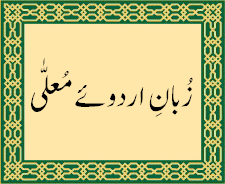
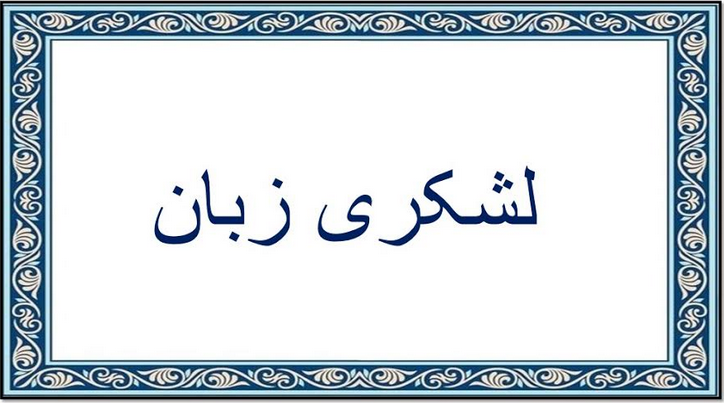
In the 18th century, towards the end of the Mughal period, with the fragmentation of the empire and the elite system, a variant of Hindustani, one of the successors of apabhraṃśa vernaculars at Delhi, and nearby cities, came to gradually replace Persian as the lingua franca among the educated elite upper class particularly in northern India, though Persian still retained much of its pre-eminence for a short period. The term Hindustani was given to that language. Nijhawan, S. 2016. "Hindi, Urdu or Hindustani? Revisiting 'National Language' Debates through Radio Broadcasting in Late Colonial India." South Asia Research 36(1):80–97. . The Perso-Arabic script form of this language underwent a standardisation process and further Persianisation during this period (18th century) and came to be known as Urdu, a name derived from Persian: Zabān-e Urdū-e Mualla ('language of the court') or Zabān-e Urdū (زبان اردو, 'language of the camp'). The etymology of the word Urdu is of Chagatai origin, Ordū ('camp'), cognate with English horde, and known in local translation as Lashkari Zabān ({{nq|لشکری زبان}}), which is shortened to Lashkari ({{nq|لشکری}}). This is all due to its origin as the common speech of the Mughal army. As a literary language, Urdu took shape in courtly, elite settings. Along with English, it became an official language of northern parts of British India in 1837.
Hindi as a standardised literary register of the Hindustani arose in the 19th century. While the first literary works (mostly translations of earlier works) in Sanskritised Hindustani were already written in the early 19th century as part of a literary project that included both Hindu and Muslim writers (e.g. Lallu Lal, Insha Allah Khan), the call for a distinct Sanskritised standard of Hindustani written in Devanagari under the name of Hindi became increasingly politicised in the course of the century and gained pace around 1880 in an effort to displace Urdu's official position.
John Fletcher Hurst in his book published in 1891 mentioned that the Hindustani or camp language of the Mughal Empire's courts at Delhi was not regarded by philologists as a distinct language but only as a dialect of Hindi with admixture of Persian. He continued: "But it has all the magnitude and importance of separate language. It is linguistic result of Muslim rule of eleventh & twelfth centuries and is spoken by many Hindus in North India and by Musalman population in all parts of India." Next to English it was the official language of British Indian Empire, was commonly written in Arabic or Persian characters, and was spoken by approximately 100,000,000 people. The process of hybridization also led to the formation of words in which the first element of the compound was from Khari Boli and the second from Persian, such as rajmahal 'palace' (raja 'royal, king' + mahal 'house, place') and rangmahal 'fashion house' (rang 'colour, dye' + mahal 'house, place'). As Muslim rule expanded, Hindustani speakers traveled to distant parts of India as administrators, soldiers, merchants, and artisans. As it reached new areas, Hindustani further hybridized with local languages. In the Deccan, for instance, Hindustani blended with Telugu and came to be called Dakhani. In Dakhani, aspirated consonants were replaced with their unaspirated counterparts; for instance, dekh 'see' became dek, ghula 'dissolved' became gula, kuch 'some' became kuc, and samajh 'understand' became samaj.
When the British colonised the Indian subcontinent from the late 18th through to the late 19th century, they used the words 'Hindustani', 'Hindi', and 'Urdu' interchangeably. They developed it as the language of administration of British India, further preparing it to be the official language of modern India and Pakistan. However, with independence, use of the word 'Hindustani' declined, being largely replaced by 'Hindi' and 'Urdu', or 'Hindi–Urdu' when either of those was too specific. More recently, the word 'Hindustani' has been used for the colloquial language of Bollywood films, which are popular in both India and Pakistan and which cannot be unambiguously identified as either Hindi or Urdu.
British rule over India also introduced some English words into Hindustani, with these influences increasing with the later spread of English as a world language. This has created a new variant of Hindustani known as Hinglish or Urdish.
Registers
At the spoken level, Hindi and Urdu are considered registers of a single language, Hindustani or Hindi–Urdu, as they share a common grammar and core vocabulary. They differ in literary and formal vocabulary: where literary Hindi draws heavily on Sanskrit and to a lesser extent Prakrit, literary Urdu draws heavily on Persian and Arabic loanwords. The grammar and base vocabulary (most pronouns, verbs, adpositions, etc.) of both Hindi and Urdu, however, are the same and derive from a Prakritic base, and both have Persian/Arabic influence.
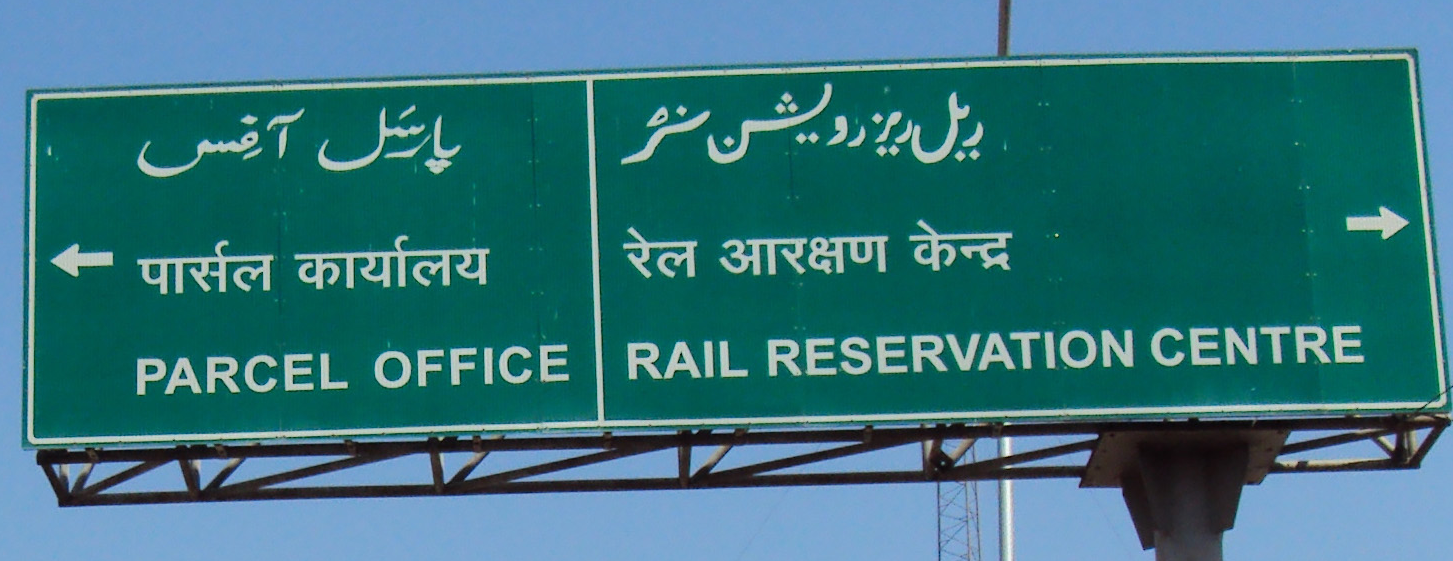
The standardised registers Hindi and Urdu are collectively known as Hindi–Urdu. Hindustani is the lingua franca of the north and west of the Indian subcontinent, though it is understood fairly well in other regions also, especially in the urban areas. This has led it to be characterised as a continuum that ranges between Hindi and Urdu. A common vernacular sharing characteristics with Sanskritised Hindi, regional Hindi and Urdu, Hindustani is more commonly used as a vernacular than highly Sanskritised Hindi or highly Persianised Urdu.
This can be seen in the popular culture of Bollywood or, more generally, the vernacular of North Indians and Pakistanis, which generally employs a lexicon common to both Hindi and Urdu speakers. Minor subtleties in region will also affect the 'brand' of Hindustani, sometimes pushing the Hindustani closer to Urdu or to Hindi. One might reasonably assume that the Hindustani spoken in Lucknow, Uttar Pradesh (known for its usage of Urdu) and Varanasi (a holy city for Hindus and thus using highly Sanskritised Hindi) is somewhat different.
In modern times, a third variety of Hindustani with significant English influences has also appeared, which is sometimes called Hinglish or Urdish.
Standard Hindi
Main article: Hindi
Standard Hindi, one of the 22 officially recognized languages of India and the official language of the Union, is usually written in the indigenous Devanagari script of India and exhibits less Persian and Arabic influence than Urdu. It has a literature of 500 years, with prose, poetry, religion and philosophy. One could conceive of a wide spectrum of dialects and registers, with the highly Persianised Urdu at one end of the spectrum and a heavily Sanskritised variety spoken in the region around Varanasi, at the other end. In common usage in India, the term Hindi includes all these dialects except those at the Urdu spectrum. Thus, the different meanings of the word Hindi include, among others:
- standardized Hindi as taught in schools throughout India (except some states such as Tamil Nadu),
- formal or official Hindi advocated by Purushottam Das Tandon and as instituted by the post-independence Indian government, heavily influenced by Sanskrit,
- the vernacular dialects of Hindustani as spoken throughout India,
- the neutralized form of Hindustani used in popular television and films (which is nearly identical to colloquial Urdu), or
- the more formal neutralized form of Hindustani used in television and print news reports.
Standard Urdu
Main article: Urdu
Urdu is the national language and state language of Pakistan and one of the 22 officially recognised languages of India. It is written, except in some parts of India, in the Nastaliq style of the Urdu alphabet, an extended Perso-Arabic script incorporating Indic phonemes. It is heavily influenced by Persian vocabulary and was historically also known as Rekhta.
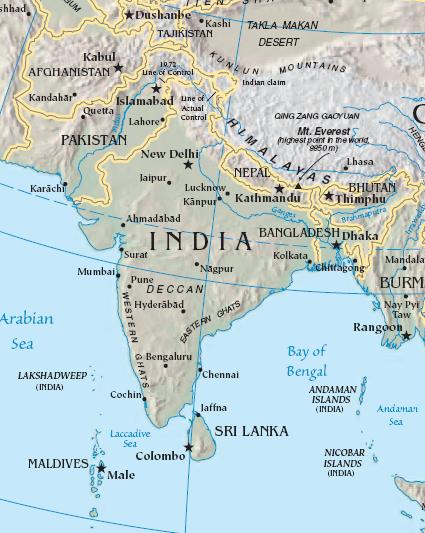
As Dakhini (or Deccani) where it also draws words from local languages, it survives and enjoys a rich history in the Deccan and other parts of South India, with the prestige dialect being Hyderabadi Urdu spoken in and around the capital of the Nizams and the Deccan Sultanates.
Earliest forms of the language's literature may be traced back to the 13th–14th century works of Amīr Khusrau Dehlavī, often called the "father of Urdu literature", while Walī Deccani is seen as the progenitor of Urdu poetry.
Bazaar Hindustani
The term bazaar Hindustani, in other words, the 'street talk' or literally 'marketplace Hindustani', also known as Colloquial Hindi or Simplified Urdu, has arisen to denote a colloquial register of the language that uses vocabulary common to both Hindi and Urdu while eschewing high-register and specialized Arabic or Sanskrit derived words. It has emerged in various South Asian cities where Hindustani is not the main language, in order to facilitate communication across language barriers. It is characterized by loanwords from local languages.
Names
Amir Khusro referred to this language of his writings as Dehlavi (देहलवी / {{nq|دہلوی}}, 'of Delhi') or Hindavi (हिन्दवी / {{nq|ہندوی}}). During this period, Hindustani was used by Sufis in promulgating their message across the Indian subcontinent. After the advent of the Mughals in the subcontinent, Hindustani acquired more Persian loanwords. Rekhta ('mixture'), Hindi ('Indian'), Hindustani, Hindvi, Lahori, and Dakni (amongst others) became popular names for the same language until the 18th century. The name Urdu (from Zabān-i-Ordu, or Orda) appeared around 1780. It is believed to have been coined by the poet Mashafi. In local literature and speech, it was also known as the Lashkari Zabān (military language) or Lashkari. Mashafi was the first person to simply modify the name Zabān-i-Ordu to Urdu.
During the British Raj, the term Hindustani was used by British officials. In 1796, John Borthwick Gilchrist published "A Grammar of the Hindoostanee Language". Upon partition, India and Pakistan established national standards that they called Hindi and Urdu, respectively, and attempted to make distinct, with the result that Hindustani commonly, but mistakenly, came to be seen as a "mixture" of Hindi and Urdu.
Grierson, in his highly influential Linguistic Survey of India, proposed that the names Hindustani, Urdu, and Hindi be separated in use for different varieties of the Hindustani language, rather than as the overlapping synonyms they frequently were:
Official status
Before 1947, Hindustani was officially recognised by the British Raj. In the post-independence period however, the term Hindustani has lost currency and is not given any official recognition by the Indian or Pakistani governments. The language is instead recognised by its standard forms, Hindi and Urdu.
Hindi
Hindi is declared by Article 343(1), Part 17 of the Indian Constitution as the "official language (राजभाषा, inc) of the Union." (In this context, "Union" means the Federal Government and not the entire country—India has 23 official languages.) At the same time, however, the definitive text of federal laws is officially the English text and proceedings in the higher appellate courts must be conducted in English.
At the state level, Hindi is one of the official languages in 10 of the 29 Indian states and three Union Territories, respectively: Bihar, Chhattisgarh, Haryana, Himachal Pradesh, Jharkhand, Madhya Pradesh, Rajasthan, Uttarakhand, Uttar Pradesh and West Bengal; Andaman and Nicobar Islands, Dadra and Nagar Haveli, and Delhi.
In the remaining states, Hindi is not an official language. In states like Tamil Nadu and Karnataka, studying Hindi is not compulsory in the state curriculum. However, an option to take the same as second or third language does exist. In many other states, studying Hindi is usually compulsory in the school curriculum as a third language (the first two languages being the state's official language and English), though the intensiveness of Hindi in the curriculum varies.
Urdu
Urdu is the national language ({{nq|قومی زبان}}, qaumi zabān) of Pakistan, where it shares official language status with English. Although English is spoken by many, and Punjabi is the native language of the majority of the population, Urdu is the lingua franca. In India, Urdu is one of the languages recognised in the Eighth Schedule to the Constitution of India and is an official language of the Indian states of Jharkhand, Bihar, Telangana, Uttar Pradesh, West Bengal, and also the Union Territories of Delhi and Jammu and Kashmir. Although the government school system in most other states emphasises Standard Hindi, at universities in cities such as Lucknow, Aligarh and Hyderabad, Urdu is spoken and learnt.
Geographical distribution
Main article: Hindustani-speaking world

Besides being the lingua franca of North India and Pakistan in South Asia, Hindustani is also spoken by many in the South Asian diaspora and their descendants around the world, including North America (e.g., in Canada, Hindustani is one of the fastest growing languages), Europe, and the Middle East.
- A sizeable population in Afghanistan, especially in Kabul, can also speak and understand Hindi–Urdu due to the popularity and influence of Bollywood films and songs in the region, as well as the fact that many Afghan refugees spent time in Pakistan in the 1980s and 1990s.
- Fiji Hindi was derived from the Hindustani linguistic group and is spoken widely by Fijians of Indian origin.
- Hindustani was also one of the languages that was spoken widely during British rule in Burma. Many older citizens of Myanmar, particularly Anglo-Indians and the Anglo-Burmese, still know it, although it has had no official status in the country since military rule began.
- Hindustani is also spoken in the countries of the Gulf Cooperation Council, where migrant workers from various countries live and work for several years.
Phonology
Main article: Hindustani phonology
Hindustani phonology, shared by both Hindi and Urdu, is characterized by a symmetrical ten-vowel system, where vowels are distinguished by length, with long vowels typically being tense and short vowels lax. The language also includes nasalized vowels, as well as a wide array of consonants, including aspirated and murmured sounds. Hindustani maintains a four-way phonation distinction among plosives, unlike the two-way distinction in English.
Grammar
Main article: Hindustani grammar
Vocabulary
Hindi–Urdu's core vocabulary has an Indic base, being derived from Prakrit and Classical Sanskrit, which in turn both derive from Vedic Sanskrit, as well as a substantial number of loanwords from Persian and Arabic (via Persian). Hindustani contains around 5,500 words of Persian and Arabic origin. There are also quite a few words borrowed from English, as well as some words from other European languages such as Portuguese and Dutch.
Hindustani also borrowed Persian prefixes to create new words. Persian affixes became so assimilated that they were used with original Khari Boli words as well.
Writing system
Main article: Hindustani orthography, Devanagari Braille, Urdu Braille
Historically, Hindustani was written in the Urdu, Devanagari and sometimes in the Kaithi script. During the British Raj, Hindustani was offiicially generally written in a derivation of the Perso-Arabic script, now known as the Urdu alphabet (written in the Nastaʿlīq style). Kaithi and Devanagari are two of the Brahmic scripts which were employed alongside the Urdu alphabet.
This remained to be the case until the 20th century when Hindi in the Devanagari script was sanctioned as an official language in India. In India, the Hindi register is officially written in Devanagari, and Urdu in the Urdu alphabet, to the extent that these standards are partly defined by their script.
Today, it continues to be written in the Urdu alphabet in Pakistan. Popular publications in India, Urdu is also written in Devanagari, with slight variations in attempts to establish a Devanagari Urdu alphabet alongside the Devanagari Hindi alphabet.
| अ | आ | इ | ई | उ | ऊ | ए | ऐ | ओ | औ | क | क़ | ख | ख़ | ग | ग़ | घ | ङ | च | छ | ज | ज़ | झ | झ़ | ञ | ट | ठ | ड | ड़ | ढ | ढ़ | ण | त | थ | द | ध | न | प | फ | फ़ | ब | भ | म | य | र | ल | व | श | ष | स | ह |
|---|
| Letter | Name of letter | Transliteration | IPA | |
|---|---|---|---|---|
| {{nq | ا}} | *alif* | a, ā, i, or u | , , , or |
| {{nq | ب}} | *be* | b | |
| {{nq | پ}} | *pe* | p | |
| {{nq | ت}} | *te* | t | |
| {{nq | ٹ}} | *ṭe* | ṭ | |
| {{nq | ث}} | *se* | s | |
| {{nq | ج}} | *jīm* | j | |
| {{nq | چ}} | *che* | c | |
| {{nq | ح}} | *baṛī he* | h̤ | / ~ / |
| {{nq | خ}} | khe | k͟h | |
| {{nq | د}} | *dāl* | d | |
| {{nq | ڈ}} | *ḍāl* | ḍ | |
| {{nq | ذ}} | *zāl* | z | |
| {{nq | ر}} | *re* | r | / ~ / |
| {{nq | ڑ}} | *ṛe* | ṛ | |
| {{nq | ز}} | *ze* | z | |
| {{nq | ژ}} | *zhe* | ž | |
| {{nq | س}} | *sīn* | s | |
| {{nq | ش}} | *shīn* | sh | |
| {{nq | ص}} | *su'ād* | s̤ | |
| {{nq | ض}} | *zu'ād* | ż | |
| {{nq | ط}} | *to'e* | t̤ | |
| {{nq | ظ}} | *zo'e* | ẓ | |
| {{nq | ع}} | *‘ain* | ‘ | – |
| {{nq | غ}} | *ghain* | ġ | |
| {{nq | ف}} | *fe* | f | |
| {{nq | ق}} | *qāf* | q | |
| {{nq | ک}} | *kāf* | k | |
| {{nq | گ}} | *gāf* | g | |
| {{nq | ل}} | *lām* | l | |
| {{nq | م}} | *mīm* | m | |
| {{nq | ن}} | *nūn* | n | |
| {{nq | ں}} | *nūn ghunna* | ṁ or m̐ | |
| {{nq | و}} | *wā'o* | w, v, ō, or ū | , , or |
| {{nq | ہ}} | *choṭī he* | h | / ~ / |
| {{nq | ھ}} | *do chashmī he* | h | or |
| {{nq | ء}} | *hamza* | ' | |
| {{nq | ی}} | *ye* | y or ī | or |
| {{nq | ے}} | *baṛī ye* | ai or ē | , or |
Because of anglicisation in South Asia and the international use of the Latin script, Hindustani is occasionally written in the Latin script. This adaptation is called Roman Urdu or Romanised Hindi, depending upon the register used. Since Urdu and Hindi are mutually intelligible when spoken, Romanised Hindi and Roman Urdu (unlike Devanagari Hindi and Urdu in the Urdu alphabet) are mostly mutually intelligible as well.
Sample text
Colloquial Hindustani
An example of colloquial Hindustani:
- Devanagari: ये कितने का है?
- Urdu: {{nq|یہ کتنے کا ہے؟}}
- Romanisation: inc
- English: How much is this?
The following is a sample text, Article 1 of the Universal Declaration of Human Rights, in the two official registers of Hindustani, Hindi and Urdu. Because this is a formal legal text, differences in vocabulary are most pronounced.
Literary Hindi
अनुच्छेद १ — सभी मनुष्यों को गौरव और अधिकारों के विषय में जन्मजात स्वतन्त्रता और समानता प्राप्त हैं। उन्हें बुद्धि और अन्तरात्मा की देन प्राप्त है और परस्पर उन्हें भाईचारे के भाव से बर्ताव करना चाहिए।
| Urdu transliteration | Transliteration (ISO 15919) | Transcription (IPA) | Gloss (word-to-word) | Translation (grammatical) | |
|---|---|---|---|---|---|
| {{Nq | انُچھید ١ : سبھی منُشیوں کو گورو اور ادھکاروں کے وِشئے میں جنمجات سوَتنتْرتا پراپت ہیں۔ اُنہیں بدھی اور انتراتما کی دین پراپت ہے اور پرسپر اُنہیں بھائی چارے کے بھاؤ سے برتاؤ کرنا چاہئے۔}} | ||||
| hi | |||||
| Article 1—*All* human-beings to dignity and rights' matter in from-birth freedom acquired is. Them to reason and conscience's endowment acquired is and always them to brotherhood's spirit with behaviour to do should. | |||||
| Article 1—All human beings are born free and equal in dignity and rights. They are endowed with reason and conscience and should act towards one another in a spirit of brotherhood. |
Literary Urdu
| Devanagari transliteration | Transliteration (ISO 15919) | Transcription (IPA) | Gloss (word-to-word) | Translation (grammatical) |
|---|---|---|---|---|
| दफ़ा १ — तमाम इनसान आज़ाद और हुक़ूक़ ओ इज़्ज़त के ऐतबार से बराबर पैदा हुए हैं। उन्हें ज़मीर और अक़्ल वदीयत हुई हैं। इसलिए उन्हें एक दूसरे के साथ भाई चारे का सुलूक करना चाहीए। | ||||
| ur | ||||
| Article 1: All humans free[,] and rights and dignity's consideration from equal born are. To them conscience and intellect endowed is. Therefore, they one another's with brotherhood's treatment do must. | ||||
| Article 1—All human beings are born free and equal in dignity and rights. They are endowed with reason and conscience. Therefore, they should act towards one another in a spirit of brotherhood. |
Hindustani and Bollywood
The predominant Indian film industry Bollywood, located in Mumbai, Maharashtra, uses Standard Hindi, colloquial Hindustani, Bombay Hindi, Urdu, Awadhi, Rajasthani, Bhojpuri, and Braj Bhasha, along with Punjabi and with the liberal use of English or Hinglish in scripts and soundtrack lyrics.
Film titles are often screened in three scripts: Latin, Devanagari and occasionally Perso-Arabic. The use of Urdu or Hindi in films depends on the film's context: historical films set in the Delhi Sultanate or Mughal Empire are almost entirely in Urdu, whereas films based on Hindu mythology or ancient India make heavy use of Hindi with Sanskrit vocabulary.
In recent years, boycotts have been launched against Bollywood films by Hindu nationalists partially on the basis that the films feature too much Urdu, with some critics employing the epithet "Urduwood".
Notes
References
Bibliography
- Asher, R. E. 1994. "Hindi." Pp. 1547–49 in The Encyclopedia of language and linguistics, edited by R. E. Asher. Oxford: Pergamon Press. .
- Bailey, Thomas G. 1950. Teach yourself Hindustani. London: English Universities Press.
- Chatterji, Suniti K. 1960. Indo-Aryan and Hindi (rev. 2nd ed.). Calcutta: Firma K. L. Mukhopadhyay.
- Dua, Hans R. 1992. "Hindi-Urdu as a pluricentric language." In Pluricentric languages: Differing norms in different nations, edited by M. G. Clyne. Berlin: Mouton de Gruyter. .
- Dua, Hans R. 1994a. "Hindustani." Pp. 1554 in The Encyclopedia of language and linguistics, edited by R. E. Asher. Oxford: Pergamon Press.
- —— 1994b. "Urdu." Pp. 4863–64 in The Encyclopedia of language and linguistics, edited by R. E. Asher. Oxford: Pergamon Press.
- Rai, Amrit. 1984. A house divided: The origin and development of Hindi-Hindustani. Delhi: Oxford University Press.
References
- "The History of the Urdu Language Together with Its Origin and Geographic Distribution". International Journal of Innovation and Research in Educational Sciences.
- "Hindi" L1: 322 million (2011 Indian census), including perhaps 150 million speakers of other languages that reported their language as "Hindi" on the census. L2: 274 million (2016, source unknown). Urdu L1: 67 million (2011 & 2017 censuses), L2: 102 million (1999 Pakistan, source unknown, and 2001 Indian census): ''Ethnologue'' 21. {{e21. hin. Hindi. {{e21. ur. Urdu.
- Gangopadhyay, Avik. (2020). "Glimpses of Indian Languages". Evincepub publishing.
- [http://share.pdfonline.com/51071726f49f47ea858865837b25f8f9/dedse_dhh09.htm Norms & Guidelines] {{Webarchive. link. (13 January 2014 , 2009. D.Ed. Special Education (Deaf & Hard of Hearing), [http://www.rehabcouncil.nic.in Rehabilitation Council of India])
- https://constitutionnet.org/sites/default/files/1997_constitution.pdf {{Bare URL PDF. (December 2025)
- "Constitution of the Republic of South Africa, 1996 – Chapter 1: Founding Provisions".
- (10 February 2019). "Abu Dhabi includes Hindi as third official court language". The Hindu.
- The Central Hindi Directorate regulates the use of [[Devanagari]] and Hindi spelling in [[India]]. Source: [http://hindinideshalaya.nic.in/hindi/introduction.html Central Hindi Directorate: Introduction] {{webarchive. link. (15 April 2010)
- "National Council for Promotion of Urdu Language".
- Zia, K. (1999). ''[http://users.skynet.be/hugocoolens/urdu-code/standardcodetableurdu.htm Standard Code Table for Urdu] {{Webarchive. link. (8 April 2019 ''. 4th Symposium on Multilingual Information Processing, (MLIT-4), [[Yangon]], [[Myanmar]]. CICC, [[Japan]]. Retrieved on 28 May 2008.)
- "About Hindi-Urdu". [[North Carolina State University]].
- (2011). "The Varied Facets of History: Essays in Honour of Aniruddha Ray". Primus Books.
- (1 November 2018). "Hindustani language". Encyclopedia Britannica.
- (15 January 2023). "Primary Language Impact on Second Language and Literacy Learning". Lexington Books.
- Trask, R. L.. (8 August 2019). "Dictionary of Historical and Comparative Linguistics". Edinburgh University Press.
- Crystal, David. (2001). "A Dictionary of Language". [[University of Chicago Press]].
- (2018). "An Autobiography or The Story of My Experiments with Truth: A Critical Edition". [[Yale University Press]].
- (3 October 2019). "After experiments with Hindi as national language, how Gandhi changed his mind". The Feral.
- Rai, Alok. "The Persistence of Hindustani". ResearchGate.
- Lelyveld, David. (1993-01-01). "Colonial knowledge and the fate of Hindustani". Comparative Studies in Society and History.
- (2016). "A House United: Bridging the Script and Lexical Barrier between Hindi and Urdu". Proceedings of COLING 2016, the 26th International Conference on Computational Linguistics.
- (2007). "The Indo-Aryan languages". Routledge.
- Kachru, Yamuna. (2006). "Hindi". John Benjamins Publishing.
- Chapman, Graham. "Religious vs. regional determinism: India, Pakistan and Bangladesh as inheritors of empire." Shared space: Divided space. Essays on conflict and territorial organization (1990): 106-134.
- "Women of the Indian Sub-Continent: Makings of a Culture - Rekhta Foundation". [[Google Arts & Culture]].
- (1985). "Urdu literature". Urdu Markaz; Third World Foundation for Social and Economic Studies.
- (2000). "The Politics of Secularism: Medieval Indian Historiography and the Sufis". [[University of Wisconsin–Madison]].
- (1943). "Indian Journal of Social Work, Volume 4". [[Tata Institute of Social Sciences]].
- (1997). "History Of Printing And Publishing In India". National Book Trust, India.
- (1991). "Principles of Historical Linguistics". Walter de Gruyter.
- Masica, Colin P.. (1993). "The Indo-Aryan Languages". Cambridge University Press.
- (1961). "Encyclopaedia Britannica: a new survey of universal knowledge, Volume 11". [[Encyclopædia Britannica]].
- (2008). "The media were American: U.S. mass media in decline". Oxford University Press.
- (2015). "The Longest August: The Unflinching Rivalry Between India and Pakistan". [[PublicAffairs]].
- (2019). "Education, Ethnicity and Equity in the Multilingual Asian Context". [[Springer Publishing]].
- (12 March 2024). "Ties between Urdu & Sanskrit deeply rooted: Scholar". [[The Times of India]].
- (2010). "The Culture of India". [[Rosen Publishing]].
- (1997). "Suniti Kumar Chatterji: a centenary tribute". Sahitya Akademi.
- (2003). "India: A Primary Source Cultural Guide". [[Rosen Publishing Group]].
- Ahmad, Aijaz. (2002). "Lineages of the Present: Ideology and Politics in Contemporary South Asia". Verso.
- Dalmia, Vasudha. (31 July 2017). "Hindu Pasts: Women, Religion, Histories". [[SUNY Press]].
- (2018-01-02). "Script and identity – the politics of writing in South Asia: an introduction". South Asian History and Culture.
- Brandt, Carmen. (2020-01-01). "From a Symbol of Colonial Conquest to the Scripta Franca: The Roman Script for South Asian Languages". Academia.
- (2025). "What are the top 200 most spoken languages?".
- (29 June 2018). "Scheduled Languages in descending order of speaker's strength - 2011". [[Registrar General and Census Commissioner of India]].
- (1995). "The Teaching and Acquisition of South Asian Languages". [[University of Pennsylvania Press]].
- (2005). "Hindi, Urdu & Bengali". Lonely Planet.
- (1993). "First Encyclopaedia of Islam: 1913-1936". [[Brill Academic Publishers]].
- (2008). "Literature, Language, and Nation Formation: The Story of a Modern Hindi Journal 1900-1920". University of California, Berkeley.
- (2011). "The Culture of India". [[Rosen Publishing]].
- (2008). "Concise Encyclopedia of Languages of the World". Elsevier.
- (2008). "Encyclopaedia of the Linguistic Sciences: Issues and Theories". Allied Publishers.
- (2013). "Nations: The Long History and Deep Roots of Political Ethnicity and Nationalism". Cambridge University Press.
- Mohammad Tahsin Siddiqi. (1994). "Hindustani-English code-mixing in modern literary texts". University of Wisconsin.
- (2005). "World Regional Geography: Global Patterns, Local Lives". Macmillan.
- (2010). "Concise Encyclopedia of Languages of the World". Elsevier.
- (3 January 2018). "Text and Tradition in Early Modern North India". Oxford University Press.
- Zahir ud-Din Mohammad. (10 September 2002). "The Baburnama: Memoirs of Babur, Prince and Emperor". Modern Library Classics.
- B.F. Manz, ''"Tīmūr Lang"'', in [[Encyclopaedia of Islam]], Online Edition, 2006
- ''[[Encyclopædia Britannica]]'', "[https://www.britannica.com/eb/article-9072546/Timurid-Dynasty Timurid Dynasty]", Online Academic Edition, 2007. (Quotation: "Turkic dynasty descended from the conqueror Timur (Tamerlane), renowned for its brilliant revival of artistic and intellectual life in Iran and Central Asia. ... Trading and artistic communities were brought into the capital city of Herat, where a library was founded, and the capital became the centre of a renewed and artistically brilliant Persian culture.")
- "Timurids". [[Columbia University]].
- ''[[Encyclopædia Britannica]]'' article: [https://www.britannica.com/eb/article-26937/Islamic-world Consolidation & expansion of the Indo-Timurids], Online Edition, 2007.
- (2012). "South Asian Sufis: Devotion, Deviation, and Destiny". A&C Black.
- Laet, Sigfried J. de Laet. (1994). "History of Humanity: From the seventh to the sixteenth century". UNESCO.
- (2000). "Students' Britannica India". [[Encyclopaedia Britannica]].
- (1997). "About Hindi-Urdu". [[The University of North Carolina at Chapel Hill]].
- (2013). "Morphology and Syntax of Old Hindī: Edition and Analysis of One Hundred Kabīr vānī Poems from Rājasthān". [[Brill Academic Publishers]].
- (6 February 2024). "In Delhi, an Urdu Wala, and a 'Dying' Language's Quiet, Vibrant Life". Mangoprism.
- (2012). "Urdu Literary Culture: Vernacular Modernity in the Writing of Muhammad Hasan Askari". [[Springer Publishing.
- {{ELL2. Hindustani
- Alyssa Ayres. (23 July 2009). "Speaking Like a State: Language and Nationalism in Pakistan". Cambridge University Press.
- Pollock, Sheldon. (2003). "Literary Cultures in History: Reconstructions from South Asia". University of California Press.
- "Rekhta: Poetry in Mixed Language, The Emergence of Khari Boli Literature in North India". [[Columbia University]].
- Khalid, Kanwal. "Lahore During the Ghanavid Period".
- Aijazuddin Ahmad. (2009). "Geography of the South Asian Subcontinent: A Critical Approach". Concept Publishing Company.
- Coatsworth, John. (2015). "Global Connections: Politics, Exchange, and Social Life in World History". Cambridge Univ Pr.
- Tariq Rahman. (2011). "Urdu as the Language of Education in British India". NIHCR.
- King, Christopher R.. (1994). "One Language, Two Scripts: The Hindi Movement in Nineteenth Century North India". Oxford University Press.
- Hurst, John Fletcher. (1992). "Indika, The country and People of India and Ceylon". Concept Publishing Company.
- (2022-04-01). "Hindustani language: Origins & Vocabulary".
- Coulmas, Florian. (2003). "Writing Systems: An Introduction to Their Linguistic Analysis". Cambridge University Press.
- Masica, Colin. (1991). "The Indo-Aryan Languages". Cambridge University Press.
- (10 January 2014). "Global English Slang: Methodologies and Perspectives". Routledge.
- (2012). "Hindi, Hinglish: Head to Head". World Policy Journal.
- Salwathura, A. N. "[https://www.researchgate.net/profile/Anusha-Salwathura/publication/346595689_EVOLUTIONARY_DEVELOPMENT_OF_'HINGLISH'_LANGUAGE_WITHIN_THE_INDIAN_SUB-CONTINENT/links/5fc8df9aa6fdcc697bd861a3/EVOLUTIONARY-DEVELOPMENT-OF-HINGLISH-LANGUAGE-WITHIN-THE-INDIAN-SUB-CONTINENT.pdf Evolutionary development of ‘hinglish’language within the Indian sub-continent.]" ''International Journal of Research-GRANTHAALAYAH''. Vol. 8. No. 11. Granthaalayah Publications and Printers, 2020. 41-48.
- Vanita, Ruth. (2009-04-01). "Eloquent Parrots; Mixed Language and the Examples of Hinglish and Rekhti". International Institute for Asian Studies Newsletter.
- Singh, Rajendra. (1985-01-01). "Modern Hindustani and Formal and Social Aspects of Language Contact". ITL - International Journal of Applied Linguistics.
- (2017). "The Rhetoric of Hindutva". [[Cambridge University Press]].
- (2019). "Hindi Christian Literature in Contemporary India". [[Routledge]].
- (2007). "The Indo-Aryan Languages". Routledge.
- Rahman, Tariq. (2011). "From Hindi to Urdu: A Social and Political History". Oxford University Press.
- (2011). "Chutnefying English: The Phenomenon of Hinglish". Penguin Books India.
- Agnihotri, Rama Kant. (2007). "Hindi: an essential grammar". Routledge.
- (1990). "Hindi and Urdu since 1800: a common reader". Heritage Publishers.
- King, Robert D.. (2001-01-10). "The poisonous potency of script: Hindi and Urdu". International Journal of the Sociology of Language.
- Smith, Ian (2008). "Pidgins, Creoles, and Bazaar Hindi". In Kachru, Braj B; Kachru, Yamuna; Sridhar, S.N (eds.). ''Language in South Asia''. Cambridge University Press. pp. 254. {{ISBN. 1139465503
- Faruqi, Shamsur Rahman. (2003). "Literary cultures in history: reconstructions from South Asia". University of California Press.
- Garcia, Maria Isabel Maldonado. 2011. "The Urdu language reforms." ''[[Studies (journal). Studies]]'' 26(97).
- Alyssa Ayres. (23 July 2009). "Speaking Like a State: Language and Nationalism in Pakistan". [[Cambridge University Press]].
- P.V.Kate. (1987). "Marathwada Under the Nizams". Mittal Publications.
- (1796). "A Grammar of the Hindoostanee Language". Chronicle Press.
- Grierson, vol. 9–1, p. 47. ''We may now define the three main varieties of Hindōstānī as follows:—Hindōstānī is primarily the language of the Upper Gangetic Doab, and is also the ''lingua franca'' of India, capable of being written in both Persian and Dēva-nāgarī characters, and without purism, avoiding alike the excessive use of either Persian or Sanskrit words when employed for literature. The name 'Urdū' can then be confined to that special variety of Hindōstānī in which Persian words are of frequent occurrence, and which hence can only be written in the Persian character, and, similarly, 'Hindī' can be confined to the form of Hindōstānī in which Sanskrit words abound, and which hence can only be written in the Dēva-nāgarī character.''
- Schmidt, Ruth L. (2003). "Urdu". Routledge.
- [http://education.nic.in/natpol_new.asp Government of India: National Policy on Education] {{webarchive. link. (20 June 2006 .)
- "Census data shows Canada increasingly bilingual, linguistically diverse".
- Hakala, Walter N.. (2012). "Languages as a Key to Understanding Afghanistan's Cultures". [[National Geographic]].
- Krishnamurthy, Rajeshwari. (28 June 2013). "Kabul Diary: Discovering the Indian connection". Gateway House: Indian Council on Global Relations.
- (2008). "Perso-Arabic Loanwords in Hindustani". Księgarnia Akademicka.
- Chandola, Anoop Chandra. (1963). "Some Linguistic Influences of English on Hindi". Anthropological Linguistics.
- Kashif, Mohd. (2025-03-18). "Urdu and Hindi: A History of Division, Politics, and Power".
- Kachru, Yamuna. (2006). "Hindi". John Benjamins Publishing.
- "UDHR - Hindi".
- (28 February 2013). "Decoding the Bollywood poster".
- "Is the Hindu Nationalist 'Boycott Bollywood' Campaign Impacting the Box Office?".
- (2022-09-30). "Bollywood under siege as rightwing social media boycotts start to bite". The Guardian.
- "The siege of Bollywood". The Economist.
This article was imported from Wikipedia and is available under the Creative Commons Attribution-ShareAlike 4.0 License. Content has been adapted to SurfDoc format. Original contributors can be found on the article history page.
Ask Mako anything about Hindustani language — get instant answers, deeper analysis, and related topics.
Research with MakoFree with your Surf account
Create a free account to save articles, ask Mako questions, and organize your research.
Sign up freeThis content may have been generated or modified by AI. CloudSurf Software LLC is not responsible for the accuracy, completeness, or reliability of AI-generated content. Always verify important information from primary sources.
Report