From Surf Wiki (app.surf) — the open knowledge base
Hinduism in Pakistan
none

none
| Field | Value | |
|---|---|---|
| group | Pakistani Hindus | |
| پاکستانی ہندو | ||
| image | Hawan at Hinglaj Mata (Rani ki Mandir) During Yanglaj Yatra 2017 Photo by Aliraza Khatri.jpg | |
| image_caption | Hawan at Shri Hinglaj Mata temple during Hinglaj Yatra in Lasbela, Balochistan | |
| population | **5.2 million** ([2023 census](2023-pakistani-census)) | |
| (2.17%) of Pakistan's population) | ||
| region1 | Sindh | |
| pop1 | (4,901,107) (8.81%) | |
| region2 | Punjab | |
| pop2 | (249,716) (0.2%) | |
| region3 | Balochistan | |
| pop3 | (59,107) (0.41%) | |
| region4 | Khyber Pakhtunkhwa | |
| pop4 | (6,104) (0.02%) | |
| languages | Sanskrit (holy) | |
| religions | Hinduism of all sects | scriptures=Vedas, Upanishads, Puranas, Ramayana, and Bhagavad Gita |
پاکستانی ہندو (2.17%) of Pakistan's population)
Sindhi (majority), Punjabi, Brahui, Baluchi, Urdu, Pashto and others (including Aer, Dhatki, Gera, Goaria, Gurgula, Jandavra, Kabutra, Koli, Loarki, Tamil, and Vaghri) Hinduism is the second largest religion in Pakistan after Islam. Pakistani Hindus are mainly concentrated in the eastern Sindh province with the Umerkot District having the highest percentage of Hindu residents in the country at 54.7%, while Tharparkar District has the most Hindus in absolute numbers at around 810,000. Hindus are also found in smaller numbers in Balochistan, Punjab, and Khyber Pakhtunkhwa.
Though Hinduism was the dominant faith in the region a few centuries back, its adherents accounted for just 2.17% of Pakistan's population (approximately 5.2 million people) according to the 2023 Pakistani census. Prior to the partition of India, according to the 1941 census, Hindus constituted 14.6% of the population in West Pakistan (contemporary Pakistan) and 28% of the population in East Pakistan (contemporary Bangladesh). After Pakistan gained independence from the British Raj, 5 million (based on 1941 &1951 Census) of West Pakistan's Hindus and Sikhs moved to India as refugees. And in the first census afterward (1951), Hindus made up 1.6% of the total population of West Pakistan, and 22% of East Pakistan.
Hindus in Pakistan are primarily concentrated in Sindh, where the majority of Hindu enclaves are found. They speak a variety of languages such as Sindhi, Seraiki, Aer, Dhatki, Gera, Goaria, Gurgula, Jandavra, Kabutra, Koli, Loarki, Marwari, Vaghri, and Gujarati. Many Hindus, especially in the rural areas, follow the teachings of local Sufi pīrs (Urdu: spiritual guide) or adhere to the 14th-century saint Ramdevji, whose main temple Shri Ramdev Pir temple is located in Tando Allahyar. A growing number of urban Hindu youth in Pakistan associate themselves with ISKCON society. Other communities worship manifold "Mother Goddesses" as their clan or family patrons. A different branch, the Nanakpanth, follows the teachings of the Guru Granth Sahib, also known as the holy book of the Sikhs. This diversity, especially in rural Sindh, often thwarts classical definitions between Hinduism, Sikhism and Islam. Despite being a predominantly Muslim nation, Pakistan's Sindh province boasts a remarkable Hindu heritage and cultural legacy. However, discrimination is increasingly prevalent throughout Pakistan, including in Sindh. Nevertheless, the profound Hindu influence continues to shape the landscape and identity of Sindh.
Though the Constitution of Pakistan provides equal rights to all citizens and is not supposed to discriminate between anyone on the basis of caste, creed or religion, Islam remains the state religion, often meaning Muslims are afforded more privileges than Hindus or other religious minorities. There have been numerous cases of violence and discrimination against Hindus, along with other minorities. There have also been cases of violence and ill-treatment of Hindus, due to strict blasphemy laws.
One of the most important places of worship for Hindus in Pakistan is the shrine of Shri Hinglaj Mata temple in Balochistan. The annual Hinglaj Yatra is the largest Hindu pilgrimage in Pakistan.
History
Though Hinduism was the dominant faith in the region a few centuries ago, its adherents presently accounted for 2.17% of Pakistan's population (approximately 5.2 million people) according to the 2023 Pakistani census, primarily due to large-scale migration and displacement of Hindus during the 1947 partition and, to a lesser extent, following the 1971 war, the liberation war of Bangladesh (then East Pakistan). Prior to the partition of India, according to the 1941 census, Hindus constituted 14.6% of the population in West Pakistan (contemporary Pakistan) and 28% of the population in East Pakistan (contemporary Bangladesh). After British India gained independence from the British Raj, 5 million (based on 1941 &1951 Census) of West Pakistan's Hindus and Sikhs moved to India as refugees during the Partition. And in the first census afterward (1951), Hindus made up 1.6% of the total population of West Pakistan, and 22% of East Pakistan.
Prior to the 1947 Partition of India
Origins
Pakistan was the fulcrum of Indus Valley Civilization, one of the oldest civilizations in the world. It is assumed that the Pashupati image of Mohenjo-daro evolved to be worshipped as Shiva and the Mother Goddess as Shakti. Various archaeological finds such as the Swastika symbol and Yogic postures from Indus Valley Civilization also point to early influences that may have shaped Hinduism. The religious beliefs and folklore of the Indus valley people have become a major part of the Hindu faith that evolved in this part of the South Asia.
Later, during the Vedic period, the Rig Veda, the oldest Hindu text, is believed to have been composed in the Punjab region of modern-day Pakistan (and India) on the banks of the Indus River around 1500 BCE.
The Sindh kingdom and its rulers play an important role in the Indian epic story of the Mahabharata. In addition, a Hindu legend states that the Pakistani city of Lahore was first founded by Lava, while Kasur was founded by his twin Kusha, both of whom were the sons of Lord Rama of the Ramayana. The Gandhara kingdom of the northwest, and the legendary Gandhara people, are also a major part of Hindu literature such as the Ramayana and the Mahabharata. Many Pakistani city names (such as Peshawar and Multan) have Sanskrit roots.
Pre-Islamic period
The Vedic period (1500–500 BCE) was characterised by an Indo-Aryan culture; during this period the Vedas, the oldest scriptures associated with Hinduism, were composed, and this culture later became well established in the region. Multan was an important Hindu pilgrimage centre. The Vedic civilisation flourished in the ancient Gandhāran city of Takṣaśilā, now Taxila in the Punjab, which was founded around 1000 BCE. Successive ancient empires and kingdoms ruled the region: the Persian Achaemenid Empire (around 519 BCE), Alexander's empire in 326 BCE and the Maurya Empire, founded by Chandragupta Maurya and extended by Ashoka the Great, until 185 BCE. The Indo-Greek Kingdom founded by Demetrius of Bactria (180–165 BCE) included Gandhara and Punjab and reached its greatest extent under Menander (165–150 BCE), prospering the Greco-Buddhist culture in the region. Taxila had one of the earliest universities and centres of higher education in the world, which was established during the late Vedic period in 6th century BCE. The school consisted of several monasteries without large dormitories or lecture halls where the religious instruction was provided on an individualistic basis. The ancient university was documented by the invading forces of Alexander the Great and was also recorded by Chinese pilgrims in the 4th or 5th century CE.
At its zenith, the Rai dynasty (489–632 CE) of Sindh ruled this region and the surrounding territories. The Pala dynasty was the last Buddhist empire, which, under Dharmapala and Devapala, stretched across South Asia from what is now Bangladesh through Northern India to Pakistan.
Early Muslim conquests and invasion of Sindh
After the conquest of Sindh by Muhammad bin Qasim and the loss of Raja Dahir, Islamization in Pakistan started and the population of Hindus started declining. After that many other Islamic conquests in Indian subcontinent entered through the Pakistan's region, including that of Ghaznavids, Ghurids and Delhi Sultanate, due to which the Buddhists and Hindus were converted to Islam. In the era of Mughal Empire, the land of Pakistan became a Muslim-majority area.
Post-independence period (1947–present)
At the time of Pakistan’s creation, the “hostage theory” had been espoused. According to this theory the Hindu minority in Pakistan was to be given a fair deal in Pakistan in order to ensure the protection of the Muslim minority in India. Muhammad Ali Jinnah, the founder of Pakistan, stated in an address to the constituent assembly of Pakistan, "You will find that in course of time Hindus will cease to be Hindus and Muslims will cease to be Muslims, not in the religious sense, because that is the personal faith of each individual, but in the political sense as the citizens of the State." However, Khawaja Nazimuddin, the 2nd Prime Minister of Pakistan stated:
After the independence of Pakistan in 1947, over more than 5 million (5.5 m, Noted in 1941 Census of British India Province Balochistan, NWFP, Sindh, West Punjab and 0.5 Noted 1951 census of Pakistan) Hindus and Sikhs from West Pakistan left for India, and 6.5 million Muslims chose to migrate to Pakistan. The reasons for this exodus were the heavily charged communal atmosphere in British Raj, deep distrust of each other, the brutality of violent mobs and the antagonism between the religious communities. That over 1 million people lost their lives in the bloody violence of 1947 should attest to the fear and hate that filled the hearts of millions of Hindus, Muslims and Sikhs who left ancestral homes hastily after independence.
Demographics
|1901 | 3,009,842 |1911 | 2,766,581 |1921 | 2,957,680 |1931 | 3,298,570 |1941 | 3,981,565 |1951 | 531,131 |1961 | 621,805 |1972 | 900,206 |1981 | 1,276,116 |1998 | 2,443,614 |2017 | 4,444,870 |2023 | 5,217,216
Decadal censuses taken in British India revealed the religious composition of all administrative divisions that would ultimately compose regions situated in contemporary Pakistan. The 1901 Census in British India taken in administrative divisions that would ultimately compose regions situated in contemporary Pakistan indicated that Hindus numbered approximately 3,009,842 persons and comprised roughly 17.1 percent of the total population, followed by a decline to around 2,766,581 persons or to 14.7 percent in 1911. The Hindu population would rise to approximately 2,957,680 persons in 1921 with the share of the total population rising to 15.3 percent, prior to declining back to 14.7 percent in 1931, despite the total Hindu population growing to roughly 3,298,570 persons.
In the final census taken prior to partition in 1941, Hindus constituted 14.6% of the population in West Pakistan (currently Pakistan) and 28% of the population in East Pakistan (currently Bangladesh). After Pakistan gained independence from Britain on 14August 1947, 4.7 million of the country's Hindus and Sikhs migrated to India.
In the 1951 census, West Pakistan (contemporary Pakistan) had 1.58% Hindu population, while East Pakistan (contemporary Bangladesh) had 22.03%. During the same census, Hindus constituted approximately 12.9% of the total population of Pakistan (composing contemporary Pakistan and Bangladesh) which represented the second-largest Hindu-population country after India.
In 1956, the government of Pakistan declared 32 castes and tribes, the majority of them Hindus, to be Scheduled Caste, including Kohlis, Meghawars, and Bheels. After 1971, Bangladesh separated from Pakistan and the population of Hindus and other Non-Muslims declined in Pakistan as Bangladesh population was no longer part of the census conducted in Pakistan.
The 1998 census of Pakistan recorded 2,443,614 Hindus, which (includes 332,343 Scheduled Caste Hindus), which constitutes to 1.85 percentage of the total population of Pakistan. and about 7.5% in the Sindh province.
The 2017 census recorded 4,444,870 Hindus (includes 849,614 Scheduled Caste Hindus) which constituting 2.14% of the total population of Pakistan.
The Pakistan census separates the members of scheduled castes from Hindus and has assessed that they form 0.41% of the national population in 2017 census (up from 0.25% in 1998 census).
Also reproduced at scribd.com However, the actual population of Scheduled Caste Hindus is expected to be much higher, as the Scheduled Caste Hindus categorise themselves as Hindus in the census rather than as Scheduled Caste . Also the Scheduled Caste may not include all Hindu scheduled castes, like Jogi community which are not formally listed as Scheduled Caste in Pakistan.
As per the data from the Election Commission of Pakistan, as of 2018 there were a total of 1.77 million Hindu voters. Hindu voters were 49% of the total in Umerkot and 46% in Tharparkar. According to estimates in religious minorities in Pakistan's elections, Hindus have a population of 50,000 or more in 11 districts. All of these are in Sindh except the Rahim Yar Khan District in Punjab.
| Year | Number | Percent | Increase | Growth | Source(s) | 1901 | 3,009,842 | 17.07% | - | - | 1911 | 2,766,581 | 14.71% | -2.36% | -8.08% | 1921 | 2,957,680 | 15.25% | +0.54% | +6.9% | 1931 | 3,298,570 | 14.65% | -0.6% | +11.52% | 1941 | 3,981,565 | 14.6% | -0.05% | +20.7% | 1951 | 531,131 | 1.58% | -13.2% | -86.66% | url=http://lsi.gov.in:8081/jspui/bitstream/123456789/7452/1/1422_1951_POP.pdf | title=CENSUS OF PAKISTAN, 1951 POPULATION ACCORDING TO RELIGION TABLE 6 | access-date=17 November 2024 | archive-date=26 March 2023 | archive-url=https://web.archive.org/web/20230326032054/http://lsi.gov.in:8081/jspui/bitstream/123456789/7452/1/1422_1951_POP.pdf | url-status=live | pages=12–21}} | 1961 | 621,805 | 1.45% | -0.13% | +17.7% | url=https://censusindia.gov.in/nada/index.php/catalog/31526 | title=Population, Vol-3, Pakistan - Census 1961 TABLE 5-POPULATION BY RELIGIOUS GROUPS, 1951 AND 1961 | website=Census Digital Library | pages=224 | access-date=17 November 2024}} | 1972 | 900,206 | 1.44% | -0.01% | +44.77% | url=https://repository.lahoreschool.edu.pk/xmlui/handle/123456789/15709 | title=Statistical Report of Pakistan 1972 | author=Population Census Organization Statistics Division, Government of Pakistan Islamabad | date=1972 | pages=20 | access-date=17 November 2024}} | 1981 | 1,276,116 | 1.51% | +0.07% | +41.75% | url=https://repository.lahoreschool.edu.pk/xmlui/handle/123456789/14529 | title=1981 Census Report of Pakistan | author=Population Census Organisation Statistics Division, Government of Pakistan, Islamabad | date=December 1984 | pages=68 | publisher=© Population Census Organisation Statistics Division, Government of Pakistan, Islamabad | access-date=17 November 2024}} | 1998 | 2,443,614 | 1.85% | +0.34% | +91.48% | 2017 | 4,444,870 | 2.14% | +0.29% | +81.89% | author1=Riazul Haq | author2=Shahbaz Rana | date=27 May 2018 | title=Headcount finalised sans third-party audit | url=https://www.tribune.com.pk/story/1719994/headcount-finalised-sans-third-party-audit%3famp=1 | url-status=live | archive-url=https://web.archive.org/web/20230406004222/https://tribune.com.pk/story/1719994/headcount-finalised-sans-third-party-audit?amp=1 | archive-date=6 April 2023 | access-date=23 January 2021}} | 2023 | 5,217,216 | 2.17% | +0.03% | +17.37% |
|---|
1901 census
According to the 1901 census, the Hindu population in Pakistan comprised roughly 3.01 million persons or 17.1 percent of the total population. With the exception of the Federally Administered Tribal Areas, all administrative divisions in the region that composes contemporary Pakistan collected religious data, with a combined population of 17,633,258, for an overall response rate of 99.6 percent out of the total population of 17,708,014, as detailed in the table below.
| Administrative | |||||||||||||||
|---|---|---|---|---|---|---|---|---|---|---|---|---|---|---|---|
| division | [1901 census](1901-census-of-india) | Hindu Population | Hindu Percentage | Total Responses | Total Population | Pakistan | 3,009,842 | 17,633,258 | 17,708,014 | ||||||
| Punjab | 1,944,363 | 10,427,765 | 10,427,765 | ||||||||||||
| url=https://www.jstor.org/stable/saoa.crl.25366895 | jstor=saoa.crl.25366895 | access-date=12 May 2024 | title=Census of India 1901. Vols. 9-11, Bombay. | author1=India Census Commissioner | year=1901 | volume=9}} | 787,683 | 3,410,223 | 3,410,223 | ||||||
| url=https://www.jstor.org/stable/saoa.crl.25363739 | jstor=saoa.crl.25363739 | access-date=25 February 2024 | title=Census of India 1901. [Vol. 17A]. Imperial tables, I-VIII, X-XV, XVII and XVIII for the Punjab, with the native states under the political control of the Punjab Government, and for the North-west Frontier Province. | year=1901 | pages=34–36}} | 129,306 | 2,050,724 | 2,125,480 | |||||||
| AJK | 108,331 | 872,915 | 872,915 | ||||||||||||
| Balochistan | 38,158 | 810,746 | 810,746 | ||||||||||||
| name=GilgitBaltistan1901 | 1901 figure taken from census data using the total population of Gilgit District in the Princely State of Jammu and Kashmir that ultimately would be administered by Pakistan, in the contemporary administrative territory of Gilgit–Baltistan. See 1901 census data here:}} | 2,001 | 60,885 | 60,885 |
1911 census
According to the 1911 census, the Hindu population in Pakistan comprised roughly 2.77 million persons or 14.7 percent of the total population. With the exception of the Federally Administered Tribal Areas, all administrative divisions in the region that composes contemporary Pakistan collected religious data, with a combined population of 18,806,379, for an overall response rate of 92.1 percent out of the total population of 20,428,473, as detailed in the table below.
| Administrative | |||||||||||||||
|---|---|---|---|---|---|---|---|---|---|---|---|---|---|---|---|
| division | [1911 census](1911-census-of-india) | Hindu Population | Hindu Percentage | Total Responses | Total Population | Pakistan | 2,766,581 | 18,806,379 | 20,428,473 | ||||||
| Punjab | 1,645,758 | 11,104,585 | 11,104,585 | ||||||||||||
| url=https://www.jstor.org/stable/saoa.crl.25393770 | jstor=saoa.crl.25393770 | access-date=12 May 2024 | title=Census of India 1911. Vol. 7, Bombay. Pt. 2, Imperial tables. | author1=India Census Commissioner | year=1911 | volume=7}} | 877,313 | 3,737,223 | 3,737,223 | ||||||
| url=http://piketty.pse.ens.fr/files/ideologie/data/CensusIndia/CensusIndia1911/1911%20-%20North%20West%20Frontier%20Province%20-%20Vol%20I%20and%20II.pdf | title=Census of India, 1911 Volume XII North-West Frontier Province | access-date=21 August 2022 | pages=307–308}} | 119,942 | 2,196,933 | 3,819,027 | |||||||||
| AJK | 84,130 | 854,531 | 854,531 | ||||||||||||
| Balochistan | 38,326 | 834,703 | 834,703 | ||||||||||||
| name=GilgitBaltistan1911 | 1911 figure taken from census data by combining the total population of Gilgit District and the *Frontier Ilaqas* in the Princely State of Jammu and Kashmir that ultimately would be administered by Pakistan, in the contemporary administrative territory of Gilgit–Baltistan. See 1911 census data here:}} | 1,112 | 78,404 | 78,404 |
1921 census
According to the 1921 census, the Hindu population in Pakistan comprised roughly 2.96 million persons or 15.3 percent of the total population. With the exception of the Federally Administered Tribal Areas, all administrative divisions in the region that composes contemporary Pakistan collected religious data, with a combined population of 19,389,016, for an overall response rate of 87.3 percent out of the total population of 22,214,152, as detailed in the table below.
| Administrative | |||||||||||||||
|---|---|---|---|---|---|---|---|---|---|---|---|---|---|---|---|
| division | [1921 census](1921-census-of-india) | Hindu Population | Hindu Percentage | Total Responses | Total Population | Pakistan | 2,957,680 | 19,389,016 | 22,214,152 | ||||||
| Punjab | 1,797,141 | 11,888,985 | 11,888,985 | ||||||||||||
| url=https://www.jstor.org/stable/saoa.crl.25394131 | jstor=saoa.crl.25394131 | access-date=6 May 2024 | title=Census of India 1921. Vol. 8, Bombay Presidency. Pt. 2, Tables : imperial and provincial. | author1=India Census Commissioner | year=1921 | volume=8}} | 876,629 | 3,472,508 | 3,472,508 | ||||||
| url=https://www.jstor.org/stable/saoa.crl.25430163 | jstor=saoa.crl.25430163 | access-date=13 February 2023 | title=Census of India 1921. Vol. 14, North-west Frontier Province : Part I, Report; part II, Tables | year=1922 | pages=345–346}} | 149,881 | 2,251,340 | 5,076,476 | |||||||
| AJK | 81,733 | 886,861 | 886,861 | ||||||||||||
| Balochistan | 51,348 | 799,625 | 799,625 | ||||||||||||
| name=GilgitBaltistan1921 | 1921 figure taken from census data by combining the total population of Gilgit District and the *Frontier Ilaqas* in the Princely State of Jammu and Kashmir that ultimately would be administered by Pakistan, in the contemporary administrative territory of Gilgit–Baltistan. See 1921 census data here:}} | 948 | 89,697 | 89,697 |
1931 census
According to the 1931 census, the Hindu population in Pakistan comprised roughly 3.30 million persons or 14.7 percent of the total population. With the exception of the Federally Administered Tribal Areas, all administrative divisions in the region that composes contemporary Pakistan collected religious data, with a combined population of 22,514,768, for an overall response rate of 90.9 percent out of the total population of 24,774,056, as detailed in the table below.
| Administrative | ||||||||||||||||||||||
|---|---|---|---|---|---|---|---|---|---|---|---|---|---|---|---|---|---|---|---|---|---|---|
| division | [1931 census](1931-census-of-india) | Hindu Population | Hindu Percentage | Total Responses | Total Population | Pakistan | 3,298,570 | 22,514,768 | 24,774,056 | |||||||||||||
| Punjab | 1,957,878 | 14,040,798 | 14,040,798 | |||||||||||||||||||
| url=https://www.jstor.org/stable/saoa.crl.25797128 | jstor=saoa.crl.25797128 | access-date=3 November 2024 | title=Census of India 1931. Vol. 8, Bombay. Pt. 2, Statistical tables. | author1=India Census Commissioner | year=1931 | volume=8 | archive-date=6 May 2024 | archive-url=https://web.archive.org/web/20240506002440/https://www.jstor.org/stable/saoa.crl.25797128 | url-status=live }} | 1,055,119 | 4,114,253 | 4,114,253 | ||||||||||
| url=https://www.jstor.org/stable/saoa.crl.25793233 | jstor=saoa.crl.25793233 | access-date=4 November 2024 | title=Census of India, 1931, vol. XV. North-west frontier province. Part I-Report. Part II-Tables | last1=Mallam | first1=G. L. | last2=Dundas | first2=A. D. F. | year=1933 | publisher=Peshawar, Printed by the manager, Government stationery and printing, 1933. | pages=373–375 | archive-date=8 February 2023 | archive-url=https://web.archive.org/web/20230208000202/https://www.jstor.org/stable/saoa.crl.25793233 | url-status=live }} | 142,977 | 2,425,076 | 4,684,364 | ||||||
| AJK | 87,554 | 969,578 | 969,578 | |||||||||||||||||||
| Balochistan | 53,681 | 868,617 | 868,617 | |||||||||||||||||||
| name=GilgitBaltistan1931 | 1931 figure taken from census data by combining the total population of Gilgit District and the *Frontier Ilaqas* in the Princely State of Jammu and Kashmir that ultimately would be administered by Pakistan, in the contemporary administrative territory of Gilgit–Baltistan. See 1931 census data here:}} | 1,361 | 96,446 | 96,446 |
1941 census
Population by province
According to the 1941 census, the Hindu population in Pakistan comprised roughly 3.98 million persons or 14.6 percent of the total population. With the exception of the Federally Administered Tribal Areas, all administrative divisions in the region that composes contemporary Pakistan collected religious data, with a combined population of 27,266,001, for an overall response rate of 92.0 percent out of the total population of 29,643,600, as detailed in the table below.
| Administrative | ||||||||||||||||||
|---|---|---|---|---|---|---|---|---|---|---|---|---|---|---|---|---|---|---|
| division | [1941 census](1941-census-of-india) | Hindu Population | Hindu Percentage | Total Responses | Total Population | Pakistan | 3,981,565 | 27,266,001 | 29,643,600 | |||||||||
| Punjab | 2,373,466 | 17,350,103 | 17,350,103 | |||||||||||||||
| url=https://www.jstor.org/stable/saoa.crl.28215545 | jstor=saoa.crl.28215545 | access-date=30 January 2023 | title=Census of India, 1941. Vol. 12, Sind | author1=India Census Commissioner | year=1941 | volume=12 | archive-date=29 January 2023 | archive-url=https://web.archive.org/web/20230129064845/https://www.jstor.org/stable/saoa.crl.28215545 | url-status=live }} | 1,279,530 | 4,840,795 | 4,840,795 | ||||||
| url=https://www.jstor.org/stable/saoa.crl.28215543 | jstor=saoa.crl.28215543 | access-date=30 January 2023 | title=Census of India, 1941. Vol. 10, North-West Frontier Province | author1=India Census Commissioner | year=1941 | volume=10 | archive-date=29 January 2023 | archive-url=https://web.archive.org/web/20230129064219/https://www.jstor.org/stable/saoa.crl.28215543 | url-status=live }} | 180,321 | 3,038,067 | 5,415,666 | ||||||
| AJK | 93,559 | 1,073,154 | 1,073,154 | |||||||||||||||
| Balochistan | 54,394 | 857,835 | 857,835 | |||||||||||||||
| 337–352}} | 295 | 116,047 | 116,047 |
Population by administrative unit
At the administrative unit level in the region that composes contemporary Pakistan, as per the 1941 census, the largest Hindu concentrations existed in Tharparkar District (Hindus formed 42.60 percent of the total population and numbered 247,496 persons), Shakargarh Tehsil (39.98 percent or 116,553 persons), Hyderabad District (32.40 percent or 245,849 persons), Karachi District (31.18 percent or 222,597 persons), Sukkur District (28.22 percent or 195,458 persons), Nawabshah District (24.04 percent or 140,428 persons), Sialkot District (19.43 percent or 231,319 persons), Quetta–Pishin District (18.32 percent or 28,629 persons), Larkana District (17.81 percent or 91,062 persons), Multan District (16.83 percent or 249,872 persons), Lahore District (16.79 percent or 284,689 persons), Mirpur District (16.44 percent or 63,576 persons), Khairpur State (16.22 percent or 49,604 persons), Montgomery District (15.87 percent or 210,966 persons), and Bolan District (15.81 percent or 950 persons).
| Administrative Unit | Administrative division | 1941 census | Hindu Population | Hindu Percentage | Total Population | Total Hindus | Pakistan | 3,981,565 | 27,266,001 |
|---|---|---|---|---|---|---|---|---|---|
| Lahore District | Punjab | 284,689 | 1,695,375 | ||||||
| Multan District | Punjab | 249,872 | 1,484,333 | ||||||
| Tharparkar District | Sindh | 247,496 | 581,004 | ||||||
| Hyderabad District | Sindh | 245,849 | 758,748 | ||||||
| Sialkot District | Punjab | 231,319 | 1,190,497 | ||||||
| Karachi District | Sindh | 222,597 | 713,900 | ||||||
| Montgomery District | Punjab | 210,966 | 1,329,103 | ||||||
| Lyallpur District | Punjab | 204,059 | 1,396,305 | ||||||
| Sukkur District | Sindh | 195,458 | 692,556 | ||||||
| Bahawalpur State | Punjab | 174,408 | 1,341,209 | ||||||
| Nawabshah District | Sindh | 140,428 | 584,178 | ||||||
| Jhang District | Punjab | 129,889 | 821,631 | ||||||
| Shakargarh Tehsil | Punjab | 116,553 | 291,505 | ||||||
| Gujranwala District | Punjab | 108,115 | 912,234 | ||||||
| Shahpur District | Punjab | 102,172 | 998,921 | ||||||
| Larkana District | Sindh | 91,062 | 511,208 | ||||||
| Muzaffargarh District | Punjab | 90,643 | 712,849 | ||||||
| Sheikhupura District | Punjab | 89,182 | 852,508 | ||||||
| Gujrat District | Punjab | 84,643 | 1,104,952 | ||||||
| Rawalpindi District | Punjab | 82,478 | 785,231 | ||||||
| Dera Ghazi Khan District | Punjab | 67,407 | 581,350 | ||||||
| Mirpur District | AJK | 63,576 | 386,655 | ||||||
| Mianwali District | Punjab | 62,814 | 506,321 | ||||||
| Dadu District | Sindh | 58,372 | 389,380 | ||||||
| Peshawar District | Khyber Pakhtunkhwa | 51,212 | 851,833 | ||||||
| Khairpur State | Sindh | 49,604 | 305,787 | ||||||
| Attock District | Punjab | 43,209 | 675,875 | ||||||
| Jhelum District | Punjab | 40,888 | 629,658 | ||||||
| Dera Ismail Khan District | Khyber Pakhtunkhwa | 39,167 | 298,131 | ||||||
| Bannu District | Khyber Pakhtunkhwa | 31,471 | 295,930 | ||||||
| Hazara District | Khyber Pakhtunkhwa | 30,267 | 796,230 | ||||||
| Upper Sind Frontier District | Sindh | 28,664 | 304,034 | ||||||
| Quetta–Pishin District | Balochistan | 28,629 | 156,289 | ||||||
| Poonch jagir | AJK | 24,137 | 421,828 | ||||||
| Kohat District | Khyber Pakhtunkhwa | 17,527 | 289,404 | ||||||
| Mardan District | Khyber Pakhtunkhwa | 10,677 | 506,539 | ||||||
| Kalat State | Balochistan | 7,971 | 253,305 | ||||||
| Sibi District | Balochistan | 6,425 | 164,899 | ||||||
| Muzaffarabad District | AJK | 5,846 | 264,671 | ||||||
| Zhob District | Balochistan | 4,286 | 61,499 | ||||||
| Loralai District | Balochistan | 3,129 | 83,685 | ||||||
| Las Bela State | Balochistan | 1,701 | 69,067 | ||||||
| Chaghai District | Balochistan | 1,204 | 29,950 | ||||||
| Bolan District | Balochistan | 950 | 6,009 | ||||||
| Biloch Trans–Frontier Tract | Punjab | 160 | 40,246 | ||||||
| Astore District | Gilgit–Baltistan | 113 | 17,026 | ||||||
| Gilgit Leased Area | Gilgit–Baltistan | 108 | 22,495 | ||||||
| Kharan State | Balochistan | 99 | 33,832 | ||||||
| Gilgit Agency | Gilgit–Baltistan | 74 | 76,526 |
1951 census
According to the 1951 census, the Hindu population in Pakistan comprised 531,131 persons or 1.58 percent of the total population.
| Administrative | ||||||||||||||||||||||
|---|---|---|---|---|---|---|---|---|---|---|---|---|---|---|---|---|---|---|---|---|---|---|
| division | 1951 Pakistani census | Jāti (Caste) | Scheduled Caste | Total Hindu population | Total responses | Total population | Pop. | % | Pop. | % | Pop. | % | Pop. | % | Pop. | % | Pakistan | 161,300 | 369,831 | 531,131 | 33,703,167 | 33,779,555 |
| Sindh | 146,028 | 336,532 | 482,560 | 6,047,748 | 6,054,474 | |||||||||||||||||
| Punjab | 2,756 | 30,296 | 33,052 | 20,636,702 | 20,651,140 | |||||||||||||||||
| Balochistan | 11,729 | 1,358 | 13,087 | 1,154,167 | 1,174,036 | |||||||||||||||||
| Khyber Pakhtunkhwa | 787 | 1,645 | 2,432 | 5,864,550 | 5,899,905 |
1961 census
According to the 1961 census, the Hindu population in Pakistan comprised 621,805 persons or 1.45 percent of the total population.
| Administrative | ||||||||||||||||||||||
|---|---|---|---|---|---|---|---|---|---|---|---|---|---|---|---|---|---|---|---|---|---|---|
| division | 1961 Pakistani census | Jāti (Caste) | Scheduled Caste | Total Hindu population | Total responses | Total population | Pop. | % | Pop. | % | Pop. | % | Pop. | % | Pop. | % | Pakistan | 203,794 | 418,011 | 621,805 | 42,880,378 | 42,978,261 |
| Sindh | 189,764 | 378,766 | 568,530 | 8,559,538 | 8,566,512 | |||||||||||||||||
| Punjab | 4,372 | 37,593 | 41,965 | 25,581,643 | 25,619,437 | |||||||||||||||||
| Balochistan | 8,996 | 840 | 9,836 | 1,161,011 | 1,192,685 | |||||||||||||||||
| Khyber Pakhtunkhwa | 662 | 812 | 1,474 | 7,578,186 | 7,599,627 |
1972 census
According to the 1961 census, the Hindu population in Pakistan comprised 900,206 persons or 1.44 percent of the total population.
| Administrative | ||||||||||||||||||||||
|---|---|---|---|---|---|---|---|---|---|---|---|---|---|---|---|---|---|---|---|---|---|---|
| division | 1972 Pakistani census | Jāti (Caste) | Scheduled Caste | Total Hindu population | Total responses | Total population | Pop. | % | Pop. | % | Pop. | % | Pop. | % | Pop. | % | Pakistan | 296,837 | 603,369 | 900,206 | 62,461,883 | 65,309,340 |
| Sindh | 271,530 | 543,922 | 815,452 | 14,155,909 | 14,155,909 | |||||||||||||||||
| Punjab | 6,569 | 54,836 | 61,405 | 37,610,159 | 37,610,159 | |||||||||||||||||
| Balochistan | 16,501 | 1,722 | 18,223 | 2,428,678 | 2,428,678 | |||||||||||||||||
| Khyber Pakhtunkhwa | 2,162 | 2,852 | 5,014 | 8,032,324 | 10,879,781 | |||||||||||||||||
| Islamabad Capital Territory | 75 | 37 | 112 | 234,813 | 234,813 |
2017 census
Population by province
The percent of population of Hindus (separating the Scheduled Caste from other Hindus) in the provinces in Pakistan, according to the 2017 census:
| Province | Total Population | Hindu (Jati) | Scheduled Caste | All Hindus | Total Hindus % | ||
|---|---|---|---|---|---|---|---|
| [[File:Flag of Sindh.svg | 20px]] Sindh | 47,854,510 | 3,345,424 | 6.99% | 831,562 | 1.74% | |
| [[File:Flag of Balochistan.svg | 20px]] Balochistan | 12,335,129 | 45,627 | 0.37% | 3,506 | 0.03% | |
| [[File:Flag of Punjab.svg | 20px]] Punjab | 109,989,655 | 198,251 | 0.18% | 13,390 | 0.012% | |
| [[File:Flag of Khyber Pakhtunkhwa.svg | 20px]] Khyber Pakhtunkhwa | 35,501,964 | 5,392 | 0.015% | 981 | 0.003% | |
| [[File:Proposed Flag of Islamabad Capital Territory.svg | 20px]] Islamabad Capital Territory | 2,003,368 | 562 | 0.028% | 175 | 0.0087% | |
| Pakistan (total) | 207,684,626 | 3,595,256 | 1.73% | 849,614 | 0.41% |
Population by district

Hindu Proportion of each Pakistani District in 2017 according to the Pakistan Bureau of Statistics|599x599px]]
Umerkot district (52.15%) is the only Hindu majority district in Pakistan. Tharparkar district has the highest population of Hindus in terms of absolute terms. Tharparkar is said to have most Hindus in absolute numbers at 811,507. The four districts- Umerkot, Tharparkar, Mirpurkhas and Sanghar hosts more than half of the Hindu population in Pakistan.
All districts with a Hindu population greater than 1%, according to the 2017 census. In other districts the population of Hindus is less than 1%.
| **Administrative Unit** | **District** | **Percentage of Hindus ** |
|---|---|---|
| **Sindh** | **Umerkot** | **54.53%** |
| **Tharparkar** | **43.39%** | |
| **Mirpurkhas** | **38.74%** | |
| **Tando Allahyar** | **34.17%** | |
| **Badin** | **23.61%** | |
| **Tando Muhammad Khan** | **22.25%** | |
| **Sanghar** | **21.79%** | |
| **Matiari** | **16.66%** | |
| **Hyderabad** | **8.22%** | |
| **Ghotki** | **6.19%** | |
| **Karachi South** | **4.01%** | |
| **Jamshoro** | **3.87%** | |
| **Shaheed Benazirabad** | **3.86%** | |
| **Sukkur** | **3.55%** | |
| **Kashmore** | **3.22%** | |
| **Thatta** | **3%** | |
| **Sujawal District** | **2.91%** | |
| **Khairpur** | **2.76%** | |
| **Jacobabad** | **2.16%** | |
| **Malir** | **1.77%** | |
| **Naushahro Feroze** | **1.64%** | |
| **Larkana** | **1.45%** | |
| **Shikarpur** | **1.4%** | |
| **Karachi East** | **1.38%** | |
| **Punjab** | **Rahim Yar Khan** | **3.12%** |
| **Bahawalpur** | **1.12%** | |
| **Balochistan** | **Sibi** | **2.4%** |
| **Lasbela** | **1.58%** | |
| **Jaffarabad** | **1.34%** | |
| **Kacchi** | **1.04%** | |
| **Mastung** | **1%** | |
| **Khyber Pakhtunkhwa** | **Kohat** | **2%** |
| **Bannu** | **2%** |
Population controversy
The official number of Hindus living in Pakistan is about 4.5 million or approx. 2.15% as per 2017 census conducted by Pakistan government authority. However, at different time some of the demographic experts of Pakistan Hindu council as well as various Hindu politicians have given numbers based on their estimation research which have led to various controversies. Pakistan has been accused on undercounting minority population over the decades. Karachi Supreme Court attorney Neel Keshav claimed that the Hindu population in Pakistan is likely to be much higher, as reported by Pakistan Today newspaper. Neel Keshav further claimed that the 1998 census data showed a Hindu population of nearly 2 million. While the new census showed that it had only risen to 3.5 million in 20 years," which throws a light possibility of undercounting Hindu population.
| Source/claimed by | Population | Year of claimed | ||||||
|---|---|---|---|---|---|---|---|---|
| Pakistan Hindu Council | 8,000,000 | 2020 | ||||||
| *Gulf News* (U.A.E based) | 8,800,000 | 2019 | ||||||
| title=Pakistan: Hindu community pardons mob accused of vandalising temple | work=The Economic Times | url=https://economictimes.indiatimes.com/news/international/world-news/pakistan-hindu-community-pardons-mob-accused-of-vandalising-temple/articleshow/81494632.cms?from=mdr | access-date=2021-05-06 | archive-date=6 May 2021 | archive-url=https://web.archive.org/web/20210506072820/https://economictimes.indiatimes.com/news/international/world-news/pakistan-hindu-community-pardons-mob-accused-of-vandalising-temple/articleshow/81494632.cms?from=mdr | url-status=live}} | 7,500,000 | 2021 |
| According to Hindu community of Pakistan | 9,000,000 | 2021 | ||||||
| Claimed by Mangla Sharma, member provincial assembly (MPA) from Muttahida Quami Movement-Pakistan (MQM-P) | 10,000,000 | 2020 |
Projections
According to a 2015 report by India TV, Hinduism is reported to be the fastest-growing religion in Pakistan. The report highlights that the total Hindu fertility rate in Pakistan stands at 3.2, which is equivalent to the Muslim fertility rate in India. Pakistan's population is projected to increase to 367.8 million by 2050. As of the 2023 Census, Pakistan currently hosts 5.2 million Hindus, making it the world's fifth-largest Hindu population. By 2050, it is projected to climb to the fourth position with 11.55 million Hindus. This surpasses Indonesia, the current fourth-largest Hindu country, according to the Pew Research Center. However, according to Pakistani newspaper DAWN, 5,000 Hindus migrate to India every year seeking safety from religious persecution. The same newspaper have also reported that some 1,000 Hindu women are forced to convert and marry Muslim men in Pakistan annually.
Religious conversions
Forced conversion of minority Hindu girls to Islam
Main article: Forced conversion of minority girls in Pakistan

One of the biggest issues the Hindu community faces in Pakistan is the forced conversion of minor Hindu girls to Islam; the number of such conversions, according to one highest estimate, is up to 1,000 per year.
Girls are often kidnapped by complicit acquaintances and relatives or men looking for brides. Sometimes they are taken by powerful landlords as payment for outstanding debts by their farmhand parents, and the authorities often look the other way. In one case, a landlord abducted a Hindu daughter from a farm worker and falsely claimed the teen was compensation for a $1,000 debt that the family owed him. Religious institutions and persons like Abdul Haq (Mitthu Mian) politician and caretaker of Bharachundi Sharif Dargah in Ghotki district and Pir Ayub Jan Sirhindi, the caretaker of Dargah pir sarhandi in Umerkot District support forced conversions and are known to have support and protection of ruling political parties of Sindh. According to the National Commission of Justice and Peace and the Pakistan Hindu Council (PHC) around 1000 non-Muslim minority women are converted to Islam and then forcibly married off. This practice is being reported increasingly in the districts of Tharparkar, Umerkot and Mirpur Khas in Sindh.
- In 2014 alone, 265 legal cases of forced conversion were reported, mostly involving Hindu girls.
In November 2016, a bill against forced conversion was passed unanimously by the Sindh Provisional Assembly. However, the bill failed to make it into law as the Governor returned the bill. The Bill was effectively blocked by political parties like the Council of Islamic Ideology and Jamaat-e-Islami.
In 2019, a bill against forced conversion was proposed by Hindu politicians in the Sindh assembly, but was turned down by the ruling Pakistan Peoples Party lawmakers.
Conversions to Christianity
There are also Irish Christian missionaries and Ahmadiyya missionaries operating in the Thar region. The Christian and Ahmadi missionaries offer impoverished Hindus schools, health clinics etc. as an inducement for those who convert. Korean Christian missionaries are also very active in Sindh, who have built schools from Badin to Tharparkar.
Korean Christian missionaries have converted more than 1,000 Hindu families in 2012 alone. According to the Sono Kangharani, a member of the Pakistan Dalit Network, the Korean missionaries have been active in the area since 2011 and these missionaries do not focus on individuals but they convert entire villages. According to him, about 200 to 250 Hindu villages were converted in the last two and a half years between 2014 and 2016.
Incentivized Conversion to Islam
Many Hindus are induced to convert to Islam for easily getting Watan Cards and National Identification Cards. These converts were also given land and money. For example, 428 poor Hindus in Matli were converted between 2009 and 2011 by the Madrassa Baitul Islam, a Deobandi seminary in Matli, which pays off the debts of Hindus converting to Islam. Another example is the conversion of 250 Hindus to Islam in Chohar Jamali area in Thatta. Conversions are also carried out by Baba Deen Mohammad Shaikh mission which converted 108,000 people to Islam since 1989.
In Pakistani law and politics
The Constitution's Article 51(2A) provides 10 reserved seats for non-Muslims in the National Assembly, 23 reserved seats for non-Muslims in the four provincial assemblies under Article 106 and four seats for non-Muslims in the Senate of Pakistan. Conventionally, Hindus were allotted 4 or 5 seats. The number of national Assembly seats were increased from 207 in 1997, to 332 in 2002. But the number of non-Muslim reserved seats were not increased from 10. Similarly, the number of seats in Provincial Assembly of Sindh and Punjab were increased from 100 to 159 and 240 to 363 respectively, but the non-Muslim reserved seats were not increased. Although a bill for increasing minorities' seats was introduced by Ramesh Kumar Vankwani, it was not passed. Political parties Jamiat Ulema-e-Islam (F) party is against giving reserved seats for minorities.
In 1980s Zia ul-Haq introduced a system under which non-Muslims could vote for only candidates of their own religion. Seats were reserved for minorities in the national and provincial assemblies. Government officials stated that the separate electorates system is a form of affirmative action designed to ensure minority representation, and that efforts are underway to achieve a consensus among religious minorities on this issue, but critics argued that under this system Muslim candidates no longer had any incentive to pay attention to the minorities. Hindu community leader Sudham Chand protested against the system but was murdered. In 1999, Pakistan abolished this system. Hindus and other minorities achieved a rare political victory in 2002 with the removal of separate electorates for Muslims and non-Muslims. The separate electorate system had marginalized non-Muslims by depriving them of adequate representation in the assemblies. The Pakistan Hindu Welfare Association was active by convening a national conference on the issue in December 2000. And in 2001, Hindus, Christians, and Ahmadis successfully conducted a partial boycott of the elections, culminating in the abolishment of the separate electorate system in 2002. This allowed religious minorities to vote for mainstream seats in the National and Provincial assemblies, rather than being confined to voting for only minority seats. Despite the victory, however, Hindus still remain largely disenfranchised.
In 2006, Ratna Bhagwandas Chawla became the first Hindu woman elected to the Senate of Pakistan. Although there is reservation of seats for women in Pakistan National Assembly, not a single seat was allotted for non-Muslim women till 2018. In 2018 a Hindu woman, Krishna Kumari Kohli, became the first non-Muslim woman to win a women's reserved seat in the Senate of Pakistan.
In 2018, Pakistan general election Mahesh Kumar Malani became the first Hindu candidate who won a general seat in Pakistan National Assembly 2018. He won the seat from Tharparkar-II and thus became the first non-Muslim to win a general seat (non-reserved) in Pakistan national assembly. In the Sindh provincial assembly election which took place along with the Pakistan National Assembly election 2018, Hari Ram Kishori Lal and Giyan Chand Essrani were elected from the Sindh provincial assembly seats. They became the first non-Muslims to win a general seat (non-reserved) in a provincial assembly election.
Hindu communities
Sindhi Hindus
Main article: Sindhi Hindus
Sindhi Hindus are the biggest groups of Hindus in Pakistan and majority of the Hindus, resides in the Sindh province. A large population of them have migrated to India after the partition.
Tamil Hindus
Main article: Tamils in Pakistan

Some Tamil Hindu families migrated to Pakistan in the early 20th century, when Karachi was developed during the British Raj, and were later joined by Sri Lankan Tamils who arrived during the Sri Lankan Civil War. The Madrasi Para area is home to around 100 Tamil Hindu families. The Maripata Mariamman Temple, which has been demolished, was the biggest Tamil Hindu temple in Karachi. The Drigh Road and Korangi also have a small Tamil Hindu population.
Kalasha people
Main article: Kalash people
The Kalasha people practice a religion which is based on an older set of Ancient Hinduism, but which has some Vedic influence, alongside animism and shamanism. Though having some cultural and religious similarities to the Hindus, they are considered a separate ethnic religion people by the government of Pakistan. They reside in the Chitral District of Khyber-Pakhtunkhwa province.
Nanakpanthis
Main article: Nanakpanthi
Nanakpanthi are Hindus who revere Guru Nanak, the founder of Sikhism along with Hindu gods. Today, a large fraction of Sindhi Hindus consider themselves Nanakpanthi.
Balmiki Hindus
Main article: Balmikism
The Valmiki or Balmikis are Hindu worshippers of Valmiki, the author of The Ramayana. Most Valmiki Hindus converted to either Christianity or Islam after the partition. However, many of those who converted still worship Valmiki and celebrate Valmiki Jayanti. The most important centre for worship of Valmikis in Pakistan is Valmiki Mandir in Lahore. Most of the Balmikis (or Valmikis) belonged to the Schedule Caste.
Pashtun Hindus
Main article: Hindu Pathans in India, Pashtuns#Religion
In the early times, before the Islamic conquest of Afghanistan, most of the modern-day Pashtun people followed to the Hindu Religion. Though due to the repeated Islamic invasion in the Pakhtun areas, most of them have converted to Islam or migrated to other parts of the Asia. Still, there is a small Pashtun Hindu community, known as the Sheen Khalai meaning 'blue skinned' (referring to the color of Pashtun women's facial tattoos), migrated to Unniara, Rajasthan, India after partition. Prior to 1947, the community resided in the Quetta, Loralai and Maikhter regions of the British Indian province of Baluchistan. They are mainly members of the Pashtun Kakar tribe. Today, they continue to speak Pashto and celebrate Pashtun culture through the Attan dance.
Punjabi Hindus
Main article: Punjabi Hindus, Punjabis#Punjabis in Pakistan
There is a small population of Punjabi Hindus living in the Punjab province of Pakistan, most notably in Lahore where there are some 200 Hindu families. Though most of the Punjabi Hindus migrated en masse to India after the partition of India in 1947. In the modern times most of the Punjabi Hindus are settled in United States, Germany, England, Canada and Australia due to their mass migration (or diaspora). A small proportion of Afghan Punjabis are also there in Pakistan in Balochistan and Punjab, majority of them are Hindus who migrated from Afghanistan mainly after conflict due to the persecution of Taliban and religious fanatics.
Community life and status
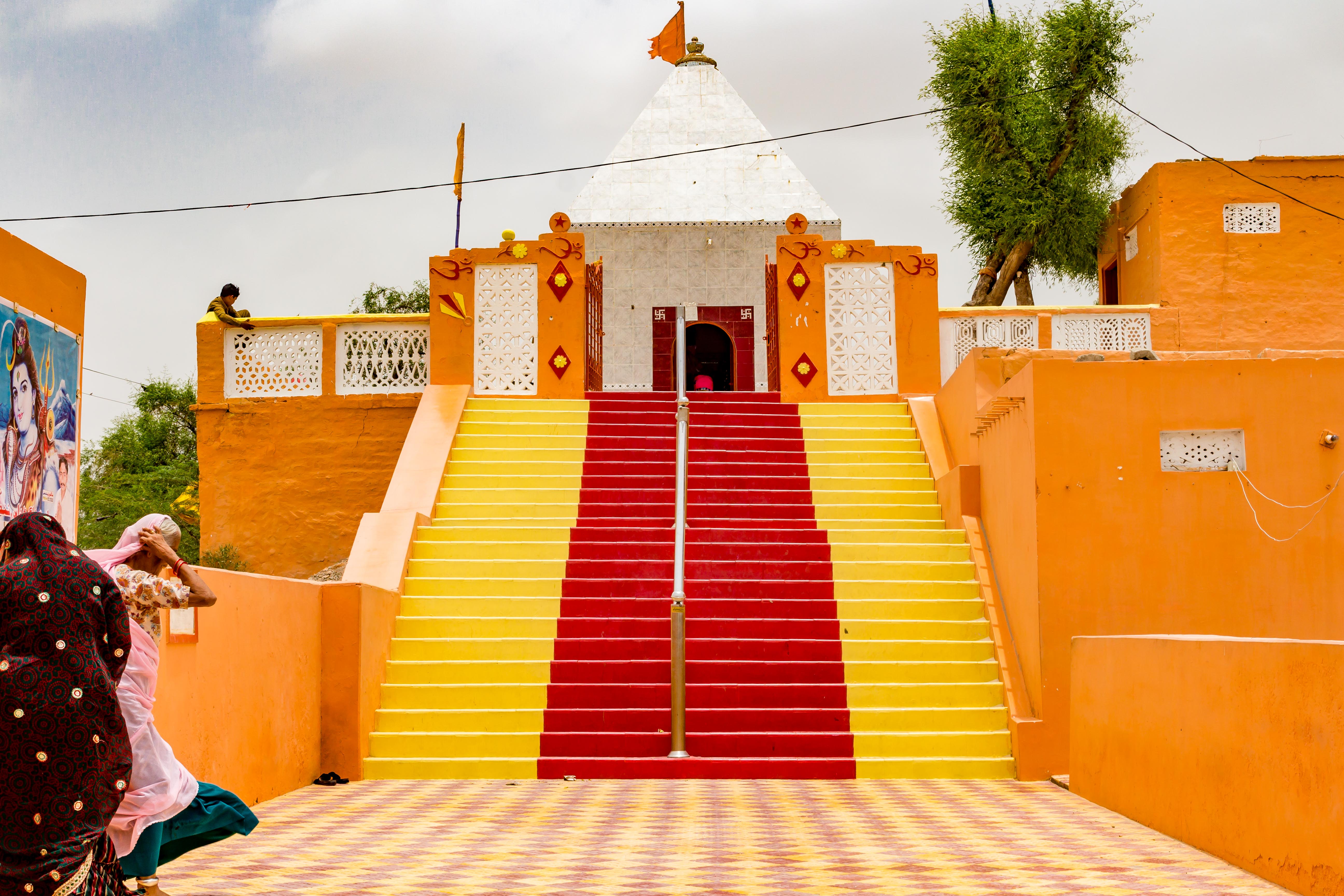
According to a study, Information on Caste Based Discrimination in South Asia, Long Behind Schedule, a Study on the Plight of Scheduled Caste Hindus in Pakistan, the majority of scheduled caste Hindus (79%) in Pakistan have experienced discrimination. This discrimination is higher in southern Punjab (86.5%), compared to the rest of the country. The study found that majority (91.5%) of the respondents in Rahimyar Khan, Bahawalpur, Tharparkar and Umerkot districts believed that political parties are not giving importance to them.
In Balochistan province, Hindus are relatively more secure and face less religious persecution. The tribal chiefs in Balochistan, particularly the Jams of Lasbela and Bugti of Dera Bugti, consider non-Muslims like Hindus as members of their own extended family and allows religious freedom. They have never forced Hindus to convert. Also, in Balochistan Hindu places of worship are proportionate to their population. For example, between Uthal and Bela jurisdiction in Lasbela District, there are 18 temples for 5,000 Hindus living in the area, which is an indicator of religious freedom. However, in Khuzdar District and Kalat District, Hindus face discrimination.
In Peshawar, capital of Khyber Pakhtunkhwa, Hindus enjoy religious freedom and live peacefully alongside the Muslims. The city of Peshawar today is home to four Hindu tribes – the Balmiks, the Rajputs, the Heer Ratan Raths and the Bhai Joga Singh Gurdwara community. Since partition, the four tribes have lived in harmony with all religious communities including Muslims. However, there is the lack of upkeep of the dilapidated Hindu temples in the city. The local government always fails to assign caretakers and priests at temples. But in other parts of Kyber Pakhtunkhwa like Buner, Swat and Aurakzai Agencies, Hindu and Sikh families, have been targeted by Taliban for failing to pay Jizya (religious tax) and due to this more than 150 Sikhs and Hindu families in Pakistan's have moved to Hasan Abdal and Rawalpindi in Punjab in 2009
In central Punjab, Hindus are a small minority. After the partition, Hindus have been converting to Islam under pressure, particularly in Doda village near Sargodha. Due to the low population of Hindus in the Central Punjab, many of the Hindus have married Sikhs and vice versa. Intermarriages between the Hindus and Sikhs are very common there.
The Indus river is a holy river to many Hindus, and the Government of Pakistan periodically allows small groups of Hindus from India to make pilgrimage and take part in festivities in Sindh and Punjab. Rich Pakistani Hindus go to India and release their loved ones' remains into the Ganges. Those who cannot afford the trip go to Churrio Jabal Durga Mata temple in Nagarparkar.
Education and literacy rates
According to Pakistan's National Council for Justice and Peace (NCJP) report the average literacy rate among Hindu (upper caste) is 34 percent, Hindu Scheduled Caste is 19 percent, compared to the national average of 46.56 percent. According to a 2013 survey conducted by the Pakistan Hindu Seva Welfare Trust, the literacy rate among Scheduled Caste Hindus in Pakistan is just 16%. The survey noted that majority of the scheduled caste Hindu families do not send their girl children to schools due to the fear of forced conversion. Pakistan belongs to those nations who have the world's worst literacy rate, which is the main reason for its slow agricultural growth and sluggish economy. Pakistan's literacy rate is ranked 113 in a total of 120 countries. This is a huge issue for the country and its economic development.
Hindu marriage acts and laws
Main article: Hindu marriage laws in Pakistan

There are two laws governing Hindu marriages-Sindh Hindu Marriage act of 2016 (applicable only in the Sindh province), Hindu Marriage Act of 2017 (applicable in Islamabad Capital Territory, Balochistan, Khyber-Pakhtunkhwa and Punjab provinces). However, there are no laws and amendments made to register a marriage between two Hindus – from one Province to another (Islamabad Capital Territory, Balochistan, Khyber-Pakhtunkhwa and Punjab).
The Sindh Hindu Marriage Bill was passed by the Provincial Assembly of Sindh in February 2016. This was the first Hindu Marriage act in Pakistan. It was amended in 2018 to include divorce rights, remarriage rights and financial security of the wife and children after divorce.
At federal level, a Hindu Marriage Bill was proposed in 2016, which was unanimously approved by the National Assembly of Pakistan in 2016 and by the Senate of Pakistan in 2017. In March 2017, the Pakistani President Mamnoon Hussain signed the Hindu Marriage Bill and thereby making it a law. Prime Minister Nawaz Sharif also mentioned that the marriage registrars will be established in areas where Hindus stay. However, many have criticised the Clause 12(iii) of the Hindu Marriage Bill which says that "a marriage will be annulled if any of the spouses converts to another religion".
Temples
Main article: List of Hindu temples in Pakistan
The Communal violence of the 1940s and the subsequent persecutions have resulted in the destruction of many Hindu temples in Pakistan, although the Hindu community and the Government of Pakistan have preserved and protected many prominent ones. Some ancient Hindu temples in Pakistan draw devotees from across faiths including Muslims.
According to a survey, there were 428 Hindu temples in Pakistan at the time of Partition and 408 of them were now turned into toy stores, restaurants, government offices and schools. Among these 11 temples are in Sindh, four in Punjab, three in Balochistan and two in Khyber Pakhtunkhwa. However, in November 2019, government of Pakistan started the restoration process for 400 Hindu temples in Pakistan. After restoration, the temples will be reopened to Hindus in Pakistan.
The Pamwal Das Shiv Mandir, centuries-old historic temple in Baghdadi area of Lyari Town was illegally turned into a Muslim Pir and slaughterhouse for cows by Muslim clerics with the help of Baghdadi police after making series of attacks on Hindu families living in the area. The 135,000 acres of temple land is now controlled by the Evacuee Trust Property Board. The historic Kali Bari Hindu Temple has been rented out to a Muslim party in Dera Ismail Khan who converted the temple into a Hotel. The Holy Shiv Temple in Kohat has been converted into a government primary school. The Raam Kunde Complex of Temples at Saidpur village in Islamabad is now a picnic site. Another temple at Rawal Dam in Islamabad has been shut down and the Hindu community believes that the temple is going to dilapidate day by day without being handed over to them. In Punjab, a Hindu temple at Rawalpindi was destroyed and reconstructed to use as a community centre, while in Chakwal the Bhuwan temple complex is being used by the local Muslim community for commercial purposes.
According to a report issued by a one-man commission to the Supreme Court in February 2021, out of 365 Hindu temples built before partition in Pakistan, 13 are being managed by the Evacuee Trust Property Board, 65 are being managed by the Hindu community, and the remainder of 287 have been abandoned to land mafias.
Reopened temples

The Goraknath Temple which was closed in the 1947 was reopened in 2011 after a court ruling which ordered the Evacuee Trust Property Board to open it. Some temples were reopened and renovated in a public-private partnership like the Darya Lal Mandir in Karachi.
In 2019, the Pakistan Prime Minister Imran Khan said that his government will reclaim and restore 400 temples to Hindus. Following this, the 1,000-Year-Old Shivala Teja Singh temple in Sialkot (which was closed for 72 years) and a 100-year-old Hindu temple in Balochistan was reopened.
Major Pilgrimage centres
- Shri Hinglaj Mata temple – Shakta pitha in Pakistan. The annual pilgrimage to the temple is the largest one in Pakistan. More than 250,000 people take part in the pilgrimage during the spring.
- Shri Ramdev Pir temple in Tando Allahyar District, in Sindh. The annual Ramdevpir mela in the temple is the second largest Hindu pilgrimage in Pakistan.
- Umarkot Shiv Mandir –The three-day Shivrathri festival in the temple is famous. It is one of the biggest religious festivals in the country. It is attended by around 250,000 people. All the expenses were borne by the Pakistan Hindu Panchayat.
- Churrio Jabal Durga Mata Temple – Famous for Shivrathri celebrations which is attended by 200,000 pilgrims. Hindus cremate the dead and ashes are preserved till Shivratri for immersion in the into holy water in Churrio Jabal Durga Mata Temple.
Riots, attacks and destruction of temples
- In 2006, a Hindu temple in Lahore was destroyed to pave the way for construction of a multi-storied commercial building. When reporters from Pakistan-based newspaper Dawn tried to cover the incident, they were accosted by the henchmen of the property developer, who denied that a Hindu temple existed at the site.
- In January 2014, a policeman standing guard outside a Hindu temple at Peshawar was gunned down. 25 March 2014 Express Tribune citing an All Pakistan Hindu Rights Movement (PHRM) survey said that 95% of all Hindu temples in Pakistan have been converted since 1990. Pakistani Muslims have attacked Hindu temples if anything happens to any mosque in neighbouring India.
- In 2014, a Hindu temple and a dharmashala in Larkana district in Sindh was attacked by a crowd of Muslims.
- In 2019, three Hindu temples were vandalised in Ghotki district in Sindh over blasphemy accusations.
- In 2019, a Hindu temple Pakistan's southern Sindh province was vandalism by miscreants and they set fire to holy books and idols inside the temple.
- In January 2020, a Hindu temple in Chachro, Tharparkar district in Sindh was vandalised by miscreants, who desecrated the idols and set fire to holy scriptures.
- In December 2020, a Hindu temple in Teri village of Karak district was attacked and vandalised.
- In August 2021, a Hindu Temple in Rahim Yar Khan in Punjab province of Pakistan was attacked by a Muslim Mob, burning down parts of it and damaging idols.
Religious persecution{{anchor|Decline and persecution}}
There has been a historical decline of Hinduism, Buddhism and Sikhism in the areas of Pakistan. This happened for a variety of reasons even as these religions have continued to flourish beyond the eastern frontiers of Pakistan. The region became predominantly Muslim during the rule of Delhi Sultanate and later Mughal Empire. In general, religious conversion was a gradual process, though it is mostly attributed to the works of Sufis, some converted to Islam to gain tax relief, land grant, marriage partners, social and economic advancement, or freedom from slavery and some by force. The predominantly Muslim population supported Muslim League and Partition of India. After the independence of Pakistan in 1947, the minority Hindus and Sikhs migrated to India while the Muslims refugees from India migrated to Pakistan. Approximately 4.7 million Hindus and Sikhs moved to India while 6.5 million Muslims settled in Pakistan.
Some Hindus in Pakistan feel that they are treated as second-class citizens and many have continued to migrate to India. According to the Human Rights Commission of Pakistan data, around 1,000 Hindu families fled to India in 2013. In May 2014, a member of the ruling Pakistan Muslim League-Nawaz (PML-N), Dr Ramesh Kumar Vankwani, revealed in the National Assembly of Pakistan that around 5,000 Hindus are migrating from Pakistan to India every year.
The London-based Minority Rights Group and Islamabad-based International and Sustainable Development Policy Institute state that religious minorities in Pakistan such as Hindus face "high levels of religious discrimination", and "legal and social discrimination in almost every aspect of their lives, including political participation, marriage and freedom of belief".
Targeted sexual harassment
Those Pakistani Hindus who have migrated to India allege that Hindu girls are sexually harassed in Pakistani schools and their religious practices are mocked. The Indian government is planning to issue Aadhaar cards and PAN cards to Pakistani Hindu refugees, and simplifying the process by which they can acquire Indian citizenship. In 2019, India passed the Citizenship (Amendment) Act, 2019 that allows the persecuted Pakistani Hindus and Sikhs who arrived in India before the end of December 2014 to obtain Indian citizenship.
Discrimination and attacks
Jogendranath Mandal, Pakistan's first minister of Law and Labour, left for India in 1950, 3 years after taking office, citing anti-Hindu bias by the bureaucracy. He quoted, "I have come to the conclusion that Pakistan is no place for Hindus to live in and that their future is darkened by the ominous shadow of conversion or liquidation".
Separate electorates for Hindus and Christians were established in 1985—a policy originally proposed by Islamist leader Abul A'la Maududi. Christian and Hindu leaders complained that they felt excluded from the county's political process, but the policy had strong support from Islamists. Until 1999, when former military chief Pervez Musharraf overthrew Nawaz Sharif's government, non-Muslims had dual voting rights in the general elections that allowed them to not only vote for Muslim candidates on general seats, but also for their own non-Muslim candidates.
In the aftermath of the Babri Masjid demolition, widespread violence erupted against Hindus. Shops owned by Hindus were also attacked in Sukkur, Sindh. Hindu homes and temples were also attacked in Quetta.
In December 2020, a mob in Karak District attacked and set fire to a Hindu temple which was originally demolished in 1997 before being restored by the Pakistan Supreme Court in 2017. The head of the Pakistan Hindu Council, Ramesh Kumar Vankwani stated "We will stage a protest in front of the Supreme Court against the attack on our temple which is one of the four largest holy sites of the Hindu community in Pakistan." Religious discrimination remains common to this day throughout the country, and Pakistan has been designated a 'Country of Particular Concern' by the United States Commission on International Religious Freedom (USCIRF) for engaging in or tolerating "systematic, ongoing, egregious violations of religious freedom".
The rise of Taliban insurgency in Pakistan has been an influential and increasing factor in the persecution of and non-Muslims in Pakistan. Between 2011 and 2012, 23 Hindus were kidnapped for ransom and 13 Hindus were killed as a part of targeted killings of non-Muslims. In January 2014, a policeman standing guard outside a Hindu temple at Peshawar was gunned down. Pakistan's Supreme Court has sought a report from the government on its efforts to ensure access for the minority Hindu community to temples – the Karachi bench of the apex court was hearing applications against the alleged denial of access to the members of the minority community.
Former Pakistan cricketer Danish Kaneria recently alleged mistreatment by team members and management for being a Hindu.
In June 2023, the Pakistan Higher Education Commission banned the celebration of the Hindu festival Holi on institute campuses to preserve "Islamic identity" and "sociocultural values" which flared the issue of religious discrimination in the country. The ban was later removed a month later by the education commission, following outrage on social media.
A Hindu temple was attacked with rocket launchers by a gang of dacoits in the Southern Sindh Province of Pakistan on July 16, in the second such incident of vandalism of a place of worship belonging to the minority community in less than two days. The assailants attacked the small temple built by the local Hindu community and adjoining homes belonging to members of the minority community in the Kashmore area of the Sindh Province. The attack came after the Mari Mata Temple in Karachi's Soldier Bazar was razed to the ground by bulldozers in the presence of a heavy contingent of police force late on Friday night. The temple believed to be nearly 150 years ago was demolished after being declared an old and dangerous structure in Karachi, the provincial capital of Sindh Province.
As per a written response to parliament by Indian Minister of State for External Affairs Kirti Vardhan Singh in December 2024, a total of 112 cases of violence against Hindus and other minorities have been reported in Pakistan in 2024 till October.
Islamic curriculum
According to the Sustainable Development Policy Institute report, "Associated with the insistence on the Ideology of Pakistan has been an essential component of hate against India and the Hindus. For the upholders of the Ideology of Pakistan, the existence of Pakistan is defined only in relation to Hindus, and hence the Hindus have to be painted as negatively as possible".
A 2005 report by the National Commission for Justice and Peace, a non-profit organization, found that Pakistan Studies textbooks in Pakistan have been used to articulate the hatred that Pakistani policy-makers have attempted to inculcate towards the Hindus. "From the government-issued textbooks, students are taught that Hindus are backward and superstitious", the report stated.In Pakistan's Public Schools, Jihad Still Part of Lesson Plan – The Muslim nation's public school texts still promote hatred and jihad, reformers say. By Paul Watson, Times Staff Writer; 18 August 2005; Los Angeles Times. 4-page article online, retrieved on 2 January 2010
In 1975, Islamiat or Islamic studies was made compulsory, resulting that a large number of minority students being forced to study Islamic Studies. In 2015, Khyber Pakhtunkhwa government introduced Ethics as an alternative subject to Islamiat for non-Muslim school children in the province followed by Sindh in 2016.
Hindu students are often forced to study as per the Islamic curriculum. It has been reported that students are taught hatred against the Hindus in Pakistan's school. While speaking at the UN Working Group on Durban Declaration and Plan of Action in Genava, Munir Mengal, the president of Baloch Voice Association said, "I used to go to school in a very high standard state-run Army school called Cadet College the first lesson to us was Hindus are Kafirs, Jews are enemies of Islam both are liable to death for no other reason". He added, "Even today the same is the first most important and basic message from uniformed Army teachers that we have to respect guns and bombs because we have to use these against Hindu mothers to kill them otherwise they will give birth to a Hindu child".
In 2021, Single National Curriculum (SNC) was adopted by the Pakistan government in which instead of Islamiat for Muslims, the Non-Muslim students belonging to Hindu, Christian, Sikh, Kalash and Bahai religions will be taught separate books on their religion separately.
As per the new Curriculum, Hindu students from Grade 1 to 5 will study about Om symbol, Dharma, Moksha, Karma yoga, Bhakti yoga, arti song Om Jai jagdhesh with meaning, Hindu celebrations (like Ram Navmi, Diwali, Cheti Chand, Janmashtami), Hindu deities (like Ganesh, Jhulelal, Sita) Prahlad pictorial life story of Ram, Krishna, Hindu Saints like Valmiki, Mira Bai, Kabir das, Tulsi das; Sacred places of Hindus in Pakistan like Sant Nenuram Ashram, Sadhu Bela, Hinglaj Mata Mandir etc. The Brookings Institution, in a recent report evaluating the SNC, points to the phenomenon of isomorphic mimicry in which developing states "pretend to do the reforms that look like the kind of reforms that successful countries do" without actually changing much. SNC also aims at mainstreaming madrassas, which might lead to spilling over of extremist and more theological subjects into formal schools.
Prominent Pakistani Hindus
Main article: List of Pakistani Hindus
Notes
References
References
- "Religious Demographics of Pakistan 2023".
- (2013). "The Fiction of Nationality in an Era of Transnationalism". [[Routledge]].
- Maclean, Derryl N.. (1989). "Religion and Society in Arab Sind". Brill.
- (2016-11-10). "Architectural Conservation in Asia: National Experiences and Practice". Taylor & Francis.
- Malik, Iftikhar Haider. (2006). "Culture and Customs of Pakistan". Greenwood Publishing Group.
- "Population Distribution by Religion, 1998 Census". Pakistan Bureau of Statistics.
- "Population Census 2023". Pakistan Hindu Council.
- Ranganathan, Anand. (9 January 2015). "The Vanishing Hindus of Pakistan – a Demographic Study".
- "The Bobbs-Merrill Reprint Series in Geography". Bobbs-Merrill Company.
- (2009). "Migration and Small Towns in Pakistan". IIED.
- Chakraborty, Chandrima. (2 October 2017). "Mapping South Asian Masculinities: Men and Political Crises". Routledge.
- Humayun, Syed. (1995). "Sheikh Mujib's 6-point Formula: An Analytical Study of the Breakup of Pakistan". Royal Book Company.
- (17 August 2017). "The truth about forced conversions in Thar". [[Dawn (newspaper).
- "Pakistan".
- Rehman, Zia Ur. (18 August 2015). "With a handful of subbers, two newspapers barely keeping Gujarati alive in Karachi". The News International.
- Latief, Samiya. (18 July 2020). "Explained: Pakistan's Krishna Temple and the controversy over its construction".
- {{harvnb. Avari. 2013
- Abbasi, Muhammad Yusuf. (1992). "Pakistani Culture". [[HarperCollins]].
- {{harvnb. Ispahani. 2017
- Taking its name from [[Pakistan]], an acronym composed of the key letters of its constituent regions-[[Punjab, Pakistan. Punjab]], [[Afghania]], [[Kashmir]], [[Sindh]], and [[Balochistan. Baluchistan]]-Pakistan at first welcomed all of its new citizens, Muslim and non-Muslim alike. Non-Muslims comprised 23 percent of the total population, and non-[[Sunnis]] comprised a quarter of the Muslim population. {{Harvard citation. Ispahani. 2017
- "In Pakistan, Hindu culture perseveres despite discrimination". Christian Science Monitor.
- (2007-03-02). "Hindus feel the heat in Pakistan". [[BBC News]].
- Rehman, Javaid. (13 April 2000). "The Weaknesses in the International Protection of Minority Rights". Martinus Nijhoff Publishers.
- Haq, Farhat. (10 May 2019). "Sharia and the State in Pakistan: Blasphemy Politics". Routledge.
- Schaflechner, Jürgen. (2018). "Hinglaj Devi: identity, change, and solidification at a Hindu temple in Pakistan". Oxford University Press.
- (2011). "OnBecoming Gods". Being in the World Productions.
- (10 January 2019). "In a Muslim-majority country, a Hindu goddess lives on".
- Maclean, Derryl N.. (1989). "Religion and Society in Arab Sind". Brill.
- (2016-11-10). "Architectural Conservation in Asia: National Experiences and Practice". Taylor & Francis.
- Malik, Iftikhar Haider. (2006). "Culture and Customs of Pakistan". Greenwood Publishing Group.
- Ranganathan, Anand. (9 January 2015). "The Vanishing Hindus of Pakistan – a Demographic Study".
- (2004). "A Demographic Case Study of Forced Migration: The 1947 Partition of India". Population Association of America 2004 Annual Meeting Program.
- Chakraborty, Chandrima. (2 October 2017). "Mapping South Asian Masculinities: Men and Political Crises". Routledge.
- Humayun, Syed. (1995). "Sheikh Mujib's 6-point Formula: An Analytical Study of the Breakup of Pakistan". Royal Book Company.
- "Sakti - Mother Goddess 1".
- Reeves, B. O. K.. (1974). "Crowsnest Pass Archaeological Project: 1972 Salvage Excavations and Survey Paper No. 1: Preliminary Report". University of Ottawa Press.
- "Rigveda {{!}} Hindu literature". Encyclopædia Britannica.
- (2014-08-05). "India's Rise as an Asian Power: Nation, Neighborhood, and Region". Georgetown University Press.
- Roy, Kumkum. (2008-12-04). "Historical Dictionary of Ancient India". Scarecrow Press.
- Rengel, Marian. (15 December 2003). "Pakistan: A Primary Source Cultural Guide". The Rosen Publishing Group, Inc.
- Singh, Sarina. (2008). "Pakistan & the Karakoram Highway". Lonely Planet.
- Singh, Vipul. (2008). "The Pearson Indian History Manual for the UPSC Civil Services Preliminary Examination". Pearson Education India.
- (January 2007). "Inderscience Publishers - linking academia, business and industry through research". World Review of Entrepreneurship, Management and Sustainable Development.
- Wink, André. (1991). "Al-Hind the Making of the Indo-Islamic World: The Slave Kings and the Islamic Conquest : 11Th-13th Centuries". BRILL.
- Paracha, Nadeem F.. (22 June 2015). "Why some in Pakistan want to replace Jinnah as the founder of the country with an 8th century Arab".
- {{Harvard citation no brackets. Avari. 2013
- Chandra, Satish. (2005). "Medieval India: From Sultanat to the Mughals Part II". Har Anand Publications.
- Zamindar, Vazira Fazila-Yacoobali. (2010). "The Long Partition and the Making of Modern South Asia: Refugees, Boundaries, Histories". Columbia University Press.
- Dhulipala, Venkat. (2015). "Creating a New Medina: State Power, Islam, and the Quest for Pakistan in Late Colonial North India". Cambridge University Press.
- "The inter-religious dialogue".
- Qasmi, Ali Usman. (2015). "The Ahmadis and the Politics of Religious Exclusion in Pakistan". Anthem Press.
- Zamindar, Vazira Fazila-Yacoobali. (2010). "The Long Partition and the Making of Modern South Asia: Refugees, Boundaries, Histories". Columbia University Press.
- Gilmartin, David. (1998). "Partition, Pakistan, and South Asian History: In Search of a Narrative". The Journal of Asian Studies.
- Dr Iftikhar H. Malik. "Religious Minorities in Pakistan".
- (24 March 2019). "4 Million Hindus persecuted in partition of the West Pakistan".
- (10 February 2020). "Has Pak's Hindu population dropped sharply".
- "As per as Pakistan government official estimation, there are 75 lakhs Hindus living in Pakistan in the year of 2021".
- "Has Pak's Hindu population dropped sharply?". The Times of India.
- (9 January 2015). "The Vanishing Hindus of Pakistan – a Demographic Study".
- (12 December 2019). "No, Pakistan's non-Muslim population didn't decline from 23% to 3.7% as BJP claims".
- (28 March 2022). "Exiled analysts rue decline of Hinduism in Pakistan's Punjab province".
- (31 July 2014). "Pakistan's shrinking minority space". The Hindu.
- (13 June 2016). "Our vanishing Hindus".
- (19 January 2016). "Slow genocide of minorities in Pakistan: Farahnaz Ispahani". mint.
- "Area, Population, Density and Urban/Rural Proportion by Administrative Units". Statistics Division, Ministry of Economic Affairs and Statistics, Government of Pakistan.
- "Census of Bangladesh". Banbeis.gov.bd.
- (2013). "Hindus in South Asia & the Diaspora: A Survey of Human Rights, 2013". Hindu American Foundation.
- (13 March 2016). "Caste and captivity: Dalit suffering in Sindh". [[Dawn (newspaper).
- (2008). "Long behind Schedule: a Study on the plight of Scheduled Caste Hindus in Pakistan". Indian Institute of Dalit Studies, New Delhi.
- Rawat, Mukesh. (12 December 2019). "No, Pakistan's non-Muslim population didn't decline". [[India Today]].
- "Population Distribution by Religion, 1998 Census". Pakistan Bureau of Statistics.
- "Scheduled castes have a separate box for them, but only if anybody knew".
- Arisar, A. B.. (2025-07-27). "SOCIETY: TRANSFORMING GEN JOGI".
- Khan, Iftikhar A.. (28 May 2018). "Number of non-Muslim voters in Pakistan shows rise of over 30pc". [[Dawn (newspaper).
- (22 July 2018). "Pakistan General Election: Non-Muslim voters increase by 30 percent in 5 years, Hindus most numerically significant minority". Firstpost.
- (18 December 2019). "Hindus of Pakistan reject CAA, do not want Indian Prime Minister Modi's offer of citizenship". Gulf News.
- (4 March 2015). "Mithi: Where a Hindu fasts and a Muslim does not slaughter cows".
- "CENSUS OF PAKISTAN, 1951 POPULATION ACCORDING TO RELIGION TABLE 6".
- "Census of Pakistan, 1951 Population According to Religion Table 6 CensusIndgov site".
- "Population, Vol-3, Pakistan - Census 1961 TABLE 5-POPULATION BY RELIGIOUS GROUPS, 1951 AND 1961".
- "Population, Vol-3, Pakistan - Census 1961 TABLE 7-POPULATION BY RELIGIOUS GROUPS AND SEX".
- Population Census Organization Statistics Division, Government of Pakistan Islamabad. (1972). "Statistical Report of Pakistan 1972".
- Population Census Organisation Statistics Division, Government of Pakistan, Islamabad. (December 1984). "1981 Census Report of Pakistan". © Population Census Organisation Statistics Division, Government of Pakistan, Islamabad.
- Population Census Organisation Statistics Division, Government of Pakistan, Islamabad. (December 1985). "Handbook of Population Census Data, 1981". © Population Census Organisation Statistics Division, Government of Pakistan, Islamabad.
- (27 May 2018). "Headcount finalised sans third-party audit".
- (1901). "Census of India 1901. [Vol. 17A]. Imperial tables, I-VIII, X-XV, XVII and XVIII for the Punjab, with the native states under the political control of the Punjab Government, and for the North-west Frontier Province.".
- (1913). "Punjab District Gazetteers Gurdaspur District Vol.21 Statistical Tables".
- (1901). "Census of India 1901. Vols. 9-11, Bombay.".
- (1901). "Census of India 1901. [Vol. 17A]. Imperial tables, I-VIII, X-XV, XVII and XVIII for the Punjab, with the native states under the political control of the Punjab Government, and for the North-west Frontier Province.".
- (1901). "Census of India 1901. Vol. 23A, Kashmir. Pt. 2, Tables.".
- (1901). "Census of India 1901. Vol. 5A, Baluchistan. Pt. 2, Imperial tables.".
- (1911). "Census of India 1911. Vol. 14, Punjab. Pt. 2, Tables.".
- Kaul, Harikishan. (1911). "Census Of India 1911 Punjab Vol XIV Part II".
- (1911). "Census of India 1911. Vol. 7, Bombay. Pt. 2, Imperial tables.".
- "Census of India, 1911 Volume XII North-West Frontier Province".
- (1911). "Census of India 1911. Vol. 20, Kashmir. Pt. 2, Tables.".
- (1911). "Census of India 1911. Vol. 4, Baluchistan : pt. 1, Report; pt. 2, Tables.".
- (1921). "Census of India 1921. Vol. 15, Punjab and Delhi. Pt. 2, Tables.".
- (1921). "Census of India 1921. Vol. 8, Bombay Presidency. Pt. 2, Tables : imperial and provincial.".
- (1922). "Census of India 1921. Vol. 14, North-west Frontier Province : Part I, Report; part II, Tables".
- (1921). "Census of India 1921. Vol. 22, Kashmir. Pt. 2, Tables.".
- (1921). "Census of India 1921. Vol. 4, Baluchistan : part I, Report; part II, Tables.".
- (1931). "Census of India 1931. Vol. 17, Punjab. Pt. 2, Tables.".
- (1931). "Census of India 1931. Vol. 8, Bombay. Pt. 2, Statistical tables.".
- (1933). "Census of India, 1931, vol. XV. North-west frontier province. Part I-Report. Part II-Tables". Peshawar, Printed by the manager, Government stationery and printing, 1933..
- (1931). "Census of India 1931. Vol. 24, Jammu & Kashmir State. Pt. 2, Imperial & state tables.".
- (1931). "Census of India 1931. Vol. 4, Baluchistan. Pts. 1 & 2, Report [and] Imperial and provincial tables.".
- (1941). "Census of India, 1941. Vol. 6, Punjab".
- (1941). "Census of India, 1941. Vol. 12, Sind".
- (1941). "Census of India, 1941. Vol. 10, North-West Frontier Province".
- (1941). "Census of India, 1941. Vol. 22, Jammu & Kashmir".
- (1942). "Census of India, 1941. Vol. 14, Baluchistan".
- "Population by Releigion".
- "SALIENT FEATURES OF FINAL RESULTS CENSUS-2017".
- (4 March 2015). "Mithi: Where a Hindu fasts and a Muslim does not slaughter cows".
- (19 May 2025). "Hindu community, bikers stage victory march".
- "District wise census".
- (20 April 2021). "Inside Pakistan's 'Conversion Factory' For Hindu Brides". Radio Free Europe/Radio Liberty.
- (July 2021). "Pakistan's Religious Minorities Say They Were Undercounted in Census".
- (2 September 2021). "Pakistan faces accusations of undercounting Hindus, Christians in latest census". Hindustan Times.
- (July 2021). "Pakistan's Religious Minorities Say They Were Undercounted in Census".
- (13 January 2017). "Hindu Population (PK) – Pakistan Hindu Council". [[Pakistan Hindu Council]].
- (18 December 2019). "Hindus of Pakistan reject CAA, do not want Indian Prime Minister Modi's offer of citizenship".
- "Pakistan: Hindu community pardons mob accused of vandalising temple". [[The Economic Times]].
- (2020-01-07). "Two years after it counted population, Pakistan silent on minority numbers".
- (11 June 2015). "Hinduism fastest growing religion in Pakistan and Saudi Arabia | India TV News".
- "Religious Demographics of Pakistan 2023".
- "Pakistani Hindu Population Among Fastest Growing in the World".
- (13 May 2014). "5,000 Hindus migrating to India every year, NA told".
- (8 April 2014). "1,000 minority girls forced in marriage every year: Report".
- Imtiaz, Saba. (14 August 2017). "Hindu Today, Muslim Tomorrow".
- Sarfraz, Mehmal. (2019-04-13). "In Pakistan, the problem of forced conversions". The Hindu.
- (4 August 2020). "Poor and Desperate, Pakistani Hindus Accept Islam to Get By". The New York Times.
- (28 December 2020). "Each year, 1000 Pakistani girl forcibly converted to Islam". Associated Press.
- (15 February 2017). "Pakistan Hindus lose daughters to forced muslim marriages". USA Today.
- (18 August 2016). "State of fear". [[Herald (Pakistan)]].
- (19 September 2017). "Forced conversions of Pakistani Hindu girls". [[Daily Times (Pakistan)]].
- (16 September 2019). "Who Is Mian Mithu?". Naya Daur Media (NDM), Pakistan.
- (2018). "Forced Conversions & Forced Marriages in Sindh, Pakistan". CIFORB, the [[University of Birmingham]].
- (9 October 2019). "PPP lawmakers turn down bill against forced conversions". [[The Express Tribune]].
- (2017-06-21). "Pakistan expels South Korean for 'illegal preaching' after murder of Chinese 'missionaries'".
- (21 January 2012). "Mass conversions: for Matli's poor Hindus, 'lakshmi' lies in another religion". [[The Express Tribune]].
- (10 April 2019). "Pakistan to restore, hand over 400 Hindu temples". [[India Today]].
- (23 January 2012). "100,000 conversions and counting, meet the ex-Hindu who herds souls to the Hereafter". [[The Express Tribune]].
- "Hindu youth delegation calls on governor".
- (22 April 2017). "How long will govt neglect Tharparkar, asks MNA Ramesh Kumar". Pakistan Today.
- (7 January 2019). "79 Hindu couples tie the knot in mass wedding". [[Dawn (newspaper).
- "Dalit sujag tehreek: Scheduled caste Hindus elect officers". ExpressTribune.
- Schaflechner, Jürgen. (2018). "Hinglaj Devi : identity, change, and solidification at a Hindu temple in Pakistan". Oxford University Press.
- "Rath Yatra travels the world". Orissa Post.
- (28 June 2011). "Cabinet approves devolution of seven ministries". [[Dawn (newspaper).
- (24 March 2011). "Asian/Pakistan – Paul Bhatti appointed "Special Advisor" for Religious Minorities". [[Agenzia Fides]].
- (5 August 2011). "Ministry of national harmony formed". [[The Express Tribune]].
- (24 June 2013). "Concern over merger of ministries". [[Dawn (newspaper).
- Dev, Kapil. (2015-06-23). "Where should a Pakistani Hindu go?".
- (2006-09-25). "Pak army recruits first Hindu cadet". The Times of India.
- "Sikh and Hindu officers usher in a new era in Pakistani Army". SikhNet.
- "How many Hindus are currently serving in Pakistan army?".
- "First time in history, Pakistan Army promotes Hindu officers as Lt Colonel". India Today NE.
- "ٹنڈو باگو، پاکستان کی تاریخ کا پہلا ہندو نوجوان پائلٹ آفیسر بن گیا".
- (2023-11-12). "Pakistan Army honours Hindu soldier killed in line of duty".
- mudaser.kazi. (2017-05-28). "Hindu soldier died in defence of Pakistan".
- "President confers civil awards on meritorious figures including Ashok Kumar". The Nation.
- (30 August 2016). "Minorities' seats". [[Dawn (newspaper).
- (1 July 2018). "Problems with the electoral representation of non-Muslims". [[Herald (Pakistan)]].
- (7 March 2019). "Bill suggests increasing minorities' seats". [[Dawn (newspaper).
- (3 April 2019). "JUI-F lawmaker suggests abolition of reserved seats for minorities". [[Dawn (newspaper).
- (2 March 2007). "Hindus feel the heat in Pakistan". BBC News.
- (21 February 2018). "After 1947, First Hindu Minority Woman From Thar to Become Senator in Pakistan".
- (4 March 2018). "Hindu woman elected to Pakistan's senate in historic first: Report". [[Times of India]].
- (29 July 2018). "Meet Pakistan's First Hindu Candidate Mahesh Kumar Malani to Win on General Seat". [[Network18 Group]].
- (31 July 2018). "Pakistan election: Muslim-majority areas elect 3 Hindu candidates in Sindh". Business Standard India.
- (26 November 2017). "The connection between Tamils and Pakistan". [[DT Next]].
- Shahbazi, Ammar. (20 March 2012). "Strangers to their roots, and those around them". The News.
- Witzel, Michael. (2004). "The Vedas: Texts, Language and Ritual". Forsten.
- pace Fussman 1977
- Akbar, Ali. (4 April 2017). "Peshawar High Court orders govt to include Kalasha religion in census". [[Dawn (newspaper).
- (2016h). "Genomic insights into the origin of farming in the ancient Near East". Nature.
- (18 October 2016). "Struggling to revive Gurmukhi". [[Daily Times (Pakistan)]].
- (14 August 2018). "'To see Lahore is to be born': A view of Pakistan's famed cultural heart. On Pak Independence Day, an edited excerpt from Haroon Khalid's book 'Imagining Lahore: The City That Is, The City That Was'.". Daily O (part of [[India Today]]).
- (21 July 2017). "Hindu past in an Islamic country: Living with new identities and old fears in Pakistan". The Scroll (India).
- (2005-10-05). "Hindu Valmiki Mandir in Lahore".
- Patel, Shaista Abdul Aziz. (2 December 2020). "It is time to talk about caste in Pakistan and Pakistani diaspora". [[Al Jazeera English.
- Vogelsang, Willem. (2001-11-28). "The Afghans". Wiley.
- (2000). "The Garland Encyclopedia of World Music: South Asia". [[Taylor & Francis]].
- Haidar, Suhasini. (2018-02-03). "Tattooed 'blue-skinned' Hindu Pushtuns look back at their roots". The Hindu.
- (2018-08-08). "Hindu Pashtun: How One Woman Uncovered India's Forgotten Links to Afghanistan".
- (8 November 2018). "Hindu community celebrates Diwali across Punjab". The Express Tribune.
- (23 October 2015). "Dussehra celebrated at Krishna Mandir". The Express Tribune.
- Gurbachan, Talib. (1950). "Muslim League Attack on Sikhs and Hindus in the Punjab, 1947". [[Shiromani Gurdwara Parbandhak Committee]].
- Gokhale, Balkrishna Govind. (1995). "Ancient India: History and Culture". Popular Prakashan.
- (2019-12-25). "Persecuted Hindus from Pakistan, Sikhs from Afghanistan make case for CAA".
- (27 February 2018). "The thriving Shiva festival in Umarkot is a reminder of Sindh's Hindu heritage". [[Dawn (newspaper).
- (December 2007). "Information on Caste Based Discrimination in South Asia, Long Behind Schedule, a Study on the Plight of Scheduled Caste Hindus in Pakistan". Indian Institute of Dalit Studies (IIDS) and International Dalit Solidarity Network (IDSN).
- (31 March 2019). "Forced conversions". [[Dawn (newspaper).
- (18 August 2016). "State of fear". [[Herald (Pakistan)]].
- (14 October 2019). "Across religious divides: A harmonious haven for Hindus in Khyber-Pakhtunkhwa". [[The Express Tribune]].
- (3 May 2009). "Sikhs and Hindu families move to Pak Punjab". NDTV.
- (23 November 2016). "Pakistan: Over 70 Hindu pilgrims from India arrive in Sindh for Sant Shada Ram anniversary". [[The Indian Express]].
- (5 March 2016). "125 Indian hindu pilgrims visit Pakistan ahead of Maha Shivratri, welcomed at Wagah border". [[India Today]].
- (10 March 2011). "Contractor blasting through Tharparkar temple in search of granite". [[The Express Tribune]].
- "Religious Minorities in Pakistan By Dr Iftikhar H.Malik".
- Yudhvir Rana. (4 June 2013). "Hindu parents don't send girl children to schools in Pakistan: Report".
- Abbasi, Kashif. (2021-06-11). "Literacy rate stagnant at 60pc".
- (2022-04-11). "Low literacy rate in Pakistan".
- Shahid Jatoi. (8 June 2017). "Sindh Hindu Marriage Act—relief or restraint?". Express Tribune.
- (15 February 2016). "Sindh Assembly approves Hindu Marriage Bill". [[Dawn (newspaper).
- (25 October 2016). "Two laws govern Hindu marriages in Pakistan – but neither addresses divorce adequately". Scroll.In.
- (9 February 2016). "Pakistan approves Hindu Marriage Bill after decades of inaction". [[The Times of India]].
- (11 August 2018). "Pak's Sindh to let divorced or widowed Hindu women remarry". [[The Times of India]].
- (27 September 2016). "NA finally passes Hindu marriage bill". [[Dawn (newspaper).
- (27 September 2016). "Pakistani lawmakers adopt landmark Hindu marriage bill". [[The Times of India]].
- Yudhvir Rana. (19 February 2017). "Pak senate's nod to Hindu Marriage Bill". [[The Times of India]].
- (2017-03-20). "Hindu Marriage Bill Becomes Law in Pakistan". News18.
- (27 July 2014). "Ancient Pakistan temples draw devotees from across faiths". [[Times of India]].
- (13 November 2019). "Pakistan to restore, hand over 400 Hindu temples". Gulf News.
- [https://www.thenews.com.pk/archive/print/27465 Temple turns into slaughterhouse] {{Webarchive. link. (20 March 2020 , [[The News International]], 10 October 2006.)
- [https://www.thenews.com.pk/archive/print/28128-historic-shiv-mandir-makes-way-for-a-pir Historic Shiv Mandir makes way for a Pir ] {{Webarchive. link. (17 May 2020 , [[The News International]], 10 October 2006.)
- (October 2006). "Shiv temple turns into slaughterhouse in Pakistan". [[Hindu Janajagruti Samiti]] (HJS).
- (25 March 2014). "95% of worship places put to commercial use: Survey". [[The Express Tribune]].
- Ali, Kalbe. (2021-02-08). "Hindus' holy sites a picture of neglect, says commission".
- (1 November 2011). "Hindu temple reopens after 60 ears". Rediff.
- (26 January 2014). "Gunmen kill Hindu temple guard in Peshawar". [[Dawn (newspaper).
- "Hindu Gorakhnath temple in Peshawar, Pakistan reopens after 60 years".
- (18 July 2021). "Shiv Ratri begins at Peshawar temple". [[The Express Tribune]].
- Tooba Masood. (6 January 2016). "Finishing touches to renovated Darya Lal mandir". Dawn.
- "Pakistan to restore more than 400 Hindu temples". Dailypakistan.
- (29 July 2019). "1,000-Year-Old Hindu Temple in Pakistan's Sialkot Reopens After 72 Years". Ndtv News.
- (8 February 2020). "Pak reopens 100-year-old temple in Balochistan". [[India Today]].
- (2013). "Historical Dictionary of the Bengalis". Scarecrow.
- (20 April 2016). "Mata Hinglaj Yatra: To Hingol, a pilgrimage to reincarnation". [[The Express Tribune]].
- (26 September 2012). "Hindu's converge at Ramapir Mela near Karachi seeking divine help for their security". [[The Times of India]].
- (27 February 2018). "The thriving Shiva festival in Umarkot is a reminder of Sindh's Hindu heritage".
- (2006-05-28). "Another temple is no more".
- (26 January 2014). "Hindu Temple Guard Gunned Down in Peshawar".
- (1992-12-08). "PAKISTANIS ATTACK 30 HINDU TEMPLES (Published 1992)". The New York Times.
- (16 March 2014). "Mob sets fire to Hindu community center in Pak over blasphemy". Firstpost.
- (15 September 2019). "Hindu teacher attacked, temple vandalised in Pakistan's Sindh". [[India Today]].
- ANI. (2019-02-05). "Pak: Hindu temple vandalised, holy books, idols burnt". Business Standard India.
- (27 January 2020). "Another Hindu temple vandalised in Pakistan, holy books, idols burnt". Wionews.
- Ahmad, Imtiaz. (2021-12-30). "Hindu temple in Pakistan vandalised, set on fire".
- (2021-08-05). "Mob attacks temple in Pakistan's Punjab, damages idols". The Hindu.
- Bhatti, Haseeb. (2021-08-05). "CJP takes notice of attack on Hindu temple in Rahim Yar Khan".
- Sohail, Riaz. (2 March 2007). "Hindus feel the heat in Pakistan". [[BBC]].
- "Gujarat: 114 Pakistanis are Indian citizens now". Ahmedabad Mirror.
- Rizvi, Uzair Hasan. (10 September 2015). "Hindu refugees from Pakistan encounter suspicion and indifference in India". Dawn.
- Haider, Irfan. (13 May 2014). "5,000 Hindus migrating to India every year, NA told".
- Bhalla, Nita. "Persecution of Pakistan's religious minorities intensifies, says report". U.S..
- (28 October 2015). "Why Pakistani Hindus leave their homes for India – BBC News". BBC News.
- (17 April 2016). "Modi government to let Pakistani Hindus register as citizens for as low as Rs 100 {{!}} Latest News & Updates at Daily News & Analysis". [[Daily News and Analysis]].
- [https://www.bbc.co.uk/news/world-asia-india-50670393 Citizenship Amendment Bill: India's new 'anti-Muslim' law explained] {{Webarchive. link. (12 December 2019 , BBC News, 11 December 2019.)
- "Parliament passes the Citizenship (Amendment) Bill 2019".
- Balouch, Akhtar. (2015-11-04). "Jogendra Nath Mandal: Chosen by Jinnah, banished by bureaucracy".
- (2020-03-01). "History Headline: Pakistan's Ambedkar, and two stories far apart".
- (2002). "Pakistan: Eye of the Storm". Yale University Press.
- Rahman, Zia-ur. (14 December 2016). "Christian community campaigns for right to elect, not 'select'".
- (2014). "India's Rise as an Asian Power: Nation, Neighborhood, and Region". Georgetown University Press.
- (14 November 2019). "How the Babri Masjid Demolition Upended Tenuous Inter-Religious Ties in Pakistan". The Wire.
- (7 December 1992). "Pakistanis Attack 30 Hindu Temples". [[The New York Times]].
- (29 March 2021). "Police: Attackers Damage Hindu Temple in Pakistan".
- "Mob attacks and sets fire to Hindu temple in Pakistan".
- (15 July 2014). "Extremists Make Inroads in Pakistan's Diverse South". [[The New York Times]].
- (21 October 2013). "Persecution of religious minorities in Pakistan". Zee Media Corporation Ltd..
- (15 September 2006). "Pakistan, International Religious Freedom Report 2006". US Department of State.
- (13 July 2010). "Hindus attacked in Pakistan". [[Oneindia.in]].
- (26 January 2014). "Hindu temple guard gunned down in Peshawar". AG Publications (Private) Limited..
- (27 February 2014). "Are Hindus in Pakistan being denied access to temples?". PTI (Press Trust of India).
- Sahoutara, Naeem. (26 February 2014). "Hindus being denied access to temple, SC questions authorities". [[The Express Tribune]].
- (26 February 2014). "Pak SC seeks report on denial of access to Hindu temple". Press Trust of India.
- (December 27, 2019). "Danish Kaneria controversy: Player should be judged on cricketing ability not on religion, says Mohsin Khan".
- (2023-06-21). "Holi banned in Pakistan universities to 'preserve Islamic identity': Report".
- Khan, Sameer. (2023-06-21). "Pakistan imposes ban on Holi celebrations in varsities".
- "'Erosion Of Country's Islamic Identity': Pakistan's Higher Education Commission Bans Holi Celebrations In Universities".
- Presse, AFP-Agence France. "Pakistan Education Officials Reverse Ban On Holi Celebrations".
- (16 July 2023). "Dacoits attack Hindu temple with rocket launchers in Pakistan".
- (2024-12-20). "2,200 in Bangladesh, 112 in Pakistan: Government on violence cases against Hindus in neighbouring countries". The Times of India.
- "2,200 Cases of Violence Against Hindus, Other Minorities in Bangladesh, 112 In Pakistan: Centre".
- Nayyar, A.H. and Salim, A. (eds.)(2003). [https://web.archive.org/web/20051109090607/http://www.sdpi.org/whats_new/reporton/State%20of%20Curr%26TextBooks.pdf The subtle Subversion: A report on Curricula and Textbooks in Pakistan]. Report of the project ''A Civil Society Initiative in Curricula and Textbooks Reform''. Sustainable Development Policy Institute, Islamabad.
- link. (6 June 2011, [[Daily Times (Pakistan)]], 2006-04-25)
- [http://www.rediff.com/news/2003/jul/16guest.htm Noor's cure: A contrast in views] {{Webarchive. link. (4 March 2016 ; by Arindam Banerji; 16 July 2003; [[Rediff.com). Rediff India Abroad]] Retrieved on 2 January 2010
- (18 December 2016). "Non-Muslim students reluctant to study Islamic studies or ethics". [[Daily Times (Pakistan)]].
- "Insensitivity of Pakistani School Education to Religious Diversity of the Nation* {{!}} ヒューライツ大阪".
- (1 March 2015). "Ethics as an alternative subject to Islamiat in KP". PakTribune.
- (2011-11-09). "'Pakistan schools teach Hindu hatred'".
- Afzal, Madiha. (4 April 2018). "How Pakistani school textbooks mould its students' skewed worldview".
- (16 October 2020). "Schools in Pakistan teach hatred against Hindus, Jews, Baloch activist told UN".
- Kashif Abbasi. "President told minority students to be taught their religious texts".
- "Single National Curriculum".
- (2021-06-24). "Explained: What is the Single National Curriculum proposed for schools in Pakistan and what are its criticisms?".
This article was imported from Wikipedia and is available under the Creative Commons Attribution-ShareAlike 4.0 License. Content has been adapted to SurfDoc format. Original contributors can be found on the article history page.
Ask Mako anything about Hinduism in Pakistan — get instant answers, deeper analysis, and related topics.
Research with MakoFree with your Surf account
Create a free account to save articles, ask Mako questions, and organize your research.
Sign up freeThis content may have been generated or modified by AI. CloudSurf Software LLC is not responsible for the accuracy, completeness, or reliability of AI-generated content. Always verify important information from primary sources.
Report
Social, religious and political institutions
The Pakistan Hindu Panchayat, Pakistan Hindu Council, Pakistan Hindu Youth Council and the Pakistani Hindu Welfare Association are the primary civic organizations that represent and organise Hindu communities on social, economic, religious and political issues in most of the country, with the exception of the Shiv Temple Society of Hazara, which especially represents community interests in the Hazara region of Khyber Pakhtunkhwa, in addition to being the special guardians of the Shiva temple, at Chitti Gatti village, near Mansehra. The Pakistan Hindu Council runs 13 schools across Tharparkar and also conducts mass wedding of poor Hindu couples. The Dalit Sujag Tehreek is a Scheduled Caste Hindu movement representing the scheduled caste Hindu communities like Kolhi, Bheel, Meghwar, Oad, Bhagri etc.
ISKCON also has a presence in Pakistan. It is involved in preaching and distributing Urdu translated Bhagavad Gita. It has a large following among the Scheduled Caste Hindus in Urban areas of Pakistan. There is a significant increase in the influence of Iskcon due to its rejection of caste system. Iskcon has been conducting Rathayatras since 2015.
There was a Ministry of Minority Affairs in the Government of Pakistan which looked after specific issues concerning Pakistani religious minorities. In 2011, the Government of Pakistan closed the Ministry of Minority Affairs. And a new ministry Ministry for National Harmony was formed for the protection of the rights of the minorities in Pakistan. But in 2013, the Ministry of National Harmony was merged with the Ministry of Religious Affairs despite opposition from the minorities.
Pakistan Army
Between 1947 and 2000, a policy of restricting Hindus prior enlisting in the Pakistan Army was in practice until the policy was reversed by the federal government. In 2006, army recruiters began recruiting Hindus into the army and people of all faith or no faith can be promoted to any rank or commanding position in the army. Pakistani Hindus have served in the Pakistan Armed Forces, with milestones including Captain Danish as the first Hindu officer commissioned in 2006, Major Dr Kelash Kumar and Major Dr Aneel Kumar as the first Hindu officers promoted to Lieutenant Colonel in 2022, and Dev Anand as the first Hindu pilot officer in the Pakistan Air Force in 2023. Three notable Pakistani Hindu martyrs include Heman Das Kohli, killed in the line of duty in 2023, Lance Naik Lal Chand Rabari, killed in the line of duty in 2017 and Ashok Kumar, posthumously awarded the Tamgha‑e‑Shujaat for bravery in Waziristan in 2013.