From Surf Wiki (app.surf) — the open knowledge base
Hijab
Islamic head covering for women
Islamic head covering for women

Hijab (, ) refers to head coverings worn by Muslim women. Similar to the mitpaḥat/tichel or snood worn by religiously observing married Jewish women, certain headcoverings worn by some Christian women, such as the hanging veil, apostolnik and kapp, and the dupatta favored by many North Indian Hindu and Sikh women, the hijab comes in various forms. The term describes a scarf that is wrapped around the head, covering the hair, neck, and ears while leaving the face visible. The use of the hijab, voluntarily and involuntarily, has grown globally since the 1970s, with religious Muslims viewing it as a symbol of modesty and faith; it is also worn as a form of adornment. There is consensus among mainstream Islamic religious scholars that covering the head is required, although Islamic modernists argue it is not an Islamic obligation.
The term ar was originally used to denote a partition and was sometimes used for Islamic rules of modesty. The Qur'an never uses the word hijab (lit. 'barrier') to refer to women's clothing, but rather discusses the attire of women using other terms Jilbāb (long and loose-fit outer garment) and khimār (generic headscarf).
Scholars differ as to whether hijab mandates covering everything except the face and hands, or to cover the whole body, including the face and hands, via niqab. The specific guidelines are found in texts of hadith and fiqh.
Islamic veiling practices vary globally based on local laws and customs. In some regions, the hijab is mandated by law, while in others, its use is subject to restrictions or bans. Muslim women face persecution in various countries for wearing the hijab—and, as in some Islamic countries, for not wearing it. This issue has the potential to be a deeply controversial topic not only from a human rights perspective but also from an international legal perspective, as it undermines the principle of impartiality, such as judging by individuals who wear clothing that also carries religious symbolism.
Terminology and usage
The Arabic word hijab () (lit. 'curtain, cloth barrier') is the verbal noun originating from the verb ﺣَﺠَﺐَ (hajaba), from the triliteral root ح ج ب (H-J-B), which forms a large class of words mostly relating to concepts of hide, conceal, block. The term ar was originally used to denote a partition and was sometimes later used for Islamic rules of modesty. While one usage in the Quran refers to the curtain separating Muhammad's wives from visitors, other usages refers to a metaphysical barrier separating man or the world from God. The Quran does not use the word hijab for women's clothing, but uses other terms such as jilbab (as an outer garment recommendation) and khimar (for discussions see below) in various contexts. The word in Turkish expresses an emotional state, shame, that is not related to clothing.
In Islamic scripture
Qur'an
A verse in the Surah Al-A'raf-26 gives the simplest and most fundamental purpose of dressing as covering one's ugly parts and emphasizes that fear of God is more important than covering oneself. There are seven verses in the Quran that refer in some way to women's clothing, and the two discussed below are ostensibly related to the form of clothing; The clearest verses on this topic are , telling both men and women to dress and act modestly, with more detail on women's position.{{Cite web|date=8 April 2003 The "ornaments" in the verse has been interpreted and presented by some scholars as the parts that are adorned, and by others as the female body, with the potential to encompass the entire body. Meanwhile modesty is exalted in the Islamic understanding, the opposite behavior is despised as fahisha by Islamic scholars alike as emblematic of a state of spiritual ignorance Jahiliyyah. In Luxenberg's Syro-Aramaic Reading analysis on Qur'an, the part "Let them draw their veils over their chests" means literally as "snap their belts around their waists", an idiom, the belt was a symbol for chastity and does not order any organ to be covered with cloth. According to him, the meanings of the words in the relevant part of the verse are as follows: خِمار Khimar; cummerbund, جيب jyb; sinus, sac, وَلْيَضْرِبْنَ; "let them hit."{{refn|group=note|One of the biggest difficulties in understanding the Quran for those who do not know its language may be shifts in linguistic usage over the centuries. Studies involving understanding, interpreting and translating the Quran can contain individual tendencies, reflections and even distortionsThere are occasional misinterpretations, mistranslations, and even distortions. Translating the meanings of the Holy Quran has always been challenging for translators, as the Quran has an exoteric and an esoteric meaning. caused by the region, sect, education, religious ideology and knowledge of the people who made them.}} (See also:Revisionist school of Islamic studies)
A statement ın Al-Aḥzāb: 59 is as follows; {{Blockquote|O Prophet, tell your wives, your daughters, and the women of the believers to draw their cloaks (the plural form of jilbab (جَلَـٰبِيبِهِنَّ)) over themselves. That is more suitable "so that they will be recognized and not be harmed". And Allah is ever Forgiving and Merciful. |}} This was a statement that tells women to wear their "outer garments" when going out for various needs (such as defecation), interpreted by some as a command and by others as a recommendation of protective measures against sexual harassment in Medina.
Those who perceived the statement as a command were also divided into two; while most scholars consider it won't to include face, a small group arguing that "the purpose of the veil is to prevent women from being recognized", hence the face is included. The statement in question is as follows: (ذَٰلِكَ أَدْنَىٰٓ أَن يُعْرَفْنَ فَلَا يُؤْذَيْنَ) literally "so that they will be recognized and not be harmed." In order to understand the expression, some narrations can give clues about the sociological infrastructure of the period. It is reported that Umar prohibited female slaves from resembling free women by covering their hair, no different from earlier social practices in which noble women who could wear ornate female headdresses were easily distinguished from slaves as in Mesopotamia, Assyria and ancient Greece. According to well-known explanation of the verse, by Al-Qurtubi the verse was an expression directed towards free and Muslim women, not slaves or non-Muslim women, for which Tabari cites Ibn Abbas. Ibn Kathir states that the jilbab was distinguishing free Muslim women from those of Jahiliyyah, so other men know they are free women and not slaves or prostitutes, so they are not harassed.
Some later scholars like Ibn Hayyan, Ibn Hazm and Muhammad Nasiruddin al-Albani questioned the quoted explanation. Their reasons were that slaves were not explicitly excluded in the verse or hadith, and that they could attract lust more easily, and that the prohibition of adultery and molestation should also apply to slaves. What is said about the dimensions of the Jilbab varies; While Qurtubi reports that jilbab covers the whole body, Ibn Arabi considered that excessive covering would make impossible for a woman to be recognised, which the verse mentions.{{Cite book|editor1-last=Gabriel|editor1-first=Theodore |chapter-url=https://books.google.com/books?id=2IdgumzY9VgC&pg=PT112|title=Islam and the Veil: Theoretical and Regional Contexts|editor2-last=Hannan|editor2-first=Rabiha
During Muhammad's lifetime
Main article: Sīrah, Sunnah
The word ḥijāb in the Qur'an refers not to women's clothing but to a spatial partition or curtain as in other early Islamic texts in literal usage while in other cases the word denotes separation between deity and mortals (42:51), wrongdoers and righteous (7:46, 41:5), believers and unbelievers (17:45), and light from darkness (38:32). Available evidence suggests that veiling was not introduced into Arabia by Muhammad, but already existed there, particularly in the towns, although it was probably not as widespread as in the neighbouring countries such as Syria and Palestine. Similarly to the practice among Greeks, Byzantines, Jews, and Assyrians, its use was associated with high social status.
The Quran in Sura 33:53 which is believed to have been revealed in 627; states, "And when you ask [his wives] for something, ask them from behind a hijab (partition). That is purer for your hearts and their hearts". As Muhammad's influence increased, he entertained more and more visitors in the mosque, which was then his home. Often, these visitors stayed the night only feet away from his wives' apartments. It is commonly understood that this verse was intended to protect his wives from these strangers. Leila Ahmed adds that Muhammad's concubines did not wear veils, while his wives did, and emphasizes that the term "darabat'ül hijab" was used among Muslims over time to mean "she entered among Muhammad's wives." This is understood as not requiring slave women to wear veils and is supported by tradition.
Some have also offered different interpretations of this barrier; A visual barrier between Muhammad's family and the surrounding community, a physical barrier is used to create a space that provides comfort and privacy for individuals, and an ethical barrier, such as in the expression purity of hearts in reference to Muhammad's wives and the Muslim men to make something forbidden.
Hadith
The Hadiths sources specify the details of hijab for men and women, exegesis of the Qur'anic verses attributed to the sahabah, and are a major source which Muslim legal scholars used to derive rulings.{{Cite book | publication-date =2005 | access-date = 8 November 2018}} Sahih al-Bukhari records Aisha saying:
Aisha also reported that when was revealed,
Shape and extent according to hadiths
-
Safiya bint Shaiba, said that 'A'ishah mentioned the women of Ansar, praised them and said good words about them. She then said: When Surat an-Nur came down, they took the curtains, tore them and made head covers (veils) of them.. This hadith is often translated as "...and covered their heads and faces with the cut pieces of cloth,"{{Cite web |url=https://sunnah.com/urn/44370 |title=Vol. 6, Book 60, Hadith 282 |access-date=8 November 2018 |archive-url=https://web.archive.org/web/20171103145643/https://sunnah.com/urn/44370 |archive-date=3 November 2017 |url-status=live }} Some commentators, such as Ibn Hajar al-Asqalani in Fatḥ al-Bārī, claimed that covering also covers the face, based on the word () in the text of this hadith.
-
According to some hadiths from Bukhari, Abu Dawud and Nasai, during the time of Muhammad, male and female Muslims were performing ablution from the same water bowl. "We used to perform ablution collectively, men and women, by lowering and dipping our hands into the same bowl." indicating that women could perform ablution in the presence of men. In this case, the arms up to the elbows, feet, face and the part of the head that are essential for ablution and wiping can be considered as free zones.
In prayer
Main article: Women's prayer in Islam
- Yahya related to me from Malik from Muhammad ibn Zayd ibn Qunfudh that his mother asked Umm Salama, the wife of the Prophet, may Allah bless him and grant him peace, "What clothes can a woman wear in prayer?" She said, "She can pray in the khimār and the diri' (, ) that reaches down and covers the top of her feet."
- Aishah narrated that Allah's Messenger said: "The Salat of a woman who has reached the age of menstruation is not accepted without a khimār."
Dress code in sharia
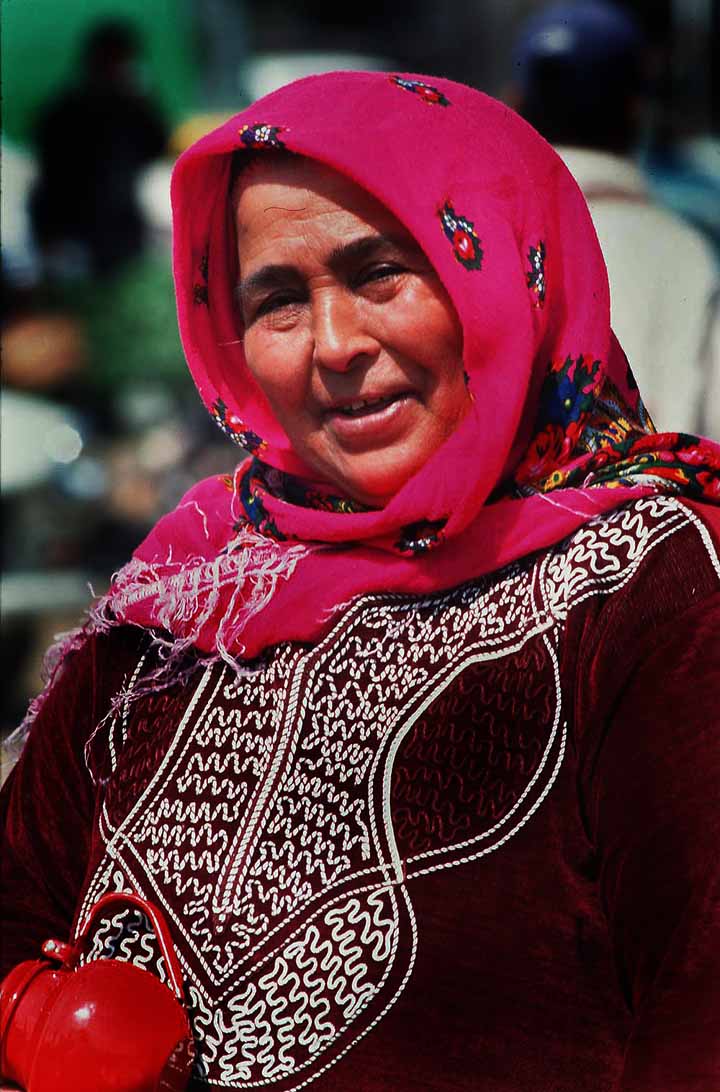
Classical fiqh have differed as how to understand Qur'anic verses on clothing; Sunni and Shia scholars say hijab is mandatory, while Ismaili, accounting for ~0.25% of all Muslims, do not. Besides that traditional scholars had different opinions on covering the hands and face. Muslim scholars usually require women to cover everything but their hands and face in public, but do not require the niqab (a face covering worn by some Muslim women). In nearly all Muslim cultures, pre-pubescent girls are not required to wear a hijab.
In private, and in the presence of close relatives (mahrams), rules on dress relax. However, in the presence of the husband, most scholars stress the importance of mutual freedom and pleasure of the husband and wife.
Some scholars argue that beyond the body of a woman, her voice is also a part of her "awrah" and should not be heard by men outside her immediate family. They cite some hadiths citing women's voices as a source of temptation and fitna (charmingness, attractiveness) and should be kept private and some verse interpretations.
Sunni
In Sunni tradition, scholarly consensus (ijma') has discerned hijab is mandatory. The four major Sunni schools of thought (Hanafi, Shafi'i, Maliki and Hanbali) believe that it is obligatory for free women to cover their hair, and the entire body except her face and hands, while in the presence of people of the opposite sex other than close family members.
According to Hanafis, these requirements extend to being around non-Muslim women as well, for fear that they may describe her physical features to unrelated men. The Sunni Permanent Committee for Islamic Research and Issuing Fatwas in Saudi Arabia, and Muhammad ibn Adam Al-Kawthari also believe women should cover their head.
Men must cover from their belly buttons to their knees, though the schools differ on whether this includes covering the navel and knees or only what is between them.
Shia
In Shia jurisprudence, by consensus, it is obligatory for women to cover their hair, and the entire body except her hands and face, while in the presence of people of the opposite sex other than close family members. The major and most important Shia hadith collections such as Nahj Al-Balagha and Kitab Al-Kafi for the most part do not give any details about hijab requirements. However a quotation from the Shia Fiqh book Man La Yahduruhu al-Faqih Musa al-Kadhim in reply to his brother makes reference to female hijab requirements during the salat (prayer), stating "She covers her body and head with it then prays. And if her feet protrude from beneath, and she doesn't have the means to prevent that, there is no harm".
Modern approaches
Modern approaches to this issue emerge under the influence of a series of social and intellectual developments, from the re-evaluation of religious sources and the questioning of sources that establish a androcentric / misogynist religious understanding to the protection of women's individual dignity, freedom and rights.
Notable Muslim scholars who do not believe the hijab is an obligation include Khaled Abou El Fadl, Javed Ahmad Ghamidi, Abdullah bin Bayyah, Ahmad Ghabel, and Nasr Abu Zayd. Like these scholars, others like Zaki Badawi and Gamal al-Banna have also adopted positions in stark contrast to the current mainstream position.
Clothing does not play a key role in Quranism. All Quranist movements agree that Islam has no sets of traditional clothing, except for the rules described in the Quran. Therefore, beards and the hijab are not necessary. Modernist thinkers including Karen Armstrong, Reza Aslan and Leila Ahmed, believe the requirements of the hijab were initially intended solely for Muhammad's wives, serving to preserve their sanctity. This was because Muhammad conducted religious and civic matters in the mosque next to his home. Leila Ahmed further explains that Muhammad aimed at fostering a sense of privacy and protecting the intimate space of his wives from the constant presence of the bustling community at their doorstep. They argue that the term darabat al-hijab ('taking the veil') was used synonymously and interchangeably with ‘becoming Prophet Muhammad's wife’ and that during Muhammad's life no other Muslim woman wore the hijab. Aslan suggests that Muslim women started to wear the hijab to emulate Muhammad's wives, who are revered as "Mothers of the Believers" in Islam.
Khaled Abou El Fadl argues that all Islamic moderates agree that, in all cases, the decision whether to wear the hijab should be a woman's autonomous decision and that her choice must be respected because the moderate pro-choice position is based on the Quranic teachings that there ought to be no compulsion in religion.
Some traditionalist Muslim scholars accept the contemporary views and arguments as those hadith sources are not sahih and ijma would no longer be applicable if it is argued by scholars (even if it is argued by only one scholar). Notable examples of traditionalist Muslim scholars who accept these contemporary views include the Indonesian scholar Quraish Shihab.
History
Pre-Islamic veiling practices

Veiling did not originate with the advent of Islam. Statuettes depicting veiled priestesses date back as far as 2500 BC. Elite women in ancient Mesopotamia and in the Byzantine, Greek, and Persian empires wore the veil as a sign of respectability and high status. In ancient Mesopotamia, Assyria had explicit sumptuary laws detailing which women must veil and which women must not, depending upon the woman's class, rank, and occupation in society. Female slaves and prostitutes were forbidden to veil and faced harsh penalties if they did so. Veiling was thus not only a marker of aristocratic rank, but also served to "differentiate between 'respectable' women and those who were publicly available".
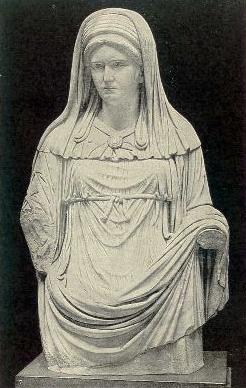
Strict seclusion and the veiling of matrons were also customary in ancient Greece. Between 550 and 323 BCE, prior to Christianity, respectable women in classical Greek society were expected to seclude themselves and wear clothing that concealed them from the eyes of strange men. Roman pagan custom included the practice of the head covering worn by the priestesses of Vesta (Vestal Virgins).
It is not clear whether the Hebrew Bible contains prescriptions with regard to veiling, but rabbinic literature presents it as a question of modesty (tzniut). Modesty became an important rabbinic virtue in the early Roman period, and it may have been intended to distinguish Jewish women from their non-Jewish counterparts in Babylonian and later in Greco-Roman society. According to rabbinical precepts, married Jewish women have to cover their hair (cf. Mitpaḥat). The surviving representations of veiled Jewish women may reflect general Roman customs rather than particular Jewish practices. According to Fadwa El Guindi, at the inception of Christianity, Jewish women were veiling their heads and faces.
The best-known view on Christian headcovering is delineated in the Bible within the passage in 1 Corinthians 11:4–7, which states that "every woman who prays or prophesies with her head uncovered dishonors her head". The early Church Fathers, including Tertullian of Carthage, Clement of Alexandria, Hippolytus of Rome, John Chrysostom and Augustine of Hippo attested in their writings that Christian women should wear a headcovering, while men should pray with their heads uncovered. There is archaeological evidence demonstrating that headcovering was observed as an ordinance by women in early Christianity, and the practice of Christian headcovering continues among female adherents of many Christian denominations today, especially among Anabaptist Christians, as well as among certain Eastern Orthodox Christians, Oriental Orthodox Christians and Reformed Christians, among others.
In the Indian subcontinent, some Hindu women cover their heads and face with a veil in a practice known as ghoonghat.
Intermixing of populations resulted in a convergence of the cultural practices of Greek, Persian, and Mesopotamian empires and the Semitic peoples of the Middle East. Veiling and seclusion of women appear to have established themselves among Jews and Christians before spreading to urban Arabs of the upper classes and eventually among the urban masses. In the rural areas it was common to cover the hair, but not the face.
According to Leila Ahmed, the rigid norms pertaining to veiling and seclusion of women found in Christian Byzantine literature had been influenced by ancient Persian traditions, and there is evidence to suggest that they differed significantly from actual practice. Leila Ahmed argues that "Whatever the cultural source or sources, a fierce misogyny was a distinct ingredient of Mediterranean and eventually Christian thought in the centuries immediately preceding the rise of Islam."
Later pre-modern history
During the history of slavery in the Muslim world, it is known that female slaves did show themselves unveiled. Slave women were visually identified by their way of dress. While Islamic law dictated that a free Muslim woman should veil herself entirely, except for her face and hands, in order to hide her awrah (intimate parts) and avoid sexual harassment, the awrah of slave women were defined differently, and she was only to cover between her navel and her knee. This difference became even more prominent during the Abbasid Caliphate, when free Muslim women, in particular those of the upper classes, were subjected to even more sex segregation and harem seclusion, in contrast to the qiyan slave artists, who performed unveiled in male company.
The practice of veiling was borrowed from the elites of the Byzantine and Persian empires, where it was a symbol of respectability and high social status, during the Arab conquests of those empires. Reza Aslan argues that "The veil was neither compulsory nor widely adopted until generations after Muhammad's death, when a large body of male scriptural and legal scholars began using their religious and political authority to regain the dominance they had lost in society as a result of the Prophet's egalitarian reforms".
Because Islam identified with the monotheistic religions of the conquered empires, the practice was adopted as an appropriate expression of Qur'anic ideals regarding modesty and piety. Veiling gradually spread to upper-class Arab women, and eventually it became widespread among Muslim women in cities throughout the Middle East. Veiling of Arab Muslim women became especially pervasive under Ottoman rule as a mark of rank and exclusive lifestyle, and Istanbul of the 17th century witnessed differentiated dress styles that reflected geographical and occupational identities. Women in rural areas were much slower to adopt veiling because the garments interfered with their work in the fields. Since wearing a veil was impractical for working women, "a veiled woman silently announced that her husband was rich enough to keep her idle."
By the 19th century, upper-class urban Muslim and Christian women in Egypt wore a garment which included a head cover and a burqa (muslin cloth that covered the lower nose and the mouth). The name of this garment, harabah, derives from early Christian and Judaic religious vocabulary, which may indicate the origins of the garment itself. Up to the first half of the twentieth century, rural women in the Maghreb and Egypt put on a form of niqab when they visited urban areas, "as a sign of civilization".
Modern history
Western clothing largely dominated fashion in Muslim countries in the 1960s and 1970s. For example, in Pakistan, Afghanistan and Iran, some women wore short skirts, flower printed hippie dresses, or flared trousers. This changed following the military dictatorship in Pakistan, and Iranian revolution of 1979, when traditional conservative attire including the abaya, jilbab and niqab made a comeback. There were demonstrations in Iran in March 1979 after the hijab law, decreeing that women in Iran would have to wear scarves to leave the house, was brought in. However, this phenomenon did not happen in all countries with a significant Muslim population; in Turkey there has been a decline on women wearing the hijab in recent years, although under Erdoğan Turkey is becoming more conservative and Islamic, as Turkey repeals the 1982 headscarf ban in public sector, and the founding of new fashion companies catering to women who want to dress more conservatively.
Egyptian leader President Gamal Abdel Nasser claimed that, in 1953, he was told by the leader of the Muslim Brotherhood organization that they wanted to enforce the wearing of the hijab, to which Nasser responded, "Sir, I know you have a daughter in college, and she doesn't wear a headscarf or anything! Why don't you make her wear the headscarf? So you can't make one girl, your own daughter, wear it, and yet you want me to go and make ten million women wear it?"
The late-twentieth century saw a resurgence of the hijab in Egypt after a long period of decline as a result of westernization. Already in the mid-1970s some college aged Muslim men and women began a movement meant to reunite and rededicate themselves to the Islamic faith. This movement was named the Sahwah, or awakening, and sparked a period of heightened religiosity that began to be reflected in the dress code. The uniform adopted by the young female pioneers of this movement was named al-Islāmī (Islamic dress) and was made up of an "al-jilbāb—an unfitted, long-sleeved, ankle-length gown in austere solid colors and thick opaque fabric—and al-khimār, a head cover resembling a nun's wimple that covers the hair low to the forehead, comes under the chin to conceal the neck, and falls down over the chest and back". In addition to the basic garments that were mostly universal within the movement, additional measures of modesty could be taken depending on how conservative the followers wished to be. Some women choose to also utilize a face covering (niqāb) that leaves only eye slits for sight, as well as both gloves and socks in order to reveal no visible skin.
Soon this movement expanded outside of the youth realm and became a more widespread Muslim practice. Women viewed this way of dress as a way to both publicly announce their religious beliefs as well as a way to simultaneously reject Western influences of dress and culture that were prevalent at the time. Despite many criticisms of the practice of hijab being oppressive and detrimental to women's equality, many Muslim women view the way of dress to be a positive thing. It is seen as a way to avoid harassment and unwanted sexual advances in public and works to desexualize women in the public sphere in order to instead allow them to enjoy equal rights of complete legal, economic, and political status. This modesty was not only demonstrated by their chosen way of dress but also by their serious demeanor which worked to show their dedication to modesty and Islamic beliefs.

Controversy erupted over the practice. Many people, both men and women from backgrounds of both Islamic and non-Islamic faith questioned the hijab and what it stood for in terms of women and their rights. There was questioning of whether in practice the hijab was truly a female choice or if women were being coerced or pressured into wearing it.
As the awakening movement gained momentum, its goals matured and shifted from promoting modesty towards more of a political stance in terms of retaining support for Pan-Islamism and a symbolic rejection of Western culture and norms. Today the hijab means many different things for different people. For Islamic women who choose to wear the hijab it allows them to retain their modesty, morals and freedom of choice.
After the September 11 attacks, the discussion and discourse on the hijab in Western nations intensified as Islamic traditions and theology came under greater scrutiny, with Hijabis facing extensive discrimination. According to the Harvard University Pluralism Project: "Some Muslim women cover their head only during prayer in the mosque; other Muslim women wear the hijab; still others may cover their head with a turban or a loosely draped scarf."
Contemporary practice
The styles and practices of hijab vary widely across the world. An opinion poll conducted in 2014 by The University of Michigan's Institute for Social Research asked residents of seven Muslim-majority countries (Egypt, Iraq, Lebanon, Tunisia, Turkey, Pakistan, and Saudi Arabia) which style of women's dress they considered to be most appropriate in public. The survey found that the headscarf (in its tightly- or loosely-fitting form) was chosen by the majority of respondents in Egypt, Iraq, Tunisia and Turkey. The response rate for people of Turkey was just about 60%. In Saudi Arabia, 63% gave preference to the niqab face veil; in Pakistan the niqab, the full-length chador robe and the headscarf, received about a third of the votes each; while in Lebanon half of the respondents in the sample (which included Christians and Druze) opted for no head covering at all. However, women more strongly support women's right to choose how to dress. People with university education are less conservative in their choice than those without one, and more supportive of women's right to decide their dress style, except in Saudi Arabia.
Some fashion-conscious women have been turning to non-traditional forms of hijab such as turbans. While some regard turbans as a proper head cover, others argue that it cannot be considered a proper Islamic veil if it leaves the neck exposed.
In Iran, where wearing the hijab is legally required, many women push the boundaries of the state-mandated dress code, risking a fine or a spell in detention. The former Iranian president Hassan Rouhani had vowed to rein in the morality police and their presence on the streets has decreased since he took office, but the powerful conservative forces in the country have resisted his efforts, and the dress codes are still being enforced, especially during the summer months. After Ebrahim Raisi became president, he started imposing hijab laws strictly, announcing use of facial recognition in public transport to enforce hijab law. An Iranian woman, Mahsa Amini, died in custody of 'morality police' after they arrested her on new stricter hijab laws, which led to widespread protests. Women's resistance in Iran is gaining traction as an increasing number of women challenge the mandatory wearing of the hijab. Smith (2017) addressed the progress that Iranian women have made in her article, "Iran surprises by realizing Islamic dress code for women," published by The Times, a news organization based in the UK. The Iranian government has enforced their penal dress codes less strictly and instead of imprisonment as a punishment have implemented mandatory reform classes in the liberal capital, Tehran. General Hossein Rahimi, the Tehran's police chief stated, "Those who do not observe the Islamic dress code will no longer be taken to detention centers, nor will judicial cases be filed against them" (Smith, 2017). The remarks of Tehran's recent police chief in 2017 reflect political progress in contrast with the remarks of Tehran's 2006 police chief. Iranian women activists have made a headway since 1979 relying on fashion to enact cultural and political change.
In Turkey the hijab was formerly banned in private and state universities and schools. The ban applied not to the scarf wrapped around the neck, traditionally worn by Anatolian villager women, but to the head covering pinned neatly at the sides, called türban in Turkey, which has been adopted by a growing number of educated urban women since the 1980s. As of the mid-2000s, over 60% of Turkish women covered their head outside home. However the majority of those wear a traditional, non-Islamic head covering and only 11% wore a türban. The ban was lifted from universities in 2008,{{Cite news|last2=Knickmeyer|first1=Zehra
The hijab is also a common cultural practice for Muslims in the West. For example, in a 2016 Environics poll, a large majority (73%) of Canadian Muslim women reported wearing some sort of head-covering in public (58% wear the hijab, 13% wear the chador and 2% wear the niqab). Wearing a head covering in public had increased since the 2006 survey. Women who wear the Hijab may be called "hijabi".
Meanwhile, in a Pew Research Center poll from 2011, most Muslim American women also reported wearing hijab, 36% indicating they wore hijab whenever they were in public, with an additional 24% saying they wore it most or some of the time; 40% said they never wore hijab.
Around the world

Some governments encourage and even oblige women to wear the hijab, while others have banned it in at least some public settings. In many parts of the world women also experience informal pressure for or against wearing the hijab, including physical attacks.
Legal enforcement
In Gaza, there was a campaign by religious conservatives such as Hamas to impose the hijab on women during the First Intifada. In 1990, the Unified National Leadership of the Uprising (UNLU) declared that it rejected the imposition of a hijab policy for women, and targeted those who seek to impose the hijab, but that declaration was argued to have come too late, as many women had already yielded to the pressure in order to avoid harassment. After assuming the government in the Gaza Strip in June 2007, Hamas sought to enforce Islamic law, imposing the hijab on women at courts, institutions and schools.
Iran transitioned from banning veils in 1936 to mandating Islamic dress for women following the 1979 Islamic Revolution. By 1980, veiling was required in government and educational settings, with the 1983 penal code imposing 74 lashes for not adhering to the hijab, though the exact requirements were unclear. This led to public tensions and vigilante actions regarding proper hijab. Subsequent regulations in 1984 and 1988 clarified dress-code standards, and the current penal code prescribes fines or prison terms for failing to observe hijab, without detailing its specific form.
The enforcement of the dress code in Iran has fluctuated between strict and relaxed over the years, leading to ongoing debate between conservatives and reformists like Hassan Rouhani. The United Nations Human Rights Council has urged Iran to uphold the rights of those advocating for dress code reforms. The government officially promotes stricter veiling, citing both Islamic principles and pre-Islamic Iranian culture.
Ruhollah Khomeini maintained that women do not have to wear a full-body cover. He stated that women can choose any kind of attire they like so long as it covers them properly and they have a hijab. His successor, Ali Khamenei, stated that the hijab does not hinder participation in social, political, or academic activities. In 2024, the former president of Iran Hassan Rouhani criticised the reinstatement of Iran's morality police and the implementation of the "Noor plan" by law enforcement authorities. He expressed shock over the hijab law approved by the Guardian Council which prescribed severe punishment for those violating it, saying that it "aligns neither with the Constitution, nor with justice, nor with the Qur'an and Islamic culture."
The Indonesian province of Aceh encourages Muslim women to wear hijab in public. Indonesia's central government granted Aceh's local government the right to impose Sharia in 2001, although that no local regulations should conflict with Indonesian national laws, in a deal aiming to put an end to the separatist movement in the province.
Saudi Arabia formally required women to cover their hair and wear a full-body garment, though enforcement varies. Saudi women typically wear the abaya, while foreigners may choose long coats. Regulations are enforced by religious police, which once faced criticism for their role in a fire rescue where schoolgirls' lack of hijabs was reportedly a factor, leading to 15 deaths.
During the Taliban regime in Afghanistan, the wearing of the hijab is mandated for women. The requirement extends to covering not only their heads but also their faces, as it was believed that doing so would prevent any perceived impropriety and maintain modesty in society.
Legal bans
Muslim world
The tradition of veiling hair in Persian culture has ancient pre-Islamic origins, but the widespread custom was ended by Reza Shah's government in 1936, as the hijab was considered to be incompatible with modernization and he ordered "unveiling" act or Kashf-e hijab. In some cases the police arrested women who wore the veil and would forcibly remove it. These policies had popular support but outraged the Shi'a clerics, to whom appearing in public without their cover was tantamount to nakedness. Some women refused to leave the house out of fear of being assaulted by Reza Shah's police. In 1941, the compulsory element in the policy of unveiling was abandoned.
Turkey had a ban on headscarves at universities in the 80s. In 2008, the Turkish government attempted to lift a ban on Muslim headscarves at universities, but were overturned by the country's Constitutional Court. In December 2010, however, the Turkish government ended the headscarf ban in universities and schools. The ban on civil servants remained in effect for a few more years. The current situation regarding the headscarf, which is problematic in terms of the principle of neutrality due to its religious symbolism, is revealed by Recep Tayyip Erdoğan's words at an initial appointment ceremony attended by headscarf-wearing judge and prosecutor candidates also: "Regarding our headscarf-wearing judicial members… It may take some time, there may be some difficulty in accepting it, but God willing, everyone will accept the new Turkey where freedoms are applied equally to everyone."
In Tunisia, women were banned from wearing the hijab in state offices in 1981; in the 1980s and 1990s, more restrictions were put in place.
In June 2024, Tajikistan's parliament passed a bill banning "foreign clothing" and religious celebrations for children during the Islamic holidays of Eid al-Fitr and Eid al-Adha. The upper house, Majlisi Milli, approved the legislation on 19 June, following approval by the lower house, Majlisi Namoyandagon, on 8 May. The bill specifically targets the hijab, a traditional Islamic headscarf. This formalization of restrictions comes after years of Tajikistan unofficially discouraging Islamic attire, including headscarves and bushy beards. In 2007, the Ministry of Education banned both Islamic clothing and Western-style miniskirts in schools, a policy later extended to all public institutions. Minister of Culture Shamsiddin Orumbekzoda told Radio Free Europe that Islamic dress was "really dangerous". Under previous laws, women wearing hijabs are already banned from entering the country's government offices.
Europe
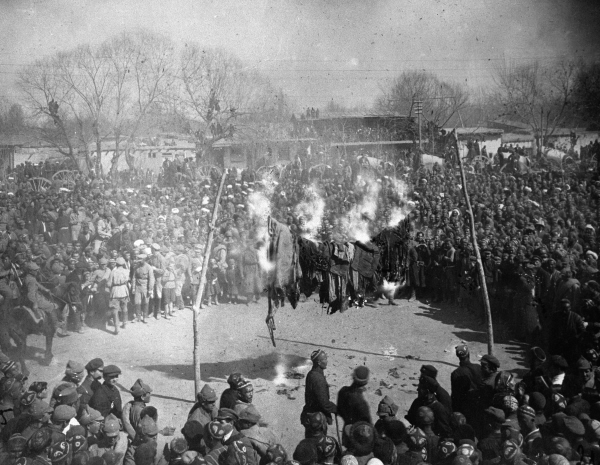
In the former Soviet Union, a broad atheistic Sovietization campaign was undertaken by the Communist Party of the Soviet Union to remove all manifestations of gender inequality within the Union Republics of Central Asia, targeting prevalent practices among Soviet Muslims, such as female veiling practices.
On 15 March 2004, France passed a law banning "symbols or clothes through which students conspicuously display their religious affiliation" in public primary schools, middle schools, and secondary schools. In the Belgian city of Maaseik, the niqāb has been banned since 2006. On 13 July 2010, France's lower house of parliament overwhelmingly approved a bill that would ban wearing the Islamic full veil in public. It became the first European country to ban the full-face veil in public places, followed by Belgium, Latvia, Bulgaria, Austria, Denmark and some cantons of Switzerland in the following years.
Belgium banned the full-face veil in 2011 in places like parks and on the streets. In September 2013, electors of the Swiss canton of Ticino voted in favour of a ban on face veils in public areas. In 2016, Latvia and Bulgaria banned the burqa in public places. In October 2017, wearing a face veil became also illegal in Austria. This ban also includes scarves, masks and clown paint that cover faces to avoid discriminating against Muslim dress. In 2016, Bosnia-Herzegovina's supervising judicial authority upheld a ban on wearing Islamic headscarves in courts and legal institutions, despite protests from the Muslim community that constitutes 40% of the country. In 2017, the European Court of Justice ruled that companies were allowed to bar employees from wearing visible religious symbols, including the hijab. However, if the company has no policy regarding the wearing of clothes that demonstrate religious and political ideas, a customer cannot ask employees to remove the clothing item. In 2018, the Danish parliament passed a law banning the full-face veil in public places.
In 2016, more than 20 French towns banned the use of the burqini, a style of swimwear intended to accord with rules of hijab. Dozens of women were subsequently issued fines, with some tickets citing not wearing "an outfit respecting good morals and secularism", and some were verbally attacked by bystanders when they were confronted by the police. Enforcement of the ban also hit beachgoers wearing a wide range of modest attire besides the burqini. Media reported that in one case the police forced a woman to remove part of her clothing on a beach in Nice. The Nice mayor's office denied that she was forced to do so and the mayor condemned what he called the "unacceptable provocation" of wearing such clothes in the aftermath of the Nice terrorist attack.
A team of psychologists in Belgium have investigated, in two studies of 166 and 147 participants, whether the Belgians' discomfort with the Islamic hijab, and the support of its ban from the country's public sphere, is motivated by the defence of the values of autonomy and universalism (which includes equality), or by xenophobia/ethnic prejudice and by anti-religious sentiments. The studies have revealed the effects of subtle prejudice/racism, values (self-enhancement values and security versus universalism), and religious attitudes (literal anti-religious thinking versus spirituality), in predicting greater levels of anti-veil attitudes beyond the effects of other related variables such as age and political conservatism.
In 2019, Austria banned the hijab in schools for children up to ten years of age. The ban was motivated by the equality between men and women and improving social integration with respect to local customs. Parents who sent their child to school with a headscarf would be fined 440 euro. The ban was overturned in 2020 by the Austrian Constitutional Court.
In 2019, Staffanstorp Municipality in Sweden banned all veils for school pupils up to sixth grade.
India
In India, Muslim women are allowed to wear the hijab and/or burqa anytime, anywhere. However, in January 2022, a number of colleges in the South Indian state of Karnataka stopped female students wearing the hijab from entering the campus, following which the state government issued a circular banning 'religious clothes' in educational institutions where uniforms are prescribed. On 15 March 2022, the Karnataka High Court, in a verdict, upheld the hijab ban in educational institutions where uniforms are prescribed, arguing that the practice is non-essential in Islam. The hijab ban was condemned inside India and abroad by officials in countries including the United States, Bahrain and Pakistan, as well as by Human Rights Watch, and by figures like Malala Yousafzai.
A study published by human rights body People's Union for Civil Liberties reported that the move to ban hijab has widened the social divide and increased fear among Muslims in Karnataka.
China
In Xinjiang province, the Chinese government has banned women from wearing veils as part of a major crackdown on what it sees as religious extremism from Muslim Uyghurs.
Unofficial pressure to wear hijab
In Srinagar, the capital of the Indian state of Jammu and Kashmir, a previously unknown militant group calling itself Lashkar-e-Jabbar claimed responsibility for a series of acid attacks on women who did not wear the burqa in 2001, threatening to punish women who do not adhere to their vision of Islamic dress. Women of Kashmir, most of whom are not fully veiled, defied the warning, and the attacks were condemned by prominent militant and separatist groups of the region.
Some women in Jordan have reported unofficial pressure to wear a hijab in 2018.
Unofficial pressure against wearing the hijab
In recent years, women wearing the hijab have been subjected to verbal and physical attacks worldwide, particularly following terrorist attacks. Louis A. Cainkar writes that the data suggest that women in hijab rather than men are the predominant target of anti-Muslim attacks, not because they are more easily identifiable as Muslims, but because they are seen to represent a threat to the local moral order that the attackers are seeking to defend. Some women stop wearing the hijab out of fear or following perceived pressure from their acquaintances, but many refuse to stop wearing it out of religious conviction, even when they are urged to do so for self-protection.
Kazakhstan has no official ban on wearing the hijab, but those who wear it have reported that authorities use a number of tactics to discriminate against them.
In 2015, authorities in Uzbekistan organized a "deveiling" campaign in the capital city Tashkent, during which women wearing the hijab were detained and taken to a police station. Those who agreed to remove their hijab were released "after a conversation", while those who refused were transferred to the counterterrorism department and given a lecture. Their husbands or fathers were then summoned to convince the women to obey the police. This followed an earlier campaign in the Fergana Valley.
After the election of Shavkat Mirziyoyev as President of Uzbekistan in December 2016, Muslims were given the opportunity to openly express their religious identity, which manifested itself in the wider spread of hijabs in Uzbekistan. In July 2021, the state allowed the wearing of the hijab in public places.
In Kyrgyzstan in 2016, the government sponsored street banners aiming to dissuade women from wearing the hijab.
Workplace discrimination against hijab-wearing women
Discrimination against Muslims often affects women more due to the hijab making them more visible, leading to workplace prejudice, particularly after the rise of Islamophobia post-9/11. Hijab-wearing Muslim women face both overt and covert discrimination in job applications and workplace environments, with covert bias often resulting in more hostile treatment. Perceived discrimination can harm well-being, but may also be overcome by religious pride and community; studies show hijab-wearing women often find greater strength and belonging despite challenges.
The issue of discrimination against Muslims affects Muslim women more due to the hijab making them more identifiable compared to Muslim men. Particularly after the September 11 attacks and the coining of the term Islamophobia, some of Islamophobia's manifestations are seen within the workplace. Women wearing the hijab are at risk of discrimination in their workplace because the hijab helps identify them for anyone who may hold Islamophobic attitudes. Their association with the Islamic faith automatically projects any negative stereotyping of the religion onto them. As a result of the heightened discrimination, some hijab-wearing Muslim women in the workplace resort to taking off their hijab in hopes to prevent any further prejudice acts.
A number of hijab-wearing women who were interviewed expressed that perceived discrimination also poses a problem for them. To be specific, Muslim women shared that they chose not to wear the headscarf out of fear of future discrimination.
The discrimination hijab-wearing Muslim women face goes beyond affecting their work experience; it also interferes with their decision to uphold religious obligations. As a result, hijab-wearing Muslim women in the United States have worries regarding their ability to follow their religion, because it might mean they are rejected employment.
A study by Ali et al. (2015) found a relationship between the discrimination Muslims face at work and their job satisfaction. In other words, the discrimination hijab-wearing Muslim women face at work is associated with their overall feeling of contentment of their jobs, especially compared to other religious groups.{{Cite web|last=Younis|first=Mohamed|publisher=Gallup|date=2009-03-02|title=Muslim Americans Exemplify Diversity, Potential|url=https://news.gallup.com/poll/116260/Muslim-Americans-Exemplify-Diversity-Potential.aspx|access-date=2023-01-02|archive-url=https://web.archive.org/web/20111221083615/http://www.gallup.com/poll/116260/muslim-americans-exemplify-diversity-potential.aspx |archive-date=21 December 2011
Hijab-wearing Muslim women not only experience discrimination whilst in their job environment; they also experience discrimination in their attempts to get a job. An experimental study conducted on potential hiring discrimination among Muslims found that in terms of overt discrimination there were no differences between Muslim women who wore traditional Islamic clothing and those who did not. However, covert discrimination was noted towards Muslim who wore the hijab, and as a result were dealt with in a hostile and rude manner. While observing hiring practices among 4,000 employers in the U.S., experimenters found that employers who self-identified as Republican tended to avoid making interviews with candidates who appeared Muslim on their social network pages.
One instance that some view as hijab discrimination in the workplace that gained public attention and made it to the Supreme Court was EEOC v. Abercrombie & Fitch. The U.S Equal Employment Opportunity Commission took advantage of its power granted by Title VII and made a case for a young hijabi female who applied for a job, but was rejected due to her wearing a headscarf which violated Abercrombie & Fitch's pre-existing and longstanding policy against head coverings and all black garments.
Discrimination levels differ depending on geographical location; for example, South Asian Muslims in the United Arab Emirates do not perceive as much discrimination as their South Asian counterparts in the U.S. Although, South Asian Muslim women in both locations are similar in describing discrimination experiences as subtle and indirect interactions. The same study also reports differences among South Asian Muslim women who wear the hijab, and those who do not. For non-hijabis, they reported to have experienced more perceived discrimination when they were around other Muslims.
Perceived discrimination is detrimental to well-being, both mentally and physically. However, perceived discrimination may also be related to more positive well-being for the individual. A study in New Zealand concluded that while Muslim women who wore the headscarf did in fact experience discrimination, these negative experiences were overcome by much higher feelings of religious pride, belonging, and centrality.
World Hijab Day
The World Hijab Day (WHD), which is an annual event founded by Bangladeshi American Nazma Khan in 2013, takes place on 1 February each year in 140 countries worldwide.
Notes
References
Citations
Sources
- Aslan, Reza, No god but God: The Origins, Evolution, and Future of Islam, Random House, 2005
- Elver, Hilal. The Headscarf Controversy: Secularism and Freedom of Religion (Oxford University Press; 2012); 265 pages; Criticizes policies that serve to exclude pious Muslim women from the public sphere in Turkey, France, Germany, and the United States.
- Yurdakul, Gökce and Anna C. Korteweg. *The Headscarf Debates: Conflicts of National Belonging * (Stanford University Press; 2014) Media debates on stigmatizing Muslim women and how Muslim women respond to these critics for the country cases of Germany, Turkey, the Netherlands and France.
References
- Piela, Anna. (6 April 2022). "Muslim Women and the Politics of the Headscarf".
- Mitchell, Travis. (29 June 2021). "9. Religious clothing and personal appearance".
- (24 May 2021). "Framing Hijab in the European Mind: Press Discourse, Social Categorization and Stereotypes". Springer.
- (2012). "Oxford American Writer's Thesaurus". Oxford University Press.
- (29 June 2021). "Religious clothing and personal appearance".
- (14 August 2016). "Twin Cultures Separated by Centuries: An Indian Reading of 1 Corinthians". Langham Publishing.
- Garcia, Myrian. (15 March 2022). "How India's Religious Headwear Ban Affects Muslims And Not Hindus".
- "Hijab." ''Cambridge Dictionary'', dictionary.cambridge.org/dictionary/english/hijab. Accessed 6 Sept. 2023.
- (December 2020). "Representing Islam: Hip-Hop of the September 11 Generation". Indiana University Press.
- "Is Hijab Religious or Cultural? How Islamic Rulings Are Formed".
- (2011). "Veiling and Unveiling: Attitudes and Experiences of University Students in the Punjab". International Journal of Social Sciences and Education.
- (8 December 2020). "Part 4: Khomeini & Khamenei on Women".
- "Wearing niqab by Muslim women is a divine order, religious freedom and a superior Muslim culture". International Islamic Development Management Conference (IDMAC 2019).
- (10 January 2017). "5 Muslim Scholars On The Permissibility Of Not Wearing The Headscarf".
- "Dr.Shabir Ally".
- WAWI, NA. (2021-02-03). "PENAFSIRAN AYAT-AYAT HIJAB (Studi Komparatif atas Pemikiran Quraish Shihab, Wahbah Al-Zuhaili Dan Buya Hamka Terhadap Ayat Hijab)". Universitas Islam Negeri Kiai Haji Achmad Siddiq Jember.
- [[Reza Aslan. Aslan, Reza]], ''[[No god but God: The Origins, Evolution, and Future of Islam. No God but God]]'', Random House, (2005), p.65–6
- Yüksel, Edip. (2017). "Türkçe Kuran Çevirilerindeki Hatalar".
- "Uydurulan Din ve Kuran'daki Din". Kuran Araştırmaları Grubu.
- Öztürk, Yaşar Nuri. (2012). "İslam Nasıl Yozlaştırıldı / Vahyin Dininden Sapmalar, Hurafeler, Bid'atlar". Yeni Boyut.
- Sahar Amer (2014), ''What Is Veiling?'', University of North Carolina Press, pp. 25-27
- Lane's Lexicon page 519 and 812
- Contemporary Fatwas by Sheik Yusuf Al Qaradawi, vol. 1, pp. 453-455
- Ruh Al Ma’ani by Shihaab Adeen Abi Athanaa’, vol. 18, pp. 309, 313
- Fisher, Mary Pat. Living Religions. New Jersey: Pearson Education, 2008.
- {{cite encyclopedia. Glasse. Cyril. Altamira Press. (2001)
- "YÜZÜ ÖRTMENİN HÜKMÜNE DÂİR DETAYLI DELİLLER - İslam Soru-Cevap".
- (11 April 2016). "Can You Clarify the Standard Explanation of the Verse of Hijab? [Shafi'i]".
- link. (4 March 2016, Morocco:{{usurped). [https://web.archive.org/web/20081107001103/http://www.prohijab.net/english/morocco-hijab-news.htm][https://news.bbc.co.uk/1/hi/world/africa/5413808.stm][http://parlemento.wordpress.com/2009/09/30/lambassadeur-du-maroc-a-bruxelles-pour-linterdiction-du-voile-islamique/], Tunisia:[https://news.bbc.co.uk/2/hi/africa/5382946.stm][https://news.bbc.co.uk/2/hi/africa/6053380.stm][http://www.magharebia.com/cocoon/awi/xhtml1/en_GB/features/awi/features/2006/10/27/feature-01][http://jurist.law.pitt.edu/paperchase/2006/10/tunisia-presses-enforcement-of-muslim.php] {{Webarchive. link. (23 December 2011, Egypt:[http://www.quantara.de/webcom/show_article.php/_c-549/_nr-13/_p-1/i.html?PHPSESSID=133099]{{Dead link). (August 2024). link. (5 March 2016, Senegal:[http://www.islamicvoice.com/january.2000/news.htm#HIJ] {{Webarchive). link. (17 July 2012, Singapore:[https://news.bbc.co.uk/2/hi/talking_point/debates/south_asian_debates/1803073.stm], Kosovo: [https://www.bbc.co.uk/news/world-europe-11065911], Québec: [http://www.assnat.qc.ca/Media/Process.aspx?MediaId=ANQ.Vigie.Bll.DocumentGenerique_143925en&process=Default&token=ZyMoxNwUn8ikQ+TRKYwPCjWrKwg+vIv9rjij7p3xLGTZDmLVSmJLoqe/vG7/YWzz], Austria: [https://www.dw.com/en/austria-bans-muslim-headscarf-in-primary-schools/a-48756057], Switzerland: [https://www.thelocal.ch/20190211/geneva-votes-to-ban-religious-symbols-on-public-employees#:
:text=are%20being%20targeted.-,Teachers%20in%20Geneva%20are%20already%20banned%20from%20wearing%20visible%20religious,in%20contact%20with%20the%20public], Denmark: [https://www.justiceinitiative.org/uploads/dffdb416-5d63-4001-911b-d3f46e159acc/restrictions-on-muslim-womens-dress-in-28-eu-member-states-20180709.pdf], Kazakhstan: [https://egov.kz/cms/en/articles/religious_clothes], Kyrgyzstan: [https://www.rferl.org/a/Kyrgyzstan_Bans_Head_Scarves_From_Schools/1503459.html], Tajikistan: [https://www.independent.co.uk/news/world/asia/tajikstan-muslim-hijabs-stop-women-law-headscarfs-central-asia-islam-a7923886.html], Turkmenistan: [https://www.refworld.org/docid/58738ed74.html], Uzbekistan: [https://www.rferl.org/a/uzbek-teachers-get-tough-assignment-remove-their-hijabs-but-don-t-hurt-their-feelings-/30208276.html#::text=School%20regulations%20require%20pupils%20in,for%20both%20students%20and%20teachers]) - (28 Jan 2015). "Saudi Arabia's dress code for women". The Economist.
- M. J. Gohari (2000). ''The Taliban: Ascent to Power''. Oxford: Oxford University Press, pp. 108-110.
- Louis A. Cainkar. (2009). "Homeland Insecurity: The Arab American and Muslim American Experience After 9/11". Russell Sage Foundation.
- Diallo, Rokhaya. (12 April 2024). "What has 20 years of banning headscarves done for France?". The Guardian.
- Perlez, Jane. (22 June 2007). "Muslims' Veils Test Limits of Britain's Tolerance". The New York Times.
- A German Muslim woman has been barred from working as a lay judge because she wears a headscarf which was alleged to be in violation of the requirement of neutrality. The matter is now before the constitutional court.https://www.dw.com/en/german-lay-judge-challenges-a-headscarf-ban-in-court/a-69648119
- Lane, Edward William (1863), "ح ج ب", in Arabic-English Lexicon, London: Williams & Norgate, pages 515–516
- (5 May 2019). "ح ج ب".
- (1992). "Women and Gender in Islam: Historical Roots of a Modern Debate". Yale University Press.
- General hicap duymak feel ashamed v. https://tureng.com/en/turkish-english/hicap
- Bucar, Elizabeth, The Islamic Veil. Oxford, England: Oneworld Publications, 2012.
- Hameed, Shahul. (9 October 2003). "Is Hijab a Qur'anic Commandment?".
- Nasr, Seyyed Hossein. (2004). "The Heart of Islam: Enduring Values for Humanity". HarperOne.
- "The Virgins and the Grapes: the Christian Origins of the Koran".
- Kidwai, Abdur Raheem. "Ideologic Presuppositions Behind Translation: A Case Study of the Orientalist English Translations of the Quran". Aligarh Muslim University.
- Herrag, El Hassane. (2012). "The Ideological Factor in the Translation of Sensitive Issues from the Quran into English, Spanish and Catalan". Autonomous University of Barcelona.
- Therefore, it can be noted that the ideology of religion, attitude, and social context of the translators, as well as the involvement of the state, might affect the translation of the Holy Qur’an into various target languages. Gunawan, F. (2022). The ideology of translators in Quranic translation: lessons learned from Indonesia. Cogent Arts & Humanities, 9(1). https://doi.org/10.1080/23311983.2022.2088438
- (26 May 2022). "Hijab is Not an Islamic Duty: Muslim Scholar".
- (28 May 2008). ""Örtünmek Allah'ın emri değil"". haberturk.com.
- Kandhlawi, Idris. "Tafsir Surah Al-Ahzab - 59 - Ma'arif al Quran".
- "القرآن الكريم - تفسير ابن كثير - تفسير سورة الأحزاب - الآية 59".
- Khaled Abou El Fadl. (1 October 2014). "Speaking in God's Name: Islamic Law, Authority and Women". Oneworld Publications.
- Ahmed, Leila. (1992). "Women and Gender in Islam". Yale University Press.
- El Guindi, Fadwa. (2009). "Hijab". The Oxford Encyclopedia of the Islamic World.
- Ahmed, Leila. (1992). "Women and Gender in Islam". Yale University Press.
- Ahmed, Leila. (1992). "Women and Gender in Islam". Yale University Press.
- Ahmed, Leila. (1992). "Women and Gender in Islam". Yale University Press.
- Aslan, Reza. (2005). "No God but God". Random House.
- "Surat Al-'Ahzab".
- Aslan, Reza. (2005). "No God but God". Random House.
- Ahmed, Leila. (1992). "Women and Gender in Islam". Yale University Press.
- (15 October 2012). "Hijab: Fard (Obligation) or Fiction?". virtualmosque.com.
- (25 September 2017). "How Should We Understand the Obligation of Khimar (Head Covering)?". seekershub.org.
- {{Hadith-usc. abudawud. 32. 4090
- Mariam al-Jaber. (2018-03-28). "Saudi cleric al-Ghamdi: Abaya is not mandatory as per Islam's teachings". [[Al Arabiya]].
- Öztürk, Yaşar Nuri. "Kuran'daki İslam". Yeni Boyut.
- [[Muwatta Imam Malik]] book 8 hadith 37.
- [[Jami` at-Tirmidhi]] 377.
- Goldenziel, Jill. (2012). "Veils, Politics, and Constitutionalism".
- "Hijab In Islam: What Is It, Is It Obligatory And Why? - Riwaq Al Quran".
- Rizvi, Sa'eed. (2012-10-16). "Hijab, The Dress of Modesty in Islam".
- "Houston's Shia Ismaili Women: Education and Ethics: Women & Religion VIII - University of Houston Libraries Audio/Video Repository".
- "Muslim Women Network".
- [[Heba Kotb. Heba G. Kotb M.D.]], Sexuality in Islam, PhD Thesis, Maimonides University, 2004
- (8 June 2023). "Is a Woman's Voice 'Awrah'?".
- Karimah, Shaykha Marzuqa. (2022-01-19). "Hijab And Jilbab In the Quran: On The Hermeneutics Of The Quranic Verse Of Khimar".
- Alkiek, Tesneem. "Is Hijab Religious or Cultural? How Islamic Rulings Are Formed".
- Sahar Amer. (2014). "What Is Veiling?". [[University of North Carolina Press]].
- (19 September 2010). "A Detailed Exposition of the Fiqh of Covering One's Nakedness (Awra)".
- (11 April 2016). "Can You Clarify the Standard Explanation of the Verse of Hijab? [Shafi'i]".
- Hsu, Shiu-Sian. "Modesty." Encyclopaedia of the Qur'an. Ed. Jane McAuliffe. Vol. 3. Leiden, The Netherlands: Brill Academic Publishers, 2003. 403-405. 6 vols.
- (9 September 2010). "Uncovering in Front of Non-Muslim's of Unmarriageable Kin (Mahram)".
- "Fatwas of the Permanent Committee: Women covering their faces and hands". Kingdom of Saudi Arabia.
- (30 May 2009). "Who is Mahram".
- "Fatwas by Mufti Ebrahim Desai » Askimam".
- (27 May 2014). "Covering the Nakedness for a Man: Answers".
- Ali, Abdul Samad. (23 June 2014). "Maliki Fiqh: Matn al-'Ashmāwiyyah (English Translation)". Academia.
- (15 May 2014). "The Awrah of Men According to Imams Shafi, Ahmad and Malik (A.R). – Darul Uloom Trinidad & Tobago".
- "Question & Answer » Hijab (Islamic Dress)".
- (16 October 2012). "Hijab of Eyes".
- Rispler-Chaim, Vardit. ‘The siwāk: A Medieval Islamic Contribution to Dental Care’. Journal of the Royal Asiatic Society 2.1 (1992): 13-20.
- Ahmed 1992, p. 79-83
- El Fadl, Khaled Abou (2005), The Great Theft: Wresting Islam From the Extremists, Harper San Francisco, p.274
- Kahf, Mohja. (2008). "The Veil: Women Writers on Its History, Lore, and Politics". University of California Press.
- Richard Freund. "The Veiling of Women in Judaism, Christianity and Islam. A Guide to the Exhibition". University of Hartford.
- "On Account of the Angels: Why I Cover My Head". Orthodox Christian Information Center.
- (2013). "The Ornament of a Spirit: Exploring the Reasons Covering Styles Change". Ridgeway Publishing.
- (2013). "The Ornament of a Spirit: Exploring the Reasons Covering Styles Change". Ridgeway Publishing.
- (17 May 2019). "The Ultimate Guide to Christian Headcoverings". Saint John the Evangelist Orthodox Church.
- Gupta, Kamala. (2003). "Women In Hindu Social System (1206–1707 A.D.)". Inter-India Publications.
- (1987). "Social Status of Hindu Women in Northern India, 1206-1707 A.D.". Inter-India Publications.
- Ahmed, Leila. (1992). "Women and Gender in Islam". Yale University Press.
- Ahmed, Leila. (1992). "Women and Gender in Islam". Yale University Press.
- Anchassi, O. (2021). Status Distinctions and Sartorial Difference: Slavery, Sexual Ethics, and the Social Logic of Veiling in Islamic Law. Islamic Law and Society, 28(3), 125-155. https://doi.org/10.1163/15685195-bja10008
- Caswell, F. M. (2011). The Slave Girls of Baghdad: The Qiyan in the Early Abbasid Era. Storbritannien: I.B.Tauris. 6-7
- (2014). "Hijab". Oxford University Press.
- Ahmed, Leila. (1992). "Women and Gender in Islam". Yale University Press.
- Esposito, John. (1991). "Islam: The Straight Path". Oxford University Press.
- Bloom (2002), p.47
- Sara Silverstri. (2016). "Religion in Public Spaces: A European Perspective". Routledge.
- Leila Ahmed. (2014). "A Quiet Revolution: The Veil's Resurgence, from the Middle East to America". Yale University Press.
- (18 August 2013). "Retro Middle East: The rise and fall of the miniskirt".
- (4 December 2015). "Bhutto's Pakistan".
- "Pakistan's swinging 70s".
- "25 photos show what Iran looked like before the 1979 revolution turned the nation into an Islamic republic".
- (3 September 2015). "theguardian.com, 3 September 2015, accessed 23 October 2016".
- (20 February 2019). "Women in Turkey: The headscarf is slipping - Qantara.de". Qantara.de - Dialogue with the Islamic World.
- ''[https://www.mevzuat.gov.tr/mevzuat?MevzuatNo=85105&MevzuatTur=3&MevzuatTertip=5 KAMU KURUM VE KURULUŞLARINDA ÇALIŞAN PERSONELİN KILIK VE KIYAFETİNE DAİR YÖNETMELİK]'' ("THE REGULATION ON THE DRESS AND ATTIRE OF PERSONNEL WORKING IN PUBLIC INSTITUTIONS AND ORGANIZATIONS") dated 16 July 1982.
- "Cover Story".
- (2018-07-23). "How Abdel Nasser described Muslim Brotherhood".
- "Ḥijāb". The Oxford Encyclopedia of the Islamic World.
- Bullock, Katherine. (2000). "Challenging Medial Representations of the Veil". The American Journal of Islamic Social Sciences.
- Elsaie, Adel. "Dr.". United States of Islam.
- Aziz, Rookhsana. (2011-01-01). "Hijab – the Islamic dress code: its historical development, evidence from sacred sources and views of selected Muslim scholars". University of South Africa.
- Patrick Johnston. (19 August 2016). "Kimia Alizadeh Zenoorin Becomes The First Iranian Woman To Win An Olympic Medal". Reuters/Huffington Post.
- "The Muslim 'Veil' Post-9/11: Rethinking Women's Rights and Leadership".
- "Women in Islam".
- (23 January 2014). "Female Muslim Dress Survey Reveals Wide Range Of Preferences On Hijab, Burqa, Niqab, And More". Huffington Post.
- RICH MORIN. (14 January 2014). "Q&A with author of U. Mich. study on preferred dress for women in Muslim countries". Pew Research Center.
- Shounaz Meky. (9 October 2014). "Under wraps: Style savvy Muslim women turn to turbans". Al Arabiya.
- Yasmin Nouh. (11 May 2016). "The Beautiful Reasons Why These Women Love Wearing A Hijab". The Huffington Post.
- "Playing cat and mouse with Iran's morality police". Qantara.de.
- Yara Elmjouie. (19 June 2014). "Iran's morality police: patrolling the streets by stealth". Tehran Bureau/The Guardian.
- (2022-09-05). "Iranian authorities plan to use facial recognition to enforce new hijab law". [[The Guardian]].
- (2022-09-16). "Iranian woman dies 'after being beaten by morality police' over hijab law". [[The Guardian]].
- Hannah Lucinda Smith. (29 December 2017). "Iran surprises by relaxing Islamic dress code for women". [[The Times]].
- "Fashion police get tough in Tehran".
- Rainsford, Sarah. (7 November 2006). "Headscarf issue challenges Turkey". [[BBC News]].
- Rainsford, Sarah. (2 October 2007). "Women condemn Turkey constitution". BBC News.
- Jonathan Head. (31 December 2010). "Quiet end to Turkey's college headscarf ban". BBC News.
- Clark-Flory, Tracy. (23 April 2007). "Head scarves to topple secular Turkey?". Salon.
- (8 October 2013). "Turkey Lifts Longtime Ban on Head Scarves in State Offices". NY Times.
- (23 September 2014). "Turkey-lifts-ban-on-headscarves-at-high-schools".
- (2016-04-27). "Muslim Canadians increasingly proud of and attached to Canada, survey suggests".
- (30 August 2011). "Muslim Americans: No Signs of Growth in Alienation or Support for Extremism; Section 2: Religious Beliefs and Practices". Pew Research Center.
- (4 May 1990). "Women, the Hijab and the Intifada".
- (2010). "Hamas: The Islamic Resistance Movement". John Wiley & Sons.
- Fedorak, Shirley A.. (2012). "Anthropology Matters". University of Toronto Press.
- link. (2 March 2019 ''[Hijab in Iran from the Islamic Revolution to the end of the Imposed war]'' (Persian), Faslnamah-e Takhassusi-ye Banuvan-e Shi’ah [Quarterly Journal of Shiite Women] '''4''':11, Qom: Muassasah-e Shi’ah Shinasi, pp. 251-300, {{ISSN). 1735-4730
- Elizabeth M. Bucar. (2011). "Creative Conformity: The Feminist Politics of U.S. Catholic and Iranian Shi'i Women". Georgetown University Press.
- "قانون مجازات اسلامی (Islamic Penal Code), see ماده 102 (article 102)". Islamic Parliament Research Center.
- (2010). "Women's Rights in the Middle East and North Africa: Progress Amid Resistance". Rowman & Littlefield Publishers.
- Behnoosh Payvar. (2016). "Space, Culture, and the Youth in Iran: Observing Norm Creation Processes at the Artists' House". Springer.
- BBC Monitoring. (22 April 2016). "Who are Islamic 'morality police'?". BBC.
- (6 May 2019). "Iran must protect women's rights advocates". UN OHCHR.
- ''Strategies for promotion of chastity'' (Persian), the official website of Iranian Majlis (04/05/1384 AP, [http://rc.majlis.ir/fa/law/show/101228 available online] {{Webarchive. link. (19 October 2017 ))
- (May 2024). "Ex-Iran President Rouhani Criticizes Reinstatement of Morality Police".
- (18 December 2024). "Former Iranian President Rouhani: Hijab law neither just, Islamic, nor constitutional".
- (2022). "2022 Report on International Religious Freedom: Indonesia". U.S. Department of State.
- Jewel Topsfield. (7 April 2016). "Ban on outdoor music concerts in West Aceh due to Sharia law". The Sydney Morning Herald.
- (15 September 2019). "Rebel Saudi women appear in public without hijab, abaya; onlookers stunned".
- Nic Robertson. (5 December 2020). "Saudi Arabia has changed beyond recognition. But will tourists want to visit?". CNN.
- (20 Mar 2018). "Coverings for women 'not mandatory', says Saudi crown prince ahead of US charm offensive". The New Arab.
- (15 March 2002). "Saudi police 'stopped' fire rescue". BBC News.
- {{Iranica. clothing-ii. CLOTHING ii. In the Median and Achaemenid periods
- El-Guindi, Fadwa, ''Veil: Modesty, Privacy, and Resistance'', Berg, 1999
- (6 June 2008). "Turkey's AKP discusses hijab ruling". Al Jazeera.
- (31 December 2010). "Quiet end to Turkey's college headscarf ban". BBC News.
- Ömer Taşpınar. (1 April 2012). "Islamist Politics in Turkey: The New Model?". The Brookings Institution.
- A German Muslim woman has been barred from working as a lay judge because she wears a headscarf which was alleged to be in violation of the requirement of neutrality. The matter is now before the constitutional court.https://www.dw.com/en/german-lay-judge-challenges-a-headscarf-ban-in-court/a-69648119
- Başörtülü yargı mensuplarımız konusunda……. Belki biraz zaman alacak belki biraz hazım problemi çekilecek ama özgürlüklerin herkese eşit uygulandığı yeni Türkiye’yi inşallah herkes kabullenecek.” https://www.yenisafak.com/gundem/cumhurbaskani-erdoganndan-onemli-mesajlar-yeni-turkiyeyi-herkes-kabullenecek-4774571
- (11 October 2007). "Tunisia's Hijab Ban Unconstitutional".
- "Hijab ban: Tajikistan parliament approves bill prohibiting alien garments and Eid celebrations by children". Mint.
- (September 2017). "Country passes law 'to stop Muslim women wearing hijabs'".
- "Majority-Muslim Tajikistan passes law to discourage wearing of hijabs".
- Northrop, Douglas. (2001a). "Subaltern dialogues: subversion and resistance in Soviet Uzbek family law". [[Slavic Review]].
- Mardell, Mark. (2006-01-16). "Dutch MPs to decide on burqa ban". BBC News.
- (2017). "The Islamic veil across Europe". BBC News.
- (21 April 2016). "A European government has banned Islamic face veils despite them being worn by just three women". The Independent.
- (1 October 2016). "Another European country just banned the burqa". The Independent.
- Köksal Baltaci. (27 September 2017). "Austria becomes latest European country to ban burqas — but adds clown face paint, too". USA Today.
- (7 February 2016). "Bosnian women protest at headscarf ban". BBC News.
- (11 February 2016). "Bosnia Judicial Authorities Uphold Hijab Ban, Despite Protests". Radio Free Europe/Radio Liberty.
- (14 March 2017). "Europe's right hails EU court's workplace headscarf ban ruling". The Guardian.
- (31 May 2018). "Denmark passes law banning burqa and niqab". The Guardian.
- ALISSA J. RUBIN. (24 August 2016). "French 'Burkini' Bans Provoke Backlash as Armed Police Confront Beachgoers". New York Times.
- (12 August 2016). "Cannes bans burkinis over suspected link to radical Islamism". BBC News.
- (19 August 2016). "Nice joins growing list of French towns to ban burqini". The Local.fr.
- Harry Cockburn. (24 August 2016). "Burkini ban: Armed police force woman to remove her clothing on Nice beach". The Independent.
- Ben Quinn. (23 August 2016). "French police make woman remove clothing on Nice beach following burkini ban". The Guardian.
- Angelique Chrisafis. (24 August 2016). "French burkini ban row escalates after clothing incident at Nice beach". The Guardian.
- (2009). "Host society's dislike of the Islamic veil: The role of subtle prejudice, values, and religion". International Journal of Intercultural Relations.
- (16 May 2019). "Österreich verbietet Kopftücher an Grundschulen".
- (11 December 2020). "Austria court overturns primary school headscarf ban". BBC News.
- (29 May 2019). "Staffanstorp röstade för huvudduksförbud". Svenska Dagbladet.
- Sheikh Saaliq. (8 February 2022). "In India, wearing hijab bars some Muslim students from class". Toronto Star.
- (10 February 2022). "Karnataka hijab row: Judge refers issue to larger bench". BBC News.
- (8 February 2022). "Religious identity, rights in focus as Indian schools ban hijab". Christian Science Monitor.
- "Karnataka's hijab row: A fragile regime's latest assault on right to choice".
- "Hijab ban: Karnataka high court upholds government order on headscarves". BBC News.
- (2022-02-15). "India's Hijab Debate Fueled by Divisive Communal Politics". Human Rights Watch.
- (2022-02-09). "Nobel laureate Malala Yousafzai comments on hijab controversy in Karnataka". The Hindu.
- (2022-09-12). "'Very Frightening' to Enter Campus Alone: Muslim Students Recount Hijab Ban's Impact". [[The Wire (India).
- (April 2017). "China bans veils and beards in the western province of Xinjiang".
- Popham, Peter (in Delhi). (30 August 2001). "Kashmir women face threat of acid attacks from militants". The Independent.
- (10 August 2001). "Kashmir women face acid attacks". BBC News.
- (2022). ""There Is Always an Excuse to Blame the Girl": Perspectives on Sexual Harassment at a Jordanian University". Violence Against Women.
- Basia Spalek. (2013). "Muslim women's safety talk and their experience of victimisation". Routledge.
- Kirk Semple. (25 November 2015). "'I'm Frightened': After Attacks in Paris, New York Muslims Cope With a Backlash". New York Times.
- Farangis Najibullah. (20 March 2011). "Hijab Now A Hot Topic In Kazakhstan". Radio Free Europe/Radio Liberty.
- Bruce Pannier, Farruh Yusupov. (14 June 2015). "'Deveiling' Drive Moves To Uzbekistan's Capital". Radio Free Europe/Radio Liberty.
- Malikov A. and Djuraeva D. 2021. Women, Islam, and politics in Samarkand (1991–2021), International Journal of Modern Anthropology. 2 (16): 563. DOI: 10.4314/ijma.v2i16.2
- BBC Trending. (13 August 2016). "Kyrgyzstan president: 'Women in mini skirts don't become suicide bombers'". BBC News.
- Tahmincioglu, Eve. (12 September 2010). "Muslims face growing bias in the workplace".
- Ahmad, A. S., King, E. B.(2010). An experimental field study of interpersonal discrimination toward Muslim job applicants. ''Personnel Psychology'', ''63''(4), 881–906
- Pascoe, E. A., & Smart Richman, L. (2009). Perceived discrimination and health: a meta-analytic review. ''Psychological Bulletin'', ''135''(4), 531
- (2004). "Islam 101: Understanding the Religion and Therapy Implications". Professional Psychology: Research and Practice.
- Council on American-Islamic Relations. (2008). ''[http://cairunmasked.org/wp-content/uploads/2010/07/2008-Civil-Rights-Report.pdf The status of Muslim civil rights in the United States] {{webarchive. link. (11 December 2010.'' [DX Reader version].)
- Ghumman, S., & Jackson, L. (2010). The downside of religious attire: the Muslim headscarf and expectations of obtaining employment. ''Journal of Organizational Behavior'', ''31''(1), 4-23
- (2003). "Perspectives and Experiences of Muslim Women Who Veil on College Campuses". Journal of College Student Development.
- Reeves, T., Mckinney, A., & Azam, L. (2012). Muslim women's workplace experiences: Implications for strategic diversity initiatives. ''Equality, Diversity and Inclusion'', ''32''(1), 49-67.
- Hamdani, D. (March 2005). Triple jeopardy: Muslim women's experience of discrimination. [http://archive.ccmw.com/publications/triple_jeopardy.pdf ''Canadian Council of Muslim Women''] {{webarchive. link. (16 August 2018)
- Ali, S., Yamada, T., & Mahmood, A. (2015). Relationships of the practice of Hijab, workplace discrimination, social class, job stress, and job satisfaction among Muslim American women. ''[[Journal of Employment Counseling]]'', ''52''(4), 146-157
- (17 July 2015). "An Experiment in Hiring Discrimination Via Online Social Networks". Social Sciences Research Network.
- Harrison, A. K. (2016). Hiding under the veil of "dress policy": Muslim women, hijab, and employment discrimination in the United States. ''Georgetown Journal of Gender and the Law'', ''17''(3), 831
- Pasha-Zaidi, N. (2015). Judging by appearances: Perceived discrimination among South Asian Muslim women in the US and the UAE. ''Journal of International Women's Studies,16''(2), 70-97
- Jasperse, Marieke Lyniska. (2009). "Persevere in Adversity: Perceived Religious Discrimination and Islamic Identity as Predictors of Psychological Wellbeing in Muslim Women in New Zealand". Victoria University of Wellington.
- "World Hijab Day - Better Awareness. Greater Understanding. Peaceful World".
- Participating Countries. "Worldwide Support". World Hijab Day.
- (2012). "Encyclopedia of Global Religion". SAGE Publications.
This article was imported from Wikipedia and is available under the Creative Commons Attribution-ShareAlike 4.0 License. Content has been adapted to SurfDoc format. Original contributors can be found on the article history page.
Ask Mako anything about Hijab — get instant answers, deeper analysis, and related topics.
Research with MakoFree with your Surf account
Create a free account to save articles, ask Mako questions, and organize your research.
Sign up freeThis content may have been generated or modified by AI. CloudSurf Software LLC is not responsible for the accuracy, completeness, or reliability of AI-generated content. Always verify important information from primary sources.
Report