From Surf Wiki (app.surf) — the open knowledge base
Hide-and-seek
Children's game
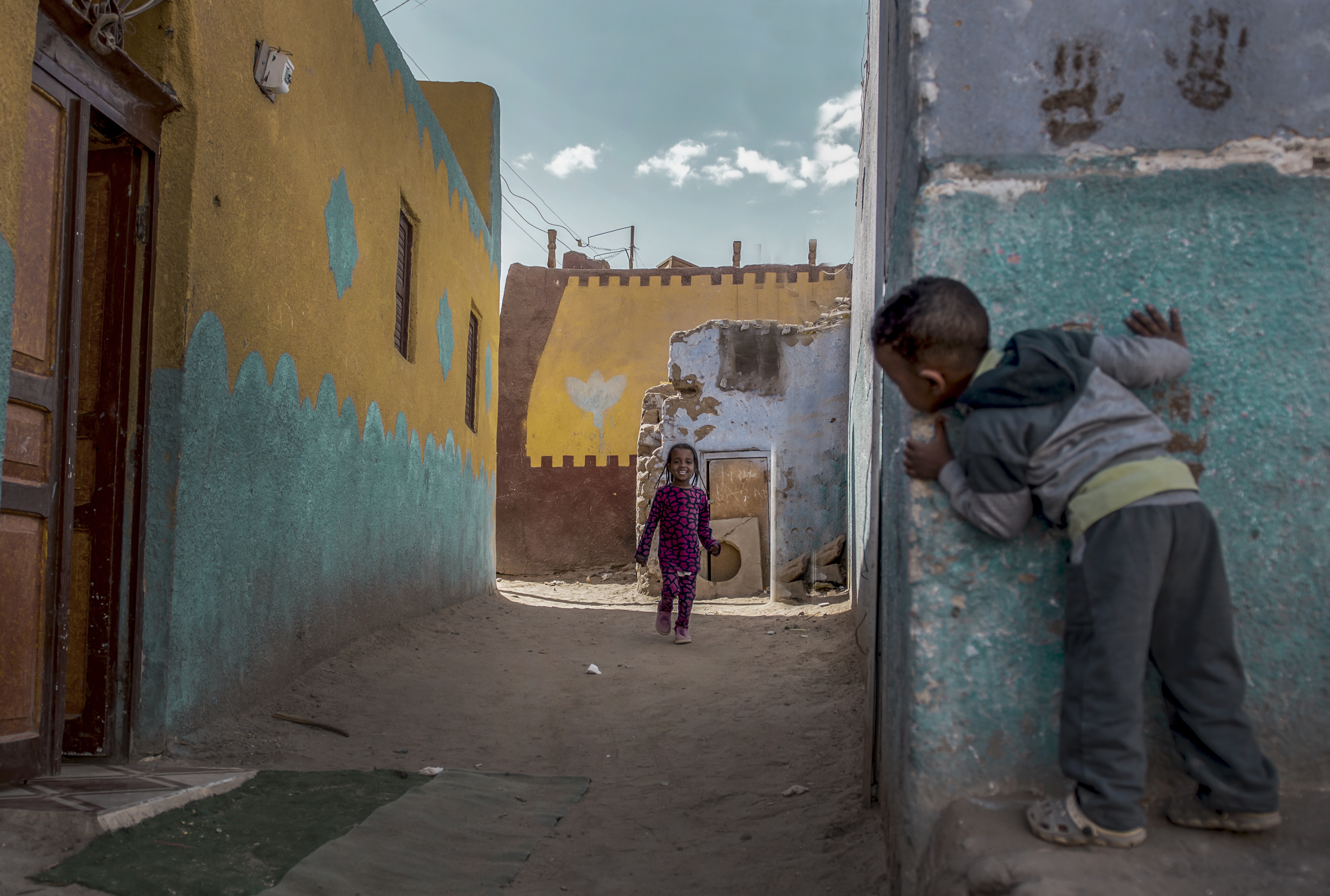
Children's game
| Field | Value | |
|---|---|---|
| italic title | no | |
| subject_name | Hide-and-seek | |
| image_link | [[Image:Meyerheim Versteckspiel.jpg | 250px]] |
| image_caption | A 19th-century painting of three children playing hide-and-seek in a forest (Friedrich Eduard Meyerheim) | |
| players | 2+ | |
| ages | 3+ | |
| setup_time | 90 seconds | |
| playing_time | No limit | |
| random_chance | Very low | |
| skills | Running, tracking, hiding, observation, ability to stay silent, patience, ability to count |
Hide-and-seek (sometimes known as hide-and-go-seek) is a children's game in which at least two players (usually at least three) conceal themselves in a set environment, to be found by one or more seekers. The game is played by one chosen player (designated as being "it") counting to a predetermined number with eyes closed while the other players hide. After reaching this number, the player who is "it" calls "Ready or not, here I come!" or "Coming, ready or not!" and then attempts to locate all concealed players.
The game can end in one of several ways. The most common way of ending is the player chosen as "it" locates all players; the player found first is the loser and is chosen to be "it" in the next game. The player found last is the winner. Another common variation has the seeker counting at "home base"; the hiders can either remain hidden or they can come out of hiding to race to home base; once they touch it, they are "safe" and cannot be tagged.
The game is an example of an oral tradition, as it is commonly passed by children.
Variants
Different versions of the game are played around the world, under a variety of names.
One variant is called "sardines", in which only one person hides and the others must find them, hiding with them when they do so. The hiding places become progressively more cramped, like sardines in a tin. The last person to find the hiding group is the loser, and becomes the hider for the next round. A. M. Burrage calls this version of the game "Smee" in his 1931 ghost story of the same name.
_by_William_Bliss_Baker.jpg)
Once spotted, the hider must run to "home base" (where the seeker was counting while the other players hid) and touch it before they are "tipped" (tagged, or touched) by the seeker. If tagged, that hider becomes the new seeker. Forty forty has many regional names including 'block one two three' in North East England and Scotland, 'relievo one two three' in Wilmslow, 'forty forty' in South East England, 'mob' in Bristol and South Wales, 'pom pom' in Norwich, 'I-erkey' in Leicester, 'hicky one two three' in Chester, 'rally one two three' in Coventry, ' Ackey 123' in Birmingham and '44 Homes' in Australia.
History
Whilst hide-and-seek is evidently likely a very ancient and instinctual childhood game from time immemorial, an early attested version of the game was called apodidraskinda (ἀποδιδρασκίνδα) in Ancient Greek. This game is also referred to by variations of the name, such as phyginda (φυγίνδα) or pheyginda (φευγίνδα). A second century Greek writer named Julius Pollux mentioned the game for the first time. Then as now, it was played the same with one player closing their eyes and counting while the other players hide. This game was also found in an early painting discovered at Herculaneum, dating back to about the second century AD.
Psychology
Hide-and-seek requires children to use both theory of mind and executive function mechanisms to successfully play the game, such as inhibiting the desire to cheat by peeking while playing the role of the seeker. As a result, it may be used as a relatively naturalistic setting for researchers to study children's abilities with these cognitive mechanisms. Hide-and-seek games can also be used by adults to instill social values and useful skills in children, as in the example of the father-son gukwelonone hide-and-seek game among the Onge hunter-gatherers of Little Andaman Island.
International competition
The Hide-and-Seek World Championship was an international hide-and-seek competition held from 2010 through 2017. The game is a derivative of the Italian version of hide-and-seek, "nascondino".
The championship was first held in 2010 in Bergamo, Italy, as an initiative of CTRL Magazine. Though it started out as a joke, the event grew year after year. The 2016 and 2017 competitions took place in Consonno, a ghost town or "The Italian Las Vegas", located in the district of Lecco, Lombardy.

The winning team was awarded "The Golden Fig Leaf", which is biblically the symbol of hiding, referring to the story of Adam and Eve.
Yasuo Hazaki, a graduate of Nippon Sport Science University, and professor of media studies at Josai University in Sakado, Japan, had set up a campaign in 2013 to promote hide-and-seek for the 2020 Olympics in Tokyo. The game Hazaki was promoting was a slightly different traditional Japanese game, more similar to a game of tag. Hazaki contacted the Nascondino World Championship organizers and said that nascondino rules were more appropriate to be a candidate to the Olympics.
References
References
- Williams, Jenny. (20 August 2009). "30 Classic Outdoor Games for Kids".
- (August 2003). "Children and robots learning to play hide and seek". Naval Research Laboratory.
- "Play May Be a Deeper Part of Human Nature Than We Thought".
- "hide-and-seek". Encyclopædia Britannica, Inc.
- ''The Oxford Book of English Ghost Stories'', OUP 1986.
- "Games Children Play".
- [http://www.worldwidewords.org/qa/qa-oll1.htm "Ollie Ollie oxen free"], World Wide Words, Michael Quinion
- "Hide-and-seek {{!}} Definition, Rules, & Facts".
- (2011). "44 Home - Hiding Game".
- "Acky one two three I see children's dialect on TV".
- (2011). "44 Home - Hiding Game".
- [https://www.perseus.tufts.edu/hopper/text?doc=Perseus%3Atext%3A1999.04.0063%3Aentry%3Dapodidraskinda-cn A Dictionary of Greek and Roman Antiquities (1890), Apodidraskinda]
- Weintraub, Richard. (July 12, 2017). "The history behind 3 classic outdoor games | Play N Learn".
- (2003). "Representing the Mental World in Children's Social Behavior: Playing Hide‐and‐Seek and Keeping a Secret". Social Development.
- (1992). "Gukwelonone: The game of hiding fathers and seeking sons among the Ongee of Little Andaman". Father–child relations: Cultural and biosocial contexts.
- "Italian Ghost Town Hosts the Hide-and-seek World Championship". Travel + Leisure.
- Merelli, Annalisa. "A ghost town in Italy is about to come back to life for a hide-and-seek "world championship"". Quartz.
- (2016-09-05). "IN PICS: Italy's crazy hide and seek championship".
- "Consonno".
- (2016-09-15). "Consonno, not only a hamlet but the Italian Las Vegas on Lake Como". Visit Lake Como.
- Woolveridge, Richard. (2017-09-10). "Aussie team with high hopes enters world hide and seek championships". The Sydney Morning Herald.
- (2017-09-11). "IN PICTURES: An international hide and seek tournament in an Italian ghost town".
- "An abandoned Italian town will host the hide-and-seek world championships".
- "Japanese professor pushes for Hide and Seek at the Olympics". Telegraph.co.uk.
This article was imported from Wikipedia and is available under the Creative Commons Attribution-ShareAlike 4.0 License. Content has been adapted to SurfDoc format. Original contributors can be found on the article history page.
Ask Mako anything about Hide-and-seek — get instant answers, deeper analysis, and related topics.
Research with MakoFree with your Surf account
Create a free account to save articles, ask Mako questions, and organize your research.
Sign up freeThis content may have been generated or modified by AI. CloudSurf Software LLC is not responsible for the accuracy, completeness, or reliability of AI-generated content. Always verify important information from primary sources.
Report