From Surf Wiki (app.surf) — the open knowledge base
Hefei
Capital of Anhui, China
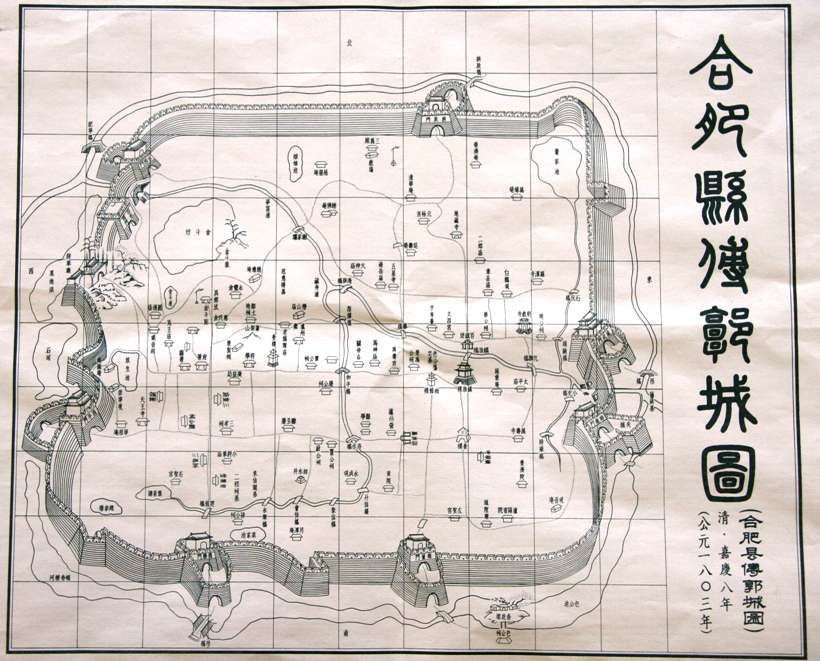
Capital of Anhui, China
| Field | Value |
|---|---|
| name | Hefei |
| official_name | |
| native_name | 合肥市 |
| native_name_lang | zh |
| other_name | Hofei |
| settlement_type | Prefecture-level city |
| image_skyline | {{multiple image |
| border | infobox |
| total_width | 280 |
| perrow | 1/2/2 |
| caption_align | center |
| image1 | 天鹅湖.jpg |
| caption1 | Swan Lake CBD |
| image2 | 包公园内的浮莊1.jpg |
| caption2 | Baogong Park |
| image3 | 包拯历史文化园内景色 - panoramio.jpg |
| caption3 | Lord Bao Temple |
| image4 | 巢湖中庙.jpg |
| caption4 | Temple on Chao Lake |
| image5 | Hua Tuo Hefei.jpg |
| caption5 | Hua Tuo Statue |
| mapframe | yes |
| mapframe-zoom | 7 |
| mapframe-point | none |
| image_map1 | Location map of Hefei, Anhui.png |
| map_caption1 | Location of Hefei City jurisdiction in Anhui |
| pushpin_map | Eastern China topography#China |
| pushpin_mapsize | 250 |
| pushpin_map_caption | Location in Eastern China |
| coor_pinpoint | Hefei municipal government |
| coordinates | |
| seat_type | Municipal seat |
| seat | Shushan District |
| subdivision_type | Country |
| subdivision_name | China |
| subdivision_type1 | Province |
| subdivision_type2 | County-level divisions |
| subdivision_name1 | Anhui |
| subdivision_name2 | 7 |
| established_title2 | |
| established_title3 | |
| government_type | Prefecture-level city |
| governing_body | Hefei Municipal People's Congress |
| leader_title | CCP Secretary |
| leader_name | Yu Aihua |
| leader_title1 | Congress Chairman |
| leader_name1 | Wang Weidong |
| leader_title2 | Mayor |
| leader_name2 | Luo Yunfeng |
| leader_title3 | CPPCC Chairman |
| leader_name3 | Han Bing |
| unit_pref | |
| area_footnotes | |
| area_total_km2 | 11434.25 |
| area_land_km2 | |
| area_urban_km2 | 838.5 |
| area_metro_km2 | 7055.6 |
| elevation_footnotes | |
| elevation_m | 37 |
| elevation_ft | 123 |
| population_total | 9,465,881 |
| population_as_of | 2022 census |
| population_footnotes | |
| population_density_km2 | auto |
| population_urban | 5,118,199 |
| population_density_urban_km2 | auto |
| population_metro | 7,754,481 |
| population_density_metro_km2 | auto |
| population_blank1_title | |
| population_blank1 | |
| population_blank2_title | Major nationalities |
| population_blank2 | |
| postal_code_type | Postal code |
| postal_code | 230000 |
| area_code | 551 |
| iso_code | CN-AH-01 |
| website | |
| footnotes | |
| demographics_type2 | GDP |
| demographics2_title1 | Prefecture-level city |
| demographics2_info1 | CN¥ 1.141 trillion |
| US$ 145.0 billion | |
| demographics2_title2 | Per capita |
| demographics2_info2 | CN¥ 120,579 |
| US$ 18,691 | |
| timezone | CST |
| utc_offset | +8 |
| blank_name | License plate prefixes |
| blank_info | 皖A |
| mapframe-zoom = 7 | mapframe-point = none US$ 145.0 billion US$ 18,691
Hefei is the capital of Anhui province, China. A prefecture-level city, it is the political, economic, and cultural center of Anhui. Its population was 9,369,881 as of the 2020 census. Its built-up (or metro) area is made up of four urban districts plus Feidong, Feixi and Changfeng counties being urbanized, and was home to 7,754,481 inhabitants. Located in the central portion of the province, it borders Huainan to the north, Chuzhou to the northeast, Wuhu to the southeast, Tongling to the south, Anqing to the southwest and Lu'an to the west. A natural hub of communications, Hefei is situated to the north of Chao Lake and stands on a low saddle crossing the northeastern extension of the Dabie Mountains, which forms the divide between the Huai and Yangtze rivers.
The present-day city dates from the Song dynasty. Before World War II, Hefei remained essentially an administrative centre and the regional market for the fertile plain to the south. It has gone through a growth in infrastructure in recent years. Hefei is the location of Experimental Advanced Superconducting Tokamak, an experimental superconducting tokamak magnetic fusion energy reactor.
Hefei is a leading world city for scientific research, ranking at 12th globally, 8th in the Asia-Pacific, and 7th in China (behind Beijing, Shanghai, Nanjing, Guangzhou, Wuhan and Hangzhou), as tracked by the Nature Index in 2025. The city is represented by several major universities, including the University of Science and Technology of China, Hefei University of Technology, Anhui University, Anhui Agricultural University and Anhui Medical University. Notably, the University of Science and Technology of China is one of the top 100 comprehensive public research universities in the world.
History
From the 8th to the 6th centuries BC, Hefei was the site of many small states, later a part of the Chu kingdom. Many archaeological finds dating from this period have been made. The name 'Hefei' was first given to the county set up in the area under the Han dynasty in the 2nd century BC.
In the 3rd century AD, the Battle of Xiaoyao Ford was fought at Xiaoyao Ford (逍遙津) in Hefei. Zhang Liao, a general of the Wei state, led 800 picked cavalry to defeat the 200,000-strong army from Wei's rival state Wu. Several decades of warring in Hefei between Wu and Wei followed this battle.
During the 4th to the 6th centuries AD, this crucial border region between northern and southern states was much fought over; its name and administrative status were consequently often changed. During the Sui (581–618) and Tang (618–907) periods, it became the seat of Lu prefecture—a title it kept until the 15th century, when it became a superior prefecture named Luzhou.
The present city dates from the Song dynasty (960–1126), the earlier Hefei having been some distance farther north. In the 10th year of Xining (, 1077 AD), the taxes collected from the Luchow Prefecture were 50315 Guan, approximately 25 million today's Chinese Yuan, with a ranking of the amount of taxes was the 11th(following Kaifeng, Hangzhou, Qinzhou, Chuzhou, Chengdu, Zizhou, Xingyuan, Mianzhou, Zhenzhou, Suzhou) among all the prefectures of Song Dynasty. During the 10th century, it was for a while the capital of the independent Wu kingdom (902–938) and was an important center of the Southern Tang state (937–975).
After 1127 it became a center of the defenses of the Southern Song dynasty (1126–1279) against the Jin (Jurchen) invaders in the Jin–Song wars, as well as a flourishing center of trade between the two states. When the Chinese Republic was founded in 1911, the superior prefecture was abolished, and the city took the name of Hefei. The city was known as Luchow or Liu-tcheou ({{linktext|庐州}}, p Luzhou) during the Ming and Qing dynasties (after the 14th century to the 19th century). Hefei was the temporary capital for Anhui from 1853 to 1862. It was renamed as Hefei County in 1912. Following the Chinese victory in the Second Sino-Japanese War in 1945, Hefei was made the capital of Anhui.
Before World War II, Hefei remained essentially an administrative center and the regional market for the fertile plain to the south. It was a collecting center for grain, beans, cotton, and hemp, as well as a center for handicraft industries manufacturing cloth, leather, bamboo goods, and ironware.
The construction in 1912 of the Tianjin–Pukou railway, farther east, for a while made Hefei a provincial backwater, and much of its importance passed to Bengbu. In 1932–36, however, a Chinese company built a railway linking Hefei with Yuxikou (on the Yangtze opposite Wuhu) to the southeast and with the Huai River at Huainan to the north. While this railway was built primarily to exploit the rich coalfield in northern Anhui, it also did much to revive the economy of the Hefei area by taking much of its produce to Wuhu and Nanjing.
Although Hefei was a quiet market town of only about 30,000 in the mid-1930s, its population grew more than tenfold in the following 20 years. The city's administrative role was strengthened by the transfer of the provincial government from Anqing in 1945, but much of its new growth derived from its development as an industrial city.
Hefei was designated the provincial capital in 1952.
A cotton mill was opened in 1958, and a thermal generating plant, using coal from Huainan, was established in the early 1950s. It also became the seat of an industry producing industrial chemicals and chemical fertilizers. In the late 1950s an iron and steel complex was built. In addition to a machine-tool works and engineering and agricultural machinery factories, the city has developed an aluminum industry and a variety of light industries.
Hefei's development was advanced by the Third Front construction. In 1970, the University of Science and Technology of China relocated to Hefei. It is one of the best technological universities in the country.
In 1978, the Chinese Academy of Sciences opened a Hefei branch. Several electronics institutes were moved from Beijing to Hefei in the early 1980s. The establishment of these educational and research and development institutions in Hefei were a foundations for its subsequent growth in innovation.
In 1991, Hefei was one of the first Chinese cities to establish a High-Tech Industrial Zone.
A period of rapid growth began in 2005, when Hefei party secretary Sun Jinlong initiated a strategy of industry-based city building. Sun prioritized the automobile, electric appliance, and equipment manufacturing sectors of the city's economy. The city government established a department for attracting investment and sent teams around the country to recruit businesses to Hefei. Sun also launched a construction program of neighborhood redevelopment, road system improvement, rail system, and a new international airport. Hefei's GDP grew at the highest rate of any Chinese provincial capital during Sun's tenure.
Since the 2010s, Hefei has developed high-tech industries and an innovation-driven economy, including semi-conductors and alternative energy economic sectors.
Geography
Hefei is located 130 km west of Nanjing in south-central Anhui. Chao Lake, a lake 15 km southeast of the city, is one of the largest fresh water lakes in China. Though the lake has unfortunately been polluted with nitrogen and phosphorus in recent decades, the situation is improving due to efforts by both the government and the people.
Climate
Hefei features a humid subtropical climate (Köppen Cfa) with four distinct seasons. Hefei's annual average temperature is 16.6 °C. Its annual precipitation is just slightly over 1000 mm, being heavier from May through August. Winters are damp and cold, with January lows dipping just below freezing and January averaging 2.8 °C. The city sees irregular snowfalls that rarely turn significant. Occasional cold spells from Siberia that usually happen during winter months such as December, January, February. Sometimes November and March which can bring snow and heavier snowfall. (Springs are generally relatively pleasant if somewhat erratic. Summers are hot and humid, with a July average of 28.6 °C. In the months of June, July, August, and often September, daily temperatures can reach or surpass 37 °C with high humidity levels being the norm. Autumn in Hefei sees a gradual cooling and drying. With monthly percent possible sunshine ranging from 35 percent in March to 50 percent in August, the city receives 1,868 hours of bright sunshine annually. Extremes since 1951 have ranged from −20.6 °C on 6 January 1955, to 41.1 °C on 27 July 2017.
| Jan record high C = 22.1 | Feb record high C = 27.5 | Mar record high C = 33.7 | Apr record high C = 34.7 | May record high C = 36.4 | Jun record high C = 38.0 | Jul record high C = 41.1 | Aug record high C = 41.0 | Sep record high C = 38.6 | Oct record high C = 39.9 | Nov record high C = 30.1 | Dec record high C = 24.0 | Jan record low C = −20.6 | Feb record low C = −14.1 | Mar record low C = −7.3 | Apr record low C = −0.4 | May record low C = 6.2 | Jun record low C = 12.2 | Jul record low C = 17.9 | Aug record low C = 15.8 | Sep record low C = 10.8 | Oct record low C = 1.5 | Nov record low C = −5.1 | Dec record low C = −13.5 |script-title = zh:CMA台站气候标准值(1991-2020) |access-date= 8 October 2025
Air pollution
Air quality typically diminishes in May and June when the city is blanketed by smog caused by the smoke generated as farmers outside the city burn their fields in preparation for planting the next crop.
Administrative divisions and demographics
Demographics
|1953 | 183570 |1964 | 431490 |1982 | 535681 |1990 | 714242 |2000 | 1549476 |2010 | 3098727 |2020 | 5055978
The majority of the population in Hefei are Han Chinese. There are a comparatively small number of Hui Chinese living in the city, for whom a few mosques have been constructed. Of the more than five million people in the city, some are migrant workers from other parts of Anhui.
Administration
The prefecture-level city of Hefei administers nine county-level divisions, including four districts, one county-city and four counties.
Hefei subdivisions area (km2), population (According to 2010 Census) and population density (per km2).
| Map | Division code | English | Chinese | Pinyin | Area in km2 | Seat | Postal code | Subdivisions | Subdistricts | Towns | Townships | Ethnic townships | Residential communities | Villages | 340100 | Hefei | 340102 | Yaohai District | 340103 | Luyang District | 340104 | Shushan District | 340111 | Baohe District | 340121 | Changfeng County | 340122 | Feidong County | 340123 | Feixi County | 340124 | Lujiang County | 340181 | Chaohu |
|---|---|---|---|---|---|---|---|---|---|---|---|---|---|---|---|---|---|---|---|---|---|---|---|---|---|---|---|---|---|---|---|---|---|---|
| 合肥市 | zh | 11434.25 | Shushan District | 230000 | 45 | 65 | 19 | 1 | 736 | 1102 | ||||||||||||||||||||||||
| 瑶海区 | zh | 142.90 | Mingguang Road Subdistrict (明光路街道) | 230000 | 13 | 2 | 1 | 118 | 18 | |||||||||||||||||||||||||
| 庐阳区 | zh | 139.32 | Bozhou Road Subdistrict (亳州路街道) | 230000 | 11 | 1 | 84 | 14 | ||||||||||||||||||||||||||
| 蜀山区 | zh | 261.36 | Sanli'an Subdistrict (三里庵街道) | 230000 | 8 | 2 | 92 | 17 | ||||||||||||||||||||||||||
| 包河区 | zh | 294.94 | Luogang Subdistrict (骆岗街道) | 230000 | 7 | 2 | 77 | 38 | ||||||||||||||||||||||||||
| 长丰县 | zh | 1928.45 | Shuihu (水湖镇) | 231100 | 8 | 6 | 80 | 193 | ||||||||||||||||||||||||||
| 肥东县 | zh | 2205.92 | Dianbu (店埠镇) | 231600 | 10 | 4 | 95 | 249 | ||||||||||||||||||||||||||
| 肥西县 | zh | 2082.66 | Shangpai (上派镇) | 231200 | 12 | 6 | 1 | 90 | 241 | |||||||||||||||||||||||||
| 庐江县 | zh | 2347.48 | Lucheng (庐城镇) | 231500 | 17 | 38 | 194 | |||||||||||||||||||||||||||
| 巢湖市 | zh | 2031.22 | Woniushan Subdistrict (卧牛山街道) | 238000 | 6 | 11 | 1 | 62 | 138 |
Economy
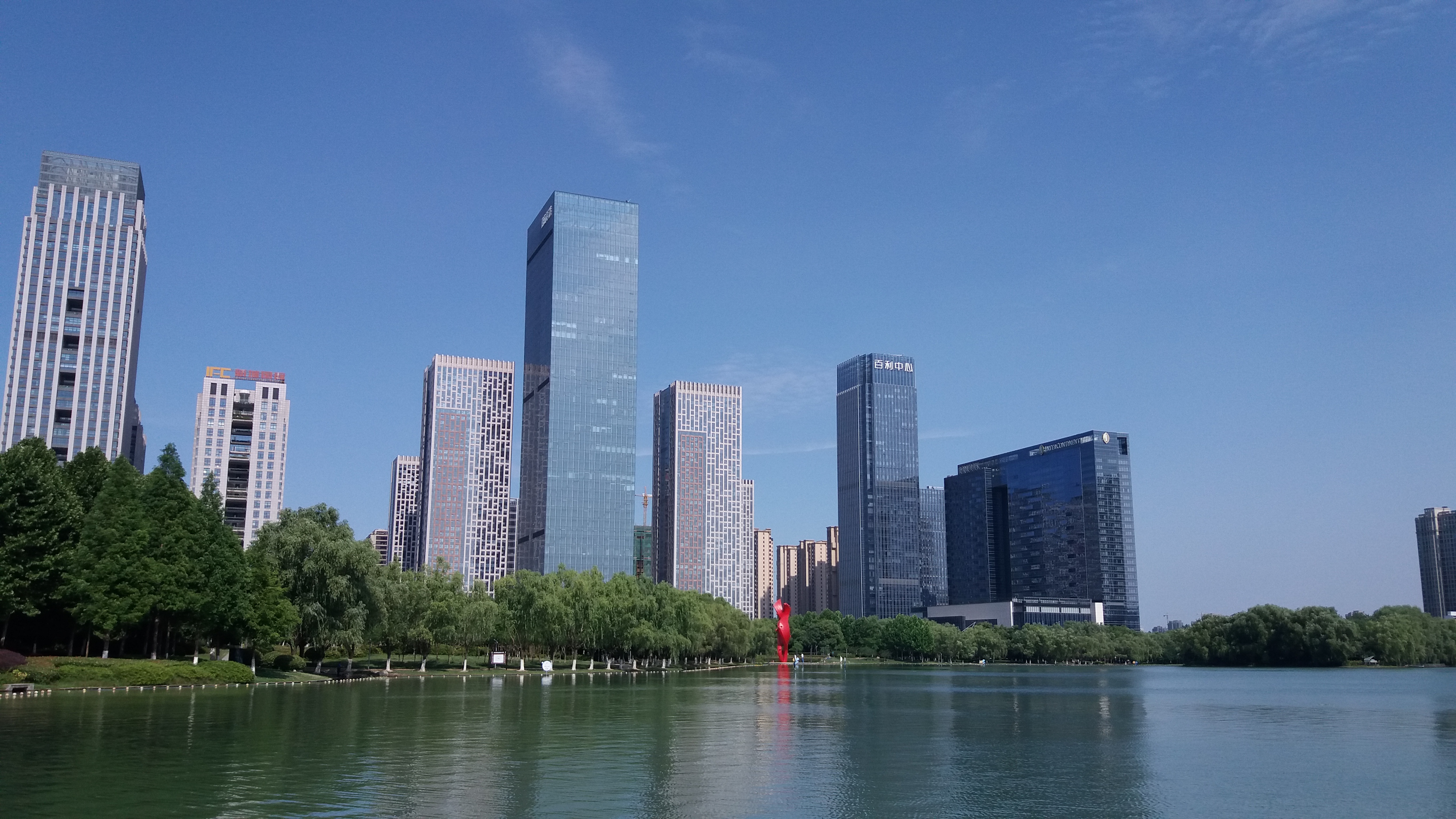
As of 2021, the GDP of Hefei is CN¥1,141.28 billion. The GDP per capita of the city is ¥121,187 (US$18,784), ranking within the top 20 of cities in China.
As of 2023, the GDP of Hefei is CN¥1,267.38 billion.
Investments and state-owned enterprises
Hefei's city government is highly engaged in business, both through state-owned enterprises and investment. This approach has helped drive economic growth and re-structure the cities economic base.
In 2008, the local government spent US$3.5 billion for a controlling ownership stake in BOE Technology (Jingdongfang). BOE Technology subsequently grew to be one of the world's leading manufacturers of semiconductor products for telecommunications. It is also the world's largest manufacturer of liquid crystal displays, organic light-emitting diodes, and flexible displays. As of at least 2024, BOE has three production lines in Hefei, and its presence has helped Hefei attract further business in the electronics supply chain and contributed to Hefei's development as one of the main centers for the optoelectronic industry in China.
In 2008, Hefei invested heavily in iFlytek, a voice-recognition technology firm spun off from USTC.
The local government invested heavily in NIO in order to integrate it with Hefei Changan Automobile, a legacy enterprise from the Third Front construction. NIO was on the brink of bankruptcy in 2020 when Hefei obtained a 25% stake in the company in exchange for RMB 7 billion. NIO moved its headquarters to Hefei, where the government helped it obtain loans from local banks to expand its supply chains. As of 2022, NIO is China's most successful electric vehicle manufacturer.
Analysis of growth
Hefei has been identified by the Economist Intelligence Unit in the November 2010 Access China White Paper as a member of the CHAMPS (Chongqing, Hefei, Anshan, Ma'anshan, Pingdingshan and Shenyang), an economic profile of the top 20 emerging cities in China.
Hefei was identified by The Economist in December 2012 as the world's No.1 fastest growing metropolitan economy.
Hefei has supported the growth of the chip industry in the city and has become one of the biggest sites for the manufacture of memory chips (DRAM).
Transportation
Rail
There are two main train stations in Hefei. The newest one is Hefei South railway station (Hefeinan station, 合肥火车南站) where most high-speed trains pass through. The alternative station is Hefei railway station (合肥火车站) which is smaller and older.
There are some small stations such as Feidong Station (肥东火车站), Feixi Station (肥西火车站), Shuijiahu Station (水家湖火车站), Chaohu Station (巢湖火车站), Chaohu East railway station (Chaohudong station; 巢湖火车东站), Hefeibeicheng Station (Hefei Northtown Station 合肥北城火车站), Lujiang Station (庐江火车站) and so on. These stations are mostly located in small towns and connect commuters with the main city.
Air
Hefei Xinqiao International Airport replaced the old Hefei Luogang International Airport and started its operation on 30 May 2013, 00:00. This new domestic aviation hub is located in Gaoliu Village situated in the northwestern part of Hefei City. The first arriving flight was China Eastern Airlines flight MU5172 from Beijing Capital International Airport. The first departing flight was China Eastern Airlines MU5468 to Shanghai Pudong International Airport. Hefei Xinqiao International Airport provides scheduled passenger service to major airports in China and other international cities. Destinations include Hong Kong, Macao, Singapore, Taipei (Taoyuan, Songshan), Kaohsiung, Taichung, Seoul, Cheongju, Yangyang, Jeju, Osaka, Nagoya, Shizuoka, Okayama, Boracay Island, Bali Island, Frankfurt, Siem Reap, Bangkok, Phuket Island and Krabi Island.
Subway
Main article: Hefei Metro
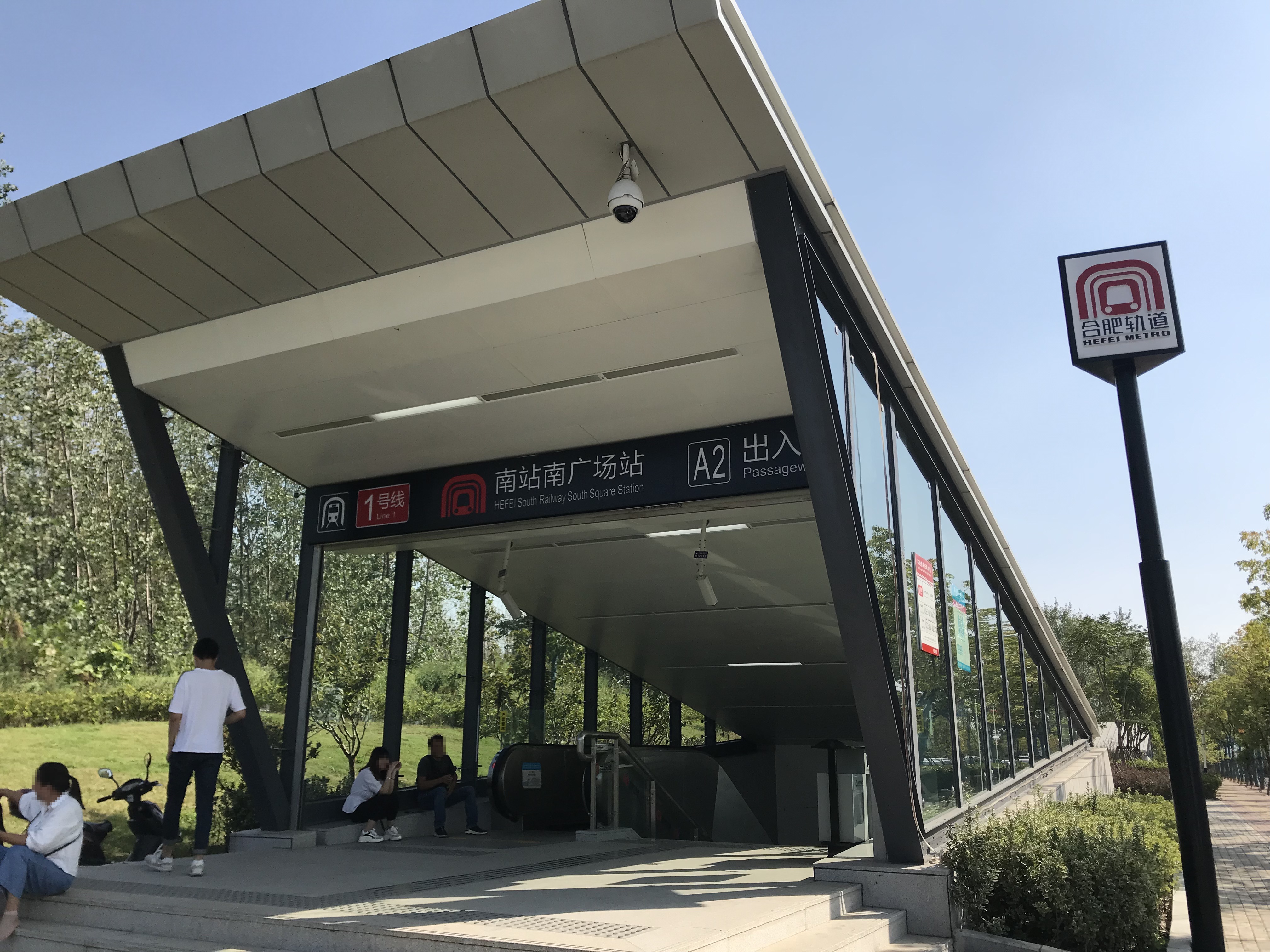
Hefei Metro is a rapid transit rail network under construction that will eventually serve both urban and rural areas of Hefei. As planned, Line 1 covers a total distance of 24 km starting from Hefei Railway Station. It was inaugurated in December 2016.
In February 2013, Metro Line 2 also began its construction. It is being built alongside the Changjiang Dong Road, Changjiang Zhong Road and Changjiang Xi Road, which is a major passenger corridor in the east–west direction. It will pass through the city center area and connect to a transit point where passengers will be able to take the shuttle bus to Hefei Xinqiao International Airport. The Line 2 was opened on 26 December 2017.
In November 2015, Metro Line 3 construction began. Line 3 was opened on 26 December 2019. Line 3 connects the New Station Exploitative-experimental Zone and the Economic Technology Development District, from the vocational education town to the university town. In 2016, Metro Line 4 construction began and was subsequently opened on 26 December 2021. Line 4 connects the New Station Exploitative-experimental Zone and the High Technology Development District. In 2017, Metro Line 5 construction began. The south part of Line 5 was opened on 26 December 2020. Line 5 connects Binhu New District and the Beicheng (North city) New District. The north part of Line 5 is expected to open at the end of 2022.
Alongside Line 1, Line 2, Line 3, Line 4 and Line 5, Hefei is also planning to build other 12 metro lines, 4 lines of intra-metropolitan rail transit (to Lu'an, Huainan, Lujiang and Chaohu) and 3 lines of tram and hopefully accomplish the project by 2030.
Bus
There is an extensive public bus system in the city, including eight bus rapid transit lines. There are several commuter lines which only run at designated time or having a large interval.
Universities and research
Hefei plays an important role in scientific research in China. It has seven national laboratories, second only to Beijing: The National Synchrotron Radiation Laboratory (), the Hefei National Laboratory for Physical Sciences at the Microscale (), both of which are under the University of Science and Technology of China. It also has the Institute of Solid State Physics, Institute of Plasma Physics, Institute of Intelligent Machines, High Magnetic Field Laboratory (founded in 2008), Anhui Institute of Optics and Fine Mechanics, all of which are under the Hefei Institutes of Physical Science which belongs to the Chinese Academy of Sciences. Hefei is the location of Experimental Advanced Superconducting Tokamak, an experimental superconducting tokamak magnetic fusion energy reactor. The No. 105 Hospital of the People's Liberation Army, located in Hefei, is reportedly the site of the first human trials using CRISPR genome editing, doing so in 2015.
As of 2017, Hefei had 60 universities and more than 564 research institutes. The city is represented by several major universities, including the University of Science and Technology of China, Hefei University of Technology, Anhui University, Anhui Agricultural University and Anhui Medical University. Notably, the University of Science and Technology of China is one of the top 100th comprehensive public research universities in the world.
- University of Science and Technology of China (USTC)
- Hefei University of Technology (HFUT)
- Anhui University (AHU)
- Anhui Agricultural University (AHAU)
- Anhui Medical University (AHMU)
- Anhui University of Chinese Medicine (AUCM)
- Anhui Jianzhu University (AHJU)
- Hefei Normal University (HNU)
- Hefei University (HU)
- Beihang University (BUAA) – Hefei Campus
- National University of Defense Technology (NUDT) – Hefei Campus
- Beijing Foreign Studies University (BFSU) – Hefei Campus
- Tianjin University (TJU) – Hefei Graduate School
- Peking University (PKU) – Hefei Graduate School
- Tsinghua University (THU) – Hefei Institute of Public Safety Research
Yicheng Prison
Yicheng Prison is located within the city. It was built during the 1983 "Strike Hard" campaign and was formerly Hefei Zhenxing Machine Parts Factory. On 15 June 1984, the Prov. Justice Dept. decided to change the name of the Machine Parts Factory's Internal Dept. to the Prov. Independent LRC. On 17 March 1986, the city's Party Committee and government agreed to the change. On 26 April more than 400 inmates were transferred to Hefei Shangzhangwei Farm and Baihu Farm. In February 1992 a secondary country level prison was created at the Shangzhangwei Farm. In August 1992 the Hefei City LRD level was upgraded by the government. In June 1996 the prison was changed to its present name. It is currently controlled by Hefei city. It mainly houses prisoners with sentences of less than five years and houses up to 1000 prisoners a year. In the past 20 years, nearly 20,000 inmates have completed their sentences here. The prison mainly cultivates vegetables and rice but also cooperates with the Zhejiang Rongguang Group and produces soccer training shoes, soccer balls, tourism products, and other products.
Sport
Hefei had its own football team called Anhui Jiufang, who in the 2007–08 season were promoted from the Chinese Football Association Yi League to the Chinese Football Association Jia League which is the second highest tier of Chinese football. It was acquired by Tianjin Runyulong in 2011.
Sites of interest


- Chao Lake, is the largest lake in Anhui and one of the five major freshwater lakes in China.
- Sanhe Town, ancient town which has a history of more than 2,500 years.
- Xiaoyaojin Park, a public park sitting on the ancient site of the Battle of Xiaoyao Ford.
- Temple of Lord Bao, built in 1066 near the tomb of Lord Bao.
- Li Hongzhang's Former Residence (), built in the late 19th century and fully restored by the 1990s.
- Hui Garden () (Opened to the public in September 2001)
- Children's Welfare Institute (a.k.a. "Social Welfare Institute"), children's orphanage
- Anhui Laomingguang Stadium, the home ground of Anhui Jiufang, but also used for other public sporting events.
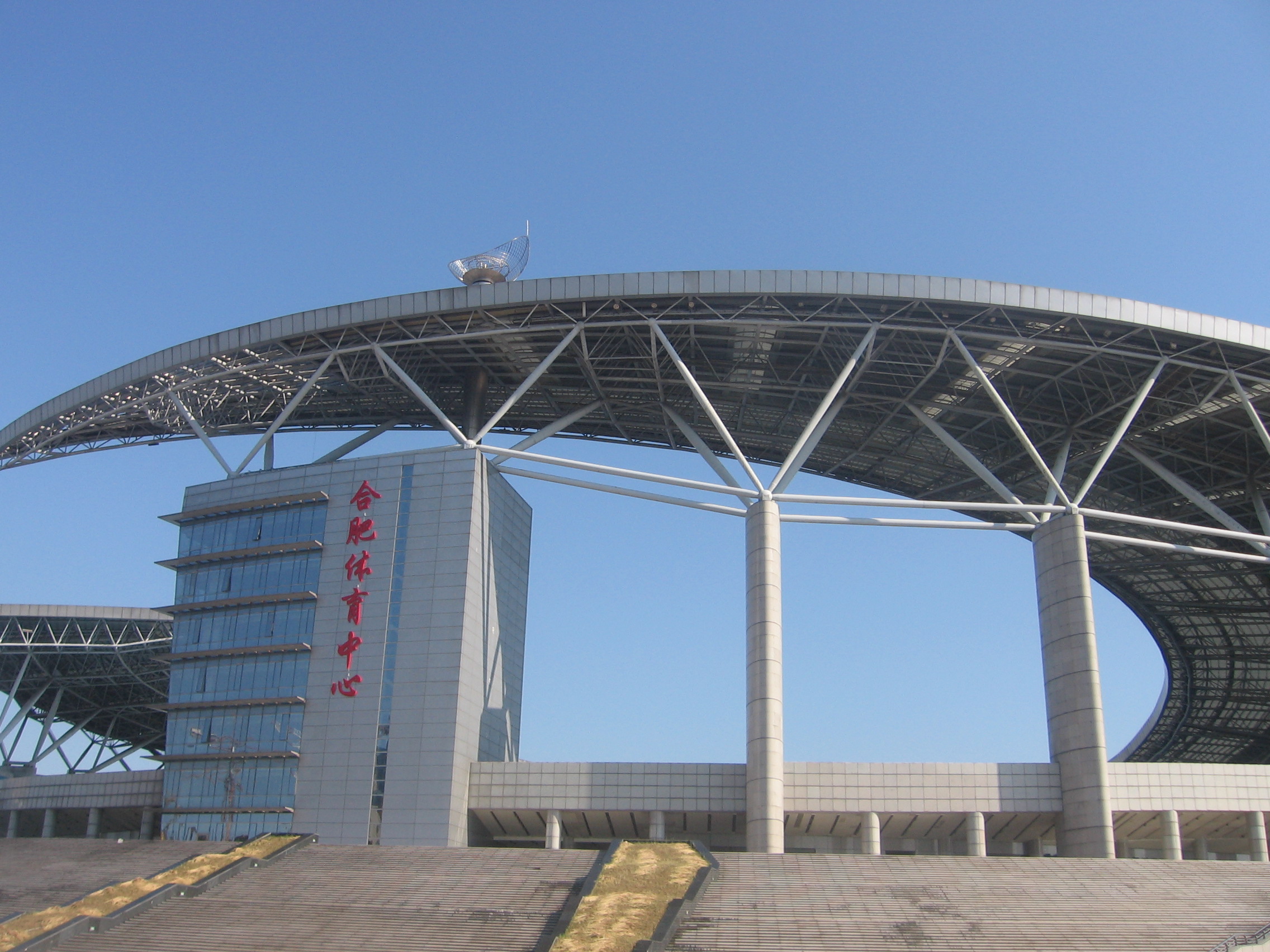
- Hefei Olympic Sports Center Stadium, football stadium with a capacity of 60,000 people
- Hefei Grand Theatre, opera house
Notable people
- Bao Zheng (999–1062), Northern Song dynasty bureaucrat and judge whose name has become synonymous with judicial wisdom and uprightness.
- Li Hongzhang (1823–1901), prominent late Qing dynasty bureaucrat and diplomat.
- Liu Mingchuan (1836–1896), statesman during the late Qing dynasty, first governor of Taiwan.
- Duan Qirui (1865–1936), the Provisional Chief Executive of Republic of China (in Beijing) from 24 November 1924, to 20 April 1926.
- Susan Wu Rathbone (1921–2019), community leader in Queens, New York.
- Yang Chen-Ning, (1922–2025), 1957 Nobel Physics Prize laureate, for their work on parity nonconservation of weak interaction. One of the two earliest Chinese to receive the prize.
- Wu Bangguo (b. 1941), Chinese politician.
- Li Keqiang (1955–2023), Premier of China 2013–2023.
- Yang Yuanqing (b. 1964), Chairman of Board of Lenovo.
- Han Qizhi, (b. 1970), first person to climb the Jin Mao Tower, then the tallest building in China.
- Jin Jing (b. 1981), Paralympic fencer.
- Xu Song (b. 1986), Chinese singer.
- Chen Xiao (b. 1987), actor.
- Yang Yang (b. 1991), actor.
- Hu Bingqing (b. 1992), actress.
Sister cities
- JPN Kurume, Fukuoka, Japan (1980)
- Sierra Leone Freetown, Sierra Leone (1984)
- Burundi Bujumbura, Burundi (1986)
- United States Columbus, Ohio, United States (1988)
- Denmark Aalborg, Denmark (1989)
- Spain Lleida, Catalonia, Spain (1998)
- South Korea Wonju, Gwandong, South Korea (2002)
- Australia Darebin, Victoria, Australia (2003)
- CAN Edmonton, Alberta, Canada (2004)
- UK Belfast, Northern Ireland, United Kingdom (2005)
- Germany Osnabrück, Lower Saxony, Germany (2006)
- Russia Ufa, Bashkortostan, Russia (2016)
References
References
- "China: Ānhuī (Prefectures, Cities, Districts and Counties) – Population Statistics, Charts and Map".
- "《安徽统计年鉴2022》电子查阅版".
- "Hefei {{!}} China".
- "The Economist Intelligence Unit".
- "Leading 200 science cities {{!}} {{!}} Supplements {{!}} Nature Index".
- (26 October 2021). "US News Best Global Universities Rankings in Hefei".
- (16 July 2015). "QS Ranking: University of Science and Technology of China".
- "Institution outputs {{!}} Nature Index".
- (17 September 2020). "University of Science and Technology of China".
- "University of Science and Technology of China".
- "World University Rankings – 2020 {{!}} China Universities in Top 1000 universities {{!}} Academic Ranking of World Universities – 2020 {{!}} Shanghai Ranking – 2020".
- ''Inter alia'': Mitchell Sr., S.A. ''A New Universal Atlas Containing Maps of the various Empires, Kingdoms, States and Republics Of The World''. "[http://www.geographicus.com/P/AntiqueMap/China-mitchell-1850 China.] {{Webarchive. link. (2012-06-29 " Entered 1850, Published 1853.)
- Hu, Richard. (2023). "Reinventing the Chinese City". [[Columbia University Press]].
- (2022). "Mao and Markets: The Communist Roots of Chinese Enterprise". [[Yale University Press]].
- (8 February 2021). "[Distribution of Nitrogen and Phosphorus in Lake Chaohu Sediments and Pollution Evaluation]". Huan Jing Ke Xue = Huanjing Kexue.
- "无标题文档".
- link. [[China Meteorological Administration]]
- (2020). "China County Map with 2000-201o Population Census Data".
- {{in lang. link. (25 March 2012)
- link. [[National Bureau of Statistics of the People's Republic of China]]. (2011)
- {{lang. zh-hans. 《合肥统计年鉴2011》
- {{lang. zh-hans. 《中国民政统计年鉴2011》
- National Bureau of Statistics of China
- (2024-02-04). ["2023年全市经济运行情况"](https://tjj.hefei.gov.cn/tjyw/tjgb/15094341.html }}{{Dead link).
- Lan, Xiaohuan. (2024). "How China Works: An Introduction to China's State-led Economic Development". [[Palgrave Macmillan]].
- Jin, Keyu. (2023). "The New China Playbook: Beyond Socialism and Capitalism". Viking.
- "THE RISE OF THE 'CHAMPS' – NEW REPORT MAPS BUSINESS OPPORTUNITY IN CHINA'S FASTEST GROWING CITIES".
- (4 December 2012). "Metro economies". The Economist.
- link
- "Leading 200 science cities {{!}} {{!}} Supplements {{!}} Nature Index".
- (21 January 2018). "China, Unhampered by Rules, Races Ahead in Gene-Editing Trials". [[The Wall Street Journal]].
- "Laogai Handbook 2007–2008". Laogao.it.
- [https://telegraph.co.uk/news/worldnews/1559172/Prison-for-scaling-Chinas-tallest-skyscraper.html "Prison for Scaling China's Tallest Skyscraper"] {{webarchive. link. (13 July 2015 1 August 2007.)
- link. Kurume city
- "Hefei, China – Columbus Sister Cities".
This article was imported from Wikipedia and is available under the Creative Commons Attribution-ShareAlike 4.0 License. Content has been adapted to SurfDoc format. Original contributors can be found on the article history page.
Ask Mako anything about Hefei — get instant answers, deeper analysis, and related topics.
Research with MakoFree with your Surf account
Create a free account to save articles, ask Mako questions, and organize your research.
Sign up freeThis content may have been generated or modified by AI. CloudSurf Software LLC is not responsible for the accuracy, completeness, or reliability of AI-generated content. Always verify important information from primary sources.
Report