From Surf Wiki (app.surf) — the open knowledge base
Hammered coinage
Early method of creating metal currency
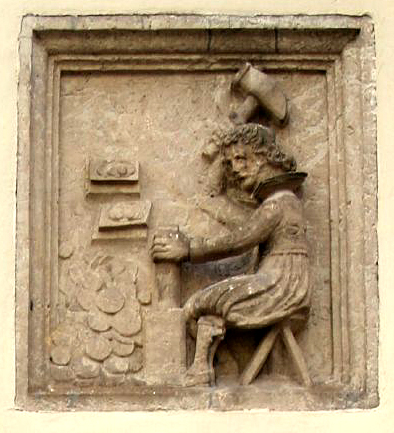
Early method of creating metal currency
Hammered coinage was the most common form of coins produced from the invention of coins in the first millennium BC until the early modern period of c. the 15th–17th centuries, contrasting to the cast coinage and the later developed milled coinage.
History
Hammered coins were produced by placing a blank piece of metal (a planchet or flan) of the correct weight between two dies, and then striking the upper die with a hammer to produce the required image on both sides. The planchet was usually cast from a mold. The bottom die (sometimes called the anvil die) was usually counter sunk in a log or other sturdy surface and was called a pile. One of the minters held the die for the other side (called the trussel), in his hand while it was struck either by himself or an assistant.
Experimental archeology suggests that a lower die could be expected to last for up to 10,000 strikes depending on the level of wear deemed acceptable.
In later history, in order to increase the production of coins, hammered coins were sometimes produced from strips of metal of the correct thickness, from which the coins were subsequently cut out. Both methods of producing hammered coins meant that it was difficult to produce coins of a regular diameter. Coins were liable to suffer from "clipping" where unscrupulous people would remove slivers of precious metal since it was difficult to determine the correct diameter of the coin.
Coins were also vulnerable to "sweating", which is when silver coins would be placed in a bag that would be vigorously shaken. This would produce silver dust, which could later be removed from the bag.
Milled coins
The ability to fashion coins from machines (milled coins) caused hammered coins to become gradually obsolete during the 17th century. They were still made in Venice until the 1770s. France became the first country to adopt a full machine-made coin in 1643.
In England, the first non-hammered coins were produced in the reign of Queen Elizabeth I in the 1560s, but while machine-produced coins were experimentally produced at intervals over the next century, the production of hammered coins did not finally end until 1662.
Cast coins
An alternative method of producing early coins, particularly found in Asia, especially in China, was to cast coins using molds. This method of coin production continued in China into the nineteenth century. Up to a couple of dozen coins could be produced at one time from a single mold, when a 'tree' of coins (which often contained features such as a square hole in the center) would be produced and the individual coins (called cash) would then be broken off.
Hammered coin production
File:A mint furnace.jpg| File:Trussel and minting.jpg| File:Anvil dye detail.JPG| File:Carisia1a2.jpg|Roman Denarius issued by T. Carisius (46BCE) showing the moneyer's anvil, hammer and tongs. The object above the anvil may be the die (trussel) or a leather cap. File:Moule de frappe de la monnaie, Alger, période ottomane.jpg|Coin striking mold, Algiers, Ottoman period File:Moule de frappe de la monnaie, Alger, période ottomane - 02.jpg|Coin die, Algiers, Ottoman period
References
References
- Bean, Simon C. (1994). "The coinage of Atrebates and Regni". University of Nottingham..
- http://numis.org/coins-of-the-month/may-2022-spotlight/. Accessed 4 May 2025.
This article was imported from Wikipedia and is available under the Creative Commons Attribution-ShareAlike 4.0 License. Content has been adapted to SurfDoc format. Original contributors can be found on the article history page.
Ask Mako anything about Hammered coinage — get instant answers, deeper analysis, and related topics.
Research with MakoFree with your Surf account
Create a free account to save articles, ask Mako questions, and organize your research.
Sign up freeThis content may have been generated or modified by AI. CloudSurf Software LLC is not responsible for the accuracy, completeness, or reliability of AI-generated content. Always verify important information from primary sources.
Report