From Surf Wiki (app.surf) — the open knowledge base
Guangzhou Metro
Rapid transit railway in Guangzhou, China

Rapid transit railway in Guangzhou, China
| Field | Value | |
|---|---|---|
| name | Guangzhou Metro | |
| image | Guangzhou Metro logo.svg | |
| imagesize | 150px | |
| image2 | Jinshazhou Pearl River Bridge, Guangzhou 20220710-A.jpg | |
| caption2 | A Line 6 train on the Jinshazhou Pearl River Bridge | |
| imagesize2 | 275px | |
| owner | City of Guangzhou | |
| locale | Guangzhou | |
| Foshan | ||
| transit_type | Rapid transit | |
| operator | Guangzhou Metro Corporation | |
| began_operation | ||
| lines | 19 | |
| vehicles | 625 trains () | |
| stations | 398 | |
| ridership | 8.2 million (2018 Avg.) | |
| 14.093 million (31 December 2025 peak) | ||
| annual_ridership | 3.31 Billion (2019) | |
| system_length | 779.9 km | |
| track_gauge | ||
| el | {{plainlist | |
| * {{1,500 V DC | conductor | overhead}} and |
| * {{1,500 V DC | conductor | third rail}} and 600 V 50 Hz 3-phase AC |
| }}<ref name | "power" / | |
| minimum_radius_of_curvature | 206 m | |
| website | ||
| map | [[File:Guangzhou Metro Network.png | 275px]] |
Foshan 14.093 million (31 December 2025 peak)
- and
- and 600 V 50 Hz 3-phase AC
The Guangzhou Metro () is the rapid transit system of the city of Guangzhou, Guangdong, China. It is operated by the state-owned Guangzhou Metro Corporation and was the fourth metro system to be built in mainland China, after Beijing, Tianjin, and Shanghai.
The earliest efforts to build an underground rapid transit system in Guangzhou date back to 1960. In the two decades that followed, the project was brought into the agenda five times but ended up abandoned each time due to financial and technical difficulties. Preparation of what would lead to today's Guangzhou Metro did not start until the 1980s, and it was not until 1993 that construction of Line 1 officially began. Line 1 opened four years later in 1997 with five stations in operation.{{cite web |script-title = zh:广州地铁发展历程 |trans-title = Development of Guangzhou Metro |access-date = 8 October 2010 |archive-date = 7 July 2011 |archive-url = https://web.archive.org/web/20110707060147/http://2010.163.com/10/0929/10/6HOAGBRO00863AUC.html |url-status = dead
, Guangzhou Metro has 19 lines in operation: Line 1, Line 2, Line 3, Line 4, Line 5, Line 6, Line 7, Line 8, Line 9, Line 10, Line 11, Line 12, Line 13, Line 14, Line 18, Line 21, Line 22, Guangfo Line, and Zhujiang New Town APM reaching both the urban core and surrounding suburbs. Guangfo Line connects Guangzhou and Foshan and is the first metro line between two cities in the country. Daily service hours start at 6:00 am and end at midnight and daily ridership averages over 7 million.{{Cite web | script-title = zh:广州地铁 全程为你--公司新闻 | access-date = 27 April 2017 | archive-date = 27 April 2017 | archive-url = https://web.archive.org/web/20170427193253/http://www.gzmtr.com/ygwm/xwzx/gsxw/201704/t20170420_51169.html | url-status = dead | script-title = zh:广州地铁上半年运客超13亿人次 | trans-title = Guangzhou Metro First Half of 2017 Provided 1.3 billion rides. | access-date = 8 July 2017 |script-title = zh:首尾班车时刻表 |trans-title = Schedules of first and last trains |access-date = 24 November 2010 |archive-date = 31 December 2013 |archive-url = https://web.archive.org/web/20131231082800/http://cs.gzmtr.com/ckfw/ |url-status = dead
Extensive development of the metro network has been planned for the next decade, with construction started on Line 24 and pre-construction preparations on . Extensions of Line 8, Line 10, Line 12, Line 13, Line 14, Line 18, as well as the extension of Line 22 to Baiyun Airport are in the works.
Some of the system's lines were designed to operate much faster than traditional metro lines, with stations far apart and faster trainsets regularly running at 160 km/h. Lines 18 and 22 are the fastest metro lines in China, a title previously held by Line 11 of the Shenzhen Metro.
History
Forays of the 1960s and 1970s
Chen Yu (), Governor of Guangdong in 1957–1967,{{cite web | script-title = zh:广东省志·政权志 | trans-title = Annal of Regimes, Annals of Guangdong | access-date = 25 November 2010 | url-status = dead | archive-url = https://archive.today/20121130155849/http://www.gd-info.gov.cn/books/dtree/showbook.jsp?paths=201&stype=v&siteid=mastersite&sitename=%E5%B9%BF%E4%B8%9C%E7%9C%81%E6%83%85%E4%BF%A1%E6%81%AF%E5%BA%93 | archive-date = 30 November 2012
In 1965, Chen Yu along with Tao Zhu (), who had been the Governor of Guangdong and First Secretary of Guangdong Committee of the Chinese Communist Party, proposed in the wake of the Gulf of Tonkin incident that a tunnel is built in Guangzhou for wartime evacuations and post-war metro development. Approved by the central government, the project started in the spring of 1965. Due to its confidentiality in the context of intensification of the Vietnam War, the project adopted the obscure name of "Project Nine" (), where "Nine" was the number of strokes in "地下", the Chinese word for "underground".
As envisaged by Chen Yu, the metro system of Guangzhou would consist of two lines: a north–south line that would connect Nanfang Building to Sanyuanli via Renmin Lu and Jiefang Beilu, and an east–west line that would run from Xichang to Dongshan along today's Dongfeng Lu. The two lines roughly parallelled Line 2 and Line 1 of the modern days, respectively. The east–west line was never built, while Project Nine was dedicated to the north–south line. Over ten teams of miners were recruited for a project filled with hazards and perils. Constrained by extreme scarcity of time, monetary and material resources, the ambition to build a tunnel for the metro operation was scaled back— the capability to run trolleybuses was deemed acceptable. For ¥13 million, an 8 km long tunnel was completed in 1966. The tunnel was planned to be used as an air-raid shelter and eventual metro line; however, with a cross-section merely 3 m wide and 2.85 m tall, and exposed rocks and wooden trestles scattered everywhere, it was unusable for public transit. In the two decades that followed, four attempts were made to revive and expand Project Nine, first in 1970, next in 1971, then in 1974, and last in 1979. Due to lack of funds and complex geotechnical conditions, none of these efforts materialized.
Construction of Line 1
The metro project of Guangzhou was launched for the sixth time in 1984 as the Preparation Office of Guangzhou Metro, established back in 1979 as part of the last attempt to resurrect Project Nine, was moved out of the civil air-defense system and became a subordinate body of the Construction Commission of Guangzhou, bringing Guangzhou Metro into the scope of urban infrastructure development. Before the 1980s, war preparedness was the dominant tenet of underground infrastructure projects in mainland China. The construction of Guangzhou Metro marked the first deviation from the old doctrine as traffic itself became the prime consideration of the project.
The design of the initial metro network was a collaborative effort between China and France (SYSTRA).{{Cite web | access-date = 22 May 2021
Construction of Line 1 officially commenced on 28 December 1993, although work on a trial section at Huangsha had begun in October 1992, five months before the feasibility study of the line was ratified by the State Planning Commission in March 1993. Various technologies novel to China's construction industry at the time were adopted in different sections of the project, notably including immersed tubes (Pearl River Tunnel) and tunnel boring machines (Huangsha–Martyrs' Park section). As the most massive urban infrastructure project in the history of Guangzhou, Line 1 required funding of ¥12.75 billion, all of which was raised by the local government. Use of cut-and-cover tunnels aggressively backed by then-mayor Li Ziliu necessitated the relocation of approximately 100,000 residents in 20,000 households and demolition of buildings totalling 1.1 km2 in the area and earned Li the nickname "Li the Demolisher" ().{{cite news | script-title = zh:广州地铁一号线今告建成 | trans-title = Guangzhou Metro Line 1 completed today | access-date = 4 December 2010 | script-title = zh:塞车被骂得最厉害,不建地铁不行 | trans-title = Traffic congestion was most criticized, therefore metro was a must | access-date = 23 January 2014 | archive-url = https://web.archive.org/web/20150607003055/http://gcontent.oeeee.com/c/f9/cf9a242b70f45317/Blog/322/fe5c41.html | archive-date = 7 June 2015 | url-status = dead
Three and a half years after construction started, the 5.4 km section from Xilang to Huangsha opened for trial operation on 28 June 1997. The remaining 13 km, from Huangsha to Guangzhou East railway station, was completed eighteen months later on 28 December 1998. The entire line opened for sightseeing tours between 16 February and 2 March 1999, delivering 1.39 million rides 15 days before closing for final testing.{{cite news | script-title = zh:广州地铁今起封闭调试6月28日正式营运 | trans-title = Guangzhou Metro closed for testing today, to start operation on 28 June | access-date = 4 December 2010
Accelerated expansion in the 2000s
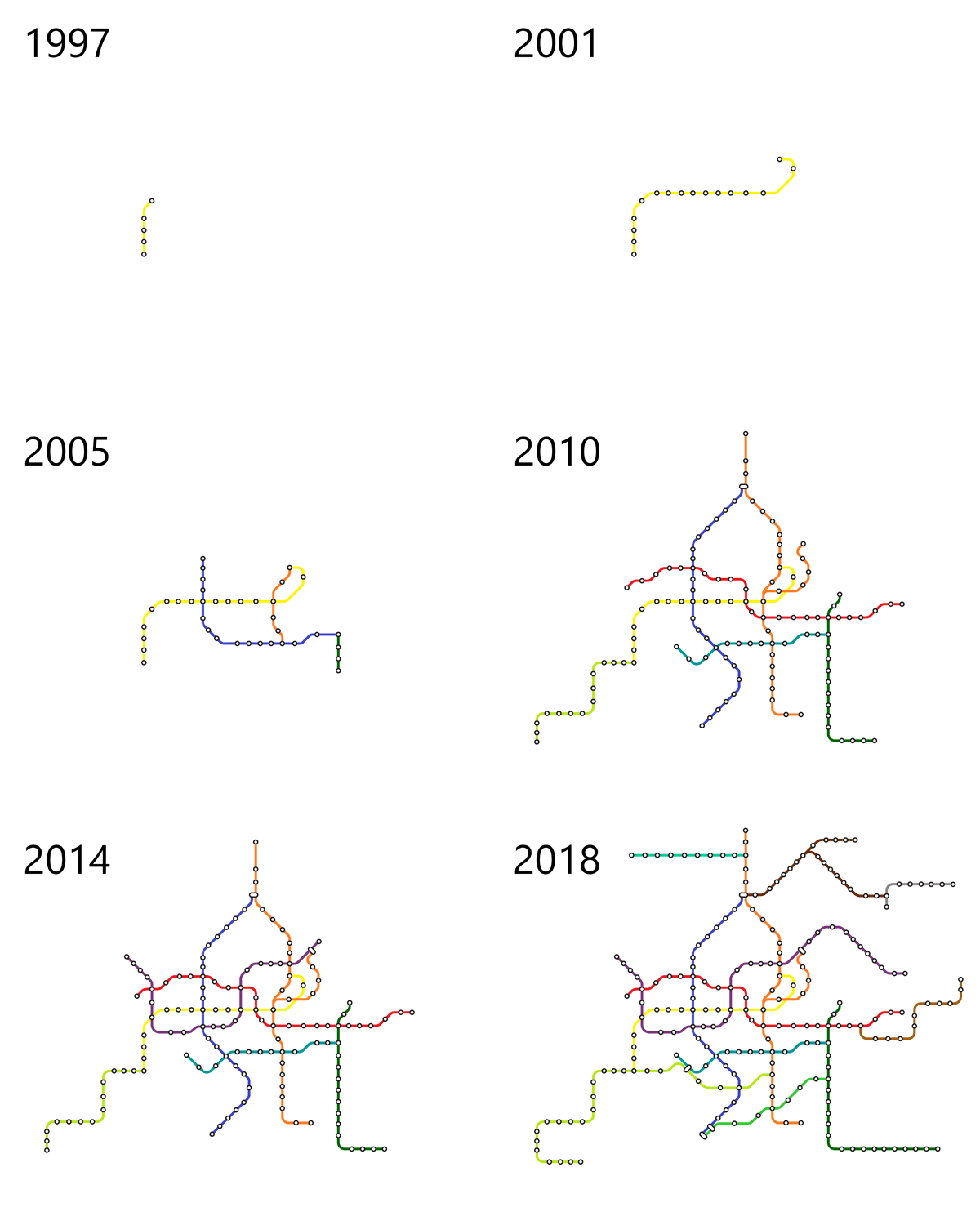
The success of Line 1 as a turnkey project acquired from Siemens{{cite web | access-date = 22 January 2014 | archive-url = https://web.archive.org/web/20140204051239/http://cn.siemens.com/cms/cn/English/TS/Mobility/Press/presscontent1/Pages/2007_12_18_1.aspx | archive-date = 4 February 2014 | url-status = dead
Construction of Line 2 started in July 1998.{{cite web | script-title = zh:广州地铁历程回顾 | trans-title = History of Guangzhou Metro | access-date = 23 January 2014 | archive-url = https://web.archive.org/web/20031011143601/http://sina.com.cn/c/2002-12-23/1653850724.shtml | archive-date = 11 October 2003 | url-status = dead | script-title = zh:广州地铁二号线首段开通 市民评议挑出瑕疵 | trans-title = First section of Guangzhou Metro Line 2 opens, critiqued by local residents | access-date = 23 January 2014 | script-title = zh:广州地铁二号线贯通 地铁公司将成为特大型企业 | trans-title = Guangzhou Metro Line 2 opens, metro company to become a large-scale enterprise | access-date = 23 January 2014
The renewed craze for rapid transit across the country soon encountered a new round of tightened control on project approval around 2003. But Guangzhou was exempted along with Beijing, Shanghai and Shenzhen.{{cite news | script-title = zh:赵新文 揭秘广佛地铁的心路历程 | trans-title = Zhao Xinwen recounts the history of Guangfo Metro | access-date = 23 January 2014
Lines in operation
| Line | Terminals | |||||||
|---|---|---|---|---|---|---|---|---|
| (District) | Commencement | Newest | ||||||
| Extension | Length | |||||||
| km | Stations | Depots/ | ||||||
| Stabling Sidings | Total | 779.9 | 398 | |||||
| **** | ||||||||
| (Liwan) | **** | |||||||
| (Tianhe) | 1997 | 1999 | 18.4 | 16 | Xilang | |||
| **** | ||||||||
| (Panyu) | **** | |||||||
| (Baiyun) | 2002 | 2010 | 31.8 | 24 | Jiahe/Dazhou | |||
| **** | ||||||||
| (Panyu) | **** (Huadu) | |||||||
| **** (Tianhe) | 2005 | 2024 | 74.89 | 34 | Jiahe/Xiajiao/Guangzhou New Town | |||
| **** | ||||||||
| (Nansha) | **** | |||||||
| (Tianhe) | 2005 | 2017 | 56.2 | 23 | Xinzao/Nansha | |||
| **** | ||||||||
| (Liwan) | **** | |||||||
| (Huangpu) | 2009 | 2023 | 41.7 | 30 | Yuzhu/Shuanggang | |||
| **** | ||||||||
| (Baiyun) | **** | |||||||
| (Huangpu) | 2013 | 2016 | 42.0 | 32 | Xunfenggang/Luogang | |||
| **** | ||||||||
| (Shunde, Foshan) | **** | |||||||
| (Huangpu) | 2016 | 2023 | 54.24 | 27 | Dazhou/Yifeng/Jitang | |||
| **** | ||||||||
| (Baiyun) | **** | |||||||
| (Haizhu) | 2003 | 2020 | 33.9 | 28 | Baiyunhu | |||
| **** | ||||||||
| (Huadu) | **** | |||||||
| (Baiyun) | 2017 | — | 20.1 | 11 | Qishan | |||
| **** | ||||||||
| (Liwan) | **** | |||||||
| (Tianhe) | 2025 | — | 17.2 | 12 | Guanggang New Town | |||
| **Loop line** | ||||||||
| (–) | 2024 | — | 44.2 | 31 | Chisha | |||
| West | **** | |||||||
| (Baiyun) | **** | |||||||
| (Baiyun) | 2025 | — | 15.0 | 9 | Chatou | |||
| East | **** | |||||||
| (Yuexiu) | **** | |||||||
| (Panyu) | 2025 | — | 12.9 | 8 | Higher Education Mega Center South | |||
| **** | ||||||||
| (Tianhe) | **** | |||||||
| (Zengcheng) | 2017 | 2025 | 36.9 | 15 | Yuzhu/Guanhu | |||
| **** (Baiyun) | ||||||||
| **** (Baiyun) | **** (Conghua) | |||||||
| **** (Huangpu) | 2017 | 2025 | 85.1 | 29 | Shihu/Zhenlong/Dengcun | |||
| **** | ||||||||
| (Tianhe) | **** | |||||||
| (Nansha) | 2021 | — | 58.3 | 8 | Longzhen/Wanqingsha | |||
| **** | ||||||||
| (Tianhe) | **** | |||||||
| (Zengcheng) | 2018 | 2019 | 60.5{{cite web | url = https://www.gz.gov.cn/gzgov/zxfwu/201912/6fa23b2c5caf4833aa5d393e37ee8200.shtml | title = 广州地铁运营里程将突破500公里 | date = 19 December 2019 | 20 | |
| **** | ||||||||
| (Liwan) | **** | |||||||
| (Panyu) | 2022 | 2025 | 30.6 | 8 | Longzhen/Chentougang | |||
| **** | ||||||||
| (Haizhu) | **** | |||||||
| (Tianhe) | 2010 | — | 4.0 | 9 | Chigang Pagoda | |||
| **** | ||||||||
| (Shunde, Foshan) | **** | |||||||
| (Haizhu) | 2010 | 2018 | 39.6 | 25 | Xianan |
Line 1
Main article: Line 1 (Guangzhou Metro)
Line 1 runs from Xilang to Guangzhou East railway station, with a total length of 18.5 km. Except for Kengkou and Xilang, all stations on Line 1 are underground.{{cite web | access-date = 10 October 2010 | url-status = dead | archive-url = https://web.archive.org/web/20100302081742/http://www.urbanrail.net/as/guan/guangzhou.htm | archive-date = 2 March 2010
Line 2
Main article: Line 2 (Guangzhou Metro)
Line 2 is a north–south line that runs from Jiahewanggang to Guangzhou South railway station. Until 21 September 2010, it ran from to Wanshengwei. Its first section, between Sanyuanli and , opened on 29 December 2002. It was extended from Xiaogang to on 28 June 2003 and further to Wanshengwei a year later. The section between Xiaogang and Wanshengwei was split off to form part of Line 8 during 22–24 September 2010, when the operation was paused. The latest extension, from to Guangzhou South railway station and from Sanyuanli to Jiahewanggang, opened on 25 September 2010 as the whole line resumed operation. The length of the current line is 31.4 km. All stations in Line 2 are underground.{{cite web | access-date = 10 October 2010
Line 3
Main article: Line 3 (Guangzhou Metro)
Line 3 is a 74.9 km Y-shaped line connecting Airport North and Tianhe Coach Terminal to Haibang. All stations in the line are underground.{{cite news | access-date = 10 October 2010 In official distinctions, the main route consists of the entire Airport North–Haibang section, while the Tianhe Coach Terminal–Tiyu Xilu section is a spur line.{{cite news | script-title = zh:明天下午2时地铁直达白云机场 | trans-title = Metro reaches Baiyun Airport tomorrow 2 pm | access-date = 10 November 2010 | url-status = dead | archive-url = https://web.archive.org/web/20101107043249/http://www.ycwb.com/ePaper/ycwb/html/2010-10/29/content_958039.htm | archive-date = 7 November 2010 | script-title = zh:2020年轨道交通线网规划 | trans-title = Layout of 2020 rail transit network | access-date = 23 August 2010 | archive-url = https://web.archive.org/web/20110724120614/http://www.ycwb.com/ePaper/ycwb/html/2010-04/27/content_812646.htm | archive-date = 24 July 2011 | url-status = dead | script-title = zh:地铁3号线今起全线车厢'3变6' 拥挤确有缓解 | trans-title = All metro Line 3 trains reconfigured from 3-car to 6-car today, crowding indeed relieved | access-date = 6 October 2010
Line 4
Main article: Line 4 (Guangzhou Metro)
Line 4 is a north–south line running parallel to Line 2 along the east of the city. It is 60.03 km long with 24 stations. The section of the line from Huangcun to Xinzao, Feishajiao to Nansha Passenger Port are built underground, while that from Xinzao to Jinzhou is built at the elevated track.{{cite news | access-date = 10 October 2010 | access-date = 10 October 2010 | script-title = zh:广州地铁四号线大学城专线下月26日试运行 | trans-title = Higher Education Mega Center Line of Guangzhou Metro Line 4 to start trial operation on 26th of next month | access-date = 4 October 2010 | archive-url = https://web.archive.org/web/20110716132657/http://www.gd.xinhuanet.com/gdnews/2005-11/28/content_5688642.htm | archive-date = 16 July 2011 | url-status = dead
Line 5
Main article: Line 5 (Guangzhou Metro)
The 41.7 km long Line 5 currently runs from Jiaokou to Huangpu New Port. It first entered operation on 28 December 2009 between Jiaokou and Wenchong, and was extended on 28 December 2023 from Wenchong to Huangpu New Port. All stations in the line except Jiaokou and Tanwei are underground. Until Line 8 was split off from Line 2, it was the only line that interchanged with all other lines. Similar to Line 4, Line 5 also uses linear motor trains. Line 5's color is red.
Line 6
Main article: Line 6 (Guangzhou Metro)
The first stage of Line 6, a 24.5 km long phase one runs from Xunfenggang to Changban with 22 stations. It began service on 28 December 2013 and contains three elevated stations along the route. A 10-station, 17.5 km long extension to Xiangxue from Changban entered revenue service in 2016. The line runs four-car trains, but stations on the east extension starting with South China Botanical Garden are constructed with a provision to accommodate six-car trains in preparation for a route split in the future.{{cite news | script-title = zh:地铁六号线二期工程正式启动 | trans-title = Construction of 2nd phase of Metro Line 6 officially starts | access-date = 1 July 2011
Line 7
Main article: Line 7 (Guangzhou Metro)
The first phase of Line 7 began service on 28 December 2016 and ran from Guangzhou South railway station to Higher Education Mega Center South in Panyu District throughout 18.6 km. The phase 1 west extension opened on 1 May 2022 from Guangzhou South railway station to Meidi Dadao station. Six-car trains are used. All stations are underground.{{cite news | script-title = zh:地铁七号线9座车站6座已动工 | trans-title = Six of nine stations of metro Line 7 under construction | access-date = 19 April 2013
Line 8
Main article: Line 8 (Guangzhou Metro)
The first section of Line 8, from Xiaogang to Wanshengwei, opened in 2002 and ran as part of Line 2 until the extension to the line was completed in September 2010. Line 8 ran from Fenghuang Xincun to Wanshengwei. The section from Changgang to Wanshengwei opened on 25 September 2010 when the split-off from Line 2 was complete. The section west of Changgang did not open until 3 November 2010 due to disputes over the environmental impact of the cooling facilities at Shayuan.{{cite news | script-title = zh:光大花园维权记 | trans-title = Rights defending at Guangda Garden | access-date = 4 October 2010 | script-title = zh:地铁八号线西延段 广佛线今开通 | trans-title = West extension of metro Line 8, Guangfo Metro opens today | access-date = 3 November 2010 | url-status = dead | archive-url = https://web.archive.org/web/20101106114944/http://gcontent.oeeee.com/a/2c/a2cc63e065705fe9/Blog/772/553efa.html | archive-date = 6 November 2010
Line 9
Main article: Line 9 (Guangzhou Metro)
The 20.1 km long underground route is operated by six-car trains, which runs from Fei'eling to Gaozeng, serving 11 stations. The line, other than Qingtang station, went operational on 28 December 2017. Line 9 mainly serves as a link for the passengers of Huadu District and Guangzhou North railway station to the rest of the system, having only one transfer station with Line 3 at Gaozeng. After the Tianhe Coach Terminal–Tiyu Xilu spur line of Line 3 is split off to form part of Line 10, the line is expected to be connected into Line 3 using the reserved switches at Gaozeng to become a new spur line. Line 9's color is pale green.
Line 10
Main article: Line 10 (Guangzhou Metro)
The 17.2 km long initial section of Line 10 from Xilang to Yangji East opened on 29 June 2025. Line 10 connects Tianhe with Liwan via Haizhu. Due to logistical uncertainties in constructing the connection between Yangji East and Shipaiqiao (which requires track dismantling and reconfiguration), the section between Shipaiqiao and Tianhe Coach Terminal which currently runs as a branch of Line 3 will not be incorporated into the line yet. All stations on the line are underground. Line 10's color is bluish grey.
Line 11
Main article: Line 11 (Guangzhou Metro)
Line 11 is a 44.2 km underground loop-shaped line—the first in such shape—connecting and , via Guangzhou railway station, Guangzhou East railway station, , , and . The line was opened on 28 December 2024 at 14:00 local time, with trains stopping at all stations except . Line 11's color is gold.
Line 12
Main article: Line 12 (Guangzhou Metro)
Line 12 currently operates in 2 separate sections, with their total length being 27.9 km. The 9-station western section between and and the 9-station eastern section between and except opened on 29 June 2025. The middle section between Guangzhou Gymnasium and Ersha Island, consisting of 7 stations, is still under construction. All stations on the line are underground. Line 12 is a special case in which its signposting and line display colors are different to each other. The Line 12 signposting color is sea green, whilst its line information display color is brownish green. This is because originally, brownish green was used for Line 12, but changed to sea green during construction, and back to brownish green after. This has caused inconsistencies in route color, with LEDs using sea green, but brownish green used for everything else, including the official map, platform screen door colors, Line 12 route map colors, station numbering colors, and more.
Line 13
Main article: Line 13 (Guangzhou Metro)
Opened on 28 December 2017, Line 13 is the first metro line in Guangzhou built to run eight-car trains. The currently operating 27.03 km first phase runs from Yuzhu to Xinsha, serving passengers of Huangpu and Xintang, Zengcheng. The eleven-station line currently has transfers with Line 5 at Yuzhu and Xiayuan, Line 7 at Yufengwei, and the national railway at Xintang. The second phase of Line 13 runs west of the current phase, which cuts through popular areas of Huangpu, Tianhe, and Liwan District. Among them, the first section of the second phase (Yuzhu - Tianhe Park) entering Tianhe District opened on 29 September 2025, bringing the residents of Tianhe Zhucun and Tangxia and other areas along Zhongshan Avenue into the metro network. Tianhe Park station allows transfer to Line 11, and because it runs parallel to Line 5, it can help ease the passenger flow pressure on the latter. Line 13's color is olive.
Line 14
Main article: Line 14 (Guangzhou Metro)
Two sections of Line 14 are currently in service. The Knowledge City Branch Line, a ten-station 21.01 km long route located mainly within Huangpu, opened on 28 December 2017. The branch line operates primarily within Huangpu between Xinhe and Zhenlong, serving the Sino-Singapore Guangzhou Knowledge City. The mainline segment to Conghua opened a year later on 28 December 2018 and runs from in Baiyun District to Dongfeng in Conghua. A southward extension via Jichang (Airport) Road to in Baiyun District opened on 29 September 2025. A further extension south to Guangzhou railway station is under construction. Line 14 was the first Guangzhou Metro line to run express services. Line 14's color is brown.
Line 18
Main article: Line 18 (Guangzhou Metro)
The section from to of Line 18 opened on 28 September 2021. The section is 58.3 km in length. It will be extended 3 km to . A further 39.6 km extension to and a southwestern extension to Zhongshan is also under construction. Line 18's color is blue.
Line 21
Main article: Line 21 (Guangzhou Metro)
The 60.5 km long Line 21 runs between Tianhe Park in Tianhe and Zengcheng Square in Zengcheng with six-car trains. It has 40.1 km of underground tracks, 14.7 km of elevated tracks, and 6.8 km of tracks in mountain tunnels.{{cite web | access-date = 20 December 2019 | script-title = zh:广州市轨道交通十一号线工程环境影响报告书简本 | trans-title = Environment Impact Report of Guangzhou Metro Line 11 Construction Project (Abridge Edition) | archive-url = https://web.archive.org/web/20140115060628/http://www.crfsdi.com.cn/sysWeb/upfiles/hpgs/20131227145001.doc | archive-date = 15 January 2014 | url-status = dead | access-date = 14 January 2014
Line 22
Main article: Line 22 (Guangzhou Metro)
The section from to of Line 22 opened on 31 March 2022. The section is 18.2 km in length. The section from to opened on 29 December 2025. The section is 11.5 km in length. It will be extended 42.4 km to . Line 22's color is dark orange.
Guangfo Line
Main article: Guangfo line}}{{See also, Foshan Metro
The Guangzhou–Foshan Section of Pearl River Delta Region Intercity Rapid Transit () is an intercity metro line that connects Guangzhou and Foshan. It is commonly known as Guangfo Metro and Guangfo Line of Guangzhou Metro. The section within Foshan also doubles as Line 1 of FMetro (Foshan Metro). The line is operated by Guangdong Guangfo Rail Transit Co., Ltd., a subsidiary co-owned by Guangzhou Metro (51%) and Foshan Metro (49%).{{cite web | access-date = 6 October 2010 | url-status = dead | archive-url = https://web.archive.org/web/20110716070955/http://cn.siemens.com/cms/cn/English/TS/Mobility/Press/presscontent1/Pages/Guang-fo_1.aspx | archive-date = 16 July 2011 | script-title = zh:与亚运有约 促广佛同城————访广东广佛轨道交通有限公司总经理徐一平 | trans-title = Serving Asian Games and promoting Guangzhou-Foshan integration: Interview with Xu Yiping, General Manager of Guangdong Guangfo Inter-City Co., Ltd. | access-date = 6 October 2010 | url-status = dead | archive-url = https://web.archive.org/web/20101120201816/http://ccmetro.com/expert/person.aspx?id=59208 | archive-date = 20 November 2010 | script-title = zh:地铁广佛线开通成就广佛人的梦想 | trans-title = Dreams of Guangzhou, Foshan residents come true as Guangfo Metro opens | access-date = 29 October 2010 | archive-url = https://web.archive.org/web/20101104011221/http://www.ycwb.com/ePaper/ycwbdfb/html/2010-10/27/content_955518.htm | archive-date = 4 November 2010 | url-status = dead | script-title = zh:八千万"候鸟"的三年同城旅程 | trans-title = 80 million "migratory birds'" three-year intercity journeys | access-date = 4 November 2013 | archive-url = https://web.archive.org/web/20131105041518/http://www.ycwb.com/ePaper/ycwbdfb/html/2013-11/01/content_289633.htm | archive-date = 5 November 2013 | url-status = dead | script-title = zh:广佛线风雨坎坷路 | access-date = 29 October 2010
Zhujiang New Town APM Line
Main article: Zhujiang New Town Automated People Mover System
The Automated People Mover System of Zhujiang New Town Core District Municipal Traffic Project (){{cite web | script-title = zh:广东省广州市发改委关于珠江新城核心区市政交通项目旅客自动输送系统工程项目核准的批复 | trans-title = Reply of Development and Reform Commission of Guangzhou, Guangdong on ratification of engineering project of Automated People Mover System of Zhujiang New Town Core District Municipal Traffic Project | access-date = 22 November 2010 | archive-url = https://web.archive.org/web/20110707032752/http://gcjs.gd.gov.cn/xmsp2/446495.htm | archive-date = 7 July 2011 | url-status = dead | access-date = 22 November 2010 | script-title = zh:"赤岗塔站"改名"广州塔站" | trans-title = Chigang Pagoda Station renamed Canton Tower Station | access-date = 14 January 2014 | archive-url = https://web.archive.org/web/20140115114524/http://www.ycwb.com/ePaper/ycwb/html/2013-10/30/content_288136.htm | archive-date = 15 January 2014 | url-status = dead | script-title = zh:六千人首试乘APM 海心沙赤岗塔站封闭 | trans-title = 6,000 try out APM; Haixinsha, Chigang Pagoda Stations remain closed | access-date = 12 November 2010 | archive-url = https://web.archive.org/web/20110707022920/http://news.xkb.com.cn/guangzhou/2010/1109/101117.html | archive-date = 7 July 2011 | url-status = dead | script-title = zh:开幕式三号线特定段停运 非管制站通宵运营 | trans-title = Designated sections of metro Line 3 to close during Asian Games opening ceremony, unrestricted stations to operate overnight | access-date = 14 November 2010 | archive-url = https://web.archive.org/web/20110707022942/http://news.xkb.com.cn/guangzhou/2010/1111/101570.html | archive-date = 7 July 2011 | url-status = dead | script-title = zh:APM线海心沙站终启用 出站只能购票进公园 | trans-title = APM Haixinsha Station finally opens, with exit to only paid entry into Asian Games Park | access-date = 3 July 2011 | archive-url = https://web.archive.org/web/20111006234756/http://news.dayoo.com/news/201102/24/85080_15329362.htm | archive-date = 6 October 2011 | url-status = dead The APM Line's color is light blue.
Network expansion
Short-term planning
| Under construction | Project | Terminals/Stations | Length | |||||||||||||||
|---|---|---|---|---|---|---|---|---|---|---|---|---|---|---|---|---|---|---|
| km | Stations | Construction progress | Expected opening time | Approved and awaiting construction | Project | Terminals/Stations | Length | |||||||||||
| km | Stations | Status | Awaiting approval | Project | Terminals/Stations | Length | ||||||||||||
| km | Stations | Status | ||||||||||||||||
| Remaining station | — | 1 | Under construction | 2026 | ||||||||||||||
| Remaining station | — | 1 | Opening postponed | — | ||||||||||||||
| Far northern extension | Jiaoxin – Jiangfu | 9.4 | 4 | 26% | — | |||||||||||||
| Eastern extension | Wanshengwei – Lianhua | 18.0 | 8 | 3% | — | |||||||||||||
| Line 3 branch dismantling section | Yangji East – Shipaiqiao joins Line 3 spur line | 2.1 | 1 | 69% | — | |||||||||||||
| Remaining station | — | 1 | — | |||||||||||||||
| Middle section | – | 9.7 | 7 | 88% | 2026 | |||||||||||||
| Remaining station | — | 1 | — | Early 2026 | ||||||||||||||
| Phase 2 remaining section | – Chaoyang | 25.2 | 19 | 95% | 2026 | |||||||||||||
| Phase 2 remaining section | Guangzhou railway station – | 3.0 | 1 | — | — | |||||||||||||
| Remaining section of Phase 1 | Xiancun – Guangzhou East Railway Station | 3 | 1 | 55% | ||||||||||||||
| Northern extension | ||||||||||||||||||
| (Guanghua intercity) | Guangzhou East Railway Station – | 40.1 | 7 | 63% | 2027 | |||||||||||||
| Southern extension western section | ||||||||||||||||||
| (Nanzhuzhong intercity Nansha to Zhongshan section) | Wanqingsha – Xingzhong | 47.6 | 10 | 86% | ||||||||||||||
| (Guangzhou section) | ||||||||||||||||||
| 44% | ||||||||||||||||||
| (Zhongshan section) | — | |||||||||||||||||
| Northern extension | ||||||||||||||||||
| (Fangbai intercity) | Fangcun – Airport North | 42.4 | 10 | 53% | 2027 | |||||||||||||
| North section (Line 8 far northern extension) | Jiangfu – Guangzhou North Railway Station | 11.3 | 18 | 26% | — | |||||||||||||
| South section (Line 8 far northern extension branch) | Sun Yat-sen Memorial Hall – Jiangfu | 20.0 | 23% | |||||||||||||||
| Southern extension | ||||||||||||||||||
| (Nanzhuzhong intercity Zhongshan to Zhuhai section) | Xiangshan – Gongbei | 18.1 (Zhongshan section) | ||||||||||||||||
| 26.6 (Zhuhai section) | 11 | EIA publicity | ||||||||||||||||
| (Fosuiguan intercity Foshan-Guangzhou section) | Luzhou – | 113 | 17 | Pre-construction preparations | ||||||||||||||
| (Fosuiguan intercity Dongguan section) | – Songshan Lake | 6 | Preliminary studies in progress | |||||||||||||||
| Foshan section | Magang Dadao – – (Guangfo city boundary) | 11.3 | 4 | EIA publicity |
Long-term planning
The Guangzhou Urban Rail Transit Network Planning Scheme (2018–2035) (《广州市城市轨道交通线网规划方案》(2018—2035年)), which was approved by the Guangzhou Municipal Government in November 2020, shows that a total of 53 metro lines and 2,029 km are planned in Guangzhou. This round of line network planning is divided into three levels: high-speed metro, rapid metro, and regular-speed metro. Among them, there are 5 high-speed metro lines with 452 km in Guangzhou, 11 rapid metro lines with 607 km in Guangzhou, and 37 regular-speed metro lines with 970 km.
- High-speed metro lines:
- : Knowledge City – Luogang – Zini (→ Foshan)
- : (Zhongshan / Zhuhai →) Shiliuchong – Huachengjie (→ Qingyuan)
- : Airport North – Nansha Passenger Port (→ Dongguan)
- : (Foshan →) Fangcun – Xintang (→ Dongguan)
- spur line: – Guangzhou Huali College (→ Huizhou)
- : Guangzhou East Railway Station – Liangkou (→ Xinfeng)
- Rapid metro lines:
- : – Haiou Island
- parallel express line: Pazhou – Jiaomen
- : Chaoyang – Xinsha
- : Guangzhou Railway Station – Dongfeng
- : – Lichengbei
- : Tianhe Park – Guangzhou Huali College
- : Guangzhou North Railway Station – Lijiao
- : Longxi –
- : Taihe – Lanhe (→ Foshan)
- : Xinhe – Jiangnan (→ Dongguan)
- : Huangpu Railway Station – Huadu Square
- Regular-speed metro lines:
- : Xilang – Guangzhou East Railway Station
- : Jiahewanggang – Guangzhou South Railway Station
- : Huangcun – Nansha Passenger Port
- : Jiaokou – Huangpu New Port
- : Xunfenggang – Guangzhou Middle School
- : –
- : Jiangfu – Haibang
- : Tanzhonglu – Gaozeng
- : Gaotangshi – Xilang
- spur line: Huawei (→ Foshan)
- : Guangzhou Railway Station – – Guangzhou Railway Station
- Regular-speed metro lines (continued):
- : – Higher Education Mega Center South
- spur line: Higher Education Mega Center North – Chenbian
- : – – – Lingshan Island
- : Huangpu Railway Station – Nanpu West (→ Foshan)
- : – Jiangnan
- : Chishajiao – Xintang Dadao
- : Guangzhou Avenue North – Education Park
- : Dongchong Town – Nansha Wetland Park
- : Nanguolu – Information Technology Park
- : Ronggui Railway Station – Qingshengdong
- : (Foshan →) Huangjinwei – Toubei
- : Dongjing – Huadong Coach Terminal
- : Fengcun – Baishantang
- : Lianxidadao – Shiliuchong
- : – Datian
- : Shihua – Changping
- spur line: Yonghe – Lihu
- : Bicun – Fangshi
- : Aotou – Conghua Coach Terminal
- : – GAC Base
- Foshan : (Foshan →) Guangzhou South Railway Station
- Foshan : (Foshan →) Xingyedadao
- Foshan : (Foshan →) Guangzhou Railway Station
- Foshan : (Foshan →) Baiyun Dongping
- Foshan : (Foshan →) Longxi
- Foshan : (Foshan →)
- Foshan : (Foshan →)
- Dongguan : Huangpu New Port (→ Dongguan)
- Dongguan : Zengcheng Railway Station (→ Dongguan)
- Dongguan : Shiqi (→ Dongguan)
Connections to neighboring cities
The Guangzhou Metro is actively constructing connections to neighboring cities. Foshan is already connected via the Guangfo Metro with connections via Line 7 and Foshan Metro Line 2 is now opened. Dongguan city is proposing connections with Guangzhou Metro Line 13 and the Dongguan Metro.{{Cite web | script-title = zh:广州东部交通2018年全面爆发!_房产新闻库_南方网 | access-date = 7 April 2018 | script-title = zh:构建立体化交通网络 加快融入粤港澳大湾区_新闻_电子报_惠州_惠州日报_东江时报_惠州报业传媒集团 | access-date = 7 April 2018 | archive-url = https://web.archive.org/web/20180203130256/http://e.hznews.com/paper/hzrb/20180116/A2/1/ | archive-date = 3 February 2018 | url-status = dead | script-title = zh:罗浮山、龙门有望对接广州地铁-南方都市报·奥一网 | access-date = 7 April 2018 | access-date = 4 January 2019
;Guangzhou–Foshan metro connections
| # | Guangzhou Metro | FMetro | Status |
|---|---|---|---|
| 1 | Guangfo Metro | In operation | |
| 2 | Line 2 | Line 2 | In operation |
| 3 | Line 7 | Line 3 | Partially in operation (Line 3 only) |
| 4 | 10 | 6 | Planned |
| 5 | 17 | 7 | Planned |
| 6 | Extension of Guangzhou Metro Line 12 from Chatou to Lishui | Planned | |
| 7 | Extension of Guangzhou Metro Line 19 to Suiyan Lu | Planned |
Rolling stock
The Guangzhou Metro currently operates five different categories of rolling stock: A, B, D, L, and APM.
| Name | Image | Line(s) | Manufacturer(s) | Manufactured | Quantity | Cars per train | Notes | |
|---|---|---|---|---|---|---|---|---|
| A1 | [[File:Refurbished 1x21-22 at Xilang.jpg | 150px]] | Adtranz / Siemens Mobility | 1996 - 1999 | 21 | 6 | Briefly used on Line 2 previously before the A2 trains arrived. | |
| A2 | [[File:A2 Train (01x067-068) entering Kengkou Station, Guangzhou Metro 20191013.jpg | 150px]] | CNR Changchun / Bombardier Transportation | 2002 - 2005 | 26 | Previously used on Line 2 before the A5 trains arrived. | ||
| A3 | [[File:A3 Train (01x051-052) leaving Kengkou Station, Guangzhou Metro 20191013.jpg | 150px]] | 2006 | 8 | ||||
| A4 | [[File:02x053-054 at Xilang.jpg | 150px]] | CSR Zhuzhou | 2009 - 2011 | 27 | Previously also used on Line 8 before the A2 trains were reallocated. | ||
| A5 | [[File:08A112 in Chisha Depot.jpg | 150px]] | 2011 - 2014 | 32 | Originally meant for service on Lines 1, 2 and 8. | |||
| A6 | [[File:Guangzhou Metro A6 train at Chisha Depot.jpg | 150px]] | CRRC Zhuzhou | 2018 - 2020 | 24 | |||
| A7 | [[File:Guangzhou Metro A7 train at Guanhu Depot-B 20240416.jpg | 150px]] | CRRC Dalian | 2016 - 2017 | 17 | 8 | ||
| A8 | [[File:Exterior of A8 Train (08x213), Guangzhou Metro 20230701-A.jpg | 150px]] | CRRC Changchun | 2022 - 2023 | 13 | 6 | Originally meant for service on Line 2. | |
| A9 | [[File:A9 Train (11x063-064) leaving Chisha Station, Guangzhou Metro 20250112-2.jpg | 150px]] | CRRC Zhuzhou | 2023 - 2024 | 55 | 8 | ||
| A10 | [[File:12A017 at HEMC South Depot.jpg | 150px]] | 47 | 6 | ||||
| A11 | - | CRRC Dalian | 2025 - | 42 | 8 | |||
| B1 | [[File:CSR Zhuzhou-Siemens train of Line 3, Guangzhou Metro.jpg | 150px]] | CSR Zhuzhou / Siemens Mobility | 2005-2007 | 40 | 6 | Initially operated in 3-car trainsets. Currently operates with 2 of these 3-car sets connected as a 6-car set. | |
| B2 | [[File:03x131-132 at Xiajiao Depot (02).jpg | 150px]] | CSR Zhuzhou | 2009 - 2011 | 25 | |||
| B3 | [[File:广佛线地铁列车(DKZ29).jpg | 150px]] | CNR Changchun | 27 | 4 | Owned by Guangdong Guangfo Metro. | ||
| B3-I | [[File:B3-I Train (GFx055-056) at Lijiao Station, Guangfo Metro 20250712.jpg | 150px]] | CRRC Qingdao Sifang | 2015 | 6 | Owned by Foshan Metro. | ||
| B3-II | [[File:B3-II Train (GFx087-088) at Lijiao Station, Guangfo Metro 20250712.jpg | 150px]] | 2019-2020 | 18 | Owned by Guangdong Guangfo Metro. | |||
| B4 | [[File:中国南车株洲电力机车-广州地铁B型列车.JPG | 150px]] | CSR Zhuzhou | 2011 - 2013 | 26 | 6 | ||
| B5 | [[File:B5 Train (07x021-022) at Guangzhou CRRC Base, Guangzhou Metro 20230626.jpg | 150px]] | CRRC Zhuzhou | 2015 - 2016 | 23 | |||
| B6 | [[File:Guangzhou Metro B6 train at Qishan Depot 20240716-B.jpg | 150px]] | 2016 - 2018 | 18 | ||||
| B7 | [[File:Guangzhou Metro B7 train p4.jpg | 150px]] | 2017 - 2019 | 30 | ||||
| B8 | [[File:Guangzhou Metro B8 train is arriving at Changping Station.jpg | 150px]] | 2016 - 2018 | 33 | ||||
| B9 | [[File:B9 Train (07x059-060) at Dazhou Depot, Guangzhou Metro 20230626-A.jpg | 150px]] | CRRC Qingdao Sifang | 2019 - 2021 | 13 | |||
| B10 | [[File:03x157-158 at Xiajiao Depot.jpg | 150px]] | CRRC Zhuzhou | 2021 - 2022 | 10 | |||
| B11 | [[File:CCD5059 (B11) at Xiajiao Depot.jpg | 150px]] | CRRC Changchun | 2022 - 2023 | 18 | |||
| B12 | [[File:B12 Train (07x099-100) at Guangzhou CRRC Base, Guangzhou Metro 20240331.jpg | 150px]] | CRRC Zhuzhou | 2023 - 2025 | 19 | |||
| B13 | [[File:B13 Train (10x013-014) at Guangzhou CRRC Base, Guangzhou Metro 20241026.jpg | 150px]] | 43 | |||||
| B14 | [[File:B14 Train (14x091-092) at Guangzhou CRRC Base, Guangzhou Metro 20240331-B.jpg | 150px]] | 16 | |||||
| D1 | [[File:D1 Train (18x027-028) entering Guangzhou South Railway Station, Guangzhou Metro 20230528.jpg | 150px]] | 2020-2021 | 25 | 8 | Express metro trains. Can operate at speeds of up to 160km/h. | ||
| D2 | [[File:Guangzhou Metro D train(Line22) at Dazhou Depot.jpg | 150px]] | 15 | |||||
| L1 | [[File:04027 Guangzhou Metro Line 4 09-07-2019.jpg | 150px]] | CSR Qingdao Sifang | 2005 - 2007 | 30 | 4 | ||
| L2 | [[File:DSC 5968 (8652122748).jpg | 150px]] | 2008 - 2010 | 30 | 6 | |||
| L3 | [[File:Running on the Xunfeng Gang To Hengsha section of Guangzhou Metro Line 6.jpg | 150px]] | 2011 - 2013, 2016 | 51 | 4 | |||
| L4 | [[File:Guangzhou Metro Line 5 CSR Sifang L4-I Train 099100 arriving Tanwei Station 2018 01.jpg | 150px]] | 2011 - 2013 | 32 | 6 | |||
| L5 | [[File:Guangzhou Metro Line 4 CRRC Sifang L5-Train.jpg | 150px]] | CRRC Qingdao Sifang | 2016 - 2017 | 27 | 4 | ||
| L6 | [[File:Guangzhou Metro L6 Stock For Xunfenggang Station 20201209.jpg | 150px]] | CRRC Guangdong | 2020 - 2022 | 38 | |||
| L7 | [[File:L7 Train (05x129-130) at Tanwei Station, Guangzhou Metro 20241207.jpg | 150px]] | 2021 - 2023 | 14 | 6 | |||
| APM1 | [[File:APM Train (M1A012) at Guangzhou Opera House Station, Guangzhou Metro 20230701.jpg | 150px]] | Bombardier Transportation | 2009 - 2010 | 7 (2 cars each) | 2 |
Fares and tickets
Fares
Fares of Guangzhou Metro currently range from ¥2 (a couple of stations) to ¥20 (the longest journeys). A journey shorter than 4 km costs ¥2; ¥1 is charged for every 4 km after 4 km, every 6 km after 12 km, and every 8 km after 24 km. A flat fare of ¥2 applies on the XPM line. Between 30 October 2010 and 30 October 2011, an additional, undiscountable ¥5 fee was charged for any journey to or from Airport South. Collection of such a fee was approved for one year in July 2010 and expired without extension.{{cite web | script-title = zh:关于2010年广州地铁线网票价的批复 | trans-title = Reply on 2010 Guangzhou Metro fares | access-date = 4 October 2010 | url-status = dead | archive-url = https://archive.today/20120805051706/http://www.gzwjj.gov.cn/html/zwgk/ywgz/jggl/2010-08-27/23795.htm | archive-date = 5 August 2012 | script-title = zh:地铁去机场明起省5元 | trans-title = Metro rides to airport to be ¥5 cheaper | access-date = 30 October 2010 | archive-url = https://web.archive.org/web/20111030111849/http://gzdaily.dayoo.com/html/2011-10/30/content_1515012.htm | archive-date = 30 October 2011 | url-status = dead
If a passenger exits with no record of entry, the maximum possible fare will be charged. The maximum journey time is set such that it is always possible to complete the longest possible journey without penalty. It is currently set at 270 minutes. If the maximum journey time is exceeded, the maximum possible fare will charged in addition to the normal fare.
Frequent user discounts are available when using smartcards and QR payments. A discount of 20% applies after ¥80 is spent on public transport in a calendar month, boosted to 50% after ¥200.
There was formerly provision for an extra charge of ¥2 for excess luggage, however this has since been removed from the fare rules.{{Cite web | script-title = zh:票务规则 | trans-title = Ticketing rules | access-date = 21 July 2010 | archive-url = https://web.archive.org/web/20101201175142/http://www.gzmtr.com/ckfw/pwzc/gpxz/ | archive-date = 1 December 2010 | url-status = dead
Current ticket types
Single journey ticket

Single journey tickets can be bought at a kiosk at every station or at the automatic ticket vending machines. The ticket itself is a contactless radio-frequency plastic token, only valid on day of issue. To enter, it can simply be tapped at the ticket gate like a smartcard. When exiting, it is inserted into a slot for collection and reuse. Full base fares are charged for single journey tickets for individuals. Passengers travelling in groups of 30 or larger can enjoy a 10% discount.
Smartcards
A number of contactless smartcards are accepted by Guangzhou Metro. Yang Cheng Tong () is the most commonly used, however many other cards from other Chinese issuers are accepted via the China T-Union standard. Digital smartcards used via NFC on a smartphone can also be used.
Concession Yang Cheng Tong cards are available for students (half fare), seniors aged 60–64 (half fare) and seniors over 65 (free travel).
EMV cards
From 12 October 2025, Guangzhou Metro started accepting EMV payments on all lines. Cards issued by Visa, Mastercard, American Express, JCB and UnionPay are supported.. For Visa and JCB card holders, only cards issued outside Mainland China are available for tap to ride.
Digital QR tickets
The Guangzhou Metro app can be used to generate a QR code for travel. Similar to smartcards, this QR code is scanned at tickets gates at either end of a journey. Shortly after exiting, the fare is automatically deducted from the user's mobile wallet.
This QR ticketing is also available embedded into Wechat and Alipay as mini apps. The same QR codes are accepted on some other metro systems in China (including Foshan Metro), and conversely QR codes issued by some other metro systems are also accepted on Guangzhou Metro.
Day pass

Guangzhou Metro introduced day passes on 1 January 2013. A day pass holder can travel an unlimited number of times in the metro system during a limited period of validity starting from the first use. Two variants are currently available:
- One-day pass: ¥20 each and valid for 24 hours
- Three-day pass: ¥50 each and valid for 72 hours
Day passes are not rechargeable. They can be fully refunded until the first use, at which time they become nonrefundable. Used passes are not reclaimed, although they can be voluntarily recycled at drop boxes in the stations.
The passes are decorated with illustrations of the Cantonese language and cuisine to promote the local culture. The art design was favored by over 70% of those who responded to public opinion surveys compared to two other competing designs.{{cite web | script-title = zh:广州地铁元旦起发行日票 | trans-title = Guangzhou Metro starts issuing day passes on New Year's Day | access-date = 11 January 2013 | archive-url = https://web.archive.org/web/20130111092854/http://www.gzmtr.com/ttxw/t20130106_301826.htm | archive-date = 11 January 2013 | url-status = dead
Discontinued ticket types
Guangzhou Metro discontinued the following ticket types in favor of Yang Cheng Tong.
Stored value ticket

Stored value tickets were very similar to Yang Cheng Tong. Stored value tickets are not on sale anymore, but they will be presented as souvenirs to VIPs at the activities of the subway company and can have a 5% discount on fares.
Monthly pass
Monthly passes were introduced on 1 November 2008 and abolished on 1 May 2010.{{cite news | script-title = zh:公交地铁坐得多才能享优惠 | trans-title = Discounts only available to frequent bus and metro riders | access-date = 10 October 2010 | script-title = zh:广州地铁限次月票今起取消 | trans-title = Guangzhou Metro limited-ride monthly passes discontinued today | access-date = 10 October 2010 | archive-url = https://web.archive.org/web/20100503052255/http://gd.nfdaily.cn/content/2010-05/01/content_11573610.htm | archive-date = 3 May 2010 | url-status = dead
- ¥55 monthly pass for 20 single journeys
- ¥88 monthly pass for 35 single journeys
- ¥115 monthly pass for 50 single journeys
Each journey could travel from one station to any other station regardless of distance. A monthly pass was valid within a calendar month, not the one-month period from the first day it was used. Unused journeys in a month could not be rolled over to a pass for the following month.
Student pass and senior citizen pass
Both were issued by the metro company and used on metro only, allowing the holders to travel free or at half price.
MetroPay
MetroPay is a function integrated in Guangzhou Metro App on NFC (only Android phone). To use this function, simply tap your phone onto the reader on the turnstile to go through it. The MetroPay is no longer available for user effective from 20 May 2021.
Power supply
Most Guangzhou Metro lines in operation are powered by . For power transmission, lines 1, 2, 3, 7, 8, 9, 10, 11, 12 and 13 as well as Guangfo Line use overhead lines, while lines 4, 5, 6, 14 and 21 use third rails. Lines 18 and 22 also use overhead wires, although at . In contrast to the heavy-rail lines, the light-rail APM runs on 600 V 50 Hz 3-phase AC supplied by third rails.{{cite journal | script-title = zh:广州市轨道交通接触网形式选择 | trans-title = Selection of overhead catenary system for Guangzhou urban rail transit
Controversies
Free rides for relatives of metro employees
Starting from 1997, the Guangzhou Metro implemented a policy that allowed free rides for, in addition to its employees, their relatives. The policy was exposed to the public after its validity was questioned at a hearing on metro fares in December 2005.{{cite news |script-title = zh:广州地铁宣布正式取消家属免费乘坐政策 |trans-title = Guangzhou Metro announces official cancellation of policy allowing free rides for relatives of employees |access-date = 10 October 2010 |archive-date = 31 October 2006 |archive-url = https://web.archive.org/web/20061031082725/http://gd.news.sina.com.cn/local/2005-12-16/1998074.html |url-status = dead |script-title = zh:地铁员工亲属免票达1.8万人遭质疑 |trans-title = Free access for up to 18,000 relatives of metro employees questioned |access-date = 10 October 2010 |archive-date = 31 October 2006 |archive-url = https://web.archive.org/web/20061031082350/http://gd.news.sina.com.cn/local/2005-12-13/1985885.html |url-status = dead
In response to questions on the policy raised at the hearing, Lu Guanglin, then-General Manager of Guangzhou Metro, claimed that relatives of employees with free access would volunteer as security personnel of the metro. He cited counter-terrorism when explaining that the policy was not exclusively an employee benefit but also a safety measure. Guangzhou Metro later clarified that only the spouse and at most one pre-college child under 18 of each employee were allowed free access, limiting the number of such people to about 2,000. Free rides were strictly regulated and tracked, with abuse subject to disciplinary actions. An unnamed metro employee estimated that the actual cost per year was ¥3 million rather than ¥13 million.
Following its publicity, the policy sparked widespread criticism. A Nanfang Daily editorial criticised the policy as Guangzhou Metro exploiting public resources to its own interests. It also questioned the competence of relatives of metro employees in counter-terrorism. It further argued that if Guangzhou Metro indeed needed voluntary security personnel, it could have recruited them openly from the public.{{cite news | script-title = zh:南方时评:地铁公司焉能助长搭便车之风 | trans-title = Editorial: Guangzhou Metro should not encourage free ride practices | access-date = 10 October 2010 | archive-url = https://web.archive.org/web/20110707022215/http://gz.house.sina.com.cn/news/2005-12-14/1989385.html | archive-date = 7 July 2011 | url-status = dead | script-title = zh:广州地铁:'家属免票'是反恐需要? | trans-title = Guangzhou Metro: 'Free rides for relatives' for the sake of counter-terrorism? | access-date = 10 October 2010
Ridership under-prediction
The first lines that were constructed, such as Lines 1, 2, and 8, used high capacity 6-car A-type trains in anticipation of heavy ridership. This choice later proved invaluable in the densely populated Guangzhou with all three aforementioned lines today having a peak daily usage of over 1 million passengers each. However, in the early days of operation, ridership of these lines was low. Ridership for Line 1 plateaued at – in the late 1990s and early 2000s even though it was projected to reach in 1998. The under utilization of these lines at the time allowed experts to insist on using lower capacity trains on newer lines and even led to the Guangzhou government being criticized for overinflating ridership predictions to approve metro projects. Preference was given to small-capacity trains and low-headway operation in the planning of later projects such as Lines 3, 5 and 6. Line 3 was to be built using smaller, lower capacity B-type rolling stock while Lines 5 and 6 were planned to use even lower capacity light metro four car L-type trains.
Initially the trains of Line 3 would only be three cars long and planned to gradually be extended into six car trains in the long-term future. This was in line with the conservative ridership projections at the time, with the Airport Section of Line 3 predicted in 2007 to have a long term peak demand of just over 20,000 pphpd by 2034.{{Cite web | script-title = zh:八年苦战 六号线终破茧 | trans-title = Line 6 to open after 8 difficult years of construction | access-date = 26 December 2013 | archive-url = https://web.archive.org/web/20131225234036/http://gzdaily.dayoo.com/html/2013-12/25/content_2493149.htm | archive-date = 25 December 2013 | url-status = dead | script-title = zh:穗地铁3号线列车多了 等车时间却长了?_广州新闻_广州大洋网 | access-date = 14 December 2016 | url-status = dead | archive-url = https://web.archive.org/web/20161221003421/http://news.dayoo.com/guangzhou/201407/10/73437_37224407.htm | archive-date = 21 December 2016 | access-date = 23 May 2021 | script-title = zh:1024.1万!春运收官日广州地铁客流再创新高 | access-date = 13 March 2019 | access-date = 2 August 2020 | archive-date = 20 June 2024 | archive-url = https://web.archive.org/web/20240620122047/https://www.camet.org.cn/tjxx/5133 | url-status = dead
As the controversy surrounding Line 3 unfolded the low capacity design of Line 6, another downscaled line, drew concentrated but late criticism from local media in July 2009.{{cite news | script-title = zh:地铁六号线设22个站点 | trans-title = Metro Line 6 to have 22 stations | access-date = 4 November 2013 | url-status = dead | archive-url = https://web.archive.org/web/20131105051329/http://gzdaily.dayoo.com/html/2009-07/10/content_629115.htm | archive-date = 5 November 2013 | script-title = zh:6号线仅4车厢,让人怎么挤 | access-date = 4 November 2013 | url-status = dead | archive-url = https://web.archive.org/web/20131105051236/http://informationtimes.dayoo.com/html/2009-07/15/content_634132.htm | archive-date = 5 November 2013 | script-title = zh:六号线仅设计4节车厢三号线挤爆场面将重演? | trans-title = Line 6 designed with only four-car trains, overcrowding of Line 3 to repeat? | access-date = 4 November 2013 | archive-url = https://web.archive.org/web/20131105045717/http://epaper.nfdaily.cn/html/2009-07/15/content_6764900.htm | archive-date = 5 November 2013 | url-status = dead | script-title = zh:六号线仍用四节车厢市民担心到时很拥挤 | trans-title = Line 6 to use four-car trains as planned, residents concerned about overcrowding | access-date = 4 November 2013 | url-status = dead | archive-url = https://web.archive.org/web/20131105051925/http://www.ycwb.com/ePaper/ycwb/html/2009-07/16/content_544996.htm | archive-date = 5 November 2013 | script-title = zh:站台设计只能容下四节车厢 | trans-title = Platform design [of Line 6] can accommodate only four cars | access-date = 4 November 2013 | url-status = dead | archive-url = https://web.archive.org/web/20131105050239/http://epaper.xkb.com.cn/view.php?id=421450 | archive-date = 5 November 2013 | script-title = zh:广州地铁 全程为你--公司新闻 | access-date = 17 September 2016 | archive-date = 4 June 2015 | archive-url = https://web.archive.org/web/20150604004624/http://www.gzmtr.com/ygwm/xwzx/gsxw/201412/t20141229_38031.html | url-status = dead | archive-url = https://web.archive.org/web/20160917133308/http://www.gd.xinhuanet.com/newscenter/2016-09/16/c_1119569966.htm | url-status = dead | archive-date = 17 September 2016 | script-title = zh:中秋假期广州地铁日均客流730万人次- 新华网 | access-date = 17 September 2016 | script-title = zh:广州地铁六号线运力再升级!间隔首次压缩到小于3分钟_广州日报大洋网 | access-date = 4 May 2018
The congestion following the openings of Lines 3 and 6 made a profound impact on the planning and design of metro lines in Guangzhou. Line 5 had an urgent revision during early construction to support longer six car trains but still using a low capacity L-type design. Lines 7 was originally also planned to use the same four car light metro design as Line 6 but was redesigned and constructed to use higher capacity six car B-type trains. Before the opening of Line 6, the mayor of Guangzhou Chen Jianhua publicly admitted that planning of Line 6 lacked foresight and ridership estimates were too conservative. He predicts the line would be very crowded upon opening. He promised to ensure that future lines will be designed to use trains that are six or more cars long.{{cite news | script-title = zh:广州市长陈建华坦承地铁6号线规划预见性不够 | trans-title = Guangzhou mayor Chen Jianhua admits planning of Metro Line 6 lacked foresight | access-date = 4 November 2013
Quality inspection of Line 3 north extension
Exposure of quality issue
On 11 October 2010, news broke that the concrete structures of two connecting passages in the north extension of Line 3 between Jiahewanggang and Longgui had substandard compressive strength. The quality of the two connecting passages was found to be questionable as early as August 2009. But it not was brought to light until a technician who worked for a company that inspected their quality posted scanned copies of the original inspection reports in his blog in August 2010, and the media picked up the story in October 2010.
The connecting passages were intended as connections between two metro tunnels for the maintenance crew and emergency escape corridors for passengers.{{cite news | script-title = zh:记者探访施工方 项目经理都'休假' | trans-title = Correspondent visits constructor, project manager 'on vacation' | access-date = 12 October 2010 | archive-url = https://web.archive.org/web/20110707022846/http://epaper.xkb.com.cn/view.php?id=578007 | archive-date = 7 July 2011 | url-status = dead | script-title = zh:广州三号线北延段有问题? | trans-title = North extension of Guangzhou Metro Line 3 problematic? | access-date = 12 October 2010 | archive-url = https://web.archive.org/web/20101014182112/http://gcontent.oeeee.com/8/16/816826c162e44db2/Blog/477/ff5e87.html | archive-date = 14 October 2010 | url-status = dead
Alleged fraud attempts
According to the two technicians, BCBB rejected a negative inspection report and conspired with their employer company to produce a fraudulent positive report.{{cite news | script-title = zh:广州地铁三号线北延段验收作假? | trans-title = Fraud in inspection-on-acceptance of north extension of Guangzhou Metro Line 3? | access-date = 11 October 2010 | archive-url = https://web.archive.org/web/20101017054856/http://news.xkb.com.cn/guangzhou/2010/1011/94954.html | archive-date = 17 October 2010 | url-status = dead
Reactions
According to Su (Guangzhou Metro) had launched an investigation into the incident and demanded remedial plans for fortifying the structures from the designer after its experts verified that the quality of the passage did not meet the design standard. In its official response (Guangzhou Metro) claimed that it had been monitoring the connecting passages since they were completed in August 2009 and noticed no cracks, deformation or leaks. It also commissioned a re-inspection in September 2010 and obtained results comparable to previous ones. Evaluation by the designer of the connecting passages based on these results recognised their structures as safe. Previously in 2009, the designer also evaluated one of the two connecting passages as safe upon demand of BCBB with the standard for its compressive strength at the lowest permissible value of 25 MPa.{{cite news | script-title = zh:广州地铁三号线北延段隧道结构安全 可如期开通 | trans-title = Tunnel structure of north extension of Guangzhou Metro Line 3 is safe, will open on schedule | access-date = 12 October 2010 | archive-url = https://web.archive.org/web/20101019163715/http://nf.nfdaily.cn/nfrb/content/2010-10/12/content_16566485.htm | archive-date = 19 October 2010 | url-status = dead
In the wake of widespread media coverage, the Construction Commission of Guangzhou launched an investigation into the incident. The commission invited an independent expert group to inspect the connecting passages. The expert group reaffirmed that despite their quality was indeed below the design standard, the passages were safe for operation and needed not be strengthened or rebuilt. The commission also confirmed that BCBB violated regulations in concealing negative inspection reports from related parties.{{cite news | script-title = zh:广州地铁三号线调查结果:确有不达标问题 但不需加强或重做 | trans-title = Conclusions of Guangzhou Metro Line 3 investigation: quality standard indeed not met, but no strengthening or rebuild needed | access-date = 29 October 2010 | script-title = zh:'通道水泥硬度不达标不影响主隧道安全' | trans-title = Below-standard strength of cement in passages does not affect safety of main tunnels | access-date = 29 October 2010 | archive-url = https://web.archive.org/web/20110724043149/http://gcontent.oeeee.com/8/06/806beafe154032a5/Blog/b34/75b325.html | archive-date = 24 July 2011 | url-status = dead
The scheduled opening of the north extension of Line 3 on 30 October 2010 was eventually unaffected.
Universal free access in November 2010
In January 2010, then-mayor Zhang Guangning revealed to the media that the local government was considering rewarding residents with an "Asian Games gift package" in acknowledgement of their support for the Games.{{cite news | script-title = zh:张广宁:想给市民送'亚运大礼包' | trans-title = Zhang Guangning: intending to give an "Asian Games gift package" to residents | access-date = 6 November 2010 | archive-url = https://web.archive.org/web/20110927095518/http://www.ycwb.com/ePaper/ycwb/html/2010-01/06/content_706179.htm | archive-date = 27 September 2011 | url-status = dead | script-title = zh:亚运大礼包公布 全城市民30天免费乘公交 | trans-title = Asia Games gift package announced, residents to enjoy 30-day free public transit | access-date = 6 November 2010 | archive-url = https://web.archive.org/web/20100930040607/http://2010.dayoo.com/201009/27/91144_14010101.htm | archive-date = 30 September 2010 | url-status = dead | archive-url = https://web.archive.org/web/20121020043235/http://english.cri.cn/6909/2010/11/01/2722s602354.htm | url-status = dead | archive-date = 20 October 2012 | access-date = 6 November 2010
The free rides policy prompted unprecedented enthusiasm from local residents on 1 November 2010, the first day it went into effect. The metro system carried 7.80 million rides, doubling the figure of an average day.{{cite news | script-title = zh:多个地铁站仍须控客流 | trans-title = Flow control still in effect at multiple metro stations | access-date = 2 November 2010 | archive-url = https://web.archive.org/web/20101105234519/http://www.ycwb.com/ePaper/ycwb/html/2010-11/02/content_960819.htm | archive-date = 5 November 2010 | url-status = dead | script-title = zh:513万客流扑向国庆地铁 | trans-title = 5.13 million rides hit metro on National Day | access-date = 2 October 2010 | archive-url = https://web.archive.org/web/20101006002100/http://www.ycwb.com/ePaper/ycwb/html/2010-10/02/content_938372.htm | archive-date = 6 October 2010 | url-status = dead | script-title = zh:第二届地铁春联今起征集 | trans-title = Second Metro Spring Duilian Contest starts today | access-date = 23 January 2010 | archive-url = https://web.archive.org/web/20120317120832/http://ycdtb.dayoo.com/html/2011-01/10/content_1239487.htm | archive-date = 17 March 2012 | url-status = dead | script-title = zh:首个免费周地铁日均客流超750万 | trans-title = Metro daily ridership averages over 7.5 million in first free rides week | access-date = 6 November 2010 | archive-url = https://web.archive.org/web/20101109234133/http://gcontent.oeeee.com/a/2c/a2cc63e065705fe9/Blog/ec0/0d76db.html | archive-date = 9 November 2010 | url-status = dead | archive-url = https://web.archive.org/web/20111123231013/http://news.xinhuanet.com/english2010/china/2010-11/07/c_13594463.htm | url-status = dead | archive-date = 23 November 2011 | access-date = 7 November 2010
Five days after the free rides policy came into force, local authorities decided to rescind the free public transit offer starting from 8 November 2010 and replace it with a cash subsidy program as they deemed the enormous public response a potential security threat to the Games. Registered households and migrant households with presence in the city longer than half a year would each receive a public transit subsidy of ¥150 in cash; individuals in corporate households would each receive ¥50. Residents could claim the subsidies between 12 January and 31 March 2011.{{cite news | script-title = zh:亚运公交补贴明起发放 市民可打电话咨询 | trans-title = Asian Games public transit subsidies to be given out tomorrow; residents can enquire over phone | access-date = 24 January 2010 | archive-url = https://archive.today/20130101220823/http://news.xkb.com.cn/guangzhou/2011/0111/113091.html | archive-date = 1 January 2013 | url-status = dead | script-title = zh:关于调整广州亚运会亚残运会期间公共交通惠民措施的通告 | trans-title = Announcement of adjustments to public transit benefits during Guangzhou Asian Games and Asian Para Games | access-date = 6 November 2010
Kangwang Lu sinkhole incident
Around 16:40 on 28 January 2013, in the immediate neighbourhood of the construction site of the Cultural Park station of Line 6 on Kangwang Lu (), a sinkhole of approximately in area and in depth collapsed, consuming several houses and trees.{{cite news | script-title = zh:好大一个坑 吞楼又吞树 | trans-title = Big hole consumes houses and trees | access-date = 15 February 2013 | archive-url = https://archive.today/20130411143156/http://epaper.oeeee.com/G/html/2013-01/29/content_1802070.htm | archive-date = 11 April 2013 | url-status = dead | script-title = zh:地质与图纸不符爆破致地陷 | trans-title = Blast operation based on inaccurate drawings caused sinkhole | access-date = 15 February 2013 | url-status = dead | archive-url = https://web.archive.org/web/20140103224457/http://informationtimes.dayoo.com/html/2013-01/29/content_2140550.htm | archive-date = 3 January 2014 | script-title = zh:广州康王南路下陷路段再封闭 | trans-title = Sunken section of Kangwang Nanlu in Guangzhou closed again | access-date = 15 February 2013 | archive-url = https://archive.today/20130411144743/http://epaper.oeeee.com/A/html/2013-02/12/content_1808112.htm | archive-date = 11 April 2013 | url-status = dead
There were no casualties in the incident because metro construction workers detected geological anomalies 20 minutes before the initial collapse and promptly evacuated the neighbourhood. The sinkhole caused disruptions to electricity, gas and water supplies and drainage pipelines. Preliminary analysis blamed the incident on inaccurate geological drawings used for underground blast operations.{{cite news | script-title = zh:塌拆商铺补贴5万元 每户搬家费2000元 | trans-title = ¥50,000 compensation for each collapsed/demolished business, ¥2000 for each relocated household | access-date = 15 February 2013 | archive-url = https://archive.today/20130411145540/http://epaper.oeeee.com/G/html/2013-01/31/content_1803506.htm | archive-date = 11 April 2013 | url-status = dead | script-title = zh:已塌档口每户临时补贴5万元 | trans-title = Collapsed businesses to receive ¥50,000 in provisional compensation | access-date = 15 February 2013 | archive-url = https://archive.today/20130411141658/http://epaper.oeeee.com/A/html/2013-01/31/content_1803374.htm | archive-date = 11 April 2013 | url-status = dead | script-title = zh:30日康王路塌陷事件进展 | trans-title = 30 January status report of Kangwang Lu sinkhole incident | access-date = 15 February 2013 | archive-url = https://archive.today/20130411020022/http://www.gzmtr.com/ttxw/t20130131_304443.htm | archive-date = 11 April 2013 | url-status = dead
Overseas business
On February 25, 2020, the Guangzhou Metro Group and the Punjab Provincial Public Transport Authority of Pakistan signed a service contract for the operation and maintenance of the Orange Line of the Lahore Metro in Pakistan. The bid-winning consortium would undertake the operation and maintenance of the Lahore Metro Orange Line for eight years.
Notes
References
Bibliography
- {{cite book | script-title = zh:与龙共舞:广州地铁深度报道 | trans-title = Dancing with the Dragon: An In-Depth Report of Guangzhou Metro | editor-link = Nanfengchuang | access-date = 23 November 2010 | archive-url = https://web.archive.org/web/20110718141319/http://www.gzmtr.com/yxzx/web/index1.htm | archive-date = 18 July 2011 | url-status = dead
References
- link. Guangzhou Metro Corporation. (2022)
- link. Guangzhou Metro. (2018)
- (2026-01-01). "首破1400万人次!广州地铁客流再创新高 ( in Chinese Simplified)".
- (2026-01-01). "1409.3万人次!2025年最后一天,广州地铁单日客流创历史新高、破全国纪录(14.093 million people! On the last day of 2025, the single-day passenger flow of Guangzhou Metro hit a record high and broke the national record)".
- link. Guangzhou Metro. (2019)
- (2024-12-28). Nandu.com. link
- link. (14 December 2009)
- Burroughs, David. (2020-09-28). "China debuts 160km/h metro train for Guangzhou".
- (2021-03-29). "Guangzhou is Home to China's Fastest Subway Train".
- "地下腾龙 三十九年圆梦".
- "往事:广州地下腾龙 三十九年圆地铁梦_新闻中心_新浪网".
- (2024-10-30). "广州地铁三号线东延段11月1日开通".
- link
- (26 December 2024). "地铁十一号线26座口袋公园"扮靓"广州". Guangzhou Metro.
- 黄舒旻. (2023-03-30). "南珠(中)城际开工!广州、中山中心城区未来45分钟可通达". 南方日报.
- 李天研. (2025-12-26). "官宣!广州地铁二十二号线后通段12月29日开通运营". 广州日报.
- Jiang Chang. (2022-03-31). "1st section of Guangzhou metro Line 22 opens on March 31". GDToday.
- (5 December 2024). "广州市轨道交通新线建设概况及进展". Guangzhou Metro.
- Jerry. (2021-07-13). "High-speed metro lines to connect Guangzhou with Foshan, Dongguan, Zhongshan, and Zhuhai". Newsgd.com.
- (2021-07-12). "The Third Announcement of Guangzhou East to Huadu Tiangui Intercity Environmental Impact Assessment". Guangzhou Metro Group.
- "广清地铁规划出炉,18、24号线站点曝光,直通清远_广州".
- 广州地铁. (2025-06-23). "你知道广州距离最远的地铁站是哪两个吗?".
- 广州地铁. (2024-06-27). "广州地铁票务规则".
- link. Guangzhou Metro Corporation
- link. Guangzhou Yang Cheng Tong Co., Ltd.
- 广州广播电视台. (2025-10-12). "今起,广州地铁又多一项功能!太方便了!".
- "Supported Payments in metro".
- (2025-10-15). "Guangzhou metro adds contactless payment for foreign cards".
- (2025-10-13). "Guangzhou Metro accepts foreign bank cards for tap-to-ride payment from Oct 12".
- "1151.71万人次,广州地铁单日客流创年内新高!_广州日报大洋网".
This article was imported from Wikipedia and is available under the Creative Commons Attribution-ShareAlike 4.0 License. Content has been adapted to SurfDoc format. Original contributors can be found on the article history page.
Ask Mako anything about Guangzhou Metro — get instant answers, deeper analysis, and related topics.
Research with MakoFree with your Surf account
Create a free account to save articles, ask Mako questions, and organize your research.
Sign up freeThis content may have been generated or modified by AI. CloudSurf Software LLC is not responsible for the accuracy, completeness, or reliability of AI-generated content. Always verify important information from primary sources.
Report