From Surf Wiki (app.surf) — the open knowledge base
Greek language
Indo-European language
Indo-European language
| Field | Value | |||||
|---|---|---|---|---|---|---|
| name | Greek | |||||
| nativename | ελληνικά | |||||
| el | ||||||
| pronunciation | ||||||
| ethnicity | Greeks | |||||
| states | {{plainlist | |||||
| nation | {{plainlist | |||||
| minority | {{plainlist | |||||
| *Turkey{{sfn | Tsitselikis | 2013 | pp | 287–288}} | ||
| *United States<ref>{{cite web | url | https://www.census.gov/prod/2013pubs/acs-22.pdf | title=Language Use in the United States: 2011 | publisher=United States Census | access-date=17 October 2015}} | |
| *Russia<ref>{{cite web | url | http://glottolog.org/resource/languoid/id/gree1276 | title=gree1276 | publisher=Council of Europe | date= | accessdate=8 December 2008}} }} |
| speakers | 13.5 million | |||||
| date | 2012 | |||||
| ref | e18 | |||||
| refname | Greek | |||||
| familycolor | Indo-European | |||||
| fam2 | Graeco-Phrygian (?) | |||||
| fam3 | Hellenic | |||||
| ancestor | Proto-Greek | |||||
| dia1 | Ancient dialects | |||||
| dia2 | Koine | |||||
| dia3 | Medieval | |||||
| dia4 | Modern dialects | |||||
| script | Greek alphabet | |||||
| iso1 | el | |||||
| iso2b | gre | |||||
| iso2t | ell | |||||
| lc1 | ell | |||||
| ld1 | Modern Greek | |||||
| lc2 | grc | |||||
| ld2 | Ancient Greek | |||||
| lc3 | cpg | |||||
| ld3 | Cappadocian Greek | |||||
| lc4 | gmy | |||||
| ld4 | Mycenaean Greek | |||||
| lc5 | pnt | |||||
| ld5 | Pontic | |||||
| lc6 | tsd | |||||
| ld6 | Tsakonian | |||||
| lc7 | yej | |||||
| ld7 | Yevanic | |||||
| glotto | gree1276 | |||||
| glottorefname | Greek | |||||
| lingua | ||||||
| mapscale | 1 | |||||
| map | Idioma Griego.PNG | |||||
| mapcaption | Areas where Modern Greek is spoken (Dark blue represents areas where it is the official language.) | |||||
| notice | IPA |
el
- Greece
- Cyprus
- Albania (Gjirokastër County and Vlorë County)
- Italy (Calabria, Salento and Messina)
- and other regions of the Balkans, Caucasus, Black Sea coast, Asia Minor and Eastern Mediterranean}}
- Greece
- Cyprus
- European Union
- Albania
- Argentina
- Armenia
- Australia
- Hungary
- Italy (Apulia and Calabria)
- Romania
- Turkey
- Ukraine
- United States
- Russia }} Greek ( ; ) is an Indo-European language, constituting an independent Hellenic branch within the Indo-European language family. It is native to the territories that have had populations of Greeks since antiquity: Greece, Cyprus, Egypt, Turkey, Italy (in Calabria and Salento), southern Albania, and other regions of the Balkans, Caucasus, the Black Sea coast, and the Eastern Mediterranean. It has the longest documented history of any Indo-European language, spanning at least 3,400 years of written records. Its writing system is the Greek alphabet, which has been used for approximately 2,800 years; previously, Greek was recorded in writing systems such as Linear B and the Cypriot syllabary.
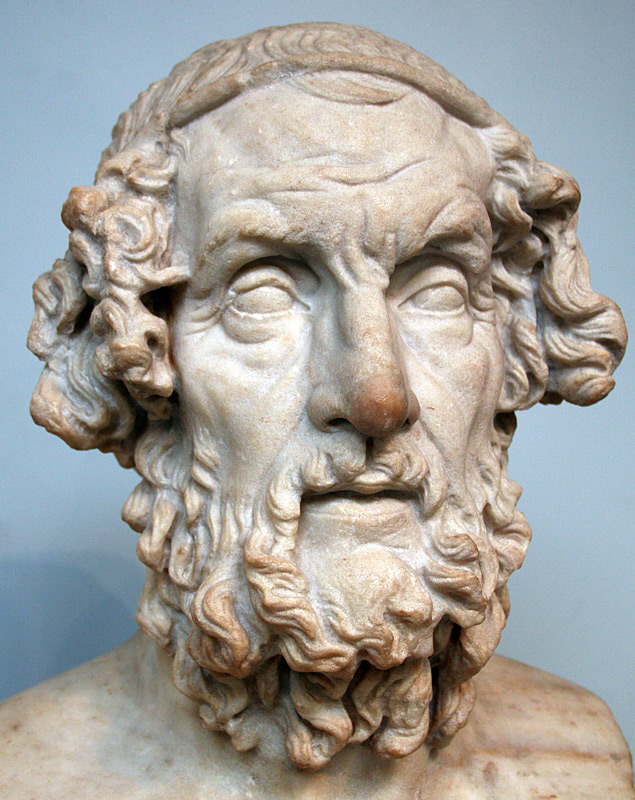
The Greek language holds a very important place in the history of the Western world. Beginning with the epic poetry of Homer, ancient Greek literature includes many works of lasting importance in the European canon. Greek is also the language in which many of the foundational texts in science and philosophy were originally composed. The New Testament of the Christian Bible was also originally written in Greek. Together with the Latin texts and traditions of the Roman world, the Greek texts and Greek societies of antiquity constitute the objects of study of the discipline of Classics.
During antiquity, Greek was by far the most widely spoken lingua franca in the Mediterranean world. It eventually became the official language of the Byzantine Empire and developed into Medieval Greek. In its modern form, Greek is the official language of Greece and Cyprus and one of the 24 official languages of the European Union. It is spoken by at least 13.5 million people today in Greece, Cyprus, Italy, Albania, Turkey, and the many other countries of the Greek diaspora.
Greek roots have been widely used for centuries and continue to be widely used to coin new words in other languages; Greek and Latin are highly-influential on the English language and remain the predominant sources of international scientific vocabulary.
History
Main article: History of Greek
Greek has been spoken in the Balkan peninsula since around the 3rd millennium BC, or possibly earlier. The earliest written evidence is a Linear B clay tablet found in Messenia that dates to between 1450 and 1350 BC, making Greek the world's oldest recorded living language. Among the Indo-European languages, its date of earliest written attestation is matched only by the now-extinct Anatolian languages.
Periods
The Greek language is conventionally divided into the following periods:
- Proto-Greek: the unrecorded but assumed last ancestor of all known varieties of Greek. The unity of Proto-Greek would have ended as Hellenic migrants entered the Greek peninsula sometime in the Neolithic era or the Bronze Age.
- Mycenaean Greek: the language of the Mycenaean civilisation. It is recorded in the Linear B script on tablets dating from the 15th century BC onwards.
- Ancient Greek: in its various dialects, the language of the Archaic and Classical periods of the ancient Greek civilisation. It was widely known throughout the Roman Empire. Ancient Greek fell into disuse in Western Europe in the Middle Ages but remained officially in use in the Byzantine world and was reintroduced to the rest of Europe with the Fall of Constantinople and Greek migration to western Europe.
- Koine Greek (also known as Hellenistic Greek): The fusion of Ionian with Attic, the dialect of Athens, began the process that resulted in the creation of the first common Greek dialect, which became a lingua franca across the Eastern Mediterranean and Near East. Koine Greek can be initially traced within the armies and conquered territories of Alexander the Great; after the Hellenistic colonisation of the known world, it was spoken from Egypt to the fringes of India. Due to the widespread use of the Greek language during this period, a set of rules had to be established for the proper dissemination of the language. It is at this point that the term Hellenism (Ἑλληνισμός) first appears. Hellenism was used by the grammarians and Strabo to denote "correct Greek". After the Roman conquest of Greece, an unofficial bilingualism of Greek and Latin was established in the city of Rome and Koine Greek became the first or second language in the Roman Empire. In the eastern parts of the Roman Empire, Rome refrained from imposing the use of Latin and instead communicated with its subjects in Greek, even in regions where Greek was not the predominant spoken language. The origin of Christianity can also be traced through Koine Greek because the Apostles used this form of the language to spread Christianity. Because it was the original language of the New Testament, and the Old Testament was translated into it as the Septuagint, that variety of Koine Greek may be referred to as New Testament Greek or sometimes Biblical Greek.
]]
- Medieval Greek (also known as Byzantine Greek): the continuation of Koine Greek up to the demise of the Byzantine Empire in the 15th century. Medieval Greek is a cover phrase for a whole continuum of different speech and writing styles, ranging from vernacular continuations of spoken Koine that were already approaching Modern Greek in many respects, to highly learned forms imitating classical Attic. Much of the written Greek that was used as the official language of the Byzantine Empire was an eclectic middle-ground variety based on the tradition of written Koine.
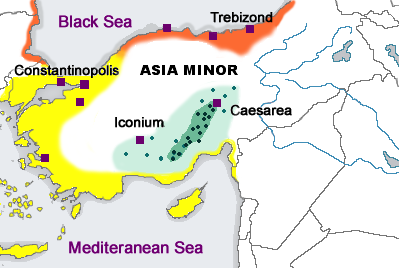
- Modern Greek (also known as Neo-Hellenic): Stemming from Medieval Greek, Modern Greek usages can be traced in the Byzantine period, as early as the 11th century. It is the language used by the modern Greeks, and, apart from Standard Modern Greek, there are several dialects of it.
Diglossia
Main article: Greek language question
In the modern era, the Greek language entered a state of diglossia: the coexistence of vernacular and archaising written forms of the language. What came to be known as the Greek language question was a polarisation between two competing varieties of Modern Greek: Dimotiki, the vernacular form of Modern Greek proper, and Katharevousa, meaning 'purified', a compromise between Dimotiki and Ancient Greek developed in the early 19th century that was used for literary and official purposes in the newly formed Greek state. In 1976, Dimotiki was declared the official language of Greece, after having incorporated features of Katharevousa and thus giving birth to Standard Modern Greek, used today for all official purposes and in education.
Historical unity

The historical unity and continuing identity between the various stages of the Greek language are often emphasised. Although Greek has undergone morphological and phonological changes comparable to those seen in other languages, never since classical antiquity has its cultural, literary, and orthographic tradition been interrupted to the extent that one can speak of a new language emerging. Greek speakers today still tend to regard literary works of ancient Greek as part of their own rather than a foreign language. It is also often stated that the historical changes have been relatively slight compared with some other languages. According to one estimation, "Homeric Greek is probably closer to Demotic than 12-century Middle English is to modern spoken English".
Geographic distribution
.svg)
Greek is spoken today by at least 13 million people, principally in Greece and Cyprus along with a sizable Greek-speaking minority in Albania near the Greek-Albanian border. A significant percentage of Albania's population has knowledge of the Greek language due in part to the Albanian wave of immigration to Greece in the 1980s and '90s and the Greek community in the country. Prior to the Greco-Turkish War and the resulting population exchange in 1923 a very large population of Greek-speakers also existed in Turkey, though very few remain today. A small Greek-speaking community is also found in Bulgaria near the Greek-Bulgarian border. Greek is also spoken worldwide by the sizeable Greek diaspora which has notable communities in the United States, Australia, Canada, South Africa, Chile, Brazil, Argentina, Russia, Ukraine, the United Kingdom, and throughout the European Union, especially in Germany.
Historically, significant Greek-speaking communities and regions were found throughout the Eastern Mediterranean, in what are today Southern Italy, Turkey, Cyprus, Syria, Lebanon, Israel, Palestine, Egypt, and Libya; in the area of the Black Sea, in what are today Turkey, Bulgaria, Romania, Ukraine, Russia, Georgia, Armenia, and Azerbaijan; and, to a lesser extent, in the Western Mediterranean in and around colonies such as Massalia, Monoikos, and Mainake. It was also used as the official language of government and religion in the Christian Nubian kingdoms, for most of their history.
Official status
Greek, in its modern form, is the official language of Greece, where it is spoken by almost the entire population. It is also the official language of Cyprus (alongside Turkish) and the British Overseas Territory of Akrotiri and Dhekelia (alongside English). Because of the membership of Greece and Cyprus in the European Union, Greek is one of the organization's 24 official languages. Greek is recognized as a minority language in Albania, and used co-officially in some of its municipalities, in the districts of Gjirokastër and Sarandë. It is also an official minority language in the regions of Apulia and Calabria in Italy. In the framework of the European Charter for Regional or Minority Languages, Greek is protected and promoted officially as a regional and minority language in Armenia, Hungary, Romania, and Ukraine. It is recognized as a minority language and protected in Turkey by the 1923 Treaty of Lausanne.
Characteristics
The phonology, morphology, syntax, and vocabulary of the language show both conservative and innovative tendencies across the entire attestation of the language from the ancient to the modern period. The division into conventional periods is, as with all such periodizations, relatively arbitrary, especially because, in all periods, Ancient Greek has enjoyed high prestige, and the literate borrowed heavily from it.
Phonology
Main article: Ancient Greek phonology, Koine Greek phonology, Modern Greek phonology}}{{unref section
Across its history, the syllabic structure of Greek has varied little: Greek shows a mixed syllable structure, permitting complex syllabic onsets but very restricted codas. It has only oral vowels and a fairly stable set of consonantal contrasts. The main phonological changes occurred during the Hellenistic and Roman period (see Koine Greek phonology for details):
- replacement of the pitch accent with a stress accent.
- simplification of the system of vowels and diphthongs: loss of vowel length distinction, monophthongisation of most diphthongs and several steps in a chain shift of vowels towards (iotacism).
- development of the voiceless aspirated plosives and to the voiceless fricatives and , respectively; the similar development of to may have taken place later (the phonological changes are not reflected in the orthography, and both earlier and later phonemes are written with φ, θ, and χ).
- development of the voiced plosives , , and to their voiced fricative counterparts (later ), , and .
Morphology
In all its stages, the morphology of Greek shows an extensive set of productive derivational affixes, a limited but productive system of compounding and a rich inflectional system. Although its morphological categories have been fairly stable over time, morphological changes are present throughout, particularly in the nominal and verbal systems. The major change in the nominal morphology since the classical stage was the disuse of the dative case (its functions being largely taken over by the genitive). The verbal system has lost the infinitive, the synthetically-formed future, and perfect tenses and the optative mood. Many have been replaced by periphrastic (analytical) forms.
Nouns and adjectives
Pronouns show distinctions in person (1st, 2nd, and 3rd), number (singular, dual, and plural in the ancient language; singular and plural alone in later stages), and gender (masculine, feminine, and neuter), and decline for case (from six cases in the earliest forms attested to four in the modern language). Nouns, articles, and adjectives show all the distinctions except for a person. Both attributive and predicative adjectives agree with the noun.
Verbs
The inflectional categories of the Greek verb have likewise remained largely the same over the course of the language's history but with significant changes in the number of distinctions within each category and their morphological expression. Greek verbs have synthetic inflectional forms for:
| Ancient Greek | Modern Greek | Person | Number | tense | aspect | mood | Voice |
|---|---|---|---|---|---|---|---|
| first, second and third | also second person formal | ||||||
| singular, dual and plural | singular and plural | ||||||
| present, past and future | past and non-past (future is expressed by a periphrastic construction) | ||||||
| imperfective, perfective (traditionally called *aorist*) and perfect (sometimes also called *perfective*; see note about terminology) | imperfective and perfective/aorist (perfect is expressed by a periphrastic construction) | ||||||
| indicative, subjunctive, imperative and optative | indicative, subjunctive, and imperative (other modal functions are expressed by periphrastic constructions) | ||||||
| active, medio-passive, and passive | active and medio-passive |
Syntax
Many aspects of the syntax of Greek have remained constant: verbs agree with their subject only, the use of the surviving cases is largely intact (nominative for subjects and predicates, accusative for objects of most verbs and many prepositions, genitive for possessors), articles precede nouns, adpositions are largely prepositional, relative clauses follow the noun they modify and relative pronouns are clause-initial. However, the morphological changes also have their counterparts in the syntax, and there are also significant differences between the syntax of the ancient and that of the modern form of the language. Ancient Greek made great use of participial constructions and of constructions involving the infinitive, and the modern variety lacks the infinitive entirely (employing a raft of new periphrastic constructions instead) and uses participles more restrictively. The loss of the dative led to a rise of prepositional indirect objects (and the use of the genitive to directly mark these as well). Ancient Greek tended to be verb-final, but neutral word order in the modern language is verb–subject–object or subject–verb–object.
Vocabulary
Modern Greek inherits most of its vocabulary from Ancient Greek, which in turn is an Indo-European language, but also includes a number of borrowings from the languages of the populations that inhabited Greece before the arrival of Proto-Greeks, some documented in Mycenaean texts; they include a large number of Greek toponyms. The form and meaning of many words have changed. Loanwords (words of foreign origin) have entered the language, mainly from Latin, Venetian, Ottoman Turkish and Semitic languages. During the older periods of Greek, loanwords into Greek acquired Greek inflections, thus leaving only a foreign root word. Modern borrowings (from the 20th century on), especially from French and English, are typically not inflected; other modern borrowings are derived from Slavic languages, Albanian and Eastern Romance languages (Romanian and Aromanian).
Loanwords in other languages
Greek words have been widely borrowed into other languages, including English. Example words include: mathematics, physics, astronomy, democracy, philosophy, athletics, theatre, rhetoric, baptism, evangelist, etc. Moreover, Greek words and word elements continue to be productive as a basis for coinages (neologisms): anthropology, photography, telephony, isomer, biomechanics, cinematography, etc. Together with Latin words, they form the foundation of international scientific and technical vocabulary; for example, all words ending in -logy ('discourse'). There are many English words of Greek origin.
Classification
Greek is an independent branch of the Indo-European language family. Hellenic is the branch of the Indo-European language family whose principal member is Greek. In most classifications, Hellenic consists of Greek alone, but some linguists use Hellenic to refer to a group consisting of Greek proper and other varieties thought to be related but different enough to be separate languages, either among ancient neighboring languages or among modern varieties of Greek. Ancient Macedonian has been considered by some scholars a distinct sister language of Greek (i.e. part of the Hellenic branch). However, according to most scholars ancient Macedonian was a dialect of Greek itself, related to the Northwest Doric group. Additionally, current consensus regards Phrygian as the closest relative of Greek, since they share a number of phonological, morphological, and lexical isoglosses, with some being exclusive between them. Scholars have proposed a Graeco-Phrygian subgroup out of which Greek and Phrygian originated.
Among living languages, some Indo-Europeanists suggest that Greek may be most closely related to Armenian (see Graeco-Armenian) or the Indo-Iranian languages (see Graeco-Aryan), but little definitive evidence has been found. In addition, Albanian has also been considered somewhat related to Greek and Armenian, and it has been proposed that they all form a higher-order subgroup along with other extinct languages of the ancient Balkans; this higher-order subgroup is usually termed Palaeo-Balkan, and Greek has a central position in it.
Writing system
Linear B
Main article: Linear B
Linear B, attested as early as the late 15th century BC, was the first script used to write Greek. It is basically a syllabary, which was finally deciphered by Michael Ventris and John Chadwick in the 1950s (its precursor, Linear A, has not been deciphered and most likely encodes a non-Greek language). The language of the Linear B texts, Mycenaean Greek, is the earliest known form of Greek.
Cypriot syllabary
Main article: Cypriot syllabary

Another similar system used to write the Greek language was the Cypriot syllabary (also a descendant of Linear A via the intermediate Cypro-Minoan syllabary), which is closely related to Linear B but uses somewhat different syllabic conventions to represent phoneme sequences. The Cypriot syllabary is attested in Cyprus from the 11th century BC until its gradual abandonment in the late Classical period, in favor of the standard Greek alphabet.
Greek alphabet
Main article: Greek alphabet, Greek orthography
Greek has been written in the Greek alphabet since approximately the 9th century BC. It was created by modifying the Phoenician alphabet, with the innovation of adopting certain letters to represent the vowels. The variant of the alphabet in use today is essentially the late Ionic variant, introduced for writing classical Attic in 403 BC. In classical Greek, as in classical Latin, only upper-case letters existed. The lower-case Greek letters were developed much later by medieval scribes to permit a faster, more convenient cursive writing style with the use of ink and quill.
The Greek alphabet consists of 24 letters, each with an uppercase (majuscule) and lowercase (minuscule) form. The letter sigma has an additional lowercase form (ς) used in the final position of a word:
| upper case | lower case |
|---|---|
| Α | Β |
| α | β |
Diacritics
Main article: Greek diacritics}}{{unref section
In addition to the letters, the Greek alphabet features a number of diacritical signs: three different accent marks (acute, grave, and circumflex), originally denoting different shapes of pitch accent on the stressed vowel; the so-called breathing marks (rough and smooth breathing), originally used to signal presence or absence of word-initial /h/; and the diaeresis, used to mark the full syllabic value of a vowel that would otherwise be read as part of a diphthong. These marks were introduced during the course of the Hellenistic period. Actual usage of the grave in handwriting saw a rapid decline in favor of uniform usage of the acute during the late 20th century, and it has only been retained in typography.
After the writing reform of 1982, most diacritics are no longer used. Since then, Greek has been written mostly in the simplified monotonic orthography (or monotonic system), which employs only the acute accent and the diaeresis. The traditional system, now called the polytonic orthography (or polytonic system), is still used internationally for the writing of Ancient Greek.
Punctuation
In Greek, the question mark is written as the English semicolon, while the functions of the colon and semicolon are performed by a raised point (•), known as the ano teleia (άνω τελεία). In Greek the comma also functions as a silent letter in a handful of Greek words, principally distinguishing {{linktext|ό,τι}} (ó,ti, 'whatever') from ότι (óti, 'that').
Ancient Greek texts often used scriptio continua ('continuous writing'), which means that ancient authors and scribes would write word after word with no spaces or punctuation between words to differentiate or mark boundaries. Boustrophedon, or bi-directional text, was also used in Ancient Greek.
Latin alphabet
Greek has occasionally been written in the Latin script, especially in areas under Venetian rule or by Greek Catholics. The term Frankolevantinika / Φραγκολεβαντίνικα applies when the Latin script is used to write Greek in the cultural ambit of Catholicism (because Frankos / Φράγκος is an older Greek term for West-European dating to when most of (Roman Catholic Christian) West Europe was under the control of the Frankish Empire). Frankochiotika / Φραγκοχιώτικα (meaning 'Catholic Chiot') alludes to the significant presence of Catholic missionaries based on the island of Chios. Additionally, the term Greeklish is often used when the Greek language is written in a Latin script in online communications.
The Latin script is nowadays used by the Greek-speaking communities of Southern Italy.
Hebrew alphabet
The Yevanic dialect was written by Romaniote and Constantinopolitan Karaite Jews using the Hebrew Alphabet.
Arabic alphabet
In a tradition, that in modern time, has come to be known as Greek Aljamiado, some Greek Muslims from Crete wrote their Cretan Greek in the Arabic alphabet. The same happened among Epirote Muslims in Ioannina. This also happened among Arabic-speaking Byzantine rite Christians in the Levant (Lebanon, Palestine, Syria and Jordan). This usage is sometimes called aljamiado, as when Romance languages are written in the Arabic alphabet.{{cite book |editor1-last=Gruber |editor1-first=Christiane J. |editor2-last=Colby |editor2-first=Frederick Stephen |title=The Prophet's Ascension: Cross-cultural Encounters with the Islamic Mi'rāj Tales |date=2010 |publisher=Indiana University Press |isbn=978-0-253-35361-0 |pages=297 |url=https://books.google.com/books?id=sjLHirJmvPUC&q=Reworking+the+Ascension+in+Ottoman+Lands:+An+Eighteenth-Century+Mi%27r%C4%81jn%C4%81ma+in+Greek+from+Epirus&pg=PA297 |language=en |quote=The element that makes this text a unicum is that it is written in Greek script. In the Ottoman Empire, the primary criterion for the selection of an alphabet in which to write was religion. Thus, people who did not speak—or even know—the official language of their religion used to write their religious texts in the languages that they knew, though in the alphabet where the sacred texts of that religion were written. Thus, the Grecophone Catholics of Chios wrote using the Latin alphabet, but in the Greek language (frangochiotika); the Turcophone Orthodox Christians of Cappadocia wrote their Turkish texts using the Greek alphabet (karamanlidika); and the Grecophone Muslims of the Greek peninsula wrote in Greek language using the Arabic alphabet (tourkogianniotika, tourkokretika). Our case is much stranger, since it is a quite early example for that kind of literature and because it is largely concerned with religious themes."; p. 306. The audience for the Greek Mi'rājnāma was most certainly Greek-speaking Muslims, in particular the so-called Tourkogianniotes (literally, the Turks of Jannina). Although few examples have been discovered as yet, it seems that these people developed a religious literature mainly composed in verse form. This literary form constituted the mainstream of Greek Aljamiado literature from the middle of the seventeenth century until the population exchange between Greece and Turkey in 1923. Tourkogianniotes were probably of Christian origin and were Islamized sometime during the seventeenth century. They did not speak any language other than Greek. Thus, even their frequency in attending mosque services did not provide them with the necessary knowledge about their faith. Given their low level of literacy, one important way that they could learn about their faith was to listen to religiously edifying texts such as the Greek Mi'rājnāma.}}
Example text
Article 1 of the Universal Declaration of Human Rights in Greek: :Όλοι οι άνθρωποι γεννιούνται ελεύθεροι και ίσοι στην αξιοπρέπεια και τα δικαιώματα. Είναι προικισμένοι με λογική και συνείδηση, και οφείλουν να συμπεριφέρονται μεταξύ τους με πνεύμα αδελφοσύνης.
Transcription of the example text into Latin alphabet: :el
Article 1 of the Universal Declaration of Human Rights in English: :"All human beings are born free and equal in dignity and rights. They are endowed with reason and conscience and should act towards one another in a spirit of brotherhood."
Notes
Footnotes
References
References
- [http://www.abs.gov.au/websitedbs/censushome.nsf/home/cowsredirect 2006 Census Table: Language Spoken at Home by Sex – Time Series Statistics (1996, 2001, 2006 Census Years)]
- [http://www.zougla.gr/omogenia/article/afstralia-tilediaskepsi-milame-elinika-ton-martio Αυστραλία: Τηλεδιάσκεψη «Μιλάμε Ελληνικά τον Μάρτιο»]
- "Language Use in the United States: 2011". [[United States Census]].
- "gree1276". Council of Europe.
- "Greek language". Encyclopædia Britannica, Inc..
- (2013). "Anthropology: The Human Challenge". [[Cengage.
- Comrie, Bernard. (1987). "The World's Major Languages". [[Routledge]].
- Adrados, Francisco Rodríguez. (2005). "A history of the Greek language : from its origins to the present". Brill.
- Kurt Aland, Barbara Aland The text of the New Testament: an introduction to the critical 1995 p. 52.
- Archibald Macbride Hunter Introducing the New Testament 1972 p. 9.
- (2011). "A small Greek world : networks in the Ancient Mediterranean". Oxford University Press.
- Manuel, Germaine Catherine. (1989). "A study of the preservation of the classical tradition in the education, language, and literature of the Byzantine Empire".
- {{harvnb. Renfrew. 2003. Georgiev. 1981
- {{harvnb. Gray. Atkinson. 2003. Atkinson. Gray. 2006
- (1 April 2011). "Ancient Tablet Found: Oldest Readable Writing in Europe".
- Tulloch, A.. (2017). "Understanding English Homonyms: Their Origins and Usage". Hong Kong University Press.
- {{harvnb. Hooker. 1976
- {{harvnb. Renfrew. 1973
- (2008). "Hellenisms: culture, identity, and ethnicity from antiquity to modernity". Ashgate.
- Cotton, Hannah M.. (2022). "Roman Rule and Jewish Life: Collected Papers". [[De Gruyter]].
- "Greek".
- {{harvnb. Dawkins. Halliday. 1916.
- Peter, Mackridge. (1985). "The modern Greek language : a descriptive analysis of standard modern Greek". Oxford University Press.
- {{harvnb. Browning. 1983
- {{harvnb. Alexiou. 1982
- Burstein, Stanley. (2 November 2020). "When Greek was an African Language".
- "Greece". Central Intelligence Agency.
- "The Constitution of Cyprus, App. D., Part 1, Art. 3".
- "The EU at a Glance – Languages in the EU". European Union.
- Bytyçi, Enver. (2022). "In the Shadows of Albania-China Relations (1960–1978)". [[Cambridge Scholars Publishing]].
- "List of Declarations Made with Respect to Treaty No. 148". Council of Europe.
- Toktaş, Şule. (2006). "EU enlargement conditions and minority protection : a reflection on Turkey's non-Muslim minorities". East European Quarterly.
- Bayır, Derya. (2013). "Minorities and nationalism in Turkish law". [[Ashgate Publishing]].
- (April 19, 2002). "Questions and Answers: Freedom of Expression and Language Rights in Turkey". Human Rights Watch.
- {{harvnb. Ralli. 2001
- {{harvnb. Beekes. 2009.
- "Review of Frühe Semitiche Lehnwörter im Griechischen".
- (18 March 2019). "Foreign loanwords in Modern Greek".
- {{harvnb. Scheler. 1977.
- (18 November 2019). "Πόσο "ελληνικές" είναι οι ξένες γλώσσες".
- In other contexts, ''Hellenic'' and ''Greek'' are generally synonyms.
- Browning (1983), ''Medieval and Modern Greek'', Cambridge: Cambridge University Press.
- Joseph, Brian D. and Irene Philippaki-Warburton (1987): ''Modern Greek''. London: Routledge, p. 1.
- Joseph, Brian D.. (2001). "Facts about the World's Languages: An Encyclopedia of the World's Major Languages, Past and Present". [[H. W. Wilson Company]].
- David Dalby. ''The Linguasphere Register of the World's Languages and Speech Communities'' (1999/2000, Linguasphere Press). pp. 449–450.
- Vladimir Georgiev, "The Genesis of the Balkan Peoples", ''The Slavonic and East European Review'' '''44''':103:285–297 (July 1966)
- W. B. Lockwood, "A Panorama of Indo-European Languages", (1972), Hutchinson University Library London, Hellenic, Macedonian, p. 6: "It is generally held that the evidence suggests rather an aberrant form of Greek than an independent language."
- [[Eric P. Hamp]] & [[Douglas Q. Adams]] (2013), [https://sino-platonic.org/complete/spp239_indo_european_languages.pdf "The Expansion of the Indo-European Languages"], ''Sino-Platonic Papers'', vol 239.
- {{harvnb. Giannakis. 2017
- (2010). "A Companion to Ancient Macedonia". Wiley-Blackwell.
- Anson, Edward M.. (2010). "A Companion to Ancient Macedonia". Wiley-Blackwell.
- Crespo, Emilio. (2023). "Alloglōssoi: Multilingualism and Minority Languages in Ancient Europe". [[De Gruyter]].
- {{harvnb. Olander. 2022. van Beek. 2022
- Crespo, Emilio. (2018). "Studies in Ancient Greek Dialects: From Central Greece to the Black Sea". Walter de Gruyter.
- Brixhe, Claude. (2018). "Handbook of Comparative and Historical Indo-European Linguistics". [[De Gruyter]].
- Hatzopoulos, Miltiades B.. (2018). "Studies in Ancient Greek Dialects: From Central Greece to the Black Sea". Walter de Gruyter.
- {{harvnb. Babiniotis. 1992. Dosuna. 2012
- Brixhe, Claude. (2008). "The Ancient Languages of Asia Minor". [[Cambridge University Press & Assessment.
- {{harvnb. Woodhouse. 2009
- {{harvnb. Obrador-Cursach. 2020
- {{harvnb. Obrador-Cursach. 2020
- {{harvnb. Ligorio. Lubotsky. 2018
- {{Glottolog. grae1234. Graeco-Phrygian
- {{harvnb. van Beek. 2022
- {{harvnb. Renfrew. 1990; {{harvnb. Gamkrelidze. Ivanov. 1990. Renfrew. 2003. Gray. Atkinson. 2003
- {{harvnb. Olsen. Thorsø. 2022. Hyllested. Joseph. 2022
- {{harvnb. Holm. 2008
- Hooker, J. T.. (1980). "Linear B : an introduction". Bristol Classical Press.
- "Cypriot syllabary". Britannica Academic.
- Nicolas, Nick. (2005). "Greek Unicode Issues: Punctuation".
- Hugoe, Matthews Peter. (March 2014). "The concise Oxford dictionary of linguistics". Oxford University Press.
- {{harvnb. Androutsopoulos. 2009
- "Yevanic alphabet, pronunciation and language".
- HMML Hill Museum & Manuscript Library (27 July 2024). ''This month, "Greek Aljamiado" (i.e., Greek written in Arabic script) became one of the more than 90 languages identified in HMML's online Reading Room ([https://www.vhmml.org/ vhmml.org]). Greek Aljamiado was a common phenomenon among Byzantine-rite Christians in Arabic-speaking communities, but has been little studied. So far, 84 examples of Greek Aljamiado have been identified in HMML's collections of Christian manuscripts digitized in Lebanon, Palestine, and Syria. Cataloging by HMML staff and associates makes these manuscripts easier to find, and supports scholars in their research of the extent and purposes of Greek Aljamiado usage. Pictured: Greek Aljamiado is written on the left page of this manuscript, in the collection of the Ordre Basilien Alepin in Jūniyah, Lebanon. View in Reading Room (OBA 00256): [https://www.vhmml.org/readingRoom/view/120512 www.vhmml.org/readingRoom/view/120512]'' [Image attached] [Story update]. Facebook. [https://www.facebook.com/story.php/?story_fbid=891590206344824&id=100064815573799&_rdr]
- "Universal Declaration of Human Rights".
- "Universal Declaration of Human Rights". United Nations.
This article was imported from Wikipedia and is available under the Creative Commons Attribution-ShareAlike 4.0 License. Content has been adapted to SurfDoc format. Original contributors can be found on the article history page.
Ask Mako anything about Greek language — get instant answers, deeper analysis, and related topics.
Research with MakoFree with your Surf account
Create a free account to save articles, ask Mako questions, and organize your research.
Sign up freeThis content may have been generated or modified by AI. CloudSurf Software LLC is not responsible for the accuracy, completeness, or reliability of AI-generated content. Always verify important information from primary sources.
Report