From Surf Wiki (app.surf) — the open knowledge base
Grate firing
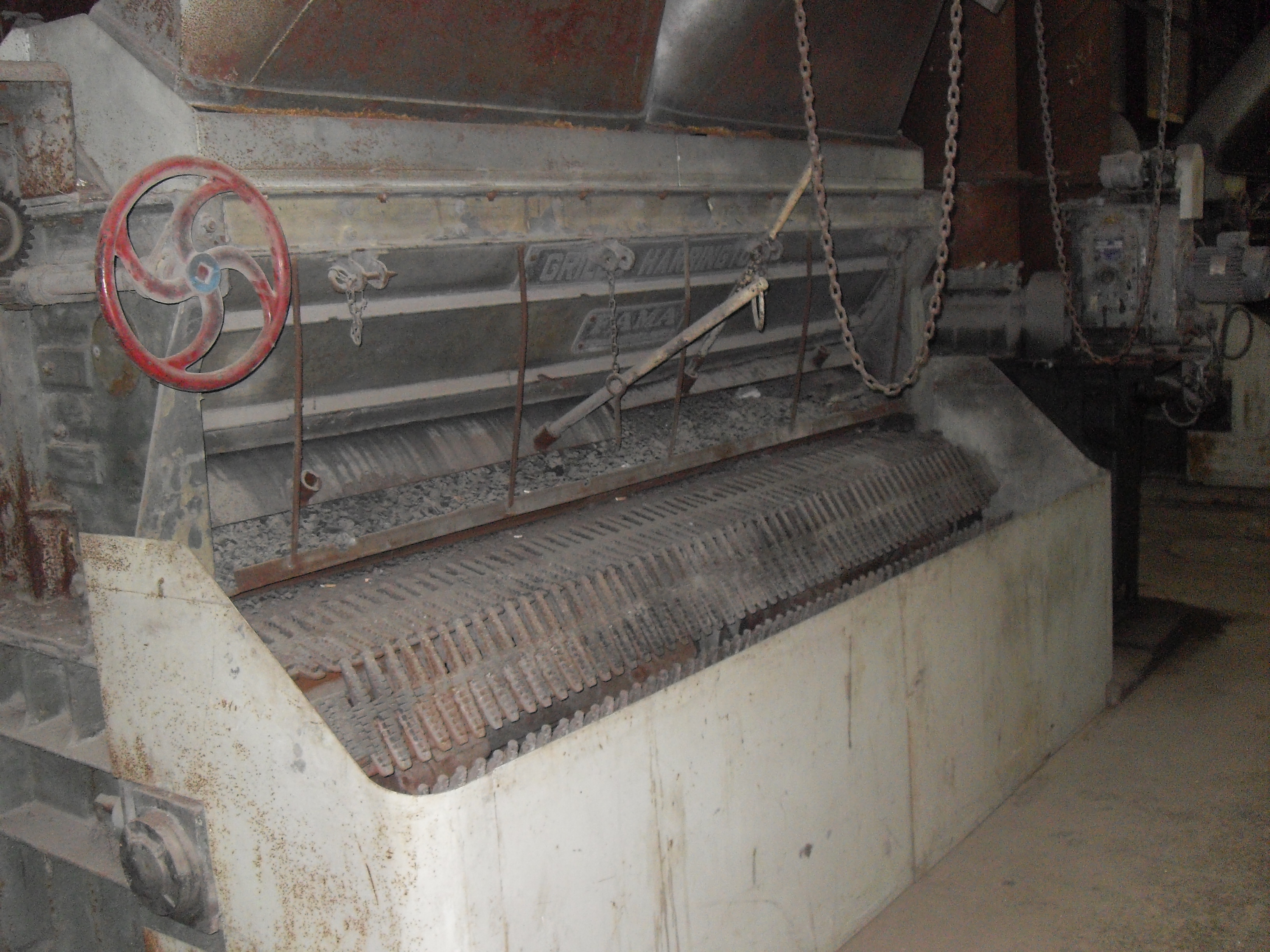
Grate firing is a type of industrial combustion system used for solid fuels. It now is used mainly for burning waste and biomass, but also for smaller coal furnaces.
- Capacities 0.3 to 175 MWth in industry and CHP
- Fuel fired per grate area 1-2 MW/m2, maximum grate area 100 m2
- Grates are typical only suitable for coarse particles, for fine particles a spreader is required, increases max. capacity
- Primary air through the grate (also used for cooling) and secondary air
Types
;Travelling grate :A moving grate which is covered with a fuel layer, 10-30 cm. Power control by means of varying the grate velocity
;Reciprocating grate :For ash-rich, low calorific fuels like municipal waste, arrangement of stationary and moving grates - conveying and mixing (forward-moving type or reverse-action grate)
;Vibrating grate :Water cooled membrane wall, with holes for air. For burning coal or wood.
Grate area
The grate area is the area of the grate (length x width). The larger the grate area, the more fuel can be burned per hour. The amount of fuel burned also depends on the fuel or bed movement velocity.
This article was imported from Wikipedia and is available under the Creative Commons Attribution-ShareAlike 4.0 License. Content has been adapted to SurfDoc format. Original contributors can be found on the article history page.
Ask Mako anything about Grate firing — get instant answers, deeper analysis, and related topics.
Research with MakoFree with your Surf account
Create a free account to save articles, ask Mako questions, and organize your research.
Sign up freeThis content may have been generated or modified by AI. CloudSurf Software LLC is not responsible for the accuracy, completeness, or reliability of AI-generated content. Always verify important information from primary sources.
Report