From Surf Wiki (app.surf) — the open knowledge base
Glutamate flavoring
Generic name for flavor-enhancing compounds based on glutamic acid and its salts

Generic name for flavor-enhancing compounds based on glutamic acid and its salts
flavor compounds based on glutamic acid and its salts
Glutamate flavoring is the generic name for flavor-enhancing compounds based on glutamic acid and its salts (glutamates). These compounds provide a savory taste to food.
Glutamic acid and glutamates are natural constituents of many fermented or aged foods, including soy sauce, fermented bean paste, and cheese. They can also be found in hydrolyzed proteins such as yeast extract. The sodium salt of glutamic acid, monosodium glutamate (MSG), is manufactured on a large scale and widely used in the food industry.
Glutamic acid versus glutamates
When glutamic acid or any of its salts are dissolved in water, they form a solution of separate negative ions, called glutamates, and positive ions like or . The result is actually a chemical equilibrium among several ionized forms, including zwitterions, that depends on the pH (acidity) of the solution. Within the common pH range of foods, the prevailing ion can be described as −OOC-C()-()2-COO−, which has an electric charge of −1.
Only the glutamate ion is responsible for the umami flavor, so the effect does not depend significantly on the starting compound. However, some crystalline salts such as monosodium glutamate dissolve much better and faster than crystalline glutamic acid. This has proven to be an important factor in the implementation of substances as flavor enhancers.
Discovery
Although they occur naturally in many foods, glutamic acid and other amino acid flavor contributions were not scientifically identified until early in the twentieth century. In 1866, the German chemist Karl Heinrich Ritthausen discovered and identified the compound. In 1907, Japanese researcher Kikunae Ikeda of the Tokyo Imperial University identified brown crystals left behind after the evaporation of a large amount of kombu broth as glutamic acid. These crystals, when tasted, reproduced the ineffable but undeniable flavor detected in many foods, especially seaweed. Professor Ikeda coined the term umami for this flavor. He then patented a method of mass-producing the crystalline salt of glutamic acid known as monosodium glutamate.
Isomers
Further research into the compound has found that only the L-glutamate enantiomer has flavor-enhancing properties. Manufactured monosodium glutamate consists to over 99.6% of the naturally predominant L-glutamate form, which is a higher proportion of L-glutamate than can be found in the free glutamate ions of fermented naturally occurring foods. Fermented products such as soy sauce, steak sauce, and Worcestershire sauce have levels of glutamate similar to those in foods with added monosodium glutamate. However, 5% or more of the glutamate may be the D-enantiomer. Nonfermented naturally occurring foods have lower relative levels of D-glutamate than fermented products do.
Taste perception
Glutamic acid stimulates specific receptors located in taste buds such as the amino acid receptor T1R1/T1R3 or other glutamate receptors like the metabotropic receptors (mGluR4 and mGluR1), which induce the flavor known as umami. This is classified as one of the five basic tastes (the word "umami" is a loanword from Japanese; it is also referred to as "savory" or "meaty").
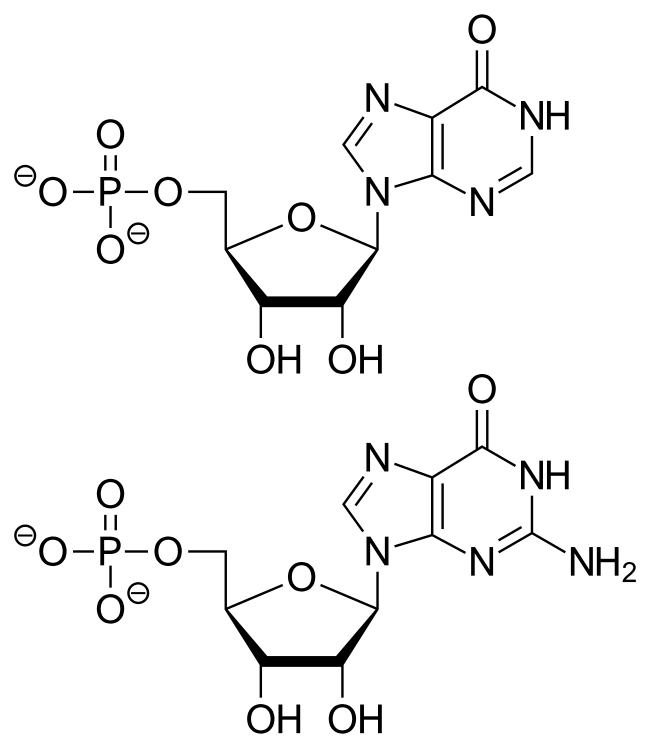
The flavoring effect of glutamate comes from its free form, in which it is not bound to other amino acids in protein. Nonetheless, glutamate by itself does not elicit an intense umami taste. The mixing of glutamate with nucleotides inosine-5'-monophosphate (IMP) or guanosine-5'-monophosphate (GMP) enhances the taste of umami; T1R1 and T1R3 respond primarily to mixtures of glutamate and nucleotides. While research has shown that this synergism occurs in some animal species with other amino acids, studies of human taste receptors show that the same reaction only occurs between glutamate and the selected nucleotides. Moreover, sodium in monosodium glutamate may activate glutamate to produce a stronger umami taste.
Two hypotheses for the explanation of umami taste transduction have been introduced: the first posits that the umami taste is transduced by an N-methyl-D-aspartate (NMDA) type glutamate ion channel receptor; the second posits that the taste is transduced by a metabotropic type glutamate receptor (taste-mGluR4). The metabotropic glutamate receptors such as mGluR4 and mGluR1 can be easily activated at glutamate concentration levels found in food.
Perceptual independence from salty and sweet taste
Since umami taste compounds are frequently sodium salts, the perceptual differentiation of salty and umami tastes has been difficult in taste tests and studies have found as much as 27% of certain populations may be umami "hypotasters".
Furthermore single glutamate(glutamic acid) with no table salt ions(Na+) elicits sour taste and in psychophysical tests, sodium or potassium salt cations seem to be required to produce a perceptible umami taste.
Sweet and umami tastes both utilize the taste receptor subunit T1R3, with salt taste blockers reducing discrimination between monosodium glutamate and sucrose in rodents.
If umami doesn't have perceptual independence, it could be classified with other tastes like fat, carbohydrate, metallic, and calcium, which can be perceived at high concentrations but may not offer a prominent taste experience.
Sources
Natural occurrence
Glutamate is ubiquitous in biological life. It is found naturally in all living cells, primarily in the bound form as a constituent of proteins. Only a fraction of the glutamate in foods is in its "free" form, and only free glutamate produces an umami flavor in foods. The savory flavor of tomatoes, fermented soy products, yeast extracts, certain sharp cheeses, and fermented or hydrolyzed protein products (such as soy sauce and fermented bean paste) is partially due to the presence of free glutamate ions.
Asia
Japanese cuisine originally used broth made from kombu (kelp) to produce the umami taste in soups.
Rome
In the Roman Empire, glutamic acid was present in a sauce called garum, made from fermenting fish in saltwater. The flavor-enhancing properties of glutamic acid allowed Romans to reduce the use of expensive salt.
Concentration in foods
The following table illustrates the glutamate content of some selected common foods. Free glutamate is the form directly tasted and absorbed whereas glutamate bound in protein is not available until further breakdown by digestion or cooking. In general, vegetables contain more free glutamate but less protein-bound glutamate.
| Food | Free glutamate (mg/100 g) | Protein glutamate (mg/100 g) |
|---|---|---|
| Monosodium glutamate | 87720 | |
| Makombu (kelp) | 3190 | |
| Rausu kombu (kelp) | 2286 | |
| Rishiri kombu (kelp) | 1985 | |
| Marmite | 1960 | |
| Hidaka kombu (kelp) | 1344 | |
| Nori (seaweed) | 1378 | |
| Vegemite | 1431 | |
| Japanese fish sauce | 1383 | |
| Roquefort cheese | 1280 | |
| Parmesan cheese | 1200 | 9847 |
| Korean soy sauce | 1264 | |
| Chinese soy sauce | 926 | |
| Japanese soy sauce | 782 | |
| Oyster sauce | 900 | |
| Green tea | 668 | |
| Cured ham | 337 | |
| Sardine | 280 | |
| Grape juice | 258 | |
| Clam | 208 | |
| Peas | 200 | 5583 |
| Scallop | 159 | |
| Squid | 146 | |
| Tomatoes | 140 | 238 |
| Oyster | 137 | |
| Corn | 130 | 1765 |
| Mussel | 105 | |
| Potatoes | 102 | |
| Duck | 69 | 3636 |
| Chicken | 44 | 3309 |
| Beef | 33 | 2846 |
| Pork | 23 | 2325 |
| Eggs | 23 | 1583 |
| Human milk | 22 | 229 |
| Salmon | 20 | 2216 |
| Cow milk | 2 | 819 |
Hydrolyzed protein
Hydrolyzed proteins, or protein hydrolysates, are acid- or enzymatically treated proteins from certain foods. One example is yeast extract. Hydrolyzed protein contains free amino acids, such as glutamate, at levels of 5% to 20%. Hydrolyzed protein is used in the same manner as monosodium glutamate in many foods, such as canned vegetables, soups, and processed meats.
Pure salts
Manufacturers, such as Ajinomoto, use selected strains of Corynebacterium glutamicum bacteria in a nutrient-rich medium. The bacteria are selected for their ability to excrete glutamic acid, which is then separated from the nutrient medium and processed into its sodium salt, monosodium glutamate.
Risks of oversupply
Medical studies
Glutamate is the most important excitatory neurotransmitter in the central nervous system of vertebrates. Several complex mechanisms in the brain provide a protection against a possible oversupply of glutamate there, because this can cause neurotoxicity even leading to the death of nerve cells.
There are certain groups of persons, however, where these protection mechanisms in the brain against a glutamate oversupply are damaged. This was observed, for example, in cases of post-traumatic stress disorder (PTSD) or depression. Accordingly, it was shown in preclinical trials that the decrease of glutamate in the brain by administration of pyruvate led to a decline of anxiety and depression.
The additional consumption of glutamate, for example monosodium glutamate (MSG), as a flavor enhancer was associated with an increased probability to develop a metabolic syndrome in a large sample of a rural population in Thailand.
Social perceptions
In the late 20th century, the USA experienced a social panic over culinary MSG. Participants believed that MSG caused a syndrome known as Chinese restaurant syndrome or MSG symptom complex (MSC).
The panic began with a joke. In a 1968 letter to the New England Journal of Medicine's editor, Robert Ho Man Kwok noted that I have experienced a strange syndrome whenever I have eaten out in a Chinese restaurant, especially one that served northern Chinese food. The syndrome, which usually begins 15 to 20 minutes after I have eaten the first dish, lasts for about two hours, without hangover effect. The most prominent symptoms are numbness at the back of the neck, gradually radiating to both arms and the back, general weakness and palpitations... Context suggests that Kwok was likely joking about postprandial somnolence, and initial replies assumed the entire letter was a pseudonymous prank, often responding in kind. This satiric context was lost entirely during subsequent republication in the scientific and popular literatures.
Even while still recognized as jokes, the letters also inspired a severely flawed study the next year. 56 subjects were given increasing oral doses of MSG until all had exhibited some subset of "burning, facial pressure, and chest pain." In the popular mind, MSC later extended to include "tightness, flushing, tearing, dizziness, syncope, and facial pressure". Subsequent scientific investigation could not replicate any of these or Kwok's original phenomena consistently and reliably, even when looking for genetic predispositions.
More importantly, MSC became highly racialized in the popular press. Cultural stereotypes had primed non-Chinese Americans to view Chinese food with suspicion, and the "chemical" name of MSG obscured that it was present across a wide variety of savory ingredients. The public thus assumed that MSG was an entirely artificial additive used exclusively in Chinese cuisine.
In 1970, a National Research Council under the US National Academy of Sciences investigated MSG but concluded that MSG was safe for consumption. Despite public backlash, the Food and Drug Administration (FDA) did not remove MSG from the "Generally Recognized as Safe" regulatory category.
Scientific interested in the phenomenon has faded, So, too, has popular belief in MSC. In 2016, Anthony Bourdain said on Parts Unknown: I think [MSG] is good stuff. I don't react to it – nobody does. It's a lie... You know what causes Chinese restaurant syndrome? Racism. 'Ooh, I have a headache, must have been the Chinese guy.' Nevertheless, in 2019, a short-lived NYC restaurant named "Lucky Lee's" became a cause celebre. It claimed to provide "cleaner" and healthier Chinese food by (inter alia) eschewing fat and MSG.
In 2020, Ajinomoto, the leading manufacturer of MSG, and others launched the #RedefineMSC campaign, hoping to highlight the xenophobic prejudice against East Asian cuisine associated with "Chinese restaurant syndrome", and the paucity of scientific evidence for the phenomenon. Following the campaign, Merriam-Webster announced it would review the term. Ultimately, Merriam-Webster retained the definition, but renamed it to "MSG symptom complex".
Regulations
Regulation timeline
In 1959, the U.S. Food and Drug Administration (FDA) classified monosodium glutamate as generally recognized as safe (GRAS). This action stemmed from the 1958 Food Additives Amendment to the Federal Food, Drug, and Cosmetic Act that required premarket approval for new food additives and led the FDA to promulgate regulations listing substances, such as monosodium glutamate, which have a history of safe use or are otherwise GRAS.
Since 1970, FDA has sponsored extensive reviews on the safety of monosodium glutamate, other glutamates, and hydrolyzed proteins, as part of an ongoing review of safety data on GRAS substances used in processed foods. One such review was by the Federation of American Societies for Experimental Biology (FASEB) Select Committee on GRAS Substances. In 1980, the committee concluded that monosodium glutamate was safe at current levels of use but recommended additional evaluation to determine monosodium glutamate's safety at significantly higher levels of consumption. Additional reports attempted to look at this.
In 1986, FDA's Advisory Committee on Hypersensitivity to Food Constituents concluded that monosodium glutamate poses no threat to the general public but that reactions of brief duration might occur in some people. Other reports have given the following findings:
- The 1987 Joint Expert Committee on Food Additives of the United Nations Food and Agriculture Organization and the World Health Organization placed monosodium glutamate in the safest category of food ingredients.
- A 1991 report by the European Community's (EC) Scientific Committee for Foods reaffirmed monosodium glutamate's safety and classified its "acceptable daily intake" as "not specified", the most favorable designation for a food ingredient. In addition, the EC Committee said, "Infants, including prematures, have been shown to metabolize glutamate as efficiently as adults and therefore do not display any special susceptibility to elevated oral intakes of glutamate." Legislation in effect since June 2013 classifies glutamic acid and glutamates as salt substitutes, seasonings, and condiments with a maximum level of consumption of 10g/kg expressed as glutamic acid.
European Union
Following the compulsory EU-food labeling law the use of glutamic acid and its salts has to be declared, and the name or E number of the salt has to be listed. Glutamic acid and its salts as food additives have the following E numbers: glutamic acid: E620, monosodium glutamate: E621, monopotassium glutamate: E622, calcium diglutamate: E623, monoammonium glutamate: E624, and magnesium diglutamate: E625. In the European Union, these substances are regarded as "flavor enhancers" and are not allowed to be added to milk, emulsified fat and oil, pasta, cocoa/chocolate products and fruit juice. The EU has not yet published an official NOAEL (no observable adverse effect level) for glutamate, but a 2006 consensus statement of a group of German experts drawing from animal studies was that a daily intake of glutamic acid of 6 grams per kilogram of body weight (6 g/kg/day) is safe. From human studies, the experts noted that doses as high as 147g/day produced no adverse effects in males when given for 30 days; in a 70 kg male, this amount corresponds to 2.1 g per kg of body weight.
United States
In 1959, the Food and Drug Administration classified MSG as a "generally recognized as safe" (GRAS) food ingredient under the Federal Food, Drug, and Cosmetic Act. In 1986, FDA's Advisory Committee on Hypersensitivity to Food Constituents also found that MSG was generally safe, but that short-term reactions may occur in some people. To further investigate this matter, in 1992 the FDA contracted the Federation of American Societies for Experimental Biology (FASEB) to produce a detailed report, which was published in 1995. The FASEB report reaffirmed the safety of MSG when it is consumed at usual levels by the general population, and found no evidence of any connection between MSG and any serious long-term reactions.
Under 2003 U.S. Food and Drug Administration regulations, when monosodium glutamate is added to a food, it must be identified as "monosodium glutamate" in the label's ingredient list. Because glutamate is commonly found in food, primarily from protein sources, the FDA does not require foods and ingredients that contain glutamate as an inherent component to list it on the label. Examples include tomatoes, cheeses, meats, hydrolyzed protein products such as soy sauce, and autolyzed yeast extracts. These ingredients are to be declared on the label by their common or usual names. The term 'natural flavor' is now used by the food industry when using glutamic acid. Because of lack of regulation, it is impossible to determine what percentage of 'natural flavor' is actually glutamic acid.
The food additives disodium inosinate and disodium guanylate are usually used in synergy with monosodium glutamate-containing ingredients, and provide a likely indicator of the addition of glutamate to a product.
, the National Academy of Sciences Committee on Dietary Reference Intakes had not set a NOAEL or LOAEL for glutamate.
Australia and New Zealand
Standard 1.2.4 of the Australia New Zealand Food Standards Code requires the presence of monosodium glutamate as a food additive to be labeled. The label must bear the food additive class name (such as "flavor enhancer"), followed by either the name of the food additive (such as "MSG") or its International Numbering System (INS) number (e.g., "621").
Canada
The Canada Food Inspection Agency considers claims of "no MSG" or "MSG free" to be misleading and deceptive when other sources of free glutamates are present.
Ingredients
Forms of glutamic acid that can be added to food include:
- Monosodium glutamate
- Glutamic acid (E620), glutamate (E620)
- Monopotassium glutamate (E622)
- Calcium glutamate (E623)
- Monoammonium glutamate (E624)
- Magnesium glutamate (E625)
- Sodium glutamate (E621)
The following are also rich sources of glutamic acid, and may be added for umami flavor:
- Hydrolyzed vegetable protein
- Autolyzed yeast, yeast extract, yeast food, and nutritional yeast
- Cheese products, e.g. parmesan (1200 mg / 100 g)
- Various savory fermented seasonings, including soy sauce and worcestershire sauce
- (See for more examples.)
Notes
References
- Jordan Sand, "A Short History of MSG: Good Science, Bad Science, and Taste Cultures", ''Gastronomica '5''':4 (Fall 2005). History of MSG and its marketing in Japan, Taiwan (under the Japanese), China, and the U.S.
- Federal Register, Dec. 4, 1992 (FR 57467)
- Federal Register, Jan. 6, 1993 (FR 2950)
- FDA Consumer, December 1993, "Food Allergies: When Eating is Risky".
References
- Renton, Alex. (2005-07-10). "If MSG is so bad for you, why doesn't everyone in Asia have a headache?". [[The Guardian]].
- (2002-10-07). "Kikunae Ikeda Sodium Glutamate". [[Japan Patent Office]].
- (1994). "Evaluation of free D-glutamate in processed foods". Chirality.
- Halpern Bruce P. (2000). "Glutamate and the Flavor of Foods". The Journal of Nutrition.
- Kusuhara Y., Yoshida R., Ohkuri T., Yasumatsu K., Voigt A., Hübner S., Maeda K., Boehm U., Meyerhof W., Ninomiya Y.. (2013). "Taste responses in mice lacking taste receptor subunit T1R1". The Journal of Physiology.
- Kalapanda M.Appaiah. Monosodium Glutamate in Foods and its Biological Effects. In Ensuring Global Food Safety, 2010, pp. 217–226, {{doi. 10.1016/B978-0-12-374845-4.00013-8
- Brand Joseph G. (2000). "Receptor and Transduction Processes for Umami Taste". The Journal of Nutrition.
- Chaudhari N., Landin A. M., Roper S. D.. (2000). "A metabotropic glutamate receptor variant functions as a taste receptor". Nat. Neurosci..
- (2019-01-16). "Umami as an 'Alimentary' Taste. A New Perspective on Taste Classification". Nutrients.
- U.S. Food and Drug Administration. (19 November 2012). "Questions and Answers on Monosodium glutamate (MSG): How is it Made?".
- See column "Free glutamate" in the ''Concentration in foods'' subsection's table
- Rossella Lorenzi. (Sep 29, 2008). "Fish Sauce Used to Date Pompeii Eruption". Discovery News.
- K. Kris Hirst. "Roman Empire Fish Sauce Garum".
- (June 2003). "MONOSODIUM GLUTAMATE A Safety Assessment". [[Food Standards Australia New Zealand]].
- "Umami Information Center".
- Michael C. Flickinger. (2010). "Encyclopedia of Industrial Biotechnology: Bioprocess, Bioseparation, and Cell Technology, 7 Volume Set". Wiley.
- Zhou, Y.. (2014). "Glutamate as a neurotransmitter in the healthy brain". Journal of Neural Transmission (Vienna, Austria: 1996).
- Simões, Ana P.. (2018-02-20). "Glutamate-induced and NMDA receptor-mediated neurodegeneration entails P2Y1 receptor activation". Cell Death & Disease.
- Gruenbaum, Benjamin F.. (2024-03-21). "The Relationship between Post-Traumatic Stress Disorder Due to Brain Injury and Glutamate Intake: A Systematic Review". Nutrients.
- Haroon, E.. (2016). "Conceptual convergence: increased inflammation is associated with increased basal ganglia glutamate in patients with major depression". Molecular Psychiatry.
- Haroon, Ebrahim. (2018-09-10). "Increased inflammation and brain glutamate define a subtype of depression with decreased regional homogeneity, impaired network integrity, and anhedonia". Translational Psychiatry.
- Frank, Dmitry. (2023-02-04). "Blood glutamate scavenging as a novel glutamate-based therapeutic approach for post-traumatic brain injury anxiety and social impairment". Translational Psychiatry.
- Insawang, Tonkla. (2012-06-08). "Monosodium glutamate (MSG) intake is associated with the prevalence of metabolic syndrome in a rural Thai population". Nutrition & Metabolism.
- Banerjee, Arnab. (2021). "Worldwide flavor enhancer monosodium glutamate combined with high lipid diet provokes metabolic alterations and systemic anomalies: An overview". Toxicology Reports.
- (8 February 2017). "Uptaking Race: Genre, MSG, and Chinese Dinner". Poroi.
- (2021). "MSG Is A-OK: Exploring the Xenophobic History of and Best Practices for Consuming Monosodium Glutamate". Journal of the Academy of Nutrition and Dietetics.
- (4 April 1968). "Chinese-Restaurant Syndrome". New England Journal of Medicine.
- Blanding, Michael. (6 February 2019). "The Long Fuse". Public Radio Exchange.
- {{harvnb. Freeman. 2006, p. 483. Note that Freeman is incorrect about the study size; the largest trial had 56 participants, as {{harvnb. LeMesurier. 2017 (p. 14) recognizes. Nevertheless, Freeman is correct that the 56-participant portion of the study is [[Blinded experiment. unblinded]] and so susceptible to the nocebo effect.
- Schaumburg H. H., Byck R., Gerstl R., Mashman J. H.. (1969). "Monosodium L-glutamate: Its pharmacology and role in the Chinese restaurant syndrome". Science.
- {{harvnb. Freeman. 2006, p. 482, summarizing Geha, Beiser, Ren, ''et al'' (2000), "Review of alleged reaction to monosodium glutamate and outcome of a multicenter double-blind placebo-controlled study", ''Journal of Nutrition'', 130 (Suppl. 4S), 1058S–1062S.
- Freeman, Matthew. (2006). "Reconsidering the effects of monosodium glutamate: A literature review". Journal of the American Academy of Nurse Practitioners.
- (8 January 2016). "How MSG Got A Bad Rap: Flawed Science And Xenophobia".
- (14 August 2018). "Why Do People Freak Out About MSG in Chinese Food?". [[Al Jazeera Media Network]].
- (18 May 2020). "From MSG to COVID-19: The Politics of America's Fear of Chinese Food".
- (8 November 2013). "It's the Umami, Stupid. Why the Truth About MSG is So Easy to Swallow".
- (16 January 2020). "The Campaign to Redefine 'Chinese Restaurant Syndrome'".
- (16 October 2016). "Bourdain, off the cuff: Sichuan". CNN.
- (19 January 2020). "MSG in Chinese food isn't unhealthy – you're just racist, activists say".
- (27 April 2019). "The FDA Says It's Safe, So Feel Free to Say 'Yes' to MSG".
- Theisen, Lauren. (January 19, 2020). "Activists launch campaign to fight 'Chinese restaurant syndrome' myth".
- "Database of Select Committee on GRAS Substances (SCOGS) Reviews". [[U.S. Food and Drug Administration]].
- European Community. "Food Additives Database". DG Sanco, Bruxelles.
- "COMMISSION REGULATION (EU) No 1129/2011". European Community.
- (March 2007). "Consensus meeting: monosodium glutamate – an update". [[Eur J Clin Nutr]].
- Meadows Michelle. (January–February 2003). "MSG: A common flavor enhancer". United States Food and Drug Administration.
- (2003-06-01). "Dietary Reference Intakes for Energy, Carbohydrate, Fiber, Fat, Fatty Acids, Cholesterol, Protein, and Amino Acids (Macronutrients)". Nap.edu.
- (2011-03-03). "Canadian Food Inspection Agency". Inspection.gc.ca.
This article was imported from Wikipedia and is available under the Creative Commons Attribution-ShareAlike 4.0 License. Content has been adapted to SurfDoc format. Original contributors can be found on the article history page.
Ask Mako anything about Glutamate flavoring — get instant answers, deeper analysis, and related topics.
Research with MakoFree with your Surf account
Create a free account to save articles, ask Mako questions, and organize your research.
Sign up freeThis content may have been generated or modified by AI. CloudSurf Software LLC is not responsible for the accuracy, completeness, or reliability of AI-generated content. Always verify important information from primary sources.
Report