From Surf Wiki (app.surf) — the open knowledge base
Glucogenic amino acid
Type of amino acid
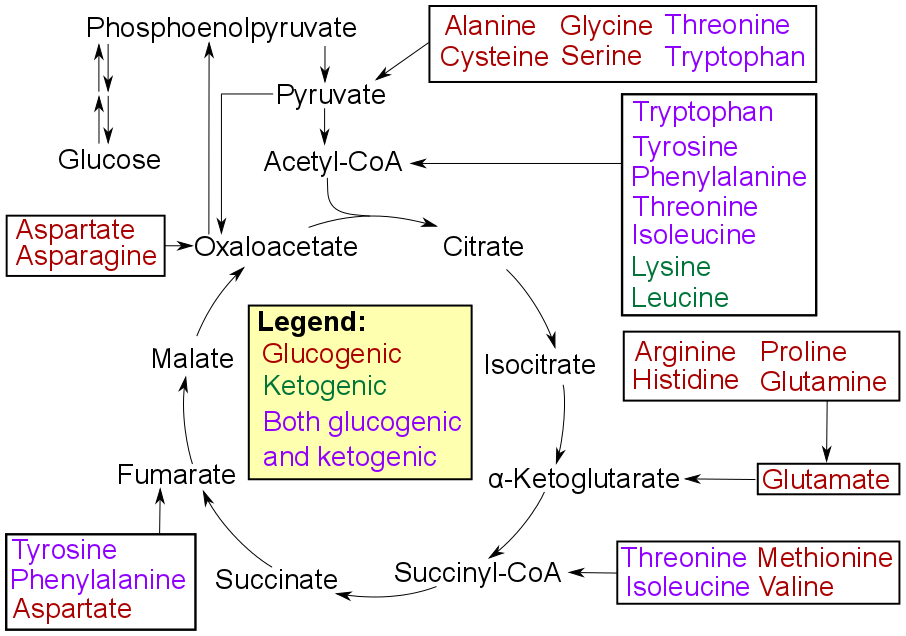
Type of amino acid
A glucogenic amino acid (or glucoplastic amino acid) is an amino acid that can be converted into glucose through gluconeogenesis. This is in contrast to the ketogenic amino acids, which are converted into ketone bodies.
The production of glucose from glucogenic amino acids involves these amino acids being converted to alpha keto acids and then to glucose, with both processes occurring in the liver. This mechanism predominates during catabolysis, rising as fasting and starvation increase in severity.
As an example, consider alanine. Alanine is a glucogenic amino acid that the liver's gluconeogenesis process can use to produce glucose.
Muscle cells break down their protein when their blood glucose levels fall, which happens during fasting or periods of intense exercise. The breakdown process releases alanine, which is then transferred to the liver. Through a transamination process, alanine is changed into pyruvate in the liver. Following this, pyruvate is transformed into oxaloacetate, a crucial step in the gluconeogenesis process. It is possible to synthesize glucose from oxaloacetate, ensuring that the blood glucose levels required for the body to produce energy are maintained.
In humans, the glucogenic amino acids are:
- Alanine
- Arginine
- Asparagine
- Aspartic acid
- Cysteine
- Glutamic acid
- Glutamine
- Glycine
- Histidine
- Methionine
- Proline
- Serine
- Valine
Amino acids that are both glucogenic and ketogenic, known as amphibolic (mnemonic "PITTT"):
- Phenylalanine
- Isoleucine
- Threonine
- Tryptophan
- Tyrosine
Only leucine and lysine are not glucogenic (they are only ketogenic).
Glucogenic and ketogenic amino acids are classified according to the metabolic pathways they enter after being broken down. Glucogenic amino acids can be converted into intermediates that feed the gluconeogenesis metabolic pathway, which produces glucose. When necessary, these amino acids can be used to generate glucose. As previously stated, because they can be transformed into glucose via a variety of metabolic pathways, the majority of amino acids (apart from leucine and lysine) are regarded as glucogenic. Alternatively, the breakdown of ketogenic amino acids results in the ketogenic precursors acetyl-CoA and acetoacetate. These substances undergo a process called ketogenesis that produces ketone bodies like acetoacetate, beta-hydroxybutyrate, and acetone.
References
References
- (February 1984). "Thyroid hormone action on intermediary metabolism: Part III. Protein metabolism in hyper- und hypothyroidism". Klinische Wochenschrift.
- (June 2003). "Interorgan Amino Acid Transport and its Regulation". The Journal of Nutrition.
- (September 2001). "Glutamine: The Emperor or His Clothes?". The Journal of Nutrition.
- (January 2000). "Classifying amino acids as gluco(glyco)genic, ketogenic, or both". Biochemical Education.
This article was imported from Wikipedia and is available under the Creative Commons Attribution-ShareAlike 4.0 License. Content has been adapted to SurfDoc format. Original contributors can be found on the article history page.
Ask Mako anything about Glucogenic amino acid — get instant answers, deeper analysis, and related topics.
Research with MakoFree with your Surf account
Create a free account to save articles, ask Mako questions, and organize your research.
Sign up freeThis content may have been generated or modified by AI. CloudSurf Software LLC is not responsible for the accuracy, completeness, or reliability of AI-generated content. Always verify important information from primary sources.
Report