From Surf Wiki (app.surf) — the open knowledge base
Georgetown University
Private Jesuit university in Washington, D.C.
Private Jesuit university in Washington, D.C.
| Field | Value |
|---|---|
| name | Georgetown University |
| image | Georgetown University Seal.svg |
| image_upright | 0.6 |
| latin_name | Collegium Georgiopolitanum |
| former_names | Georgetown College (1789–1815) |
| motto | *Utraque Unum* (Latin) |
| mottoeng | "Both into One" |
| type | Private federally chartered research university |
| established | |
| founder | John Carroll |
| religious_affiliation | Catholic (Jesuit) |
| endowment | $3.95 billion (2025) |
| budget | $1.81 billion (FY2024) |
| president | Robert Groves (interim) |
| total_staff | 7,419 |
| students | 20,031 (fall 2024) |
| undergrad | 7,833 (fall 2024) |
| postgrad | 12,198 (fall 2024) |
| city | Washington, D.C. |
| country | United States |
| coordinates | |
| campus_type | Large city |
| campus_size | 104 acre |
| colors | Blue and gray |
| sports_nickname | Hoyas |
| sporting_affiliations | |
| mascot | Jack the Bulldog |
| website | |
| logo | Georgetown University Logotype.svg |
| logo_upright | .9 |
| accreditation | MSCHE |
| academic_affiliations |
Georgetown University is a private Jesuit research university in Washington, D.C., United States. Founded by Bishop John Carroll in 1789, it is the oldest Catholic institution of higher education in the United States, the oldest university in Washington, D.C., and the nation's first federally chartered university.
The university has eleven undergraduate and graduate schools. Its main campus, located in the Georgetown historic neighborhood, is on a hill above the Potomac River and identifiable by Healy Hall, a National Historic Landmark. It is classified among "R1: Doctoral Universities – Very high research activity." The university offers degree programs in forty-eight disciplines, enrolling an average of 7,500 undergraduate and 10,000 graduate students from more than 135 countries. The school's athletic teams are nicknamed the Hoyas and include a men's basketball team, which is a member of the Big East Conference.
Notable alumni include 32 Rhodes Scholars, 46 Marshall Scholars, 33 Truman Scholars, 565 Fulbright Scholars, at least 10 living billionaires, 26 U.S. governors, 2 U.S. Supreme Court justices, 2 U.S. presidents, and 116 members of the United States Congress including 26 senators, as well as international royalty and more than a dozen foreign heads of state. Georgetown has educated more U.S. diplomats than any other university including at least 92 ambassadors of the United States, as well as a number of American politicians and civil servants.
History
Main article: History of Georgetown University
Founding
In 1634, Jesuit settlers from England founded the Province of Maryland in colonial-era British America. In 1646, the defeat of the Royalists in the English Civil War led to stringent laws against Catholic education and the extradition of known Jesuits from the colony, including missionary Andrew White, and the destruction of their school at Calverton Manor. During most of the remainder of Maryland's colonial period, Jesuits conducted Catholic schools clandestinely. Following the end of the American Revolutionary War, plans to establish a permanent Catholic institution for education in the United States were realized.
At Benjamin Franklin's recommendation, Pope Pius VI appointed former Jesuit John Carroll the first head of the Catholic Church in the United States, even though the papal suppression of the Jesuit order was still in effect. Carroll began meetings of local clergy in 1783 near Annapolis, where they orchestrated the development of a new university.
19th century
During its early years, Georgetown College suffered from considerable financial strain. The Maryland Society of Jesus began its restoration in 1805, and Jesuit affiliation, in the form of teachers and administrators, bolstered confidence in the college. The school relied on private sources of funding and the limited profits from local lands which had been donated to the Jesuits. To raise money for Georgetown and other schools in 1838, Maryland Jesuits conducted a mass sale of some 272 slaves to two Deep South plantations in Maringouin, Louisiana, from their six in Maryland, ending their slaveholding.

President James Madison signed into law Georgetown's congressional charter on March 1, 1815, creating the first federal university charter, which allowed it to confer degrees, with the first bachelor's degrees being awarded two years later.
In 1844, the school received a corporate charter under the name "The President and Directors of Georgetown College", affording the growing school additional legal rights. In response to the demand for a local option for Catholic students, the Medical School was founded in 1851.
The American Civil War greatly impacted Georgetown as 1,141 students and alumni enlisted in one army or the other, and the Union army commandeered university buildings in order to defend the national capital from a feared Confederate attack. When the Georgetown College Boat Club, the school's rowing team, was founded in 1876 it adopted two colors: blue, used for Union uniforms, and gray, used for Confederate uniforms. These colors signified the peaceful existence of students who held various loyalties.
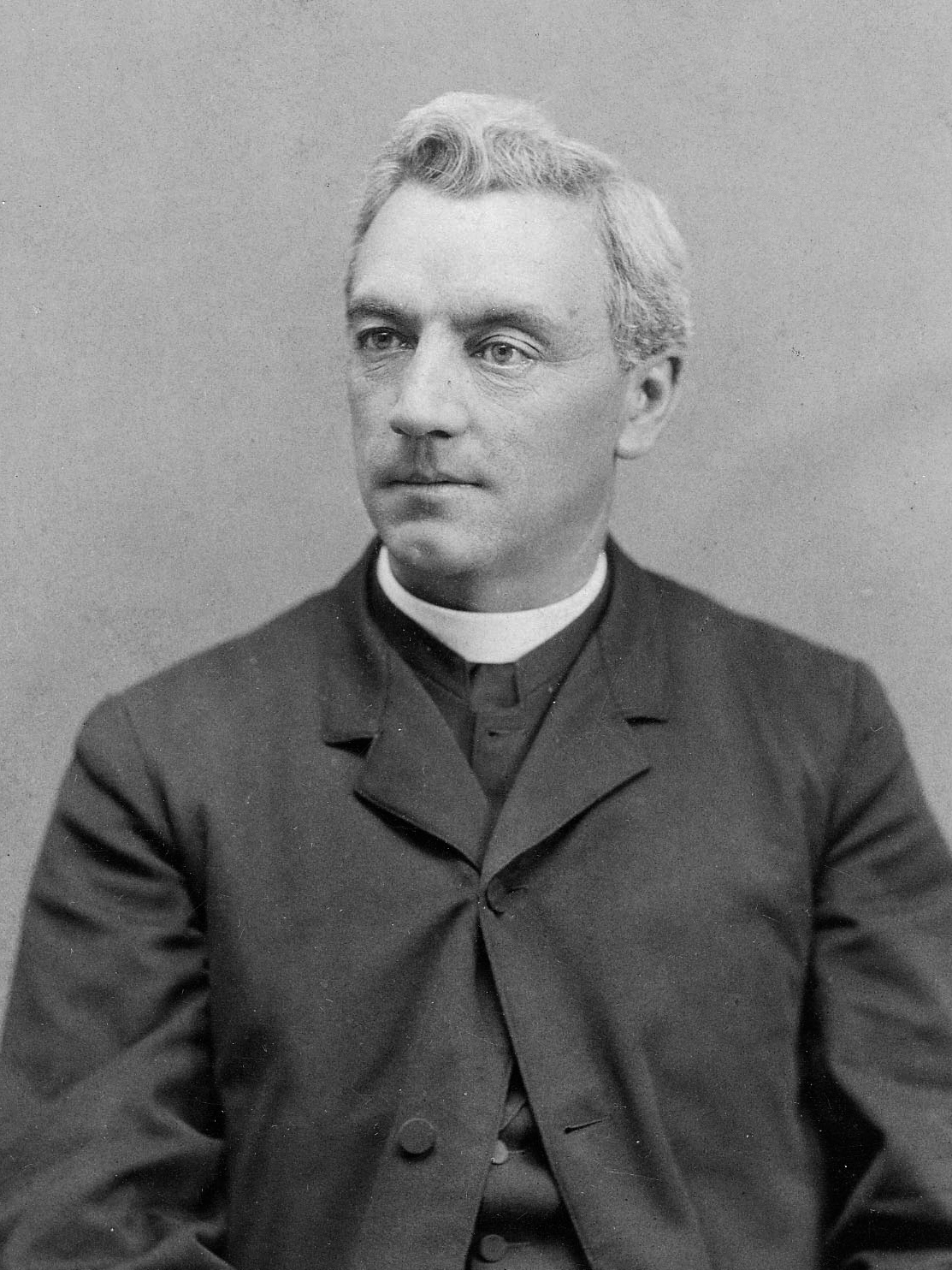
Enrollment did not recover until the late 19th century, during the presidency of Patrick Francis Healy from 1873 to 1881. Born in Athens, Georgia as a slave by law and mixed-race by ancestry, Healy was the first person of African descent to head a predominantly white American university. He identified as Irish Catholic, like his father, and was educated in Catholic schools in the United States and France. He is credited with reforming the undergraduate curriculum, lengthening the medical and law programs, and creating the Alumni Association. One of his largest undertakings was the construction of a major new building, subsequently named Healy Hall in his honor. For his work, Healy is known as the school's "second founder".
In 1870, after the founding of the Law Department, Healy and his successors hoped to bind the professional schools into a university, and focus on higher education.
20th century
The School of Medicine added a dental school in 1901, and the undergraduate School of Nursing was established 1903. Georgetown Preparatory School relocated from campus in 1919 and fully separated from the university in 1927.
The School of Foreign Service (SFS) was founded in 1919 by Edmund A. Walsh to prepare students for leadership in diplomacy and foreign commerce. The School of Dentistry became independent of the School of Medicine in 1956. The School of Business Administration was separated from the SFS in 1957 and was renamed the McDonough School of Business (MSB) in 1998 in honor of SFS alumnus Robert E. McDonough.
Georgetown also aimed to expand its resources and student body. The School of Nursing has admitted female students since its founding, and most of the university classes were made available to women on a limited basis by 1952. With the College of Arts and Sciences welcoming its first female students in the 1969–1970 academic year, Georgetown became fully coeducational.
In 1962, the Center for Strategic and International Studies (CSIS) was founded at Georgetown University as a think tank to conduct policy studies and strategic analyses of political, economic and security issues throughout the world. When Henry Kissinger retired from his position as U.S. Secretary of State in 1977, he taught at Georgetown SFS, making CSIS the base for his Washington operations. In 1986, the university's board of directors voted to sever all ties with CSIS due to differences in academic direction and competing fund-raising efforts.
In 1975, Georgetown established the Center for Contemporary Arab Studies, soliciting funds from the governments of the United States, Saudi Arabia, Oman, and Libya as well as American corporations with business interests in the Middle East. It later returned the money it received from Muammar Qaddafi's Libyan government, which had been used to fund a chair for Hisham Shirabi, and also returned further donations from Iraq. Georgetown ended its bicentennial year of 1989 by electing Leo J. O'Donovan, S.J. as president. He subsequently launched the Third Century Campaign to expand the school's endowment.
21st century
In December 2003, Georgetown completed the campaign after raising over $1 billion for financial aid, academic chair endowment, and new capital projects.
In October 2002, Georgetown University began studying the feasibility of opening a campus of the SFS in Qatar, when the non-profit Qatar Foundation first proposed the idea. The School of Foreign Service in Qatar opened in 2005 along with four other U.S. universities in the Education City development. Additionally, the Center for International and Regional Studies (CIRS) opened in 2005 at the new Qatar campus. Between 2012 and 2018, Georgetown received more than $350 million from Gulf Cooperation Council countries including Saudi Arabia, Qatar, and the United Arab Emirates.
In 2005, Georgetown received a $20 million gift from Alwaleed bin Talal bin Abdulaziz Alsaud, a member of the Saudi Royal Family; at that time the second-largest donation ever to the university, it was used to expand the activities of the Prince Alwaleed Bin Talal Center for Muslim-Christian Understanding. The same year, Georgetown began hosting a two-week workshop at Fudan University's School of International Relations and Public Affairs in Shanghai, China, which developed into a more formal connection when Georgetown opened a liaison office at Fudan on January 12, 2008, to further collaboration.
John J. DeGioia, Georgetown's first lay president, led the school from 2001 to 2024. DeGioia continued its financial modernization and sought to "expand opportunities for intercultural and interreligious dialogue." DeGioia also founded the annual Building Bridges Seminar in 2001, which brings global religious leaders together, and is part of Georgetown's effort to promote religious pluralism. The Berkley Center for Religion, Peace, and World Affairs began as an initiative in 2004, and after a grant from William R. Berkley, was launched as an independent organization in 2006.
Jesuit tradition
Georgetown University was founded by former Jesuits in the tradition of Ignatius of Loyola; it is a member of the Association of Jesuit Colleges and Universities. Georgetown is not a pontifical university, though seven Jesuits serve on the 36 member Board of Directors, the university's governing body.
Catholic spaces at the university, including Dahlgren Chapel, the university's principal place of Catholic worship, fall within the territorial jurisdiction of the Archdiocese of Washington,
Fifty-two members of the Society of Jesus live on campus, and are employed by Georgetown mostly as professors or administrators. Jesuit Heritage Week has been held every year since 2001 to celebrate the contributions of Jesuits to the Georgetown tradition.
Georgetown's Catholic heritage has been controversial at times, even though its influence is relatively limited. Stores in university-owned buildings are prohibited from selling or distributing birth control products.
The university hosts the Cardinal O'Connor Conference on Life annually in January to discuss the pro-life movement. Georgetown University Medical Center and Georgetown University Hospital, operated by MedStar Health, are prohibited from performing abortions. However, , the hospital was performing research using embryonic stem cells.
Between 1996 and 1999, the administration added crucifixes to many classroom walls, a change that attracted national attention. Before 1996, crucifixes had hung only in hospital rooms and historic classrooms. Some of these crucifixes are historic works of art, and are noted as such.
In May 2004, Imam Yahya Hendi, the school's on-campus Muslim cleric, faced pressure to remove crucifixes while he and other campus faith leaders defended their placement. The Edward B. Bunn, S.J. Intercultural Center rotates displays of various faith and culture symbols in its lobby.
In September 2005, Georgetown was criticized by religious groups, including the Cardinal Newman Society, for not following the teachings of the church and hosting pro-abortion rights speakers, including John Kerry and Barack Obama.
In 2009, Georgetown's religious symbols were brought back to national attention after the university administration covered-up the name of Jesus in preparation for then President Barack Obama's speech on campus.
In May 2012, Washington's Archbishop Donald Wuerl criticized the university for inviting pro-abortion rights Kathleen Sebelius to be a commencement speaker.
In August 2013, religious groups denounced Georgetown for allowing gay-themed events, including a performance, during which "a male student went as a high-heeled Mary and danced to Madonna's "Like a Virgin" while Jesus (a woman) looked on."
Academics
| **School** | **Founded** |
|---|---|
| College of Arts & Sciences | 1789 |
| Graduate School of Arts & Sciences | 1820 |
| School of Medicine | 1851 |
| Law Center | 1870 |
| Berkley School of Nursing | 1903 |
| Walsh School of Foreign Service | 1919 |
| School of Dentistry (defunct) | 1951 |
| School of Continuing Studies | 1956 |
| McDonough School of Business | 1957 |
| School of Languages and Linguistics (defunct) | 1959 |
| Georgetown University in Qatar | 2005 |
| McCourt School of Public Policy | 2013 |
| School of Health | 2022 |
| References: |
, the university had 7,463 undergraduate students and 11,542 graduate students. Bachelor's programs are offered through College of Arts & Sciences, the School of Nursing, the McDonough School of Business, the School of Continuing Studies, the School of Health, and the Walsh School of Foreign Service, which includes the Qatar campus.

.jpg)
Master's and doctoral programs are offered through the Graduate School of Arts & Sciences, the Law Center, the School of Medicine, the McCourt School of Public Policy, and the School of Continuing Studies. Master's students occasionally share some advanced seminars with undergraduates, and most undergraduate schools offer abbreviated bachelor's and master's programs following completion of the undergraduate degree. The McDonough School of Business and the Edmund A. Walsh School of Foreign Service both offer master's programs. The School of Foreign Service is renowned for its academic programs in international affairs. The Center for Contemporary Arab Studies also offer a Master's of Arab Studies, as well as certificates.
Each graduate school offers at least one double degree with another graduate school. Additionally, the Law Center offers a joint degree with the Johns Hopkins Bloomberg School of Public Health. The School of Continuing Studies includes the Center for Continuing and Professional Education, and operates four types of degree programs, over thirty professional certificates and non-degree courses, undergraduate and graduate degrees in Liberal Studies, as well as summer courses for graduates, undergraduates, and high school students. The School of Dentistry closed in 1990 after 89 years in operation.
Rankings and admissions
Admission to Georgetown has been deemed "most selective" by U.S. News & World Report, with the university receiving 27,650 applications and admitting 11.7% of those who applied for the Class of 2025. , Georgetown's graduate schools have acceptance rates of 2.8% to the School of Medicine, 12.9% to the Law Center, 25% to the MSFS, and 35% to the MBA program. In 2004, a National Bureau of Economic Research study on revealed preference of U.S. colleges showed Georgetown was the 16th most-preferred choice.
The School of Foreign Service's (SFS) master's and bachelor's programs in international relations were ranked first in the world by Foreign Policy in 2024. SFS's undergraduate programs were also ranked first in the United States for international affairs by Niche. The McCourt School of Public Policy is ranked fourth in global policy and administration studies by US News & World Report. In the same report, the Medical School is ranked 44th in research and 87th in primary care, and the McDonough School of Business ranks 24th in MBA programs and 14th in undergraduate programs. In 2024, Poets & Quants ranked Georgetown's undergraduate business programs third in the country. Georgetown University Law Center is ranked 14th in the United States and 12th in the world, as well as first in clinical training and part-time law, second in tax law, third in international law, fifth in criminal law, seventh in health care law, ninth in constitutional law, and tenth in environmental law.
The undergraduate schools maintain a restrictive Early Action admissions program, as students who have applied through an Early Decision process at another school are not permitted to apply early to Georgetown. Georgetown accepts the SAT and ACT, though it does not consider the writing portion of either test. Over 55% of undergraduates receive financial aid, and the university meets 100% of demonstrated need, with an average financial aid package of $23,500 and about 70% of aid distributed in the form of grants or scholarships. Georgetown is need-blind for domestic applicants.
Faculty
Main article: List of Georgetown University faculty
, Georgetown University employed 1,414 full-time and 1,196 part-time faculty members across its three Washington, D.C. campuses, The faculty comprises leading academics and notable political and business leaders, and are predominantly male by a two-to-one margin.
Georgetown University's faculty members give more support to liberal candidates, and while their donation patterns are generally consistent with those of other American university faculties, they gave more than average to Barack Obama 2008 presidential campaign.
The faculty includes former Society for Classical Studies president James J. O'Donnell, theologian John Haught, social activistd Chai Feldblum, Nobel laureate George Akerlof, writer and human rights advocate Carolyn Forché, award-winning literary critic Maureen Corrigan, linguist Deborah Tannen, business philosopher Jason Brennan, and hip hop scholar Michael Eric Dyson.
Many former politicians choose to teach at Georgetown, including former Secretaries of State Madeleine Albright and Henry Kissinger, former U.S. Ambassador to the United Nations Jeane Kirkpatrick, U.S. Agency for International Development administrator Andrew Natsios, National Security Advisor Anthony Lake, and CIA director George Tenet. Former Supreme Court Justices William J. Brennan, Jr., Antonin Scalia, and John Roberts have each taught at the university. Former Solicitor General of the United States Paul Clement has been a member of the law faculty since leaving public office in 2008. Internationally, the school attracts former ambassadors and heads of state, including former Prime Minister of Spain José María Aznar, Saudi Ambassador Prince Turki Al-Faisal, President Laura Chinchilla of Costa Rica, and President of Colombia Álvaro Uribe.
Research
.jpg)
Georgetown University is classified among "R1: Doctoral Universities – Very high research activity". , Georgetown's libraries held over 3.5 million printed items, including 1.25 million e-books, in seven buildings, with most in Lauinger Library. The Blommer Science Library in the Reiss Science Building on campus, houses most of the Science collection. Additionally, the Law School campus includes the nation's fifth-largest law library as of 2007. Georgetown faculty conduct research in hundreds of subjects, but research priorities are in religion, ethics, science, public policy, and cancer medicine.
In 2019, Georgetown spent $240.9 million on research, ranking it 101st nationwide, with $94.0 million in federal funding. In 2007, it received about $14.8 million in federal funds for research, with 64% from the National Science Foundation, National Institutes of Health, the U.S. Department of Energy, and the U.S. Department of Defense. In 2010, the school received $5.6 million from the Department of Education to fund fellowships in several international studies fields. Georgetown's Lombardi Comprehensive Cancer Center is one of 41 research-intensive comprehensive cancer centers in the United States, and developed the breakthrough HPV vaccine for cervical cancer, and conditionally reprogrammed cells (CRC) technology.
Academic publications
Centers that conduct and sponsor research at Georgetown include the Berkley Center for Religion, Peace, and World Affairs, the Prince Alwaleed Center for Muslim–Christian Understanding and the Woodstock Theological Center. Regular publications include the Georgetown Journal on Poverty Law and Policy, the Kennedy Institute of Ethics Journal, The Georgetown Law Journal, the Georgetown Journal of International Affairs, and the Georgetown Public Policy Review.
Campuses
Main article: Campuses of Georgetown University, List of Georgetown University buildings
Georgetown University has four campuses in Washington, D.C.: the undergraduate campus located in the neighborhood of Georgetown, the Medical Center, the School of Continuing Studies (in Chinatown) and the Law Center. The undergraduate campus and Medical Center are together in the Georgetown neighborhood in the Northwest Quadrant of Washington and form the main campus. Other centers are located around Washington, D.C., including the Center for Continuing and Professional Education at Clarendon in Arlington County, Virginia. Transit between these locations and the Washington Metro is supplied by a system of shuttles, known as GUTS buses. Georgetown also has branches of the School of Foreign Service in Doha, Qatar, and Jakarta, Indonesia, as well as villas in Alanya, Turkey, and Fiesole, Italy. In their campus layout, Georgetown's administrators consistently used the traditional quadrangle design.
Main campus
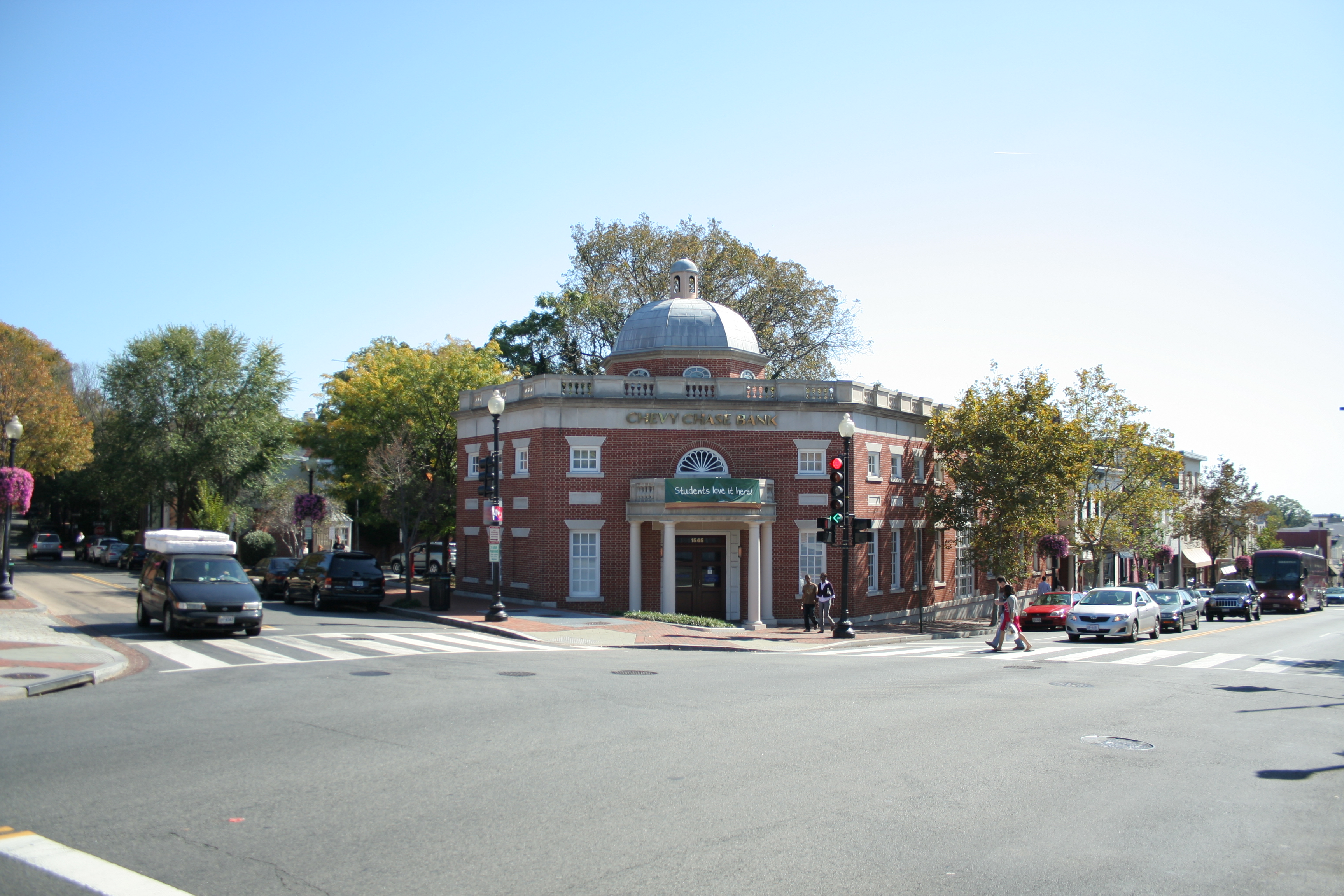
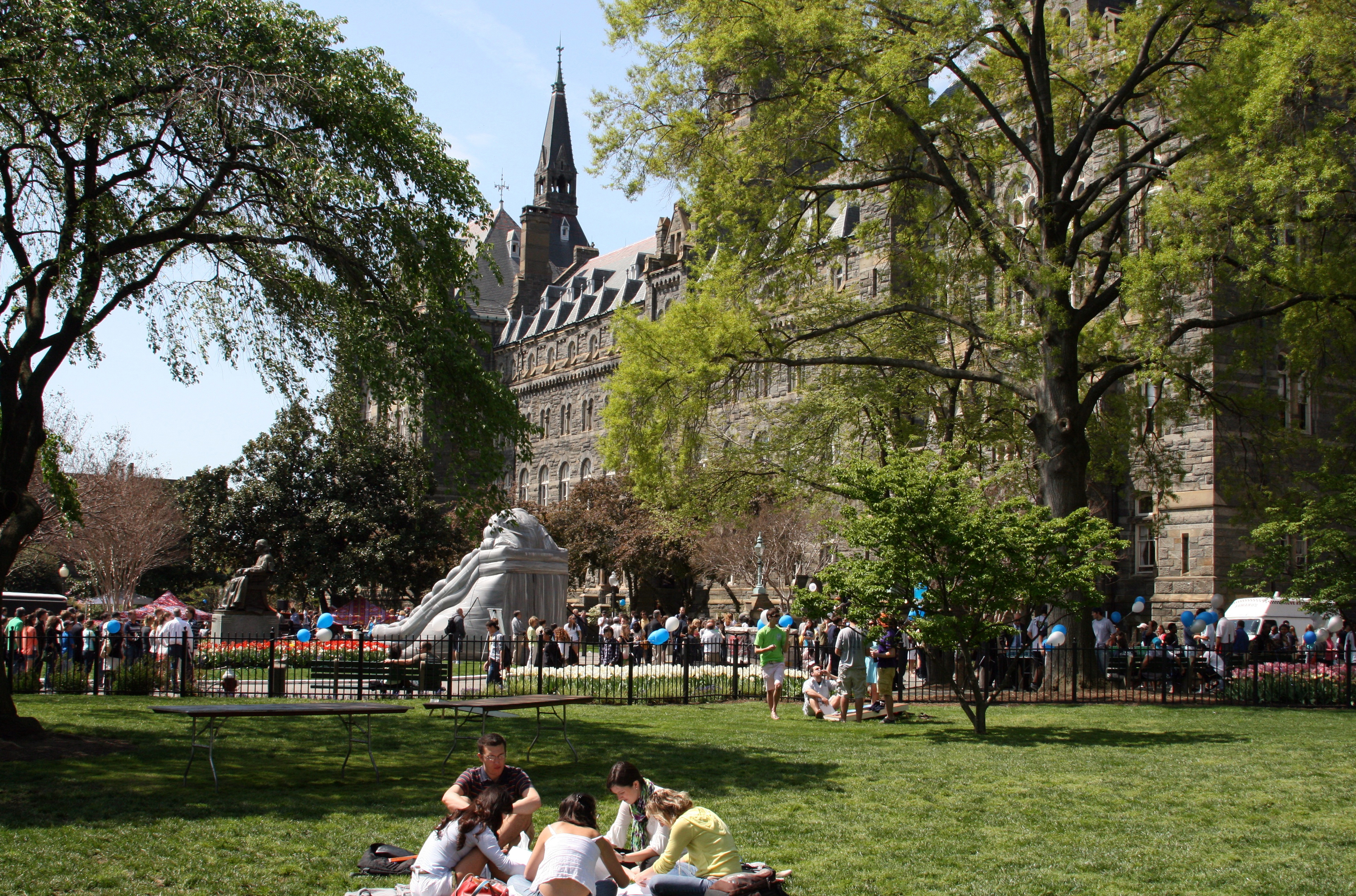
Georgetown's undergraduate and medical school campuses are situated on an elevated site above the Potomac River overlooking Northern Virginia. Because of this, Georgetown University is often referred to as "The Hilltop". The main gates, known as the Healy Gates, are located at the intersection of 37th and O Streets NW, and lead directly to the heart of campus. The main campus is relatively compact, being 104 acre in area, but includes fifty-four buildings, student residences and apartments capable of accommodating 80% of undergraduates, and various athletic facilities. Most buildings employ collegiate Gothic architecture and Georgian brick architecture. Campus green areas include fountains, a cemetery, large clusters of flowers, groves of trees, and open quadrangles. New buildings and major renovations are required to meet LEED Silver criteria, and the campus was nominated for the District Sustainability People's Choice Award in 2018.
Healy Hall, designed by Paul J. Pelz in Neo-Medieval style and built from 1877 to 1879, is the architectural gem of Georgetown's campus, and is a National Historic Landmark. Within Healy Hall are a number of notable rooms including Gaston Hall, Riggs Library, and the Bioethics Library Hirst Reading Room. Both Healy Hall and the Georgetown University Astronomical Observatory, built in 1844, are listed on the National Register of Historic Places.
In addition to the front lawn, the main campus has traditionally centered on Dahlgren Quadrangle behind Healy Hall, which is home to Dahlgren Chapel; however, in recent decades, Red Square has replaced the Dahlgren Quadrangle as the focus of student life. North of Red Square is an extended pathway that is home to buildings such as the Intercultural Center (ICC), the Reiss Science building, the newly constructed dormitory named after Pedro Arrupe, and the large Leavey Student Center.
The medical school is located in the northwestern part of the main campus on Reservoir Road. It is integrated with Georgetown University Hospital.
In the 21st-century, the West side of the Hilltop has emerged as a newly developing area of the main campus. The university completed the Southwest Quadrangle Project in late 2003 and brought a new 907-bed upperclassmen residence hall, the Leo J. O'Donovan dining hall, a large underground parking facility, and a new Jesuit Residence to the campus. The school's first performing arts center, named for Royden B. Davis, was completed in November 2005. The new business school headquarters, named for Rafik Hariri, opened in Fall 2009, and Regents Hall, the new science building, opened in Fall 2012. Along with the adjacent Leavey Student Center, these two large buildings have become popular study spaces and overlook a newly developed scenic lawn space.
In the fall of 2014, the university opened a new student center, the Healey Family Student Center (HFSC) to complement the longstanding Leavey Center. The Healey Family Student Center is located on the first floor of New South Hall, a space that functioned as the university's main dining facility until the Leo J. O'Donovan dining hall opening in 2003. It features over 43,000 square feet including several study spaces, conference rooms, dance, and music studios, as well as a pub called Bulldog Tavern and a salad store Hilltoss, which is operated by The Corp.
As a location, Georgetown was ranked nationally as the second-best college town by The Princeton Review in 2011. The Georgetown neighborhood west of Wisconsin Avenue NW is dominated by the presence of university students. Students have easy access to the M Street commercial area, the Georgetown Waterfront, and numerous trails that lead to the National Mall and other parks. Despite this, "town and gown" relations between the university communities and other Georgetown residents are often strained by facilities construction, enlargement of the student body, as well as noise and alcohol violations. Several groups of neighborhood residents have attempted to slow University growth in Georgetown, creating friction between students and the surrounding neighborhood. Despite the relative safety of the neighborhood, crime is a persistent issue, with campus security responding to 257 crimes in 2008, the majority of which were petty crimes.
Law Center campus
Main article: Georgetown University Law Center
The Law Center campus is located in the Capitol Hill neighborhood on New Jersey Avenue, near Washington Union Station, and consists of five buildings. First-year students at the Law Center can live in the single on-campus dormitory, the Gewirz Student Center. Most second- and third-year students, as well as some first-year students, live off-campus. As there is little housing near the Law Center, most are spread throughout the Washington metropolitan area.
The Campus Completion Project, finished in 2005, saw the addition of the Hotung International Building and the Sport and Fitness Center. G Street and F Street are closed off between 1st and 2nd Streets to create open lawns flanking McDonough Hall, the main building on the campus. In 2019, the university purchased $70 million of a building at 500 First St. NW to add to the Georgetown University Law Center. Opening in 2020, the 130,000-square-foot edifice will provide classrooms and offices for researchers in health, technology, law and other fields.
Downtown campus
Main article: Georgetown University School of Continuing Studies

The School of Continuing Studies (SCS) campus is located in a 95,000 square foot, state-of-the-art building in downtown Washington, D.C. The campus currently serves as the home for Georgetown's graduate programs in fields such as Applied Intelligence, Journalism, Public Relations, Real Estate, Sports Industry Management, and Urban & Regional Planning.
The current building, which was completed in 2013, includes 30 classrooms, a 125-person auditorium, a digital media lab, a broadcast studio, an interfaith chapel, and a dedicated library. It is located in the Chinatown neighborhood of the city and is considered to be one of the most accessible locations in town, with a Transit Score of 100 and a Walk Score of 98. It is also located just a few blocks away from the Capital One Arena, the home court of the men's basketball team.
Qatar campus
Main article: Georgetown University in Qatar

In 2002, the Qatar Foundation for Education, Science and Community Development presented the School of Foreign Service with the resources and space to open a campus in Education City in Al Rayyan, Qatar. SFS-Qatar opened in 2005 as a liberal arts and international affairs undergraduate school for regional students. It offers the same Bachelor of Science in Foreign Service (BSFS) as the main campus, in addition to three certificates. Apart from language courses, including Arabic and French, all courses are taught in English and the curriculum and course materials in the specified majors are identical to those offered at Georgetown's main campus in Washington D.C.
Facilities abroad
In December 1979, the Marquesa Margaret Rockefeller de Larrain, granddaughter of John D. Rockefeller, gave the Villa Le Balze to Georgetown University. The Villa is in Fiesole, Italy, on a hill above the city of Florence. The Villa is used year-round for study abroad programs focused on specialized interdisciplinary study of Italian culture and civilization.
The main facility for the McGhee Center for Eastern Mediterranean Studies was donated to Georgetown in 1989 by alumnus and former United States Ambassador to Turkey George C. McGhee. The school is in the town of Alanya, Turkey within the Seljuq-era Alanya Castle, on the Mediterranean. The center operates study abroad programs one semester each year, concentrating on Turkish language, architectural history, and Islamic studies.
In December 2007, Georgetown opened a liaison office in Shanghai, China to coordinate with Fudan University and others. In 2008, the Georgetown University Law Center in conjunction with an international consortium of law schools established the Center for Transnational Legal Studies in London, England.
In November 2023, Indonesian President Joko Widodo announced Georgetown plans to open a satellite campus of the School of Foreign Service in Jakarta that will offer degree programs for present and future policymakers in the United States and Southeast Asia. The campus, known as Georgetown SFS Asia-Pacific (GSAP), was launched in January 2025.
Student life
| Race and ethnicity | Total | Economic diversity | |||
|---|---|---|---|---|---|
| White | {{bartable | 49 | % | 2 | background:gray}} |
| Foreign national | {{bartable | 14 | % | 2 | background:orange}} |
| Asian | {{bartable | 12 | % | 2 | background:purple}} |
| Hispanic | {{bartable | 10 | % | 2 | background:green}} |
| Other | {{bartable | 8 | % | 2 | background:brown}} |
| Black | {{bartable | 7 | % | 2 | background:mediumblue}} |
| Low-income | {{bartable | 14 | % | 2 | background:red}} |
The Georgetown undergraduate student body, at 6,926 , is composed primarily of students from outside the District of Columbia area, with 33% of new 2016 students coming from the Mid-Atlantic states, 11% being international students, and the remainder coming from other areas of the U.S. The student body also represented 129 countries, with 11% being international, including over 330 undergraduate and 1,050 graduate students who chose to come to Georgetown as a study abroad destination in 2009–10. In 2014–2015, the racial diversity of the undergraduate student body was 57.0% white, 8.8% Asian, 6.2% black, and 7.5% Hispanic. The median family income of Georgetown students is $229,100, with 51% of students coming from the top 5% highest-earning families and 13.5% from the bottom 60%. 55.1% of undergraduates are female.
Although it is a Jesuit university, only 41% of the student body identify as Catholic, while 22% identify as Protestant . Georgetown employs a full-time rabbi, as 6.5% of undergraduates are Jewish. and in 2014, they appointed their first Hindu priest to serve a weekly community of around one hundred. Georgetown also sponsors student groups for Baháʼí, Buddhist, and Mormon traditions. The student body consists of both religious and non-religious students, and more than four-hundred freshmen and transfer students attend a nonreligious Ignatian retreat, called ESCAPE, annually.
A 2007 survey of undergraduates also suggests that 62.8% are sexually active, while 6.2% identify as LGBTQ. Three quarters of a 2009 survey considered homophobia a campus problem. Newsweek, however, rated Georgetown among its top "Gay-Friendly Schools" in 2010.
A survey by the school in 2016 showed that 31% of female undergraduates reported experiencing unwanted sexual contact, and 86% of LGBTQ students reported some form of sexual harassment at the college. In 2011, College Magazine ranked Georgetown as the tenth most hipster U.S. college, while People for the Ethical Treatment of Animals considered it the third most vegan friendly small U.S. school.
Almost all undergraduates attend full-time. A majority of undergraduates, 76%, live on-campus in several dormitories and apartment complexes, including all underclassmen. , 1255 undergraduates and 339 graduate students live off-campus, mostly in the Georgetown, Glover Park, Burleith, and Foxhall neighborhoods. Since Fall 2022, housing is available for on-campus graduate students at 55 H St. NW, which is 30 minute from the Hilltop campus via the Georgetown University Transportation Shuttle (GUTS). Students at the Law Center are accommodated at the Gewirz Student Center. All students in the Medical School live off-campus, most in the surrounding neighborhoods, with some in Northern Virginia and elsewhere through the DMV region.
Student groups

, 92.9% of Georgetown University undergraduates are involved in at least one of the 179 registered student organizations which cover a variety of interests: student government, club sports, media and publications, performing arts, religion, and volunteer and service. Students also operate campus stores, banks, and medical services. Students often find their interests at the Student Activities Commission Club Fair, where both official and unofficial organizations set up tables. The Georgetown University Student Association is the student government organization for undergraduates. There are also elected student representatives within the schools that serve on Academic councils, as well as to the university Board of Directors, and, since 1996, to the Georgetown Advisory Neighborhood Commission.
Georgetown's student organizations include one of the nation's oldest debating clubs, the Philodemic Society, founded in 1830, and the oldest university theater group, the Mask and Bauble Dramatic Society. Nomadic Theatre was founded in 1982 as an alternative troupe without an on-campus home. The Georgetown Improv Association, founded in 1995, performs improvisational shows on-campus at Bulldog Alley in addition to hosting "Improvfest", one of the oldest improv festivals in the country.
The Model United Nations team that is run by the Georgetown International Relations Club, the largest club on campus, and its affiliate, Georgetown International Relations Association, has attained the status of best in the world on several occasions.
There are seven a cappella groups on campus, including The Georgetown Saxatones, The Georgetown Chimes, the Phantoms, Superfood, The GraceNotes, the Chamber Singers, Essence, Harmony, and the Capitol G's. These groups perform annually at the "D.C. A Cappella Festival", held since 1991; the "Cherry Tree Massacre" concert series, held since 1974; and "Spring Sing", held since 2011. The Georgetown University Band is composed of the Georgetown Pep Band and the Georgetown Wind Ensemble, and performs on campus, in Washington, D.C., and at post-season basketball tournaments.
In addition to student organizations and clubs, Georgetown University is home to one of the nation's largest entirely student-owned and -operated corporations, Students of Georgetown, Inc. The business has annual revenues of about $5 million, and surpluses are directly re-invested into the Georgetown student body through Corp Philanthropy, which gave out over $85,000 in scholarships and donations to Georgetown groups in 2014–2015. Georgetown University Alumni & Student Federal Credit Union is the largest all student-run credit union in the United States, with over $17 million in assets and 12,000 members. The Georgetown University Student Investment Fund is one of a few undergraduate-run investment funds in the United States, and hosted CNBC's Jim Cramer to tape Mad Money in September 2006. Hilltop Consultants is a student-run nonprofit consulting agency that works with local and international organizations including Teach For America, Habitat for Humanity, and Special Olympics. The Hilltop Microfinance Initiative is a student-run micro-finance organization, aiming to empower underserved communities in DC, Maryland, and Virginia through small business loans and financial coaching.
Another student-run group, the Georgetown Emergency Response Medical Service, "GERMS", is an all-volunteer ambulance service founded in 1982 that serves campus and the surrounding communities. Georgetown's Army Reserve Officer Training Corps (ROTC) unit, the Hoya Battalion, is the oldest military unit native to the District of Columbia, and was awarded the top ranking among ROTC programs in 2012. The proportion of ROTC students at Georgetown was the 79th highest among universities in the United States . GUGS, the Georgetown University Grilling Society, has been a Georgetown tradition since 2002, selling half-pound hamburgers in Red Square on most Fridays.
Activism

Georgetown University student organizations include a diverse array of groups focused on social justice issues, including organizations run through both Student Affairs and the Center for Social Justice Research, Teaching, & Service (CSJ). The latter organization, founded in 2001, works to integrate into their education Georgetown's founding mission of education in service for justice and the common good.
Oriented against gender violence, Take Back the Night coordinates an annual rally and march to protest against rape and other forms of violence against women. Georgetown Solidarity Committee is a workers' rights organization whose successes include ending use of sweatshops in producing Georgetown-logoed apparel, and garnering pay raises for both university cleaning staff and police. Georgetown Students for Fair Trade successfully advocated for all coffee in campus cafeterias to be Fair Trade Certified.
Georgetown has many additional groups representing national, ethnic, and linguistic interests. Georgetown has the second-most politically active student body in the United States according to The Princeton Review.
As a Catholic university, the pro-life organization Georgetown University Right to Life is officially recognized by the university. In 1981, Right to Life students helped found The Northwest Center, one of two crisis pregnancy centers in Washington. Every year, the organization sends a delegation to the March for Life to show support for the national pro-life movement. In addition, every January since 2000 the club has organized the Cardinal O'Connor Conference on Life. It is the largest student-organized pro-life conference in the United States.
The pro-abortion organization Hyas for Choice is not officially recognized by the university as its positions on abortion are in opposition to university policy, including supporting late-term abortion as is still legal in Washington, D.C., prompting the asterisk in "Hyas". While not financially supported by the school, the organization is permitted to meet and table in university spaces.
Georgetown is also home to a number of student organizations focused on sustainability and environmentalism. GREEN, the Georgetown Renewable Energy and Environmental Network, is the largest of these groups. Another student group, GU Fossil Free, was founded in 2013, and aimed to pressure the university to divest its endowment from fossil fuels. Georgetown is a member of the Ivy Plus Sustainability Consortium, through which it has committed to best-practice sharing and the ongoing exchange of campus sustainability solutions along with the other member institutions; it hosted the annual Ivy Plus summit in 2019. The university announced in February 2020 that it would fully divest its endowment from fossil fuels within the next 5 years.
Media
Georgetown University has several student-run newspapers and academic journals. The Hoya is the university's oldest newspaper. It has been in print since 1920, and since 1987, has been published twice weekly. The Georgetown Voice, known for its weekly cover stories, is a newsmagazine that was founded in March 1969 to focus more attention on citywide and national issues. The Georgetown Independent is a monthly journal of news, commentary and the arts. Founded in 1966, the Georgetown Law Weekly is the student-run paper on the Law Center campus, and is a three-time winner of the American Bar Association's Best Newspaper award. Established in 1995, the Georgetown Public Policy Review is a student-run journal based out of the McCourt School of Public Policy that publishes online articles and a peer-reviewed spring edition. The Georgetown Journal of International Affairs, established in 2000, is a student-managed, peer-reviewed journal that publishes perspectives on current affairs and international relations from experts such as heads of states and renowned professors; it is the official journal of the School of Foreign Service and published by Johns Hopkins University Press.
The Georgetown Academy, restarted in 2008 after a hiatus, targets traditionalist Catholic readers, while the Georgetown Review, founded in 2016, aims to bring a conservative and libertarian viewpoint to campus. Other political publications include the Georgetown Progressive, an online publication run by the Georgetown University College Democrats, and Counterpoint Magazine, a liberal monthly founded in the spring of 2011. The Fire This Time is Georgetown's minority news source. The Georgetown Heckler is a humor magazine founded on the Internet in 2003 by Georgetown students, releasing its first print issue in 2007.
The university has a campus-wide television station, GUTV, which began broadcasting in 1999. The station hosts an annual student film festival in April for campus filmmakers. WGTB, Georgetown's radio station, is available as a webcast and on 92.3 FM in certain dormitories. The station was founded in 1946, and broadcast on 90.1 FM from 1960 to 1979, when university president Timothy S. Healy gave away the frequency and broadcast capabilities to the University of the District of Columbia because of WGTB's far left political orientation. The station now broadcasts through the Internet in its headquarters in the Leavey Center.
Greek life
Many Jesuit schools choose to disassociate from Greek systems, and Georgetown University officially recognizes and funds only one of the many Greek organizations on campus, Alpha Phi Omega, the national co-ed community service fraternity. Other Greek organizations exist on campus, although none require members to live in Greek housing. Additionally, Georgetown University students are affiliated, in some cases, with fraternities at other nearby universities and colleges.

About 10 percent of undergraduate students participate in Greek life, a ratio lower than at many other colleges and universities.
Traditions
Annual events on campus celebrate Georgetown traditions, culture, alumni, sports, and politics. In late April, Georgetown University celebrates Georgetown Day.
Homecoming coincides with a home football game, and festivities such as tailgating and a formal dance are sponsored by the Alumni Association to draw past graduates back to campus. The largest planned sports related celebration is the first basketball practice of the season. Dubbed Midnight Madness, this event introduces the men's and women's basketball teams shortly after midnight on the first day the teams are allowed by NCAA rules to formally practice together. The festivities include a dunk contest, a 3-point contest, a scrimmage, and a musical act.
Athletics
Main article: Georgetown Hoyas
Georgetown fields 23 varsity athletic teams and an additional 23 athletic club teams. The university's varsity teams participate in the NCAA's Division I. The school competes in the Big East Conference in most sports. Exceptions include the football team, which competes in Division I FCS' Patriot League, the sailing team, which competes in the Middle Atlantic Intercollegiate Sailing Association, and the rowing teams, which competes in the Eastern Association of Rowing Colleges.
In March 2002, U.S. News & World Report listed Georgetown's athletics program among the 20 best in the nation. Georgetown's student athletes have a 94% graduation success rate, and over 100 have gone on to play at some level of professional athletics.
The school's teams are called "Hoyas", which originated sometime prior to 1893, when students invented the mixed Greek and Latin chant of "Hoya Saxa", translating roughly as "what (or such) rocks". The school's baseball team, then called the Stonewalls, began in 1870, and football began in 1874; the chant likely refers to one of these teams. By the 1920s, the term "Hoyas" was used to describe groups on campus, and by 1928, campus sports writers started using it instead of the older team name, the "Hilltoppers".
The men's basketball team, which won the NCAA championship in 1984 under coach John Thompson, is among the university's most successful athletic programs. The team holds the record for the most Big East conference tournament titles with eight, and has made thirty NCAA tournament appearances. Georgetown's NBA alumni are collectively among the highest earners from a single program.
The sailing team has won 14 national championships and one world championship in match racing since 2001. Over this time, the sailing team has graduated 79 All-Americans and six College Sailors of the year.
Georgetown has been nationally successful in both cross country and track and field. In 2011, the women's cross country team won Georgetown's second team NCAA championship.
The men's and women's lacrosse teams have both been ranked in the top ten nationally, as have both soccer teams, with the men winning Georgetown's third team national championship in 2019, and the women making the national quarterfinals in 2010 and the semifinals in 2016.
The rugby club team made it to the Division II Final Four in 2005 and 2009. In 2019, Georgetown won the women's team championship at the United States Intercollegiate Boxing Association national tournament held at Syracuse University.
Former Georgetown tennis coach Gordon "Gordie" Ernst, one of several people implicated in the 2019 college admissions bribery scandal, is alleged to have facilitated the admission to Georgetown of as many as 12 students through fraudulent means while accepting bribes of up to $950,000. Ernst had relocated to the University of Rhode Island, where he was placed on administrative leave after he was charged and arrested. He later pled guilty to conspiracy to commit federal programs bribery, three counts of federal programs bribery, and to filing false tax returns for failing to report many of the bribery payments.
People
Employment and graduation outcomes
While about 73% of graduates enter the workforce immediately following graduation, many pursue advanced degrees in law, medicine, business, and other fields. Georgetown alumni pursuing graduate study have been recipients of 32 Rhodes Scholarships, 46 Marshall Scholarships, 33 Truman Scholarships, 15 Mitchell Scholarships, and 12 Gates Cambridge Scholarships. Georgetown is among the nation's top producers of Fulbright Scholars, with 565 over its history, and produced more than any other institution in 2020, 2021, 2023, and 2024. It is also one of the top-ten yearly producers of Peace Corps volunteers . Georgetown ranks among the top ten U.S. colleges for median graduate income, with graduates of the McDonough School of Business having the highest average starting salaries, at $100,859; Georgetown alumni in general have a median starting salary of $87,100 with a median mid-career salary of $179,300, as of 2023-2024.
Government and international relations are the two most popular undergraduate majors at Georgetown, and many students go on to careers in politics and diplomacy. Over 450 alumni currently serve as members and staffers on Capitol Hill. Georgetown educated more U.S. diplomats than any other university as of 2015, including at least 92 alumni that have attained the rank of U.S. Ambassador. Twelve foreign heads of state and government have graduated from Georgetown. Georgetown alumni have served as foreign ministers in a dozen countries.
Finance and economics are the third and fourth-most popular undergraduate majors, and 40% of graduates start careers at consulting or financial services firms. The university is among the top ten alma maters reported by current Wall Street banking employees , according to LinkedIn surveys. Several graduates have gone on take research and leadership positions in many monetary authorities and international financial institutions, including Chair of the Federal Reserve and President of the World Bank.
Notable alumni and faculty
Main article: List of Georgetown University alumni
Bill Clinton, 42nd President of the United States, is a 1968 graduate of the School of Foreign Service. Former officials of the United States Cabinet include 59th Secretary of State and former Supreme Allied Commander Europe, Gen. Alexander Haig; 22nd Secretary of Defense and former CIA Director Robert Gates; 5th Secretary of Homeland Security and retired Marine Gen. John F. Kelly; and 76th Secretary of the Treasury Jack Lew. Other cabinet-level and senior executive branch officials include former Director of National Intelligence Avril Haines, former CIA Director George Tenet, 16th Chair of the Federal Reserve Jerome Powell, Director General of the Foreign Service Marcia Bernicat, and seven White House Chiefs of Staff that include Ron Klain, Denis McDonough, and John Podesta. Former President of the World Bank David Malpass and former CIA Director Gen. David Petraeus are both affiliated with the School of Foreign Service, where they completed academic fellowships. Notable non-graduate alumni include 36th President Lyndon B. Johnson and the 13th and 21st Secretary of Defense Donald Rumsfeld, each of whom studied law at the Georgetown University Law Center but left without a degree.
In addition to high ranking diplomatic posts, Georgetown alumni have participated in significant historical events of the 20th century. Alumnus and longtime faculty member Jan Karski was a World War II resistance fighter and courier for the Polish government-in-exile, where he was among the first to reveal the atrocities of the Holocaust to the world. Alumnus, Jesuit, career diplomat and founder of the School of Foreign Service Edmund A. Walsh also played a role in the investigations of the Nuremberg trials and Soviet war crimes.
In the 119th U.S. Congress, alumni Hakeem Jeffries, John Barrasso, and Dick Durbin hold party leadership positions, serving among a total of seven alumni in the United States Senate and 21 alumni and faculty in the House of Representatives. In total, 116 alumni have served in Congress and 26 have served as state governors, including Terry McAuliffe and Pat Quinn. On the U.S. Supreme Court, alumni include the late Associate Justice Antonin Scalia and former Chief Justice Edward Douglass White. Alumnus and former Solicitor General of the United States Paul Clement remains affiliated with the university as a member of the faculties of law and government.
The Hoya Battalion, the school's Army ROTC program, was ranked as the best in the country in 2012 for preparing cadets for military service, and its graduates, such as former Chief of Staff of the United States Army George W. Casey Jr., have gone on to serve at every rank, including four-star general. Georgetown alumni include at least 23 officers promoted to general or flag rank across the joint service, including Chairman of the Joint Chiefs of Staff Gen. Joseph Dunford and former NATO Supreme Allied Commander Gen. John J. Sheehan.
Twelve foreign heads of state and government have graduated from Georgetown, including King Felipe VI of Spain, King Abdullah II of Jordan presidents Alfonso López Michelsen and Iván Duque of Colombia, Galo Plaza of Ecuador, Ricardo Arias of Panama, Alfredo Cristiani of El Salvador, Laura Chinchilla of Costa Rica, Gloria Macapagal-Arroyo of the Philippines, Prime Minister of Lebanon Saad Hariri, Prime Minister of Portugal and President of the European Commission José Manuel Barroso, and member of the Presidency of Bosnia and Herzegovina Željko Komšić.
In business, Georgetown billionaire alumni include real estate developer and sports team owner Frank McCourt, sports entrepreneur Ted Leonsis, venture capital investor Chris Sacca, Ipsen heir Henri Beaufour, private equity investor Antonio Gracias, Swedish heir Marcus Wallenberg, founder of Kroll Inc. Jules Kroll, Hong Kong financier Eric Hotung, and MBNA founder Charles Cawley. Other prominent alumni in business include JPMorgan Chase executive Mary Callahan Erdoes, former Warner Bros. CEO Ann Sarnoff, investor Paul Pelosi and executives Laurence Tosi, Gary Perlin, David Wehner, Patricia Russo, and Charles Prince.
Georgetown alumni in journalism have been awarded the Pulitzer Prize, Edward R. Murrow Award, and Peabody Awards for their reporting. Pulitzer Prize winners include Walter Pincus, John Bersia, and Megan Twohey. Joan Biskupic was a Pulitzer finalist for her coverage of the Supreme Court.
Alumni in the arts include Academy Award-winning screenwriter and novelist William Peter Blatty, whose novel The Exorcist and its film adaptation are set on the Georgetown campus, where the film was shot on location. Filmmaker Bradley Cooper has been nominated for 12 Academy Awards as a producer, writer, and actor. Screenwriter Jonathan Nolan is known for the films Interstellar and The Dark Knight, as well as the Academy Award-nominated Memento. Other Academy Award-nominated alumni include Golden Globe winner Andrew Morrison and writer-director RaMell Ross. Tony Award-winning alumni include John Guare and Jack Hofsiss.
Notes
--
References
Bibliography
-
- Durkin, Joseph ed. Swift Potomac's Lovely Daughter. Two Centuries at Georgetown through Students' Eyes (Georgetown UP, 1990) 446 pp.
- McFadden, William C. ed. Georgetown at Two Hundred: Faculty Reflections on the University's Future (Georgetown UP, 1990), 353 pp.
References
- "About".
- Clemens, Aaron M.. (2006-09-01). "Dr. of Law".
- (2021-01-22). "Georgetown's Diploma Reflects University's Values and Its Place in the World".
- "Recognised Academic Qualifications from the United States of America". [[Ministry of Business, Innovation and Employment]].
- "Georgetown University Endowment Annual Letter". Georgetown University.
- (October 10, 2024). "Consolidated Financial Statements: June 30, 2024 and 2023 with Independent Auditor's Report". Georgetown University.
- "Key Facts". Georgetown University.
- (2009). "Georgetown Facts". Georgetown University.
- "Georgetown University History".
- "Colors".
- (January 1936). "Miniatures of Georgetown, 1634 to 1934". [[Ohio State University Press]].
- {{harvnb. Nevils. 1934
- Devitt, E.I.. (1909). "Georgetown University". Robert Appleton Company.
- Curran. 1993
- {{harvnb. O'Neill. Williams. 2003
- Curran, Robert Emmett. (July 7, 2007). "Georgetown: A Brief History".
- [http://www.bc.edu/bc_org/avp/cas/his/schloesser/jesuitmoderns/w01/resources/MURPHY_Jesuit-slave.pdf Thomas Murphy, SJ. ''Jesuit Slaveholding in Maryland, 1717–1838,''] {{webarchive. link. (May 27, 2016 New York: Routledge, 2001, p. 4)
- (April 17, 2016). "272 Slaves Were Sold to Save Georgetown. What Does It Owe Their Descendants?". [[The New York Times]].
- "The Federal Charter".
- "Charter of the University".
- (March 23, 2008). "History". [[Georgetown University School of Medicine]].
- (1955). "A Negro President at Georgetown University Some Eighty Years Ago". Negro History Bulletin.
- "Born Enslaved, Patrick Francis Healy 'Passed' His Way to Lead Georgetown University".
- By the time President [[Abraham Lincoln]] visited the Georgetown campus in May 1861, 1,400 troops were living in temporary quarters there. The number of lives lost in the Civil war caused enrollment levels to remain low until well after the war. Only seven students graduated in 1869, down from over 300 in the previous decade.{{harvnb. O'Neill. Williams. 2003
- (August 17, 2005). "Georgetown Traditions: The Blue & Gray".
- (July 31, 2006). "Patrick Francis Healy Inaugurated". [[Library of Congress]].
- Spindle, Lindsey. (July 30, 2003). "Georgetown University School of Nursing and Health Studies Appoints New Director of Development".
- "Third Grammar Class, Second Section, on the steps of Healy Hall at Georgetown University".
- "Dental Alumni History 1970s and 1980s – Georgetown Alumni Online".
- Lyons, Emily. (October 9, 1998). "GSB Takes New Name". [[The Hoya]].
- "McDonough School of Business History".
- "Georgetown University history: Co-Ed".
- Timiraos, Nick. (April 1, 2003). "Areen Outlines Women's Role". [[The Hoya]].
- "The Center for Strategic and International Studies (CSIS): About Us".
- (1977-06-09). "Kissinger agrees to instruct undergrads at Georgetown". Columbia Spectator.
- (March 28, 2012). "A Harvard-Henry Kissinger Détente?". Harvard Magazine.
- "Henry Kissinger appointed professor".
- Jordan, Mary. "GU Severs Ties With Think Tank: Center's Academics, Conservatism Cited". ''The Washington Post''. 18 October 1986. p. B1.
- Khalil, Osamah F.. (2016). "America's Dream Palace: Middle East Expertise and the Rise of the National Security State". Harvard University Press.
- Feinberg, Lawrence. (1980-05-12). "United Arab Emirates Gives GU $750,000 for A Chair in Arab Studies". Washington Post.
- Maeroff, Gene I.. (1981-02-24). "UNIVERSITY RETURNS $600,000 LIBYAN GIFT". The New York Times.
- Sullivan, Tim. (February 16, 2001). "DeGioia Named Next GU President". [[The Hoya]].
- Timiraos, Nick. (September 12, 2003). "Capital Campaign Close to $1 Billion". [[The Hoya]].
- (April 13, 2006). "Georgetown University marks inauguration of Qatar campus". [[The Peninsula (newspaper).
- (2018-12-13). "Universities challenged: scrutiny over Gulf money". Financial Times.
- Murphy, Caryle. (December 13, 2005). "Saudi Gives $20 Million to Georgetown". [[The Washington Post]].
- (January 18, 2008). "Georgetown Opens Liaison Office at Fudan University". [[The Hoya]].
- (February 2005). "Biography". Georgetown University.
- (April 2, 2007). "Georgetown Advancing Interreligious Understanding". Georgetown University.
- (February 15, 2008). "Georgetown's Catholic and Jesuit Identity". Georgetown University.
- (November 5, 2007). "Jesuit Ideals Drive Daily Life at Georgetown". Blue & Gray.
- (2015). "Board of Directors". Georgetown University.
- "About Us".
- (2012). "Jesuit Community Members".
- Fasoranti, Oluseyi. (February 2, 2010). "GU Celebrates Jesuit Heritage Week". [[The Hoya]].
- Wildes, Kevin. (February 13, 2004). "Shades of Gray Define Catholic Complexities". [[The Hoya]].
- (March 29, 2010). "Chains Effective for Georgetown Protesters". [[WRC-TV.
- Kaplan, Sarah. (January 25, 2011). "Anti-Abortion Summit at GU". [[The Hoya]].
- Haggerty, Tim. (February 25, 2000). "University, MedStar Agree to Hospital Sale". [[The Hoya]].
- Argetsinger, Amy and Avram Goldstein. (January 30, 2004). "GU to Continue Controversial Research". [[The Washington Post]].
- Burke, Heather. (October 8, 1999). "The Catholic Question". [[The Hoya]].
- Fuchs, Marek. (June 12, 2004). "At One Catholic College, Crucifixes Make a Comeback". The New York Times.
- Fiore, Liz. (April 20, 1999). "Crucifix Leaders Angry at University". [[The Hoya]].
- Allen, John L Jr.. (May 14, 2004). "Muslim chaplain sees value in crucifixes". [[National Catholic Reporter]].
- (June 16, 2005). "Crucifixes and Religious Symbolism". Georgetown University.
- Murugesan, Vidhya. (September 9, 2005). "Catholic Group Criticizes GU Profs". [[The Hoya]].
- Sahrmann, Marie. (April 14, 2009). "Protests Come to Campus Alongside Obama". [[The Hoya]].
- [http://www.nbcwashington.com/news/archive/Jesus-Missing-From-Obamas-Georgetown-Speech.html "Jesus Missing From Obama's Georgetown Speech"] {{webarchive. link. (January 8, 2017, [[NBC News]], July 13, 2009)
- Boorstein, Michelle. (May 15, 2012). "Washington's Catholic archbishop, Georgetown president spar over graduation invitation to Kathleen Sebelius". [[The Washington Post]].
- [https://www.nytimes.com/2013/08/04/education/edlife/how-georgetown-became-a-gay-friendly-campus.html A Rainbow Over Catholic Colleges: How Georgetown Became a Gay-Friendly Campus] {{webarchive. link. (June 25, 2018, ''The New York Times'', July 30, 2013)
- (1935). "Georgetown University dental student with patient".
- "Dental Alumni History: 1930–1960".
- (July 15, 1989). "Georgetown University: A Documentary History".
- {{Harvnb. Curran. 2010b
- {{Harvnb. Curran. 2010c
- "Our Schools".
- (Fall 2017). "Georgetown Key Facts". Georgetown University.
- (2015). "Academic Programs". Center for Contemporary Arab Studies.
- (2007). "Listing of Joint / Dual Degrees Offered". [[Georgetown University Graduate School of Arts and Sciences]].
- Castronuovo, Jenny. (December 1, 2000). "Joint Public Health Center Launched". [[The Hoya]].
- (June 11, 2007). "About SCS".
- Lewin, Tamar. (October 29, 1987). "Plagued by Falling Enrollment, Dental Schools Close or Cut Back". The New York Times.
- "Common Data Set 2019–2020".
- "Common Data Set 2014–2015".
- "Georgetown University".
- (2021-04-14). "GU Admits Just 12% of Applicants, Setting Record Low".
- (April 5, 2011). "10 Medical Schools With Lowest Acceptance Rates". [[USNWR]].
- "Internet Legal Research Group (ILRG)". Internet Legal Research Group.
- "Statistical Profiles of Admitted Students 2007–2010 – MSFS". Georgetown University.
- (2008). "Full-Time MBA Profile". [[McDonough School of Business]].
- Avery, Christopher, Glickman, Mark E., Hoxby, Caroline Minter and Metrick, Andrew. (December 2005). "A Revealed Preference Ranking of U.S. Colleges and Universities".
- Tierney, Irene Entringer García Blanes, Susan Peterson, Michael J.. (2024-09-10). "The Top International Relations Schools of 2024, Ranked".
- "2021 Georgetown University Rankings".
- (2024-04-10). "Best International Policy and Administration Programs".
- "Best Medical Schools: Georgetown University".
- "Best Business Schools, Georgetown University".
- Bleizeffer, Kristy. (2024-01-22). "Poets&Quants' Best Undergraduate Business Schools Of 2024".
- "Best Law Schools: Georgetown University".
- "ShanghaiRanking's Global Ranking of Academic Subjects 2020 – Law {{!}} Shanghai Ranking – 2020".
- (2017). "Georgetown 2017 Profile for Schools and Candidates". Georgetown University.
- (2011). "Preparation Process for First Year Applicants". Georgetown University.
- (August 31, 2009). "Undergraduate Financial Aid". Georgetown University.
- "Financial Aid – Georgetown University". Georgetown University.
- Sahrmann, Marie. (October 17, 2008). "Faculty Gender Ratio Favors Males". [[The Hoya]].
- Heberle, Robert. (September 21, 2004). "Faculty Funds Favor Kerry". [[The Hoya]].
- Hu, Dawn. (November 21, 2008). "GU Faculty Among Highest Donors to Obama Campaign". [[The Hoya]].
- (2007). "List all faculty experts".
- (2009). "Faculty and Administration". [[Georgetown University Law Center]].
- (September 23, 2014). "George Akerlof (aka Mr. Janet Yellen) Heads to Georgetown – Real Time Economics – WSJ". blogs.wsj.com.
- "Paul D. Clement".
- (September 8, 2010). "Colombia Reports".
- Sarubbi, Andrea E.. (March 7, 2006). "Former President of Poland Joins Georgetown Faculty as Distinguished Scholar". Georgetown University Department of Communications.
- Heller, Chris. (August 11, 2010). "Former Colombian President to teach at Georgetown". [[The Georgetown Voice]].
- [https://som.georgetown.edu/research# Georgetown Medical School:Research] {{Webarchive. link. (November 23, 2017 , Retrieved: May 29, 2019)
- (2010). "Georgetown University". The Carnegie Foundation for the Advancement of Teaching.
- (2014). "The Library in Numbers".
- (2007). "Library Resident Program".
- (2007). "Research centers, institutes and programs".
- (2017). "Georgetown University". [[National Science Foundation]].
- Ponder, Meredith. (February 27, 2008). "Science at Georgetown: Research and the Real World".
- Weber, Lauren. (September 10, 2010). "Georgetown Receives $5.6 Million Department of Education Grant". [[The Hoya]].
- (June 9, 2006). "Georgetown Research Leads To First Cancer Vaccine". [[Science Daily]].
- [http://lombardi.georgetown.edu/pdf/about/LM/2013_Fall.pdf] {{webarchive. link. (January 14, 2014)
- (2011). "Georgetown University Transportation Shuttle (GUTS)". Georgetown University.
- Bachman, Jessica. (May 1, 2007). "Years After Blueprint Ditched, Some Lament Missed Chance". [[The Hoya]].
- (2011). "Georgetown Key Facts". Georgetown University.
- (July 5, 2007). "Georgetown Goes Greener". Blue & Gray.
- (2011). "Georgetown University". College Sustainability Report Card.
- Berman, Noah. (February 22, 2018). "Georgetown Nominated for Sustainability Award". The Hoya.
- George, Hardy. (October 1972). ["Georgetown University's Healy Building"](http://jsah.ucpress.edu/content/31/3/208.full.pdf}}{{Dead link). Society of Architectural Historians.
- "Map of Healy Hall".
- (September 28, 2009). "District of Columbia Inventory of Historic Sites". District of Columbia: Office of Planning.
- Simpao, Bernadette. "Red Square". [[The Hoya]].
- (August 11, 2016). "Georgetown's Newest Residence Hall Named for Society of Jesus Leader".
- (2011). "Georgetown Map Directory". Georgetown University.
- Timiraos, Nick. (August 22, 2003). "From Hole to Home, Southwest Quad Completed". [[The Hoya]].
- (July 10, 2009). "$20 Million Gift to Benefit New MSB Building". Georgetown University.
- (September 9, 2014). "HFSC Opens to Students". The Hoya.
- Bellmore, Ryan. (August 2, 2011). "Princeton Review justifies its existence, ranks colleges". [[The Georgetown Voice]].
- Cho, Ah-Hyun. (February 21, 2008). "Not Always a Beautiful Day in the Neighborhood". [[The Hoya]].
- Burke, Brian. (October 7, 2009). "Campus Crime Rose 7% in 2008, DPS Report Says". [[The Hoya]].
- (January 10, 2007). "Frequently Asked Questions".
- (May 3, 2007). "Washington Neighborhoods".
- Mlyniec, Wally. (October 26, 2004). "Construction Notes".
- Anderson, Nick. (November 29, 2019). "Georgetown University is building more student housing — but not in Georgetown". Washington Post.
- "Our Campus | Georgetown SCS".
- Heberle, Robert. (May 20, 2005). "SFS to Establish Qatar Campus". [[The Hoya]].
- "Studying International Affairs".
- "Why GU-Q".
- (April 23, 2008). "Welcome to the Villa".
- (April 23, 2008). "Study Abroad in Italy".
- (December 18, 2007). "About".
- (February 22, 2008). "Fall 2008: Semester Abroad".
- (2009). "乔治敦大学联络办公室 Georgetown University Liaison Office". Georgetown University Office of the Provost.
- Parks, Ann W.. (November 3, 2008). "The Center for Transnational Legal Studies Kicks off in London". [[Georgetown University Law Center]].
- (2023-11-14). "Georgetown to Open Campus in Indonesia".
- House, The White. (2023-11-12). "Background Press Call by Senior Administration Officials Previewing the Bilateral Engagement of President Biden and President Joko Widodo of Indonesia".
- House, The White. (2023-11-14). "Joint Statement from the Leaders of the United States and the Republic of Indonesia: Elevating Relations to a Comprehensive Strategic Partnership".
- antaranews.com. (November 16, 2023). "Georgetown University planning Indonesian campus: ministry".
- "Executive Master in Diplomacy and International Affairs (EMDIA) – Asia-Pacific".
- (2025-01-16). "SFS Launches Asia Pacific Program and Opens New Location in Indonesia".
- "College Scorecard: Georgetown University". [[United States Department of Education]].
- (2017). "GU Student Profile 2017".
- "Most International Students: National Universities".
- (June 30, 2010). "Statistics on Georgetown's International Community". Georgetown University.
- (January 18, 2017). "Economic diversity and student outcomes at Georgetown". The New York Times.
- "Georgetown University 2014–2015". National Center for Education Statistics.
- (January 2009). "Final Report and Recommendations". Georgetown University.
- Heneghan, Tom. (July 9, 2007). "U.S. imam questions if "American" Islam exists". [[Reuters]].
- (October 8, 2014). "Georgetown University appoints first Hindu priest". The Hindu.
- "Other Traditions".
- (June 16, 2005). "Volunteerism and Service at Georgetown".
- (February 27, 2006). "Georgetown's Great Escape".
- Salinas, Anna. (January 30, 2009). "SCU Report Prescribes Change, Inclusion". [[The Hoya]].
- Heller, Chris. (September 16, 2010). "Newsweek ranks Georgetown among the nation's most diverse and LGBTQ-friendly schools". [[The Georgetown Voice]].
- Kurzius, Rachel. (June 17, 2016). "Survey: Three In 10 Female Georgetown Undergrads Report Non-Consensual Sexual Contact".
- Farra, Emily. (December 8, 2011). "The 10 Most Hipster Campuses". [[College Magazine]].
- (December 2011). "Most Vegan-Friendly College Contest 2011".
- (2005). "COOL: College Opportunities Online Locator".
- Marush, Gabrielle. (June 13, 2011). "Neighbors ask Georgetown to house all students on campus". [[The GW Hatchet]].
- Koester, Anne Y.. (June 13, 2011). "Spring 2011 Semester Report".
- "Housing at 55 H St.".
- (2009). "Student Life". [[Georgetown University School of Medicine]].
- (February 24, 2012). "Student Life Report 2012". [[Georgetown University Student Association]].
- Palko, Ian. (September 21, 1999). "SAC Fair Is Opportunity for Most, Exclusion for Some". [[The Hoya]].
- Giblin, Adam. (October 1, 2002). "Support Your Neighborhood, Vote in D.C.". [[The Hoya]].
- (March 19, 2007). "Philodemic Society". Georgetown University.
- Jarvis, Nicole. (September 7, 2012). "Country's Oldest Theater Troupe Shines". [[The Hoya]].
- (2008). "About Us". Georgetown University.
- (2010). "About". Georgetown University.
- "Model UN Wins Award". The Hoya.
- "Collegiate-Acappella Directory of College A Cappella Groups A–G". Collegiate-acappella.com.
- Bayer, Michael. (November 5, 2003). "A capella abounds at DCAF". The Georgetown Independent.
- (August 5, 2008). "History of The Chimes". Georgetown Chimes.
- "Spring Sing returns to Gaston Hall tomorrow {{!}} Vox Populi".
- (2008). "Pep Band Homepage". Georgetown University.
- (April 29, 2007). "About The Corp". [[Students of Georgetown, Inc..
- "Non-profit report for Students of Georgetown, Inc.". GuideStar USA.
- (April 10, 2015). "The Corp Adds Social Impact Chair to Board". The Hoya.
- "GUASFCU Celebrates 30th Anniversary". Georgetown Alumni Online.
- Swan, John. (October 3, 2006). "GU Goes 'Mad' for Financial Advice". [[The Hoya]].
- "» Our Clients".
- "» About Us".
- "About – GERMS".
- (August 4, 2010). "Battalion History". The HOYA Battalion.
- Goldberg, Roxanne. (February 27, 2012). "ROTC ranked nation's best". [[GW Hatchet]].
- (2010). "National University Rankings 2010".
- (February 20, 2003). "Georgetown University Grilling Society (GUGS): About". Studentorgs.georgetown.edu.
- "About the Center for Social Justice (CSJ)".
- Baldwin, Leslie. (November 8, 2001). "Events educate GU on violence against women". [[The Georgetown Voice]].
- Amend, Andy. (February 9, 1999). "Compromise Reached". [[The Hoya]].
- Somers, Bailey. (March 6, 2003). "Cafeterias to offer only Fair Trade coffee". [[The Georgetown Voice]].
- Toporek, Bryan. (May 2008). "Georgetown Students Struggle to Endorse Candidates".
- (May 12, 2006). "Gimme an 'O'!". The Chronicle of Higher Education.
- (2017). "Abortion Foes Aim to Compete With Turnout for Women's March". The New York Times.
- (January 31, 2017). "Anti-Abortion Activists Convene for Conference".
- Walters, Anne K.. (May 12, 2006). "Gimme an 'O'!". [[The Chronicle of Higher Education]].
- Johnson, Andrew. (November 6, 2003). "Jesuit colleges lack pro-choice groups". [[Marquette Tribune]].
- "Student Organizations and Campus Life".
- (2020-06-19). "GUFF Reflects on GU's Journey to Divestment".
- "Partnerships". Princeton Office of Sustainability.
- "Ivy Plus Sustainability Consortium". Brown University.
- Flaherty, Colleen. "Georgetown to Divest From Fossil Fuels".
- "The Hoya: A Brief History". Digital Georgetown.
- Zumbrun, Josh. (January 14, 2005). "How Georgetown Found a Different Voice". [[The Hoya]].
- (November 10, 2008). "About The Georgetown Independent".
- Free, Elissa. (October 21, 2004). "Georgetown Law Weekly Wins ABA's Best Newspaper Award Three Years Running". [[Georgetown University Law Center]].
- "About – Georgetown Public Policy Review". Georgetown Public Policy Review.
- (2013). "About the Journal". [[Georgetown Journal of International Affairs]].
- Redden, Molly. (October 23, 2008). "Controversial Catholics...and the third coming of The Georgetown Academy". [[The Georgetown Voice]].
- Jubber, Eric. (October 18, 2016). "Conservative Blog To Launch". [[The Hoya]].
- (March 30, 2011). "Students start progressive political magazine". Georgetown Voice.
- "The Fire This Time". Georgetown University.
- (January 23, 2007). "The Georgetown Heckler".
- Cho, Ah-Hyun. (January 27, 2006). "The Revolution Will Be Televised". [[The Hoya]].
- Dillon, Liam. (October 17, 2002). "Finding a Place for Campus Radio". [[The Georgetown Voice]].
- Singh, Suma. (September 19, 2000). "Greek Life: Alive and Well At Georgetown". [[The Hoya]].
- Boyle, Terrence. (December 2, 2007). "The Other Georgetown Fraternities". [[Delta Phi Epsilon (professional).
- Townsend, Jack. (April 12, 2019). "It's All Greek to Me: Fraternities and Sororities on the Hilltop". The Georgetown Voice.
- (July 19, 2021). "New poll points to college and career benefits of Greek life despite criticism". The Hechinger Report.
- "Schedule of Events". Georgetown Day.
- Mellott, Sarah. (October 25, 2005). "Parties, Pageantry Mark Homecoming". [[The Hoya]].
- Tarnow, George. (October 21, 2004). "Clock strikes midnight, basketball stars come out". [[The Georgetown Voice]].
- Witkin, Gordon and Jodi Schneider. (March 10, 2002). "Why they're not just about winning and losing anymore". [[U.S. News & World Report]].
- (October 21, 2011). "Graduation Rates Report". [[NCAA]].
- Shoup-Mendizabal, Jon. (January 23, 2004). "Glory Days". [[The Hoya]].
- {{harvnb. O'Neill. Williams. 2003
- (August 17, 2005). "What's A Hoya?". HoyaSaxa.com.
- Reynolds, Jon K.. (September–October 1983). "The Dogs of Georgetown". Georgetown University Library.
- "Hoyas claim their first Big East tourney title since 1989". ESPN.com.
- (March 18, 2011). "Rams hope to charge past Hoyas in Southwest Regional clash". 9news.
- Diamond, Jared. (February 8, 2012). "Basketball's Alumni Loot Index". [[Wall Street Journal]].
- (November 13, 2013). "A National Championship". We Are Georgetown.
- (July 5, 2014). "Georgetown wins World University Match Racing Championships". Scuttlebutt Sailing News.
- Jammet, Nicolas. (November 23, 2004). "Georgetown's Track Program Quietly Dominates". [[The Hoya]].
- Owings, Matt. (November 21, 2011). "Wisconsin men, Georgetown women earn cross country titles". [[USA Today]].
- Mendoza, Moises. (May 20, 2005). "Experience, Leadership and Vision Propel Hoya Crew to National Prominence". [[The Hoya]].
- (April 24, 2007). "Georgetown Men's Lacrosse Moves Up to No. 4 in National Rankings". Georgetown University Official Athletic Site.
- Bohbot, Samantha. (April 21, 2009). "Ford, Hubschmann Lead GU to Big East Crown". [[The Hoya]].
- Goff, Steven. (December 15, 2019). "College Cup soccer: Georgetown outlasts Virginia in penalty kicks to win its first NCAA title". The Washington Post.
- El-Bashir, Tarik. (November 26, 2010). "Georgetown women's soccer has reached new heights". [[The Washington Post]].
- "2016 Women's College Cup: Preview {{!}} College Soccer". TopDrawerSoccer.com.
- Finn, Dave. (November 17, 2009). "Hoyas Finish Off Undefeated Season". [[The Hoya]].
- (April 6, 2019). "Grand Forks woman wins boxing title for Georgetown".
- Brennan, George. (March 13, 2019). "Martha's Vineyard tie to college admissions scandal".
- Reynolds, Mark. (October 25, 2021). "RI tennis legend 'Gordie' Ernst pleads guilty in Varsity Blues college admissions scandal". Providence Journal.
- Lumpkin, Lauren. (September 15, 2021). "Former Georgetown tennis coach to plead guilty following college admissions scandal". Washington Post.
- Hartocollis, Anemona. (September 15, 2021). "Former Georgetown Tennis Coach Agrees to Plead Guilty in Admissions Scandal". [[The New York Times]].
- Hafer, Chelsea. (November 2, 2018). "2017 First Destination Report: Consulting, Finance Top Industries". The Hoya.
- Stockton, Curran. (December 6, 2019). "Senior Becomes 1st RhodesScholar in NHS History". The Hoya.
- "Statistics and Resources – Marshall Scholarships".
- (October 15, 2019). "Truman Scholars from Georgetown University". Truman.gov.
- (November 17, 2012). "Georgetown Student Wins Mitchell Scholarship to Study in Ireland". Georgetown University.
- alex.corr. (October 19, 2014). "Find a scholar".
- (February 10, 2020). "Georgetown Is No. 1 Producer of U.S. Fulbright Student Scholars".
- "Grantee Directory".
- (2025-02-25). "Georgetown Named a Top Producer of Fulbright Students in 2024-2025".
- (2023-02-10). "Georgetown Named No. 1 Producer of Fulbright Student Scholars in the U.S.".
- (March 18, 2016). "Georgetown Alumni Continue Strong Tradition of Peace Corps Service". Georgetown University.
- (2023-03-27). "Opinion {{!}} Build Your Own College Rankings". The New York Times.
- McNair, Kamaron. (2023-04-06). "Top 10 colleges to attend if you want to make a lot of money—Harvard and Yale didn't make the list".
- Krause, Samantha. (2024-02-08). "Undergraduate Class of 2023 Achieves Record Employment Outcomes".
- "Salaries for Georgetown University - Washington D.C. Graduates".
- (2019). "Academics at Georgetown University".
- (2022-09-26). "Georgetown Celebrates 450+ Alumni Serving in U.S. Congress at Hoyas on the Hill Event".
- McClain, Buzz. (2015). "Mason Ranks Seventh in Country for Placing Foreign Service Officers". George Mason University.
- "Prominent Alumni".
- "Notable Georgetown Alumni".
- "Prominent Alumni".
- Long, Heather. (October 2, 2014). "Want a job on Wall Street? Go to UPenn or Georgetown".
- "Recent Placements".
- "Alumni List".
- "William J. McDonough".
- Riding, Alan. (1982-09-08). "Man in the News: Director of Mexico's Central Bank". [[New York Times]].
- "Marcia S. Bernicat".
- "Remarks by Chair Powell at the Georgetown University Law Center commencement ceremony".
- Cary, Dakota. (2019-12-03). "GSSR Reports: World Bank President David Malpass on the Global Economy and Development".
- Tzatzev, Aleksi. "Six Law School Dropouts Who Went On To Become President".
- Mills, Curt. (2021-06-30). "Donald Rumsfeld, Nixon Republican Turned Iraq War Salesman, Dead at 88".
- Kaufman, Michael T.. (2000-07-15). "Jan Karski Dies at 86; Warned West About Holocaust". The New York Times.
- MacNamara, Patrick J.. (2004). "The Argument of Strength Justly and Righteously Employed: Edmund A. Walsh, Catholic Anticommunism, and American Foreign Policy, 1945-1952". [[Catholic Historian]].
- (1956-11-01). "REV. E. A. WALSH OF GEORGETOWN U.; Founder of School of Foreign Service in 1919 Dies--Was Authority on Soviet Led Fight on Communism Headed Papal Mission". The New York Times.
- (2025-01-03). "28 Georgetown Alumni and Faculty Sworn Into 119th U.S. Congress".
- Pongsajapan, Robert. (2016-02-16). "Georgetown Remembers Alumnus and U.S. Supreme Court Justice Antonin Scalia".
- (1891). "Edward Douglass White, Chief Justice of the U.S. Supreme Court.".
- Goldberg, Roxanne. (February 27, 2012). "ROTC ranked nation's best". The GW Hatchet.
- (Spring 2009). "Civic Engagement and National Service". Georgetown University.
- "General Joseph F. Dunford Jr.".
- "General John J. Sheehan".
- Eilers, Marlene (1997) ''Queen Victoria's Daughters''. Rosvall Royal Books, Falkoping, Sweden. {{ISBN. 91-630-5964-9
- (2008). "The Encyclopedia of the Arab–Israeli Conflict: A Political, Social, and Military History". ABC-CLIO.
- "Alfonso López Michelsen: President of Colombia".
- "Ivan Duque Marquez".
- Eilers, Marlene. (1998). "Queen Victoria's Descendants". Rosvall Royal Books.
- Assistant Secretary of State for Inter-American Affairs. (January 17, 1955). "United States Department of State / Foreign relations of the United States, 1955–1957. American republics: Central and South America (1955–1957)". University of Wisconsin.
- Gruson, Lindsey. (March 21, 1989). "Man in the News; The New Face of the Right: Alfredo Cristiani". The New York Times.
- Long, Chrissie. (February 8, 2010). "Costa Rica elects first woman president, inspiring the region". The Christian Science Monitor.
- "Gloria Arroyo". Forbes.
- "Saad al-Hariri: Prime minister of Lebanon".
- "José Manuel Barroso Curriculum Vitae".
- Wurth, Julie. (October 1, 2013). "Bosnian leader calls for end to ethnic divisions". The News Gazette.
- Roberts, Sam. (2015-11-25). "Charles M. Cawley, Credit Card Pioneer, Dies at 75". The New York Times.
- "Henri Beaufour".
- "Antonio Gracias".
- "Frank McCourt".
- "Theodore Leonsis".
- "Chris Sacca".
- Taylor, Chloe. (2019-07-26). "Protectionism is leading the world in completely the wrong direction, Swedish billionaire says".
- "The man from MBNA". The Economist.
- Pincus, Walter. (May 27, 2013). "Circling the media wagons". [[The Washington Post]].
- "Lulu Garcia-Navarro".
- "Pulitzer Prizes 2015".
- Vitello, Paul. (2017-01-13). "William Peter Blatty, Author of 'The Exorcist,' Dies at 89". The New York Times.
- Polus, Sarah. (2018-09-12). "Bradley Cooper talks 'A Star is Born,' swaps college stories and snaps a selfie at Georgetown talk". The Washington Post.
- Bacic, Ryan. (2017-12-02). "His class is famously tough. 'The Dark Knight' and 'Westworld' wouldn't exist without it.". The Washington Post.
- Djajapranata, Cliff. (2025-02-26). "Two Georgetown Alumni Nominated for Best Picture at 97th Academy Awards".
- (1992). "John Guare, The Art of Theater No. 9".
- Richards, David. (1997-08-31). "THE FALL AND RISE OF JACK HOFSISS". The Washington Post.
This article was imported from Wikipedia and is available under the Creative Commons Attribution-ShareAlike 4.0 License. Content has been adapted to SurfDoc format. Original contributors can be found on the article history page.
Ask Mako anything about Georgetown University — get instant answers, deeper analysis, and related topics.
Research with MakoFree with your Surf account
Create a free account to save articles, ask Mako questions, and organize your research.
Sign up freeThis content may have been generated or modified by AI. CloudSurf Software LLC is not responsible for the accuracy, completeness, or reliability of AI-generated content. Always verify important information from primary sources.
Report