From Surf Wiki (app.surf) — the open knowledge base
Geography of Europe
none
.svg)
none
| Field | Value | ||
|---|---|---|---|
| title | Geography of Europe | ||
| image | [[Image:Northwestern Europe at Night.JPG | frameless | upright=1.15]] |
| Several of the oldest cities of Northwestern Europe are highlighted in this astronaut's photograph from 00:25 GMT on 10 August 2011. | |||
| area | 10,180,000 km2 (6th) | ||
| population | 742,452,000 (2013; 3rd) | ||
| density | 72.9/km2 (188/sq mi) (2nd) | ||
| demonym | European | ||
| countries | 50 sovereign states | ||
| 5 with limited recognition | |||
| dependencies | 4 dependencies | ||
| languages | ~225 languages | ||
| time | UTC−1 to UTC+5 |
Several of the oldest cities of Northwestern Europe are highlighted in this astronaut's photograph from 00:25 GMT on 10 August 2011.
5 with limited recognition
Europe is traditionally defined as one of seven continents. Physiographically, it is the northwestern peninsula of the larger landmass known as Eurasia (or the larger Afro-Eurasia); Asia occupies the centre and east of this continuous landmass. Europe's eastern frontier is usually delineated by the Ural Mountains in Russia, which is the largest country by land area in the continent. The southeast boundary with Asia is not universally defined, but the modern definition is generally the Ural River or, less commonly, the Emba River. The boundary continues to the Caspian Sea, the crest of the Caucasus Mountains (or, less commonly, the river Kura in the Caucasus), and on to the Black Sea. The Bosporus, the Sea of Marmara, and the Dardanelles conclude the Asian boundary. The Mediterranean Sea to the south separates Europe from Africa. The western boundary is the Atlantic Ocean. Iceland is usually included in Europe because it is over twice as close to mainland Europe as mainland North America. There is ongoing debate on where the geographical centre of Europe falls.
Overview

Some geographical texts refer to a Eurasian continent given that Europe is not surrounded by sea and its southeastern border has always been variously defined for centuries.
In terms of shape, Europe is a collection of connected peninsulas and nearby islands. The two largest peninsulas are Europe itself and Scandinavia to the north, divided from each other by the Baltic Sea. Three smaller peninsulas—Iberia, Italy, and the Balkans—emerge from the southern margin of the mainland. The Balkan peninsula is separated from Asia by the Black and Aegean Seas. Italy is separated from the Balkans by the Adriatic Sea, and from Iberia by the Mediterranean Sea, which also separates Europe from Africa. Eastward, mainland Europe widens much like the mouth of a funnel, until the boundary with Asia is reached at the Ural Mountains and Ural River, the Caspian Sea, and the Caucasus Mountains.
Land relief in Europe shows great variation within relatively small areas. The southern regions are mountainous while moving north the terrain descends from the high Alps, Pyrenees, and Carpathians, through hilly uplands, into broad, low northern plains, which are vast in the east. An arc of uplands also exists along the northwestern seaboard, beginning in southwestern Ireland, continuing across through western and northern Great Britain, and up along the mountainous, fjord-cut spine of Norway.
This description is simplified. Sub-regions such as Iberia and Italy contain their own complex features, as does mainland Europe itself, where the relief contains many plateaus, river valleys, and basins that complicate the general trend. Iceland and the British Isles are special cases. The former is of North Atlantic volcanic formation, while the latter consist of upland areas once joined to the mainland until cut off by rising sea levels.
Partial list of European peninsulas
- Balkan Peninsula
- Peloponnese
- Chalkidiki
- Istria
- Gallipoli
- Brittany
- Cotentin Peninsula
- Crimea
- Fennoscandian Peninsula
- Kola Peninsula
- Scandinavian Peninsula
- Iberian Peninsula
- Italian Peninsula
- Jutland
- Kanin Peninsula
Geology
Main article: Geology of Europe
Europe's most significant geological feature is the dichotomy between the highlands and mountains of Southern Europe and a vast, partially underwater, northern plain ranging from Great Britain in the west to the Ural Mountains in the east. These two halves are separated by the mountain chains of the Pyrenees and the Alps/Carpathians. The northern plains are delimited in the west by the Scandinavian Mountains and the mountainous parts of the British Isles. The major shallow water bodies submerging parts of the northern plains are the Celtic Sea, the North Sea, the Baltic Sea complex, and the Barents Sea.
The northern plain contains the old geological continent of Baltica, and so may be regarded as the "main continent", while peripheral highlands and mountainous regions in south and west constitute fragments from various other geological continents.
The geology of Europe is hugely varied and complex, and gives rise to the wide variety of landscapes found across the continent, from the Scottish Highlands to the rolling plains of Hungary.
Population
Throughout history, the population of Europe has been affected by migration into and out of the continent, disease and conflict. Figures for the population of Europe vary according to which definition of European boundaries is used. The population within the standard physical geographical boundaries was 701 million in 2005 according to the United Nations. In 2000 the population was 857 million, using a definition which includes the whole of the transcontinental countries of Russia and Turkey. Population growth is comparatively slow, and median age comparatively high in relation to the world's other continents.
Rivers
Main article: List of rivers of Europe
The most important rivers in Europe are Danube, Volga, Rhine, Elbe, Oder and Dnieper, among others. Europe's largest waterfall (by flow rate) are the Rhine Falls.
European rivers by length
The longest rivers in Europe, directly flowing into the World Ocean or Endorheic basins, with their approximate lengths:
- Volga3690 km
- Danube2860 km
- Ural2428 km
- Dnieper2290 km
- Don1950 km
- Pechora1809 km
- Dniester1352 km
- Rhine1236 km
- Elbe1091 km
- Vistula1047 km
- Tagus1038 km
- Daugava1020 km
- Loire1012 km
- Ebro960 km
- Prut953 km
- Neman937 km
- Meuse925 km
- Douro897 km
- Kuban River870 km
- Mezen857 km
- Oder854 km
- Guadiana829 km
- Rhône815 km
- Southern Bug806 km
- Kuma802 km
- Seine776 km
- Mureș761 km
- Northern Dvina744 km
- Po682 km
- Guadalquivir657 km
- Bolshoy Uzen650 km
- Siret647 km
- Terek623 km
- Glomma604 km (Norway's longest and most voluminous river)
- Garonne602 km
- Kemijoki550 km
- Main525 km (longest (right) tributary of Rhine)
- Torne522 km
- Dalälven520 km
- Maritsa515 km
- Marne514 km (major tributary of the Seine)
- Neris510 km
- Júcar509 km
- Dordogne483 km
- Ume470 km
- Ångerman460 km (Sweden's longest rivers)
- Lule460 km
- Gauja452 km
- Weser452 km
- Kalix450 km
European rivers by discharge

The 15 rivers of Europe by average discharge, including only rivers directly flowing into the World Ocean or Endorheic basins:
- Volga8,087 m3/s (largest river in Eastern Europe)
- Danube6,450 m3/s (largest river in Central Europe)
- Pechora4,380m³/s
- Northern Dvina3,330m³/s
- Neva2,490 m3/s
- Rhine2,315 m3/s (largest river in Western Europe)
- Rhône1,900 m3/s (largest river in France)
- Dnieper1,700 m3/s
- Po1,460 m3/s (largest river in Italy)
- Vistula1,080 m3/s (largest river in Poland)
- Don890 m3/s
- Mezen890 m3/s
- Loire889 m3/s (longest river in France)
- Elbe860 m3/s
- Glomma709 m3/s (Norway's longest and most voluminous river)
Lakes and inland seas
Main article: List of lakes#Europe
Major islands
Aegean Islands, Åland, Balearic Islands, British Isles, Corsica, Crete, Cyprus (Adjacent to Asia), Fyn, Faroe Islands, Gotland, Hinnøya, Iceland, Ionian Islands, Malta, North Jutlandic Island, Saaremaa, Sardinia, Senja, Sicily, Svalbard and Zealand.
Plains and lowlands
- Great European Plain, the largest landscape feature of Europe
- East European Plain
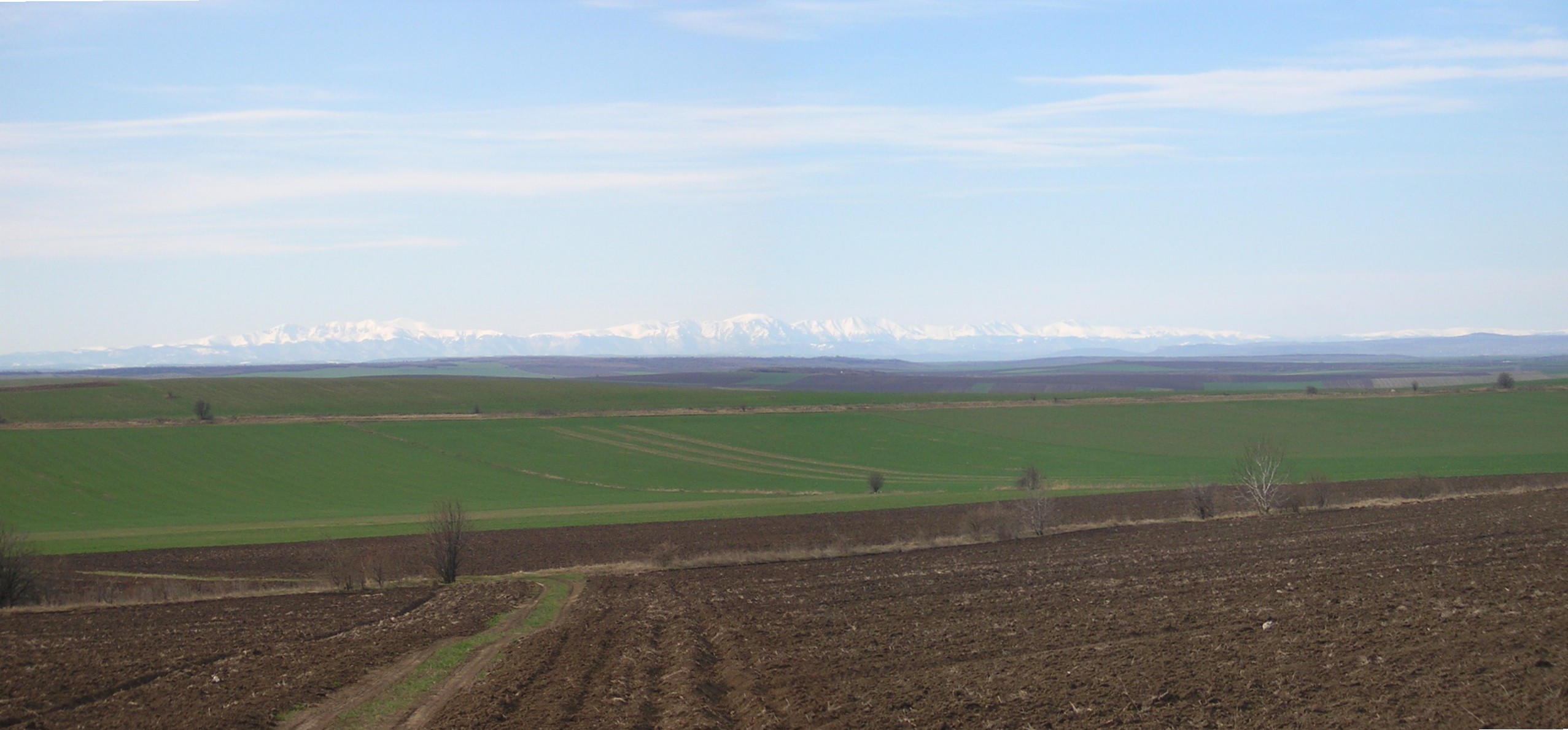
- Lower Danubian Plain, between Balkan Mountains and Southern Carpathians
- Danubian Plain (Bulgaria)
- Wallachian Plain
- Lower Danubian Plain, between Balkan Mountains and Southern Carpathians
- North European Plain
- North German Plain (German section)
- Beauce, France
- East European Plain
- Baetic Depression (Andalusian Plain), between Sierra Morena and Baetic System
- British Lowlands
- Central Swedish lowland
- Ebro Basin (Ebro Depression), between Pyrenees and Sistema Ibérico
- Meseta Central is a high plain plateau in central Spain (occupies roughly 40% of the country), between Cantabrian Mountains and Sistema Central
- Pannonian Plain, between Alps, Dinaric Mountains and Carpathian Mountains
- Po Valley, also known as Padan Plain, between Alps and Apennines
- Swiss Central Plateau, between the Jura Mountains and Swiss Alps
- Upper Rhine Plain, between Vosges Mountains and Black Forest Mountains
- Upper Thracian Plain, between Balkan Mountains (Sredna Gora) and Rila-Rhodope massif
- Other European coastal plains
Mountain ranges
Main article: List of mountain ranges#Europe
Some of Europe's major mountain ranges are:
- Alps, in Central Western Europe
- Western Alps
- Eastern Alps
- Southern Alps
- Northern Alps
- Apennines, which run through Italy
- Baetic System, Spain, Iberian Peninsula
- Balkan Mountains, mainly Bulgaria, central Balkan Peninsula
- Sredna Gora Mountain range in central Bulgaria, situated south of and parallel to the Balkan Mountains
- Bohemian and other Variscan massifs (pre-Alpine mountain ranges): Jura Mountains, Vosges, Palatinate Forest, Black Forest, Ore Mountains, Sudetes
- Cantabrian Mountains, which run across northern Spain
- Carpathian Mountains, a major mountain range in Central and Southern Europe
- Southern Carpathians, Romania
- Tatra Mountains, Slovakia and Poland
- Caucasus Mountains, which also separate Europe and Asia
- Crimean Mountains
- Dinaric Alps, a mountain range in the Balkans
- Pindus Mountains, Albania and Greece
- Pyrenees, the natural border between France and Spain
- Rila-Rhodope mountain system composed by massifs, including Pirin Mountain and Osogovo-Belasitsa mountain chain, mainly Bulgaria
- Šar-Korab-Jakupica-Baba-Kajmakčalan-Olympus, Albania, North Macedonia and Greece
- Scandinavian Mountains, a mountain range which runs through the Scandinavian Peninsula, includes the Kjølen mountains
- Scottish Highlands (including the Cairngorms) in the United Kingdom.
- Sierra Morena, Spain
- Sistema Ibérico, Spain
- Sistema Central, Spain
- Ural Mountains, which form the boundary between Europe and Asia
Land area in different classes of European mountainous terrain
| Altitude | Area (km2) | % Area |
|---|---|---|
| ≥4500 m | 1 | 0.00% |
| 3500–4500 m | 225 | 0.00% |
| 2500–3500 m | 497,886 | 4.89% |
| 1500–2500 m & slope ≥2° | 145,838 | 1.43% |
| 1000-1500m & slope ≥5° | ||
| or local elevation range 300m | 345,255 | 3.39% |
| 300–1000 m | ||
| and local elevation range 300m | 1,222,104 | 12.00% |
| **Mountainous total** | 2,211,308 | 21.72% |
| **Europe total** | 10,180,000 | 100.00% |
| **Source:** |
Temperature and precipitation
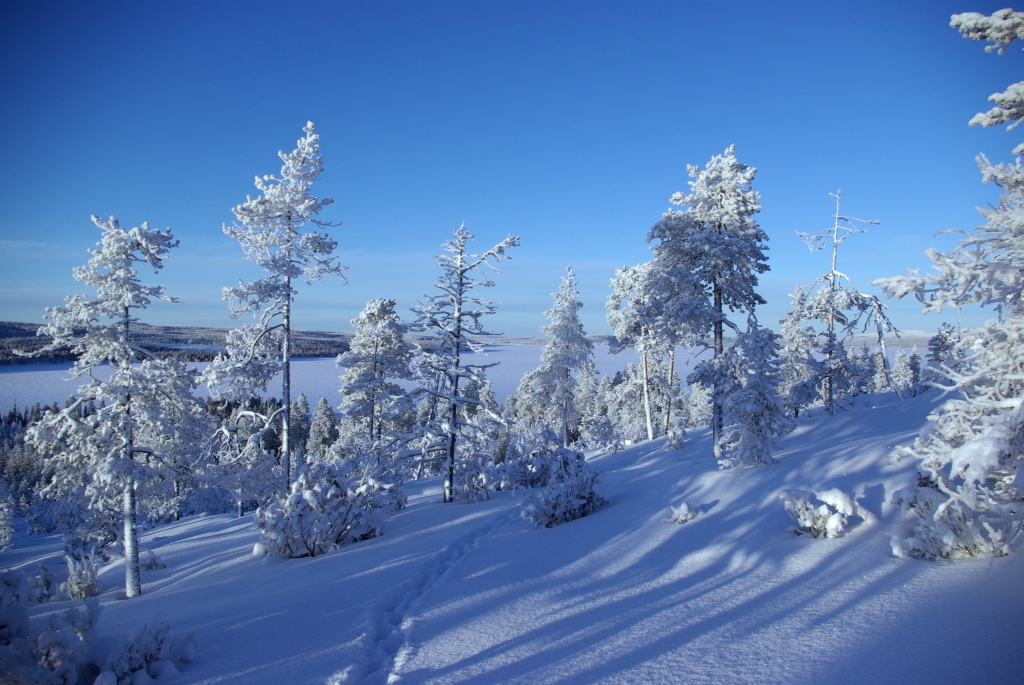
The high mountainous areas of Europe are colder and have higher precipitation than lower areas, as is true of mountainous areas in general. Europe has less precipitation in the east than in central and western Europe. The temperature difference between summer and winter gradually increases from coastal northwest Europe to southeast inland Europe, ranging from Ireland, with a temperature difference of only 10 °C from the warmest to the coldest month, to the area north of the Caspian Sea, with a temperature difference of 40 °C. January average range from 13 °C in southern Spain and southern Greek islands to -20 °C in the northeastern part of European Russia. Desert climates are found in the European portion of Kazakhstan and South Eastern Spain.
Western Europe and parts of Central Europe generally fall into the temperate maritime climate (Cfb), the southern part is mostly a Mediterranean climate (mostly Csa, smaller area with Csb), the north-central part and east into central Russia is mostly a humid continental climate (Dfb) and the northern part of the continent is a subarctic climate (Dfc). In the extreme northern part (northernmost Russia; Svalbard), bordering the Arctic Ocean, is tundra climate (Et). Mountain ranges, such as the Alps and the Carpathian mountains, have a highland climate with large variations according to altitude and latitude.
Climate
Main article: Climate of Europe
Europe's climate is diverse due to its extensive range from the Arctic Ocean in the north to the Mediterranean Sea in the south, and from the Atlantic Ocean in the west to the Ural Mountains in the east. Several climatic zones intersect the continent, influenced by factors such as latitude, proximity to water bodies, elevation, and prevailing wind patterns.
The North Atlantic Drift, a warm ocean current, significantly moderates temperatures across much of Western Europe, resulting in relatively mild winters for regions at similar latitudes elsewhere. This effect is particularly evident in countries such as the United Kingdom, Ireland, and coastal Norway, which experience oceanic climates characterized by cool summers and mild, wet winters.
Southern Europe enjoys a Mediterranean climate, with hot, dry summers and mild, wet winters. This climate predominates in countries such as Spain, Italy, and Greece, where seasonal rainfall supports agriculture and tourism. Eastern Europe and parts of the continent's interior feature continental climates with more pronounced seasonal temperature differences, including cold winters and warm summers. Precipitation in these regions is relatively evenly distributed throughout the year.
Northern Europe, including Scandinavia, is characterized by subarctic and tundra climates, where winters are long and harsh, and summers are short and cool. The Arctic portions of Europe, particularly in Russia and Norway, also experience polar climates. Mountainous regions, such as the Alps and the Carpathians, exhibit alpine climates, with temperature and precipitation patterns that vary with altitude. Higher elevations generally experience cooler temperatures and greater precipitation, often in the form of snow.
Europe's climate zones have been further influenced by anthropogenic climate change, leading to rising temperatures, shifting precipitation patterns, and increased frequency of extreme weather events across the continent.
Landlocked countries
The landlocked countries in Europe are: Andorra, Armenia, Austria, Belarus, Czech Republic, Hungary, Kosovo, Liechtenstein (which is doubly landlocked), Luxembourg, North Macedonia, Moldova, San Marino, Serbia, Slovakia, Switzerland, Vatican City
Switzerland, Liechtenstein, Austria, Czech Republic, Slovakia, Hungary, Serbia, and North Macedonia constitute a contiguous landlocked agglomeration of eight countries in Central Europe and the Balkans, stretching from Geneva all the way to Skopje. The other landlocked countries are "standalone" landlocked, not bordering any other such European one (the emphasis is necessary, since Kazakhstan borders Turkmenistan, Uzbekistan, and Kyrgyzstan, thus forming a vast landlocked expanse in Central Asia).
Countries consisting solely of islands or parts of islands
- Cyprus
- Iceland
- Ireland
- Malta
- United Kingdom
Countries bordering or spanning another continent
| Europe-North America | France (Guadeloupe, Martinique, and St. Pierre et Miquelon), Iceland, Denmark (Greenland), the Netherlands (Bonaire, Saba, and St. Eustatius), Portugal (Corvo Island, Flores Island) |
|---|
Countries whose capital is not the most populous
| Country | Capital | Largest city or municipality |
|---|---|---|
| Liechtenstein | Vaduz | Schaan |
| Malta | Valletta | Birkirkara |
| San Marino | San Marino | Serravalle |
| Switzerland | Bern | Zürich |
| Turkey | Ankara | Istanbul |
Note: Italy's capital, Rome, is the country's largest city if only the municipality (comune) is considered. Greater Milan is the largest metropolitan area in Italy.
Brussels is considered to be the largest city of Belgium, according to the population of the Brussels-Capital Region. The population of the City of Brussels is ~175,000. Antwerp is the biggest city of the country.
List of countries by the number of other countries they border

| 0 | Iceland, Cyprus, Malta |
|---|
References
References
- [http://edl.ecml.at/LanguageFun/LanguageFacts/tabid/1859/Default.aspx Language facts – European day of languages], Council of Europe. Retrieved 30 July 2015.
- (29 April 2021). "European Rivers". worldatlas.com.
- "River Systems of the World".
- "Мезень (река)". Great Soviet Encyclopedia.
- [https://www.peakbagger.com/range.aspx?rid=361 Greek-Albanian Ranges] peakbagger.com
- [https://web.archive.org/web/20080510183742/http://www.unep-wcmc.org/habitats/mountains/eur.htm UNEP-WCMC]
- (2000). "Peoples of Africa". Marshall Cavendish.
This article was imported from Wikipedia and is available under the Creative Commons Attribution-ShareAlike 4.0 License. Content has been adapted to SurfDoc format. Original contributors can be found on the article history page.
Ask Mako anything about Geography of Europe — get instant answers, deeper analysis, and related topics.
Research with MakoFree with your Surf account
Create a free account to save articles, ask Mako questions, and organize your research.
Sign up freeThis content may have been generated or modified by AI. CloudSurf Software LLC is not responsible for the accuracy, completeness, or reliability of AI-generated content. Always verify important information from primary sources.
Report