From Surf Wiki (app.surf) — the open knowledge base
Gas burner
Device used to make fire from combusting fuel and oxidizer gases
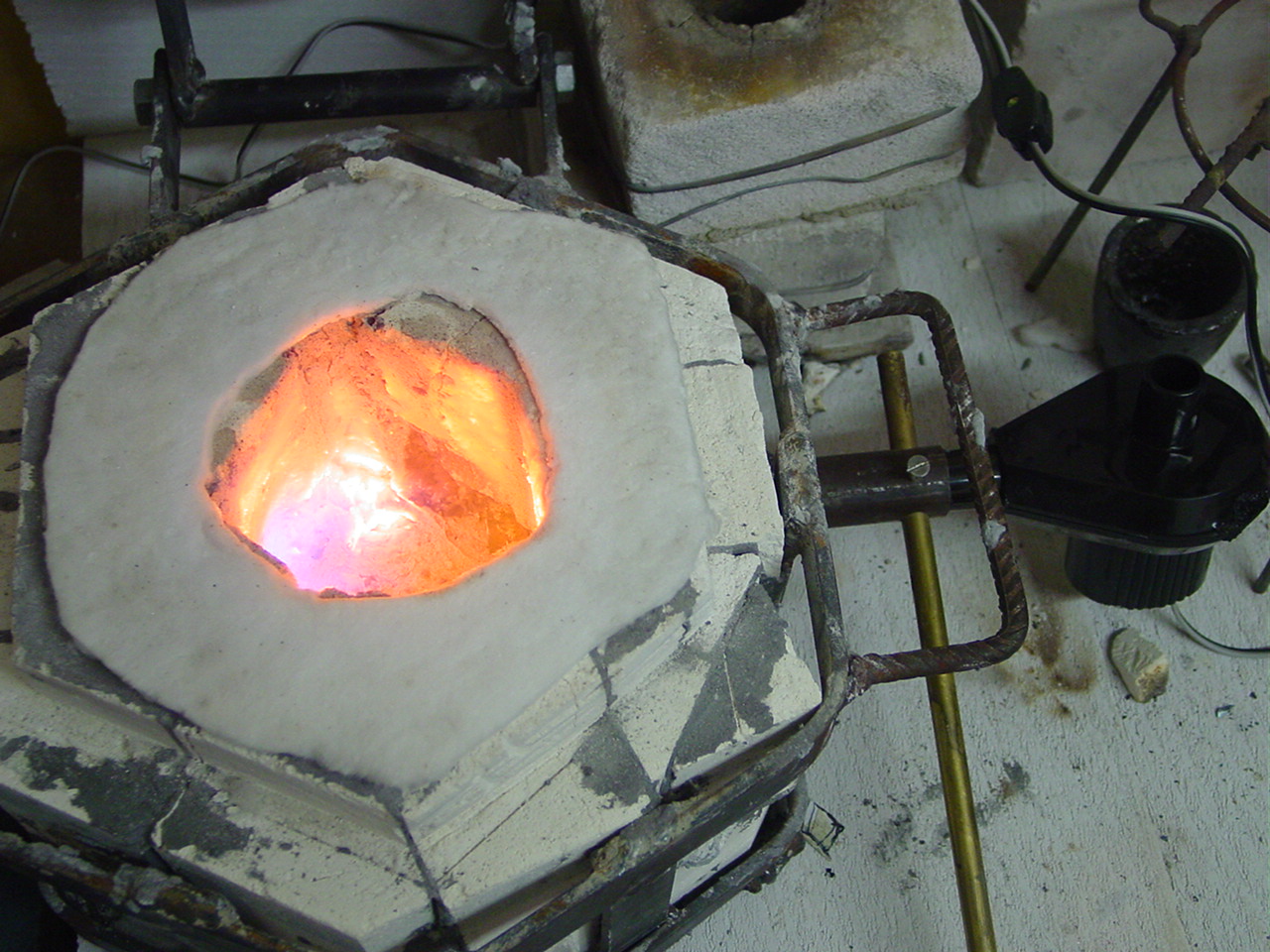
Device used to make fire from combusting fuel and oxidizer gases


A gas burner is a device that produces a non-controlled flame by mixing a fuel gas such as acetylene, natural gas, or propane with an oxidizer such as the ambient air or supplied oxygen, and allowing for ignition and combustion.
The flame is generally used for the heat, infrared radiation, or visible light it produces. Some burners, such as gas flares, dispose of unwanted or uncontainable flammable gases. Some burners are operated to produce carbon black.
The gas burner has many applications such as soldering, brazing, and welding, the latter using oxygen instead of air for producing a hotter flame, which is required for melting steel. Chemistry laboratories use natural-gas fueled Bunsen burners. In domestic and commercial settings gas burners are commonly used in gas stoves and cooktops. For melting metals with melting points of up to 1100 °C (such as copper, silver, and gold), a propane burner with a natural drag of air can be used. For higher temperatures, acetylene is commonly used in combination with oxygen.
Flame temperatures of common gases and fuels
| Gas / Fuels | Flame temperature |
|---|---|
| Propane in air | 1980 °C 3596 °F |
| Butane in air | 1970 °C 3578 °F |
| Wood in air (normally not reached in a wood stove) | 1980 °C 3596 °F |
| Acetylene in air | 2550 °C 4622 °F |
| Methane (natural gas) in air | 1950 °C 3542 °F |
| Hydrogen in air | 2111 °C 3831 °F |
| Propane with oxygen | 2800 °C 5072 °F |
| Acetylene in oxygen | 3100 °C 5612 °F |
| Propane-butane mix with air | 1970 °C 3578 °F |
| Coal in air (blast furnace) | 1900 °C 3452 °F |
| Cyanogen (C2N2) in oxygen | 4525 °C 8177 °F |
| Dicyanoacetylene (C4N2) in oxygen (highest flame temperature) | 4982 °C 9000 °F |
The above data is given with the following assumptions:
- The flame is adiabatic
- The surrounding air is at 20 °C, 1 bar (atm)
- Complete combustion (no soot, and more blue-like flame is the key) (Stoichiometric)
- Peak Temperature These notes are not assumptions, and need more clarification:
- Speed of Combustion (has no effect on temperature, but more energy released per second (as adiabatic) compared to normal flame)
- Spectral bands also affect colour of flame, as of what part and elements of combustion
- Blackbody radiation (colour appearance only because of heat)
- Atmosphere - affects temperature of flame and colour due to the atmospheric colour effect
Flammability limits and ignition temperatures of common gases
| Flammability limit lower, in % | Flammability limit upper, in % | Ignition temperatures |
|---|---|---|
| Natural gas | 4.7 | 15 |
| Propane | 2.15 | 9.6 |
| Butane | 1.9 | 8.5 |
| Acetylene | 2.5 | 81 |
| Hydrogen | 4 | 75 |
| Ammonia | 16 | 25 |
| Carbon monoxide | 12.5 | 74 |
| Ethylene | 3.4 | 10.8 |
(Atmosphere is air at 20 degrees Celsius.)
Combustion values of common gases
| Gas | Combustion value | (Btu/ft³) | (MJ/m³) |
|---|---|---|---|
| Natural gas (methane) | 950 to 1,150 | 35 to 43 | |
| Propane | 2,572 | 95.8 | |
| Propane-butane mix | 2,500 to 3,200 | 90 to 120 | |
| Butane | 3,225 | 120.1 |
References
- Pocket Guide to Fire and Arson Investigation, second edition, FM Global, Table 1, 2, and 3
- Gas burner at the Encyclopædia Britannica
This article was imported from Wikipedia and is available under the Creative Commons Attribution-ShareAlike 4.0 License. Content has been adapted to SurfDoc format. Original contributors can be found on the article history page.
Ask Mako anything about Gas burner — get instant answers, deeper analysis, and related topics.
Research with MakoFree with your Surf account
Create a free account to save articles, ask Mako questions, and organize your research.
Sign up freeThis content may have been generated or modified by AI. CloudSurf Software LLC is not responsible for the accuracy, completeness, or reliability of AI-generated content. Always verify important information from primary sources.
Report