From Surf Wiki (app.surf) — the open knowledge base
Gaffer tape
Heavy cotton cloth pressure-sensitive tape

Heavy cotton cloth pressure-sensitive tape
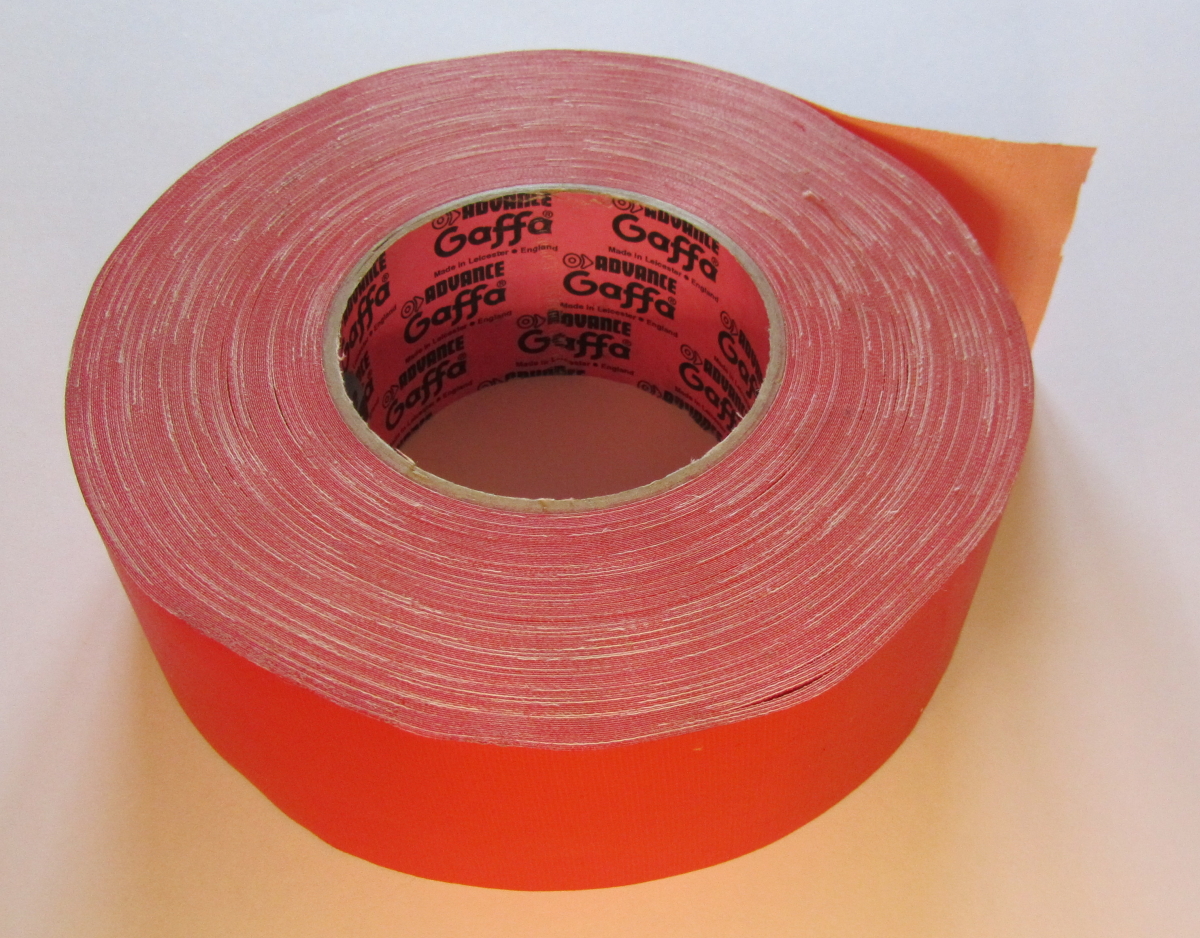
Gaffer tape (also known as gaffer's tape, gaff tape or gaffa tape as well as spike tape for narrow, colored gaffer tape) is a heavy cotton cloth pressure-sensitive tape with strong adhesive and tensile properties. It is widely used in theatre, photography, film, radio and television production, and industrial staging work.
While sometimes confused with duct tape, gaffer tape differs in the composition of both the backing, which is made from fabric as opposed to vinyl or other plastics, and the adhesive, which is more resistant to heat and more easily removed without damaging the surface to which it adhered.
History
The precise origin of the name is unknown, one hypothesis being that it is named for the gaffer (chief lighting technician) on a film crew. When cables are taped down on a stage or other surface, either to prevent tripping hazards or conceal them from view of the audience or camera, they are said to be gaffed or gaffered.
Gaffer tape was invented in 1959 by Ross Lowell, director, cinematographer, and founder of Lowel-Light. Lowell reworked Johnson & Johnson's Permacel duct tape product by combining the Permacel adhesive with a silver fabric backing to create gaffer tape which could hold a flat metal plate to a window.
Properties and uses
Gaffer tape is manufactured in many colors, including fluorescent and custom colors, but perhaps the most common variety is matte black. A matte finish keeps the tape from reflecting light, so that it blends in with a typical stage floor. It is sold in a variety of widths, from 1/4 in to 4 in, with 1 in and 2 in being the most common. Gaffer tape is strong, yet can be torn by hand, so no cutting tools are necessary, and it can easily be ripped into narrower strips when desired. The synthetic adhesive typically leaves little or no residue and will generally not damage most surfaces when it is removed. Gaffer tape is usually more expensive than duct tape because it is manufactured in smaller quantities, has more exacting specifications, and is marketed for professional use.

A common application for gaffer tape is securing cables to a stage floor, podium, or other surface, either for safety or concealment. It is also frequently used whenever a quick ad hoc fix is required, from temporarily attaching fixtures or props, to salvaging a broken piece of production equipment. A narrow version of gaffer tape, called spike tape, is used in theater productions for floor layout.
In the absence of console tape or artist tape, live sound engineers or light board operators may use a strip of white gaffer tape along the bottom of a mixing board to label the channels or submasters used for a particular show.
In rock climbing gyms, gaffer tape can be used to mark climbs on the wall. It is preferable to duct tape because it is stronger and lasts longer on the wall.
References
References
- Lawler, Mike. (2007). "Careers in Technical Theater". Allworth Communications, Inc..
- (2005). "Sticking With What Works". EventDV.
- "What is Gaffer's Tape?".
- "Church of the Holy Gaffer Tape - Top Tips for Gaffer Tape".
- "Gaffing cable to the floor".
- "About Lowel Light".
- (2019-02-20). "Obituary: Ross Lowell, Founder of Lowel-Light and Creator of Gaffer Tape, 92".
- "British Standards Document BS EN 12034—Self-adhesive tapes. Measurement of the length of a roll of adhesive tape". [[BSI Group]].
- (2002). "Comparative Study of a Cluster Analysis and a Principal-Component Analysis Using a Polarized Imaging Technique for Discriminating Adhesive Cloth Tapes". Analytical Sciences.
- (March 2009). "What's In Your Bag". Broadcast Engineering.
- (2014). "The Grip Book". Focal Press.
- "Types Of Tape (And Not The Recording Type) For Audio/Production".
This article was imported from Wikipedia and is available under the Creative Commons Attribution-ShareAlike 4.0 License. Content has been adapted to SurfDoc format. Original contributors can be found on the article history page.
Ask Mako anything about Gaffer tape — get instant answers, deeper analysis, and related topics.
Research with MakoFree with your Surf account
Create a free account to save articles, ask Mako questions, and organize your research.
Sign up freeThis content may have been generated or modified by AI. CloudSurf Software LLC is not responsible for the accuracy, completeness, or reliability of AI-generated content. Always verify important information from primary sources.
Report