From Surf Wiki (app.surf) — the open knowledge base
Freeboard (nautical)
Distance from the waterline to the upper deck level of a ship
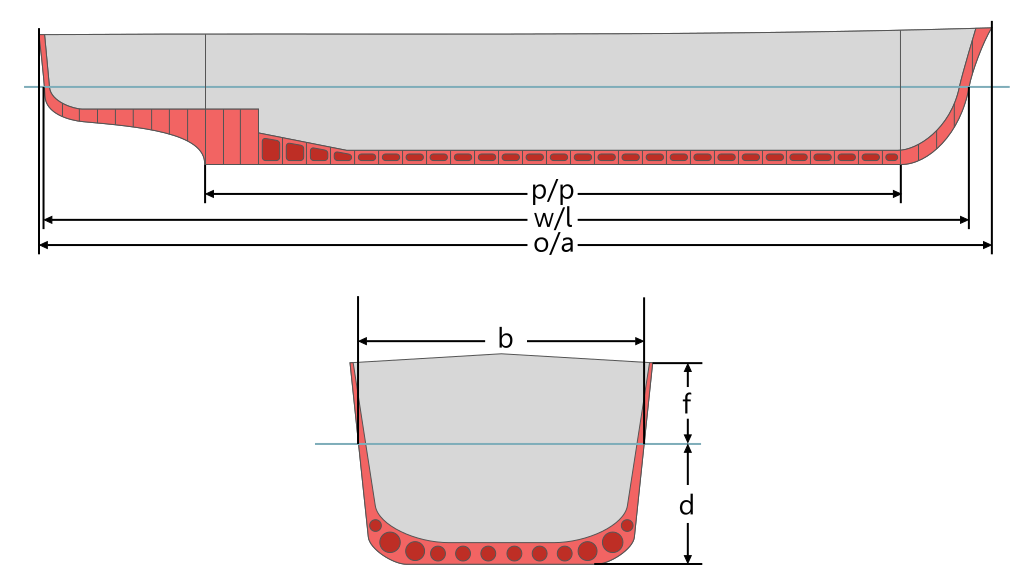
Distance from the waterline to the upper deck level of a ship
In sailing and boating, a vessel's freeboard is the distance from the waterline to the upper deck level, measured at the lowest point of sheer where water can enter the boat or ship.{{cite web | access-date = 2008-04-16 | archive-url = http://arquivo.pt/wayback/20091014024227/http://www.imo.org/Conventions/mainframe.asp?topic_id=1034 | archive-date = 2009-10-14 | url-status = dead
In yachts, a low freeboard is often found on racing boats, for increased speed (by reducing weight and therefore drag). A higher freeboard will give more room in the cabin, but will increase weight and drag, compromising speed. A higher freeboard, such as used on ocean liners, also helps weather waves and so reduce the likelihood of being washed over by full water waves. A low-freeboard vessel is susceptible to taking in water in rough seas. Freighter ships and warships use high freeboard designs to increase internal volume, which also allows them to satisfy International Maritime Organization (IMO) damage stability regulations, due to increased reserve buoyancy.
References
Notes
Bibliography
de:Schiffsmaße#Freibord
References
This article was imported from Wikipedia and is available under the Creative Commons Attribution-ShareAlike 4.0 License. Content has been adapted to SurfDoc format. Original contributors can be found on the article history page.
Ask Mako anything about Freeboard (nautical) — get instant answers, deeper analysis, and related topics.
Research with MakoFree with your Surf account
Create a free account to save articles, ask Mako questions, and organize your research.
Sign up freeThis content may have been generated or modified by AI. CloudSurf Software LLC is not responsible for the accuracy, completeness, or reliability of AI-generated content. Always verify important information from primary sources.
Report