From Surf Wiki (app.surf) — the open knowledge base
Foreign relations of Russia
none
none
The foreign relations of the Russian Federation is the policy arm of the government of Russia which guides its interactions with other nations, their citizens, and foreign organizations. This article covers the foreign policy of the Russian Federation since the dissolution of the Soviet Union in late 1991. At present, Russia has no diplomatic relations with Ukraine (Since 2022) due to the Russo-Ukrainian war. Other than Ukraine, Russia also has no diplomatic relations with Georgia (Since 2008), Bhutan, the Federated States of Micronesia (Since 2022) or Solomon Islands.
Kremlin's foreign policy debates show a conflict among three rival schools: Atlanticists, seeking a closer relationship with the United States and the Western World in general; Imperialists, seeking a recovery of the semi-hegemonic status lost during the previous decade; and Neo-Slavophiles, promoting the isolation of Russia within its own cultural sphere. While Atlanticism was the dominant ideology during the first years of the new Russian Federation, under Andrei Kozyrev, it came under attack for its failure to defend Russian pre-eminence in the former USSR. The promotion of Yevgeny Primakov to Minister of Foreign Affairs in 1996 marked the beginning of a more nationalistic approach to foreign policy.
Another major trend has been Eurasianism, a school of thought that emerged during the early 20th century. Eurasianists assert that Russia is composed of Slavic, Turkic and Asiatic cultures and equates Liberalism with Eurocentric imperialism. One of the earliest ideologues of Eurasianism was the Russian historian Nikolai Trubetzkoy, who denounced the Europhilic Czar Peter I and advocated Russian embrace of the Asiatic "legacy of Chinggis Khan" to establish a trans-continental Eurasian state. Following the collapse of Soviet Union, Eurasianism gained public ascendency through the writings of philosopher Aleksandr Dugin and has become the official ideological policy under the government of Vladimir Putin.
Vladimir Putin held the presidency from January 2000 to May 2008, and again from May 2012 to the present. Under Putin, Russia has engaged in several notable conflicts, including against the neighboring country of Ukraine. He recognized the independence of Donetsk and Luhansk within that country. Relations with the United States in particular have sharply deteriorated between 2001 and 2022, with the Kremlin blaming U.S. involvement in the Middle East and countries bordering Russia. Relations with the European Union became hostile after Russia's 2014 annexation of Crimea from Ukraine.
On February 24, 2022, Russia started the Russo-Ukrainian war, prompting the imposition of substantial economic and political sanctions by the European Union, the United Kingdom, the United States, Canada, Japan, and other countries. The Russian government now has a specified "Unfriendly Countries List" which indicates those countries with which relations are now strained (or non-existent). Despite deteriorating relations with the Western world since the start of the Russo-Ukrainian war, Russia still maintains support and strong relations with some countries, such as China, India, Belarus, Iran, Cuba, Venezuela, Nicaragua, North Korea, Myanmar, Eritrea, Mali, Central African Republic, Zimbabwe, Burkina Faso, Burundi, Iraq, Libya, Palestine, and Niger. Russia also has strong support from the Houthis in Yemen.
Russia also maintains positive relations with countries that have been described as "Russia-leaning" according to The Economist. These countries include Algeria, Afghanistan, Kazakhstan, Kyrgyzstan, Tajikistan, Pakistan, Ethiopia, Sudan, and Uganda. Russia also maintains positive relations with countries considered neutral on the world stage such as Brazil, Honduras, Bangladesh, India, Turkmenistan and Uzbekistan. With countries traditionally considered Western aligned, Russia maintains positive relations with Hungary, Serbia, Slovakia, Azerbaijan, Turkey, Bahrain, Kuwait, Oman, Qatar, Saudi Arabia, Egypt, Jordan, Morocco, Armenia and the United Arab Emirates.
History
Foreign policy of the Russian Empire
Main article: Foreign policy of the Russian Empire
Foreign relations of the Soviet Union
Main article: Foreign relations of the Soviet Union
Foreign policy of the Russian Federation
Main article: Ministry of Foreign Affairs (Russia), Foreign policy of Vladimir Putin
In international affairs, Putin had made increasingly critical public statements regarding the foreign policy of the United States and other Western countries. In February 2007, at the annual Munich Conference on Security Policy, he criticized what he called the U.S. monopolistic dominance in global relations and claimed that the U.S. displayed an "almost unconstrained hyper use of force in international relations." He said the result of it is that "no one feels safe! Because no one can feel that international law is like a stone wall that will protect them. Of course such a policy stimulates an arms race."[[File:Putin in Switzerland 2021 10.jpg|thumb|upright=1.2|Vladimir Putin meeting with [[President of the United States|American president]] [[Joe Biden]], 2021.]]
Putin proposed initiatives such as establishing international centers for the enrichment of uranium and prevention of deploying weapons in outer space. In a January 2007 interview, Putin stated that Russia is in favor of a democratic multipolar world and of strengthening the system of international law.
2000-2006
Putin is often characterized as an autocrat by the Western media and politicians. His relationship with former U.S. President George W. Bush, former and current Brazilian President Luiz Inácio Lula da Silva, former Venezuelan President Hugo Chávez, former German Chancellor Gerhard Schröder, former French President Jacques Chirac, and former Italian Prime Minister Silvio Berlusconi are reported to be personally friendly. Putin's relationship with Germany's former Chancellor, Angela Merkel, is reported to be "cooler" and "more business-like" than his partnership with Gerhard Schröder, who accepted a job with a Russian-led consortium after leaving office.
During the Iraq disarmament crisis in 2002–2003, Putin opposed Washington's move to invade Iraq, without the benefit of a United Nations Security Council resolution explicitly authorizing the use of military force. After the official end of the war was announced, U.S. President George W. Bush asked the United Nations to lift sanctions on Iraq. Putin supported lifting of the sanctions in due course, arguing that the UN commission first be given a chance to complete its work on the search for weapons of mass destruction in Iraq.
During the 2004 Ukrainian presidential election, Putin twice visited Ukraine before the election to show his support for Ukrainian Prime Minister Viktor Yanukovych, who was widely seen as a pro-Kremlin candidate, and he congratulated him on his anticipated victory before official election results had even been released. Putin's personal support for Yanukovych was criticized as unwarranted interference in the affairs of a sovereign state (See also The Orange revolution). Crises also developed in Russia's relations with Georgia and Moldova, both former Soviet republics accusing Moscow of supporting separatist entities in their territories (i.e., Abkhazia, South Ossetia, and Transnistria.)
In 2005, Putin and former German Chancellor Gerhard Schröder negotiated the construction of a major gas pipeline over the Baltic exclusively between Russia and Germany. Schröder also attended Putin's 53rd birthday celebration in Saint Petersburg the same year.
The end of 2006 brought strained relations between Russia and Britain, in the wake of the death of a former FSB officer in London by poisoning. On July 20, 2007, UK Prime Minister Gordon Brown expelled "four Russian envoys over Putin's refusal to extradite ex-KGB agent Andrei Lugovoi, wanted in the UK for the murder of fellow former spy Alexander Litvinenko in London." The Russian constitution prohibits the extradition of Russian nationals to third countries. British Foreign Secretary David Miliband said that "this situation is not unique, and other countries have amended their constitutions, for example, to give effect to the European Arrest Warrant."
When Litvinenko was dying from radiation poisoning, he accused Putin of directing the assassination, in a statement which was released shortly after his death by his friend Alex Goldfarb. Critics have doubted that Litvinenko is the true author of the released statement. When asked about the Litvinenko accusations, Putin said that a statement released posthumously of its author "naturally deserves no comment."
The expulsions were seen as "the biggest rift since the countries expelled each other's diplomats in 1996 after a spying dispute." In response to the situation, Putin stated, "I think we will overcome this mini-crisis. Russian-British relations will develop normally. On both the Russian side and the British side, we are interested in the development of those relations." Despite this, British Ambassador Tony Brenton was told by the Russian Foreign Ministry that UK diplomats would be given 10 days before they were expelled in response. The Russian government also announced that it would suspend issuing visas to UK officials, and froze cooperation on counterterrorism, in response to Britain suspending contacts with their Federal Security Service.
Alexander Shokhin, president of the Russian Union of Industrialists and Entrepreneurs, warned that British investors in Russia will "face greater scrutiny from tax and regulatory authorities. They could also lose out in government tenders." Some see the crisis as originating with Britain's decision to grant Putin's former patron, Russian billionaire Boris Berezovsky, political asylum in 2003. Earlier in 2007, Berezovsky had called for the overthrow of Putin.
2007-2009
Putin took an active personal part in promoting the Act of Canonical Communion with the Moscow Patriarchate signed in May 2007, which restored relations between the Moscow-based Russian Orthodox Church and Russian Orthodox Church Outside of Russia (ROCOR) after the 80-year schism.
The Commonwealth of Independent States (CIS), seen in Moscow as its traditional sphere of influence, became one of Putin's foreign policy priorities, as the EU and NATO have grown to encompass much of Central Europe and, more recently, the Baltic states.
On April 26, 2007, in his annual address to the Federal Assembly, Putin announced plans to declare a moratorium on the observance of the Treaty on Conventional Armed Forces in Europe by Russia until all NATO members ratified it and started observing its provisions, as Russia had been doing on a unilateral basis. Putin argues that as new NATO members have not even signed the treaty so far, an imbalance in the presence of NATO and Russian armed forces in Europe creates a real threat and an unpredictable situation for Russia. NATO members said they would refuse to ratify the treaty until Russia complied with its 1999 commitments made in Istanbul, whereby Russia should remove troops and military equipment from Moldova and Georgia. Russian Foreign Minister, Sergey Lavrov, was quoted as saying in response that "Russia has long since fulfilled all its Istanbul obligations relevant to CFE."
On December 11, 2007, Russia suspended its participation in the CFE. On December 12, 2007, the United States officially stated that it "deeply regretted the Russian Federation's decision to 'suspend' implementation of its obligations under the Treaty on Conventional Armed Forces in Europe (CFE)." State Department spokesman Sean McCormack added in a written statement that "Russia's conventional forces are the largest on the European continent, and its unilateral action damages this successful arms control regime." NATO's primary concern arising from Russia's suspension is that Moscow could now accelerate its military presence in the Northern Caucasus.
The months following Putin's Munich speech were marked by tension and a surge in rhetoric on both sides of the Atlantic. As a result, Vladimir Putin stated at the anniversary of the Victory Day, "these threats are not becoming fewer, but are only transforming and changing their appearance. These new threats, just as under the Third Reich, show the same contempt for human life, and the same aspiration to establish an exclusive dictate over the world." This was interpreted by some Russian and Western commentators as comparing the United States to Nazi Germany.
In 2007, on the eve of the 33rd Summit of the G8 in Heiligendamm, Germany, U.S. journalist Anne Applebaum, who is married to a Polish politician, wrote that "Whether by waging cyberwarfare on Estonia, threatening the gas supplies of Lithuania, or boycotting Georgian wine and Polish meat, [Putin] has, over the past few years, made it clear that he intends to reassert Russian influence in the former communist states of Europe, whether those states want Russian influence or not. At the same time, he has also made it clear that he no longer sees Western nations as mere benign trading partners, but rather as Cold War-style threats."
_03.jpg)
In his article "No wonder they like Putin," British academic Norman Stone compared Putin to General Charles de Gaulle. Adi Ignatius argues that "Putin... is not a Stalin. There are no mass purges in Russia today, no broad climate of terror. But Putin is reconstituting a strong state, and anyone who stands in his way will pay for it." Both Russian and U.S. officials consistently denied the idea of a new Cold War. At the Munich Conference, U.S. Secretary of Defense Robert Gates said, "We all face many common problems and challenges that must be addressed in partnership with other countries, including Russia.... one Cold War was quite enough." In June 2007, just prior to the 33rd G8 Summit, Vladimir Putin said, "We do not want confrontation; we want to engage in dialogue. However, we want a dialogue that acknowledges the equality of both parties' interests."
On June 7, 2007, Putin, publicly opposed to a U.S. missile shield in Europe, presented President George W. Bush with a counterproposal of sharing the use of the Soviet-era radar system in Azerbaijan, rather than building a new system in Poland and the Czech Republic. Putin expressed readiness to modernize the Gabala radar station, which has been in operation since 1986. Putin proposed it would not be necessary to place interceptor missiles in Poland then, but interceptors could be placed in NATO member Turkey or Iraq. Putin suggested equal involvement of interested European countries in the project.
In June 2007, in an interview with journalists of G8 countries, when answering the question of whether Russian nuclear forces may be focused on European targets in case "the United States continues building a strategic shield in Poland and the Czech Republic," Putin admitted that "if part of the United States' nuclear capability is situated in Europe and that our military experts consider that they represent a potential threat then we will have to take appropriate retaliatory steps. What steps? Of course we must have new targets in Europe."
Following the 2007 Peace Mission military exercises jointly conducted by the Shanghai Cooperation Organisation (SCO) member states, Putin announced in August 2007 that the resumption on a permanent basis of long-distance patrol flights of Russia's strategic bombers that were suspended in 1992. The announcement made during the SCO summit in the light of joint Russian-Chinese military exercises, first-ever in history to be held on Russian territory, makes some believe that Putin is inclined to set up an anti-NATO bloc, or the Asian version of OPEC.
When presented with the suggestion that "Western observers are already likening the SCO to a military organisation that would stand in opposition to NATO," Putin answered that "this kind of comparison is inappropriate in both form and substance." Russian Chief of the General Staff Yury Baluyevsky was quoted as saying that "there should be no talk of creating a military or political alliance or union of any kind, because this would contradict the founding principles of SCO."
The resumption of long-distance flights of the Russian Air Force's strategic bombers was followed by the announcement by Russian Defense Minister Anatoly Serdyukov during his meeting with Putin on December 5, 2007, that 11 ships, including the aircraft carrier Kuznetsov, would take part in the first major navy sortie into the Mediterranean since Soviet times. The sortie was to be backed up by 47 aircraft, including strategic bombers. According to Serdyukov, this is an effort to resume regular Russian naval patrols on the world's oceans, the view that is also supported by Russian media. The military analyst from Novaya Gazeta Pavel Felgenhauer believes that the accident-prone Kuznetsov is scarcely seaworthy, and is more of a menace to her crew than any putative enemy.
In September 2007, Putin visited Indonesia, and in doing so, became the first Russian leader to visit the country in more than 50 years. In the same month, Putin also attended the APEC meeting held in Sydney, Australia, where he met with Australian Prime Minister John Howard, and signed a uranium trade deal. This was the first visit of a Russian president to Australia.
In October 2007, Putin visited Tehran, Iran to participate in the Second Caspian Summit, where he met with Iranian leader Mahmoud Ahmadinejad. Other participants were leaders of Azerbaijan, Kazakhstan, and Turkmenistan. This is the first visit of a leader from the Kremlin to Iran, since Joseph Stalin's participation in the Tehran Conference in 1943. At a press conference after the summit, Putin stated that "all our (Caspian) states have the right to develop their peaceful nuclear programmes without any restrictions." During the summit, it was also agreed that its participants, under no circumstances, would let any third-party state use their territory as a base for aggression or military action against any other participant.
On October 26, 2007, at a press conference following the 20th Russia-EU Summit in Portugal, Putin proposed to create a Russian-European Institute for Freedom and Democracy, headquartered either in Brussels, or in one of the European capitals, and added that "we are ready to supply funds for financing it, just as Europe covers the costs of projects in Russia." This newly proposed institution is expected to monitor human rights violations in Europe and contribute to the development of European democracy.
Russian President Vladimir Putin and U.S. President George W. Bush failed to resolve their differences over U.S. plans for a missile defense system based in Poland and the Czech Republic, in their meeting in the Russian Black Sea resort of Sochi in April 2008. Putin made clear that he did not agree with the decision to establish sites in the Eastern European countries. However, he said that the two had agreed to a "strategic framework" to guide future U.S.-Russian relations, in which the two countries recognized that the era in which each had considered the other to be a "strategic threat or enemy" was over.
Putin expressed cautious optimism that the two sides could find a way to cooperate over missile defense and described his eight-year relationship with President Bush as "mostly positive." The Sochi summit was the Bush's last meeting with Putin as a sitting president, following both leaders' attendance at the NATO summit in Romania earlier that month. That summit also highlighted differences between Washington and Moscow, over U.S.-backed proposals to extend the military alliance to include the former Soviet republics of Ukraine and Georgia. Russia opposes the proposed expansion, fearing it will reduce its own influence over its neighbours.
Fareed Zakaria suggested that the 2008 South Ossetia War turned out to be a diplomatic disaster for Russia. He added that it was a major strategic blunder, turning neighboring nations such as Ukraine to embrace the United States and other Western nations more. Hungarian-American geostrategist George Friedman countered that both the war and Russian foreign policy have been successful in expanding Russia's influence.
2010-2016
The mid-2010s marked a dramatic downturn in Russian relations with the West, with some even considering it the start of a new Cold War. The United States and Russia supported opposing sides in the Syrian Civil War, and Washington regarded Moscow as obstructionist in its support for the Bashar al-Assad regime.
In 2013, for the first time since 1960, the United States cancelled a summit with Russia, after the latter granted asylum to Edward Snowden.
However, the greatest increase in tensions ensued from the Ukraine crisis that began in 2014, which saw the Russian annexation of Crimea. Russia also inflamed a separatist uprising in the Donbas region. The United States responded to these events by imposing sanctions on Russia, with most European countries following suit due to concerns over Russian interference in the affairs of Central and Eastern Europe.
In October 2015, after years of supporting the Syrian government indirectly, Russia directly intervened in the conflict, turning the tide in favor of the Assad regime. Already strained over Russian support for Assad, Russian-Turkish relations deteriorated even further, especially after the Turkish Air Force shot down a Russian jet fighter in November 2015. In 2015, Russia also formed the Eurasian Economic Union with Armenia, Kazakhstan, and Belarus.
The Russian government disapproves the expansion of NATO into Eastern Europe, claiming that Western leaders promised that NATO would not expand beyond its 1990s borders.
2017-2022

For decades, the dispute between Japan and Russia over the ownership of the Kuril Islands has hindered closer cooperation between the two countries. However, since 2017, high-level talks involving Prime Minister Shinzō Abe have been ongoing in an attempt to resolve the situation.
Russia's power on the international stage depends in large part on its revenue from fossil fuel exports. If the world completes a transition to renewable energy, and international demand for Russian raw materials resources is dramatically reduced, so may Russia's international power be. Although Russian oil and gas exports receive more attention, the country is also one of the world's three largest coal exporters and this industry is important for some Russian towns and provinces. Russia is ranked 148 out of 156 countries in the index of Geopolitical Gains and Losses after energy transition (GeGaLo).
Russia lacks strong alliances. The Collective Security Treaty Organization is an attempt to develop a successor alliance to the Warsaw Pact but it is comparatively weak. Russia participates in the Shanghai Cooperation Organization, but the SCO is a multilateral cooperation group rather than a military alliance and China plays the leading role in the organization.
2022-present
Main article: Foreign relations of Russia since the Russian invasion of Ukraine
When Russia invaded Ukraine in 2022, its foreign policy changed significantly after 141 countries approved a March 2022 UN resolution condemning the invasion and demanding a full withdrawal of Russian forces and after more than 600 Russian diplomats were declared persona non grata that same year.
Russia attempted to solidify its alliances in Africa, Asia, and South America. Historically, the former Soviet Union and later the Russian Federation had good relations with modern states in those regions, being on the side of oppressed populations, such as during Apartheid in South Africa, and opposing imperialism worldwide. Later in 2022, many African and South American countries abstained from voting against Russia in the UN Security Council for its military involvements in Ukraine. Russia's influence in Africa and South America is expanding, particularly in the areas of mining and security services. Most African and South American countries have a keen interest in cheap fossil energy and have no sanctions in place against Russian entities.
In 2023, Russia unveiled a Eurasianist, anti-Western foreign policy strategy in a document titled The Concept of the Foreign Policy of the Russian Federation approved by Vladimir Putin. The document defines Russia as a "unique country-civilization and a vast Eurasian and Euro-Pacific power" that seeks to create a "Greater Eurasian Partnership" by pursuing close relations with China, India, countries of the Islamic World and the rest of the Global South (Latin America and Southern Africa.) The policy identifies the United States and other English-speaking countries as "the main inspirer, organizer and executor of the aggressive anti-Russian policy of the collective West" and seeks the end of U.S. dominance in the international scene. The document also adopts a neo-Soviet posture, positioning Russia as the successor state of USSR and calling for the spread of "accurate information" regarding the "decisive contribution of the Soviet Union" in shaping the post-WWII international order and the United Nations.
In 2024, Mali, Niger, and Burkina Faso reached an agreement with Russia to obtain telecom and surveillance satellites, aiming to strengthen border security and improve communications. These West African nations, facing ongoing Islamist insurgencies, sought Russian support after tensions with Western allies. This move came shortly after an Islamist militants attack on an airport in Mali, highlighting the region's unstable security situation.
In Africa, Russia uses anti-French and anti-Western propaganda through clandestine agencies.
In response to widespread sanctions and military support for Ukraine, Russia has been accused of waging a campaign of hybrid warfare across the continent. This includes confirmed and suspected acts of sabotage, espionage, and influence operations intended to weaken European resolve and infrastructure.
Diplomatic relations
List of countries which Russia maintains diplomatic relations with:
| [[File:Diplomatic_relations_of_Russia.svg | frameless | 425x425px]] | # | Country | Date |
|---|---|---|---|---|---|
| 1 | Denmark | ||||
| 2 | Iran | ||||
| 3 | United Kingdom | ||||
| 4 | Netherlands | ||||
| 5 | France | ||||
| 6 | Sweden | ||||
| 7 | Portugal | ||||
| 8 | United States | ||||
| 9 | Spain | ||||
| 10 | Switzerland | ||||
| 11 | Brazil | ||||
| 12 | Serbia | ||||
| 13 | Greece | ||||
| 14 | Belgium | ||||
| 15 | Japan | ||||
| 16 | Uruguay | ||||
| 17 | Peru | ||||
| 18 | Romania | ||||
| 19 | Bulgaria | ||||
| 20 | Mexico | ||||
| 21 | Luxembourg | ||||
| 22 | Thailand | ||||
| 23 | Bolivia | ||||
| 24 | Panama | ||||
| 25 | Norway | ||||
| 26 | Afghanistan | ||||
| 27 | Finland | ||||
| 28 | Italy | ||||
| 29 | Poland | ||||
| 30 | Mongolia | ||||
| 31 | Austria | ||||
| 32 | Albania | ||||
| 33 | Turkey | ||||
| 34 | Saudi Arabia | ||||
| 35 | Hungary | ||||
| 36 | Czech Republic | ||||
| 37 | Colombia | ||||
| 38 | Iraq | ||||
| 39 | Canada | ||||
| 40 | Australia | ||||
| 41 | Ethiopia | ||||
| 42 | Egypt | ||||
| 43 | Iceland | ||||
| 44 | New Zealand | ||||
| 45 | Costa Rica | ||||
| 46 | Syria | ||||
| 47 | Lebanon | ||||
| 48 | Dominican Republic | ||||
| 49 | Venezuela | ||||
| 50 | Guatemala | ||||
| 51 | Argentina | ||||
| 52 | India | ||||
| 53 | Myanmar | ||||
| 54 | Pakistan | ||||
| 55 | Israel | ||||
| 56 | North Korea | ||||
| 57 | China | ||||
| 58 | Vietnam | ||||
| 59 | Indonesia | ||||
| 60 | Germany | ||||
| 61 | Libya | ||||
| 62 | Yemen | ||||
| 63 | Sudan | ||||
| 64 | Liberia | ||||
| 65 | Tunisia | ||||
| 66 | Nepal | ||||
| 67 | Cambodia | ||||
| 68 | Sri Lanka | ||||
| 69 | Ghana | ||||
| 70 | Morocco | ||||
| 71 | Guinea | ||||
| 72 | Togo | ||||
| 73 | Cuba | ||||
| 74 | Democratic Republic of the Congo | ||||
| 75 | Republic of the Congo | ||||
| 76 | Somalia | ||||
| 77 | Laos | ||||
| 78 | Mali | ||||
| 79 | Cyprus | ||||
| 80 | Nigeria | ||||
| 81 | Central African Republic | ||||
| 82 | Sierra Leone | ||||
| 83 | Tanzania | ||||
| 84 | Algeria | ||||
| 85 | Benin | ||||
| 86 | Senegal | ||||
| 87 | Burundi | ||||
| 88 | Uganda | ||||
| 89 | Kuwait | ||||
| 90 | Jordan | ||||
| 91 | Rwanda | ||||
| 92 | Kenya | ||||
| 93 | Cameroon | ||||
| 94 | Mauritania | ||||
| 95 | Zambia | ||||
| 96 | Chad | ||||
| 97 | Gambia | ||||
| 98 | Maldives | ||||
| 99 | Ivory Coast | ||||
| 100 | Burkina Faso | ||||
| 101 | Malaysia | ||||
| 102 | Malta | ||||
| 103 | Mauritius | ||||
| 104 | Singapore | ||||
| 105 | Equatorial Guinea | ||||
| 106 | Ecuador | ||||
| 107 | Botswana | ||||
| 108 | Guyana | ||||
| 109 | United Arab Emirates | ||||
| 110 | Bangladesh | ||||
| 111 | Niger | ||||
| 112 | Madagascar | ||||
| 113 | Ireland | ||||
| 114 | Guinea-Bissau | ||||
| 115 | Gabon | ||||
| 116 | Fiji | ||||
| 117 | Trinidad and Tobago | ||||
| 118 | Jamaica | ||||
| 119 | Mozambique | ||||
| 120 | São Tomé and Príncipe | ||||
| 121 | Tonga | ||||
| 122 | Cape Verde | ||||
| 123 | Comoros | ||||
| 124 | Papua New Guinea | ||||
| 125 | Philippines | ||||
| 126 | Seychelles | ||||
| 127 | Angola | ||||
| 128 | Suriname | ||||
| 129 | Samoa | ||||
| 130 | Djibouti | ||||
| 131 | Grenada | ||||
| 132 | Nicaragua | ||||
| 133 | Lesotho | ||||
| 134 | Zimbabwe | ||||
| 135 | Oman | ||||
| 136 | Vanuatu | ||||
| 137 | Nauru | ||||
| 138 | Qatar | ||||
| 139 | Antigua and Barbuda | ||||
| — | State of Palestine | ||||
| 140 | Namibia | ||||
| 141 | Kiribati | ||||
| 142 | Bahrain | ||||
| 143 | Honduras | ||||
| 144 | South Korea | ||||
| 145 | Belize | ||||
| 146 | Brunei | ||||
| 147 | Latvia | ||||
| 148 | Lithuania | ||||
| 149 | Estonia | ||||
| 150 | Chile | ||||
| — | Ukraine (severed) | ||||
| 151 | South Africa | ||||
| 152 | Kyrgyzstan | ||||
| 153 | Uzbekistan | ||||
| 154 | Armenia | ||||
| 155 | Azerbaijan | ||||
| 156 | Moldova | ||||
| 157 | Tajikistan | ||||
| 158 | Turkmenistan | ||||
| 159 | Paraguay | ||||
| 160 | Croatia | ||||
| 161 | Slovenia | ||||
| 162 | El Salvador | ||||
| 163 | Belarus | ||||
| — | Georgia (severed) | ||||
| 164 | Marshall Islands | ||||
| 165 | Kazakhstan | ||||
| 166 | Slovakia | ||||
| 167 | Barbados | ||||
| 168 | Eritrea | ||||
| 169 | Malawi | ||||
| 170 | San Marino | ||||
| 171 | Liechtenstein | ||||
| 172 | North Macedonia | ||||
| 173 | Dominica | ||||
| 174 | Andorra | ||||
| 175 | Haiti | ||||
| 176 | Bosnia and Herzegovina | ||||
| — | Federated States of Micronesia (severed) | ||||
| 177 | Eswatini | ||||
| 178 | Timor-Leste | ||||
| 179 | Saint Vincent and the Grenadines | ||||
| 180 | Saint Kitts and Nevis | ||||
| 181 | Bahamas | ||||
| 182 | Saint Lucia | ||||
| 183 | Montenegro | ||||
| 184 | Monaco | ||||
| 185 | Palau | ||||
| — | Abkhazia | ||||
| — | South Ossetia | ||||
| — | Holy See | ||||
| 186 | South Sudan | ||||
| 187 | Tuvalu |
Bilateral relations
Africa
| Country | Formal relations began | Notes |
|---|---|---|
| Algeria | See Algeria–Russia relations | |
| Angola | See Angola–Russia relations or Angola–Soviet Union relations | |
| Benin | See Benin–Russia relations | |
| Botswana | 6 March 1970 | See Botswana–Russia relations |
| Burkina Faso | 18 February 1967 | See Burkina Faso – Russia relations |
| Burundi | See Burundi–Russia relations | |
| Cameroon | See Cameroon–Russia relations | |
| Cape Verde | ||
| Central African Republic | See Central African Republic–Russia relations | |
| Democratic Republic of the Congo | See Democratic Republic of the Congo–Russia relations | |
| Egypt | See Egypt–Russia relations | |
| Eswatini | See Eswatini–Russia relations | |
| Ethiopia | 1943-4-21 | See Ethiopia–Russia relations |
| Eritrea | 1943-4-21 | See Eritrea–Russia relations |
| Gambia | 1965-07-17 | See Gambia–Russia relations |
| Ghana | See Ghana–Russia relations | |
| Guinea-Bissau | See Guinea-Bissau–Russia relations | |
| Ivory Coast | See Ivory Coast–Russia relations | |
| Kenya | See Kenya–Russia relations | |
| Liberia | ||
| Libya | ||
| Madagascar | See Madagascar–Russia relations | |
| Mali | See Mali–Russia relations | |
| Mauritania | See Mauritania–Russia relations | |
| Mauritius | 17 March 1968 | See Mauritius–Russia relations |
| Morocco | See Morocco–Russia relations | |
| Mozambique | 25 June 1975 | See Mozambique–Russia relations |
| Namibia | See Namibia–Russia relations | |
| See Niger–Russia relations | ||
| Nigeria | 25 November 1960 | See Nigeria–Russia relations |
| Senegal | 14 June 1962 | See Russia–Senegal relations |
| Seychelles | 1976-06-30 | See Russia–Seychelles relations |
| South Africa | 1942 | See Russia–South Africa relations |
| South Sudan | See Russia–South Sudan relations | |
| Sudan | See Russia–Sudan relations | |
| Tanzania | 1961-01-11 | See Russia–Tanzania relations |
| Tunisia | 1956 | See Russia–Tunisia relations |
| Uganda | See Russia – Uganda relations | |
| Zambia | See Russia–Zambia relations | |
| Zimbabwe | 1981-02-18 | See Russia–Zimbabwe relations |
Americas
| Country | Formal relations began | Notes |
|---|---|---|
| Argentina | 1885-10-22 | See Argentina–Russia relations |
| Barbados | 1993-01-29 | |
| Bolivia | See Bolivia–Russia relations | |
| Brazil | 3 October 1828 | See Brazil–Russia relations |
| Canada | 1942-06-12 | See Canada–Russia relations |
| Chile | 1944-12-11 | See Chile–Russia relations |
| Colombia | 1935 | See Colombia–Russia relations |
| Costa Rica | See Costa Rica–Russia relations | |
| Cuba | See Cuba–Russia relations or Cuba–Soviet Union relations | |
| Dominica | ||
| Ecuador | See Ecuador–Russia relations | |
| Grenada | ||
| Guyana | 17 December 1970 | See Guyana–Russia relations |
| Mexico | 1 December 1890 | See Mexico–Russia relations |
| Nicaragua | December 1944 | See Nicaragua–Russia relations |
| Panama | 21 November 1903 | See Panama–Russia relations |
| Paraguay | 14 May 1992 | See Paraguay–Russia relations |
| Suriname | ||
| Trinidad and Tobago | 6 June 1974 | See Russia–Trinidad and Tobago relations |
| United States | See Russia–United States relations | |
| Uruguay | See Russia–Uruguay relations | |
| Venezuela | See Russia–Venezuela relations |
Asia
| Country | Formal relations began | Notes | |
|---|---|---|---|
| Abkhazia | 9 September 2008 | See Abkhazia–Russia relations | |
| Afghanistan | See Afghanistan–Russia relations | ||
| Armenia | See Armenia–Russia relations | ||
| Azerbaijan | See Azerbaijan–Russia relations | ||
| Bahrain | See Bahrain–Russia relations | ||
| Bangladesh | See Bangladesh–Russia relations | ||
| Cambodia | See Cambodia–Russia relations | ||
| China | 1949 | See China–Russia relations | |
| Georgia | (Suspended ) | See Georgia–Russia relations | |
| India | See India–Russia relations | ||
| Indonesia | See Indonesia–Russia relations | ||
| Iran | See Iran–Russia relations | ||
| Iraq | 9 September 1944 | See Iraq–Russia relations | |
| Israel | 17 May 1948 | See Israel–Russia relations and Russian language in Israel | |
| Japan | See Japan–Russia relations or Japan–Soviet Union relations | ||
| Jordan | 20 August 1963 | See Jordan–Russia relations | |
| Kazakhstan | See Kazakhstan–Russia relations | ||
| Kyrgyzstan | See Kyrgyzstan–Russia relations | ||
| Laos | See Laos–Russia relations | ||
| Lebanon | See Lebanon–Russia relations | ||
| Malaysia | See Malaysia–Russia relations | ||
| Mongolia | See Mongolia–Russia relations | ||
| Myanmar | See Myanmar–Russia relations | ||
| Nepal | 1956 | See Nepal–Russia relations | |
| North Korea | 1948 | See North Korea–Russia relations | |
| Pakistan | See Pakistan–Russia relations | ||
| Palestine | See Palestine-Soviet Union relations and Palestine-Russia relations | ||
| Philippines | See Philippines–Russia relations | ||
| Qatar | See Qatar–Russia relations | ||
| Saudi Arabia | See Russia–Saudi Arabia relations | ||
| Singapore | See Russia–Singapore relations | ||
| South Ossetia | See Russia–South Ossetia relations | ||
| South Korea | See Russia–South Korea relations | ||
| Sri Lanka | See Russia–Sri Lanka relations | ||
| Syria | See Russia–Syria relations | ||
| Tajikistan | See Russia–Tajikistan relations | ||
| Thailand | 1941 | See Russia–Thailand relations | |
| Timor-Leste | See Russia–Timor-Leste relations | ||
| Turkey | See Russia–Turkey relations | ||
| Turkmenistan | See Russia–Turkmenistan relations | ||
| United Arab Emirates | See Russia–United Arab Emirates relations | ||
| Uzbekistan | See Russia–Uzbekistan relations | ||
| Vietnam | See Russia–Vietnam relations |
Europe
| Country | Formal relations began | Notes |
|---|---|---|
| European Union | ||
| Albania | 7 April 1924 | See Albania–Russia relations |
| Austria | See Austria–Russia relations | |
| Belarus | See Belarus–Russia relations or Foreign relations of Russia towards Belarus | |
| Belgium | See Belgium–Russia relations | |
| Bosnia and Herzegovina | See Bosnia and Herzegovina–Russia relations | |
| Bulgaria | 1879-07-07 | see Bulgaria–Russia relations |
| Croatia | 1992-05-25 | See Croatia–Russia relations |
| Czech Republic | See Czech Republic–Russia relations | |
| Denmark | See Denmark–Russia relations | |
| Estonia | See Estonia–Russia relations and Chechen–Estonia relations | |
| Finland | ||
| France | *See France–Russia relations* | |
| Germany | See Germany–Russia relations | |
| Greece | See Greece–Russia relations | |
| Holy See | 2009 | See Holy See–Russia relations. |
| Hungary | See Hungary–Russia relations | |
| Iceland | See Iceland–Russia relations | |
| Ireland | See Ireland–Russia relations | |
| Italy | See Italy–Russia relations | |
| Latvia | 1920-10-04 and again 1991-10-04 | See Latvia–Russia relations |
| Liechtenstein | See Liechtenstein–Russia relations | |
| Lithuania | 12 July 1920 and again 27 July 1991 | See Lithuania-Russia relations |
| Netherlands | See Netherlands-Russia relations | |
| Norway | 30 October 1905 | See Norway–Russia relations |
| Poland | See Poland–Russia relations | |
| Portugal | 1779 | See Portugal–Russia relations |
| Romania | 1878-10-12 | See Romania–Russia relations |
| Serbia | 1838/1940 | See Russia–Serbia relations |
| Slovakia | 1993-01-01 | See Russia–Slovakia relations |
| Slovenia | 1992-05-25 | See Russia–Slovenia relations |
| Spain | See Russia–Spain relations | |
| Sweden | See Russia–Sweden relations. | |
| Switzerland | 1816 | See Russia–Switzerland relations |
| Ukraine | **Diplomatic relations severed in February 2022** | See Russia–Ukraine relations |
| United Kingdom | 20 April 1566 | See Russia–United Kingdom relations |
Oceania
| Country | Formal relations began | Notes |
|---|---|---|
| Australia | 1942 | See Australia–Russia relations |
| Nauru | See Nauru–Russia relations | |
| New Zealand | 1943 | See New Zealand–Russia relations |
| Tonga | 1976 | See Russia–Tonga relations |
| Vanuatu | 30 June 1986 | See Russia–Vanuatu relations or Soviet Union–Vanuatu relations |
Perception
Global opinion

Pew Research Center indicated that (as of 2015) only four surveyed countries have a positive view (50% or above) of Russia. The top ten most approving countries are Vietnam (75%), Ghana (56%), China (51%), South Korea (46%), Lebanon (44%), Philippines (44%), India (43%), Nigeria (39%), Tanzania (38%), Ethiopia (37%), and Uganda (37%). The ten countries with the most negative views of Russia were Pakistan (12%), Turkey (15%), Poland (15%), United Kingdom (18%), Jordan (18%), Ukraine (21%), Japan (21%), United States (22%), Mexico (24%), and Australia (24%). Russians' own view of Russia was overwhelmingly positive at 92%.
Multilateral
NATO and the European Union
Russia is a member of the Commonwealth of Independent States (CIS), Union of Russia and Belarus, Organization for Security and Cooperation in Europe (OSCE), Paris Club, and the North Atlantic Cooperation Council (NACC). It signed the NATO Partnership for Peace initiative on 22 June 1994. On 20 May 1997, NATO and Russia signed the NATO–Russia Founding Act, which the parties hoped would provide the basis for an enduring and robust partnership between the Alliance and Russia—one that could make an important contribution to European security architecture in the 21st century, though already at the time of its signing doubts were cast on whether this accord could deliver on these ambitious goals.
This agreement was superseded by the NATO–Russia Council that was agreed at the Reykjavík Ministerial and unveiled at the Rome NATO Summit in May 2002. On 24 June 1994, Russia and the European Union (EU) signed a partnership and cooperation agreement. European Union imposed sanctions on Russian businesses and individuals in 2014, regarding the annexation of Crimea and alleged support for separatists during War in Donbas.
Following the Russian invasion of Ukraine in 2022, non NATO/EU countries felt threatened by Russia with EU candidate status being granted to Bosnia and Herzegovina, Ukraine and Moldova in 2022, EU negotiations speeding up for Albania and North Macedonia and Finland joining NATO in 2023 with Sweden joining in 2024.
Former Soviet Republics and Warsaw Pact
The non-Russian countries that were once part of the USSR have been termed the 'near abroad' by Russians. More recently, Russian leaders have been referring to all 15 countries collectively as "Post-Soviet Space," while asserting Russian foreign policy interest throughout the region. After the USSR was dissolved by the presidents of Russia, Ukraine and Belarus, Russia tried to regain some sort of influence over the post-Soviet space by creating, on 8 December 1991, a regional organization – the Commonwealth of Independent States. The following years, Russia initiated a set of agreements with the Post-Soviet states which were designed to institutionalize the relations inside the CIS. However, most of these agreements were not fulfilled and the CIS republics began to drift away from Russia, which at that time was attempting to stabilize its broken economy and ties with the West.
One of the major issues which had an influence on the foreign relations of Russia in FSU was the remaining large Russian minority populations in many countries of the near abroad. This issue has been dealt with in various ways by each individual country. They have posed a particular problem in countries where they live close to the Russian border, such as in Ukraine and Kazakhstan, with some of these Russians calling for these areas to be absorbed into Russia. By and large, however, Russians in the near-abroad do not favor active intervention of Russia into the domestic affairs of neighboring countries, even in defense of the interests of ethnic Russians. Moreover, the three Baltic states (Estonia, Latvia, and Lithuania) have clearly signaled their desire to be outside any claimed Russian sphere of influence, as is reflected by their joining both the NATO alliance and the European Union in 2004.
Close cultural, ethnic and historical links exist between Russia, Belarus and Ukraine. The traditional Russian perspective is that they are one ethnic group, with Russians called 'Great Russians', Belarusians 'White Russians' and Ukrainians 'Little Russians'. This manifested itself in lower levels of nationalism in these areas, particularly Belarus and Ukraine, during the disintegration of the Soviet Union. However, few Ukrainians accept a "younger brother" status relative to Russia, and Russia's efforts to insert itself into Ukrainian domestic politics, such as Putin's endorsement of a candidate for the Ukrainian presidency in the last election, are contentious.
Russia maintains its military bases in Armenia, Belarus, Kyrgyzstan, the Transnistria region of Moldova, the occupied South Ossetia region of Georgia and Tajikistan. Russia's relationships with Georgia are at their lowest point in modern history due to the Georgian-Russian espionage controversy and due to the 2008 Russo-Georgian war, Georgia broke off diplomatic relations with Russia and has left the Commonwealth of Independent States.
Russia's relations with Ukraine, since 2013, are also at their lowest point in history as a result of the pro-Western Euromaidan revolution in Ukraine, the annexation of Crimea and the pro-Russian insurgency in Ukraine's Donetsk and Luhansk regions. Ukraine withdrew from the Commonwealth of Independent States in 2018, with Moldova following in 2022 after Russia invaded Ukraine.
Russia maintains diplomatic relations with most countries that were once part of the former Warsaw Pact, and furthermore, Albania. Russia also continues to maintain friendly relations with Cuba as well as third world and non-aligned countries of Afghanistan, Angola, Benin, Congo, Egypt, Ethiopia, Grenada, Guinea-Bissau, India, Iraq, Mozambique, Serbia and the former Southern part of Yemen.
International membership
Main article: Permanent Representatives of Russia to international organisations
Membership in International Organizations:
Russia holds a permanent seat, which grants it veto power, on the Security Council of the United Nations (UN). Prior to 1991, the Soviet Union held Russia's UN seat, but, after the breakup of the Soviet Union the Russian government informed the United Nations that Russia will continue the Soviet Union's membership at the United Nations and all other UN organs.
Russia is an active member of numerous UN system organizations, including:
-
UN General Assembly and Security Council
-
Food and Agriculture Organization
-
United Nations Conference on Trade and Development
-
UN Educational, Scientific and Cultural Organization
-
UN Office of the High Commissioner for Refugees
-
United Nations Industrial Development Organization
-
United Nations Economic Commission for Europe Russia also participates in some of the most important UN peacekeeping missions, including:
-
United Nations Mission in Sierra Leone
-
United Nations Iraq–Kuwait Observation Mission
-
United Nations Institute for Training and Research
-
United Nations Mission in Bosnia and Herzegovina
-
United Nations Operation in Côte d'Ivoire
-
United Nations Mission in Ethiopia and Eritrea
-
United Nations Mission of Observers in Prevlaka
-
United Nations Observer Mission in Georgia
-
United Nations Transitional Administration in East Timor
-
United Nations Truce Supervision Organization
-
United Nations Mission for the Referendum in Western Sahara
-
United Nations Organization Mission in the Democratic Republic of the Congo Russia also holds memberships in:
-
Asia-Pacific Economic Cooperation
-
Association of Caribbean States (observer)
-
Bank for International Settlements
-
Black Sea Economic Cooperation
-
European Organization for Nuclear Research (observer, suspended as of March 2022)
-
Commonwealth of Independent States
-
Collective Security Treaty Organisation
-
Euro-Atlantic Partnership Council
-
Economic and Social Commission for Asia and the Pacific
-
Group of 20
-
International Atomic Energy Agency
-
International Civil Aviation Organization
-
International Red Cross and Red Crescent Movement
-
International Development Association
-
International Finance Corporation
-
International Hydrographic Organization
-
International Labour Organization
-
International Monetary Fund
-
International Maritime Organization
-
International Mobile Satellite Organization
-
International Criminal Police Organization
-
International Olympic Committee
-
International Organization for Migration (observer)
-
International Organization for Standardization
-
International Telecommunication Union
-
Latin American Integration Association (observer)
-
Non-Aligned Movement (observer)
-
Nuclear Suppliers Group
-
Organization of American States (observer)
-
Organisation of Islamic Cooperation (observer)
-
Organisation for the Prohibition of Chemical Weapons
-
Organization for Security and Co-operation in Europe
-
Permanent Court of Arbitration
-
Partnership for Peace
-
Shanghai Cooperation Organisation
-
World Tourism Organization
-
Universal Postal Union
-
World Customs Organization
-
World Federation of Trade Unions
-
World Health Organization
-
World Intellectual Property Organization
-
World Meteorological Organization
-
World Trade Organization
-
Zangger Committee
Mediation in international conflicts
Russia has played an important role in helping mediate international conflicts and has been particularly actively engaged in trying to promote a peace following the Transnistrian war and the Kosovo conflict and the Proposed Russian annexation of South Ossetia. Russia's foreign minister claimed on 25 February 2008 that NATO and the European Union have been considering using force to keep Serbs from leaving Kosovo following the 2008 Kosovo declaration of independence.
Russia is a co-sponsor of the Middle East peace process and supports UN and multilateral initiatives in the Persian Gulf, Myanmar, Angola, the former Yugoslavia, and Haiti. Russia is a founding member of the Contact Group and (since the Denver Summit in June 1997) a member of the G8. In November 1998, Russia joined the Asia-Pacific Economic Cooperation Forum (APEC). Russia has contributed troops to the NATO-led stabilization force in Bosnia and has affirmed its respect for international law and OSCE principles. Russia has accepted UN and OSCE involvement in instances of regional conflict in neighboring countries, including the dispatch of observers to Georgia, Moldova, Tajikistan, and the former Republic of Artsakh, where in October 2023 Russian troops failed to withstand the incursion of the Azeri army.
Russia supported, on 16 May 2007, the set up of the international tribunal to try the suspects in the murder of the Lebanese Prime Minister, Rafiq Hariri.
Territorial disputes
- The dispute between Russia and Latvia regarding the Pytalovo (Abrene) area of Pskov Oblast, Russia, was settled in 27 March 1997 border treaty.
- Disputes over the boundary with the People's Republic of China were finally resolved on 21 July 2008. On that day the Foreign Ministers of the two countries signed an agreement in Beijing. Under the agreement, Russia ceded approximately 174 km2 of territory to China. The territory transferred comprised Tarabarov Island and approximately half of Bolshoy Ussuriysky Island. The area transferred was largely uninhabited. The settlement of their border dispute followed over 40 years of negotiations. The final settlement was the result of the Treaty of Good-Neighborliness and Friendly Cooperation which was concluded on 2 June 2005 and signed by Chinese Foreign Minister Li Zhaoxing and his Russian counterpart, Sergei Lavrov. This followed talks in Vladivostok. There is now no border dispute between Russia and China along their 4300 km border.
- Caspian Sea boundaries are not yet determined among all littoral states. Issues between Russia and the states bordering itAzerbaijan and Kazakhstanwere settled in 2003. Russia has no common land or Caspian-sea border with Turkmenistan and Iran, which do not agree with the Caspian Sea settlements.
- Russia has made no territorial claim in Antarctica, despite being a state that has first discovered that continent (but has reserved the right to make these claims), and does not recognize the claims of any other nation. The Soviet Union signed the Antarctic Treaty in 1960.
- De jure Taiwan asserts that its territory includes all former lands of the Qing empire including Tuva, a part of Russia since 1944. Taiwan does not actively pursue its claim as it lacks any official relationship with Russia, which does not recognize Taiwan as a sovereign nation.
Unresolved
- The Kuril Islands dispute concerns the islands of Iturup, Kunashir, and Shikotan and the Khabomai group, all of which had belonged to the Japanese Empire from 1855 until the Soviet–Japanese War when the Soviet Union occupied them and the southern part of the Sakhalin island since Japan has lost the war. The Russian SFSR, then part of the USSR, got them at the end of the Second World War during the 1945 Yalta Conference, when the Allies agreed to the cession of the islands to the USSR. However, this stipulation was not included in the treaty of Capitulation of Japan which later gave Japan a chance to demand the return of the "controversial northern territories". However, the disputed territory is currently administered by the Russian Federation, and the majority of inhabitants of the disputed territory are supportive of Russian administration, because all the Japanese inhabitants were expelled from the islands in 1946.
- Territorial issues between Estonia and Russia regarding some territories of Pskov and Leningrad Oblast of Russia are still unresolved. The 2005 treaty on Estonia–Russia border was not ratified by the Russian side. Negotiations were reopened in 2012 and the Treaty was signed in February 2014, but ratification is still pending. In March 2022, President Putin sent the Estonian-Russia Border Agreement to the Russian-State Duma to be ratified, but nothing has come of it as of July 2022.
- Disputes over the boundary with Georgia relating to Russia's recognition of Georgian regions, South Ossetia and Abkhazia as independent states, due to the 2008 South Ossetia war and which has led to the severance of all diplomatic relations between them.
- Following the breakup of the Soviet Union, the Russian Federation refused to recognize Ukrainian sovereignty over Sevastopol as well as over the surrounding Crimean Oblast, using the argument that the city was never practically integrated into the Ukrainian SSR because of its military status. This claim was relinquished in the bilateral Peace and Friendship Treaty, which confirmed that both the Crimea and Sevastopol belong to Ukraine. A separate treaty established the terms of a long-term lease of land and resources in and around Sevastopol by Russia. In the Annexation of Crimea by the Russian Federation of early 2014 Crimea was annexed by Russia. Since then status of the Crimea and of the city of Sevastopol is currently under dispute between Russia and Ukraine; Ukraine and the majority of the UN members consider Crimea to be an autonomous republic of Ukraine and Sevastopol to be one of Ukraine's cities with special status, while Russia and other UN members, on the other hand, consider Crimea to be a federal subject of Russia and Sevastopol to be one of Russia's federal cities. On 31 March 2014 the State Duma approved the denunciation of the above-mentioned Peace and Friendship Treaty and long-term lease of land in Sevastopol. Russia officially does not recognize "Crimea question" as a ground for any territorial disputes.
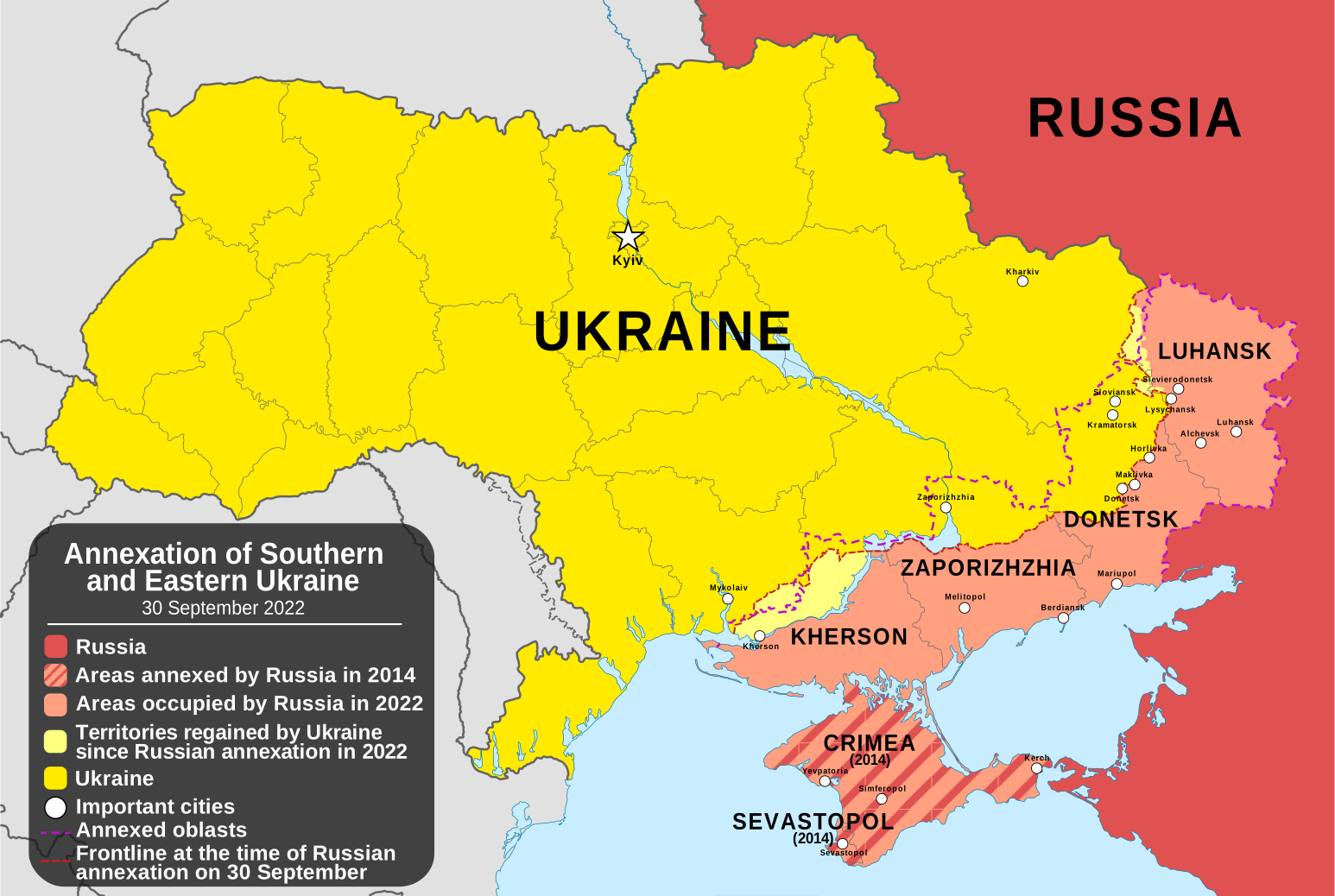
- Donetsk oblast of Ukraine, currently occupied and claimed by Russia.
- Luhansk oblast of Ukraine, currently occupied and claimed by Russia.
- Kherson and Zaporizhzhia oblasts, partially occupied and claimed by Russia.
Notes
References
References
- (23 October 2012). "Statement by the Twelve on the future status of Russia and the other former Soviet Republics (23 December 1991)".
- "Resources for the creation of the Commonwealth of Independent States (CIS) - Subject files - CVCE Website".
- "Заявление "двенадцати" о будущем статусе России и других бывших республик (23 декабря 1991 г.) | ГАРАНТ".
- "Заявление "двенадцати" о будущем статусе России и других бывших республик от 23 декабря 1991 - docs.CNTD.ru".
- Ambrosio, Thomas. (2005). "Challenging America's Global Preeminence: Russia's Quest for Multipolarity". Routledge.
- Fuller, Steve. (23 March 2022). "Eurasianism as the deep history of Russia's discontent". Educational Philosophy and Theory.
- Burbank, Jane. (22 March 2022). "The Grand Theory Driving Putin to War". The New York Times.
- Laurelle, Marlene. (2008). "Russian Eurasianism: An Ideology of Empire". Johns Hopkins University Press.
- Dixon Klump, Sarah. (7 July 2011). "Russian Eurasianism: An Ideology of Empire".
- Hill, Alexander. (2024-07-03). "Why Russia still has friends on the world stage".
- "Belarus and Russia - Ministry of Foreign Affairs of the Republic of Belarus".
- (2023-06-04). "The Russia–Ukraine conflict and the changing geopolitical landscape in the Middle East". China International Strategy Review.
- "Nicaragua's Foreign policy under President Daniel Ortega".
- Matamis, Joaquin. (2025-12-17). "Symbolic Alignment: Why the Myanmar Junta Is Expanding Its Engagement with Russia".
- "President of Eritrea arrives in St. Petersburg for participation in Russia-Africa Summit".
- (2025-10-15). "Mali and Russia mark 65 years of diplomatic trust".
- "Moscow, Bangui choosing place for Russian military base in Central African Republic".
- (2023-07-28). "Zimbabwe and Uganda leaders meet with Russian President Putin".
- (2025-08-01). "Burkina Faso and Russia create joint commission to deepen strategic ties".
- (9 January 2024). "Russia's Putin Plans Trip to Burundi, Equatorial Guinea".
- "The Republic of Iraq - The Ministry of Foreign Affairs of the Russian Federation".
- "Libya calls for deeper Russia–Africa cooperation ahead of 2026 Summit".
- "State of Palestine - The Ministry of Foreign Affairs of the Russian Federation".
- [https://www.usnews.com/news/world/articles/2024-01-16/russia-and-niger-agree-to-develop-military-ties-moscow-says Russia and Niger Agree to Develop Military Ties, Moscow Says]
- (2024-03-19). "President Al-Mashat congratulates Russian President Vladimir Putin on his election victory".
- Suleymanov, Ruslan. (19 September 2023). "Russia's Growing Ties With Afghanistan Are More Symbolism Than Substance".
- Brick Murtazashvili, Jennifer. (2 March 2022). "Central Asian countries now have two big worries about Russia". The Washington Post.
- (2023-08-03). "Who are Russia's supporters?". The Economist.
- (2024-03-20). "Lula envia carta a Putin cumprimentando pela vitória".
- "MSN".
- (28 February 2024). "Serbia is Playing with Matches Again".
- (23 December 2024). "BBC".
- (18 March 2024). "Iran, Saudi Arabia, UAE, others shower Russia's Putin with congratulatory messages".
- (5 October 2022). "What's Driving Russia's Opportunistic Inroads With Saudi Arabia and the Gulf Arabs".
- (24 March 2023). "Egypt-Russia relations reach new heights in Ukraine war aftermath".
- 43rd [[Munich Conference on Security Policy]]. [http://president.kremlin.ru/eng/speeches/2007/02/10/0138_type82912type82914type82917type84779_118123.shtml Putin's speech in English] {{webarchive. link. (4 May 2008, 10 February 2007.)
- Liquid Courage, ''The American''. By Charlie Szrom and Thomas Brugato. [http://www.american.com/archive/2008/february-02-08/liquid-courage] {{Webarchive. link. (26 October 2010, 22 February 2008. See also Brugato, Thomas. (2008). Drunk On Oil: Russian Foreign Policy 2000–2007. Berkeley Undergraduate Journal, 21(2). Retrieved from: http://escholarship.org/uc/item/26d7t54f)
- [http://www.kremlin.ru/eng/speeches/2007/01/18/0726_type82916_117121.shtml Interview] {{webarchive. link. (4 May 2008 for Indian Television Channel Doordarshan and Press Trust of India News Agency, 18 January 2007.)
- [https://www.washingtonpost.com/wp-dyn/articles/A21853-2004Sep14.html ''Stand Up to Putin.'' by Robert Kagan] [[The Washington Post]] 15 September 2004
- "The myth of Putin's success".
- [https://news.bbc.co.uk/2/hi/europe/4618860.stm Merkel cools Berlin Moscow ties] BBC News 16 January 2006
- (2008-04-08). "Putin Congratulates Yanukovych On Presidential 'Victory'". Radio Free Europe/Radio Liberty.
- McFaul, Michael. (13 December 2004). "Carnegie Endowment for International Peace".
- "Schröder to Visit Russia for Putin's Birthday – DW – 10/04/2005".
- Gonzalo Vina and Sebastian Alison. (20 July 2007). "Brown Defends Russian Expulsions, Decries Killings". Bloomberg News.
- [http://www.fco.gov.uk/servlet/Front?pagename=OpenMarket/Xcelerate/ShowPage&c=Page&cid=1007029391629&a=KArticle&aid=1183544695364 David Miliband's oral statement to the Commons on the Litvinenko case], 16 July 2007
- (24 November 2006). "In full: Litvinenko statement". BBC News.
- "В смерти Литвиненко виновен советский "Луноход"?".
- (December 2017). "Conservative Columnists with Political News Commentary, Analysis". Townhall.com.
- [http://www.kremlin.ru/eng/speeches/2006/11/24/2355_type82914type82915_114506.shtml Joint Press Conference after Russia-EU Summit] {{webarchive. link. (5 March 2008, Helsinki, Finland, 24 November 2006)
- David Holley. (17 May 2007). "Russian Orthodox Church ends 80-year split". Los Angeles Times.
- [http://www.kremlin.ru/eng/speeches/2007/04/26/1209_type70029type82912_125670.shtml Annual Address to the Federal Assembly] {{webarchive. link. (4 May 2008, 26 April 2007, Kremlin, Moscow)
- [http://www.izvestia.ru/news/news156321 Lavrov Announced Conditions of Resuming CFE Observance] {{webarchive. link. (5 April 2008, 3 December 2007, Izvestia.ru)
- (12 December 2007). "Russia walks away from CFE arms treaty".
- (12 December 2007). "Russia Suspends Participation In CFE Treaty". [[Radio Liberty]].
- (12 December 2007). "US 'deeply regrets' Russia's 'wrong' decision on CFE".
- (12 December 2007). "Putin poised to freeze arms pact as assertiveness grows". [[Financial Times]].
- [http://www.kremlin.ru/eng/speeches/2007/05/09/1432_type82912type127286_127675.shtml Speech at the Military Parade Celebrating the 62nd Anniversary of Victory in the Great Patriotic War] {{webarchive. link. (5 March 2008, Red Square, Moscow, 9 May 2007)
- [https://web.archive.org/web/20070607162323/http://www.telegraph.co.uk/opinion/main.jhtml?xml=%2Fopinion%2F2007%2F06%2F05%2Fdo0502.xml Putin is playing a dangerous game] By [[Anne Applebaum]], 5 June 2007
- [https://archive.today/20100525073652/http://www.timesonline.co.uk/tol/comment/columnists/guest_contributors/article2994651.ece No wonder they like Putin.] by [[Norman Stone]] [[The Times]] 4 December 2007.
- [https://web.archive.org/web/20071221162201/http://www.time.com/time/specials/2007/personoftheyear/article/0,28804,1690753_1690757_1690766-6,00.html Person of the Year 2007: A Tsar Is Born] by Adi Ignatius, Retrieved on 19 December 2007, Time.com
- [http://www.defenselink.mil/speeches/speech.aspx?speechid=1123 Speech of Robert M. Gates], Munich Conference on Security Policy, Germany, 11 February 2007. U.S. Department of Defense
- the Internet Department of the Presidential Press and Information Office. (4 June 2007). "Interview with Newspaper Journalists from G8 Member Countries". The Presidential Press and Information Office.
- [http://www.kremlin.ru/eng/speeches/2007/06/08/2251_type82914type82915_133552.shtml Press Conference following the end of the G8 Summit] {{webarchive. link. (4 May 2008, 8 June 2007)
- Doug Sanders, [https://www.theglobeandmail.com/servlet/story/RTGAM.20070602.wputin01/BNStory/International/home "Putin threatens to target Europe with missiles"] {{webarchive. link. (31 December 2008, ''[[The Globe and Mail]]'', 2 June 2007)
- [http://www.kremlin.ru/eng/speeches/2007/08/17/2033_type82915_141812.shtml Press Statement following the Peace Mission 2007 Counterterrorism Exercises and the Shanghai Cooperation Organisation Summit] {{webarchive. link. (31 May 2008, 17 August 2007, Chelyabinsk Region)
- link. (10 February 2012, 8 August 2007, KM.ru)
- link. (8 February 2012, 20 August 2007, "Chas", Latvia)
- [http://president.kremlin.ru/appears/2007/12/05/1940_type63378_153373.shtml Beginning of Meeting with Defense Minister Anatoliy Serdyukov] {{webarchive. link. (8 June 2008, 5 December 2007, Kremlin.ru)
- [https://www.reuters.com/article/idUSL0518563620071205 Guy Faulconbridge. ''Russian navy to start sorties in Mediterranean''] [[Reuters]] 5 December 2007.
- [http://www.vz.ru/news/2007/12/5/129713.html Российский флот возобновил присутствие в Мировом океане] ''Russia's Navy Has Resumed Presence in World Ocean''] Vzglyad.ru (Russian) 5 December 2007.
- [http://novayagazeta.ru/data/2007/95/17.html Павел Фельгенгауэр. ''Семь честных слов под килем''] {{webarchive. link. (20 May 2008 [[Novaya gazeta). ''Novaya Gazeta'']] No. 95 13 December 2007.
- "Russia Courts Indonesia".
- [http://top.rbc.ru/politics/16/10/2007/122607.shtml Putin: Iran Has Right to Develop Peaceful Nuclear Programme] {{Webarchive. link. (6 April 2008, 16 October 2007, Rbc.ru)
- [http://president.kremlin.ru/text/news/2007/10/148432.shtml Putin Positive on Second Caspian Summit Results, Meets With Iranian President Mahmoud Ahmadinejad] {{webarchive. link. (4 May 2008, 16 October 2007, Kremlin.ru)
- [http://president.kremlin.ru/events/chron/2007/10/148247.shtml Visit to Iran. Second Caspian Summit] {{webarchive. link. (4 May 2008, 15–16 October 2007, Kremlin.ru)
- [http://www.inosmi.ru/translation/237237.html Vladimir Putin defies assassination threats to make historic visit to Tehran] {{webarchive. link. (20 January 2008, 16 October 2007, The Times (In Russian))
- [https://web.archive.org/web/20080726124113/http://www.timesonline.co.uk/tol/news/world/europe/article2666142.ece Vladimir Putin defies assassination threats to make historic visit to Tehran], 16 October 2007, The Times (In English)
- [http://president.kremlin.ru/eng/speeches/2007/10/16/2020_type82914type82915_148460.shtml Answer to a Question at the Joint Press Conference Following the Second Caspian Summit] {{webarchive. link. (4 May 2008, 16 October 2007, Tehran, Kremlin.ru)
- [http://kremlin.ru/eng/speeches/2007/10/26/1918_type82914type82915_149706.shtml Press Statement and Answers to Questions following the 20th Russia-European Union Summit] {{webarchive. link. (9 February 2008, 26 October 2007, Mafra, Portugal, Kremlin.ru)
- [http://www.izvestia.ru/politic/article3109784/ Russia Will Finance European Democracy] {{webarchive. link. (31 January 2008, 29 October 2007, Izvestia.ru)
- (1 April 2008). "Bush, Putin disagree on missile defense". CNN.
- Zakaria, Fareed, [http://www.newsweek.com/2008/08/29/this-isn-t-the-return-of-history.html "This Isn't the Return of History"]}
- Friedman, George. (25 September 2008). "Georgia and the Balance of Power". The New York Review of Books.
- (2018-10-29). "Russia, the United States, and the New Cold War {{!}} Journal of Military and Strategic Studies". Journal of Military and Strategic Studies.
- Patrick W. Quirk, "Russia–Syria Internal Threat Alliance (2010–2016)". in Quirk, ''Great Powers, Weak States, and Insurgency'' (Palgrave Macmillan, Cham, 2017). 179–213.
- Cynthia Nolan, "The Edward Snowden Case and the Morality of Secrecy". ''Catholic Social Science Review'' 22 (2017): 291–310.
- Michał. Natorski, "The EU and crisis in Ukraine: policy continuity in Times of Disorder?". in by Dimitris Bouris and Tobias Schumacher, eds. ''The Revised European Neighbourhood Policy'' (Palgrave Macmillan, 2017). 177–196.
- Mackinnon, Amy. (2023-02-12). "The Other Ukraine War".
- Lyall Grant, Mark. (March 1, 2014). "Russia cannot be granted impunity to disregard international law and the UN Charter". United Kingdom Government.
- Tracey German, "NATO and the enlargement debate: enhancing Euro-Atlantic security or inciting confrontation?". ''International Affairs'' 93.2 (2017): 291–308.
- (30 December 2022). "Russia outlines plan for 'unfriendly' investors to sell up at half-price". Reuters.
- James D. J. Brown, "Japan's foreign relations with Russia". in James D. J. Brown and Jeff Kingston, eds. ''Japan's Foreign Relations in Asia'' (2018): 248–261.
- (2023-08-01). "The Russian coal industry in an uncertain world: Finally pivoting to Asia?". Energy Research & Social Science.
- (2019). "The GeGaLo index: Geopolitical gains and losses after energy transition". Energy Strategy Reviews.
- Gärtner, Heinz. (2023). "China and Eurasian powers in a Multipolar World Order 2.0: Security, Diplomacy, Economy and Cyberspace". [[Routledge]].
- (16 November 2022). "Russian spying in Europe dealt 'significant blow' since Ukraine war, MI5 chief says".
- ADDO. (2025-02-18). "Challenging the West: Russian anti-imperialism narratives in Nigeria".
- [https://www.aljazeera.com/news/2022/7/26/ugandan-leader-extols-africa-russia-friendship-during-visit-by-lavrov "Uganda's Museveni extols Africa-Russia ties during Lavrov visit"]. ''aljazeera''. Retrieved 28 July 2022.
- [https://www.rbth.com/international/2013/12/06/mandela_and_the_soviet_union_the_struggle_against_apartheid_32329.html "Mandela and the Soviet Union: The struggle against apartheid"] ''rbth.com''. Retrieved 28 July 2022.
- (31 March 2023). "Russia adopts new anti-West foreign policy strategy". Deutsche Welle.
- Gould-Davies, Nigel. (6 April 2023). "Russia's new foreign-policy concept: the impact of war".
- (1 March 2023). "The Concept of the Foreign Policy of the Russian Federation".
- (25 September 2024). "Russia in satellite deal with West African military governments".
- [https://www.sudouest.fr/international/la-france-denonce-une-operation-de-desinformation-russe-ciblant-l-afrique-francophone-24829438.php "La France dénonce une opération de désinformation russe ciblant l'Afrique francophone"] ''sudouest.fr''. Retrieved 14 June 2025.
- (May 26, 2024). "Russia Steps Up a Covert Sabotage Campaign Aimed at Europe".
- (1981). "Soviet Foreign Policy: 1945-1980". Progress Publishers.
- Lind, John. "Den dansk-russiske traktat 1302".
- (2021). "The Geopolitics of Iran". [[Springer Nature]].
- (24 August 2016). "День в истории: 24 августа 1553 года. Установлены дипломатические отношения между Россией и Англией".
- (10 July 2020). "The history of relations between Russia and the Netherlands goes back centuries to when they launched economic cooperation".
- (2010). "L'incident diplomatique (XVIe-XVIIIe siècle)". Editions Pedone.
- Naumann, Erik. (1927). "Herman Cedercreutz". [[National Archives of Sweden]].
- "Países". Portal Diplomático.
- "All Countries".
- "Acuerdo de amistad y alianza entre Rusia y España (5 artículos)".
- (28 March 2014). "ВОЗРОЖДАЯ МИЛОСЕРДИЕ – МИЛОСЕРДИЕМ ВОЗРОДИМСЯ".
- "190 years of Brazil-Russia diplomatic relations – October 3, 2018".
- "Bilateral cooperation".
- "РОССИЙСКО-ГРЕЧЕСКИЕ ОТНОШЕНИЯ".
- "Королевство Бельгия: Двусторонние отношения".
- (1874). "Treaties and Conventions concluded between Empire of Japan and Foreign Nations, together with Regulations and Communications 1854-1874". Nisshu-sha Printing Office.
- (12 December 2017). "Inauguración de la muestra "160 años de Relaciones Diplomáticas Uruguay-Rusia"".
- (12 December 2025). "Hoy cumplimos 168 años de relaciones diplomáticas con la Federación Rusa.".
- n.a.. (2019-08-24). "Archivos antiguos demuestran que relaciones entre Rusia y Perú iniciaron en 1863 [FOTOS]".
- "Diplomatic Relations of Romania".
- "Установяване, прекъсване u възстановяване на дипломатическите отношения на България (1878-2005)".
- "México y Rusia: 130 años de relaciones diplomáticas".
- (3 October 2021). "Célébration du 130e anniversaire de l'établissement des relations diplomatiques entre le Grand-Duché de Luxembourg et la Fédération de Russie".
- "ความสัมพันธ์ทวิภาคี".
- (9 August 2013). "Press release on the exchange of greetings between the foreign ministers of Russia and Bolivia on the 125th anniversary of bilateral relations".
- "RELACIONES DIPLOMÁTICAS DE LA REPÚBLICA DE PANAMÁ".
- (27 April 1999). "Norges opprettelse af diplomatiske forbindelser med fremmede stater".
- (1 June 2025). "Russia accepts Taliban's nominated ambassador to Moscow". [[Reuters]].
- (31 December 2010). "Stubb and Lavrov celebrate the 90th anniversary of diplomatic relations between Finland and Russia".
- "Политический диалог".
- "Hariciye Vekâleti Yıllığı 1959". Ministry of Foreign Affairs of the Republic of Türkiye.
- "Europa".
- MFA Russia. (August 25, 2022). "🇷🇺🇪🇬 On August 26, 1943, the USSR established diplomatic relations with Egypt. In the spirit of historically friendly relations we are looking forward to further strengthening #RussiaEgypt ties in all spheres, based on mutual respect and multi-faceted cooperation ☝️".
- (17 June 2014). "Costa Rica y Rusia celebran 70 aniversario del establecimiento de relaciones diplomáticas".
- (5 February 2010). "On the Occasion of the 60th Anniversary of the Establishment of Diplomatic Relations between the Russian Federation and the Republic of Indonesia".
- "Russische Föderation: Steckbrief".
- (20 August 2021). "Tunisie-Russie: 65 ans de coopération soutenue".
- "LIST OF MEMBER STATES OF THE UNITED NATIONS (193) HAVING DIPLOMATIC RELATIONS WITH CAMBODIA".
- "Diplomatic relations".
- (23 August 2022). "Strengthening bilateral relations between Nigeria and Russia".
- (7 December 2023). "Today marks 55 years since the diplomatic relations between our country and EquatorialGuinea were established".
- (1970). "Africa Quarterly". Indian Centre for Africa.
- "Formal diplomatic relations list".
- "Relações Diplomáticas".
- "Lijst van Diplomatieke Betrekkingen en Visum-afschaffingsovereenkomsten".
- (3 April 2020). "On April 3, 1978, diplomatic relations between the USSR and Djibouti were established".
- Ginsburgs, George. (1987). "A Calendar of Soviet Treaties: 1974-1980". BRILL.
- Paszyn, D.. (2000). "The Soviet Attitude to Political and Social Change in Central America, 1979–90: Case-Studies on Nicaragua, El Salvador and Guatemala". Springer.
- "Bilateral relations".
- Mastny, Vojtech. (2019). "Soviet-east European Survey, 1986-1987". [[Routledge]].
- (1988). "Problems of Communism". Documentary Studies Section, International Information Administration.
- "Russian-Qatar relationship (Brief summary)".
- "Política Bilateral".
- (1990). "Vestnik". USSR Ministry of Foreign Affairs.
- Mushelenga, Samuel Abraham Peyavali. (2008). "Foreign policy-making in Namibia: the dynamics of the smallness of a state".
- "Today Russia and Kiribati celebrate 27th Anniversary of diplomatic relations (Ministry of Foreign Affairs of Russia)".
- "Bilateral relations".
- "Countries & Regions".
- (1 July 2021). "Dates of establishment and renewal of diplomatic relations".
- "List of countries with which Lithuania has established diplomatic relations".
- (30 January 2018). "Diplomaatiliste suhete (taas)kehtestamise kronoloogia".
- "RELACIONES DIPLOMATICAS DE CHILE CON LOS PAISES DE LA CUENCA DEL PACIFICO".
- "Протокол про встановлення дипломатичних відносин між Україною і Російською Федерацією".
- "Bilateral Relations (country profiles listed alphabetically)".
- "Список стран, с которыми КР установил дипломатические отношения".
- "STATES WITH WHICH THE REPUBLIC OF UZBEKISTAN ESTABLISHED DIPLOMATIC RELATIONS".
- "Bilateral relations".
- "Foreign policy - bilateral relations".
- "Bilateral relations".
- "LIST OF STATES WITH WHICH THE REPUBLIC OF TAJIKISTAN ESTABLISHED DIPLOMATIC RELATIONS".
- "STATES WITH WHICH TURKMENISTAN ESTABLISHED DIPLOMATIC RELATIONS".
- (7 March 2009). "Primer embajador ruso llega esta mañana al país".
- "Bilateral relations - Date of Recognition and Establishment of Diplomatic Relations".
- Đogić, Mojca Pristavec. (September 2016). "Priznanja samostojne Slovenije".
- "REGISTRO DE FECHAS DE ESTABLECIMIENTO DE RD".
- (27 December 2017). "Tight, fruitful Belarus-Russia relations praised".
- "Relations between Georgia and Russia". [[Ministry of Foreign Affairs (Georgia)]].
- "Страны, установившие дипломатические отношения с Республикой Казахстан".
- "Štáty a teritóriá".
- (29 January 1993). "Diplomatic Relations Between Russian Federation and Barbados as of 29 Jan. 1993 (UN Digital Library)".
- "Following a referendum on May 24, 1993, Eritrea was officially proclaimed to be an independent state, and on the same day the Russian Federation and the State of Eritrea established diplomatic relations".
- "Rapporti bilaterali della Repubblica di San Marino".
- (28 February 2022). "Prince Alois of Liechtenstein comments on the Russian invasion of Ukraine".
- "Bilateral relations".
- "Vladimir Vinokurov is Russia's New Ambassador to Dominica".
- "Diplomatic relations". Ministry of Foreign Affairs of Andorra.
- (2022). "Datumi priznanja i uspostave diplomatskih odnosa".
- "Countries With Which the Federated States of Micronesia Has Established Diplomatic Relations".
- "Свазиленд / Участие в международных организациях, основные внешнеполитические контрагенты и партнёры, отношения с Россией".
- "15 years ago Russia and East Timor established diplomatic relations".
- "Russia – St.Vincent and the Grenadines".
- "Tabela priznanja i uspostavljanja diplomatskih odnosa". Montenegro Ministry of Foreign Affairs and European Integration.
- "La Russie et Monaco".
- Solovyev, Vladimir. (10 September 2008). "Freshly Recognized". [[Kommersant]].
- "Diplomatic relations of the Holy See".
- (6 June 2012). "Meeting of Deputy Minister of Foreign Affairs of Russia M. L. Bogdanov with Ambassador of South Sudan to Moscow Shol Deng Alak".
- (25 September 2011). "Russia Forges Ties With Tuvalu After Abkhaz, Ossetia Recognition".
- Mousli, Malek. (2019-12-15). "Algerian-Russian Cooperation: True Strategic Partnership?". Vestnik RUDN. International Relations.
- Katz, Mark N.. (2007-11-27). "Russia and Algeria: Partners or Competitors?". Middle East Policy.
- "A Mixed Balance Sheet: Russia's Uneven Influence in the Maghreb".
- "Algeria-Russia Ties: Beyond Military Cooperation?".
- (2023-06-15). "The President of Russia and the President of Algeria made statements for the press".
- {{in lang
- "WE MUST EXPLOIT RUSSIA'S POTENTIAL".
- "Botswana-Russia relations".
- (28 August 2015). "How the West Lost Burundi – Foreign Policy". Foreignpolicy.com.
- "Главная страница". Capeverde.mid.ru.
- (9 December 2014). "Cabo Verde - The Ministry of Foreign Affairs of the Russian Federation". Mid.ru.
- (22 March 2018). "Russia provides free military aid to Central African Republic — Foreign Ministry". [[Russian News Agency TASS]].
- Hauer, Neil. (27 August 2018). "Russia's Favorite Mercenaries".
- [http://allafrica.com/stories/201003180524.html Russia And Italy Renew Ties With Liberia] Government of Liberia, 17 March 2010
- (27 May 2011). "In diplomatic shift, Russia calls for Gadhafi to step down".
- (7 June 2011). "Russian envoy visits Benghazi for Libya mediation". Reuters.
- Gutterman, Steve. (1 September 2011). "Russia recognises Libya's Transitional Council". Reuters.
- (17 March 2009). "Transcript of Remarks and Response to Media Questions by Minister of Foreign Affairs of the Russian Federation Sergey Lavrov at Joint Press Conference Following Talks with Ojo Maduekwe, Minister of Foreign Affairs of Nigeria, Moscow, March 17, 2009". [[Ministry of Foreign Affairs (Russia).
- "Посольство Мадагаскара в РФ - Обращение Посла МАДАГАСКАРА в РФ".
- "Главная - Министерство иностранных дел Российской Федерации".
- (2023-02-09). "Mali: Avoiding the Trap of Isolation {{!}} Crisis Group".
- (2024-07-06). "M-DIME {{!}} Russian Military Influence In Mali".
- (2024-12-10). "Base Development in Mali Indicates Continued Russian Involvement". CSIS.
- (1981). "A calendar of Soviet treaties, 1958–1973". [[Brill Publishers.
- (16 February 2009). "Российско-маврикийские отношения". [[Russian Ministry of Foreign Affairs]].
- "Russia to Develop Economic Cooperation with Mozambique".
- [http://english.peopledaily.com.cn/200607/28/eng20060728_287595.html Russia urges more trade with mineral-rich Namibia] People's Daily, 28 July 2006
- [https://archive.today/20110711003232/http://www.fin24.com/articles/default/display_article.aspx?Nav=ns&ArticleID=1518-25_2085428 Russia, Namibia in nuke talks] Fin24.com, 18 March 2007
- [http://www.namibian.com.na/2008/November/marketplace/083FB873A5.html Russian minist in trade talks with Nam] The Namibian, 28 November 2008 {{dead link. (June 2016)
- Okafor, Chinedu. (2025-04-04). "Russia reveals its intention to open an embassy in Niger".
- Ginsburgs, George. (1987). "A calendar of Soviet treaties, 1974-1980". [[Brill Publishers.
- link. [[Ministry of Foreign Affairs of Russia]]
- "Russian embassy in Pretoria". Russianembassy.org.za.
- "South African embassy in Moscow".
- "Department of International Relations and Cooperation - South Africa".
- (10 April 2010). "Президент России". Kremlin.ru.
- link. (9 July 2011)
- (25 August 2011). "Russia establishes diplomatic relations with South Sudan".
- "Embassy of Tanzania in Moscow".
- "Russian embassy in Buenos Aires".
- "Экономика Барбадоса". Polpred.com.
- (14 February 2014). "Russia and Barbados To Strengthen Diplomatic Ties".
- [http://www.mid.ru/en/foreign_policy/news/-/asset_publisher/cKNonkJE02Bw/content/id/3054676 Press release on the exchange of congratulatory messages between the foreign ministers of Russia and Barbados on the 25th anniversary of the establishment of diplomatic relations], 2 February 201817:34
- "Russia ready to develop cooperation with Barbados".
- link. (8 March 2018, Invest Barbados, 30 October 2014)
- "Russia willing to assist Caribbean with oil and gas exploration".
- (13 February 2012). "Russia, Barbados Talk Cultural Ties".
- Gittens, Deirdre. (7 February 2017). "Scholarship Opportunity In Russia".
- (8 February 2022). "Russian Envoy Keen On Bilateral Relations With Barbados". Barbados Government Information Service (BGIS).
- [https://guyana.mid.ru/en/countries/rossiya_barbados/ Barbados–Russia relations], Embassy of the Russian Federation in the Cooperative Republic of Guyana
- [http://www.voanews.com/english/2008-11-14-voa17.cfm Voice of America]{{dead link. (April 2025)
- (22 May 2009). "Bolivia proyecta comprar armamento ruso por varios millones de dólares". El País.
- (3 October 2008). "Latin America". CBS.
- (17 February 2009). "Russia to aid Bolivia drugs fight". BBC News.
- "Embassy of the Russian federation in San José".
- {{Timatic
- (20 May 2015). "Dominica and Russia celebrate 20 years of diplomatic relations". dominicanewsonline.com.
- (26 April 2018). "Dominica appoints resident ambassador to Russia".
- "Ecuadorian embassy in Moscow".
- "Russian embassy in Quito".
- (1985). "The Soviet Union and Grenada under the New Jewel Movement". International Affairs.
- [http://www.rusembassyguyana.org.gy/bilateral/rgren.html Embassy of the Russian Federation in Georgetown, Guyana - Bilateral relations between Grenada and Russia] {{webarchive. link. (21 July 2011)
- David Ryan. (2000). "US foreign policy in world history". Routledge.
- "Relaciones Diplomáticas de la República de Panamá".
- (2017). "Manual de Protocolo y Ceremonial del Estado de la República de Panamá". Ministerio de Relaciones Exteriores.
- "Embassy of Panama in Moscow (in Spanish)".
- "Embassy of Russia in Panama City (in Russian and Spanish)".
- "Paraguayan embassy in Moscow". Embapar.ru.
- [https://www.commonwealthroundtable.co.uk/commonwealth/americas/caribbean/russia-caricom-new-dawn/ Russia and CARICOM: A New Dawn?], By: Peter Clegg & Veronika Clegg, 17 January 2018, The Commonwealth Round Table
- "Embassy of the Russian Federation in Georgetown about relations with Trinidad and Tobago".
- "Embassy of the Russian Federation in Montevideo".
- (9 April 2022). "Russia Latest Country to Establish Diplomatic Ties With Taliban". [[Voice of America]].
- "Посол Российской Федерации в Азербайджанской Республике » Посольство Российской Федерации в Азербайджанской Республике".
- "Political Relations / Embassy of the Russian Federation in the Kingdom of Cambodia".
- Has recognized [[International recognition of Abkhazia and South Ossetia. Abkhazia and South Ossetia independence]]
- "Georgia breaks relations with Russia".
- [http://www.globalsecurity.org/military/library/news/2004/01/mil-040119-3ae77eaf.htm VOA News Report]. Globalsecurity.org (19 January 2004). Retrieved 12 November 2011.
- "Embassy of India in Russia".
- "Indian Consulate in St. Petersburg".
- "Indian Consulate in Vladivostok". Embassy of India - Moscow.
- "Embassy of Russia in India".
- "Russian diplomatic centers in India".
- [[Ministry of Foreign Affairs (Russia). Ministry of Foreign Affairs of the Russian Federation]]. (26 May 2008). link
- [http://www.mfa.gov.il/MFA/Peace%20Process/Guide%20to%20the%20Peace%20Process/UN%20General%20Assembly%20Resolution%20181 UN General Assembly Resolution 181] Israel Ministry of Foreign Affairs
- (1948). "The Recognition of Israel". The American Journal of International Law.
- [https://web.archive.org/web/20090201154514/http://news.xinhuanet.com/english/2008-07/19/content_8571164.htm Russia hopes to solve territorial dispute with Japan by strengthening trust], [[Xinhua News Agency]]. Retrieved 19 July 2008
- "Embassy of Russia in Amman".
- Zabortseva, Yelena Nikolayevna. (2016). "Russia's Relations with Kazakhstan: Rethinking Ex-Soviet Transitions in the Emerging World System". Routledge.
- Martha Brill Olcott. "Russia". [http://lcweb2.loc.gov/frd/cs/kgtoc.html ''Kyrgyzstan: a country study''] (Glenn E. Curtis, editor). [[Library of Congress]] [[Federal Research Division]] (March 1996). ''This article incorporates text from this source, which is in the public domain.''
- (March 2016). "LAO EMBASSY TO THE RUSSIAN FEDERATION".
- "Главная - Министерство иностранных дел Российской Федерации".
- "Russian-Malaysian Relations". Embassy of the Russian Federation in Malaysia.
- [[Ministry of Foreign Affairs of Russia]]. link
- "Welcome to the Official Website of Embassy of Malaysia, Moscow". Ministry of Foreign Affairs of Malaysia.
- Nemzer, Louis. (1939). "The Status of Outer Mongolia in International Law.". The American Journal of International Law.
- Montsame News Agency. ''Mongolia''. 2006, Foreign Service Office of [[Montsame News Agency]], {{ISBN. 99929-0-627-8, p. 55
- (25 September 2007). "Chinese dilemma over Burma". BBC News.
- (13 January 2007). "Russia, China veto resolution criticizing Burma". The Washington Post.
- (24 January 2018). "US criticizes Russia for arming Myanmar amid Rohingya crisis". Fox News.
- "Speech of H.E. Mr. Sergey Peskov, Ambassador Extraordinary and Plenipotentiary of the Russian Federation, to the Islamic Republic of Pakistan, at the Jubilee Function on the occasion of celebration of the 60th anniversary of the establishment of diplomatic relations between Russia and Pakistan". Pakistan.mid.ru.
- (3 August 1974). "USSR AGREES TO OPENING OF PLO MISSION IN MOSCOW".
- link. (13 January 2009). [[Cominf.org]]
- link. (16 January 2009). [[Presidential Press and Information Office]]
- (2009-02-11). "Vladimir Putin signed a direction about establishment of Russian embassies in Abkhazia and South Ossetia". REGNUM.
- "Посольство Российской Федерации в Республике Корея".
- "Consulate-General of the Russian Federation in Busan, Republic of Korea".
- "주 러시아 대한민국 대사관".
- "While acknowledging the justifiable concerns of the Russian Federation, Sri Lanka also welcomes attempts at de-escalating the tension. Sri Lanka is confident that the parties concerned would be able to resolve the issues arising out of the recent developments, through a legitimate democratic process, enabling harmonious co-existence of the people of Ukraine." - See more at: http://www.nation.lk/edition/breaking-news/item/26839-ukraine-crisis-lanka-regrets-presidents-unconstitutional-removal.html#sthash.888W7iUA.dpuf {{Webarchive. link. (5 May 2014)
- Paul Alster. (22 December 2012). "Russians moving into Syria. Strategic alliance include fleet, missiles". [[Fox News]].
- (21 September 2012). "Russians Continue to Guard the Tajik Border with Afghanistan". Satrapia.
- "Voice of Russia".
- [http://www.turkmenistan.mid.ru/ Russian Embassy in Turkmenistan] {{Webarchive. link. (24 June 2009 {{in lang). ru
- [http://www.turkmenembassy.ru/ Turkmenistan Embassy in Russia] {{in lang. ru
- [[Associated Press]]. (4 July 2008). "Russian president in Turkmenistan to consolidate Kremlin's grip on Central Asian energy". International Herald Tribune.
- Blagov, Sergei. (30 December 2008). "Russia faces a collapse of its economic and political clout". Eurasianet.
- Trilling, David. (15 April 2009). "Pipeline spat with the Kremlin turns into a political test of strength". Eurasianet.
- Blank, Stephen. (2 July 2008). "Russian president strives for a breakthrough moment in Caspian basin energy game". Eurasianet.
- (5 March 2001). "Vietnam-Russia traditional ties reach new heights". Embassy of Vietnam in the United States of America.
- "Veleposlanstvo Bosne i Hercegovine u Ruskoj Federaciji".
- "Embassy of the Russian Federation in Bosnia and Herzegovina".
- "Defense.gov News Article: Russian Troops Arriving in Bosnia".
- "Bulgarian embassy in Moscow (in Bulgarian and Russian)".
- "Russian embassy in Sofia".
- "Rusija - MVEP • Hrvatski".
- {{in lang. ru. hr [http://www.croatia.mid.ru/ Embassy of The Russian Federation in Zagreb] {{webarchive. link. (12 April 2009)
- Government of Russia. "Russian embassy in Copenhagen, Denmark".
- "Denmark in Russia". Ministry of Foreign Affairs of Denmark.
- "Danish consulate general in Saint Petersburg, Russia".
- Kristina Kallas, ''[http://www.ut.ee/ABVKeskus/eesti/eesti-vene.doc Eesti Vabariigi ja Vene Föderatsiooni riikidevahelised läbirääkimised aastatel 1990–1994] {{webarchive. link. (25 February 2009'' - Tartu 2000)
- [[Eesti Ekspress]]: ''[http://www.ekspress.ee/viewdoc/41763F52B461B81DC22572C800232248 Ta astus sajandist pikema sammu - Boriss Jeltsin 1931-2007] {{Webarchive. link. (27 September 2007'', 25 April 2007)
- "Citizenship Act of Estonia (1995, consolidated March 2004) - Legislationline - free online legislation database".
- (18 October 2022). "Estonian parliament declares Russia a terrorist state".
- "Situation at Finland's eastern border". Government of Finland.
- "Katso kartta: venäläisten maakauppoja strategisissa kohteissa".
- "Supo epäilee: Venäjä ostanut Suomesta kiinteistöjä sotilailleen".
- "Ulkoasiainministeriö: Maat ja alueet: Kahdenväliset suhteet".
- (9 June 2023). "Iceland to Suspend Embassy Operations in Russia". Kyiv Post.
- [http://www.iceland.mid.ru/index_e.html Embassy of the Russian Federation to the Republic of Iceland] {{Webarchive. link. (3 November 2014 (in English))
- "Italy, Russia sign 'protocol of cooperation' - Pravda.Ru".
- Text in ''League of Nations Treaty Series'', vol. 2, pp. 196-231
- "Norwegian embassy in Moscow".
- "Norway – the official site in Russia".
- [http://www.norway.mid.ru/en/ Embassy of Russia in Oslo (in English, Norwegian and Russian)] {{webarchive. link. (11 June 2011)
- [http://www.mfa.gov.rs/Policy/Bilaterala/Russia/basic_e.html Bilateral Political Relations with Russia] {{Webarchive. link. (5 August 2012, Ministry of Foreign Affairs of Serbia)
- [http://ljubljana.rusembassy.org/ Russian embassy in Ljubljana] {{webarchive. link. (29 November 2009)
- (20 May 2022). "Veleposlaništvo RS Moskva".
- (24 February 2022). "Ukraine breaks off diplomatic ties with Russia".
- Kitsoft. "Ministry of Foreign Affairs of Ukraine - Statement by the Ministry of Foreign Affairs of Ukraine Regarding the Severance of Diplomatic Relations with the Russian Federation".
- Bell, Gary M.. (1995). "A Handlist of British Diplomatic Representatives: 1509-1688". [[Cambridge University Press]].
- "British Embassy Moscow".
- Al Jazeera. (8 March 2022). "Russia issues list of 'unfriendly' countries amid Ukraine crisis".
- "Russian Federation - United Kingdom BIT (1989)".
- "Homepage – Australian Embassy". embassy.gov.au.
- "Посольство России в Австралии".
- [http://www.theage.com.au/articles/2004/04/18/1082226623418.html Pacific nation Nauru on brink of collapse] The Age, 18 April 2004
- Harding, Luke. (14 December 2009). "Tiny Nauru struts world stage by recognising breakaway republics". The Guardian.
- "On the exchange of greeting telegrams between the Foreign Ministers of the Russian Federation and the Kingdom of Tonga on the occasion of 30 anniversary of establishment of diplomatic relations".
- HUFFER, Elise 1993, pp.272-282"
- "Opinion of Russia - Indicators Database {{pipe}} Pew Research Center". Pewglobal.org.
- Otfried Nassauer. (4 July 1997). "The NATO-Russia "Founding Act": Stepping Stone or Stumbling Block for a European Security Architecture?".
- Helene Sjursen and Guri Rosén. "Arguing Sanctions. On the EU's Response to the Crisis in Ukraine." ''JCMS: Journal of Common Market Studies'' (Sept 2016). DOI: 10.1111/jcms.12443
- See [[Vladimir Socor]], "[http://www.jamestown.org/programs/edm/single/?tx_ttnews%5Btt_news%5D=27502&tx_ttnews%5BbackPid%5D=176&no_cache=1 Kremlin Refining Policy in 'Post-Soviet Space']," ''Eurasia Daily Monitor'' (7 February 2005).
- [http://www.ef.huji.ac.il/publications/Yakovlev%20Golani.pdf Two Decades of the Russian Federation's Foreign Policy in the Commonwealth of Independent States: The Cases of Belarus and Ukraine] {{webarchive. link. (20 November 2011, p. 17)
- Lowell W. Barrington, Erik S. Herron, and Brian D. Silver, "The Motherland Is Calling: Views of Homeland among Russians in the Near Abroad," ''World Politics'' 55, No. 2 (2003) : 290–313.
- (2015). "Russia Today: Atlas for Business and Political Decision Makers - Strategic Information and Developments". IBP, Inc..
- [https://www.cia.gov/the-world-factbook/countries/china/ Russia], CIA World Factbook
- "CERN Council responds to Russian invasion of Ukraine". CERN.
- "Russia warns EU over Serbs in Kosovo".
- link. (28 September 2011)
- "Договор Между Российской Федерацией И Латвийской Республикой О Российско-Латвийской Государственной Границе (Подписан В Г. Москве 27.03.2007)".
- Business Standard. "India News, Latest News Headlines, Financial News, Business News & Market Analysis on Indian Economy - Business Standard News". Business Standard India.
- (26 July 2008). "The Sino-Russian border: The cockerel's cropped crest - The Economist". The Economist.
- (5 January 2023). "Putin Signals Readiness for Peace Talks if Kyiv Cedes Occupied Regions". Al Jazeera.
- (28 May 2013). "Estonia, Russia to exchange 128.6 hectares of land under border treaty".
- "Estonian-Russian border agreement sent to Russian Duma for ratification".
- Gutterman, Steve. (18 March 2014). "Putin signs Crimea treaty, will not seize other Ukraine regions". Reuters.com.
- (13 November 2014). "Ukraine crisis: Timeline". BBC News.
- [http://en.itar-tass.com/russia/725964 State Duma approves denunciation of Russian-Ukrainian agreements on Black Sea Fleet] {{Webarchive. link. (17 October 2014, [[ITAR-TASS]] (31 March 2014))
This article was imported from Wikipedia and is available under the Creative Commons Attribution-ShareAlike 4.0 License. Content has been adapted to SurfDoc format. Original contributors can be found on the article history page.
Ask Mako anything about Foreign relations of Russia — get instant answers, deeper analysis, and related topics.
Research with MakoFree with your Surf account
Create a free account to save articles, ask Mako questions, and organize your research.
Sign up freeThis content may have been generated or modified by AI. CloudSurf Software LLC is not responsible for the accuracy, completeness, or reliability of AI-generated content. Always verify important information from primary sources.
Report