From Surf Wiki (app.surf) — the open knowledge base
Ford River Rouge complex
Historic automobile factory in Michigan, US
Historic automobile factory in Michigan, US
| Field | Value |
|---|---|
| name | Ford River Rouge Complex |
| nrhp_type | nhld |
| nocat | yes |
| image | Ford Dearborn Factory Aerial (45574999515).jpg |
| image_size | 325px |
| caption | Aerial view of the Rouge in 2015 |
| location | Dearborn, Michigan, United States |
| locmapin | Michigan |
| coordinates | |
| area | 900 acre (landmarked area) |
| built | 1917–1928 |
| architect | Albert Kahn |
| visitation_num | 148,000 |
| visitation_year | 2017 |
| designated_nrhp_type | June 2, 1978 |
| added | June 2, 1978 |
| designated_other1 | Michigan State Historic Site |
| designated_other1_date | December 14, 1976 |
| refnum | 78001516 |
The Ford River Rouge complex (commonly known as the Rouge complex, River Rouge, or The Rouge) is a Ford Motor Company automobile factory complex located in Dearborn, Michigan, along the River Rouge, upstream from its confluence with the Detroit River at Zug Island. Completed in 1928, it was declared a National Historic Landmark in 1978.
Site and buildings
Henry Ford purchased the future site of the Rouge in 1915, with plans to build a bird sanctuary. Plans shifted to manufacturing following a federal request to the Ford Motor Company to produce warships. 'Building B', the first building on the property, was built to fulfill the request.
The Rouge complex measures 1.5 miles wide by 1 mile long, including 93 buildings with nearly 16 e6sqft of factory floor space. With its own docks in the dredged Rouge River, 100 miles of interior railroad track, its own electricity plant, and integrated steel mill, the titanic Rouge was able to turn raw materials into running vehicles within this single complex, a prime example of vertical-integration production.
Some of the Rouge's buildings were designed by architect Albert Kahn, such as its glass plant in 1925, which replaced Ford's glass production site in Highland Park, Pittsburgh. It measures 760 feet long and 240 feet wide, and its walls features large glass panels. Khan also designed the tire plant. Completed January 30, 1938, it measures 802 feet in length and 240 feet in width and features a butterfly roof and, similarly to the glass plant, has large glass panels in its walls.
In the second quarter of 1932, through Edsel Ford's support, Mexican muralist Diego Rivera was invited to study the facilities at the Rouge. The studies informed his set of murals known as the Detroit Industry Murals, which is exhibited in the Detroit Institute of Arts.
Charlie Chaplin studied the Rouge for his 1936 film Modern Times.
The Ford Company provides free tours of the facility via bus. They ran from 1924 to 1980, at their peak hosting approximately a million visitors per year. They resumed in 2004, in cooperation with The Henry Ford Museum, with multimedia presentations, as well as a viewing of the assembly floor. In 2017, the Rouge had 148,000 visitors.
The Rouge formerly operated a power plant to power the facility. On February 1, 1999, the power plant exploded, killing six workers and critically injuring fourteen others. The explosion was believed to have been caused by Ford's disregard of regulation, and Ford was fined $1.5 million without criminal proceedings. Bronze plaques were installed for the six killed. In 2024, the power plant – now abandoned – was explored by The Proper People, an urban exploration YouTube duo.
In September 2020, Ford announced the construction of the Ford Rouge Electric Vehicle Center, costing $700,000,000 to build, for production of the Ford F-150 Lightning, an electric vehicle. On May 18, 2021, then-president Joe Biden toured the plant and drove an F-150 Lightning before it entered the market. He endorsed electric vehicles during a speech at the plant.
Green roof renovation
In 1999, architect William McDonough entered into an agreement with Ford Motor Company to redesign its 85-year-old, 1212 acre Rouge River facility. The roof of the 1.1 e6sqft Dearborn truck assembly plant was covered with more than 10 acre of sedum, a low-growing groundcover. The sedum retains and cleanses rainwater and moderates the internal temperature of the building, saving energy.
The roof is part of an $18 million rainwater treatment system designed to collect and clean rainwater annually, sparing Ford from a $50 million mechanical treatment facility.
Production history
The plant's first products were Eagle-class patrol crafts for the United States Navy, which were never deployed during World War I. The production of the warships led to the widening of the River Rouge, also allowing lake freighters to fit in it. Ford produced tractors at the plant from 1921 to 1927, and following a five-month closure, began producing the Model A at the plant. The plant also produced most of the parts of the Model T, with construction of the vehicles themselves happening in Highland Park.
During World War II, the Rouge complex produced jeeps, aircraft engines, aircraft components and parts, tires, tubes, and armor plates.
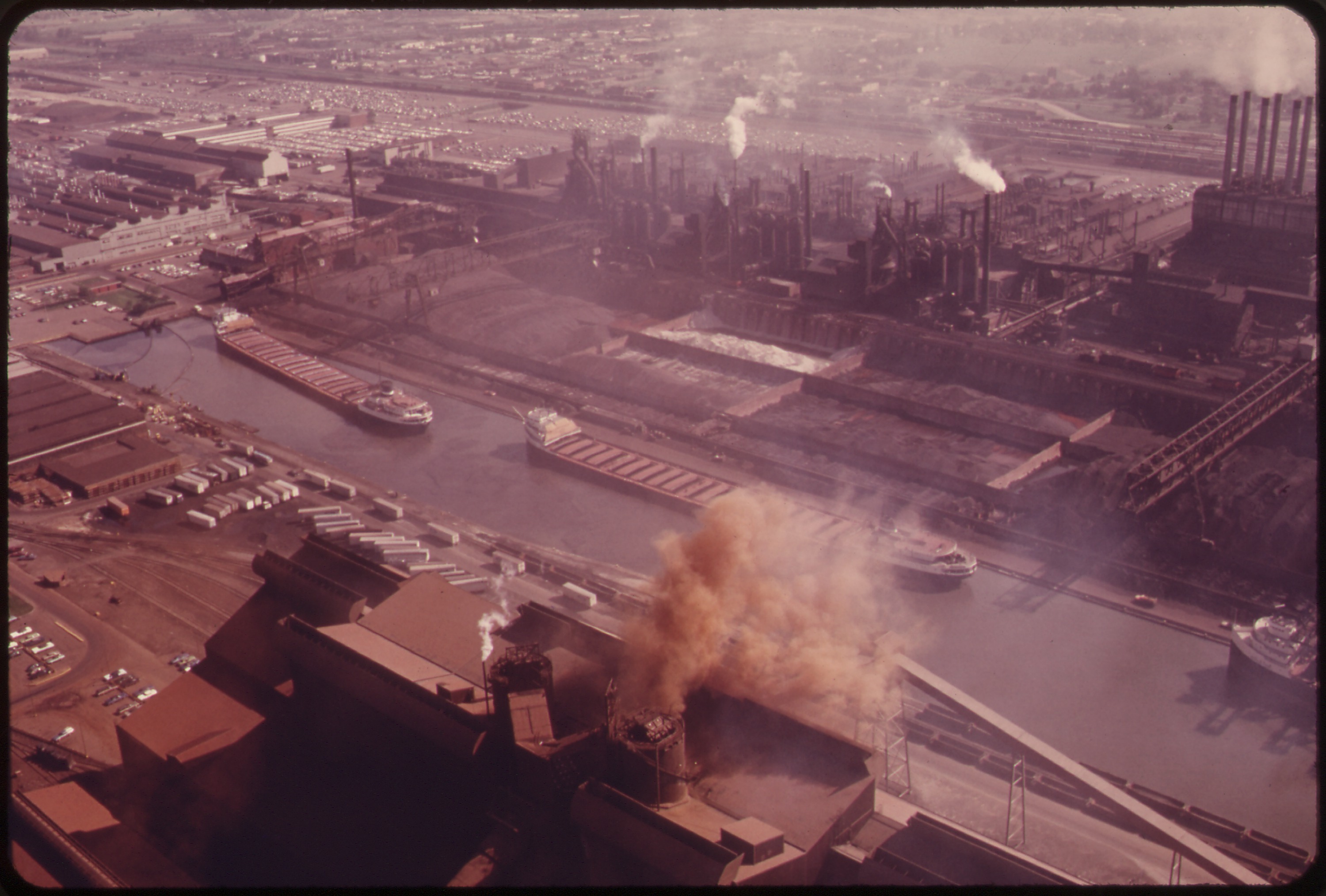
The Rouge manufactured most of the components of Ford vehicles, starting with the Model T. Many of the vehicles were compiled into "knock-down kits", then sent by railroad to various branch assembly locations across the United States in major metropolitan cities to be locally assembled, using local supplies as necessary.
Throughout four decades, the Rouge produced multiple different Mustang models. It was one of only three locations where Ford manufactured the Mustang; the other sites were Metuchen Assembly in Edison, New Jersey, and San Jose Assembly in Milpitas, California.
In 2019, to celebrate the centennial of the Rouge Plant's opening, Ford produced the Mustang Shelby GT500 at the 2020 Ford Motor Show. At 700 horsepower, it is the most powerful street-legal vehicle. As of its centennial, it is the oldest automobile plant still in operation.
As of 2019, the Rouge has produced F-150s, and as of 2022, F-150 Lightnings.
Employment and unionization
At its peak, the Rouge employed as many as 100,000 employees.
In March 1932, following mass layoffs, 4–5,000 former employees of the Rouge starved themselves and marched in protest, an event later called the Ford Hunger March.
On May 26, 1937, members of the United Auto Workers (UAW) planned to hand out leaflets, which resulted in an attack by Ford; it is known as the Battle of the Overpass. The UAW was officially recognized by the Rouge on June 20, 1941, with a contract. By 1947, the Rouge plant's union was led by Communist Party USA official James E. Jackson. A caucus of the union to protect African American workers, who made up approximately 25% of employees, in 1949. The caucus' demands were denied due to being red-baited. By 1960, 65% of the plant's employees were African American, with 3.5% considered skilled laborers.
In September 2024, the tool and die makers of the Rouge went on strike over contract disagreements.
Architectural influence
The Rouge complex inspired Renault's 1920 Île Seguin factory, GAZ's 1930s factory in the Soviet Union, Volkswagen's 1938 Wolfsburg factory in Germany, FIAT's 1939 (Mirafiori factory) in Italy as well as the later Hyundai factory complex in Ulsan, South Korea, which was developed beginning in the late 1960s. With some of its buildings designed by architect Albert Kahn, River Rouge was designated as a National Historic Landmark District in 1978 for its architecture and historical importance to the industry and economy of the United States.
In the early stages of the Soviet Union's industrialization, Ford participated in the development of an automobile production complex in Nizhny Novgorod, which drew influence from the River Rouge complex
Current products made
- Ford F-Series (1948–present)
Former products made
- Eagle-class patrol craft (1918–1919)
- Fordson tractor (1921–1928)
- Ford Model T (1920s; parts)
- Ford Model A (1927–1932)
- Ford Model B (1932–1934)
- Ford Model 48 (1935–1936)
- 1937 Ford (1937–1940)
- 1941 Ford (1941–1942, 1946–1949)
- 1949 Ford (1949–1951)
- 1952 Ford (1952–1954)
- Ford Fairlane (1955–1961)
- Ford Thunderbird (1955–1957)
- Ford Mustang (1964–2004)
- Ford F-150 Lightning (2022–2025)
- Mercury Capri (1979–1986)
- Mercury Cougar (1966–1973)
References
References
- "Ford River Rouge Complex". National Park Service.
- {{NRISref. 2007a
- Hoek, Remko van. (August 2024). "The Making of the Supply Chain: How Five CSCMP Supply Chain Hall of Famers Shaped the Industry". University of Arkansas Press.
- Hyde, Charles K.. (1976). "The Lower Peninsula of Michigan: An Inventory of Historic Engineering and Industrial Sites". Historic American Engineering Record, Office of Archeology and Historic Preservation, National Park Service, U.S. Department of the Interior.
- Kahn, Albert. (1987). "The Legacy of Albert Kahn". Wayne State University Press.
- "The nation's longest continuously operating auto factory turns 100". [[Detroit Free Press]].
- Graff, Garrett M.. (2007-11-27). "The First Campaign: Globalization, the Web, and the Race for the White House". Macmillan.
- Frank, Annalise. (January 26, 2018). "The Henry Ford's Attendance Down Slightly in 2017". [[Crain Communications]].
- Struman, Maryann. "Horrific Ford Rouge power plant explosion happened 20 years ago today".
- Mehta, Sajeev. (2024-10-25). ""The Proper People" Explore Ford's Lost Power Plant So You Don't Have To".
- "Detroit Free Press Subscription Offers, Specials, and Discounts".
- (2021-05-18). "Biden drives electric vehicle and touts it as the "future of the auto industry" - CBS News".
- Patton, Phil. (December 29, 2010). "For Ford, a Green Roof That Springs Eternal". Wheels Blog.
- "Architectural Record - News, Continuing Ed, Products, Green Bldg".
- (2015-04-28). "American Economic History: A Dictionary and Chronology". Bloomsbury Publishing USA.
- "US Auto Industry in World War II- - Ford".
- (1922). "My Life and Work". Garden City Publishing.
- Date, Colin. "Original Mustang : 1964 1/2-1966". MotorBooks International.
- Korn, Morgan. "Ford debuts the 2020 Mustang Shelby GT500, its most powerful street-legal car, at Detroit auto show".
- "Ford's Rouge Assembly Plant Turns 100 {{!}} 2019-03-14 {{!}} ASSEMBLY".
- Fine, Sidney. (1975). "Frank Murphy". Ann Arbor : University of Michigan Press.
- Arnesen, Eric. (2007). "Encyclopedia of U.S. Labor and Working-class History". Taylor & Francis.
- "Ford-UAW Contract {{!}} Encyclopedia.com".
- Wheeler, Tim. (2019-06-07). "James Jackson: Communist leader and pioneer fighter for civil rights".
- Jezer, Martin. (1982). "The Dark Ages, Life in the United States, 1945-1960". South End Press.
- Boyle, Kevin. (1995-11-21). "The UAW and the Heyday of American Liberalism, 1945–1968". Cornell University Press.
- (2024-09-18). "Ford's River Rouge tool and die unit workers will strike if contract issues not resolved, UAW says - CBS Detroit".
- (2024-09-18). "UAW members at Ford's River Rouge tool and die unit set strike deadline". Reuters.
- "The Île Seguin Renault Factory".
- Link, Stefan J.. (2020). "Forging global Fordism : Nazi Germany, Soviet Russia, and the contest over the industrial order".
- "NHL nomination for Ford River Rouge Complex". National Park Service.
- Hirata, Koji. (2024). "Making Mao's Steelworks: Industrial Manchuria and the Transnational Origins of Chinese Socialism". [[Cambridge University Press]].
This article was imported from Wikipedia and is available under the Creative Commons Attribution-ShareAlike 4.0 License. Content has been adapted to SurfDoc format. Original contributors can be found on the article history page.
Ask Mako anything about Ford River Rouge complex — get instant answers, deeper analysis, and related topics.
Research with MakoFree with your Surf account
Create a free account to save articles, ask Mako questions, and organize your research.
Sign up freeThis content may have been generated or modified by AI. CloudSurf Software LLC is not responsible for the accuracy, completeness, or reliability of AI-generated content. Always verify important information from primary sources.
Report