From Surf Wiki (app.surf) — the open knowledge base
Flowering plant
Clade of seed plants that produce flowers
Clade of seed plants that produce flowers
- Amborellales
- Nymphaeales
- Austrobaileyales Core angiosperms
- Unranked clades
- Magnoliids
- Monocots
- Eudicots
- Orders
- Chloranthales
- Ceratophyllales
- Angiospermae Lindl.
- Magnoliophyta Cronquist, Takht. & W.Zimm.
- Magnolicae Takht.
Flowering plants are plants that bear flowers and fruits, and form the clade Angiospermae (). The term angiosperm is derived from the Greek words ἀγγεῖον (angeion; 'container, vessel') and σπέρμα (sperma; 'seed'), meaning that the seeds are enclosed within a fruit. The group was formerly called Magnoliophyta.
Angiosperms are by far the most diverse group of land plants with 64 orders, 416 families, approximately 13,000 known genera and 300,000 known species. They include all forbs (flowering plants without a woody stem), grasses and grass-like plants, a vast majority of broad-leaved trees, shrubs and vines, and most aquatic plants. Angiosperms are distinguished from the other major seed plant clade, the gymnosperms, by having flowers, xylem consisting of vessel elements instead of tracheids, endosperm within their seeds, and fruits that completely envelop the seeds. The ancestors of flowering plants diverged from the common ancestor of all living gymnosperms before the end of the Carboniferous, over 300 million years ago. In the Cretaceous, angiosperms diversified explosively, becoming the dominant group of plants across the planet.
Agriculture is almost entirely dependent on angiosperms, and a small number of flowering plant families supply nearly all plant-based food and livestock feed. Rice, maize and wheat provide half of the world's staple calorie intake, and all three plants are cereals from the Poaceae family (colloquially known as grasses). Other families provide important industrial plant products such as wood, paper and cotton, and supply numerous ingredients for drinks, sugar production, traditional medicine and modern pharmaceuticals. Flowering plants are commonly grown for decorative purposes, with certain flowers playing significant cultural roles in many societies. Many flowering plants are threatened by habitat destruction and by climate change.
Distinguishing features
Angiosperms are terrestrial vascular plants; like the gymnosperms, they have roots, stems, leaves, and seeds. They differ from other seed plants in several ways.
| Feature | Description | Image | ||||
|---|---|---|---|---|---|---|
| Flowers | The reproductive organs of flowering plants, not found in any other seed plants. | [[File:Daffodil flower in section, labelled.svg | thumb | none | A *[[Narcissus (plant) | Narcissus]]* flower in section. [[Petal]]s and [[sepal]]s are replaced here by a fused tube, the corona, and tepals.]] |
| Reduced gametophytes, three cells in male, seven cells with eight nuclei in female (except for basal angiosperms) | The gametophytes are smaller than those of gymnosperms. The smaller size of the pollen reduces the time between pollination and fertilization, which in gymnosperms is up to a year. | [[File:Angiosperm embryo sac with female gametophyte.JPG | thumb | none | [[Embryo sac]] is a reduced female [[gametophyte]].]] | |
| Endosperm | Endosperm forms after fertilization but before the zygote divides. It provides food for the developing embryo, the cotyledons, and sometimes the seedling. | |||||
| Closed carpel enclosing the ovules. | Once the ovules are fertilised, the carpels, often with surrounding tissues, develop into fruits. Gymnosperms have unenclosed seeds. | [[File:Alternating peas in peapod (cropped).jpg | thumb | none | Peas (seeds, from ovules) inside pod (fruit, from fertilised carpel).]] | |
| Xylem made of vessel elements | Open vessel elements are stacked end to end to form continuous tubes, whereas gymnosperm xylem is made of tapered tracheids connected by small pits. | [[File:Herbaceous Dicot Stem Xylem Vessels Cucurbita (35463815631).jpg | thumb | none | [[Xylem]] vessels (long tubes).]] |
Diversity
Ecological diversity
File:MountainAshWithCars.jpg|Eucalyptus regnans, a tree almost 100 m tall File:WolffiaArrhiza2.jpg|Wolffia arrhiza, a rootless floating freshwater plant under 2 mm across
The largest angiosperms are Eucalyptus gum trees of Australia, and Shorea faguetiana, dipterocarp rainforest trees of Southeast Asia, both of which can reach almost 100 m in height. The smallest are Wolffia duckweeds which float on freshwater, each plant less than 2 mm across.
File:Sunlight on a gunnera leaf, 'Quarry Garden', Belsay estate - geograph.org.uk - 1384733.jpg|Gunnera captures sunlight for photosynthesis over the large surfaces of its leaves, which are supported by strong veins. File:Orobanche purpurea.jpg|Orobanche purpurea, a parasitic broomrape with no leaves, obtains all its food from other plants.
Considering their method of obtaining energy, some 99% of flowering plants are photosynthetic autotrophs, deriving their energy from sunlight and using it to create molecules such as sugars. The remainder are parasitic, whether on fungi (myco-heterotrophic, formerly thought to be saprophytic) like the orchids for part or all of their life-cycle, or on other plants, either wholly like the broomrapes, Orobanche, or partially like the witchweeds, Striga.
File:Carnegiea gigantea Saguaro cactus plant (cropped).jpg|Carnegiea gigantea, the saguaro cactus, grows in hot dry deserts in Mexico and the southern United States. File:Dryas octopetala (Colorado, USA).jpg|Dryas octopetala, the mountain avens, lives in cold arctic and montane habitats in the far north of America and Eurasia. File:Nelumbo nucifera Gaertn. (47502598342).jpg|Nelumbo nucifera, the sacred lotus, grows in warm freshwater across tropical and subtropical Asia. File:Zostera.jpg|Zostera seagrass grows on the seabed in sheltered coastal waters.
In terms of their environment, flowering plants are cosmopolitan, occupying a wide range of habitats on land, in fresh water and in the sea. On land, they are the dominant plant group in every habitat except for frigid moss-lichen tundra and coniferous forest. The seagrasses in the Alismatales grow in marine environments, spreading with rhizomes that grow through the mud in sheltered coastal waters.
File:Drosera anglica ne2.jpg|Drosera anglica, a sundew, lives in nutrient-poor acid bogs, deriving nutrients from trapped insects. File:Gentiana verna.jpg|Gentiana verna, the spring gentian, flourishes in dry limestone habitats.
Some specialised angiosperms are able to flourish in extremely acid or alkaline habitats. The sundews, many of which live in nutrient-poor acid bogs, are carnivorous plants, able to derive nutrients such as nitrate from the bodies of trapped insects. Other flowers such as Gentiana verna, the spring gentian, are adapted to the alkaline conditions found on calcium-rich chalk and limestone, which give rise to often dry topographies such as limestone pavement.
File:GT Herb Robert.jpg|Geranium robertianum, herb-Robert, is an annual or biennial herb of Europe and North America. File:Betula_pendula_001.jpg|Betula pendula, the silver birch, is a perennial deciduous tree of Eurasia. File:Lianas.jpg|Lianas Austrosteenisia, Parsonsia, and Sarcopetalum climbing trees in Australia
As for their growth habit, the flowering plants range from small, soft herbaceous plants, often living as annuals or biennials that set seed and die after one or two growing seasons, to large perennial woody trees that may live for many centuries and grow to many metres in height. Some species grow tall without being self-supporting like trees by climbing on other plants in the manner of vines or lianas.
Taxonomic diversity
The number of species of flowering plants is estimated to be in the range of 250,000 to 400,000. This compares to around 12,000 species of moss and 11,000 species of pteridophytes. The APG system seeks to determine the number of families, mostly by molecular phylogenetics. In the 2009 APG III there were 415 families. The 2016 APG IV added five new orders (Boraginales, Dilleniales, Icacinales, Metteniusales and Vahliales), along with some new families, for a total of 64 angiosperm orders and 416 families.
The diversity of flowering plants is not evenly distributed. Nearly all species belong to the eudicot (75%), monocot (23%), and magnoliid (2%) clades. The remaining five clades contain a little over 250 species in total; i.e. less than 0.1% of flowering plant diversity, divided among nine families. The 25 most species-rich of 443 families, containing over 166,000 species between them in their APG circumscriptions, are:
| Group | Family | English name | No. of spp. |
|---|---|---|---|
| 1 | Eudicot | Asteraceae or Compositae | daisy |
| 2 | Monocot | Orchidaceae | orchid |
| 3 | Eudicot | Fabaceae or Leguminosae | pea, legume |
| 4 | Eudicot | Rubiaceae | madder |
| 5 | Monocot | Poaceae or Gramineae | grass |
| 6 | Eudicot | Lamiaceae or Labiatae | mint |
| 7 | Eudicot | Euphorbiaceae | spurge |
| 8 | Eudicot | Melastomataceae | melastome |
| 9 | Eudicot | Myrtaceae | myrtle |
| 10 | Eudicot | Apocynaceae | dogbane |
| 11 | Monocot | Cyperaceae | sedge |
| 12 | Eudicot | Malvaceae | mallow |
| 13 | Monocot | Araceae | arum |
| 14 | Eudicot | Ericaceae | heath |
| 15 | Eudicot | Gesneriaceae | gesneriad |
| 16 | Eudicot | Apiaceae or Umbelliferae | parsley |
| 17 | Eudicot | Brassicaceae or Cruciferae | cabbage |
| 18 | Magnoliid dicot | Piperaceae | pepper |
| 19 | Monocot | Bromeliaceae | bromeliad |
| 20 | Eudicot | Acanthaceae | acanthus |
| 21 | Eudicot | Rosaceae | rose |
| 22 | Eudicot | Boraginaceae | borage |
| 23 | Eudicot | Urticaceae | nettle |
| 24 | Eudicot | Ranunculaceae | buttercup |
| 25 | Magnoliid dicot | Lauraceae | laurel |
Evolution
History of classification
Main article: Plant taxonomy
The botanical term "angiosperm", from Greek words angeíon ( 'bottle, vessel') and spérma ( 'seed'), was coined in the form "Angiospermae" by Paul Hermann in 1690, including only flowering plants whose seeds were enclosed in capsules. The term angiosperm fundamentally changed in meaning in 1827 with Robert Brown, when angiosperm came to mean a seed plant with enclosed ovules. In 1851, with Wilhelm Hofmeister's work on embryo-sacs, Angiosperm came to have its modern meaning of all the flowering plants including Dicotyledons and Monocotyledons. The APG system treats the flowering plants as an unranked clade without a formal Latin name (angiosperms). A formal classification was published alongside the 2009 revision in which the flowering plants rank as the subclass Magnoliidae. From 1998, the Angiosperm Phylogeny Group (APG) has reclassified the angiosperms, with updates in the APG II system in 2003, the APG III system in 2009, and the APG IV system in 2016.
Phylogeny
External
In 2019, a molecular phylogeny of plants placed the flowering plants in their evolutionary context:
Internal
The main groups of living angiosperms are:
| Detailed cladogram of the 2016 Angiosperm Phylogeny Group (APG) IV classification. |
|---|
In 2024, Alexandre R. Zuntini and colleagues constructed a tree of some 6,000 flowering plant genera, representing some 60% of the existing genera, on the basis of analysis of 353 nuclear genes in each specimen. Much of the existing phylogeny is confirmed; the rosid phylogeny is revised.

Fossil history
Main article: Fossil history of flowering plants
Fossilised spores suggest that land plants (embryophytes) have existed for at least 475 million years. However, angiosperms appear suddenly and in great diversity in the fossil record in the Early Cretaceous (~130 mya). Claimed records of flowering plants prior to this are not widely accepted, as all supposed pre-Cretaceous "flowers" can be explained through being misidentifications of other seed plants. Furthermore, almost all of these controversial fossils are described in papers co-authored by the researcher Xin Wang, such as the particularly debated Nanjinganthus. Molecular evidence suggests that the ancestors of angiosperms diverged from the gymnosperms during the late Devonian, about 365 million years ago. The origin time of the crown group of flowering plants remains contentious. By the Late Cretaceous, angiosperms appear to have dominated environments formerly occupied by ferns and gymnosperms. Large canopy-forming trees replaced conifers as the dominant trees close to the end of the Cretaceous, 66 million years ago. The radiation of herbaceous angiosperms occurred much later.
Reproduction
Flowers
Main article: Flower, Plant reproductive morphology
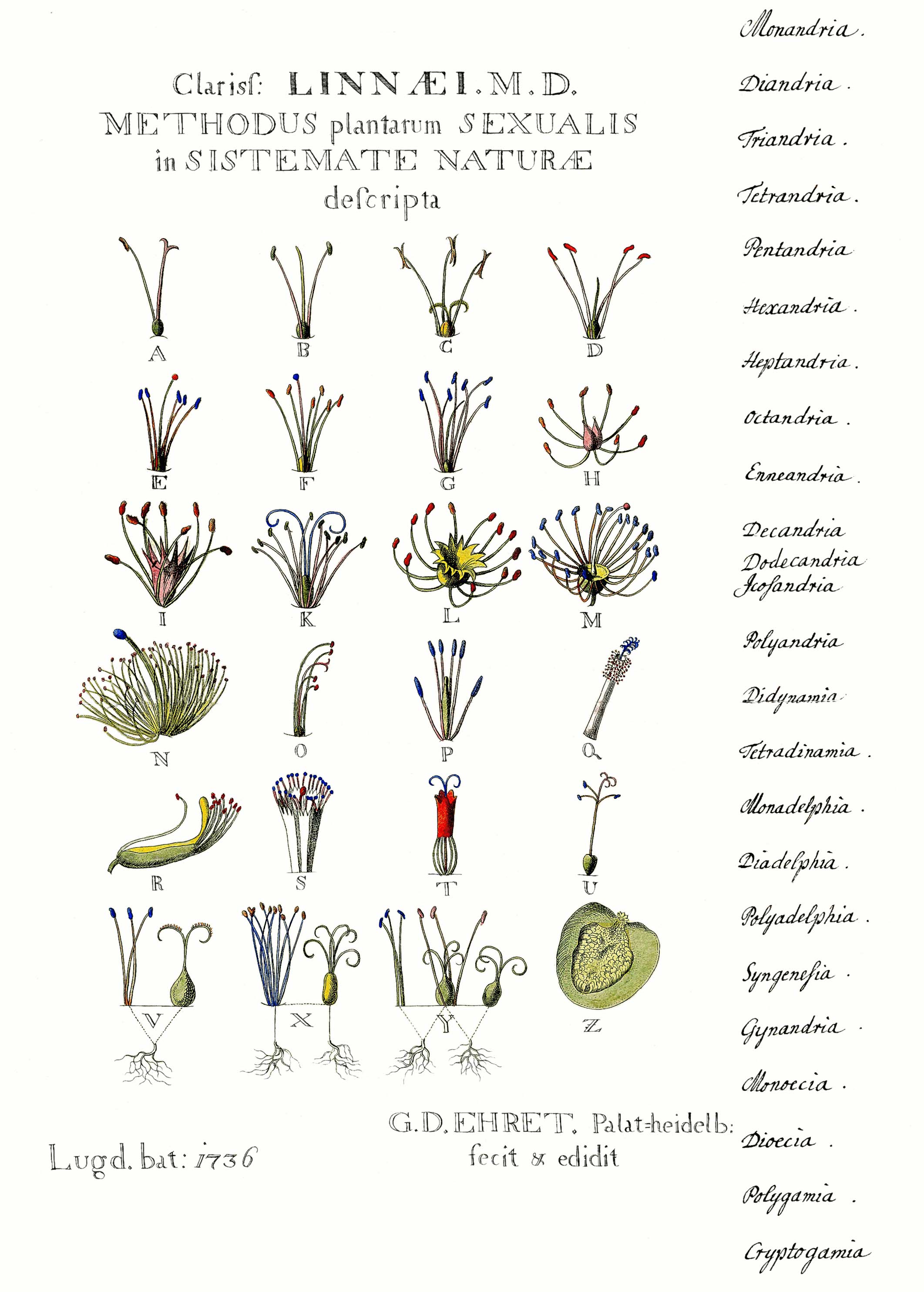
The characteristic feature of angiosperms is the flower. Its function is to ensure fertilization of the ovule and development of fruit containing seeds. It may arise terminally on a shoot or from the axil of a leaf. The flower-bearing part of the plant is usually sharply distinguished from the leaf-bearing part, and forms a branch-system called an inflorescence.
Flowers produce two kinds of reproductive cells. Microspores, which divide to become pollen grains, are the male cells; they are borne in the stamens. The female cells, megaspores, divide to become the egg cell. They are contained in the ovule and enclosed in the carpel; one or more carpels form the pistil.
The flower may consist only of these parts, as in wind-pollinated plants like the willow, where each flower comprises only a few stamens or two carpels. In insect- or bird-pollinated plants, other structures protect the sporophylls and attract pollinators. The individual members of these surrounding structures are known as sepals and petals (or tepals in flowers such as Magnolia where sepals and petals are not distinguishable from each other). The outer series (calyx of sepals) is usually green and leaf-like, and functions to protect the rest of the flower, especially the bud. The inner series (corolla of petals) is, in general, white or brightly colored, is more delicate in structure, and attracts pollinators by colour, scent, and nectar.
Most flowers are hermaphroditic, producing both pollen and ovules in the same flower, but some use other devices to reduce self-fertilization. Heteromorphic flowers have carpels and stamens of differing lengths, so animal pollinators cannot easily transfer pollen between them. Homomorphic flowers may use a biochemical self-incompatibility to discriminate between self and non-self pollen grains. Dioecious plants such as holly have male and female flowers on separate plants. Monoecious plants have separate male and female flowers on the same plant; these are often wind-pollinated, as in maize, but include some insect-pollinated plants such as Cucurbita squashes.
Fertilisation and embryogenesis
Main article: Fertilization, Plant embryogenesis
Double fertilization requires two sperm cells to fertilise cells in the ovule. A pollen grain sticks to the stigma at the top of the pistil, germinates, and grows a long pollen tube. A haploid generative cell travels down the tube behind the tube nucleus. The generative cell divides by mitosis to produce two haploid (n) sperm cells. The pollen tube grows from the stigma, down the style and into the ovary. When it reaches the micropyle of the ovule, it digests its way into one of the synergids, releasing its contents including the sperm cells. The synergid that the cells were released into degenerates; one sperm makes its way to fertilise the egg cell, producing a diploid (2n) zygote. The second sperm cell fuses with both central cell nuclei, producing a triploid (3n) cell. The zygote develops into an embryo; the triploid cell develops into the endosperm, the embryo's food supply. The ovary develops into a fruit and each ovule into a seed.
Fruit and seed
Main article: Fruit, Seed
As the embryo and endosperm develop, the wall of the embryo sac enlarges and combines with the nucellus and integument to form the seed coat. The ovary wall develops to form the fruit or pericarp, whose form is closely associated with type of seed dispersal system.
Other parts of the flower often contribute to forming the fruit. For example, in the apple, the hypanthium forms the edible flesh, surrounding the ovaries which form the tough cases around the seeds.
Apomixis, setting seed without fertilization, is found naturally in about 2.2% of angiosperm genera. Some angiosperms, including many citrus varieties, are able to produce fruits through a type of apomixis called nucellar embryony.
Sexual selection
Main article: Sexual selection in flowering plants
Sexual selection is a mechanism of evolution in which members of one sex choose mates of the other sex (inter-sexual selection), and compete with members of the same sex for access to members of the opposite sex (intra-sexual selection). It is an accepted concept in zoology, but more controversial in botany. It could work through two principal mechanisms:
- Intra-sexual (male–male) competition: Competing pollen donors vie for ovule fertilization via traits such as pollen packaging, timing of release, and flower morphology.
- Female or pistil-mediated mate choice: Post-pollination filters—such as pollen-recipient compatibility, pollen-tube growth rates, and selective seed abortion — enable differential siring success.
These two mechanisms are, in theory, the main driving forces of sexual selection in flowering plants and their potential relevance to botany is clear, but more complicated than in zoology. The complexity of applying the concept of sexual selection to plants arises from the facts that most plants are hermaphrodites and are non-sentient, meaning that the more obvious elements of female choice (e.g. aesthetic judgements on male secondary sexual characteristics) do not apply. The research challenge currently facing botanists is mainly empirical, namely how significant these processes have actually been in plant evolution.
Adaptive function of flowers
Charles Darwin in his 1878 book The Effects of Cross and Self-Fertilization in the Vegetable Kingdom in the initial paragraph of chapter XII noted "The first and most important of the conclusions which may be drawn from the observations given in this volume, is that generally cross-fertilisation is beneficial and self-fertilisation often injurious, at least with the plants on which I experimented." Flowers emerged in plant evolution as an adaptation for the promotion of cross-fertilisation (outcrossing), a process that allows the masking of deleterious mutations in the genome of progeny. The masking effect is known as genetic complementation. Meiosis in flowering plants provides a direct mechanism for repairing DNA through genetic recombination in reproductive tissues. Sexual reproduction appears to be required for maintaining long-term genomic integrity and only infrequent combinations of extrinsic and intrinsic factors permit shifts to asexuality. Thus the two fundamental aspects of sexual reproduction in flowering plants, cross-fertilization (outcrossing) and meiosis appear to be maintained respectively by the advantages of genetic complementation and recombinational repair.
Human uses
Main article: Human uses of plants
Practical uses
Agriculture is almost entirely dependent on angiosperms, which provide virtually all plant-based food and fodder for livestock. Much of this food derives from a small number of flowering plant families. For instance, half of the world's calorie intake is supplied by just three members of the grass family – wheat, rice and maize.
| Family | English | Example foods from that family |
|---|---|---|
| Poaceae | Grasses, cereals | Most feedstocks, inc. rice, maize, wheat, barley, rye, oats, pearl millet, sugar cane, sorghum |
| Fabaceae | Legumes, pea family | Peas, beans, lentils; for animal feed, clover, alfalfa |
| Solanaceae | Nightshade family | Potatoes, tomatoes, peppers, aubergines |
| Cucurbitaceae | Gourd family | Squashes, cucumbers, pumpkins, melons |
| Brassicaceae | Cabbage family | Cabbage and its varieties, e.g. Brussels sprout, broccoli; mustard; oilseed rape |
| Apiaceae | Parsley family | Parsnip, carrot, parsley, coriander, fennel, cumin, caraway |
| Rutaceae | Rue family | Oranges, lemons, grapefruits |
| Rosaceae | Rose family | Apples, pears, cherries, apricots, plums, peaches |
Flowering plants provide a diverse range of materials in the form of wood, paper, fibers such as cotton, flax, and hemp, medicines such as digoxin and opioids, and decorative and landscaping plants. Coffee and hot chocolate are beverages from flowering plants (in the Rubiaceae and Malvaceae respectively).
Cultural uses
Both real and fictitious plants play a wide variety of roles in literature and film. Flowers are the subjects of many poems by poets such as William Blake, Robert Frost, and Rabindranath Tagore. Bird-and-flower painting (zh) is a kind of Chinese painting that celebrates the beauty of flowering plants. Flowers have been used in literature to convey meaning by authors including William Shakespeare. Flowers are used in a variety of art forms which arrange cut or living plants, such as bonsai, ikebana, and flower arranging. Ornamental plants have sometimes changed the course of history, as in tulipomania. Many countries and regions have floral emblems; a survey of 70 of these found that the most popular flowering plant family for such emblems is Orchidaceae at 15.7% (11 emblems), followed by Fabaceae at 10% (7 emblems), and Asparagaceae, Asteraceae, and Rosaceae all at 5.7% (4 emblems each).
Conservation
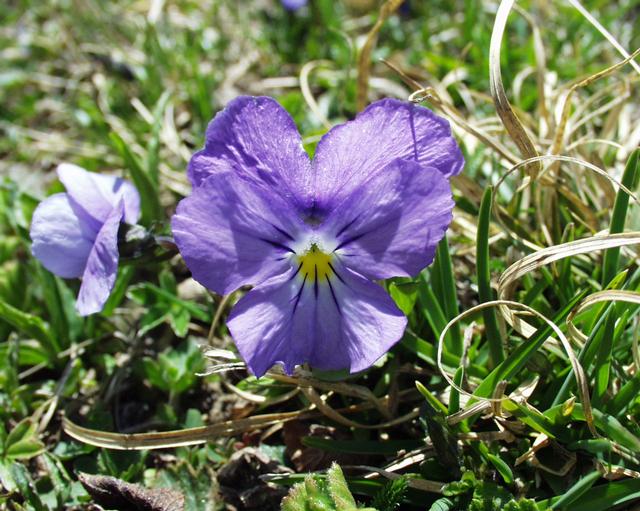
Human impact on the environment has driven a range of species extinct and is threatening even more today. Multiple organizations such as IUCN and Royal Botanic Gardens, Kew suggest that around 40% of plant species are threatened with extinction. The majority are threatened by habitat loss, but activities such as logging of wild timber trees and collection of medicinal plants, or the introduction of non-native invasive species, also play a role.
Relatively few plant diversity assessments have considered climate change, yet it is starting to impact plants as well. About 3% of flowering plants are very likely to be driven extinct within a century at 2 C-change of global warming, and 10% at 3.2 C-change. In worst-case scenarios, half of all tree species may be driven extinct by climate change over that timeframe.
Conservation in this context is the attempt to prevent extinction, whether in situ by protecting plants and their habitats in the wild, or ex situ in seed banks or as living plants. Some 3000 botanic gardens around the world maintain living plants, including over 40% of the species known to be threatened, as an "insurance policy against extinction in the wild." The United Nations' Global Strategy for Plant Conservation asserts that "without plants, there is no life". It aims to "halt the continuing loss of plant diversity" throughout the world.
References
Bibliography
Articles, books and chapters
- Cromie, William J. (16 December 1999). "Oldest Known Flowering Plants Identified By Genes". Harvard University Gazette.
Websites
References
- Reveal, James L.. (2011). "Indices Nominum Supragenericorum Plantarum Vascularium – M".
- Lindley, J.. (1830). "Introduction to the Natural System of Botany". Longman, Rees, Orme, Brown, and Green.
- (2007). "Towards a phylogenetic nomenclature of ''Tracheophyta''". [[Taxon (journal).
- (2016). "The number of known plants species in the world and its annual increase". Phytotaxa.
- "Angiosperms {{!}} OpenStax Biology 2e".
- (2009). "Reconstructing the ancestral female gametophyte of angiosperms: Insights from Amborella and other ancient lineages of flowering plants". American Journal of Botany.
- (2005). "Biology of Plants". W. H. Freeman.
- Williams, Joseph H.. (2012). "The evolution of pollen germination timing in flowering plants: Austrobaileya scandens (Austrobaileyaceae)". AoB Plants.
- (2002). "Evolutionary origins of the endosperm in flowering plants". Genome Biology.
- Gonçalves, Beatriz. (2021-12-15). "Case not closed: the mystery of the origin of the carpel". EvoDevo.
- Baas, Pieter. (1982). "New Perspectives in Wood Anatomy". Springer Netherlands.
- (6 January 2019). "Menara, yellow meranti, Shorea".
- (2009-11-25). "The Charms of Duckweed". [[Missouri Botanical Garden]].
- Leake, J.R.. (1994). "The biology of myco-heterotrophic ('saprophytic') plants". New Phytologist.
- (2010). "The evolution of parasitism in plants". Trends in Plant Science.
- "Angiosperms". University of Nevada, Las Vegas.
- (2022). "Plant Regeneration from Seeds". Elsevier.
- (1992). "Contrasting effects of supplementary feeding of insects or mineral nutrients on the growth and nitrogen and phosphorous economy of pygmy species of Drosera.". Oecologia.
- Pardoe, H. S.. (1995). "Mountain Plants of the British Isles". [[Amgueddfa Cymru – Museum Wales.
- Hart, Robin. (1977). "Why are Biennials so Few?". [[The American Naturalist]].
- (2005-01-12). "Plant growth forms: an ecological and evolutionary perspective". New Phytologist.
- Thorne, R.F.. (2002). "How many species of seed plants are there?". Taxon.
- (2003). "How many species of seed plants are there?". Taxon.
- Govaerts, R.. (2003). "How many species of seed plants are there? – a response". Taxon.
- (2004). "Systematics of the Bryophyta (Mosses): From molecules to a revised classification". Monographs in Systematic Botany.
- (2005). "Biology of Plants". [[W. H. Freeman and Company]].
- Stevens, P. F.. (2011). "Angiosperm Phylogeny Website (at Missouri Botanical Garden)".
- (October 2006). "Kew Scientist 30".
- Brown, Robert. (1827). "Narrative of a Survey of the Intertropical and Western Coasts of Australia: Performed Between the Years 1818 and 1822". J. Murray.
- Buggs, Richard J.A.. (January 2021). "The origin of Darwin's "abominable mystery"". American Journal of Botany.
- (8 October 2009). "As easy as APG III – Scientists revise the system of classifying flowering plants". The Linnean Society of London.
- (2019). "One thousand plant transcriptomes and the phylogenomics of green plants". Nature.
- Guo, Xing. (26 November 2021). "Chloranthus genome provides insights into the early diversification of angiosperms". Nature Communications.
- (October 2004). "The plant tree of life: an overview and some points of view". [[American Journal of Botany]].
- (2017). "Plants of the World: An Illustrated Encyclopedia of Vascular Plants". University of Chicago Press.
- (2015-03-18). "Five major shifts of diversification through the long evolutionary history of Magnoliidae (angiosperms)". BMC Evolutionary Biology.
- (24 April 2024). "Phylogenomics and the rise of the angiosperms". [[Nature (journal).
- Edwards, D.. (June 2000). "The role of mid-palaeozoic mesofossils in the detection of early bryophytes". Philosophical Transactions of the Royal Society of London. Series B, Biological Sciences.
- (2017-03-03). "Palaeobotanical redux: revisiting the age of the angiosperms". Nature Plants.
- Friedman, William E.. (January 2009). "The meaning of Darwin's "abominable mystery"". American Journal of Botany.
- Bateman, Richard M. (2020-01-01). "Hunting the Snark: the flawed search for mythical Jurassic angiosperms". Journal of Experimental Botany.
- (October 2020). "Supposed Jurassic angiosperms lack pentamery, an important angiosperm-specific feature". New Phytologist.
- (19 July 2021). "Gene duplications and phylogenomic conflict underlie major pulses of phenotypic evolution in gymnosperms". Nature Plants.
- (2022-06-24). "What is the age of flowering plants?". Journal of Experimental Botany.
- (December 2006). "Life: the science of biology". Macmillan.
- (1993). "Paleobotany and the evolution of plants". [[Cambridge University Press]].
- Willson, Mary F.. (1 June 1979). "Sexual Selection in Plants". [[The American Naturalist]].
- Bredmose, N.. (2003). "Encyclopedia of Rose Science". Elsevier.
- (1970). "Vascular Plants: Form and Function". Macmillan Education.
- Ainsworth, C.. (August 2000). "Boys and Girls Come Out to Play: The Molecular Biology of Dioecious Plants". Annals of Botany.
- Batygina, T.B.. (2019). "Embryology of Flowering Plants: Terminology and Concepts, Vol. 3: Reproductive Systems". CRC Press.
- (2007-01-13). "Flowering and determinacy in maize". Oxford University Press (OUP).
- Mabberley, D. J.. (2008). "The Plant Book: A Portable Dictionary of the Vascular Plants". Cambridge University Press.
- {{efloras. 2. 108644
- Berger, F.. (January 2008). "Double-fertilization, from myths to reality". Sexual Plant Reproduction.
- Eriksson, O.. (2008). "Evolution of Seed Size and Biotic Seed Dispersal in Angiosperms: Paleoecological and Neoecological Evidence". International Journal of Plant Sciences.
- "Fruit Anatomy". University of California.
- (September 2014). "Taxonomy and Biogeography of Apomixis in Angiosperms and Associated Biodiversity Characteristics". Critical Reviews in Plant Sciences.
- Gentile, Alessandra. (18 March 2020). "The Citrus Genome". Springer Nature.
- (1 August 2006). "Trait selection in flowering plants: how does sexual selection contribute?". Integrative and Comparative Biology.
- (8 March 2011). "Sexual selection in plants". [[Current Biology]].
- Darwin, Charles R.. (1878). "The effects of cross and self fertilisation in the vegetable kingdom". John Murray.
- (20 September 1985). "Genetic Damage, Mutation, and the Evolution of Sex". Science.
- Hörandl, Elvira. (7 June 2024). "Apomixis and the paradox of sex in plants". Annals of Botany.
- (8 March 2016). "Angiosperm: Significance to Humans".
- McKie, Robin. (16 July 2017). "Maize, rice, wheat: alarm at rising climate risk to vital crops". The Observer.
- "Rutaceae".
- (2017). "Diversification of Rosaceae since the Late Cretaceous based on plastid phylogenomics". New Phytologist.
- (2015). "Literary Plants". Nature Plants.
- "Flower Poems".
- "Nature's Song: Chinese Bird and Flower Paintings".
- "The Language of Flowers". Folger Shakespeare Library.
- Lambert, Tim. (2014). "A Brief History of Gardening". [[British Broadcasting Corporation]].
- (2013). "Official Biological Emblems of the World ". [[Raffles Museum of Biodiversity Research]].
- (26 August 2022). "Ecological lags govern the pace and outcome of plant community responses to 21st-century climate change". Ecology Letters.
- (29 September 2020). "Extinction risk and threats to plants and fungi". Plants People Planet.
- (2016). "Climate-Related Local Extinctions Are Already Widespread among Plant and Animal Species". PLOS Biology.
- Shivanna, K. R.. (2019). "Biodiversity and Chemotaxonomy". Springer International Publishing.
- (2023). "Climate Change 2022 – Impacts, Adaptation and Vulnerability". Cambridge University Press.
- "Botanic Gardens and Plant Conservation".
- (2020). "Plant Conservation Around the World".
- (3 July 2023). "Updated Global Strategy for Plant Conservation 2011–2020".
This article was imported from Wikipedia and is available under the Creative Commons Attribution-ShareAlike 4.0 License. Content has been adapted to SurfDoc format. Original contributors can be found on the article history page.
Ask Mako anything about Flowering plant — get instant answers, deeper analysis, and related topics.
Research with MakoFree with your Surf account
Create a free account to save articles, ask Mako questions, and organize your research.
Sign up freeThis content may have been generated or modified by AI. CloudSurf Software LLC is not responsible for the accuracy, completeness, or reliability of AI-generated content. Always verify important information from primary sources.
Report