From Surf Wiki (app.surf) — the open knowledge base
Fatty streak
Visible lesion indicating atherosclerosis
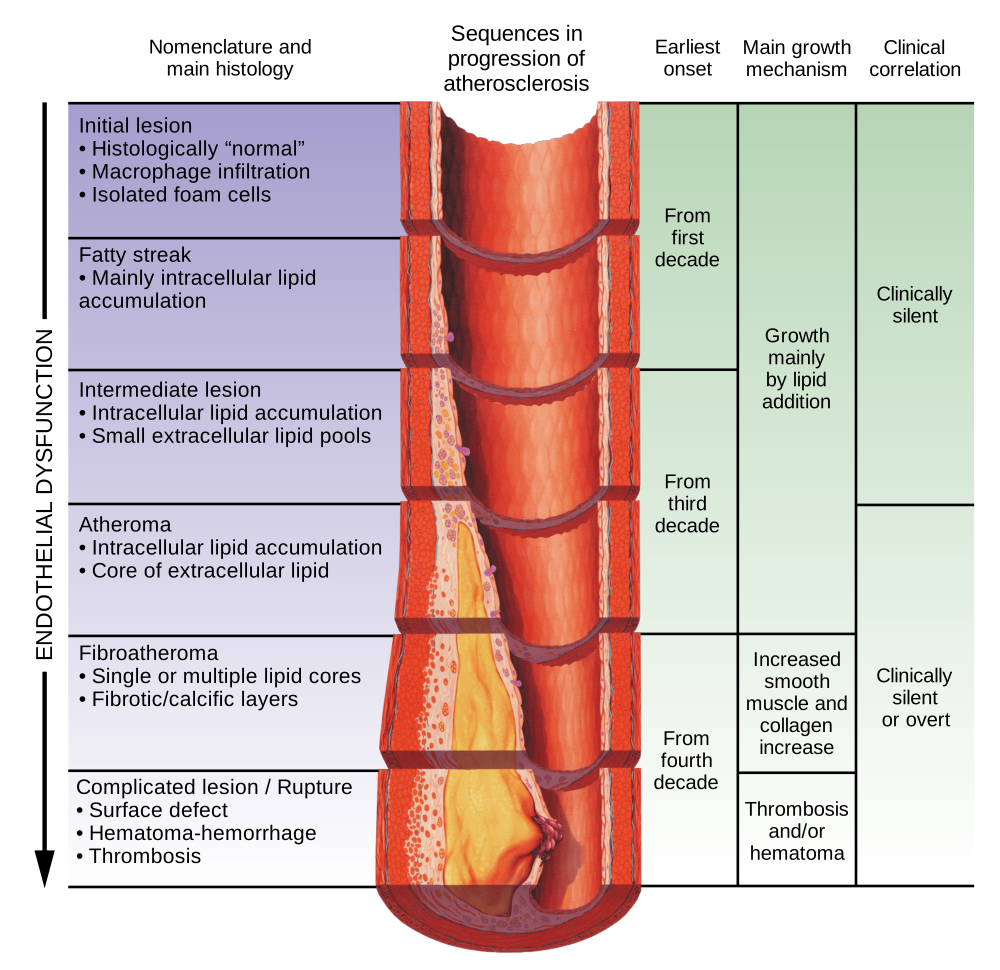
Visible lesion indicating atherosclerosis
A fatty streak is the first grossly visible (visible to the naked eye) lesion in the development of atherosclerosis. It appears as an irregular yellow-white discoloration on the luminal surface of an artery. It consists of aggregates of foam cells, which are lipoprotein-loaded macrophages, located in the intima, the innermost layer of the artery, beneath the endothelial cells that layer the lumina through which blood flows. Fatty streaks may also include T cells, aggregated platelets, and smooth muscle cells. Although fatty streaks can develop into atheromas (atheromatous plaques), not all are destined to become advanced lesions.
Epidemiology
Almost all children older than 10 in developed countries have aortic fatty streaks, with coronary fatty streaks beginning in adolescence.
In 1953, a study was published that forever changed the understanding of the development of heart disease. The study examined the results of 300 autopsies performed on U.S. soldiers who had died in the Korean War. Despite the fact that the average age of the soldiers was just 22 years old, 77% of them had visible signs of coronary atherosclerosis. This study showed that heart disease could affect people at a young age and was not just a problem for older individuals.
In 1992, a report had shown that microscopic fatty streaks were noticed in the left anterior descending artery in over 50% of children aged 10–14. And 8% had more notable accumulations of extracellular lipid.
In a 2005 study carried out between 1985–1995, it was found that around 87% of aortas and 30% of coronary arteries in age group 5–14 years had fatty streaks.
References
References
- (2006). "Textbook of Medical Physiology". Elsevier Saunders.
- (2021). "Robbins & Cotran Pathologic Basis of Disease". Elsevier.
- Kumar, Vinay; Abbas, Abul K.; Fausto, Nelson; & Mitchell, Richard N. (2007). ''Robbins Basic Pathology'' (8th ed.). Saunders Elsevier. pp. 348-351 {{ISBN. 978-1-4160-2973-1
- (1969-05-06). "The pediatric aspects of atherosclerosis". Journal of Atherosclerosis Research.
- (January 2002). "Natural History and Risk Factors of Atherosclerosis in Children and Youth: The Pday Study". Pediatric Pathology & Molecular Medicine.
- Enos, William F.. (1953-07-18). "Coronary Disease Among United States Soldiers Killed in Action in Korea". Journal of the American Medical Association.
- (15 July 2014). "Stopping Heart Disease in Childhood".
- Wilson, Don P.. (2000). "Is Atherosclerosis a Pediatric Disease?". MDText.com, Inc..
- (June 1992). "Early Lesions of Atherosclerosis in Childhood and Youth: Natural History and Risk Factors". Journal of the American College of Nutrition.
- (2005-03-01). "Atherosclerosis in children and young adults: An overview of the World Health Organization and International Society and Federation of Cardiology study on Pathobiological Determinants of Atherosclerosis in Youth study (1985–1995)". Global Heart.
This article was imported from Wikipedia and is available under the Creative Commons Attribution-ShareAlike 4.0 License. Content has been adapted to SurfDoc format. Original contributors can be found on the article history page.
Ask Mako anything about Fatty streak — get instant answers, deeper analysis, and related topics.
Research with MakoFree with your Surf account
Create a free account to save articles, ask Mako questions, and organize your research.
Sign up freeThis content may have been generated or modified by AI. CloudSurf Software LLC is not responsible for the accuracy, completeness, or reliability of AI-generated content. Always verify important information from primary sources.
Report