From Surf Wiki (app.surf) — the open knowledge base
Expressways of Singapore
none
none
| Field | Value | |
|---|---|---|
| country | SGP | |
| type | E | |
| title | Expressways of Singapore | |
| *新加坡高速公路 | ||
| Rangkaian Lebuhraya Singapura* | ||
| markers | [[File:Singapore road sign - Informatory - Expressway begins - Type II.svg | 100px]] |
| caption | Symbol of the Singaporean expressways | |
| map | Expressways and Semi-expressways of Singapore 2012.png | |
| map_notes | Map of the Singaporean expressway network as of 2012 | |
| maint | Land Transport Authority (LTA) | |
| formed | 1966 | |
| length_km | 163 | |
| label1 | Expressways | |
| field1 | Expressway AAA (AAA) |
新加坡高速公路 Rangkaian Lebuhraya Singapura
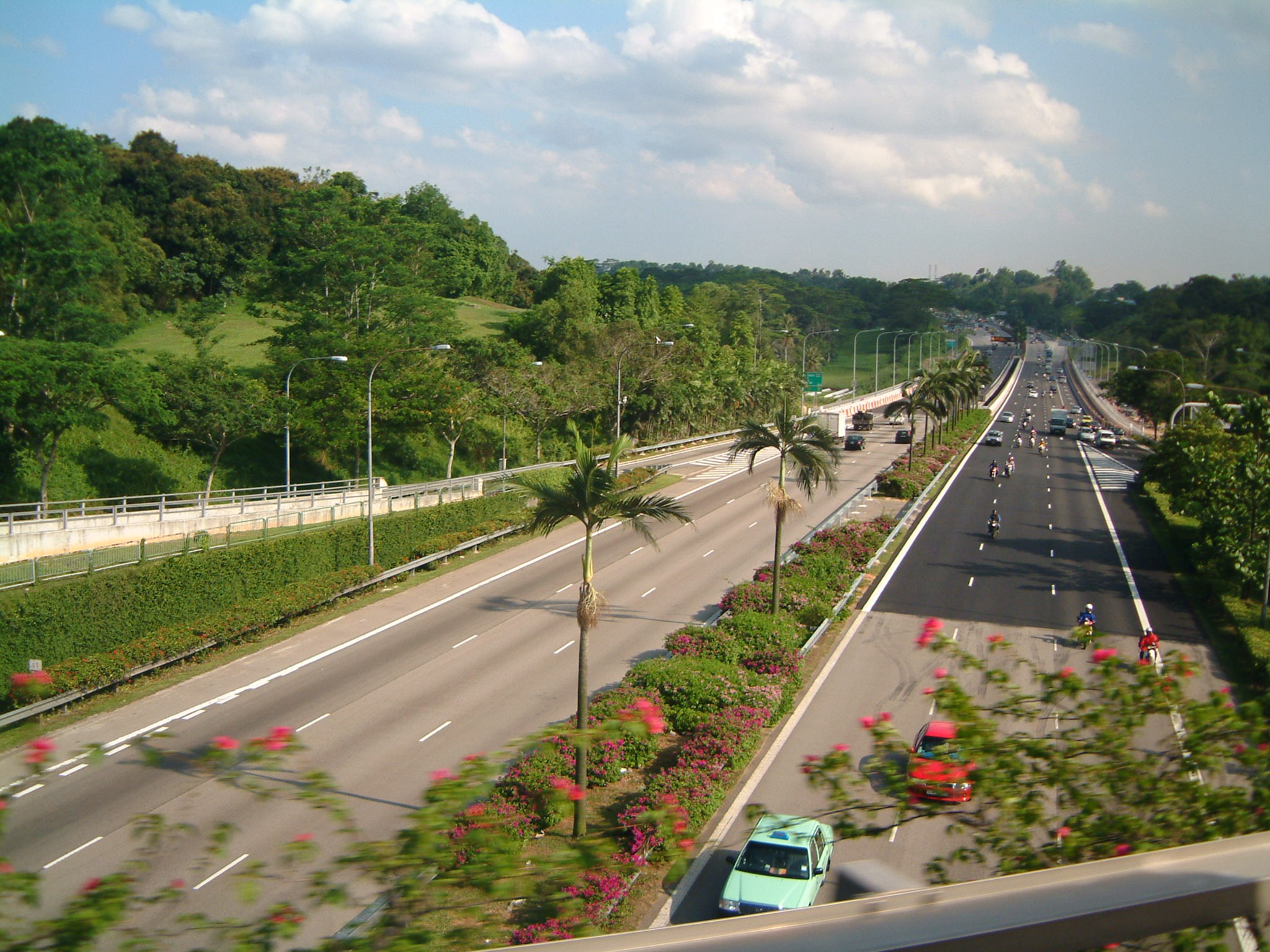
The expressways of Singapore are a system of controlled-access highways in Singapore that allow motorists to travel quickly from one urban area to another. Construction of the system was authorised when construction of the Pan Island Expressway began in 1962. They usually have three to four lanes in each direction, although there are two-lane carriageways at many expressway intersections and five-lane carriageways in some places. There are currently ten expressways and studies about the feasibility of more are ongoing.
Construction on the first expressway, the Pan Island Expressway, started in 1966. , there are 163 km of expressways in Singapore.
The Singaporean expressway networks are connected with Malaysian expressway networks via the Ayer Rajah Expressway (connects with the Second Link Expressway via the Malaysia-Singapore Second Link bridge) and the Bukit Timah Expressway (connects with the Johor Bahru Eastern Dispersal Link Expressway via Johor–Singapore Causeway).
History
| Date | Events | Remarks |
|---|---|---|
| 15 April 1962 | Construction of the Pan Island Expressway (PIE) begins. | Construction during full internal self-government of Singapore |
| 8 May 1966 | First phase of the Pan Island Expressway (PIE) completed. | Whitley Road: Mount Pleasant Flyover - Thomson Flyover - Jalan Toa Payoh - Jalan Kolam Ayer - Paya Lebar Way |
| 14 December 1970 | Toa Payoh Flyover, Singapore's first flyover is opened to motorists. | Length: 1.2 kilometres |
| 23 January 1971 | Construction of the East Coast Parkway (ECP) begins with the land reclamation of East Coast. | |
| 12 December 1974 | First phase of the East Coast Parkway (ECP) completed. | Fort Road – Marine Parade |
| Formerly called Bedok Highway | ||
| 15 July 1975 | Planning for the Sembawang Expressway begins from Ang Mo Kio Avenue 3 to Ang Mo Kio Avenue 1. | |
| 22 February 1976 | Second phase of the East Coast Parkway (ECP) completed. | Marine Parade – Bedok South Road |
| Formerly called Bedok Highway | ||
| 30 September 1976 | Pan Island Expressway (PIE) completed and opened. | Adam Road - Jalan Anak Bukit |
| 1 January 1977 | Planning for the Sembawang Expressway was extended to Yio Chu Kang Road. | |
| 19 January 1980 | Pan Island Expressway (PIE) completed and opened. | Whitley Road - Adam Road |
| 22 January 1980 | Third phase of the East Coast Parkway (ECP) completed. | Bedok South Road – Changi Airport |
| It was renamed to East Coast Parkway | ||
| 15 March 1980 | Third phase of the Pan Island Expressway (PIE) completed. | Jalan Eunos - Changi Airport |
| 25 April 1980 | Pan Island Expressway (PIE) completed and opened. | Hong Kah Drive - Jalan Boon Lay |
| 25 October 1980 | Pan Island Expressway (PIE) completed and opened. | Jalan Eunos - Bedok North Road |
| 10 January 1981 | Pan Island Expressway (PIE) completed and opened. | Bedok North Road - East Coast Parkway |
| 29 January 1981 | Pan Island Expressway (PIE) completed and opened. | Hong Kah Drive - Jalan Anak Bukit |
| 18 April 1981 | Opening of the Benjamin Sheares Bridge on the East Coast Parkway (ECP) and the completion of the ECP phase 4 from Fort Road to Keppel Road. | ECP Length: 20 kilometres |
| ECP phase 4: Fort Road - Keppel Road | ||
| 11 July 1981 | Construction of the Sembawang Expressway (renamed to Central Expressway) begins. | |
| 20 December 1981 | Fourth phase of the Pan Island Expressway (PIE) completed. | Jalan Anak Bukit - Jurong Road |
| 5 March 1983 | Construction of the Ayer Rajah Expressway (AYE) begins. | |
| 31 March 1983 | Opening of the Central Expressway (CTE) Phase 1. | Ang Mo Kio Avenue 1 - PIE |
| 23 September 1983 | Construction of the Bukit Timah Expressway (BKE) begins. | |
| 18 May 1985 | Opening of the Central Expressway (CTE) Phase 1. | PIE - Thomson Road |
| 22 January 1986 | Opening of the Bukit Timah Expressway (BKE). | Length: 10 kilometres |
| 1 July 1986 | Construction of the Central Expressway (CTE) phase 2 including Kampong Java Tunnel and Chin Swee Tunnel. | Cavenagh Road was closed to make way for the construction of Central Expressway. |
| 16 July 1987 | Public telephones along the Bukit Timah Expressway, Central Expressway, East Coast Parkway, Pan Island Expressway and Ayer Rajah Expressway were converted into exclusively emergency phones by 6 pm yesterday. Only calls for assistance to the police, fire and ambulance and breakdown service are possible from 74 emergency telephones. | |
| 30 September 1987 | Opening of the Tampines Expressway (TPE) phase 1. | PIE - Elias Road |
| 24 December 1987 | Construction of the Tampines Expressway (TPE) phase 2. | Elias Road - Lorong Halus |
| 24 September 1988 | Construction of the Central Expressway (CTE) phase 2 from Ayer Rajah Expressway to Outram Road. | |
| 5 November 1988 | Opening of the Ayer Rajah Expressway (AYE). | Keppel Viaduct - Jurong Town Hall Road |
| 15 April 1989 | Opening of the Seletar Expressway (SLE) phase 1. | Lentor Avenue - Upper Thomson Road |
| 2 June 1989 | Opening of the Tampines Expressway (TPE) phase 1. | Elias Road - Old Tampines Road |
| 17 June 1989 | Opening of the Central Expressway (CTE) phase 1. | Yio Chu Kang Road – Ang Mo Kio Avenue 1 |
| Opened by: Mr Heng Chiang Meng | ||
| 24 March 1990 | Opening of the Seletar Expressway (SLE) phase 1. | Yio Chu Kang Road – Lentor Avenue |
| 11 May 1991 | The completion of the Central Expressway (CTE) phase 2 including Kampong Java Tunnel and Chin Swee Tunnel. | Length: 15.8 kilometres |
| 21 September 1991 | Opening of the Central Expressway (CTE) phase 2 including Kampong Java Tunnel and Chin Swee Tunnel. | Length: 15.8 kilometres |
| 31 October 1991 | Construction of the Kranji Expressway (KJE) begins. | |
| 5 December 1993 | Opening of the Pan Island Expressway (PIE). | Jurong Road - Upper Jurong Road |
| 20 February 1994 | Opening of the Kranji Expressway (KJE). | Length: 8 kilometres |
| 29 November 1994 | Construction of the Ayer Rajah Expressway (AYE) phase 2 begins. | Jurong Town Hall Road - Corporation Road |
| 5 November 1995 | Opening of the Seletar Expressway (SLE) phase 2. | Bukit Timah Expressway – Woodlands Avenue 2 |
| 3 September 1996 | Opening of the Tampines Expressway (TPE) phase 2. | Old Tampines Road - SLE |
| 2 January 1998 | Opening of the Ayer Rajah Expressway (AYE) phase 2. | Jurong Town Hall Road - Tuas Second Link |
| 22 February 1998 | Opening of the Seletar Expressway (SLE) phase 2. | Length: 10.8 kilometres |
| Woodlands Avenue 2 - Upper Thomson Road | ||
| 22 August 1998 | Opening of the Tampines Expressway viaduct connecting PIE and TPE. | |
| September 1998 | The Electronic Road Pricing (ERP) systems is implemented on all expressways. | |
| 2001 | Construction of the Kallang-Paya Lebar Expressway begins. | |
| 2004 | The SOS telephones were removed on all expressways except for tunnels. | |
| 23 June 2007 | Opening of the Tampines Service Road, currently part of the Kallang-Paya Lebar Expressway (KPE). | |
| 26 October 2007 | Opening of the Kallang–Paya Lebar Expressway (KPE), the longest subterranean road tunnel in Southeast Asia. | ECP - PIE |
| March 2008 | Construction of the Marina Coastal Expressway (MCE) begins. | |
| 20 September 2008 | Official opening of the Kallang-Paya Lebar Expressway (KPE). | Prime Minister Lee Hsien Loong |
| PIE - TPE | ||
| 29 December 2013 | Opening of the Marina Coastal Expressway (MCE), Singapore's first undersea expressway. | Length: 5 kilometres |
| The East Coast Parkway was shortened to Sheares Avenue. |
Expansion
The latest expressway completed is the 5 km Marina Coastal Expressway (MCE), which links the East Coast Parkway and Kallang-Paya Lebar Expressway to Marina South and Ayer Rajah Expressway and includes Singapore's first undersea tunnel. Construction started in 2008 and the expressway opened to traffic 29 December 2013. Prior to construction of the Marina Coastal Expressway, the Kallang–Paya Lebar Expressway which runs for 12 km, 9 km of which are 10 metres underground, was started in 2001 and a 3 km section linking the Pan Island Expressway and East Coast Parkway was opened in late 2007. The Kallang–Paya Lebar Expressway was completed on 20 September 2008.
Construction of the 11th expressway, the North–South Corridor, originally conceptualised as the North-South Expressway, was announced on 30 January 2008. The new 21.5-kilometre expressway will cost about S$7.47 billion when fully completed by 2029 and will connect the East Coast Parkway with the northern parts of Singapore. In 2016, the Land Transport Authority announced that the North–South Corridor will be Singapore’s first integrated transport corridor featuring continuous bus lanes and cycling trunk routes, rather than a normal expressway when originally conceptualised.
Features
Like all other global controlled-access expressway network, there are no traffic lights on the expressways. At an interchange with another road, an expressway is connected to it via slip roads. This allows traffic to change routes without having to stop or slow down. Due to the need to conserve space in land-scarce Singapore, there are no cloverleaf interchanges on the entire island as they are too large. Instead, traffic efficiency and land space are maximised by having traffic lights on terrestrial roads, as well as the usage of interchanges such as stack interchanges. The most common forms of highway-road or highway-highway intersections are single-point urban, diamond, and trumpet interchanges. Newer expressways such as the Kallang-Paya Lebar Expressway and the future North South Corridor uses on-ramps and off-ramps to conserve space even further and minimise disruption to the road system, through the construction of viaducts and tunnels.
The road surface is asphalt, unlike normal roads which may have concrete surfaces. The lanes are separated with white dashed lines, while unbroken white lines are used to mark the edges of the median and shoulder. The shoulder is designated for stops in cases of breakdowns and emergencies, and driving on it is prohibited by law. Lanes are numbered from right to left, with lane 1 being the closest to the median. Crash barriers, cat's eyes and rumble strips are also used to ensure road safety.
There are signs marking the start and end of an expressway at its entry and exit points respectively. The expressways are also assigned route codes consisting three letters that form their respective initials, making the Singaporean expressway network as the only highway system with route coding system. The Expressway Monitoring and Advisory System is used on all the expressways—cameras are used for live monitoring of expressway conditions, and LED signboards display information messages, such as warnings of any disruptions to the normal flow of traffic, as well as estimated travel times. The longest expressway, the Pan Island Expressway, is only 41 km long and therefore has no rest areas.
Singaporean expressways are the only highway network in Singapore with their own route codes. They are assigned with three-letter codes named after their respective initials where the last letter is always E; for example, PIE for the Pan Island Expressway. The only exception is the East Coast Parkway (ECP) whose the last letter is other than E.
Safety
The default speed limit and National Speed Limits on Singapore expressways is 90 km/h, but in certain areas a lower speed limit such as 80 km/h or 70 km/h is applied, especially in large urban areas, tunnels, heavy traffic and crosswinds. Speed traps are also deployed by the Singapore police at many places along the expressways and are deployed from 7am to 12am.
Certain types of transport, such as pedestrians, bicycles, and learner drivers, are not allowed.
List of Expressways
| Rank Number | Expressway Name | Abbreviation | Opened | Length | Exit Terminus | Remarks |
|---|---|---|---|---|---|---|
| 1st | Pan Island Expressway | 1966 | 42.8 km | Changi Airport, ECP | ||
| Tuas, AYE | Longest and oldest expressway in Singapore. Designated as AH2 from Stevens Road exit to BKE exit . | |||||
| 2nd | Ayer Rajah Expressway | 1988 | 26.5 km | MCE | ||
| Tuas Checkpoint, Tuas Second Link | Directly connected to MCE. Part of AH143. | |||||
| 3rd | *North–South Corridor* | *2029 (planned)* | 21.5 km | Admiralty Road West | ||
| ECP, Republic Avenue and Nicoll Highway | Construction started in 2018, and is now estimated to be complete by 2029. The NSC will be Singapore’s first integrated transport corridor featuring continuous bus lanes and cycling trunk routes. | |||||
| 4th | East Coast Parkway | 1974 | 16 km | Changi Airport, PIE | ||
| Sheares Avenue | ||||||
| 5th | Central Expressway | 1989 | 15.8 km | SLE, TPE | ||
| AYE | This expressway has two tunnels, Kampong Java Tunnel and Chin Swee Tunnel. Directly connected to SLE. | |||||
| 6th | Tampines Expressway | 1989 | 14 km | SLE, CTE | ||
| PIE | ||||||
| Upper Changi Road East | ||||||
| 7th | Kallang–Paya Lebar Expressway | 2008 | 12 km | MCE, ECP | ||
| TPE | The expressway has the longest road tunnel in Singapore. Directly connected to MCE. Part of AH143. | |||||
| 8th | Seletar Expressway | 1990 | 10.8 km | BKE, Turf Club Avenue | ||
| CTE | Directly connected to CTE. | |||||
| 9th | Bukit Timah Expressway | 1986 | 10 km | PIE | ||
| Woodlands Checkpoint, Johor–Singapore Causeway | Part of AH2. | |||||
| 10th | Kranji Expressway | 1994 | 8 km | BKE | ||
| PIE | ||||||
| 11th | Marina Coastal Expressway | 2013 | 5 km | AYE | ||
| Fort Road, ECP, KPE | Singapore's first undersea expressway. Directly connected to KPE and AYE. Part of AH143. |
Semi-expressways
Singapore also has five semi-expressways: Bukit Timah Road, Jurong Island Highway, Nicoll Highway, the Outer Ring Road System (ORRS) and West Coast Highway. These semi-expressways are scaled down versions of expressways, without a uniform speed limit. Some sections still feature traffic light controlled junctions, such as the eastern section of the ORRS, some of Bukit Timah Road, the southern section of the Jurong Island Highway and the western sections of Nicoll Highway and West Coast Highway. However, much like with the expressways, semi-expressways allow motorists to travel quickly from one urban area to another with the use of viaducts, overpasses and tunnels.
References
- http://www.lta.gov.sg
- https://web.archive.org/web/20081106151957/http://www.kpeunderground.sg/
References
- (July 2001). "Expressways in Singapore: Did you know?". [[Automobile Association of Singapore]].
- "Marina expressway to be ready by year-end". The Straits Times.
- (13 November 2013). "Singapore's first undersea road—Marina Coastal Expressway—set to open on Dec 29". The Straits Times.
- (3 July 2023). "Road tunnel portion of North-South Corridor delayed by two years to 2029". [[The Straits Times]].
This article was imported from Wikipedia and is available under the Creative Commons Attribution-ShareAlike 4.0 License. Content has been adapted to SurfDoc format. Original contributors can be found on the article history page.
Ask Mako anything about Expressways of Singapore — get instant answers, deeper analysis, and related topics.
Research with MakoFree with your Surf account
Create a free account to save articles, ask Mako questions, and organize your research.
Sign up freeThis content may have been generated or modified by AI. CloudSurf Software LLC is not responsible for the accuracy, completeness, or reliability of AI-generated content. Always verify important information from primary sources.
Report